

Coordinating travel for a large team as an introvert feels, at first glance, like a contradiction in terms. You are the person who craves quiet mornings and solo processing time, and now you are responsible for moving fifteen or twenty people through airports, hotels, and client dinners without losing anyone or your mind. What actually makes this work is not pretending to be someone you are not. It is building systems that do the heavy lifting so your energy stays where it counts.
Large group travel coordination rewards exactly the strengths that introverts tend to have in abundance: careful planning, attention to detail, anticipating problems before they surface, and a preference for getting things right the first time rather than improvising loudly in public. The challenge is protecting your own reserves while managing everyone else’s needs.
If you are working through a significant shift in your professional life, whether that means a new leadership role, a company restructure, or a major client engagement that requires extensive travel, you might find useful framing in our Life Transitions and Major Changes hub, which covers the full emotional and practical terrain of big professional pivots.

Why Does Group Travel Feel So Draining for Introverted Leaders?
My advertising agency years involved a fair amount of group travel. New business pitches in Chicago. Production shoots in Los Angeles. Annual client summits where I was expected to be “on” from the moment the first flight landed until the final dinner wrapped at eleven at night. I genuinely loved the work. What exhausted me was the relentless social proximity of it all.
What’s your personality type?
Take our free 40-question assessment and get a detailed personality profile with dimension breakdowns, context analysis, and personalised insights.
Discover Your Type8-12 minutes · 40 questions · Free
Group travel compresses the social demands of an entire quarter into four or five days. There is no commute home to decompress. There is no quiet kitchen where you can make coffee alone at six in the morning before anyone else is up. You are sharing lobbies, shuttle buses, conference rooms, and restaurant tables with the same people for days at a stretch. For someone wired the way I am, that level of sustained social exposure does not just tire me out. It starts to affect my thinking, my patience, and my ability to make good decisions.
What I eventually figured out, after a few years of white-knuckling through these trips, was that the exhaustion was not inevitable. A significant portion of it came from the chaos of poor planning. When logistics fall apart, an introverted leader absorbs the social friction of solving them publicly and in real time. Every missed shuttle, every hotel room mix-up, every confused team member asking what happens next pulls you into reactive mode, which is the most draining mode there is.
The solution was not to become more extroverted. It was to build systems thorough enough that the trip could largely run itself, freeing me to show up as the thoughtful, steady presence my team actually needed rather than a frantic coordinator putting out fires.
This connects to something worth naming: introverts who travel solo operate under very different conditions than introverts who lead group travel. If you have not read our piece on solo travelling as an introvert, it offers a useful contrast, a picture of what travel looks like when you can fully design it around your own energy rather than a group’s needs.
What Does Effective Pre-Trip Planning Actually Look Like?
Every smooth group trip I ever ran started weeks before anyone set foot in an airport. The preparation phase is where introverted leaders have a genuine structural advantage. We tend to think in systems, anticipate edge cases, and find satisfaction in getting the details right before they become problems.
Here is what that preparation looked like in practice during my agency years.
Build a Single Source of Truth
The single most effective thing I ever did for group travel was creating one shared document that held everything: flight details, hotel confirmation numbers, ground transportation schedules, the client contact’s cell phone number, dietary restrictions for every team member, the dress code for each event, and the Wi-Fi password for the conference venue. One document. Shared with everyone. Updated in real time.
This sounds almost embarrassingly simple, but it eliminated roughly seventy percent of the questions people would otherwise ask me directly. Instead of fielding fifteen individual texts on the morning of departure, I could point everyone to the document and trust that it had what they needed. That alone saved hours of social energy over the course of a multi-day trip.
Assign Roles, Not Just Tasks
One of the more counterintuitive things I discovered was that distributing ownership, not just tasks, made a dramatic difference in how much coordination I had to do in the moment. I would identify one team member who was naturally good with logistics and make them the point person for ground transportation. Another person handled the group dinner reservations. A third managed the equipment cases on production shoots.
Giving people genuine ownership rather than just a checklist item meant they made decisions independently. They did not come back to me for every micro-choice. An extroverted team member who enjoyed the social aspects of coordination actually thrived in these roles, and I could step back without anything falling apart.
This mirrors something I have noticed in the broader conversation about introverted leadership. Adam Grant’s work at the Wharton School touches on how introverted leaders often get better results from proactive teams precisely because they create space for others to contribute rather than dominating every decision. Our piece on Adam Grant’s research at Wharton covers this dynamic in more depth if you want to explore it further.
Build Buffer Time Into Every Transition
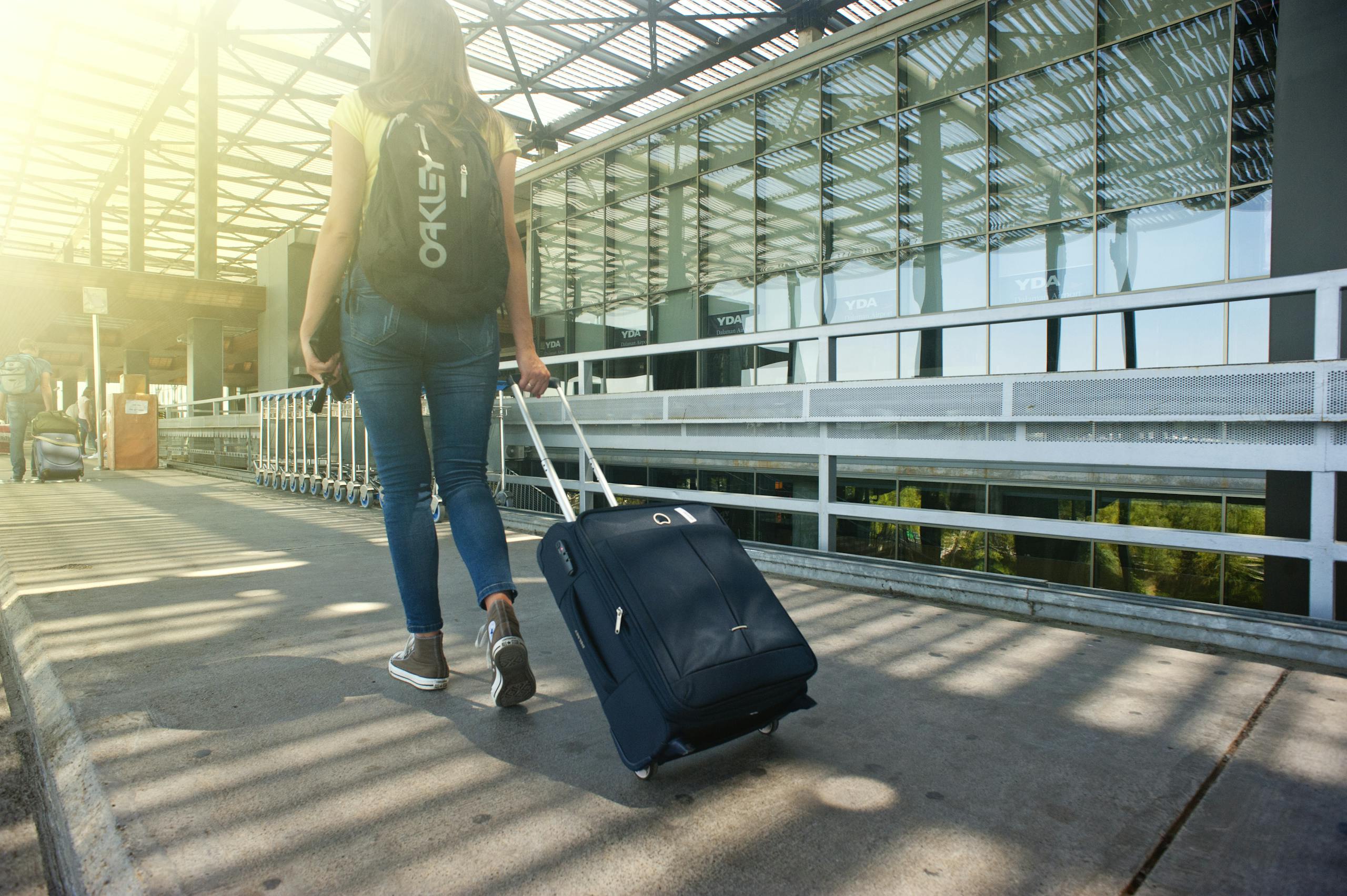
Most group travel itineraries are optimistic to the point of being delusional. They assume everyone will be at the lobby at the stated time, the shuttle will arrive on schedule, and the check-in line will move quickly. None of these things reliably happen when you are moving a group of ten or more people.
Adding fifteen to twenty minutes of buffer at every major transition, airport to hotel, hotel to venue, venue to dinner, does two things. It prevents the kind of cascading lateness that turns a manageable delay into a crisis. And it creates small pockets of unstructured time that you, as the introverted leader, can use to breathe, collect your thoughts, or simply stand quietly near a window for a moment before the next event begins.
Those small recoveries matter more than most people realize. Psychological research on cognitive load suggests that even brief periods of reduced stimulation can meaningfully restore attentional resources. You do not need a two-hour break. You need five minutes of genuine quiet, and buffer time makes that possible.
How Do You Manage Communication Without Becoming the Default Answer Machine?
One of the most draining patterns in group travel is becoming the person everyone instinctively turns to with every question, no matter how small. It is flattering, in a way. It means your team trusts you. But it is also completely unsustainable if you are an introvert trying to preserve enough mental bandwidth to actually lead effectively.
The fix is not to become less accessible. It is to redirect questions to the right channel before the trip even starts.
A group messaging thread, set up in advance and explicitly positioned as the place where logistical questions go, does a remarkable amount of work. When someone has a question about the shuttle time, they post it to the group. Someone else who knows the answer often responds before I even see the message. The social dynamics of a group chat naturally distribute the answering load.
Setting communication expectations before departure also helps. I would send a brief note to the team a few days before any major trip explaining that I would be monitoring the group thread but keeping my phone on silent during sessions and dinners. That one message did more to protect my energy than any amount of willpower during the trip itself. People stopped texting me individually because they knew I had a preferred channel.
There is a deeper principle at work here that connects to how introverts process interpersonal dynamics. We tend to prefer depth over breadth in our interactions, a preference that Psychology Today has written about extensively in the context of why introverts gravitate toward meaningful one-on-one conversations rather than surface-level group chatter. In a travel context, this means I was far more effective in a focused fifteen-minute debrief with a key team member than in an hour of scattered hallway conversations. Structuring communication to reflect that reality made the whole trip function better.
What Technology Actually Reduces Manual Effort for Group Travel?
The phrase “minimal manual effort” in group travel is not about laziness. It is about recognizing that every manual coordination task you take on is a withdrawal from a limited energy account. Technology that automates or centralizes logistics is not a luxury for introverted leaders. It is a genuine tool for sustainable performance.
Here are the categories of tools that made the biggest difference in my experience.
Shared Itinerary Apps
Apps that aggregate travel bookings and push real-time updates to everyone’s phone eliminate an entire category of questions. When a flight gate changes, the app notifies everyone simultaneously. I am not the relay station for that information. This alone reduces the number of incoming messages I receive during a trip by a significant margin.
what matters is getting the whole team onto the same platform before departure, which requires a brief setup investment but pays back immediately once travel begins.
Pre-Booked Everything
Every meal that requires a reservation, every ground transportation leg, every activity that needs a ticket, should be booked before the group leaves home. Making decisions in the moment with a group of fifteen people is one of the most socially exhausting experiences I know. Everyone has a different preference, the conversation goes in circles, and the person leading the group ends up absorbing all the friction.
Pre-booking removes the decision entirely. There is no discussion about where to eat because the reservation is already made. There is no debate about which shuttle company to use because the van is already confirmed. The group simply follows the plan, and the plan was made in the quiet of your home office two weeks ago when you had full cognitive resources available.
Automated Expense Tracking
Post-trip expense reconciliation used to be one of my least favorite parts of any agency trip. Collecting receipts from twelve people, sorting them by category, matching them to client codes, and submitting everything within the finance team’s deadline was a grinding administrative task that felt endless.
Expense management software that lets team members photograph and categorize receipts in real time during the trip means that reconciliation after the fact becomes a review task rather than a construction project. That distinction matters a great deal when you are already depleted from several days of sustained group interaction.

How Do You Protect Your Energy During the Trip Itself?
Planning handles a lot. But even the best-planned group trip will have moments of unexpected complexity, and you will need reserves to handle them well. Protecting your energy during travel is not self-indulgence. It is professional maintenance.
A few practices that I developed over years of leading agency travel:
Claim Your Recovery Windows Deliberately
Most multi-day group travel schedules have at least a few natural gaps: the hour between the morning session and lunch, the forty-five minutes before the group dinner begins, the early morning before anyone else is awake. These windows do not automatically become recovery time. You have to claim them deliberately.
My practice was to identify these windows on the itinerary before the trip and mentally mark them as mine. Not for catching up on email. Not for informal team bonding. For genuine quiet. A walk around the block, twenty minutes reading in my room, or simply sitting in the hotel lobby with headphones in and nothing playing. The specifics matter less than the intention: this time is for recharging, not for being available.
This kind of deliberate self-management during major life and work transitions is something we explore throughout the Life Transitions and Major Changes hub, particularly for introverts who are stepping into roles that feel at odds with how they are naturally wired.
Choose Your Seat Strategically
On flights, on shuttle buses, at conference tables, and at group dinners, where you sit shapes your experience significantly. An aisle seat on a plane gives you the option to stand up without negotiating with two seatmates. A seat at the end of a long dinner table means you are having one or two conversations rather than six. A position near the door in a conference room means you can step out briefly if you need a moment without making it a production.
None of this requires announcing your preferences or explaining your introversion to anyone. It is quiet, practical self-management that costs nothing and preserves a meaningful amount of energy over the course of a multi-day trip.
Know the Difference Between Necessary and Optional Social Events
Not every group dinner, every post-conference drink, or every informal gathering carries the same professional weight. Some events are genuinely important for client relationships or team cohesion. Others are pleasant but optional. Learning to distinguish between them, and giving yourself permission to skip the optional ones occasionally, is a skill that took me longer to develop than it should have.
Showing up fully present and engaged for the events that matter is worth far more than attending everything at half capacity. Your team and your clients will notice the quality of your presence more than the quantity of your appearances.
How Do Highly Sensitive Introverts Handle the Sensory Load of Group Travel?
Some introverts carry an additional layer of complexity into group travel: high sensitivity. If you process sensory and emotional information more intensely than average, the stimulation of airports, crowded conference halls, and noisy restaurants does not just feel tiring. It can feel genuinely overwhelming in ways that are hard to explain to teammates who do not share that wiring.
Our article on HSP life transitions and managing major changes addresses this directly, particularly the challenge of handling high-stimulation environments during periods of professional upheaval. Worth reading if you recognize yourself in that description.
For highly sensitive introverts specifically, a few additional strategies tend to help during group travel. Noise-canceling headphones are not a social signal. They are sensory management equipment, and using them during transit is entirely reasonable. Choosing quieter restaurants for at least some group meals, when you have any influence over the selection, reduces the cognitive load of trying to hold a conversation over ambient noise. And being honest with yourself about your limits, even if you do not broadcast them to the group, allows you to make smarter choices about where to spend your energy.
There is also something worth acknowledging about the emotional dimension of group travel for highly sensitive people. You pick up on interpersonal tension within the team. You notice when a client seems disengaged. You absorb the anxiety of a colleague who is nervous about a presentation. That emotional processing happens whether you want it to or not, and it has a cost. Building in decompression time is not optional for people wired this way. It is the only thing that keeps the whole system running.
What Can Introverts Learn From Characters Who Resist Change?
There is an interesting cultural moment happening around introversion and the discomfort of being pushed into unfamiliar social territory. The character of Tsubame in the manga and anime world has become a touchstone for this conversation. Our piece on Introvert Tsubame’s desire to change explores what that character’s struggle reveals about the genuine tension between wanting to grow and wanting to protect the quiet life you have built.
That tension shows up in group travel too. Part of you wants to be the kind of leader who moves effortlessly through crowded airports and energizes the team at every dinner. Another part of you knows that is not actually how you are built, and that pretending otherwise costs more than it returns. The resolution is not to choose one side of that tension. It is to find the approach that lets you show up as your actual self, which happens to be someone who plans carefully, delegates thoughtfully, and leads from quiet competence rather than loud charisma.
Does Your Educational Background Shape How You Handle Group Leadership Challenges?
This might seem like an odd angle for an article about travel logistics, but bear with me. How you learned to work in groups, and whether your educational environment encouraged or punished introversion, shapes the mental models you carry into leadership situations for years afterward.
Some introverts come out of college with a deep sense that their natural working style is a liability. They attended schools that rewarded constant participation, group projects, and visible social engagement. Others attended environments that were better matched to how they actually think and work. Our articles on the best colleges for introverts and college majors for introverts explore how those early environments shape long-term confidence and career trajectory.
The reason this matters for group travel is that the self-doubt many introverted leaders carry into high-visibility situations often has roots in those early experiences. If you spent four years in an educational environment that treated your preference for depth and preparation as a social deficit, you might still be overcorrecting for it in your forties. Recognizing that the skills that made you feel out of place in certain college settings are the same skills that make you exceptionally good at planning and leading complex group experiences is a genuinely useful reframe.
Preparation is not a coping mechanism for being bad at leadership. It is a form of leadership in itself. The most effective leaders I have ever worked with, across every personality type, were the ones who did the thinking before the moment of decision rather than during it. Introverts tend to be very good at that, and group travel is one of the clearest arenas where that strength pays off.
How Do You Handle Conflict and Tension Within the Group During Travel?
Group travel has a way of surfacing interpersonal friction that stays dormant in the normal office environment. People are tired, out of their routines, sharing close quarters, and operating under the low-grade stress of unfamiliar logistics. Tension that was manageable at home becomes harder to contain on the road.
As an introverted leader, you probably noticed the tension before anyone else did. That early awareness is an asset, but only if you do something constructive with it. Ignoring it and hoping it resolves on its own is rarely effective. Wading into it publicly and in the moment is often worse.
My approach was to address interpersonal friction privately and specifically. A quiet word with the individuals involved, away from the group, during one of those buffer windows built into the schedule. Not a mediation session. Just a direct, calm acknowledgment of what I had observed and a clear statement of what I needed from both parties for the remainder of the trip.
A framework from Psychology Today on introvert-extrovert conflict resolution offers a useful structure for these conversations, particularly when the tension involves team members with very different communication styles. The short version: name the behavior, not the person; state the impact on the group’s work; make a specific request; and give the other person space to respond without pressure.
The thing about handling conflict this way is that it plays directly to introvert strengths. You are not trying to manage a public confrontation. You are having a focused, purposeful private conversation, which is exactly the kind of interaction many introverts handle best.

What Does a Post-Trip Recovery Plan Actually Look Like?
The trip ends. You get home. And then, if you are wired the way I am, you spend the next day or two feeling like you have been wrung out and hung up to dry. The social and sensory accumulation of several days of group travel does not evaporate the moment you walk through your front door. It needs time and intentional conditions to process and release.
Planning for recovery before the trip, not after, changes the whole experience. Knowing that you have a genuinely quiet day scheduled for the day after you return, no meetings, no social obligations, ideally no commitments of any kind, makes the trip itself more bearable. You are not white-knuckling through the final dinner wondering how you are going to survive the next day. You know the recovery is coming, and that knowledge creates a kind of psychological buffer.
Practically, post-trip recovery for me looked like: a morning with no alarm, a long walk alone, a meal I cooked at home rather than eating out, and a few hours of reading or working on something solitary and absorbing. No social media. No catching up on messages beyond what was genuinely urgent. The world can wait twenty-four hours for most things, and the version of you that shows up on day two after that recovery is dramatically more effective than the one who powers through without it.
The broader principle here connects to something that comes up throughout the conversation about introvert wellbeing: sustainable performance requires genuine recovery, not just less stimulation. You cannot simply reduce the social load and expect to feel restored. You need the specific conditions that allow your nervous system to actually reset. For most introverts, that means genuine solitude, not just quiet.
There is solid grounding in the neuroscience literature for why this matters. Work published in PubMed Central on arousal regulation and personality suggests that introverts maintain higher baseline cortical arousal, which helps explain why sustained social stimulation produces fatigue more quickly and why genuine solitude, rather than merely reduced activity, is what actually restores equilibrium. A separate PubMed Central study on personality and stress recovery adds further context on how individual differences in arousal regulation shape recovery needs after high-demand social situations.
Understanding the mechanism does not make the fatigue easier to push through. But it does make it easier to justify the recovery time to yourself and, when necessary, to others.
If you are finding that major professional transitions, including the kind that involve high-visibility travel leadership roles, are consistently depleting you in ways that feel unsustainable, the full range of resources in our Life Transitions and Major Changes hub may offer useful perspective on what healthy adaptation looks like versus what signals you are genuinely out of alignment with your role.
About the Author
Keith Lacy is an introvert who’s learned to embrace his true self later in life. After 20 years in advertising and marketing leadership, including running agencies and managing Fortune 500 accounts, Keith now channels his experience into helping fellow introverts understand their strengths and build fulfilling careers. As an INTJ, he brings analytical depth and authentic perspective to every article, drawing from both professional expertise and personal growth.
Frequently Asked Questions
Can introverts be effective leaders for large group travel?
Yes, and often exceptionally so. The strengths that define introverted leadership, thorough preparation, careful attention to detail, anticipating problems before they occur, and steady presence under pressure, map directly onto what makes group travel work well. The challenge is not capability. It is managing your own energy sustainably so you can show up fully for the moments that require it. Building systems that reduce real-time coordination load is the most effective strategy for doing that.
How do I stop becoming the default answer machine for every logistical question during a group trip?
Set up a shared group communication channel before the trip and explicitly position it as the place where logistical questions go. Create a comprehensive shared itinerary document that answers most questions before they are asked. Assign specific team members ownership over different logistical areas so they become the point of contact for those domains. And communicate your preferred contact method before departure so people know how to reach you without defaulting to individual messages.
What is the single most effective thing I can do to reduce the energy cost of leading group travel?
Build buffer time into every major transition on the itinerary. This does two things simultaneously: it prevents the cascading delays that force you into reactive public problem-solving, and it creates small recovery windows throughout the day that allow your nervous system to partially reset before the next high-demand event. Even ten to fifteen minutes of genuine quiet between activities makes a measurable difference in how you feel and perform by the end of the day.
How should I handle interpersonal conflict within the group during travel?
Address it privately and specifically, not publicly or in the moment. Use the buffer windows built into your schedule to pull the relevant individuals aside for a focused, direct conversation. Name the specific behavior you observed, describe its impact on the group’s work, make a clear and specific request, and give the person space to respond without pressure. This approach plays directly to introvert strengths: it is a purposeful, one-on-one conversation rather than a public mediation, and it tends to produce better outcomes with less social friction for everyone involved.
How do I plan for recovery after a multi-day group trip?
Plan the recovery before the trip, not after. Block the day following your return on your calendar before you leave, and protect it from meetings, social commitments, and non-urgent demands. Knowing the recovery is coming makes the trip itself more bearable and reduces the end-of-trip exhaustion that comes from dreading what awaits you at home. During the recovery day, prioritize genuine solitude over merely reduced activity: a solo walk, a home-cooked meal, something absorbing and solitary that allows your nervous system to fully reset rather than just idle.