
A minimal playroom is a deliberately simplified play space that prioritizes open-ended toys, clear surfaces, and calm visual order over volume and variety. For introverted parents and sensitive children alike, fewer objects often means richer, more focused play and a noticeably quieter home environment.
Most of us inherited the assumption that more toys equal more fun. After spending two decades running advertising agencies where I helped brands convince parents of exactly that, I can tell you the opposite tends to be true. The rooms that actually worked for creative play were never the ones overflowing with plastic.
Our Introvert Home Environment hub covers the full picture of designing spaces that support quiet, reflective people, and the minimal playroom sits at an interesting intersection of that larger conversation. It touches children’s wellbeing, parental sanity, and the way a household’s emotional temperature either rises or falls depending on what fills its rooms.
Why Does Clutter Hit Introverted Parents So Hard?
My office at the agency had one desk, one lamp, and a whiteboard. Colleagues teased me about it. But I knew something they didn’t quite grasp yet: visual clutter costs me cognitive energy in a way it doesn’t cost everyone equally. Walking into a room scattered with objects pulls my attention in a dozen directions simultaneously, and that fragmentation is exhausting before anything else has even happened.
What’s your personality type?
Take our free 40-question assessment and get a detailed personality profile with dimension breakdowns, context analysis, and personalised insights.
Discover Your Type8-12 minutes · 40 questions · Free
Introverted parents often report that the playroom is the room they dread most. Not because they dislike their children’s play, but because the sensory load of a toy-dense space stacks on top of an already full internal world. Processing a room visually while also tracking a child’s needs while also managing your own thoughts is a lot. Most introverts are doing all three of those things at once, constantly.
There’s a related conversation happening in the highly sensitive person community around simplifying environments to reduce sensory overwhelm. The principles explored in HSP minimalism map almost directly onto the minimal playroom concept, because the underlying logic is identical: your nervous system responds to what surrounds it, and you can design that response intentionally.
One of the quieter truths I’ve absorbed from years of managing creative teams is that the most productive environments were never the loudest or most stimulating. The designers on my team who produced their best work were almost always the ones who had cleared their desks. The chaos-embracers had energy and enthusiasm, but they also had more false starts. There’s a lesson in that for play spaces.
What Does a Minimal Playroom Actually Look Like?
Strip away the marketing language and a minimal playroom is simply a room where children can play without visual noise competing for their attention. That means fewer toys on display at any one time, surfaces that aren’t perpetually covered, and a color palette that doesn’t shout.
In practical terms, most families who pursue this approach settle on a rotation system. A portion of toys stays accessible and visible. The rest goes into storage, cycling in and out every few weeks. Children often engage more deeply with toys they haven’t seen in a while, and the reintroduction feels like something new without the cost of actually buying anything new.

Open-ended materials tend to anchor these spaces well. Wooden blocks, art supplies, a few figures, a set of building materials with no prescribed outcome. These are objects that invite imagination rather than directing it. From a cognitive standpoint, attention research published through PubMed Central suggests that environments with lower visual complexity support sustained focus, which matters for both the child playing and the parent trying to think clearly in the same space.
Color is worth addressing directly. Many commercial playrooms lean on bright primaries because toy manufacturers have conditioned us to associate that palette with childhood. A minimal playroom doesn’t have to be beige and joyless. Soft, muted tones, natural wood, a few considered pops of color in the toys themselves, all of that can feel warm and inviting without triggering the same low-grade alertness that a room full of neon plastic tends to produce.
How Does a Simplified Play Space Affect Children?
The honest answer is that children generally adapt to and thrive in the environments their parents create with intention. A minimal playroom isn’t deprivation. It’s curation. And children, particularly younger ones, often play with more focus and creativity when the field of options is narrowed rather than expanded.
I watched this dynamic play out in a different context at the agency. When I gave junior creatives a brief with too many directions, the work that came back was scattered and unfocused. When I gave them a tightly defined constraint, the work was almost always sharper and more surprising. Limitation, it turns out, is often the thing that forces genuine creativity rather than suppressing it.
Children with more introverted or sensitive temperaments in particular tend to respond well to quieter play environments. They aren’t necessarily asking for less stimulation because they’re timid. They’re asking for it because their processing style runs deeper, and depth requires space. Research indexed through PubMed Central on sensory processing differences in children supports the idea that environmental design meaningfully affects children’s ability to regulate attention and emotion.
That said, a minimal playroom also works well for children who trend extroverted. The rotation system keeps novelty alive. The open-ended materials support social play when friends visit. And the cleared floor space actually gives energetic children room to move, which a cluttered room never really allows.
Where Do You Start When the Room Is Already Overwhelming?
Most families don’t start from scratch. They start from a room that has accumulated years of gifts, impulse purchases, and well-meaning donations from relatives. Getting from that starting point to something calmer requires a process, not a single afternoon.
The approach I’ve found most useful, both in decluttering physical spaces and in restructuring agency workflows, is to work in categories rather than trying to assess everything at once. Pull out all the art supplies. Evaluate them together. Put back what gets used. Move on to building toys. Move on to figures. Moving category by category keeps the decision fatigue manageable and gives you a clearer picture of what’s actually being used versus what’s just occupying floor space.
Involve children in the process where you can, but don’t let the fear of their reaction stop you from making decisions. Children often surprise parents with their willingness to let things go when they’re part of the conversation rather than having changes imposed on them. Frame it as making room for the things they love most, which is genuinely what you’re doing.
For the items leaving the room, donation is the obvious path. Toy libraries, community centers, and local buy-nothing groups all absorb children’s toys readily. Selling is an option if the toys have value, but the friction of selling often causes people to stall indefinitely. Getting things out of the house quickly tends to create more momentum than waiting for the perfect resale opportunity.
Storage solutions matter once you’ve reduced the volume. Low, open shelving at a child’s eye level is generally more functional than bins they have to dig through. When children can see what’s available, they make choices rather than dumping everything to find what they want. That single shift alone reduces the daily reset time considerably.
What Role Does the Minimal Playroom Play in the Broader Home?
A playroom doesn’t exist in isolation. It connects to the emotional climate of the whole house. When I finally redesigned the main living area of my home with the same intentionality I’d applied to my office, the effect rippled outward in ways I hadn’t fully anticipated. Evenings felt different. My capacity for conversation after a full day of work actually improved because I wasn’t spending the first twenty minutes of being home processing visual noise.
The playroom matters for the same reason. A calmer play space means children transition out of it more smoothly. There’s less resistance at cleanup time when there’s genuinely less to clean up. And the room itself becomes somewhere a parent can sit without feeling immediately depleted, which changes the quality of the time spent there.
Introverted parents who have carved out a genuine retreat space elsewhere in the home, whether that’s a reading chair, a desk, or even just a well-chosen spot on a homebody couch that feels distinctly theirs, often find that the playroom matters less as a personal refuge and more as a functional space that simply doesn’t drain them. That’s the goal. Not that the playroom becomes your sanctuary, but that it stops being the room that costs you the most.
There’s also something worth naming about what the minimal playroom models for children. A home where spaces are considered and intentional communicates something about how we relate to objects and consumption. Children absorb that. The families I’ve spoken with who’ve committed to this approach consistently note that their children become more selective in what they ask for, partly because they’ve experienced the satisfaction of loving what they already have.
What Should You Actually Keep in a Minimal Playroom?
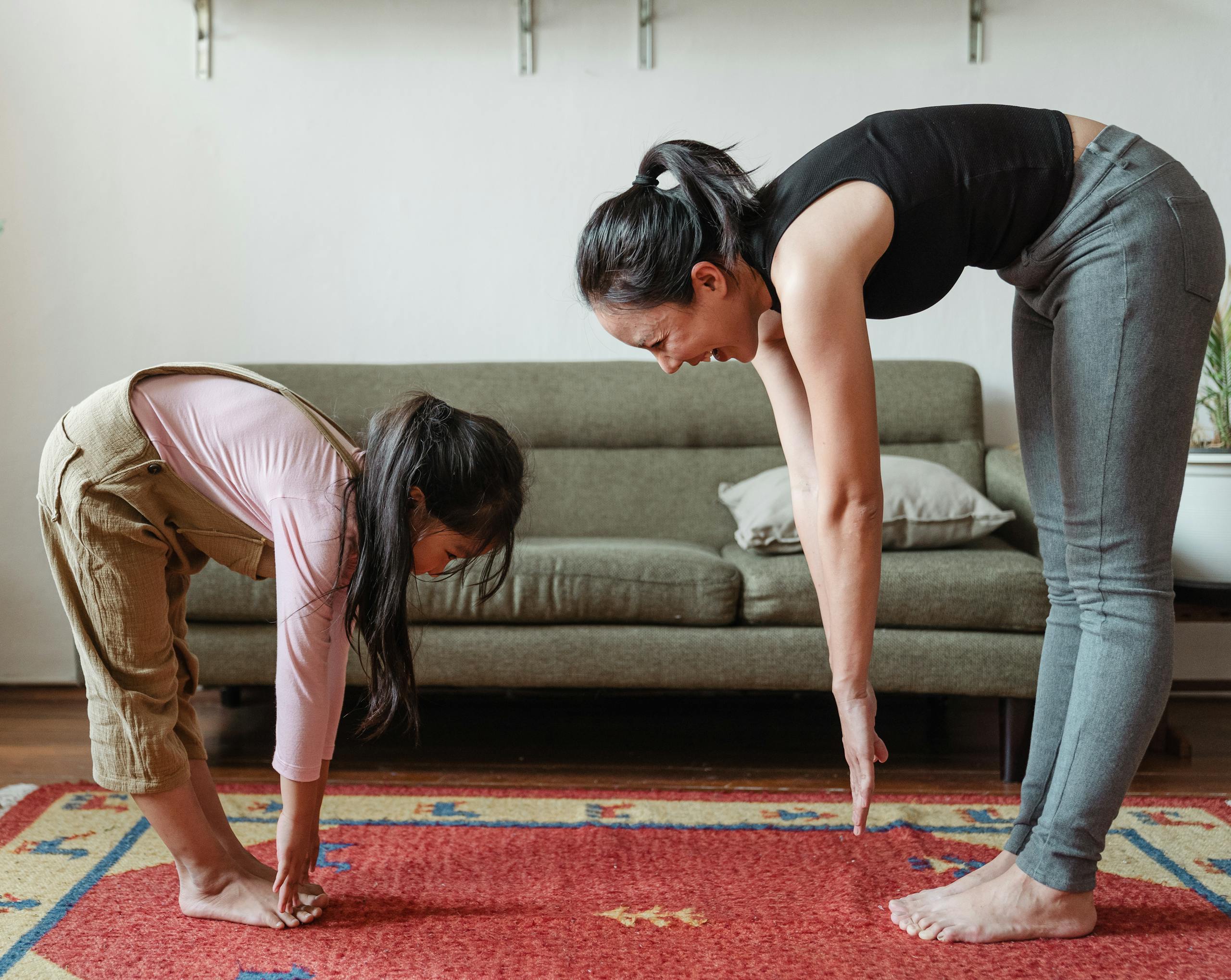
The categories that consistently earn their place in a simplified play space share a common quality: they support play across a wide age range and in multiple configurations. Open-ended materials don’t expire as children grow. A set of wooden blocks serves a two-year-old differently than it serves a seven-year-old, but it serves both.
Building materials of some kind almost always belong in a minimal playroom. Blocks, magnetic tiles, LEGO in age-appropriate sizes. These invite spatial thinking, narrative play, and the satisfaction of creating something from nothing. They’re also genuinely quiet, which matters to the introverted parent sitting nearby trying to think.
Art supplies earn their space when they’re organized in a way that makes independent use possible. A child who can access paper, crayons, and scissors without asking for help will use them more often and more creatively than one who has to negotiate access every time. A simple caddy or shallow tray at a low table is often enough.
A small collection of figures, animals, or dolls supports narrative play that children often sustain for extended periods. These don’t need to be elaborate. Simple wooden animals or a handful of figures without prescribed storylines attached to them tend to get more use than character-specific toys tied to a particular franchise.
Books belong in the playroom as much as in a dedicated reading nook. A small rotating selection at a child’s eye level makes independent reading more likely and reinforces that books are part of play, not separate from it. For parents who love reading themselves, this also creates natural overlap time. Some of the best quiet hours I’ve spent with my own family have been in rooms where everyone was simply reading, each absorbed in something different but genuinely together.
When you’re thinking about what to add rather than remove, leaning toward items that have a long useful life is worth the investment. The gifts for homebodies category has plenty of overlap with what works in a minimal playroom, particularly around items that support quiet, focused, independent engagement. And if you’re building a wish list for birthdays or holidays, a homebody gift guide framing helps relatives understand what you’re actually looking for, which is quality and purposefulness over volume.
How Does a Minimal Playroom Support an Introverted Parent’s Need for Recovery?
Parenting is relentlessly social in a way that most parenting books don’t acknowledge directly. Even if you’re home alone with your children, you’re engaged in near-constant relationship management, emotional attunement, and responsiveness. For introverted parents, that draws from the same internal reserves that social interaction with adults draws from. By the end of a full day, those reserves can be genuinely depleted.
A minimal playroom doesn’t solve that depletion. But it reduces the environmental tax on those reserves throughout the day. Every time you walk through a room and don’t have to process chaos, you retain a small amount of energy you would otherwise spend. Over the course of a day, that compounds.
Introverts often find that their recovery happens best in quiet, visually calm spaces. Psychology Today’s writing on introvert needs touches on the importance of environments that allow genuine internal processing rather than continuous external response. A home where every room demands something from you is a home where recovery is structurally impossible. The minimal playroom is one piece of building a home that gives back.
There’s also something to be said for the way a calmer playroom changes the texture of play itself. When I sat in a cluttered room with children, I found myself constantly managing, redirecting, problem-solving the environment as much as engaging with the play. In a simpler space, I could actually be present. My attention wasn’t fractured across a dozen visual inputs competing with the child in front of me. That presence, it turns out, is what children actually want from the adults in their lives. Not more toys. More of you, actually there.
What About Digital Play in a Minimal Playroom?
Screens are the honest conversation most minimal playroom discussions sidestep. Digital play isn’t inherently incompatible with a minimal approach, but it does require the same intentionality as physical toys. A tablet with unlimited app access in a simplified room doesn’t create the calm environment you’re working toward. A tablet with a small, curated selection of genuinely open-ended or educational content, used at specific times rather than as a default, can coexist with the minimal philosophy.
The same principle applies to online social engagement as children get older. Introverted children in particular often find that digital spaces give them room to connect on their own terms. Online spaces designed for introverts reflect a broader truth about how many quiet people prefer to engage socially, at their own pace, with the ability to think before responding. That’s worth honoring as children develop their own communication styles.
The minimal playroom approach to digital content is essentially the same as its approach to physical toys: less, chosen deliberately, rotated thoughtfully. A small library of quality content beats an overwhelming catalog that gets scrolled through without genuine engagement. The goal is depth of experience, not breadth of access.

Is a Minimal Playroom a Permanent Commitment or an Evolving Practice?
Treating it as a permanent fixed state tends to create rigidity that doesn’t serve families well. Children’s needs change. A toddler’s ideal play space looks different from an eight-year-old’s, which looks different again from a teenager’s. The minimal philosophy is better understood as a practice of regular evaluation rather than a single correct configuration you achieve and maintain forever.
At the agency, I ran quarterly reviews of how we’d structured our creative workflow. Not because the structure was wrong, but because the work had changed and the structure needed to keep pace. The same logic applies here. Twice a year, pull everything out, assess what’s actually being used, rotate what’s been forgotten, release what no longer fits. That rhythm keeps the space honest.
It also keeps the practice from becoming precious. The point isn’t aesthetic minimalism for its own sake. The point is a room that genuinely serves the people using it. Sometimes that means adding something back. An interest in a new subject might call for new materials. A developmental shift might open up a category of play that wasn’t relevant before. Staying responsive to actual use rather than defending an ideal keeps the space alive rather than merely sparse.
For parents who find themselves drawn to reading more deeply about the philosophy behind intentional home environments, a good homebody book on simplifying domestic life can offer both practical frameworks and the kind of reflective perspective that introverts tend to appreciate. The minimal playroom doesn’t exist in a vacuum. It’s one expression of a broader way of thinking about how spaces shape the people living in them.
What I keep coming back to, after everything, is that the minimal playroom is fundamentally an act of attention. You’re paying attention to what your children actually need rather than what marketing has told you they need. You’re paying attention to what your own nervous system requires to stay present and engaged. You’re paying attention to the way a room feels, not just how it looks in a photograph. That kind of attention is something introverts are genuinely good at. It might be the most natural home design project we could possibly take on.
If you’re exploring more ways to shape your home around how you actually think and feel, the full range of ideas lives in our Introvert Home Environment hub, where we cover everything from sensory design to creating genuine recovery spaces within a busy household.
About the Author
Keith Lacy is an introvert who’s learned to embrace his true self later in life. After 20 years in advertising and marketing leadership, including running agencies and managing Fortune 500 accounts, Keith now channels his experience into helping fellow introverts understand their strengths and build fulfilling careers. As an INTJ, he brings analytical depth and authentic perspective to every article, drawing from both professional expertise and personal growth.
Frequently Asked Questions
How many toys should a minimal playroom have?
There’s no single correct number, but most families find that displaying between 10 and 20 items at any given time creates the balance between variety and calm. The rotation system handles the rest, cycling stored toys in every few weeks so children experience genuine novelty without the household absorbing constant new purchases. The right number is whatever allows your child to make a real choice rather than feeling overwhelmed, and allows you to reset the room in under ten minutes.
Will children be bored in a minimal playroom?
Brief boredom is actually a productive state for children. It’s the space where imagination activates and self-directed play begins. Children accustomed to constant stimulation often need a short adjustment period when the environment simplifies, but most move through that into deeper, more sustained play within a few days or weeks. Open-ended materials support this transition well because they don’t have a prescribed way to be used, which keeps them interesting across many sessions.
How do you handle gifts from family members who want to give lots of toys?
Honest, early communication tends to work better than managing the aftermath of unwanted gifts. Sharing a short wish list before birthdays and holidays gives relatives a clear path to contributing meaningfully. Framing it around quality over quantity, and explaining that your child engages more deeply with fewer, better-chosen items, usually lands well with people who genuinely want to give something useful. A homebody gift guide framing can help relatives understand what kinds of items actually get used and appreciated in your household.
Does a minimal playroom work for children with ADHD or high energy levels?
Many families with high-energy or ADHD children find that a simplified environment actually supports focus better than a stimulating one. When visual complexity is reduced, there are fewer competing inputs pulling attention away from the activity at hand. The cleared floor space also gives energetic children room to move, which a cluttered room doesn’t allow. That said, children with ADHD benefit from structure and predictability in how the space is organized, so consistent placement of items and clear storage systems matter alongside the reduction in volume.
What’s the difference between a minimal playroom and a Montessori playroom?
The two approaches share significant overlap but aren’t identical. A Montessori playroom follows a specific educational philosophy that emphasizes child-led learning, purposeful materials designed for particular developmental skills, and a prepared environment with precise organization. A minimal playroom is a broader concept focused primarily on reducing visual and sensory overload without necessarily following Montessori methodology. You can apply minimal principles without any Montessori materials, and you can set up a Montessori space that isn’t particularly minimal. Many families draw from both without committing fully to either.