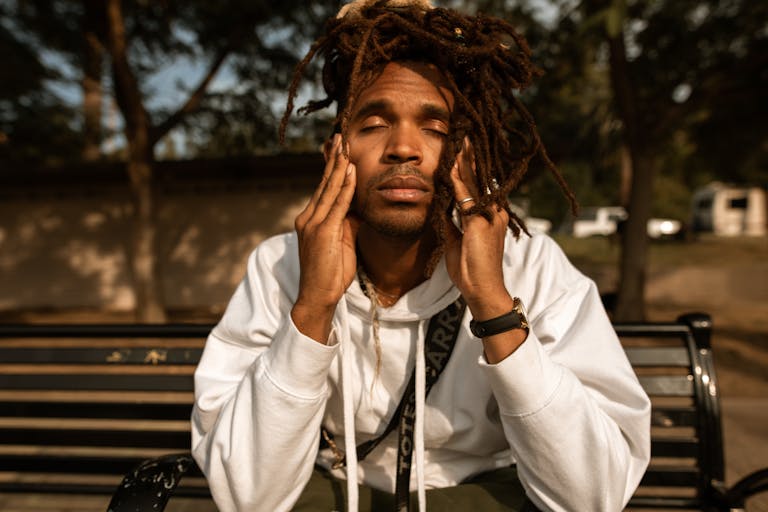

Emotional intelligence in a sentence: it is the ability to recognize, understand, and manage your own emotions while also reading and responding to the emotions of others. That single definition carries more weight than most people realize, because it covers both the internal work of self-awareness and the outward skill of human connection. Strip away the corporate jargon and the self-help buzzwords, and what you have left is something both simple and genuinely difficult to practice.
Most people have heard the term. Fewer have stopped to ask what it actually means in the middle of a hard conversation, a tense meeting, or a moment when someone they care about is struggling and they have no idea what to say. That gap between knowing the concept and living it is where emotional intelligence either develops or quietly stalls.
My own relationship with emotional intelligence has been complicated, shaped by two decades of running advertising agencies, managing creative teams, and presenting strategy to Fortune 500 clients who needed more than sharp thinking from the person across the table. They needed someone who could read the room, hold steady under pressure, and respond rather than react. As an INTJ, none of that came automatically. Some of it still doesn’t.

If you want to go deeper on how emotional intelligence connects to social behavior, self-awareness, and the particular strengths introverts bring to human interaction, our Introvert Social Skills and Human Behavior hub covers all of it in one place. But for now, let’s start with what emotional intelligence actually means, and why a single clear sentence might be the best place to begin.
What Does Emotional Intelligence Mean in Simple Terms?
The phrase “emotional intelligence” was popularized in the 1990s and has since become one of the most overused terms in leadership development, HR training, and pop psychology. That overuse has made it slippery. People nod along when they hear it without being entirely sure what they’re agreeing to.
What’s your personality type?
Take our free 40-question assessment and get a detailed personality profile with dimension breakdowns, context analysis, and personalised insights.
Discover Your Type8-12 minutes · 40 questions · Free
In plain terms, emotional intelligence is about two things working together. First, your relationship with your own inner world: noticing what you’re feeling, understanding why you’re feeling it, and choosing how to respond rather than simply reacting on impulse. Second, your relationship with other people’s inner worlds: picking up on emotional cues, interpreting them accurately, and adjusting how you engage based on what you sense.
Psychologist Daniel Goleman, whose work helped bring emotional intelligence into mainstream conversation, described it through five components: self-awareness, self-regulation, motivation, empathy, and social skills. Each one builds on the others. You can’t regulate emotions you haven’t learned to recognize. You can’t respond with genuine empathy if you’re still reacting from an unexamined emotional trigger. The framework is sequential, even when life doesn’t give you time to work through it step by step.
What strikes me about that model is how much of it is internal work before it becomes external behavior. That’s something introverts often have a natural head start on, though it doesn’t always feel that way when you’re standing in a room full of people who seem effortlessly at ease.
Why Do Introverts Often Struggle to Recognize Their Own Emotional Strengths?
There’s a persistent cultural assumption that emotional intelligence belongs to extroverts. The people who are warm and expressive and quick to connect, the ones who seem to know what to say in every situation, those are the people we tend to label emotionally intelligent. Quieter people get labeled as cold, or distant, or hard to read.
That assumption is wrong, and it costs introverts a great deal of confidence they’ve rightfully earned.
Many introverts process emotional information with considerable depth. They observe before they speak. They sit with discomfort long enough to understand it. They notice the subtle shift in someone’s tone, the slight tension around someone’s eyes, the pause that says more than the words that follow it. That kind of attentiveness is a form of emotional intelligence, even when it doesn’t announce itself loudly.
The challenge is that introverts often don’t translate what they’ve noticed into visible responses quickly enough for others to register it. A conversation moves on. A moment passes. And the introvert, who absorbed everything, walks away having processed it all in silence, leaving the other person unsure whether they were truly seen.
I spent years managing creative teams in my agencies, and I watched this play out constantly. Some of my most perceptive team members were also the quietest ones. They saw interpersonal dynamics that others missed entirely. But because they didn’t perform that perception outwardly, they were passed over for roles that required “people skills,” as if observation wasn’t one of the most valuable people skills there is.
If you’re working on making your emotional awareness more visible in social situations, improving social skills as an introvert is less about changing who you are and more about finding ways to express what you already notice.

How Does Self-Awareness Connect to Emotional Intelligence?
Self-awareness is the foundation everything else rests on. Without it, the other components of emotional intelligence are difficult to access. You can’t manage what you haven’t named. You can’t empathize from a place of genuine steadiness if your own emotional landscape is unexamined territory.
Self-awareness, in the context of emotional intelligence, means knowing your emotional patterns. What situations tend to trigger defensiveness in you? What kinds of feedback make you shut down? Where do you tend to project your own feelings onto other people’s behavior? These aren’t comfortable questions, but they’re the ones that actually move the needle.
One practice that has genuinely helped me is what I’d describe as a quiet audit at the end of difficult days. Not journaling in any elaborate sense, just a few minutes of honest reflection about what I felt during a particular interaction and whether my response matched the situation or matched an older emotional habit. The relationship between mindfulness and emotional regulation has been explored in psychological literature, and the core insight is straightforward: creating even a small gap between stimulus and response is where self-awareness lives.
Practices like meditation and self-awareness work precisely because they train that gap. They don’t make you emotionless. They make you more conscious of what you’re feeling before it drives your behavior without your input.
For introverts, this kind of internal work often feels natural. The risk is that it stays entirely internal. Self-awareness that never informs how you show up in relationships is only half the equation.
What Role Does Overthinking Play in Emotional Intelligence?
Overthinking and emotional intelligence have a complicated relationship. On one hand, the tendency to analyze situations deeply, to replay conversations, to consider multiple interpretations of someone’s behavior, can be a form of emotional processing. On the other hand, it can become a loop that prevents you from being present in the moment where emotional intelligence actually gets used.
There’s a difference between reflection and rumination. Reflection moves toward insight. Rumination circles the same territory without landing anywhere. Many introverts, myself included, have spent more time than we’d like to admit in that second category, particularly after emotionally charged situations.
After a difficult client presentation early in my agency career, I spent the better part of a week mentally replaying every moment, every facial expression, every pause in the room. Some of that analysis was useful. Most of it was anxiety dressed up as preparation. The distinction matters because one builds emotional intelligence and the other quietly erodes it.
If you recognize that pattern in yourself, overthinking therapy approaches offer practical ways to interrupt the cycle without suppressing the reflective capacity that makes you perceptive in the first place. success doesn’t mean think less. It’s to think more purposefully.
Emotional intelligence asks you to be present with what’s actually happening, not with a hypothetical version of what might have happened or what someone might have meant. That presence is harder to maintain when your mind is running several interpretations simultaneously, but it’s a skill that can be developed with practice.

How Does Emotional Intelligence Show Up in Real Conversations?
Abstract definitions are useful up to a point. What most people actually want to know is what emotional intelligence looks like when it’s working, in a real exchange with a real person who is saying one thing and feeling something else entirely.
It shows up as the pause before you respond when someone says something that stings. It shows up as the question you ask instead of the assumption you make. It shows up as the recognition that someone’s sharp tone in a meeting might be about their morning, not about you.
One of the clearest examples I can point to from my own experience happened during a contract renegotiation with a long-term client. The conversation turned tense in a way that felt personal, and my first instinct as an INTJ was to retreat into logic and data, to make the emotional temperature irrelevant by overwhelming it with facts. That instinct was wrong. What the client needed in that moment wasn’t a stronger argument. They needed to feel heard before they could hear anything I had to say.
Emotional intelligence in that conversation meant setting aside my prepared points long enough to acknowledge what they were actually expressing. Not agreeing with it. Not abandoning my position. Just naming it. “It sounds like you’re feeling like this relationship hasn’t been as reciprocal as you expected.” That one sentence changed the entire tenor of the conversation.
That’s the practical face of emotional intelligence. It’s not therapy. It’s not performance. It’s attentiveness applied in real time. Being a better conversationalist as an introvert is often less about what you say and more about how precisely you’re actually listening.
According to Harvard Health, introverts often excel in one-on-one interactions precisely because they tend to give conversations their full attention. That attentiveness, when paired with the willingness to respond to what’s emotionally present rather than just what’s verbally stated, is emotional intelligence in practice.
Can Emotional Intelligence Be Developed, or Is It Fixed?
This is one of the questions I get asked most often when I speak or write about personality and emotional development. People want to know whether they’re working with a fixed capacity or something they can genuinely build over time.
The answer, supported by both psychology and lived experience, is that emotional intelligence is developable. It’s not a static trait you either have or don’t. It’s more like a set of skills that respond to attention and practice, the way any skill does.
What makes it feel fixed for many people is that emotional habits are deeply ingrained. The way you learned to handle conflict, or to manage disappointment, or to respond when someone you trust lets you down, those patterns were formed early and reinforced over years. Changing them takes more than reading an article. It takes sustained, honest attention to your own patterns over time.
The neurological basis for emotional regulation suggests that the brain retains significant capacity for change well into adulthood. That’s not a license for magical thinking about transformation, but it is a genuine reason for optimism about growth.
My own emotional intelligence grew most noticeably not during periods of success, but during periods of friction. A partnership that ended badly. A team member I misread for months before finally understanding what was actually going on. A client relationship I let deteriorate because I prioritized being right over being responsive. Each of those situations taught me something about my own patterns that I couldn’t have learned in a workshop.
The introvert advantage in leadership often comes precisely from this willingness to sit with difficult experiences long enough to extract something useful from them. That’s not a comfortable process, but it’s a productive one.
If you want to understand your own emotional and personality baseline more clearly before working on development, our free MBTI personality test can give you a useful starting point. Knowing your type doesn’t define your ceiling, but it does help you understand which aspects of emotional intelligence might come more naturally and which ones will require more deliberate attention.

What Happens to Emotional Intelligence Under Stress or After Betrayal?
Emotional intelligence is easiest to practice when life is relatively stable. The real test of it arrives when you’re under significant stress, when you’ve been hurt, when someone you trusted has broken that trust in a serious way.
In those moments, the gap between knowing what emotional intelligence looks like and actually accessing it can feel enormous. The emotional brain moves faster than the reflective one. Pain, anger, and grief don’t wait politely while you work through your self-regulation toolkit.
What emotional intelligence offers in those situations isn’t immunity to the pain. It’s a slightly better chance of not making irreversible decisions while you’re in the middle of it. That’s a modest promise, but it’s an honest one.
Betrayal in particular has a specific effect on the mind. It doesn’t just hurt in the moment. It tends to generate persistent, circular thinking that can last long after the initial event. The mind keeps returning to the same questions, the same moments, the same evidence, trying to make sense of something that may never fully resolve into sense. If you’ve experienced that specific kind of emotional disruption, the work of stopping the overthinking cycle after being cheated on is closely tied to rebuilding the self-awareness that betrayal temporarily destabilizes.
Emotional intelligence after a significant rupture isn’t about recovering quickly. It’s about not letting the rupture permanently reshape how you interpret every future interaction. That’s harder than it sounds, and it requires a kind of patient self-compassion that doesn’t always come naturally to analytical personalities.
The psychological literature on stress and emotional regulation consistently points to the importance of social support and self-compassion practices during high-stress periods. Neither of those is a sign of weakness. Both are practical tools for maintaining the emotional stability that intelligent responses require.
How Does Emotional Intelligence Relate to MBTI Personality Types?
MBTI doesn’t measure emotional intelligence directly. What it does is describe patterns in how people take in information and make decisions, and those patterns have real implications for which aspects of emotional intelligence feel natural and which require more intentional development.
Feeling types in the MBTI framework, those who lead with personal values and interpersonal harmony in their decision-making, often find empathy and relational attunement more accessible. Thinking types, like me as an INTJ, tend to lead with logic and objective analysis, which means the empathic dimension of emotional intelligence requires more conscious effort.
That doesn’t mean thinking types are emotionally unintelligent. It means they may need to be more deliberate about translating their internal emotional observations into visible, relational responses. The observation is often there. The expression of it requires a different kind of attention.
I’ve managed people across the full MBTI spectrum over the years. The INFJs on my teams were often the most emotionally attuned people in any room, absorbing the emotional undercurrents of a situation before anyone else had consciously registered them. The challenge I watched them face wasn’t perception, it was boundary-setting. Their emotional sensitivity sometimes made it difficult to separate what they were feeling from what the room was feeling, and that blurring created its own kind of stress.
High emotional intelligence isn’t the same as high emotional sensitivity. One is a skill. The other is a trait. The skill involves knowing what to do with the information your sensitivity provides, including when to act on it and when to set it aside.
The American Psychological Association’s definition of introversion emphasizes the inward orientation of energy and attention, which creates a natural alignment with the self-awareness dimension of emotional intelligence. Whether that translates into full emotional intelligence depends on what the individual does with that inward attention.
For those who want to explore what emotional intelligence looks like when it’s communicated at scale, the work of an emotional intelligence speaker offers a useful window into how these concepts translate into leadership, culture, and organizational behavior.

What Practical Steps Actually Build Emotional Intelligence Over Time?
Practical development of emotional intelligence doesn’t require a dramatic overhaul of your personality. It requires consistent, small practices applied over time. The cumulative effect of those practices is what produces genuine change.
Name your emotions with precision. Saying “I feel bad” is less useful than “I feel embarrassed” or “I feel dismissed.” The more specific your emotional vocabulary, the more accurately you can identify what’s driving your responses. The distinction between introversion and social anxiety is a good example of why precision matters: conflating the two leads to misdiagnosis and unhelpful interventions. The same principle applies to your emotional life more broadly.
Practice pausing before responding in charged situations. Not a theatrical pause, just a breath, a moment of internal checking. Ask yourself: what am I actually feeling right now, and is that feeling relevant to what this situation actually requires?
Seek feedback from people who will be honest with you about how you come across emotionally. This is uncomfortable, but it closes the gap between how you think you’re showing up and how others are actually experiencing you. That gap, in my experience, is often where the most important growth lives.
Read widely about human behavior, not just self-help frameworks, but literature, biography, and psychology. The more reference points you have for the range of human emotional experience, the more nuanced your interpretation of other people’s behavior becomes. The depth of connection introverts often bring to friendships is partly a product of this kind of sustained attention to the inner lives of others.
Finally, be patient with yourself in the process. Emotional intelligence isn’t a destination you arrive at. It’s a practice you return to, imperfectly and repeatedly, across the full span of your life. Every difficult conversation, every moment of genuine empathy, every time you catch yourself mid-reaction and choose a different response, that’s the work. It counts even when it doesn’t feel like enough.
There’s a lot more to explore at the intersection of emotional intelligence, personality, and human connection. Our complete Introvert Social Skills and Human Behavior hub brings together everything we’ve written on these themes in one place, and it’s worth spending some time there if this article resonated with you.
About the Author
Keith Lacy is an introvert who’s learned to embrace his true self later in life. After 20 years in advertising and marketing leadership, including running agencies and managing Fortune 500 accounts, Keith now channels his experience into helping fellow introverts understand their strengths and build fulfilling careers. As an INTJ, he brings analytical depth and authentic perspective to every article, drawing from both professional expertise and personal growth.
Frequently Asked Questions
What is emotional intelligence in one sentence?
Emotional intelligence is the ability to recognize, understand, and manage your own emotions while also accurately reading and responding to the emotions of the people around you. That single definition encompasses both the inward work of self-awareness and the outward skill of empathic, thoughtful engagement with others.
Are introverts naturally more emotionally intelligent?
Introverts are not automatically more emotionally intelligent, but their natural orientation toward internal reflection gives them a strong foundation for the self-awareness dimension of emotional intelligence. Whether that translates into full emotional intelligence depends on how they develop the empathy and social responsiveness components, which may require more deliberate practice for quieter personalities.
Can emotional intelligence be learned as an adult?
Yes, emotional intelligence can be developed at any stage of life. It is not a fixed trait. The brain retains the capacity to form new patterns of emotional response well into adulthood, and consistent practices like mindful reflection, honest self-assessment, and seeking feedback from trusted people all contribute to measurable growth over time.
How does overthinking affect emotional intelligence?
Overthinking can work against emotional intelligence when it pulls you out of the present moment and into circular analysis that doesn’t produce useful insight. The reflective capacity that underlies overthinking is valuable, but it becomes counterproductive when it replaces present engagement with hypothetical replaying of past or future scenarios. The goal is purposeful reflection rather than unproductive rumination.
What is the relationship between MBTI type and emotional intelligence?
MBTI type describes patterns in how people process information and make decisions, which influences which aspects of emotional intelligence feel more natural. Feeling types may find empathy and relational attunement more accessible, while thinking types may need to be more deliberate about expressing their emotional perceptions outwardly. Every type has both natural strengths and areas that require more conscious development when it comes to emotional intelligence.