
The Chevron Stonewall LA location sits at one of West Hollywood’s most storied intersections, a place where LGBTQ+ history and modern city life press up against each other in ways that feel simultaneously ordinary and charged with meaning. For introverts in this community, that particular corner represents something worth examining: how do quieter, more internally focused people build authentic romantic connections in spaces that seem designed for the loudest voices in the room? The short answer is that they do it differently, and often more deliberately, than anyone around them realizes.
What draws introverts to specific places, communities, and people rarely follows the expected script. Whether you’re an introvert finding your footing in the West Hollywood dating scene or simply trying to understand why connection feels so complicated in loud, high-energy environments, the patterns that shape how quieter people fall in love are worth paying close attention to.
Our Introvert Dating and Attraction hub covers the full landscape of how introverts approach romance, but the specific experience of dating in a place like West Hollywood, where visibility and social performance are practically cultural requirements, adds a layer that deserves its own honest examination.

What Does the Chevron Stonewall LA Intersection Actually Represent for Introverts?
Santa Monica Boulevard and San Vicente in West Hollywood is not a quiet corner. The Stonewall Inn name carries enormous historical weight in LGBTQ+ culture, and the area around it pulses with energy that can feel both welcoming and exhausting depending on how you’re wired. As an INTJ who spent two decades running advertising agencies, I know what it’s like to stand in the middle of a charged, high-energy environment and feel simultaneously present and completely elsewhere in my own head.
What’s your personality type?
Take our free 40-question assessment and get a detailed personality profile with dimension breakdowns, context analysis, and personalised insights.
Discover Your Type8-12 minutes · 40 questions · Free
I once managed a pitch for a major entertainment brand whose headquarters sat three blocks from WeHo. My creative team wanted to celebrate the win at a packed bar on Santa Monica Boulevard. I went, smiled, stayed an hour, and then quietly excused myself to sit in my car and decompress for twenty minutes before driving home. Nobody noticed. That’s how introverts often move through these spaces: present enough to participate, internally elsewhere enough to survive.
For LGBTQ+ introverts specifically, places like the Stonewall area carry an additional layer of meaning. Community spaces that were hard-won through decades of activism become places where you feel obligated to show up, to be visible, to perform belonging. That tension between the desire for authentic connection and the exhaustion of high-stimulation social environments is something quieter people in this community feel acutely. It doesn’t make them less committed to their community. It makes the way they connect distinctly their own.
Why Do Introverts Struggle With High-Energy Social Scenes Even When They Want Connection?
There’s a persistent myth that introverts don’t want connection. Healthline’s breakdown of introvert myths addresses this directly: introversion is about energy management, not a preference for isolation. Introverts want deep, meaningful connection just as much as anyone else. What they find draining is the format that most social scenes require to get there.
Loud bars, crowded events, rapid-fire small talk with strangers, these environments require introverts to spend enormous cognitive and emotional resources just to stay regulated. By the time a genuine conversation might be possible, many introverts are already running on empty. They leave early, get labeled as antisocial, and then wonder why dating feels so hard.
What I observed running agency teams is that my most introverted employees were often the ones with the richest inner lives and the most to offer in a real conversation. One of my senior strategists, a deeply introverted woman who barely spoke in group brainstorms, would send me the most incisive, emotionally intelligent written feedback after every meeting. She wasn’t disengaged. She was processing at a depth that the group setting couldn’t accommodate. Dating works the same way for people like her.
Understanding the patterns behind how introverts fall in love starts with recognizing that the timeline and format look genuinely different. When introverts fall in love, the relationship patterns often involve a slower build, more internal processing, and a tendency to become deeply attached once trust is established, sometimes to a degree that surprises even the introvert themselves.

How Do Introverts Actually Build Romantic Connections in Loud Urban Environments?
The honest answer is: strategically, selectively, and often in ways that look unconventional from the outside.
Introverts in high-energy urban dating scenes tend to develop what I’d call a filtering instinct. They’re not scanning the room for whoever is loudest or most visually prominent. They’re watching for the person who’s also slightly off to the side. The one who’s listening more than talking. The one who makes eye contact that lasts a beat longer than social convention requires, then looks away thoughtfully rather than with discomfort. These are the micro-signals that quieter people exchange with each other in crowded rooms, and they’re remarkably effective.
Online dating has shifted this dynamic significantly. Truity’s examination of introverts and online dating captures the tension well: digital platforms give introverts the text-based, low-pressure entry point they prefer, but they eventually require a real-world meeting that can feel jarring after weeks of comfortable written exchange. The solution most introverts land on involves choosing first-date environments that are quieter, more intimate, and conducive to actual conversation rather than performance.
West Hollywood has plenty of those spaces if you know where to look. The challenge is that the neighborhood’s cultural identity is so strongly associated with its louder, more celebratory venues that quieter options can feel like a concession rather than a preference. They’re not. Choosing a low-key coffee spot over a packed bar isn’t avoiding the scene. It’s knowing what conditions allow you to actually show up as yourself.
What introverts bring to romantic connection is often expressed not through grand gestures but through sustained, specific attention. The way they remember details from three conversations ago. The way they show up quietly during hard times. How introverts show affection through their love language tends to center on quality time, acts of service, and words chosen carefully rather than frequently. Partners who understand this receive something genuinely rare.
What Happens When Two Introverts Find Each Other in a Place Like WeHo?
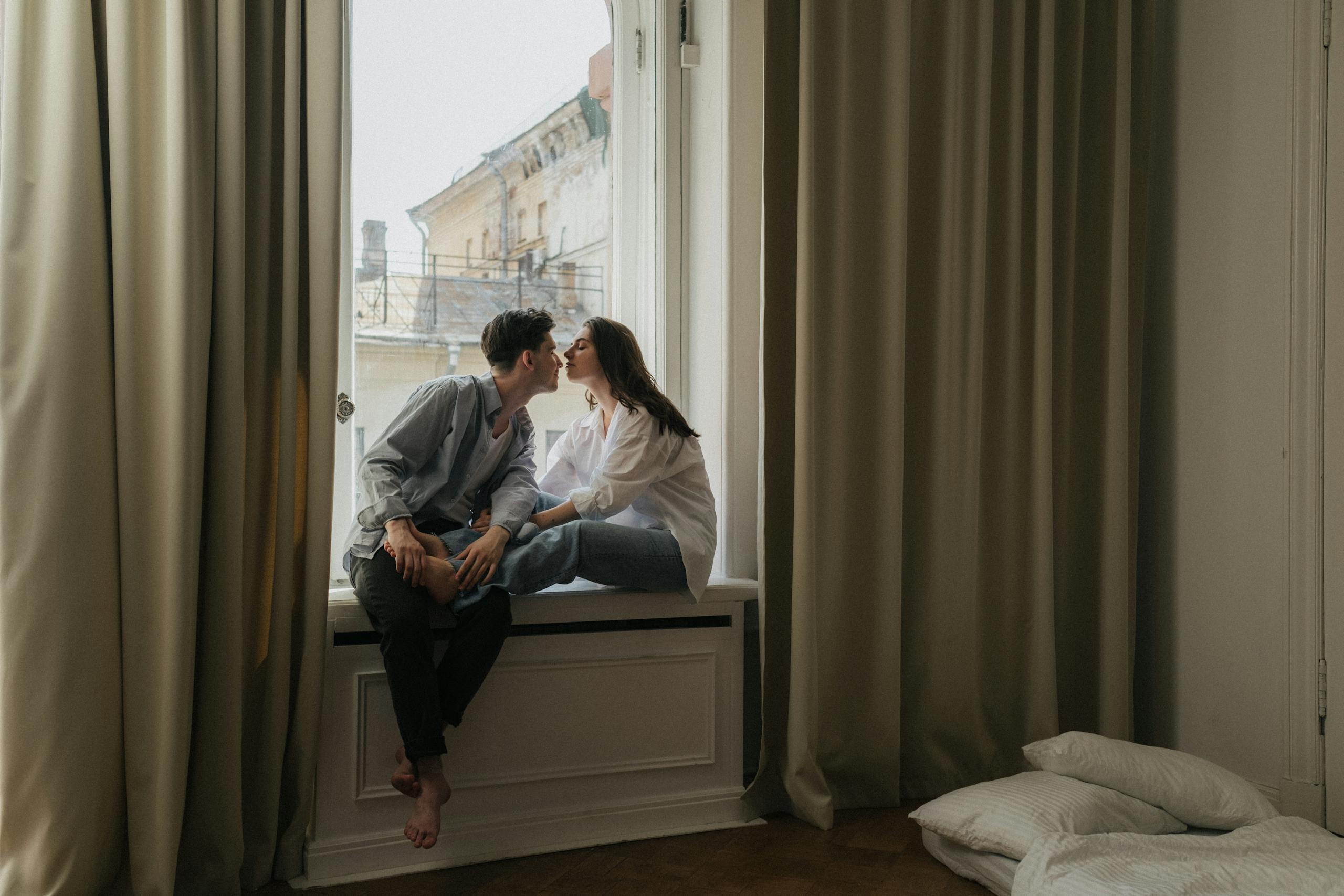
Something interesting happens when two introverts connect in an environment that wasn’t really designed for them. There’s an immediate, almost wordless recognition. A shared exhale. The relief of not having to perform energy you don’t have.
I’ve watched this happen with people on my teams over the years. Two introverted employees who barely spoke in group settings would somehow end up in the same quiet corner of a company event, and within twenty minutes they’d be having the most substantive conversation in the room. The energy between two people who process the world similarly has a particular quality. It’s slower, more careful, and often more honest than conversations that happen in louder formats.
That said, introvert-introvert relationships come with their own specific challenges. 16Personalities’ analysis of introvert-introvert relationship dynamics points to the risk of mutual withdrawal, where both partners retreat into their inner worlds during stress rather than reaching toward each other. Neither person is wrong in that moment. Both are doing what feels natural. Yet the relationship can quietly starve for connection while both people believe they’re being considerate of the other’s need for space.
The deeper patterns in these relationships are worth understanding before they become problems. When two introverts fall in love, the relationship patterns that emerge often require both partners to actively build bridges toward each other rather than assuming the other person is fine with silence. Shared solitude is beautiful. Parallel withdrawal is a different thing entirely, and the two can look identical from the outside.

How Does High Sensitivity Intersect With LGBTQ+ Introvert Dating in Urban Spaces?
A significant portion of introverts also identify as highly sensitive people, a trait that involves deeper processing of sensory and emotional information. In a place like West Hollywood, where the social environment is often loud, visually intense, and emotionally charged, high sensitivity adds another dimension to how dating feels.
Highly sensitive people don’t just feel tired after a crowded bar. They feel everything in that bar: the ambient noise, the emotional undercurrents between people, the subtle tension when someone nearby is having a bad night. That level of perceptual depth is a genuine asset in intimate relationships. It makes highly sensitive people extraordinarily attuned partners. Yet it can make the process of getting to intimacy feel genuinely overwhelming in high-stimulation contexts.
I managed an INFJ account director on one of my agency teams who had this quality in abundance. She could read a room, a client, or a colleague with a precision that was almost uncanny. Watching her in a packed client meeting, absorbing every emotional signal in the room while simultaneously managing the conversation, was impressive and clearly costly for her. She’d need an hour of quiet after those sessions to come back to herself. Dating in a city like LA, she once told me, felt like that client meeting every single night.
For highly sensitive introverts in the dating world, understanding their own emotional architecture matters enormously. The complete HSP relationships dating guide offers a framework for how sensitive people can approach romance in ways that honor their depth without burning out trying to match environments that weren’t built for them.
Conflict is a particular area where high sensitivity and introversion intersect in ways that can complicate relationships. Highly sensitive introverts often feel the aftershocks of disagreements long after the other person has moved on. Handling conflict peacefully as an HSP involves learning to communicate the need for processing time without it reading as withdrawal or stonewalling, a distinction that matters enormously in romantic partnerships.
What Does Authentic Introvert Dating Look Like Beyond the Social Performance?
Authentic dating, for introverts, almost always involves a deliberate rejection of the formats that don’t work for them, even when those formats are culturally dominant.
Psychology Today’s guide on dating an introvert makes a point that I’ve seen play out repeatedly: introverts need potential partners who understand that their quietness is not disinterest. The person who interprets an introvert’s thoughtful pause as coldness, or their preference for a quiet dinner as a lack of enthusiasm, is reading the signals through an extroverted lens. They’re getting the translation wrong.
What introverts are actually doing in those moments is paying close attention. Processing what’s being said. Formulating a response that means something rather than filling silence with noise. Psychology Today’s piece on signs of a romantic introvert captures this well, noting that introverts often express romantic interest through sustained, focused attention rather than outward enthusiasm. That attention, when you’re on the receiving end of it, is unmistakable.
The emotional experience of falling in love as an introvert has its own particular texture. It tends to happen slowly, then suddenly. There’s often a long period of quiet observation and internal deliberation before anything external shifts. Then something tips, and the depth of feeling that was building privately becomes undeniable. Understanding and working through introvert love feelings requires honoring that internal timeline rather than rushing it to match someone else’s pace.
How Can Introverts Protect Their Energy While Staying Open to Connection?
This is the practical question that underlies almost everything else. Introverts who want romantic connection in high-energy urban environments have to solve a genuine logistical problem: how do you stay open to meeting people without depleting yourself in the process?
The answer I’ve arrived at, both from my own experience and from watching people I’ve worked with figure this out, involves a few specific practices.
First, choose your social investments deliberately. Not every event requires your presence. The introvert who shows up to three things a month fully present and genuinely engaged will make more meaningful connections than the one who attends fifteen things running on fumes. Quality of presence matters more than frequency of appearance.
Second, give yourself permission to leave. One of the most liberating realizations of my adult life was that I could leave a party, a networking event, or a social gathering whenever I needed to without owing anyone an elaborate explanation. “I have an early morning” is not a lie if you’re an introvert who genuinely needs sleep to function. Your energy is a resource. Spending it wisely is not antisocial behavior.
Third, invest in the formats that actually work for you. Introverts consistently report that one-on-one conversations, quieter settings, and activities that provide shared focus (a walk, a museum, a film) create better conditions for genuine connection than open-ended social mingling. Research published in PMC on personality and social behavior supports the idea that personality traits meaningfully shape how people experience and benefit from social interactions, which is worth keeping in mind when you’re designing your own approach to meeting people.
Fourth, be honest about what you need, sooner rather than later. Introverts who hide their need for solitude and quiet in early dating relationships often end up in partnerships where their partner has no idea who they actually are. That’s a foundation problem. The person worth being with is the one who finds your introversion interesting rather than inconvenient.
There’s also something worth saying about the relationship between identity and place. West Hollywood is a neighborhood with a specific cultural identity, and for LGBTQ+ introverts, that identity can feel both like home and like a performance requirement. PMC research on identity and community belonging points to the complexity of handling spaces where your identity is celebrated collectively but your personality type may still feel like an outlier. You can belong to a community and still need to find your own quieter version of how to live within it.
What Does Identity Growth Look Like for Introverts Who’ve Spent Years Performing Extroversion?
Spending years performing a version of yourself that doesn’t fit leaves marks. I know this personally. I ran advertising agencies for over two decades, and for most of that time I believed that effective leadership required a particular kind of extroverted presence: loud in meetings, comfortable at industry events, always “on.” I performed that version of myself with reasonable competence, and it cost me more than I understood at the time.
The shift happened gradually. I started noticing that my best work, the thinking that actually moved clients and built lasting relationships, happened in the quiet hours. Early mornings at my desk before the office filled up. Long drives where I could process a problem without interruption. Written communication, where I could say exactly what I meant without the noise of a room full of people reacting in real time.
Dating while performing extroversion creates the same problem. You attract people who are drawn to the performance, not the person underneath it. Then you either have to keep performing indefinitely, which is exhausting, or reveal your actual self at some point and risk losing someone who was never really connecting with you anyway.
The introverts I’ve watched build genuinely fulfilling relationships, on my teams and in my personal life, are the ones who stopped performing early in the process. They were willing to seem quieter, less immediately exciting, potentially less impressive in the conventional social sense, because they understood that the right person would find the real version of them more interesting than the performance.
That takes a specific kind of self-trust. It’s built over time, through the accumulation of experiences where showing up authentically produced better outcomes than performing did. It doesn’t happen all at once. Yet each time you choose authenticity over performance in a social or romantic context, the internal architecture of that self-trust gets a little stronger.

There’s a lot more to explore about how introverts approach attraction, connection, and the specific textures of romantic life. The full collection of resources in our Introvert Dating and Attraction hub covers everything from first dates to long-term partnerships, all through the lens of what actually works for quieter, more internally focused people.
About the Author
Keith Lacy is an introvert who’s learned to embrace his true self later in life. After 20 years in advertising and marketing leadership, including running agencies and managing Fortune 500 accounts, Keith now channels his experience into helping fellow introverts understand their strengths and build fulfilling careers. As an INTJ, he brings analytical depth and authentic perspective to every article, drawing from both professional expertise and personal growth.
Frequently Asked Questions
Can introverts thrive in the West Hollywood dating scene?
Yes, though they often need to approach it differently than the dominant social culture suggests. West Hollywood’s dating scene skews toward high-energy, high-visibility social formats that can be draining for introverts. That said, the neighborhood also has quieter venues, strong community bonds, and a cultural emphasis on authenticity that can work in an introvert’s favor. Choosing lower-stimulation environments for first connections, investing in one-on-one formats over group settings, and being honest early about your need for quieter social experiences all significantly improve the experience.
Why do introverts often feel exhausted by dating even when they want connection?
Introversion is fundamentally about how people gain and spend energy in social contexts. Dating requires sustained social performance, often in high-stimulation environments, which depletes introverts faster than it depletes extroverts. The exhaustion isn’t a sign that an introvert doesn’t want connection. It’s a sign that the format of the connection is costing them more than it should. Adjusting the format, quieter venues, text-based early communication, shorter initial meetings, can reduce the energy cost significantly without reducing the quality of connection.
What are the biggest challenges in an introvert-introvert relationship?
The most common challenge is mutual withdrawal during stress. Both partners may retreat into their inner worlds when things get difficult, which can feel considerate in the moment but can leave the relationship emotionally underfed over time. Introvert-introvert couples also sometimes struggle with initiating difficult conversations, since both people may prefer to process internally rather than bring conflict into the open. Building explicit agreements about how to reach toward each other during hard periods, rather than assuming the other person is fine with silence, helps address this pattern before it becomes entrenched.
How do highly sensitive introverts handle the emotional intensity of new relationships?
Highly sensitive introverts tend to feel the emotional texture of new relationships with particular intensity. The early stages of dating, which involve uncertainty, vulnerability, and a lot of new sensory and emotional information, can feel genuinely overwhelming for HSP introverts even when the relationship is going well. Pacing matters enormously. Giving themselves permission to take things slowly, to have recovery time between dates, and to communicate their sensitivity to a potential partner early reduces the risk of burning out on a promising connection before it has time to develop.
How can introverts be authentic in dating without coming across as disinterested?
The most effective approach involves naming the dynamic directly, early, and without apology. Something as simple as “I tend to be quieter in new situations but I’m genuinely engaged” reframes the introvert’s natural presentation before a potential partner has time to misinterpret it. Introverts can also lean into the specific ways they do show interest: remembering details, asking thoughtful follow-up questions, choosing meaningful activities rather than defaulting to loud social venues. These are genuine expressions of attraction that, once a partner understands the language, are more meaningful than performative enthusiasm.