
Vulnerability drawing is the practice of using visual art, specifically drawing or sketching, as a way to express emotions and inner experiences that feel too raw, too complex, or too deeply personal to put into words. For many introverts and highly sensitive people, it offers a rare kind of relief: a channel for feelings that language tends to flatten or betray.
At its core, vulnerability drawing asks you to let something honest appear on the page without demanding that it be polished, explained, or defended. That’s a surprisingly difficult thing for people who spend a lot of energy managing how much of themselves they reveal to the world.
Exploring this practice opened something up for me that I hadn’t expected. I want to share what I found, because I think it matters for introverts who carry a lot quietly and rarely find tools that actually fit the way they process emotion.
If you’re building a broader understanding of your emotional wellbeing as an introvert, our Introvert Mental Health hub covers the full range of topics that connect inner life, sensitivity, and psychological health. Vulnerability drawing fits naturally into that larger conversation.
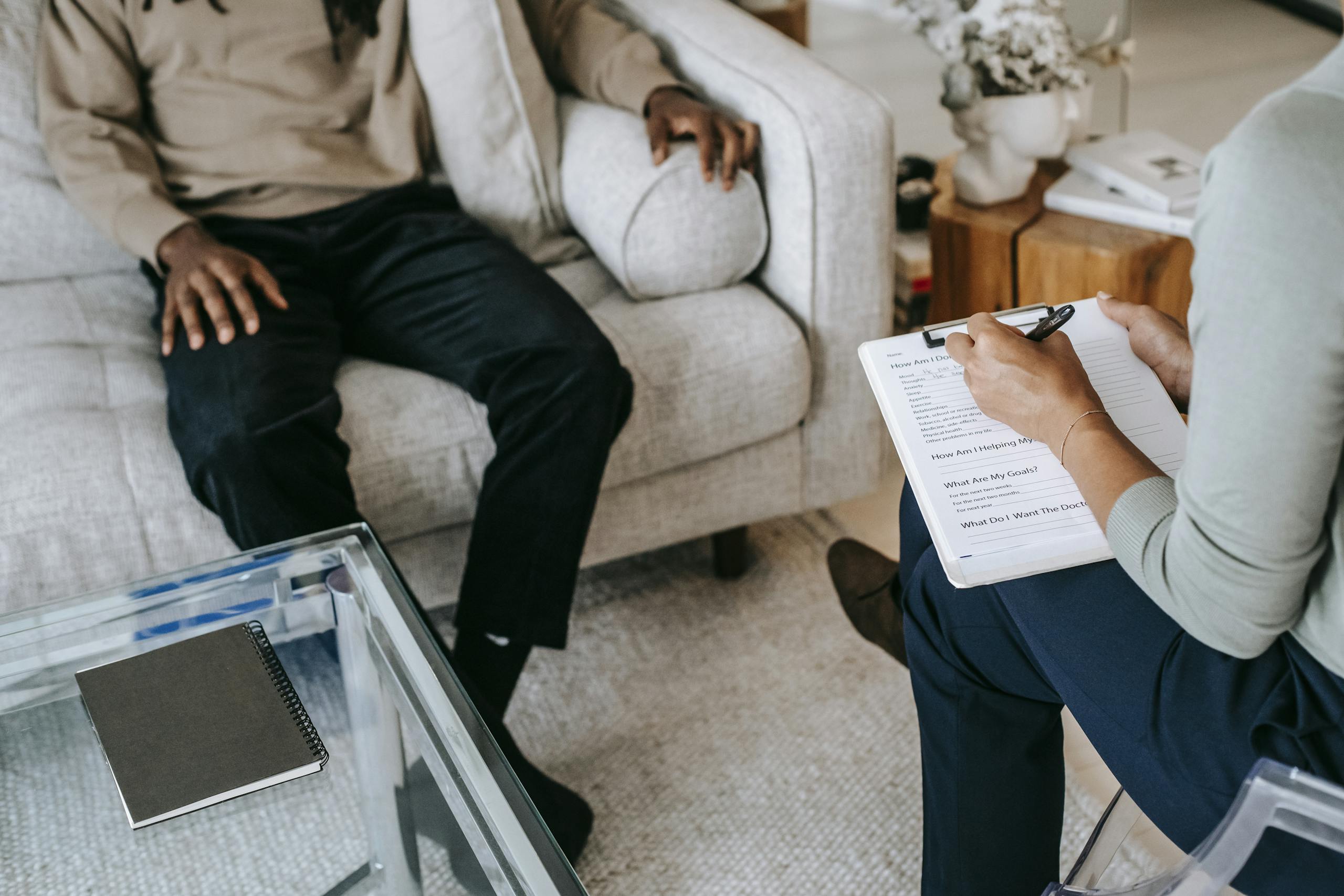
Why Do Introverts Struggle to Express Vulnerability Out Loud?
Most introverts I know, myself included, don’t lack emotional depth. What we lack is a comfortable container for expressing it in real time, in front of other people, under social pressure. The words either don’t come fast enough or they come out wrong, stripped of the nuance that made the feeling worth sharing in the first place.
What’s your personality type?
Take our free 40-question assessment and get a detailed personality profile with dimension breakdowns, context analysis, and personalised insights.
Discover Your Type8-12 minutes · 40 questions · Free
I spent more than twenty years running advertising agencies. Client presentations, new business pitches, staff reviews, board meetings. I got reasonably good at performing emotional availability in those rooms. But performing it and actually expressing it are two completely different things. I was skilled at deploying warmth strategically. Actual vulnerability? That was something I kept filed away, processed privately, and rarely let anyone see in real time.
Part of that was professional conditioning. Part of it was the introvert’s instinct to protect the inner world from casual exposure. When you process deeply and feel things fully, you become protective of that inner space, because you’ve learned that not everyone handles what you share with the care it deserves.
That protective instinct is understandable. Still, it creates a problem. Unexpressed emotional experience doesn’t disappear. It accumulates. For highly sensitive people especially, the pressure of unprocessed feeling can build into something that starts to affect sleep, focus, relationships, and general wellbeing. The article on HSP anxiety, its patterns and coping strategies, touches on exactly this dynamic, the way sensitivity without adequate expression can tip into chronic anxiety.
Vulnerability drawing sidesteps the verbal bottleneck entirely. You don’t have to find the right words. You don’t have to explain yourself to anyone. You just pick up a pencil and let something come through.
What Actually Happens When You Draw From a Vulnerable Place?
There’s a meaningful difference between drawing as a technical skill and drawing as an emotional act. Vulnerability drawing isn’t about perspective, proportion, or artistic merit. It’s about what happens in your nervous system when you give your inner experience a visual form.
When you sit down with the intention of expressing something true rather than something impressive, your relationship with the blank page changes. The pressure lifts. You’re not being evaluated. You’re not performing. You’re translating something from the inside to the outside, and that act of translation has real psychological weight.
Art therapists have long recognized that expressive drawing can help people access emotional material that verbal therapy sometimes can’t reach. Research published in PubMed Central has examined how creative expression supports emotional processing and psychological resilience, particularly for people who find direct verbal disclosure difficult. The findings point toward something many introverts already sense intuitively: some feelings need a different kind of language.
What I noticed when I first tried this was a kind of decompression. Not catharsis exactly, more like pressure equalization. The feeling I’d been carrying didn’t vanish, but it became visible, external, something I could look at rather than something that was looking at me from the inside.
That shift, from being inside the feeling to being able to observe it, is significant. It’s one of the reasons practices like this connect so naturally with the kind of deep emotional processing that highly sensitive people do. When you feel things at that level of intensity, finding a way to externalize the experience without losing its texture is genuinely valuable.
How Does Vulnerability Drawing Differ From Journaling or Therapy?
Journaling is something I’ve done for years. It helped me process the more analytical dimensions of difficult experiences, understanding why a client relationship went sideways, working through a staffing decision that didn’t sit right with me, untangling my own motivations after a conflict. Writing gave me structure and clarity.
What it didn’t always do was help me process the emotional texture of an experience. I could write a very precise account of why I felt unseen in a particular professional situation without actually releasing any of the feeling itself. The analysis was thorough. The relief was partial.
Drawing works differently. It doesn’t give you the same narrative control. You can’t construct a logical argument with a pencil the way you can with words. What you get instead is something more immediate, a mark that carries the quality of the feeling rather than a description of it. Heavy pressure, jagged lines, soft smudges, empty space: these things communicate something that a sentence struggles to hold.
Therapy, at its best, creates a relational container for vulnerability. You share with another person and they witness you. That has its own kind of healing power, and I’m not suggesting drawing replaces it. What drawing offers is a solo practice, something you can do at 11pm when the feeling is acute and your therapist isn’t available. It’s a tool you carry with you.
For introverts who find the social dimension of emotional disclosure genuinely difficult, that matters. The Psychology Today piece on introvert communication patterns captures something real: introverts often need to process privately before they’re ready to share. Vulnerability drawing supports that private processing without requiring a witness.
What Does Vulnerability Drawing Look Like in Practice?
One of the things that kept me from trying this for a long time was the assumption that I needed to know what I was doing. I’m an INTJ. I tend to want a framework before I engage with something. The idea of sitting down with no plan and just drawing felt uncomfortably unstructured.
What I eventually found was that the lack of structure was the point. Vulnerability drawing doesn’t have a correct output. There’s no rubric. You’re not making something for anyone else. You’re making a mark that corresponds to something you’re carrying, and that’s enough.
A few approaches that tend to work well for people who are new to this:
Emotion mapping. Draw a simple outline of a body and mark where you feel a particular emotion physically. Tightness in the chest, weight in the shoulders, a hollow feeling in the stomach. Use color, pressure, or texture to indicate intensity. You don’t need to be precise. The act of locating the feeling spatially often helps you understand it better.
Abstract expression. Set a timer for five or ten minutes. Think of something you’ve been carrying emotionally and draw without lifting the pencil. Don’t try to represent anything literally. Let the line respond to the feeling. When the timer goes off, look at what you made. Notice what surprises you.
Visual dialogue. Draw something that represents a feeling you’ve been avoiding. Then draw a response to it. What does the fear look like? What does the part of you that wants to move past it look like? Let them exist on the same page.
Containment drawing. If a feeling is overwhelming, draw a container for it. A box, a vessel, a room. Then draw the feeling inside the container. This is especially useful for people who experience sensory and emotional overwhelm, because it gives the feeling a boundary without requiring you to eliminate it.
None of these require artistic training. A basic pencil and a notebook are enough. What they require is a willingness to let something imperfect and honest appear on the page, which, for many of us, is actually the harder part.
Why Is Vulnerability So Difficult for Highly Sensitive Introverts?
There’s a particular combination that makes vulnerability especially complicated: high sensitivity plus a tendency toward perfectionism. I’ve watched this play out in myself and in people I’ve worked with over the years. When you feel things deeply and you also hold yourself to high standards, the prospect of exposing your emotional interior becomes fraught in a specific way.
You’re not just afraid of being judged. You’re afraid of being judged for something that matters deeply to you. The stakes feel higher because the feeling is more real. So the protective wall goes up earlier and stays up longer.
I had a creative director at one of my agencies, a genuinely gifted person, who would produce extraordinary work and then spend days in visible distress waiting for client feedback. She felt the work at a level that made every critique feel personal and every approval feel provisional. Her sensitivity was inseparable from her talent, but it also made vulnerability feel genuinely dangerous to her.
That pattern, where high standards and deep feeling create a trap, is something that the relationship between HSP perfectionism and high standards addresses directly. Vulnerability drawing can be a useful counterweight to perfectionism precisely because it removes the standard entirely. There’s no correct drawing. There’s only an honest one.
The research on expressive arts and emotional regulation supports the idea that low-stakes creative expression, meaning work done without an audience or evaluative criteria, can help reduce the physiological markers of stress and support greater emotional flexibility. For perfectionists who struggle to be vulnerable, removing the performance dimension matters.
How Does Vulnerability Drawing Relate to Empathy and Emotional Absorption?
One thing I’ve noticed among highly sensitive introverts is that vulnerability isn’t always about their own feelings. Sometimes the weight they’re carrying belongs to other people. They’ve absorbed it through proximity, through that deep attunement to the emotional states of those around them.
Empathy at high levels is genuinely complicated. It creates connection and understanding, but it also means you can end up processing emotions that aren’t originally yours. The double-edged nature of HSP empathy captures this well: the same capacity that makes you a perceptive, caring presence can leave you emotionally depleted if you don’t have ways to discharge what you’ve taken on.
Vulnerability drawing can serve as a sorting mechanism here. When you sit down to draw and let whatever is present come through, you sometimes discover that what you’re expressing isn’t quite what you thought. You start drawing what you assumed was your own frustration and something else emerges, grief you took on from a colleague, anxiety that belongs to a relationship dynamic rather than to you personally. The visual form helps you see what you’re actually holding.
That clarity is valuable. It doesn’t resolve the empathic absorption, but it gives you something to work with. You can see the feeling, name it, and make a more conscious choice about what to do with it.
In the agency world, I worked in an environment saturated with other people’s stress. Client pressure, creative anxiety, account tensions, the ambient emotional weather of a room full of people with high stakes and tight deadlines. As an INTJ, I didn’t absorb it the way the more sensitive members of my team did, but I was aware of it constantly. The people who struggled most were those who had no practice for sorting what was theirs from what wasn’t.
What Does Vulnerability Drawing Offer That Words Can’t?
Language is remarkable. It’s also a filtering system. By the time a feeling becomes a sentence, it’s already been shaped by your internal editor, your awareness of how it will land, your sense of what’s appropriate to express and what isn’t. The sentence that comes out is a curated version of the feeling that went in.
Drawing doesn’t have the same filtering mechanism, at least not the same verbal one. The mark you make is closer to the raw signal. It hasn’t been translated through grammar, vocabulary, or social expectation in the same way. That proximity to the original feeling is what gives vulnerability drawing its particular quality.
Clinical literature on expressive therapies notes that nonverbal expression can be especially useful for processing experiences that were themselves nonverbal, early emotional memories, somatic experiences, grief, or trauma that predates a person’s full language development. Even for people whose difficult experiences are entirely adult and verbal, the nonverbal channel can access something the verbal channel misses.
There’s also something to be said for the physical act of drawing. The pressure of a pencil on paper, the movement of the hand, the visual feedback of the mark appearing: these things engage the body in a way that sitting and thinking doesn’t. For people who tend to live primarily in their heads, that embodied quality matters.
I spent most of my professional life in my head. Strategy, analysis, problem-solving, systems thinking. My body was largely a vehicle for getting my brain to meetings. Practices that brought me back into physical experience, even something as simple as the sensation of drawing, turned out to be more grounding than I expected.
How Can Vulnerability Drawing Help After Rejection or Emotional Wounds?
Rejection hits differently when you feel things deeply. A casual slight that someone else might shrug off can linger for days, not because you’re fragile, but because your processing is thorough. You turn it over. You examine it from every angle. You feel its texture long after the event itself has passed.
The problem with that kind of thorough processing is that it can become circular. You revisit the wound without moving through it. Vulnerability drawing offers a way to interrupt that loop by giving the experience a form outside your own head. Once it’s on the page, it’s no longer entirely internal. You’ve done something with it.
The process of drawing a rejection, not illustrating it literally, but expressing the feeling of it, can help shift the emotional charge. You’re not suppressing the feeling. You’re not analyzing it further. You’re giving it a place to exist that isn’t inside your chest.
For people who struggle with how long rejection stays with them, the guidance on processing and healing from rejection as a highly sensitive person is worth reading alongside this practice. The two approaches complement each other: one provides the conceptual framework, the other provides a hands-on tool for moving through the feeling.
I lost a significant client relationship once, one that had been the anchor of our agency’s revenue for several years. The professional analysis of what went wrong was something I could do fairly cleanly. The emotional residue of it, the sense of failure, the questions about my own judgment, those took longer. What helped was not thinking about it more carefully. What helped was finding ways to let the feeling move.
How Do You Build a Sustainable Vulnerability Drawing Practice?
Consistency matters more than duration. Ten minutes three times a week will do more for you than an occasional two-hour session. The value of the practice comes from developing a reliable relationship with it, a habit of checking in with yourself visually, so that emotional material doesn’t build up to the point of overwhelm before you address it.
A few things that support consistency:
Keep the materials simple and accessible. A dedicated sketchbook and a few pencils, kept somewhere visible. The lower the friction, the more likely you are to actually do it. Don’t make this a production.
Protect the privacy of the practice. If you’re worried about someone seeing your drawings, you won’t be honest in them. Keep the sketchbook somewhere private, or develop the habit of drawing on loose paper that you can discard. The point isn’t to create an archive. The point is to process.
Don’t evaluate what you make. After drawing, resist the urge to assess the quality of the work. Notice what you feel after drawing compared to before. That’s the relevant data.
Pair it with a transition moment. Many introverts find that vulnerability drawing works well at the end of the workday, as a way of marking the transition between professional and personal space. It helps discharge the accumulated emotional weight of the day before you bring it home to your evening.
The American Psychological Association’s framework on resilience emphasizes that psychological resilience is built through consistent practice rather than dramatic intervention. Small, regular acts of emotional processing compound over time into genuine stability. Vulnerability drawing fits that model well.
There’s also something worth noting about the relationship between this kind of practice and broader mental health. The National Institute of Mental Health’s resources on anxiety consistently point toward the value of expressive and behavioral tools alongside professional support. Vulnerability drawing isn’t a substitute for therapy when therapy is needed, but it’s a meaningful complement to it, and a valuable standalone tool for people managing the ordinary weight of emotional life.
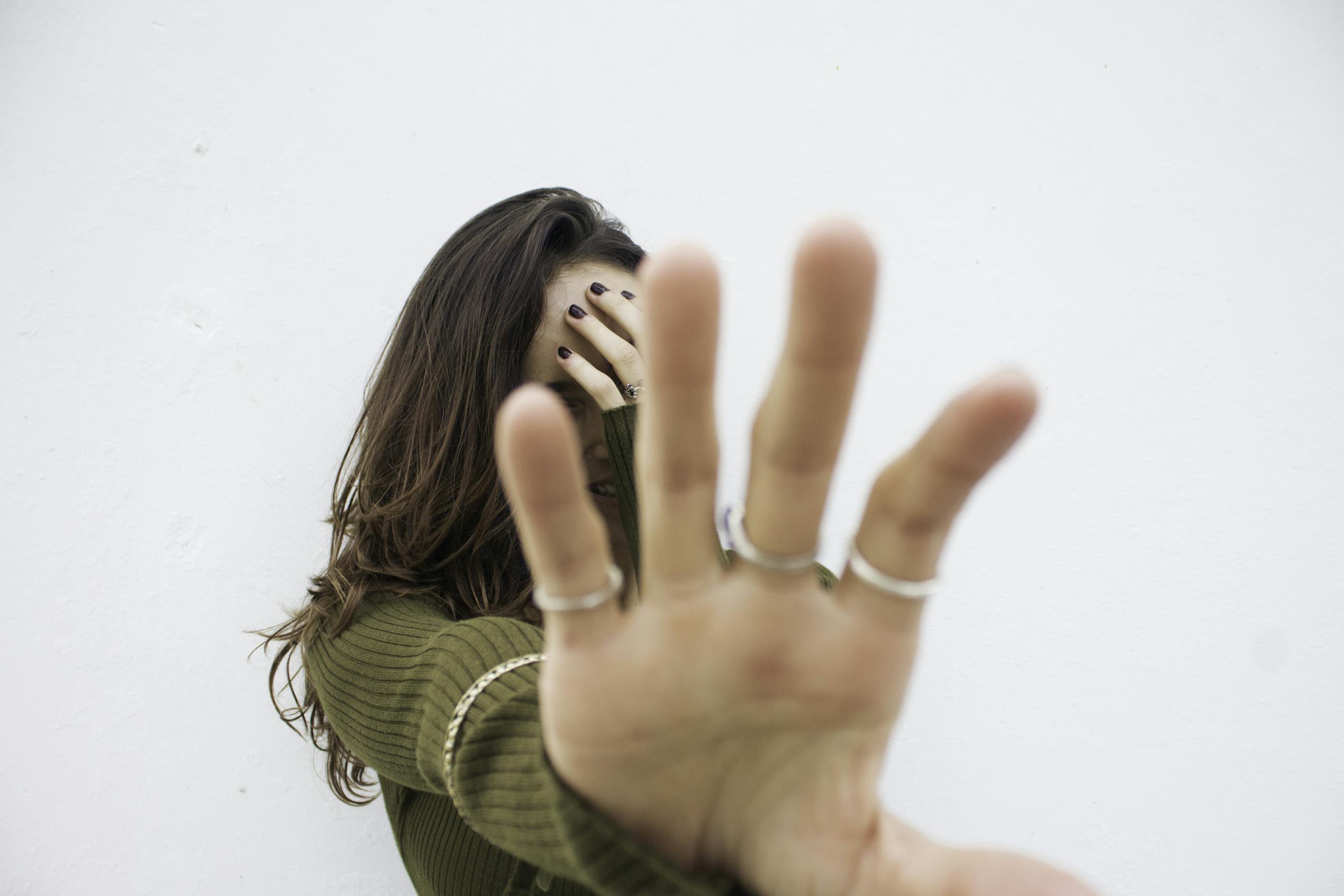
What If You Don’t Think of Yourself as Creative?
Creativity isn’t the point here, and I say that as someone who spent his career working alongside genuinely gifted visual artists and spent most of that time feeling like the analytical person in the room. I’m not a drawer. My sketches look like what they are: the work of someone who processes the world in systems and words, not images.
That doesn’t matter. Vulnerability drawing isn’t asking you to be creative. It’s asking you to be honest. Those are different requests. Honesty is something you already know how to do, even if you don’t always do it. Creativity, in the artistic sense, is optional here.
The academic literature on expressive arts in therapeutic contexts consistently notes that the therapeutic value of visual expression doesn’t correlate with artistic skill. What matters is the intention behind the mark, not the quality of the result. A stick figure drawn with genuine emotional investment does more for you than a technically accomplished drawing made without it.
Give yourself permission to make something ugly. Give yourself permission to make something that looks like nothing. The mark is honest, and that’s enough.
If you find yourself resisting the practice because it feels too unstructured or too unfamiliar, that resistance is worth examining. For many introverts and highly sensitive people, the discomfort with vulnerability drawing is itself a signal about how tightly they’re holding the inner world. The practice doesn’t ask you to let go completely. It just asks you to loosen your grip a little, enough to let something through.
There’s more to explore on the broader landscape of introvert mental health. Our complete Introvert Mental Health hub brings together articles on sensitivity, anxiety, emotional processing, and psychological wellbeing, all written with the introvert experience at the center.
About the Author
Keith Lacy is an introvert who’s learned to embrace his true self later in life. After 20 years in advertising and marketing leadership, including running agencies and managing Fortune 500 accounts, Keith now channels his experience into helping fellow introverts understand their strengths and build fulfilling careers. As an INTJ, he brings analytical depth and authentic perspective to every article, drawing from both professional expertise and personal growth.
Frequently Asked Questions
Do I need to be able to draw well to try vulnerability drawing?
No artistic skill is required. Vulnerability drawing is about emotional expression, not visual quality. The value of the practice comes from the honesty of the mark, not its technical execution. A simple line or shape drawn with genuine feeling is more useful than a polished illustration made without it.
How is vulnerability drawing different from regular art journaling?
Art journaling often involves aesthetic intention, decorative elements, and a degree of curation. Vulnerability drawing strips all of that away. The focus is entirely on expressing something emotionally true, without concern for how it looks or whether it would make sense to anyone else. It’s a private, functional practice rather than a creative one.
Can vulnerability drawing replace therapy for introverts dealing with anxiety or depression?
Vulnerability drawing is a meaningful self-care tool, but it isn’t a substitute for professional mental health support when that support is needed. It works well as a complement to therapy, helping you process emotional material between sessions, and as a standalone practice for managing the ordinary weight of daily emotional life. If you’re dealing with significant anxiety or depression, please seek professional guidance alongside any self-directed practice.
How often should I practice vulnerability drawing to see a benefit?
Consistency matters more than frequency or duration. Even ten minutes two or three times a week builds a meaningful relationship with the practice. The goal is to make emotional check-ins through drawing a regular habit, so that feelings are processed gradually rather than allowed to accumulate. Many people find that brief daily sessions work better than longer, infrequent ones.
What should I do with the drawings afterward?
That’s entirely your choice, and the choice itself can be meaningful. Some people keep their drawings as a record of emotional experience over time. Others discard them immediately, which can itself be a releasing act. If privacy is a concern, drawing on loose paper you can tear up afterward removes the worry entirely. The drawing has done its work in the making of it. What happens to it afterward is secondary.