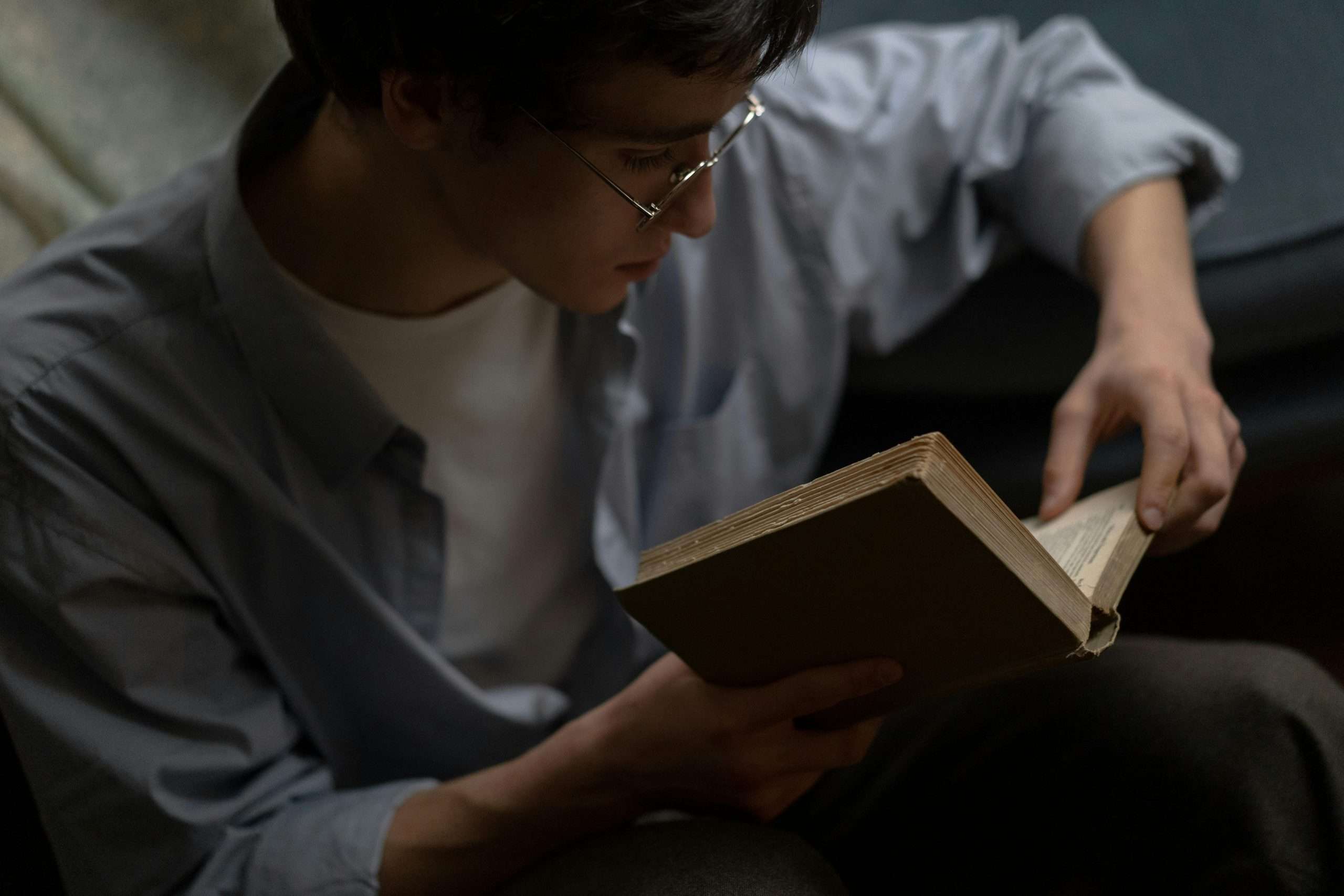

Marcus Aurelius Stoicism offers something most self-help philosophies miss entirely: a framework built not on performing confidence or projecting strength, but on the radical idea that your inner world is where real power lives. The Roman emperor who ruled one of history’s most demanding empires wrote his most enduring wisdom in a private journal, never intended for anyone else to read. That detail alone should tell introverts something important about where he believed meaningful thought actually happened.
Stoicism, as Aurelius practiced it, is fundamentally a philosophy of internal governance. You cannot control the noise outside. You can only govern your response to it. For anyone wired to process deeply, reflect quietly, and find the external world genuinely exhausting, that premise isn’t just philosophically interesting. It feels like recognition.
Our Solitude, Self-Care and Recharging hub covers the full spectrum of how introverts restore themselves, but Marcus Aurelius adds a layer that goes beyond rest strategies. He offers a complete philosophy for people who live primarily from the inside out.
Why Did a Roman Emperor Write in a Private Journal?
The Meditations of Marcus Aurelius were never meant to be published. He wrote them in Greek, to himself, as a series of reminders and self-corrections. Some entries read like a man wrestling with his own impatience. Others read like someone trying to talk himself down from anxiety about things outside his control. He was arguably the most powerful person on earth at the time, and he spent his private hours doing what many introverts do instinctively: processing everything internally before it became action.
What’s your personality type?
Take our free 40-question assessment and get a detailed personality profile with dimension breakdowns, context analysis, and personalised insights.
Discover Your Type8-12 minutes · 40 questions · Free
I’ve kept some version of a private journal for most of my adult life. Not always consistently, not always eloquently, but the habit of writing to myself before I wrote to anyone else shaped how I led agencies and how I made decisions. When I had a difficult client relationship or a team conflict that needed addressing, I didn’t call a meeting first. I wrote it out. Marcus Aurelius, it turns out, was doing the same thing across seventeen books of private notes.
What makes this significant for introverts isn’t just the journaling habit. It’s what the habit reveals about his cognitive style. Aurelius was a man who needed to process internally before he could act externally. He wrote about the same themes repeatedly, circling back to questions of anger, duty, mortality, and the nature of the mind. That kind of recursive internal processing is something many introverts recognize immediately. We don’t think something through once and move on. We return to it, turn it over, examine it from a different angle.
His Stoic practice was, at its core, a technology for managing the gap between stimulus and response. He was surrounded by war, political intrigue, plague, and the constant demands of empire. His solution was to build a fortress inside himself rather than trying to control everything outside. That’s not avoidance. That’s a sophisticated form of psychological resilience that maps remarkably well onto how many introverts already operate.
What Does Stoicism Actually Say About Solitude and Inner Life?
Stoicism places enormous value on what Aurelius called the “inner citadel,” the part of your mind that no external circumstance can touch unless you allow it. This isn’t mystical thinking. It’s a practical claim about where your agency actually lives. You cannot control whether a client fires you, whether a colleague undermines you, or whether a difficult conversation goes badly. You can control how you interpret those events and what you do next.
For introverts, this framework resolves something that causes a lot of unnecessary suffering. Many of us spend years believing our preference for solitude is a deficiency, something to be corrected or at least hidden. Stoicism reframes that entirely. The inner life isn’t a retreat from the real world. It is the real world, at least the only part of it you can actually govern.
Aurelius wrote repeatedly about withdrawing into himself as a deliberate practice, not as avoidance but as preparation. He described the ability to find quiet within yourself regardless of external circumstances as one of the highest forms of freedom. That’s a direct philosophical endorsement of what introverts do naturally. We withdraw to recharge, to think, to find our footing again. He did the same thing and considered it essential to functioning well.
There’s a meaningful distinction worth making here between solitude and isolation. Aurelius was deeply engaged with the world. He led armies, heard legal cases, managed a vast bureaucracy. His solitude was the foundation that made all of that engagement possible, not an escape from it. Harvard Health has written about this distinction between loneliness and chosen solitude, noting that the psychological effects of each are very different. Aurelius understood this intuitively. His private hours weren’t lonely. They were generative.

How Does the Stoic Concept of Control Map Onto Introvert Experience?
The central Stoic distinction is between what is “up to us” and what is not. Aurelius inherited this framework from Epictetus, a former slave who built an entire philosophy around the one freedom no one could take from him: how he interpreted his circumstances. What’s up to us, according to Stoic thinking, includes our judgments, our intentions, our desires, and our responses. What is not up to us includes everything else, reputation, other people’s opinions, outcomes we cannot control.
Introverts often struggle with a specific version of this problem. We’re sensitive to social environments in ways that can feel overwhelming, and we sometimes internalize other people’s discomfort with our quietness as evidence that something is wrong with us. A colleague who mistakes our thoughtfulness for aloofness, a manager who reads our preference for written communication as a lack of engagement, a social event where our need to step away gets misread as rudeness. These are real experiences, and they carry real weight.
Stoicism doesn’t say those experiences don’t matter. It says your interpretation of them is where you have power. Aurelius wrote about not letting other people’s opinions of you become the measure of your worth. He was an emperor surrounded by people who wanted something from him, and he had to develop genuine philosophical immunity to the noise of others’ projections. That’s not a small thing. It’s a skill that takes years to build.
In my agency years, I managed a team of about thirty people at peak, and the social demands of that role were genuinely costly for me. I was running client presentations, managing creative reviews, hosting agency-wide meetings, and doing the visible leadership that the role required. What I eventually understood, much later than I should have, was that my discomfort with those demands wasn’t a character flaw. It was information. The Stoic move isn’t to eliminate the discomfort. It’s to stop letting that discomfort become a verdict on your competence.
The highly sensitive introvert experience adds another layer to this. Those who identify as HSPs often find that their nervous systems register social and sensory input at a higher intensity than others. Daily self-care practices for HSPs often center on managing that intensity, and Stoic philosophy provides a complementary framework: you can’t always control the input, but you can build the internal structure that keeps it from overwhelming you.
What Can Introverts Learn From Aurelius’s Relationship With Quiet?
One of the most striking things about the Meditations is how consistently Aurelius returns to the theme of mental noise. He wrote about the way other people’s opinions, ambitions, and dramas could colonize your thinking if you let them. His solution wasn’t to become indifferent to others. It was to cultivate a quality of internal quiet that could coexist with external chaos.
That’s a different relationship with quiet than most people have. For many introverts, quiet is something we seek as a respite from the world. We need it to recover. Aurelius was describing something more active: the practice of generating quiet internally, carrying it with you rather than depending on external conditions to provide it.
This connects directly to what happens physiologically and psychologically when introverts are denied adequate alone time. The effects of insufficient solitude can include irritability, cognitive fog, difficulty making decisions, and a creeping sense of being disconnected from yourself. Aurelius was describing a practice that could buffer against exactly those effects, not by guaranteeing solitude but by building an internal environment that could sustain you even when external solitude wasn’t available.
He wrote about using small moments, a pause before responding, a breath before entering a difficult room, a few minutes of morning reflection before the day’s demands began. Those aren’t grand gestures. They’re micro-practices that accumulate into something significant over time. Berkeley’s Greater Good Science Center has explored how even brief periods of solitude can support creativity and self-knowledge, which aligns with what Aurelius was practicing intuitively nearly two thousand years ago.

How Does Stoic Practice Support Introvert Self-Care?
Self-care for introverts is often framed in terms of what we avoid or limit: fewer social obligations, quieter environments, more time alone. That’s not wrong, but it’s incomplete. Aurelius points toward something more proactive. Stoic self-care is about building the internal conditions that allow you to engage fully when engagement is required, and to recover genuinely when it’s not.
His morning practice is worth examining specifically. He began each day by acknowledging that he would encounter difficult people, frustrating circumstances, and situations outside his control. He didn’t do this to cultivate pessimism. He did it to preemptively remove the element of surprise that drains energy. When you’ve already mentally prepared for the possibility that a meeting will go sideways or a client will push back hard, the actual event doesn’t hit you the same way. You’ve already processed the emotional charge in advance.
This is sometimes called “negative visualization” in modern Stoic practice, and it’s particularly useful for introverts who tend to ruminate after difficult social interactions. The Stoic move is to do some of that processing before the event rather than exclusively after it. You spend less time in post-event replay if you’ve already anticipated the range of possible outcomes.
Sleep is another dimension where Stoic principles intersect with introvert wellbeing in interesting ways. Aurelius wrote about waking early and using those first hours as sacred thinking time, a practice that maps onto what many introverts find naturally: the early morning, before the world starts demanding things, is often when we think most clearly. Rest and recovery strategies for highly sensitive people often emphasize protecting those quiet morning hours, which is essentially what Aurelius was doing when he wrote the Meditations.
Nature also appears in Stoic thinking as a restorative force. Aurelius wrote about the natural world with genuine reverence, seeing in it a model of order and impermanence that he found clarifying. Many introverts and HSPs experience something similar. The healing dimension of nature connection for sensitive people is well-documented in both personal experience and broader psychological understanding. Aurelius was practicing what we might now call ecopsychology when he described the restorative quality of natural observation.
Was Marcus Aurelius an Introvert?
We can’t apply modern psychological frameworks to a second-century Roman emperor with any real precision, and it would be intellectually dishonest to try. But we can observe patterns in how he lived and what he valued, and those patterns tell a story.
He wrote privately and prolifically. He described the inner life as more real and more important than external reputation. He expressed consistent discomfort with the performative aspects of imperial life, the ceremonies, the public adulation, the expectation that he display certain emotions for political effect. He found the company of philosophers more restorative than the company of courtiers. He returned again and again to the idea that the examined life, the one turned inward, was the only life worth living.
Whether or not those traits constitute introversion in the technical sense, they describe a person who drew energy from internal reflection and found external performance costly. That’s a recognizable experience for many of us.
What’s interesting to me as an INTJ is how much of his thinking aligns with the cognitive patterns I recognize in myself. The preference for systems thinking, the tendency to examine a problem from multiple angles before acting, the discomfort with emotional performance, the deep investment in principles over politics. When I read the Meditations, I’m not reading a historical curiosity. I’m reading someone who processed the world in a way that feels genuinely familiar.
My dog Mac has taught me something related to this, actually. He’s the subject of one of my favorite pieces on this site about what alone time really means, and the lesson is simpler than any philosophy: some creatures need quiet to be themselves. Aurelius, for all his complexity, was making the same basic argument.

How Can Introverts Apply Stoic Philosophy in Practical Daily Life?
Philosophy that doesn’t change how you live isn’t really philosophy. It’s just interesting reading. Aurelius was explicit about this: the point of Stoic practice is not to understand it intellectually but to embody it habitually. Here’s how that translates into something practical for introverts handling modern life.
Morning reflection before external input. Aurelius began each day with internal preparation before engaging with the world’s demands. For introverts, this might mean resisting the urge to check email or social media immediately upon waking, instead spending even ten minutes writing, thinking, or simply sitting quietly. That buffer between sleep and the day’s demands is not a luxury. It’s a cognitive necessity for people who process deeply.
Separating events from interpretations. Something difficult happens at work. A presentation doesn’t land the way you hoped. A colleague responds dismissively to an idea you’d thought through carefully. The Stoic practice is to notice the gap between the event itself and the story you’re telling about it. The event is neutral data. The interpretation is where your energy goes. That distinction, practiced consistently, changes how you recover from setbacks.
Deliberate solitude as preparation, not just recovery. Most introverts use solitude reactively: we seek it after we’ve been depleted. Aurelius used it proactively, to prepare for what was coming. Scheduling genuine alone time before demanding social or professional events, not just after them, is a small but meaningful shift in how you think about your own energy management.
Releasing other people’s opinions as a metric. This one is harder than it sounds. Aurelius wrote about it repeatedly, which suggests he found it difficult too. The Stoic position isn’t that other people’s opinions are irrelevant. It’s that making them the primary measure of your worth is a form of self-imposed dependency. For introverts who’ve spent years trying to appear more extroverted to meet others’ expectations, this reframe is genuinely freeing.
Evening review without self-punishment. Aurelius ended his days by reviewing what he’d done well and where he’d fallen short, not to flagellate himself but to recalibrate. This is different from the rumination many introverts are prone to, replaying social interactions and cataloguing every misstep. The Stoic version is more structured and more compassionate: what happened, what I could do differently, what I’ll carry forward.
The psychological benefits of this kind of structured self-reflection are worth taking seriously. Research published in PubMed Central has examined how reflective practices support emotional regulation and psychological flexibility, qualities that matter enormously for introverts managing the demands of extrovert-oriented environments.
Solitude, practiced with intention, also carries measurable cognitive benefits. Additional work indexed in PubMed Central points to the role of quiet, unstructured time in supporting mental clarity and emotional processing. Aurelius wasn’t just philosophizing. He was doing something that had real cognitive value.
What Does Stoicism Say About the Need for Connection?
One potential misreading of Stoicism is that it advocates for emotional detachment or social withdrawal as ends in themselves. Aurelius was clear that this wasn’t his position. He wrote extensively about our obligations to one another, about the Stoic concept of oikeiosis, the natural human orientation toward community and mutual care. His solitude wasn’t misanthropy. It was the foundation that made genuine connection possible.
This is a distinction that matters for introverts. The need for solitude is real and should be honored. And social connection, chosen and genuine, is also a human need that doesn’t disappear just because we find crowds exhausting. The CDC has documented the health risks associated with social disconnection, and those risks apply to introverts as much as anyone. The Stoic position, and the introvert position at its healthiest, is not isolation but selectivity: fewer, deeper connections rather than broad, shallow ones.
Aurelius wrote about his friendships with genuine warmth. He expressed grief at the deaths of people he loved. He described the value of honest relationships where he could be corrected without flattery. Those aren’t the words of someone who had opted out of human connection. They’re the words of someone who had learned to prioritize quality over quantity.
For introverts who struggle with the guilt of needing more alone time than the people around them seem to need, this framing is useful. The genuine need for solitude isn’t selfishness or antisocial behavior. It’s the maintenance of the inner resources that make you capable of showing up fully when connection matters. Aurelius understood that. He just wrote it in Greek, two thousand years ago.
The broader psychological research supports this framing as well. Work published in Frontiers in Psychology has examined how solitude, when chosen rather than imposed, supports psychological wellbeing rather than undermining it. The key variable is agency. Solitude you choose is restorative. Solitude that feels forced or socially penalized is a different experience entirely.

Why Does Marcus Aurelius Still Matter for Introverts Today?
There’s something both humbling and encouraging about the fact that a Roman emperor, governing an empire in constant crisis, found his most essential resource in the same place introverts have always found theirs: inside. Not in performance, not in the approval of others, not in the accumulation of external markers of success, but in the quality of his own thinking and the integrity of his own responses.
Running advertising agencies for two decades, I spent a lot of years measuring my worth by external metrics: client retention rates, agency revenue, industry awards, the opinions of people whose respect I wanted. Some of that was appropriate. Outcomes matter in business. But a significant portion of my energy went toward managing how I appeared rather than developing what I actually was. Aurelius would have recognized that trap immediately. He wrote about it constantly.
The shift that eventually happened for me wasn’t dramatic. It was more like a gradual recalibration toward what I actually thought and valued, rather than what I thought I was supposed to think and value. That’s a Stoic move, even if I didn’t have that language for it at the time. You stop outsourcing your sense of worth to external sources and start building it from the inside.
For introverts who’ve spent years feeling like their natural orientation is somehow wrong, Marcus Aurelius Stoicism offers a different story. Not the story that you need to become more extroverted, more visible, more performatively confident. The story that your inner life is not a liability. It’s the place where your most important work happens. Aurelius built an empire from that premise. The rest of us can probably manage our careers and relationships with it.
There’s more to explore on these themes across our Solitude, Self-Care and Recharging hub, where we cover everything from the science of restorative alone time to practical daily practices for introverts and HSPs who want to take their inner life seriously.
About the Author
Keith Lacy is an introvert who’s learned to embrace his true self later in life. After 20 years in advertising and marketing leadership, including running agencies and managing Fortune 500 accounts, Keith now channels his experience into helping fellow introverts understand their strengths and build fulfilling careers. As an INTJ, he brings analytical depth and authentic perspective to every article, drawing from both professional expertise and personal growth.
Frequently Asked Questions
What is Marcus Aurelius Stoicism and why does it appeal to introverts?
Marcus Aurelius Stoicism is the practical philosophy recorded in his private journal, the Meditations, centered on the idea that inner governance is the only real form of freedom. It appeals to introverts because it validates the inner life as the primary site of meaning and resilience, arguing that your interpretations and responses matter far more than external circumstances or other people’s opinions of you.
How can introverts use Stoic practices for daily self-care?
Introverts can apply Stoic practices through morning reflection before engaging with external demands, deliberate solitude used proactively rather than just reactively, and evening review that examines the day without self-punishment. The Stoic habit of separating events from interpretations is also particularly useful for introverts who tend to ruminate after difficult social interactions.
Did Marcus Aurelius value solitude?
Yes. Aurelius wrote extensively about withdrawing into himself as a deliberate practice, describing the ability to find internal quiet as one of the highest forms of freedom. He used his private writing hours as a form of restorative solitude, and his philosophy consistently emphasized the inner world as the foundation for effective external engagement rather than an escape from it.
Is Stoicism the same as emotional detachment?
No. Stoicism is frequently misread as advocating emotional suppression or indifference, but Aurelius himself wrote with genuine warmth about friendship, grief, and human connection. The Stoic goal is not to eliminate emotion but to avoid being governed by it. Aurelius felt things deeply. He simply developed practices that prevented those feelings from distorting his judgment or his sense of self-worth.
How does Stoicism address the introvert need for alone time?
Stoicism treats solitude as a resource rather than a retreat. Aurelius described the capacity to find quiet within yourself as essential to functioning well under pressure, and his daily practices centered on creating internal conditions of clarity that could sustain him even when external solitude wasn’t available. For introverts, this suggests that the goal isn’t just finding more alone time but developing a quality of inner quiet that travels with you.