

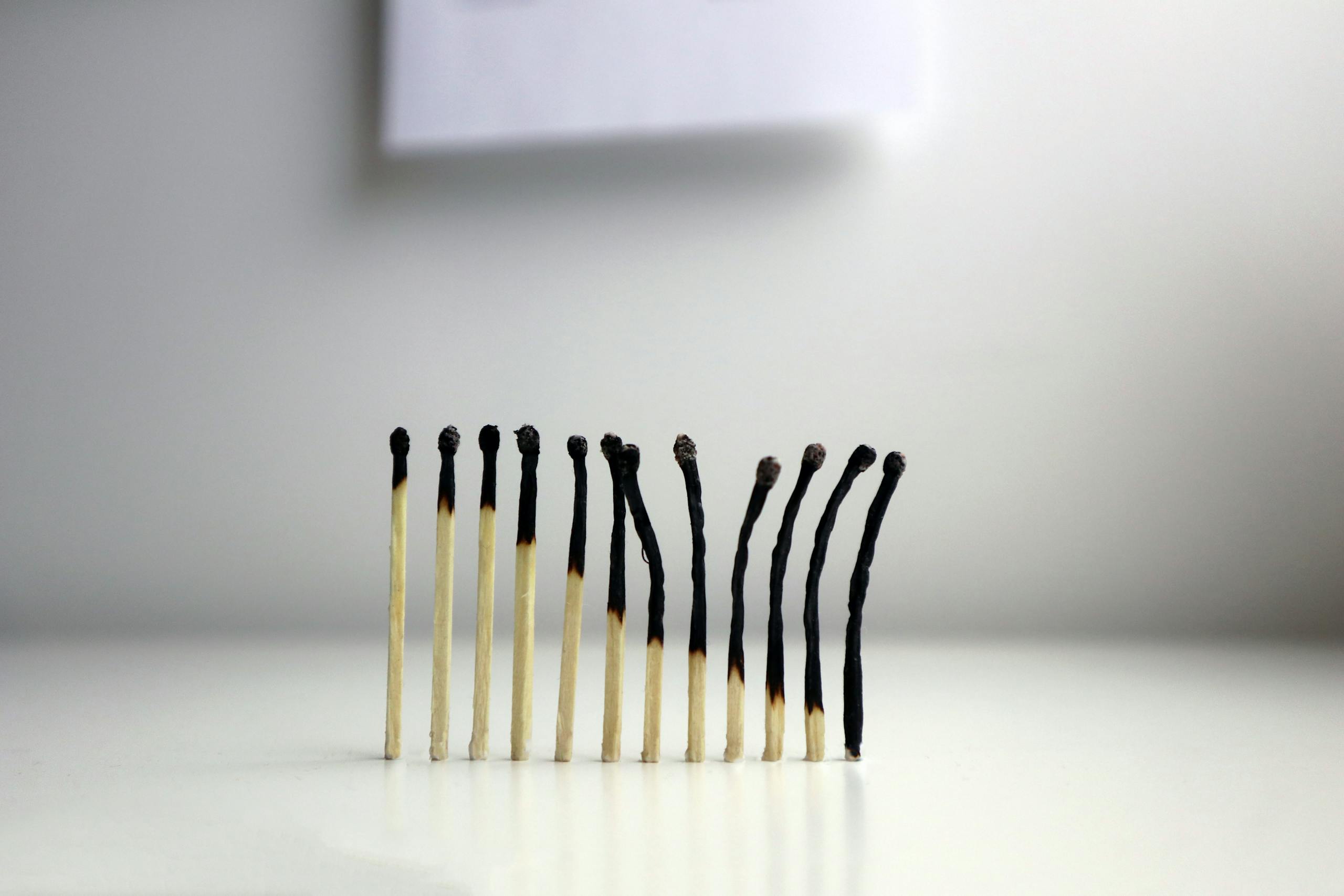
Burnout isn’t just exhaustion. It’s the specific kind of depletion that sets in when you’ve been operating against your own nature for too long, giving more than your nervous system can sustain, and ignoring the quiet signals your body sends before the loud ones arrive. For introverts, handling burnout means more than rest. It means rebuilding a relationship with your own energy.
Knowing how to handle burnout starts with recognizing that introvert burnout often looks different from what most productivity culture describes. It’s not always dramatic collapse. Sometimes it’s a slow dimming, a gradual withdrawal from things that used to matter, a creeping numbness that you mistake for being fine.
If you’ve been wondering whether what you’re feeling is burnout, or how to start pulling yourself back from the edge, you’re in the right place. Our Burnout & Stress Management hub covers this territory from multiple angles, and this article digs into the specific patterns introverts face and the concrete steps that actually help.
What Does Burnout Actually Feel Like for Introverts?
My first real burnout didn’t announce itself. There was no single moment where I thought, “I’ve hit a wall.” Instead, somewhere in my mid-thirties, running an agency with forty people and a roster of Fortune 500 clients, I noticed that I’d stopped caring about ideas. Not the business, not the clients, not even the work I’d built my identity around. I’d walk into a creative review and feel nothing. That blankness scared me more than stress ever had.
What’s your personality type?
Take our free 40-question assessment and get a detailed personality profile with dimension breakdowns, context analysis, and personalised insights.
Discover Your Type8-12 minutes · 40 questions · Free
Burnout for introverts tends to accumulate invisibly. Because we’re already accustomed to managing our energy carefully, we often don’t notice when the management stops working. We keep showing up. We keep performing. We keep saying yes to the next meeting, the next obligation, the next demand on our attention. And then one day the tank is genuinely empty, and we don’t know how we got there.
The Frontiers in Psychology journal has published work examining how personality traits interact with occupational stress, and the picture that emerges is consistent with what many introverts report anecdotally: the mismatch between internal wiring and external demands is its own category of strain. It’s not that introverts are weaker or more fragile. It’s that certain environments create a kind of constant friction that, over time, grinds people down.
Common burnout signals that introverts often dismiss or misread include persistent mental fog, a loss of interest in solitary activities that used to restore you, irritability in situations that didn’t used to bother you, and a flattening of emotional response. You stop feeling curious. You stop feeling much of anything. If you’re wondering whether someone in your life might be hitting this point, the article on how to ask an introvert if they’re feeling stressed offers some useful framing for those conversations.
Why Do Introverts Burn Out Differently Than Extroverts?
The energy equation matters here. As Psychology Today’s introvert column has framed it, introversion is fundamentally about where your energy comes from and where it goes. Social interaction, ambient noise, constant context-switching, these aren’t neutral for introverts. They’re expenditures. And in most professional environments, they’re non-negotiable ones.
When I ran agencies, the structure of the workday was built around extrovert assumptions. Open floor plans. Spontaneous collaboration. Back-to-back client calls. Team lunches. Happy hours that were really just extended work. Every one of those things cost me something. Not because I disliked people or avoided relationships, but because each interaction required a kind of active energy output that I couldn’t simply will myself to have in unlimited supply.
Extroverts often recover from stress through social engagement. A night out, a team celebration, a long conversation with a friend. Those same activities, for many introverts, are part of what depletes them. So when conventional burnout advice says “connect with others” or “talk it out,” it can actually deepen the problem rather than address it.
There’s also a layer of complexity for highly sensitive introverts. If you process emotional information more intensely than average, the cumulative weight of other people’s moods, workplace tension, and ambient conflict adds a dimension to burnout that standard recovery advice doesn’t touch. The piece on HSP burnout recognition and recovery goes into this specifically, and it’s worth reading if you suspect your sensitivity is part of what’s wearing you down.
One thing I’ve observed as an INTJ is that my burnout often shows up as intellectual withdrawal before emotional withdrawal. My mind, which is usually running several layers of analysis simultaneously, goes quiet in an unsettling way. I stop problem-solving. I stop strategizing. I lose the internal monologue that usually feels like my most reliable tool. That’s the signal I’ve learned to take seriously.
What Are the Stages of Burnout Introverts Need to Recognize?
Burnout doesn’t arrive fully formed. It moves through phases, and catching it earlier in the progression gives you more options for recovery. The challenge is that introverts are often skilled at functioning through the early stages, which means we tend to arrive at the later ones before we’ve acknowledged anything is wrong.
In the early phase, you’re still performing. You’re meeting deadlines, showing up to meetings, handling your responsibilities. But something feels slightly off. You’re more tired than usual. Small irritations feel larger. You’re less interested in the projects that used to engage you. This is the stage where intervention is easiest, and where most introverts push through instead of pausing.
The middle phase is where the coping mechanisms start to crack. You might be sleeping more but waking up unrested. You’re avoiding social contact even when it’s low-stakes. Your productivity has dropped, and you’re compensating by working longer hours, which depletes you further. The PubMed Central literature on occupational burnout describes this phase as a critical window, a point where the pattern can still be interrupted before it becomes entrenched.
The late phase is what I experienced in that creative review. Emotional numbness. Loss of meaning. A disconnection from work, relationships, and self that feels less like exhaustion and more like disappearance. Recovery from this stage is possible, but it takes longer and requires more deliberate intervention.
One pattern I noticed in my agency years was that the most intense burnout often followed periods of sustained social performance. Pitching new business, presenting to boards, managing team conflict. These weren’t just stressful activities. They required me to operate in a mode that felt fundamentally at odds with how I think and process. And the recovery time I needed afterward was rarely built into the schedule.
How Do You Actually Start to Handle Burnout as an Introvert?
Recovery from burnout isn’t a single decision. It’s a series of small adjustments, made consistently, that gradually shift the balance back toward sustainable. For introverts, the most effective starting point is usually environmental before it’s behavioral.

What I mean by that is this: before you can rebuild your energy reserves, you need to stop the leak. Look honestly at where your energy is going and identify the drains that are discretionary versus the ones that are genuinely non-negotiable. Most of us have more discretionary commitments than we realize, social obligations we’ve never questioned, meetings we attend out of habit, availability we’ve signaled that others now expect.
Solitude as medicine is real, but it needs to be intentional solitude rather than collapse. There’s a difference between lying on the couch scrolling through your phone because you have nothing left, and sitting quietly with a book, a walk, or a creative project because you’ve chosen to replenish. The former is avoidance. The latter is actual restoration.
The American Psychological Association’s overview of relaxation techniques is worth bookmarking here. Not because the techniques are exotic, they’re not, but because having a concrete toolkit matters when you’re depleted. When your cognitive resources are low, you don’t want to be making decisions about how to recover. You want habits already in place.
Physical movement has been one of the most reliable tools in my own recovery. Not group fitness classes or team sports, but solitary movement. Long walks without headphones. Running. Anything that gives the body something to do while the mind quietly processes. Many introverts find that their best thinking happens in motion, and that same quality makes movement a powerful recovery tool.
Sleep is the foundation, not a luxury. When I was running agencies, I treated sleep as a variable I could compress to create more working hours. That equation is backwards, and it accelerates burnout rather than managing it. Protecting sleep with the same seriousness you protect a client deadline is one of the most concrete things you can do.
If social anxiety is part of your experience alongside burnout, the two tend to compound each other in uncomfortable ways. The stress reduction skills for social anxiety piece covers some practical approaches that don’t require you to push through more than you’re capable of right now.
What Boundary Changes Actually Prevent Burnout From Returning?
Recovery without structural change is just a pause. You restore enough to go back to the same conditions, and the cycle repeats. Preventing burnout from becoming a recurring pattern requires looking honestly at the agreements, habits, and environments that created it.
One of the most significant shifts I made in my agency years was restructuring my calendar around my energy rather than around convention. I stopped scheduling meetings before 10 AM because I needed the first hour of the day for solitary thinking. I built a thirty-minute buffer between back-to-back client calls. I started protecting one afternoon per week as a no-meeting block for deep work. These weren’t radical changes, but they created enough breathing room that I stopped running on fumes by Thursday.
Saying no is a skill that introverts often struggle with, partly because we tend to think carefully before speaking and sometimes talk ourselves into yes before we’ve had time to check in with our actual capacity. Developing a simple pause practice, a habit of saying “let me check my schedule and get back to you” before committing, creates space to make decisions from a grounded place rather than a reactive one.
The workplace environments that introverts find most sustainable tend to share some common features: autonomy over how work gets done, some control over the social calendar, clear expectations rather than constant ambiguity, and enough quiet time to think without interruption. If your current environment has none of those features, that’s worth examining as a structural issue rather than a personal failing.
Some introverts find that creating income streams outside their primary job gives them a psychological buffer that reduces burnout risk. Having options changes how you experience obligation. If you’re curious about that angle, the 18 stress-free side hustles for introverts piece is a practical starting point for thinking through what that could look like for your situation.

How Does Self-Care Work When You’re Already Too Depleted to Try?
There’s a particular cruelty to burnout: the things that would help you recover require energy you don’t currently have. Exercise sounds impossible. Cooking nourishing food feels like too many steps. Even reading, which most introverts love, can feel inaccessible when your concentration is gone.
This is where the conventional self-care conversation often fails people. It presents recovery as a list of activities, meditate, journal, exercise, eat well, connect with loved ones, without acknowledging that executing that list requires a baseline of capacity that burnout specifically erodes.
The approach that’s worked for me, and that I’ve seen work for others, is scaling down rather than scaling up. Instead of committing to a full workout, commit to putting on your shoes and walking to the end of the block. Instead of cooking a full meal, commit to one real ingredient in whatever you’re eating. Instead of a full journaling session, write one sentence about how you’re feeling. These micro-commitments don’t feel meaningful in the moment, but they maintain the thread of self-direction when everything else feels overwhelming.
The grounding technique described by the University of Rochester Medical Center, the 5-4-3-2-1 sensory awareness practice, is one I’ve returned to more times than I can count. It requires nothing except a moment of attention, and it interrupts the spiral of anxious overthinking that often accompanies burnout in its more acute phases.
Self-care for introverts also means being honest about what actually restores you versus what you think should restore you. If a weekend alone genuinely refills you more than a social trip with friends, that’s not antisocial. That’s accurate self-knowledge. The piece on practicing better self-care without added stress takes this seriously and offers approaches that don’t require you to perform wellness on top of everything else you’re already managing.
One thing I’d add from personal experience: professional support is worth considering when burnout has moved past the early stages. A therapist who understands introversion and the particular pressures of high-demand environments can offer something that self-help articles, including this one, cannot. There’s no version of handling burnout where asking for help is a sign of weakness.
What Role Does Social Pressure Play in Introvert Burnout?
A significant portion of introvert burnout isn’t caused by the work itself. It’s caused by the social performance that surrounds the work. The small talk before meetings. The team-building activities. The after-work drinks that are technically optional but culturally mandatory. The expectation that you should seem enthusiastic about all of it.
I managed a team of twelve at one point where every Monday started with a round-robin of weekend updates. Fifteen minutes of forced sharing before we got to the actual work. I watched the introverts on my team spend those fifteen minutes visibly bracing themselves, and then spend the rest of the morning recovering from the performance. It was a ritual that cost them something real, every single week, without adding anything meaningful to our work together.
The research on whether activities like icebreakers serve their stated purpose is more mixed than most team managers realize. The piece on whether icebreakers are stressful for introverts examines this honestly, and it’s useful reading if you’re in a position to influence how your team or workplace structures social interaction.
The broader issue is that many workplaces are designed around extrovert defaults, and introverts are expected to adapt rather than the environment to flex. Over time, that constant adaptation is exhausting in a way that’s hard to articulate because it’s invisible. You’re not doing anything obviously difficult. You’re just perpetually operating slightly outside your natural mode, and that friction accumulates.
A PubMed Central study on personality and workplace wellbeing offers some useful context here. The connection between person-environment fit and sustained wellbeing is well-established, and for introverts in extrovert-oriented environments, that fit is often poor in ways that aren’t immediately obvious.
What helps is developing a clearer internal map of which social demands are genuinely costly versus which ones feel uncomfortable but don’t actually drain you. Not all social interaction is equally depleting. A one-on-one conversation with someone you respect is different from a group brainstorm with twelve people. A structured presentation is different from an unstructured networking event. Getting specific about what costs you most allows you to protect against it more precisely.

When Is Burnout a Signal That Something Bigger Needs to Change?
Sometimes burnout is a recovery problem. You’ve been running too hard, and you need to slow down and rebuild. But sometimes burnout is a signal. It’s your system telling you that the environment you’re in, the role you’re playing, or the life you’ve constructed isn’t aligned with who you actually are.
I spent years in advertising trying to match the energy of the extroverted leaders around me. I thought the problem was my output, that I needed to be louder, more visible, more socially available. What I eventually understood was that the problem was the frame. I was measuring myself against a model that wasn’t built for how I work. When I stopped trying to be a different kind of leader and started building on what I actually do well, a lot of the chronic depletion lifted.
That’s not a quick process. It requires honest self-assessment, some willingness to disappoint people’s expectations, and often some structural changes to how you work or where. But it’s the difference between managing burnout indefinitely and actually resolving its source.
If you find yourself recovering from burnout only to slide back into it within months, that’s worth examining as a pattern rather than a personal failure. The question isn’t just “how do I handle burnout” but “what conditions keep creating it, and what would need to change for those conditions to be different.”
Small talk as a chronic stressor is one angle worth examining if you’re in a client-facing or highly social role. The Psychology Today piece on the weight of small talk for introverts captures something that many introverts feel but rarely name as a legitimate source of strain.
The University of Northern Iowa research on introversion and workplace dynamics provides some academic grounding for what many introverts experience intuitively: the design of most professional environments creates structural disadvantages for people who process and perform differently. Knowing that doesn’t solve the problem, but it does reframe it. You’re not failing to adapt. You’re operating in a system that wasn’t designed with you in mind.
Burnout, at its most useful, can be a clarifying experience. It strips away the performance and the coping mechanisms and leaves you with a clearer view of what you actually need, what you actually value, and what kind of life you’re actually capable of sustaining. That clarity is worth something, even when the process of arriving at it is painful.
There’s more to explore on this topic across the full range of articles in our Burnout & Stress Management hub, from the early warning signs to long-term recovery strategies built specifically around how introverts are wired.
About the Author
Keith Lacy is an introvert who’s learned to embrace his true self later in life. After 20 years in advertising and marketing leadership, including running agencies and managing Fortune 500 accounts, Keith now channels his experience into helping fellow introverts understand their strengths and build fulfilling careers. As an INTJ, he brings analytical depth and authentic perspective to every article, drawing from both professional expertise and personal growth.
Frequently Asked Questions
How do I know if I’m burned out or just tired?
Tiredness resolves with rest. Burnout doesn’t. If you’ve had adequate sleep and still feel emotionally flat, unmotivated, and disconnected from things that used to matter to you, that’s a meaningful distinction. Burnout also tends to affect your sense of meaning and purpose in ways that ordinary fatigue doesn’t. If rest isn’t restoring you, burnout is worth taking seriously as the more likely explanation.
Can introverts burn out from too much alone time?
Yes, though it’s less common than social burnout and tends to have different causes. Isolation without purpose or connection can create its own kind of depletion, particularly if it’s accompanied by rumination, lack of structure, or a sense of meaninglessness. Solitude that restores is chosen and purposeful. Isolation that drains is often passive and disconnected from things you value. The difference matters when you’re trying to understand what’s actually happening.
How long does it take to recover from introvert burnout?
Recovery timelines vary significantly depending on how long burnout has been building and what structural changes you’re able to make. Early-stage burnout might shift meaningfully within a few weeks of deliberate rest and boundary-setting. More entrenched burnout, particularly the kind that involves emotional numbness and loss of meaning, often takes months of consistent recovery practices and sometimes professional support. Expecting a quick fix tends to extend the timeline rather than shorten it.
Is burnout more common in introverts than extroverts?
Burnout affects people across the personality spectrum, but introverts face specific risk factors that are worth acknowledging. Operating in environments built around extrovert defaults, managing the gap between internal experience and external performance, and lacking recovery time that matches how you’re actually wired all create conditions where burnout becomes more likely over time. That’s not a universal rule, but it’s a pattern that many introverts recognize in their own experience.
What’s the single most important thing an introvert can do when burnout hits?
Stop adding to the load before you try to reduce it. The instinct when burnout hits is often to compensate by working harder, socializing more to seem okay, or adding recovery activities on top of an already full schedule. The first and most important move is subtraction: identify what you can stop doing, decline, or defer, and create actual space rather than just rearranging a full plate. Recovery requires room to happen, and creating that room is the starting point for everything else.