
Personal branding photography is the practice of creating intentional, professional images that communicate who you are, what you do, and the value you bring to your field. For introverts and highly sensitive people, this kind of visibility work can feel deeply uncomfortable, yet it is one of the most powerful career tools available in a visually-driven professional world.
The good news about personal branding fotografie, as it is known in German-speaking markets and increasingly referenced across international branding circles, is that the very qualities that make introverts hesitant in front of a camera are the same qualities that produce the most compelling, authentic images. Depth, thoughtfulness, and genuine presence translate beautifully through a lens when you approach the process on your own terms.

Much of what I have written about professional visibility connects to a broader conversation about how introverts build sustainable, authentic careers. If you want to explore that terrain more fully, our Career Skills and Professional Development Hub covers everything from handling difficult workplace dynamics to presenting yourself with confidence in high-stakes situations.
Why Does Personal Branding Photography Feel So Hard for Introverts?
There is a specific kind of dread that comes with being asked to show up, be seen, and perform confidence for a camera. I know it well. Early in my advertising career, I avoided every opportunity to be photographed for agency materials. My business partner at the time was a natural extrovert who seemed to expand when a camera appeared. I contracted. I found reasons to be elsewhere.
What I did not understand then is that my discomfort was not a character flaw. It was a signal worth paying attention to. As an INTJ, I process the world internally before I express anything outward. Asking me to perform spontaneous warmth for a photographer I had just met was like asking someone to sprint before they had laced their shoes. The timing was wrong, not the person.
Many introverts and highly sensitive people carry a particular relationship with being observed. There is a heightened awareness of how one appears, a tendency to notice every micro-expression and wonder what it communicates, a concern about being misread. If you have ever felt this way, you are in significant company. Psychology Today explores how introverts process the world differently, noting that the introvert mind tends to run deeper internal simulations before acting, which can make externally-focused performance feel particularly costly.
That cost is real. It deserves acknowledgment. And it does not have to be the end of the story.
What Does Authentic Personal Branding Actually Look Like?
During my years running agencies, I sat across from hundreds of creative professionals who were trying to articulate their personal brand. The ones who struggled most were not the quiet ones. They were the people, introverted or extroverted, who were trying to project something they were not.
Authentic personal branding starts with a clear-eyed understanding of what you actually offer. Not what you think the market wants. Not what your most charismatic colleague seems to embody. What you, specifically, bring to the table that no one else does in quite the same way.
For introverts, this often means leaning into qualities that the professional world tends to undervalue in its visible symbols. Precision. Depth of thought. Calm under pressure. The ability to listen before speaking. These qualities are genuinely rare, and they photograph differently than performative confidence. They produce images that feel grounded rather than staged.
One useful starting point before any photography session is understanding your own personality profile at a deeper level. An employee personality profile test can surface insights about how you naturally present under pressure, what environments bring out your best self, and which professional contexts align with your wiring. That self-knowledge feeds directly into how you brief a photographer and what kinds of images will actually represent you.

How Do You Prepare for a Personal Branding Photo Session as an Introvert?
Preparation is where introverts genuinely thrive, and a photography session rewards thorough preparation more than almost any other professional activity. The extrovert who improvises in the moment might get lucky. The introvert who arrives with a clear vision, a curated wardrobe, and a well-briefed photographer will almost always produce better work.
Here is what I have seen work, both from my own experience and from watching colleagues and clients approach this process over the years.
Brief Your Photographer Like a Client
When I managed creative teams at my agency, I watched talented photographers produce mediocre work because the brief was vague. “Make me look professional” is not a brief. It is an invitation for the photographer to impose their aesthetic on your identity.
Come to your consultation with a clear articulation of your professional role, the platforms where images will appear, the emotional tone you want to convey, and three to five reference images that resonate with you. This is not about copying someone else’s look. It is about giving the photographer concrete data to work with, which is something introverts are often very good at producing when given the space to prepare.
Choose Environments That Reflect Your Actual Work
One of the most common mistakes in personal branding photography is choosing a location that looks impressive rather than one that feels true. I once saw a consultant who worked entirely from a home office insist on photographing in a rented corporate boardroom because it “looked more credible.” The resulting images were technically fine and completely unconvincing.
Your environment communicates context. A therapist photographed in a warm, quiet office with natural light tells a different story than the same person photographed in a sterile studio. A tech consultant photographed at their actual workstation, surrounded by the tools of their trade, reads as authentic in a way that a generic backdrop cannot replicate. Choose locations where you actually feel at ease, because ease is visible in photographs even when you cannot name exactly what you are seeing.
Manage Your Energy Before the Session
A photography session is a socially demanding event. You are performing, being observed, receiving direction, and making constant micro-adjustments. For introverts and highly sensitive people, this is genuinely draining work, and the drain shows in photographs taken in the final thirty minutes of a session where the subject has pushed past their comfortable limit.
Schedule your session for a time of day when your energy is naturally higher. Build in recovery time afterward. Avoid booking it directly after a full day of meetings or a long commute. If you are someone who benefits from quiet preparation time, arrive early and sit in your car for ten minutes before going in. These are not accommodations for weakness. They are intelligent energy management, the kind of thinking explored in depth when we consider how highly sensitive people can structure their work around their natural rhythms.
What Should Introverts Actually Show in Their Personal Brand Images?
There is a version of personal branding photography that prioritizes polish over truth. You have seen it: the perfectly lit headshot with the practiced smile, the arms-crossed power pose, the generic “confident professional” composition. These images are technically competent and emotionally empty.
Introverts have a genuine advantage here, though it requires some courage to access it. The qualities that define introverted professionals, thoughtfulness, depth, attentiveness, quiet authority, are visible in images when the subject is not performing. They emerge in the in-between moments: the slight pause before a smile fully forms, the genuine engagement when looking at something interesting, the natural posture of someone who is comfortable in their own skin.
Ask your photographer to capture candid moments alongside posed shots. Work in your actual environment. Bring a book you are genuinely reading, a project you are genuinely working on, a tool of your trade that you actually use. The specificity of real objects and real activities produces images that feel inhabited rather than constructed.
Consider also what your images need to accomplish across different platforms. A LinkedIn headshot serves a different function than images for a speaking profile or a consulting website. Your headshot needs to communicate trustworthiness and competence quickly. Your website images can afford more depth and context. Your social media images might show process and personality. Planning these distinctions in advance means you arrive at the session with a clear shot list rather than hoping something useful emerges.

How Does Personal Branding Photography Connect to Career Advancement?
When I was pitching Fortune 500 accounts, the visual presentation of our agency mattered enormously. Clients were making decisions about trust, competence, and cultural fit before a single word was spoken. The way our team appeared on our website, in our credentials deck, in our conference room, all of it was sending signals that either supported or undermined the verbal case we were making.
Personal branding photography operates on the same principle at the individual level. Your professional image is making an argument about who you are before you open your mouth, before your resume is read, before your references are called. In a world where initial impressions form in seconds, a photograph that communicates authenticity, competence, and depth gives you a meaningful advantage.
This matters especially in fields where introverts might otherwise feel overlooked. In high-stakes professional contexts, like medical careers where introverts often excel but struggle with visibility, a strong personal brand image can open doors that pure technical competence alone might not. It signals that you take your professional presence seriously, that you understand the visual language of your field, and that you are willing to show up even when it is uncomfortable.
There is also a negotiating dimension to this. Strong personal branding creates leverage in salary conversations and career discussions. Harvard’s Program on Negotiation notes that perceived value plays a significant role in compensation outcomes. A polished, authentic professional presence communicates that you understand your own worth, which is a signal that carries weight in those conversations.
What About the Emotional Weight of Being Photographed?
Being photographed is an act of vulnerability. You are offering your physical self to be observed, judged, and reproduced. For introverts, and especially for highly sensitive people, this can activate a kind of self-consciousness that goes beyond ordinary camera shyness.
I want to acknowledge that directly, because I think it gets glossed over in most personal branding advice. The cheerful “just relax and be yourself!” instruction that photographers often offer is well-intentioned and functionally useless if you are someone who processes feedback and observation deeply. What you need is not less sensitivity. You need a framework for working with it.
Part of that framework involves understanding how you respond to the implicit evaluation of being photographed. Highly sensitive people often carry a particular relationship with criticism and assessment, one that takes real skill to handle constructively. Knowing this about yourself before you walk into a session means you can build in structures that support rather than undermine your performance.
Ask to see images as you go, if that helps you calibrate. Or ask not to see them until the session is over, if seeing imperfect in-progress shots will derail your confidence. Know which environment you prefer: a quiet studio with minimal crew, or a familiar location where you feel at home. These are not demands. They are professional preferences that any skilled photographer will accommodate.
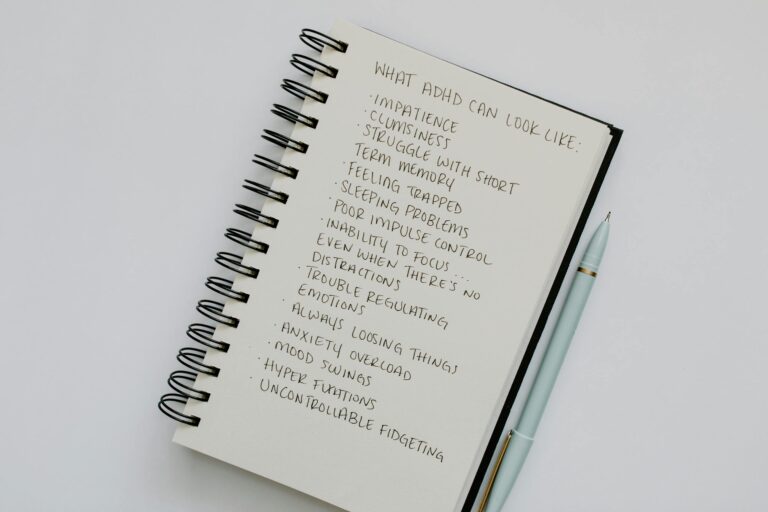
Something worth naming here is the procrastination that often surrounds personal branding photography for introverts and sensitive people. The session gets scheduled and then rescheduled. The wardrobe gets assembled but never quite feels right. The brief gets drafted and then abandoned. What looks like procrastination is often something more specific, a protection mechanism against the vulnerability of being seen. Recognizing that pattern is the first step toward moving through it.

How Do You Use Personal Branding Images Once You Have Them?
The photography session is only the beginning. What you do with the images determines whether the investment pays off.
Start with your LinkedIn profile, which remains the most professionally consequential platform for most knowledge workers. A strong headshot on LinkedIn dramatically increases profile views, and profile views translate into opportunities. Beyond the headshot, consider using personal branding images in the featured section to show context and depth beyond a single portrait.
Your professional website, if you have one, is where personal branding photography can do its most sophisticated work. A well-designed about page with images that show you in your element, engaged with your work, communicating with clients, or simply present in a way that feels true, builds the kind of trust that converts visitors into contacts.
Speaking profiles, conference bios, and media requests all require professional photography. Having a library of strong images means you can respond to these opportunities quickly rather than scrambling to produce something adequate under time pressure. That readiness is itself a form of professional confidence.
Consider also how personal branding photography can support you in job interviews and high-stakes professional presentations. When decision-makers have already encountered a strong, authentic image of you before you meet in person, you walk into that room with an established presence rather than starting from zero. For highly sensitive professionals handling job interviews, that established presence can meaningfully reduce the anxiety of being evaluated in real time.
What Makes Introvert Personal Branding Different From the Standard Advice?
Most personal branding advice is written for extroverts, or at least for people who find visibility comfortable. It emphasizes showing up loudly, posting constantly, and projecting confidence at volume. That approach is not wrong for the people it fits. It is simply not the only approach that works.
Introvert personal branding is built on depth rather than frequency. One extraordinary image communicates more than a hundred mediocre ones. A carefully crafted professional presence on two platforms outperforms a scattered presence on six. Quality of connection matters more than quantity of reach.
There is also something worth saying about the particular kind of authority that introverts project when they do show up visibly. Psychology Today has noted that introverts often bring specific advantages to high-stakes professional situations, including a capacity for careful observation and strategic thinking that translates into genuine credibility. That credibility, when captured in strong personal branding photography, creates a different kind of professional magnetism than extroverted charisma. It is quieter and often more durable.
The neuroscience of introversion offers some context here. Research published in Frontiers in Human Neuroscience has explored how introverts process sensory and social information differently, with implications for how they engage with environments and relationships. That deeper processing is not a liability in personal branding. It is what makes the resulting images feel considered rather than casual.
Introverts also tend to be more consistent in how they present themselves across contexts, because their self-presentation is less dependent on external energy and social mirroring. That consistency is a genuine brand asset. It means your images, your writing, your in-person presence, and your online activity all feel like the same person, which is rarer and more valuable than it might initially seem.
What I found, after years of resisting visibility in my own career, is that the discomfort of being photographed was never really about the camera. It was about the fear that what the camera captured would not match the professional I knew myself to be internally. Once I understood that the introvert’s internal richness is precisely what makes for compelling, authentic images, the whole exercise became less threatening. Not easy, exactly, but purposeful.
There is a broader conversation about how introverts build professional lives that honor their wiring without limiting their ambition. Our Career Skills and Professional Development Hub is the place to continue that conversation, with resources covering everything from communication strategies to career pivots designed for introverted professionals.
About the Author
Keith Lacy is an introvert who’s learned to embrace his true self later in life. After 20 years in advertising and marketing leadership, including running agencies and managing Fortune 500 accounts, Keith now channels his experience into helping fellow introverts understand their strengths and build fulfilling careers. As an INTJ, he brings analytical depth and authentic perspective to every article, drawing from both professional expertise and personal growth.
Frequently Asked Questions
Can introverts be genuinely good at personal branding photography?
Yes, and often more authentically than their extroverted counterparts. Introverts bring depth, thoughtfulness, and genuine presence to a camera when the session is structured in a way that honors their natural processing style. The qualities that define introverted professionals, precision, calm, quiet authority, translate powerfully in photographs when the subject is not performing but simply being. The difference lies in preparation and environment rather than personality type.
How should an introvert prepare for a personal branding photo session?
Thorough preparation is where introverts genuinely excel, and it pays significant dividends in photography. Arrive with a clear brief for your photographer that includes your professional role, the platforms where images will be used, the emotional tone you want to convey, and reference images that resonate with you. Choose locations where you actually feel at ease. Manage your energy by scheduling the session at a time when you are naturally at your best, and build in recovery time afterward. Knowing your own personality profile deeply, including how you present under social pressure, gives you the self-knowledge to brief a photographer effectively.
What kinds of images work best for introverted professionals?
Images that feel inhabited rather than constructed tend to work best for introverts. Candid moments captured alongside posed shots, real environments that reflect actual work, genuine objects and activities from professional life, all of these produce photographs with a quality of authenticity that generic studio work rarely achieves. Avoid locations that look impressive but feel foreign. Choose environments where you are genuinely comfortable, because ease is visible in photographs even when viewers cannot name exactly what they are responding to.
How does personal branding photography affect career opportunities for introverts?
Strong personal branding photography creates professional leverage in several concrete ways. It establishes a visible presence before in-person meetings, reducing the social pressure of making a first impression from scratch. It signals professional seriousness and self-awareness to potential employers, clients, and collaborators. It supports negotiating conversations by communicating that you understand your own value. In fields where introverts often excel but struggle with visibility, a compelling professional image can open doors that technical competence alone might not reach.
What if anxiety or procrastination is preventing me from booking a photography session?
What looks like procrastination around personal branding photography is often a specific form of self-protection against the vulnerability of being seen. Recognizing that pattern is genuinely useful, because it means the block is not about laziness or disorganization but about a deeper discomfort with visibility that deserves to be addressed directly. Breaking the task into smaller steps, starting with the brief and wardrobe before booking the session itself, can reduce the activation energy required. Working with a photographer who has experience with introverted or sensitive clients also makes a meaningful difference, as does choosing a session format that allows for breaks and a pace that does not feel relentless.