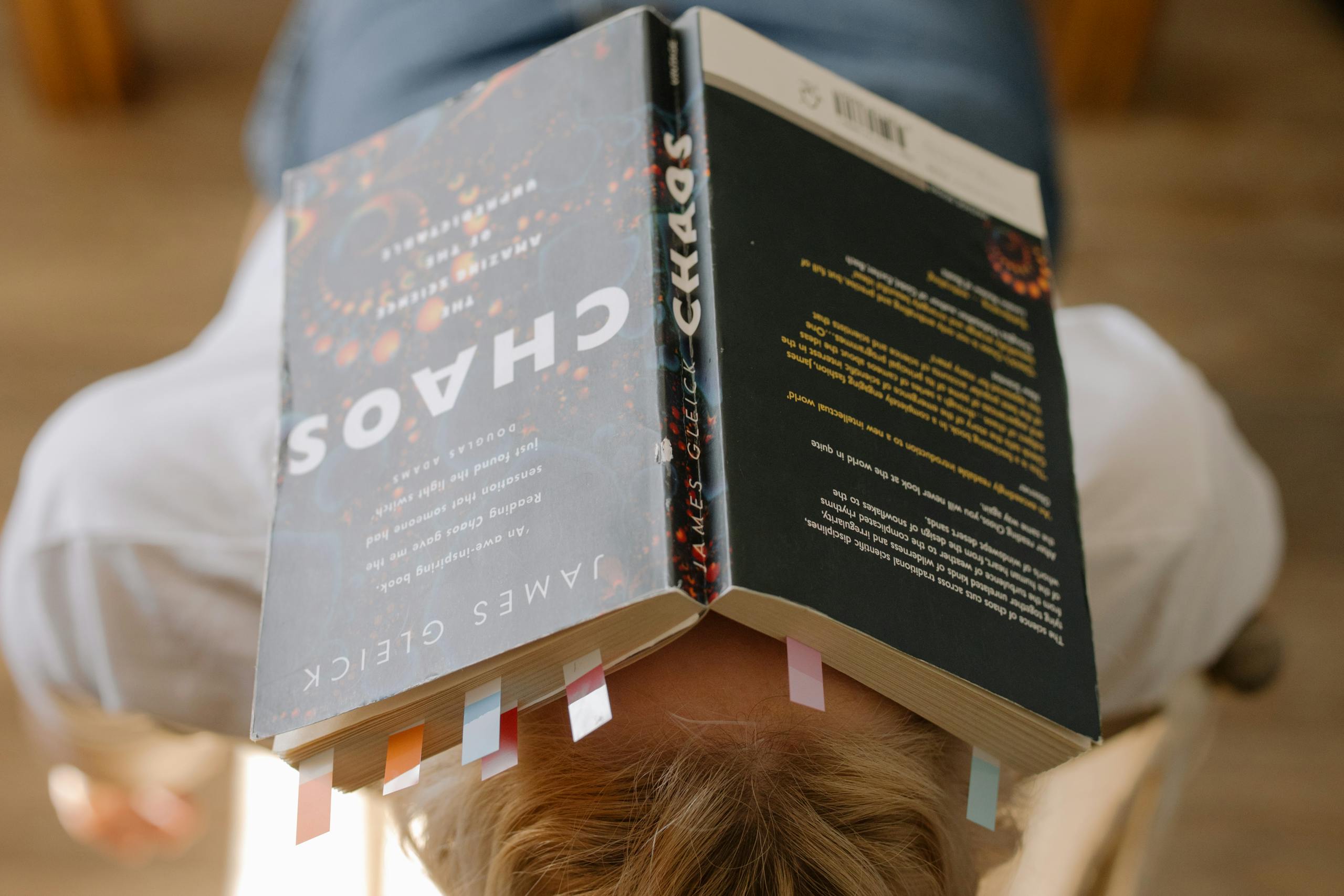

Free self improvement books in PDF format give you instant access to some of the most meaningful ideas in psychology, productivity, and personal growth, without spending a dollar. Many of the most influential titles ever written are now available legally through public domain archives, open-access libraries, and author-released downloads. Whether you’re looking to build better habits, understand your own mind more clearly, or simply find reading material that meets you where you are, the options are far more substantial than most people realize.
What I’ve noticed, though, is that the books people actually finish tend to be the ones they read in quiet. Not on a commute, not between meetings. Genuinely quiet. That distinction matters more than the format.

If you’re someone who processes ideas deeply, who needs time and stillness to absorb what you read, you’ll find this guide useful not just for the book recommendations and download sources, but for the broader question of how to make self-directed reading actually stick. The books I return to most weren’t the ones I read fastest. They were the ones I read slowly, with intention. That’s a very introvert way of approaching growth, and I think it’s worth naming it plainly. Our Solitude, Self-Care & Recharging hub explores this theme in depth, because for many of us, the conditions of reading matter as much as the content itself.
Where Can You Legally Download Self Improvement Books as PDFs for Free?
The first question worth answering honestly: most bestselling self improvement books are under copyright and cannot be downloaded legally as free PDFs. Sites that offer them are typically pirating the author’s work. That matters, both ethically and practically, since those files often carry malware or are low-quality scans that are painful to read.
That said, there is a genuinely large and valuable category of self improvement literature available legally, and for free. Here’s where to find it.
Project Gutenberg
Project Gutenberg (gutenberg.org) hosts over 70,000 free eBooks, including PDF downloads. The self-improvement titles here are older, but that’s not the limitation it might seem. Marcus Aurelius’s Meditations, William James’s The Principles of Psychology, and Ralph Waldo Emerson’s essays are all available in clean, readable formats. These aren’t dusty relics. They’re the source texts that most modern self-help books are quietly drawing from anyway.
I spent a long stretch of my early forties reading Stoic philosophy in PDF form on my iPad, usually late at night after my kids were asleep. Meditations was the first book in years that made me feel genuinely understood rather than instructed. There’s something about a Roman emperor writing privately to himself, with no audience in mind, that resonates deeply with the introvert’s tendency toward internal dialogue.
Open Library (Internet Archive)
The Internet Archive’s Open Library (archive.org/details/openlibrary) operates a digital lending system that gives you access to millions of books, including many contemporary titles, through a borrowing model. You check out a digital copy for a limited period, read it, and return it. It functions like a library card for the internet. Some titles are available as PDFs; others are in EPUB or online-reader format.
Author-Released PDFs and Free Downloads
A number of well-known authors have released full versions of their books as free PDFs, either permanently or as promotional offers. Seth Godin has released several of his books this way. Paul Graham’s essays, which read like a self-improvement curriculum in themselves, are freely available on his website. Some authors in the productivity and psychology space release older editions for free when a new edition launches.
Searching “[author name] free PDF” plus the word “official” tends to surface legitimate releases rather than pirated copies.
Library Genesis Alternatives (Legal Options)
Many public libraries now offer free digital borrowing through apps like Libby (which connects to OverDrive) and Hoopla. These are genuinely free, legal, and surprisingly well-stocked. If you have a library card, you likely already have access to thousands of self improvement titles in digital format. The PDF availability varies, but EPUB files read beautifully on most devices.

Which Self Improvement Books Are Worth Reading as a Reflective, Introverted Person?
Not all self improvement books are written with the same reader in mind. A significant portion of the genre assumes you’re energized by social interaction, motivated by external validation, and ready to “hustle” your way to a better life. Those books aren’t wrong exactly, but they’re not writing for you if you’re someone who does your best thinking alone and processes meaning through sustained reflection.
Over twenty years running advertising agencies, I read a lot of leadership and productivity books because I felt I was supposed to. My team expected me to have read the latest titles. My clients referenced them in meetings. So I read them, often feeling vaguely inadequate because the advice never quite mapped onto how I actually operated. The turning point came when I stopped reading books about how successful people behaved in public and started reading books about how thoughtful people think in private.
Classics Worth Downloading First
Meditations by Marcus Aurelius. Already mentioned, but worth emphasizing. This is a journal, not a self-help book. It was never meant to be published. That makes it feel completely different from anything written with an audience in mind. Available free on Project Gutenberg.
As a Man Thinketh by James Allen. Published in 1903, this short book (more of an extended essay) explores the relationship between thought patterns and life outcomes. It’s available as a free PDF on Gutenberg and dozens of other sites. It reads in under two hours and stays with you for years.
The Art of War by Sun Tzu. Often treated as a business strategy text, it reads more richly as a meditation on patience, preparation, and knowing yourself before engaging with the world. Highly relevant to introverts who feel pressure to act before they’ve fully processed a situation.
Walden by Henry David Thoreau. Thoreau’s account of two years living deliberately in solitude at Walden Pond is, in many ways, the original introvert self-improvement text. His argument that a simpler, more intentional life produces deeper clarity feels almost radical by contemporary standards. Available free through Project Gutenberg.
What I find interesting about all four of these books is that none of them are about becoming more productive in the conventional sense. They’re about becoming more aware, more intentional, and more honest with yourself. That’s a different kind of growth, and for people wired toward depth, it tends to be the kind that actually lasts.
Contemporary Titles Worth Seeking Out
While most contemporary bestsellers aren’t available as free PDFs through legal channels, a few deserve mention for their particular relevance to introverted readers, since you may find them through library borrowing apps or occasional author-released versions.
Quiet by Susan Cain. The book that shifted mainstream culture’s understanding of introversion. If you haven’t read it, it belongs near the top of your list. Cain’s argument, grounded in extensive research, is that introversion is a legitimate and valuable personality orientation rather than a deficit to overcome. The audiobook is also excellent.
The Artist’s Way by Julia Cameron. Originally designed for creative recovery, this twelve-week program centers on morning pages (three pages of longhand writing each day) and weekly solo outings. It’s deeply compatible with introvert rhythms and has helped a remarkable number of people reconnect with their own thinking.
Man’s Search for Meaning by Viktor Frankl. Frankl’s account of surviving the Holocaust and developing logotherapy is one of the most quietly powerful books ever written about the human capacity for meaning-making. It doesn’t shout. It doesn’t promise a system. It simply observes, with extraordinary precision, what sustains a person when everything external has been stripped away.
How Does Reading Fit Into a Genuine Self-Care Practice for Introverts?
Reading is often listed as a hobby or a leisure activity. For introverts, it’s frequently something more functional than that. It’s how we process complex emotions, test ideas against other people’s frameworks, and find language for experiences we haven’t been able to articulate yet.
During a particularly difficult stretch in my mid-forties, when I was managing a large agency through a painful restructuring, I found myself reading for about forty-five minutes each morning before anyone else in my house was awake. It wasn’t escapism. I was reading philosophy, psychology, and memoir, books that helped me think more clearly about what I was experiencing. That reading practice was, looking back, one of the most important things I did for my own stability during that period.
What made it work wasn’t just the content. It was the conditions. Quiet, unhurried, without the pressure to immediately apply or share what I was reading. That’s a point worth making explicitly: the way you read matters as much as what you read.
If you’re a highly sensitive person, you may find that certain books, even genuinely helpful ones, need to be approached carefully. Some content activates rather than settles the nervous system. Practical guidance on HSP self-care daily practices can help you build the kind of grounded routine that makes deep reading possible, rather than overwhelming.

Sleep is another factor that rarely gets discussed in the context of reading and personal growth. When you’re depleted, you don’t retain what you read. You skim. You forget. You read the same paragraph three times without absorbing it. If you’re finding that your reading isn’t sticking, the answer might not be a different book. It might be better rest. Specific HSP sleep and recovery strategies address this directly, particularly for people whose nervous systems need more careful winding down before bed.
There’s also something to be said for reading outdoors. I know that sounds small, but sitting outside with a book, even for thirty minutes, produces a different quality of attention than reading indoors. The gentle sensory input of being outside, sounds, light, air movement, seems to quiet the mental noise that can make concentration difficult. The healing power of nature for HSPs is well-documented in terms of stress reduction and nervous system regulation, and those benefits extend directly to the quality of your reading time.
Why Does Solitude Make Self-Improvement Reading More Effective?
There’s a reason the most meaningful books tend to be read alone. It’s not just preference. Solitude creates the cognitive conditions for genuine reflection, and reflection is what turns reading into actual growth.
When I was building my first agency in my early thirties, I was surrounded by people constantly. Open-plan offices, client calls, team check-ins, networking events. I consumed a lot of books during that period, mostly on audio during commutes, but I retained almost none of them. The ideas passed through me without landing. It wasn’t until I started protecting genuine alone time, not just time when I happened to be by myself, but time I treated as non-negotiable, that reading started to change me in any meaningful way.
Berkeley’s Greater Good Science Center has explored how solitude can enhance creativity and internal processing, noting that time alone allows the mind to consolidate experience and generate original thinking rather than simply responding to external stimuli. For people who already gravitate toward solitude, this isn’t surprising. But it’s useful to have the confirmation that the conditions you naturally prefer are also the conditions most conducive to deep learning.
The need for solitude isn’t a quirk or a preference to be apologized for. For many introverts and HSPs, it’s a genuine psychological requirement. The piece on HSP solitude and the essential need for alone time addresses this in detail, and it’s worth reading if you’ve ever felt guilty about needing more space than the people around you seem to.
What happens when that space isn’t available? The effects are more significant than most people acknowledge. Irritability, difficulty concentrating, emotional flatness, a kind of low-grade exhaustion that sleep doesn’t fully fix. The article on what happens when introverts don’t get enough alone time maps this out clearly. It’s not dramatic. It’s cumulative. And it directly affects your capacity to absorb and benefit from the reading you’re trying to do.
What Are the Best Habits for Actually Finishing Self Improvement Books?
Most self improvement books go unfinished. That’s not a character flaw. It’s partly a format problem and partly a habit problem. consider this’s worked for me and for the people I’ve talked with who read consistently and meaningfully.
Read One Book at a Time
The temptation to have five books going simultaneously is real, especially if you’re intellectually curious and prone to following tangents. In my experience, that approach produces a lot of starting and very little finishing. Committing to a single book until it’s done, or until you’ve genuinely decided it isn’t worth finishing, creates a different relationship with the material.
Write in the Margins (or the Digital Equivalent)
Annotation changes how you read. When you’re reading with a pen in hand, or using your PDF reader’s highlight and note functions, you’re processing more actively. You’re making decisions about what matters. You’re creating a record of your own thinking at the time of reading. That record becomes surprisingly valuable when you return to the book months or years later.
I have a habit of writing a single sentence at the end of each chapter summarizing what I think the author was actually trying to say, separate from what they explicitly said. It’s a small practice, but it forces genuine comprehension rather than passive absorption.
Give Yourself Permission to Quit
Not every highly recommended book is the right book for you at this moment. Some books arrive too early, before you have the context to receive them. Some arrive too late, after you’ve already worked through the ideas they contain. Finishing a book that isn’t serving you, out of obligation, is not a virtue. It crowds out the book that actually would.
I’ve started dozens of books that I’ve set aside after fifty pages. Some of them I’ve returned to years later and found completely different. Others I’ve never returned to. Both outcomes are fine.
Protect Your Reading Time the Way You’d Protect a Meeting
This sounds simple and is genuinely difficult. Reading time that isn’t scheduled tends to disappear. The rest of life expands to fill it. Treating thirty minutes of reading as a commitment, the same way you’d treat a client call or a doctor’s appointment, changes how reliably it happens.
For a long time I read on the train during my commute to the agency. When I started working from home, I lost that structure and my reading dropped significantly for almost two years before I figured out how to replace it. The content of the protected time matters less than the fact of its protection.
How Do You Build a Personal Growth Practice Around Reading Without Burning Out?
There’s a version of self-improvement culture that turns growth into another form of performance. You’re not just reading, you’re optimizing. You’re not just reflecting, you’re tracking metrics. You’re measuring how many books you finish per year and feeling vaguely competitive about it. That version of growth is exhausting, and it’s particularly at odds with how introverts and highly sensitive people tend to operate.
Genuine growth, the kind that actually changes how you think and behave, tends to be slower and quieter than the self-improvement industry suggests. It happens in the spaces between inputs, not during them. When you read something meaningful and then have time to sit with it, to let it settle, to notice where it connects with your own experience, that’s when it becomes part of how you see things. Without that settling time, even the best book remains an interesting idea rather than a lived insight.
A study published in PubMed Central examining psychological wellbeing and reflective practices found that intentional periods of quiet reflection were associated with stronger self-awareness and more stable emotional regulation over time. That aligns with what most introverts already know intuitively: processing takes time, and rushing it produces shallower results.
One thing I’ve found genuinely useful is the concept of “alone time with intention,” which is distinct from simply being by yourself. It’s time where you’re not consuming content, not responding to messages, not even reading. You’re just thinking, walking, or sitting quietly. My own version of this involves what I think of as thinking walks, usually about thirty minutes in the early morning before my day gets structured. No podcast, no audiobook. Just movement and whatever my mind wants to do with it.
There’s a lovely piece on Mac alone time that captures something of this spirit, the idea that solitude isn’t empty time waiting to be filled, but time with its own texture and value. That reframe matters, especially if you’ve been conditioned to feel that time spent alone and not “producing” something is time wasted.
The CDC’s research on social connectedness and mental health is often cited in the context of loneliness, but it’s worth noting that the same framework distinguishes between isolation (unwanted aloneness) and chosen solitude. Those are not the same experience, and conflating them does a disservice to people who genuinely thrive with more solitude than the social average. Choosing to spend a Saturday morning reading alone is not a risk factor. It’s a resource.
Burnout in the self-improvement space often comes from treating growth as a project with deliverables rather than a process with seasons. Some months you read a lot. Some months you sit with what you’ve already read. Some months you need neither, and you need rest instead. Honoring those rhythms isn’t laziness. It’s sustainability.
A piece in Frontiers in Psychology examining the relationship between solitude and wellbeing found that the quality of solitude, whether it’s experienced as chosen and meaningful, matters significantly more than the quantity. That’s a useful corrective to the idea that more alone time is always better. What you do with it, and how you feel about choosing it, shapes its actual benefit.
Psychology Today’s writing on embracing solitude for your health makes a similar point, noting that people who approach alone time with intention and self-compassion, rather than guilt or restlessness, gain the most from it. That self-compassion piece is worth naming directly. Many introverts spend years apologizing for needing what they need. The growth that comes from stopping that apology is substantial.

What Should You Actually Do With What You Read?
This is the question that most reading lists don’t answer. You finish the book. Now what?
My own practice, developed somewhat accidentally over the years, involves three things. First, I write a short summary of the book’s central argument in my own words, not a review, just my honest understanding of what the author was trying to say. Second, I write down one or two specific things I want to try differently based on what I read. Not a list of thirty action items. One or two. Third, I revisit those notes about six weeks later to see what actually changed and what I forgot entirely.
That six-week revisit is often more instructive than the original reading. The things that stuck without effort tend to be the things that were genuinely true for me. The things I forgot completely, despite thinking they were important at the time, often turn out to have been intellectually interesting but not personally resonant.
There’s also value in reading the same book twice, sometimes years apart. I’ve reread Meditations four times now and had a different experience each time. The book hasn’t changed. My questions have. That’s a good sign that the book contains more than a single reading can hold.
One practical note on PDFs specifically: most PDF readers allow you to highlight, annotate, and export your notes. If you’re reading on a device, use those features. A PDF with your own annotations is a significantly more valuable document than a clean one. It’s a record of your thinking at a specific point in your life, which has its own kind of worth.
PubMed Central research on reading and cognitive processing suggests that active engagement with text, including annotation and reflection, produces deeper encoding than passive reading. That’s consistent with what most serious readers already know experientially: you remember what you engaged with, not what you merely consumed.
The self improvement genre, at its best, isn’t about becoming a different person. It’s about understanding the person you already are more clearly, and making choices that are more aligned with that understanding. For introverts, that often means less striving and more discernment. Less consuming and more sitting with. The free PDFs are a starting point, but the real work happens in the quiet afterward.
If you want to explore more about how solitude, rest, and intentional self-care fit together for introverts and sensitive people, the full Solitude, Self-Care & Recharging hub brings all of these threads together in one place.
About the Author
Keith Lacy is an introvert who’s learned to embrace his true self later in life. After 20 years in advertising and marketing leadership, including running agencies and managing Fortune 500 accounts, Keith now channels his experience into helping fellow introverts understand their strengths and build fulfilling careers. As an INTJ, he brings analytical depth and authentic perspective to every article, drawing from both professional expertise and personal growth.
Frequently Asked Questions
Are free self improvement book PDFs legal to download?
It depends entirely on the source. Books in the public domain, generally those published before 1928 in the United States, are freely and legally available through sites like Project Gutenberg and the Internet Archive. Many contemporary bestsellers, even though they appear on various download sites, are pirated copies that violate copyright. Legal free options for newer books include library borrowing apps like Libby and Hoopla, author-released PDFs on official websites, and the Open Library’s digital lending system.
What are the best free self improvement books available as PDFs right now?
Among the strongest legally free options are Marcus Aurelius’s Meditations, James Allen’s As a Man Thinketh, Henry David Thoreau’s Walden, Ralph Waldo Emerson’s essays, and William James’s The Principles of Psychology. All are available through Project Gutenberg. These texts are the source material for much of modern self-help writing, and reading them directly often provides more depth than the books that summarize or adapt them.
How can introverts get the most out of reading self improvement books?
Introverts tend to absorb material most effectively when reading conditions are genuinely quiet and unhurried. Protecting a consistent reading time, reading one book at a time, annotating actively, and allowing space after finishing a book to reflect on it rather than immediately starting the next one all tend to produce deeper retention and more meaningful application. The conditions of reading, solitude, rest, and lack of time pressure, matter as much as the content itself.
Is reading self improvement books actually effective for personal growth?
Reading is effective when it’s paired with reflection and application, and less effective when it’s treated as passive consumption. Many people read widely in the self improvement genre without significant change because they’re absorbing ideas without sitting with them long enough to integrate them. The most meaningful growth tends to come from reading fewer books more slowly and thoughtfully, rather than maximizing the number of titles covered. Writing down one or two specific intentions after finishing a book, and revisiting those notes weeks later, significantly increases the practical impact of what you read.
Why do so many self improvement books feel like they weren’t written for introverts?
A significant portion of the self-help genre was written by, and for, people who are energized by external action, social engagement, and high-visibility achievement. The advice tends to emphasize networking, public speaking, bold external moves, and rapid iteration. Introverts often find this advice technically applicable but emotionally misaligned with how they actually operate. Books that resonate more deeply with introverted readers tend to focus on internal clarity, intentional decision-making, depth of engagement over breadth, and sustainable rhythms rather than aggressive growth. Authors like Susan Cain, Viktor Frankl, and the Stoic philosophers tend to land differently for introspective readers precisely because their frameworks are built around inner life rather than external performance.