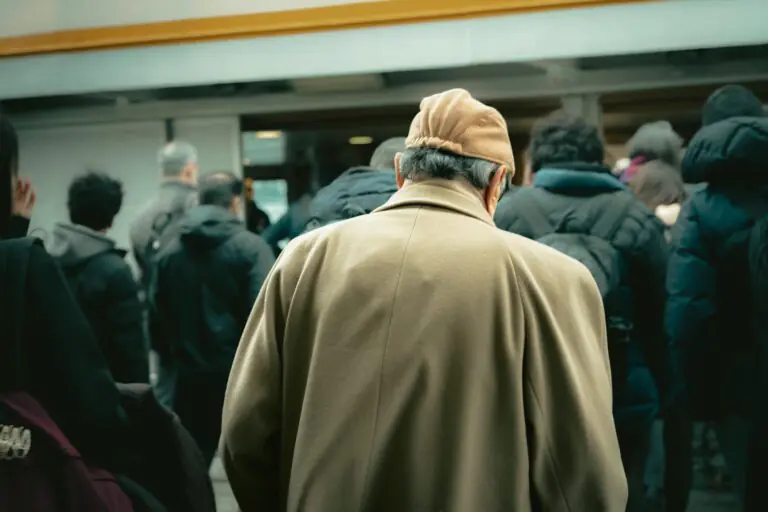

Introvert loneliness is a specific emotional experience where solitude stops feeling restorative and starts feeling isolating, often triggered not by lack of people but by lack of genuine connection. Unlike extrovert loneliness, which typically fades with social contact, introvert loneliness persists even in crowded rooms, because what’s missing isn’t company. It’s depth.
Most conversations about loneliness treat it as a numbers problem. More people, more events, more socializing. Problem solved. But that framework never mapped onto my experience, and it probably doesn’t map onto yours either. Sitting in a packed conference room, surrounded by colleagues mid-brainstorm, I’d feel a particular kind of hollow that I couldn’t name for years. Not bored. Not antisocial. Just fundamentally unmet.
What I eventually understood is that this feeling has a shape. It’s specific to how introverts process connection, meaning, and social energy. And once you recognize that shape, you can actually do something about it.

Loneliness as an introvert touches something deeper than social preference. It intersects with identity, meaning-making, and the particular way quiet people move through a world designed for louder ones. Our Introvert Identity hub explores this territory in full, and this piece adds a layer that often gets missed: why loneliness hits differently when you’re wired for depth over breadth.
Why Does Loneliness Feel Different for Introverts?
Loneliness isn’t just an emotional state. A 2020 review published by the National Institutes of Health found that chronic loneliness activates the same neural threat-response systems as physical pain, with measurable effects on sleep, immune function, and cognitive performance. The experience is physiologically real, not a personality quirk or a mood to push through.
What’s your personality type?
Take our free 40-question assessment and get a detailed personality profile with dimension breakdowns, context analysis, and personalised insights.
Discover Your Type8-12 minutes · 40 questions · Free
Yet the standard framing still treats loneliness as a social deficit. Go to more events. Call more people. Put yourself out there. For extroverts, that advice often works because their loneliness frequently does stem from insufficient social contact. Their batteries charge through interaction, and when interaction drops below a certain threshold, they feel the absence acutely.
Introvert loneliness doesn’t follow that pattern. An introvert can spend an entire weekend at parties, dinners, and team events and come home feeling profoundly alone. The quantity of social contact isn’t the variable. The quality of connection is.
What introverts are wired to need, at a fundamental level, is depth. Conversations that go somewhere real. Relationships where the other person sees past the surface. Moments where you feel genuinely understood rather than merely present. When those elements are absent, the loneliness that settles in has a particular weight to it. It’s not the ache of an empty calendar. It’s the ache of being surrounded by people and still feeling invisible.
During my years running advertising agencies, I had a full social calendar by any external measure. Client dinners, agency happy hours, industry conferences, creative reviews with rooms full of smart, engaged people. And yet there were stretches where I felt genuinely disconnected in a way I couldn’t explain to anyone around me. The conversations were fine. The relationships were professional and cordial. Nothing was wrong, exactly. But nothing was feeding the part of me that needed real contact.
What Actually Triggers Introvert Loneliness?
Pinpointing the triggers matters, because introvert loneliness doesn’t always announce itself with obvious causes. It tends to arrive quietly, accumulating beneath the surface until it’s impossible to ignore.
Surface-level social contact is one of the most consistent triggers I’ve noticed, in my own experience and in conversations with other introverts. Small talk isn’t just draining for us. It can actively deepen the sense of isolation, because it creates the appearance of connection without any of the substance. After a day of pleasantries, check-ins, and performative enthusiasm, many introverts feel more alone than they would have felt in actual solitude.
There’s also the misread problem. Introverts are frequently perceived as self-sufficient, contained, even cold. Because we don’t broadcast our emotional needs in obvious ways, the people around us often assume we’re fine. We become the friend who “doesn’t need checking in on,” the colleague who “seems to prefer working alone,” the partner who “always seems okay.” The loneliness that results from being perpetually misread is its own particular variety of painful.

Environments that reward extroversion consistently are another trigger. Open-plan offices, mandatory team bonding, cultures that celebrate the loudest voice in the room. Spending extended time in those environments doesn’t just drain introverts energetically. It can create a cumulative sense of not belonging, of being structurally excluded from a version of connection that was never designed with you in mind.
The American Psychological Association has documented how social environments that don’t match a person’s temperament can contribute to chronic stress and diminished wellbeing, separate from the effects of loneliness itself. For introverts handling extrovert-oriented workplaces, these effects compound.
One more trigger worth naming: the loneliness that comes after social exhaustion. Introverts often need significant recovery time after sustained social engagement. During that recovery period, we’re typically not available for the kind of deep connection we actually crave. So we end up in a cycle where social activity depletes us, recovery isolates us, and the connections we need most get perpetually deferred.
How Does Introvert Loneliness Show Up Differently Than Extrovert Loneliness?
The contrast is worth examining directly, because conflating the two leads to advice that doesn’t work and self-diagnoses that miss the mark.
Extrovert loneliness tends to be visible. It often shows up as restlessness, increased social seeking, and a clear correlation with reduced social activity. An extrovert who’s lonely usually knows they’re lonely, can articulate why, and responds positively when social contact increases. The feedback loop is relatively direct.
Introvert loneliness is more opaque. It can coexist with a full social life. It often doesn’t feel like “loneliness” in the conventional sense, which is part of why it goes unrecognized for so long. It might present as a vague dissatisfaction, a sense that something important is missing without a clear source, a flatness that persists even on good days. Many introverts spend years attributing this feeling to depression, personality flaws, or general life dissatisfaction before recognizing it as loneliness.
There’s also a shame dimension that’s more pronounced for introverts. We live in a culture that assumes introverts prefer solitude, full stop. So admitting to loneliness can feel contradictory, even embarrassing. “But I thought you liked being alone.” Yes. And I’m still lonely. Those two things are not mutually exclusive, but explaining that distinction requires a level of nuance that most casual conversations don’t accommodate.
A 2018 study covered by Psychology Today noted that introverts tend to report lower satisfaction from social interactions on average, not because they dislike people, but because their threshold for what counts as meaningful contact is higher. More interactions don’t automatically translate to less loneliness. Only the right interactions do.
Why Is Being Lonely in a Crowd So Common for Introverts?
This is probably the experience that most introverts recognize immediately and struggle most to explain to people who don’t share it.
Being lonely in a crowd is the gap between physical presence and genuine contact. You are surrounded by people. There is noise, movement, conversation, laughter. By every external measure, you are not alone. And yet the loneliness is real, and in some ways more acute because of the contrast.
The agency world gave me a front-row seat to this experience. I spent years at industry events, standing in rooms full of people I knew professionally, cycling through the same conversational loops about campaigns and clients and industry trends. I was good at it. I’d built enough skill at surface engagement that no one would have guessed what was happening internally. But after those evenings, I’d sit in my car before driving home and feel something that I can only describe as a specific kind of emptiness. Not tired. Empty.

What I’ve come to understand is that introverts don’t just want to be in the presence of people. We want to be in real contact with them. We want the conversation that goes somewhere unexpected. The moment where someone says something honest and the room gets a little quieter. The exchange that you’re still thinking about three days later. When those moments are absent, presence itself becomes a kind of loneliness amplifier.
The Mayo Clinic notes that perceived social isolation, meaning the subjective sense of being disconnected regardless of actual social contact, carries many of the same health risks as objective isolation. Introverts who feel chronically unseen in social environments are experiencing a real form of isolation, even when they’re objectively surrounded by people.
There’s also a cognitive load component. Introverts typically process social environments more thoroughly than extroverts, picking up on emotional undercurrents, unspoken tensions, and interpersonal dynamics that others move past. Being in a crowd while simultaneously processing all of that is exhausting in a way that leaves little bandwidth for the kind of present, open engagement that leads to genuine connection. The very sensitivity that makes deep connection so meaningful also makes shallow environments so depleting.
What Does Introvert Loneliness Do to Your Mental Health Over Time?
Leaving introvert loneliness unnamed and unaddressed doesn’t make it inert. It accumulates.
The World Health Organization has identified social isolation and loneliness as significant contributors to depression, anxiety, and cognitive decline. These effects don’t require objective isolation to take hold. Chronic perceived disconnection, feeling fundamentally unseen or unmet in social interactions, produces many of the same outcomes.
For introverts specifically, there are a few patterns worth watching. One is the withdrawal spiral. When social environments consistently fail to provide genuine connection, the reasonable response is to disengage from them. But disengagement reduces the chances of encountering the depth-level connection that would actually help. So withdrawal deepens loneliness, which increases withdrawal. The cycle is self-reinforcing and genuinely difficult to interrupt without some intentional effort.
Another pattern is identity erosion. Spending extended time in environments that don’t see you clearly, that misread your quietness as coldness or your independence as indifference, gradually shapes how you see yourself. Introverts who spend years in workplaces or relationships where their inner life is consistently overlooked sometimes begin to internalize that invisibility. They stop expecting to be understood. They stop reaching for depth. The loneliness becomes structural rather than situational.
There’s also a secondary effect on self-worth that I’ve observed in myself and in others. When you repeatedly experience social interactions as hollow or draining, it’s easy to conclude that something is wrong with you rather than with the environment. Many introverts carry a quiet belief that they’re “bad at people” or fundamentally difficult to connect with. That belief is usually false, but it’s understandable given how consistently the mainstream social script fails to accommodate the way we connect.

How Can Introverts Actually Address Loneliness Without Draining Themselves?
The standard loneliness advice, more social contact, bigger social circles, greater openness to new people, misses the point for introverts. Volume isn’t the solution. Selectivity and intentionality are.
What works is engineering for depth rather than breadth. A single conversation that goes somewhere real does more to address introvert loneliness than ten pleasant but surface-level exchanges. Recognizing that means making deliberate choices about where you invest your limited social energy.
One practical shift is identifying the environments and formats where depth is actually possible for you. For some introverts, one-on-one conversations work far better than group settings. For others, shared-activity contexts, working alongside someone on a project, cooking together, walking while talking, create the conditions for genuine connection without the pressure of performing sociability. Knowing your own pattern matters more than following a generic prescription.
There’s also value in being willing to name what you need, even when it feels awkward. Introverts are often reluctant to signal emotional needs because we’re accustomed to being perceived as self-sufficient. But the people who matter most in your life can’t provide the depth you’re craving if they don’t know you’re craving it. Vulnerability, even quiet and careful vulnerability, is part of what creates the connection that addresses loneliness at its root.
A 2019 analysis from Harvard Business Review found that the quality of workplace relationships, specifically the presence of at least one person with whom an employee could have candid, substantive conversations, was more predictive of wellbeing and engagement than the breadth of an employee’s social network. That finding resonates with what introverts already know intuitively. One real connection outweighs ten cordial ones.
Something else worth considering is the distinction between solitude and isolation. Introverts need solitude. That’s real and valid and worth protecting. Yet solitude is a choice made from a place of sufficiency. Isolation is what happens when connection is absent and you’ve stopped expecting it. Maintaining the difference between the two, actively choosing solitude rather than defaulting into isolation, requires some ongoing attention, especially during periods when life circumstances limit social options.
Late in my agency career, I made a deliberate shift. Instead of attending every industry event on my calendar, I started declining the ones that I knew would leave me feeling hollow and investing that time in a small group of peers I’d built genuine trust with over years. We’d meet quarterly, talk honestly about what was actually happening in our businesses and our lives, and leave those conversations feeling genuinely fed. That shift didn’t solve everything, but it addressed the specific loneliness I’d been carrying in a way that adding more calendar items never had.
Does Introversion Make You More Vulnerable to Loneliness?
The honest answer is: it depends on the environment and on how well you understand your own needs.
Introversion itself doesn’t cause loneliness. What creates vulnerability is the mismatch between an introvert’s connection needs and the social environments they inhabit. An introvert in a relationship, community, or workplace that genuinely accommodates depth-oriented connection can feel profoundly connected with a relatively small social footprint. An introvert in environments that consistently reward extroversion and penalize depth may feel chronically isolated regardless of how many people are around.
Self-awareness is the variable that matters most. Introverts who understand what they actually need from social connection, and who’ve developed some capacity to seek it out and communicate around it, tend to fare significantly better than those who are still operating on the assumption that something is simply wrong with them.
The American Psychological Association has noted that self-knowledge and social intentionality are among the strongest protective factors against chronic loneliness, across personality types. For introverts, that means developing clarity about the difference between chosen solitude and unwanted isolation, between surface contact and genuine connection, between being present in a room and actually being met.
Embracing your introversion, rather than treating it as a social handicap to compensate for, is also part of this. The years I spent trying to perform extroversion in professional settings didn’t just drain me. They made me worse at the kind of connection I was actually capable of. Authenticity is a prerequisite for depth. You can’t have the conversations that address loneliness while you’re busy performing a version of yourself designed to fit in.

There’s something worth sitting with here. Introvert loneliness, at its core, is a signal. It’s telling you that the connection you’re capable of and the connection you’re currently experiencing are not the same thing. That gap is real and it matters. Yet it’s also closable, not by becoming someone different, but by getting clearer about what you actually need and being more deliberate about creating conditions where that need can be met.
The path isn’t more socializing. It’s better socializing, on your terms, in formats that work for how you’re wired, with people who are willing to go somewhere real with you. That’s not a compromise. That’s a standard worth holding.
Explore more about introvert identity, self-understanding, and emotional wellbeing in our complete Introvert Identity Hub.
About the Author
Keith Lacy is an introvert who’s learned to embrace his true self later in life. After 20 years in advertising and marketing leadership, including running agencies and managing Fortune 500 accounts, Keith now channels his experience into helping fellow introverts understand their strengths and build fulfilling careers. As an INTJ, he brings analytical depth and authentic perspective to every article, drawing from both professional expertise and personal growth.
Frequently Asked Questions
Can introverts feel lonely even when they spend a lot of time alone?
Yes. Introvert loneliness isn’t caused by solitude. It’s caused by the absence of genuine, depth-level connection. An introvert can spend significant time alone by choice, find it restorative, and still feel profoundly lonely if their social interactions consistently lack meaning or authenticity. Solitude chosen from a place of sufficiency feels different from isolation that results from disconnection.
Why do introverts feel lonely in social situations?
Introverts tend to need depth and genuine connection from social interactions, not just presence or pleasantries. When social environments are dominated by small talk, surface-level engagement, or performative interaction, introverts often feel more isolated than they would in actual solitude. Being in a room full of people while experiencing no real contact is a specific form of loneliness that many introverts know well.
Is introvert loneliness the same as depression?
They are related but distinct. Introvert loneliness is a specific emotional experience tied to unmet connection needs. Depression is a clinical condition with a broader symptom profile. That said, chronic introvert loneliness that goes unaddressed can contribute to depression over time, particularly when it’s accompanied by identity erosion or persistent self-blame. If you’re experiencing persistent low mood alongside loneliness, speaking with a mental health professional is worth considering.
How is introvert loneliness different from extrovert loneliness?
Extrovert loneliness typically responds to increased social contact because it’s often rooted in insufficient interaction. Introvert loneliness is more specifically about the quality of connection rather than the quantity. More social events don’t necessarily reduce it. What helps is fewer, more meaningful interactions with people who engage at a level of depth that introverts find genuinely nourishing. The solutions are structurally different even if the emotional pain shares some common ground.
What can introverts do to feel less lonely without forcing themselves into draining social situations?
Focus on depth over breadth. Identify the formats and environments where genuine connection is possible for you, whether that’s one-on-one conversations, shared-activity contexts, or smaller groups with established trust. Be willing to communicate what you need from relationships rather than assuming others will intuit it. Protect your solitude as a deliberate choice rather than defaulting into isolation. And invest your limited social energy in the relationships and situations most likely to provide the real contact you’re actually looking for.