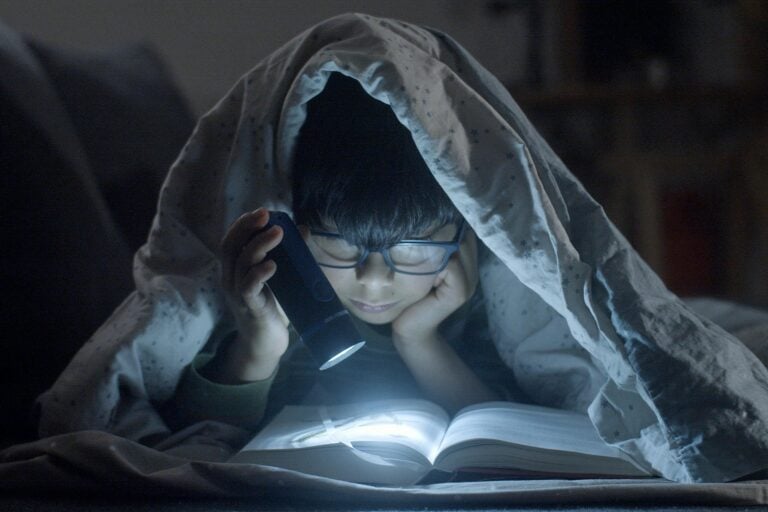
A dissociated person is someone whose mind has partially or fully disconnected from their thoughts, feelings, surroundings, or sense of self, usually as a protective response to overwhelming stress or trauma. It’s not a character flaw or a sign of weakness. It’s the nervous system doing what it was designed to do: creating distance from something too painful to process all at once.
Dissociation exists on a wide spectrum. At one end, it looks like ordinary daydreaming or zoning out during a long meeting. At the other end, it can involve profound disconnection from identity, memory, or physical sensation. Most people experience mild dissociation at some point in their lives. For some, it becomes a persistent pattern that shapes every relationship they’re in, including the ones closest to home.

I’ve spent a lot of time thinking about emotional disconnection, partly because of my work and partly because of my own wiring. As an INTJ, I process emotion internally and quietly. I retreat into my mind when things get loud or overwhelming. For years, I confused that tendency with something healthier than it sometimes was. It took some honest self-examination to understand the difference between introversion and genuine emotional withdrawal. That distinction matters enormously, especially inside a family.
If you’re trying to understand how dissociation shows up in family relationships, particularly when you or someone you love seems emotionally unreachable, you’ll find a broader context in our Introvert Family Dynamics and Parenting hub, which covers the full range of how personality and emotional experience shape the people we become inside our families.
What Does It Actually Mean to Be a Dissociated Person?
The word “dissociation” gets used loosely in everyday conversation. Someone says they feel “checked out” or “not really present,” and while that captures something real, clinical dissociation is a more specific experience. It refers to a disruption in the normally integrated functions of consciousness, memory, identity, emotion, perception, and behavior.
A dissociated person may feel like they’re watching their own life from a distance, as though they’re a spectator in a movie rather than a participant. They might lose stretches of time, feel emotionally numb when they know they should feel something, or experience their surroundings as unreal or dreamlike. Some describe it as living behind glass, able to see everything but unable to fully touch it.
The American Psychological Association recognizes dissociation as a common response to trauma, one that can range from brief and benign to persistent and disabling. What ties the spectrum together is the core mechanism: the mind creating separation between self and experience as a form of protection.
There are several recognized forms. Depersonalization involves feeling detached from your own thoughts, feelings, or body. Derealization involves the sense that the world around you isn’t real. Dissociative amnesia involves gaps in memory that can’t be explained by ordinary forgetting. Dissociative identity disorder, formerly called multiple personality disorder, sits at the far end of the spectrum and involves distinct identity states that take control at different times.
Most people who would define themselves as a dissociated person aren’t dealing with the extreme end of that spectrum. They’re dealing with something more subtle and more common, a persistent sense of emotional distance, of being slightly removed from their own life, that makes genuine connection feel difficult or even impossible.
How Does Dissociation Differ From Introversion?
This is a question I’ve sat with for a long time, because the surface behaviors can look remarkably similar. Both the introverted person and the dissociated person may seem quiet, withdrawn, hard to read, or reluctant to share what’s happening inside. Both may prefer solitude. Both may seem emotionally contained in ways that frustrate more expressive people around them.
The difference lies in what’s actually happening beneath the surface. Introversion, as I understand it from the inside, is about energy and preference. I go quiet because I’m processing. I withdraw to recharge. My inner world is rich and active, even when I’m not broadcasting it. When I’m alone after a long client presentation, I’m not absent. I’m very present, just internally.
Dissociation is different. It’s not a preference. It’s a protective mechanism that often operates without conscious choice. Where an introvert retreats to their inner world, a dissociated person may find that their inner world has gone quiet too, that the feelings they expect to find when they look inward simply aren’t accessible. It’s less like choosing to close a door and more like finding that the room behind the door is empty.
I managed a creative director once, a deeply introverted woman who processed everything slowly and privately. She’d sit in silence through entire brainstorm sessions and then send a three-paragraph email at midnight that completely reframed the problem. That was introversion at work. Pure, productive, internally rich. I also worked with an account executive who seemed similarly quiet but whose silence had a different quality. He wasn’t processing. He was somewhere else entirely. Meetings would end and he’d have no memory of what was decided. That was something else.
Personality assessments can sometimes help clarify what’s going on beneath the surface. Taking something like the Big Five Personality Traits test can reveal patterns in how someone relates to their emotions and the world around them, which can be a useful starting point for understanding whether what you’re experiencing is temperament or something that needs more direct attention.

What Causes Dissociation, and Why Does It Matter for Families?
Dissociation typically develops in response to experiences the mind couldn’t fully integrate at the time they happened. Childhood trauma is one of the most well-documented contributors, including physical or emotional abuse, neglect, witnessing violence, or growing up in an environment of chronic unpredictability. When a child can’t escape a frightening situation physically, the mind finds another way out.
But trauma isn’t the only pathway. Prolonged stress, grief, certain medical conditions, and even some medications can trigger dissociative experiences. Some people find that dissociation becomes a habitual response to any emotional intensity, not just extreme situations, because the nervous system has learned that disconnection is safer than engagement.
Research published through PubMed Central has explored the neurological underpinnings of dissociation, pointing to disruptions in how the brain processes and integrates sensory and emotional information. The picture that emerges is of a system that has learned to protect itself by fragmenting experience rather than processing it whole.
Inside a family, this matters enormously. A parent who dissociates under stress may be physically present but emotionally unreachable precisely when their child needs them most. A partner who dissociates during conflict may appear calm, even cold, in ways that feel dismissive or punishing to the person trying to reach them. A sibling who dissociates may seem indifferent to family events that carry deep meaning for everyone else.
The people around a dissociated person often don’t understand what they’re seeing. They interpret absence as rejection, numbness as cruelty, emotional distance as deliberate withdrawal. That misreading creates its own damage, layering hurt and resentment onto what is often an involuntary and deeply painful experience for the person going through it.
For parents specifically, the stakes are particularly high. A highly sensitive child will feel the emotional absence of a dissociated parent acutely, even if they can’t name what they’re sensing. If you’re parenting while handling your own emotional patterns, the article on HSP parenting and raising children as a highly sensitive parent offers a thoughtful look at how our own emotional wiring shapes the environment we create for our kids.
How Does a Dissociated Person Experience Relationships?
Relationships require presence. Not just physical proximity, but emotional availability, the capacity to feel what’s happening between two people and respond to it authentically. For a dissociated person, that kind of presence can feel genuinely out of reach, not because they don’t care, but because the mechanisms that make emotional availability possible have been disrupted.
Many dissociated people describe loving their partners or children deeply while being unable to access or express that love in the moment. They know, intellectually, that they feel something. But the feeling itself seems muted or inaccessible, like trying to remember a dream that keeps dissolving as you reach for it.
This creates a particular kind of loneliness, the loneliness of being surrounded by people you love and still feeling utterly alone. It also creates confusion and pain for the people on the other side of that distance. Partners often describe feeling like they’re in a relationship with someone who is only partially there. Children may grow up sensing a gap they can’t explain, an emotional absence that shapes their own attachment patterns.
The Psychology Today overview of family dynamics captures how profoundly our early relational experiences shape the patterns we carry into adulthood. A parent’s emotional availability, or lack of it, becomes part of the emotional architecture a child builds their sense of self upon.
Some dissociated people become highly attuned to others’ needs as a way of staying oriented, using external cues to compensate for the internal signals that feel unreliable. Others withdraw further when relationships intensify, because closeness itself can trigger the dissociative response. Both patterns can look, from the outside, like personality traits rather than symptoms, which is part of why dissociation so often goes unrecognized for years.
It’s also worth noting that dissociation can overlap with other conditions. Some of the emotional dysregulation and identity disturbance associated with borderline personality disorder, for example, includes dissociative features. If you’ve been trying to understand patterns in yourself or someone close to you, taking a preliminary borderline personality disorder test can be a useful first step toward understanding what might be happening and whether to seek professional support.

Can You Recognize a Dissociated Person in Your Life?
Recognizing dissociation in someone else requires letting go of the assumption that emotional absence is always a choice. It’s easy to read a dissociated person as cold, uninterested, or deliberately withholding. The signs are often subtle, and they overlap with other patterns, which makes them easy to misread.
Some things to look for include a blank or glazed expression during conversations that should carry emotional weight. A person who seems to “check out” mid-discussion and returns without being able to account for where they went. Responses that feel slightly off-tempo, as though there’s a delay between what’s happening and when they register it. A tendency to describe their own experiences in flat, detached language, as though reporting on events that happened to someone else.
You might also notice that they seem to have difficulty remembering conversations or events that were significant to you. Not because they weren’t paying attention, but because the experience didn’t fully register. Memory consolidation is affected when dissociation is active during an event.
Early in my agency career, I had a senior copywriter who was brilliant when he was present. But there were stretches where he’d sit through an entire client review and then look genuinely confused when I referenced something that had been discussed. At first I thought he was disengaged or arrogant. Over time, I came to understand that something else was happening. He wasn’t choosing to be absent. He was struggling to stay in the room in a way that went beyond ordinary distraction.
Likeability often suffers when dissociation is present, not because dissociated people are unkind, but because the social reciprocity that makes people feel seen and valued requires a kind of real-time emotional tracking that dissociation disrupts. If you’ve ever wondered why someone who seems genuinely well-intentioned still leaves people feeling vaguely unseen, the likeable person test can surface some of the interpersonal patterns that might be worth examining.
What’s the Relationship Between Dissociation and Introversion in Family Settings?
Introverted families often have their own version of emotional distance that’s entirely healthy. We need more quiet. We process privately. We don’t always express emotion in real time. Those tendencies can look, from the outside, like the same emotional unavailability that characterizes dissociation. And sometimes, in families where introversion is the dominant style, genuine dissociation can hide in plain sight for years.
What I’ve come to understand, both through my own experience and through watching the families of people I’ve worked with, is that the distinction often comes down to one question: is there actually something there when you look inward, or does the inner landscape feel empty or inaccessible?
An introverted parent who needs an hour alone after work to decompress is practicing self-regulation. A parent who goes through the motions of family life feeling like they’re watching it happen to someone else is experiencing something that deserves attention and care.
The National Institutes of Health has explored how early temperament shapes personality development into adulthood, which underscores how much of who we become in our families is shaped by wiring we were born with. That wiring interacts with experience in complex ways, and sometimes the result is patterns that look like personality but are actually adaptive responses to early environments.
In blended families, these dynamics can become especially complicated. When people with different histories and different nervous systems come together to form a new family unit, the emotional availability of each person shapes the whole. The Psychology Today resource on blended families offers useful context for how those dynamics play out when the emotional histories people bring into the room are especially varied.

What Helps a Dissociated Person Reconnect?
Reconnection is possible. That’s the most important thing to hold onto, whether you’re the person experiencing dissociation or someone who loves them. The nervous system learned to disconnect because disconnection felt safer than presence. With the right support, it can learn that presence is survivable.
Therapy is typically the most direct path, particularly approaches that work with the nervous system rather than just the cognitive mind. Somatic therapies, EMDR, and trauma-focused approaches have all shown meaningful results for people dealing with persistent dissociation. success doesn’t mean force presence but to gradually expand the window of tolerance so that being emotionally available doesn’t feel like a threat.
Grounding practices can help in the moment. These are techniques that anchor awareness in the present through the senses, noticing what you can see, hear, feel, or smell right now. They work because they interrupt the dissociative process by directing attention outward and into the body, rather than allowing the mind to drift further from experience.
For people in caregiving roles, understanding dissociation can change how they approach their work entirely. Whether you’re a family member, a personal care assistant, or someone in a support role, recognizing that emotional absence isn’t always willful changes the quality of care you can offer. The personal care assistant test online can help clarify whether someone has the temperament and awareness to support people handling complex emotional and psychological experiences.
Consistency and safety matter more than intensity. A dissociated person doesn’t reconnect through being pushed to feel more or be more present. They reconnect through repeated experiences of safety, where presence is met with warmth rather than demand, and where the risk of being emotionally available gradually comes to feel lower than the cost of staying away.
Physical health and routine also play a role that’s easy to underestimate. Sleep, movement, nutrition, and time in nature all support nervous system regulation. For people in physically demanding support roles, like personal trainers working with clients who carry trauma in their bodies, understanding the connection between physical experience and emotional regulation is particularly valuable. The certified personal trainer test touches on some of these dimensions of whole-person wellness.
Perhaps most importantly, self-compassion is not optional. Many dissociated people carry enormous shame about their emotional unavailability, a shame that itself makes reconnection harder. Treating the dissociation as a survival strategy rather than a character failure opens the door to change in a way that self-criticism never can.
What Does It Feel Like From the Inside?
I want to spend a moment here, because I think the inside experience of dissociation is often the least understood part. From the outside, a dissociated person can look like they simply don’t care. From the inside, the experience is frequently one of profound loss.
Many people who experience dissociation describe grief as one of its primary features. Grief at not being able to feel what they want to feel. Grief at watching moments that should matter pass by behind glass. Grief at the relationships that have frayed because they couldn’t show up the way they wanted to.
There’s also often a deep exhaustion. Maintaining any degree of functioning while partially disconnected from your own experience takes enormous energy. The effort of appearing present when you feel absent, of tracking conversations when your mind keeps slipping away, of performing emotional availability when the internal signal is weak or absent, all of that is genuinely tiring in ways that are hard to explain to someone who hasn’t experienced it.
Some people describe moments of sudden reconnection as both relief and overwhelm. When the dissociation lifts, even briefly, the feelings that flood in can be intense precisely because they’ve been held at a distance. That intensity can itself trigger a return to dissociation, which is part of why the process of healing tends to be gradual rather than sudden.
Research available through PubMed Central on emotional processing and trauma responses helps explain why this oscillation between connection and disconnection is so common, and why patience, both self-directed and from the people around a dissociated person, is such an essential part of the path forward.
Why This Matters for Introverts Specifically
Introverts are not more prone to dissociation than extroverts. But there are reasons why dissociation can be harder to identify and address in introverted people and introverted family systems. Our natural tendency toward inwardness, privacy, and emotional restraint creates a kind of cover. The behaviors that would signal distress in a more outwardly expressive person can look, in an introvert, like ordinary personality.
As an INTJ, I’ve had to learn to distinguish between my genuine preference for solitude and processing quietly, which serves me well, and moments of emotional shutdown that were closer to dissociation than to healthy introversion. The line isn’t always obvious from the inside. It took honest reflection and, at times, feedback from people who knew me well enough to notice the difference.
What I’ve found is that the richness of introverted inner life is actually a resource in healing from dissociation. The capacity for deep reflection, for sitting with complexity, for noticing subtle internal shifts, these are strengths that support the kind of careful self-examination that reconnection requires. They’re not the problem. They’re part of the solution.
If you’re an introverted person trying to understand whether what you’re experiencing is your natural temperament or something that needs more direct attention, that question is worth taking seriously. Not with alarm, but with the same honest curiosity you’d bring to any other aspect of your inner life.
There’s more to explore on how personality, emotional experience, and family dynamics intersect in our Introvert Family Dynamics and Parenting hub, where we look at the full range of how being wired the way we are shapes our closest relationships.
About the Author
Keith Lacy is an introvert who’s learned to embrace his true self later in life. After 20 years in advertising and marketing leadership, including running agencies and managing Fortune 500 accounts, Keith now channels his experience into helping fellow introverts understand their strengths and build fulfilling careers. As an INTJ, he brings analytical depth and authentic perspective to every article, drawing from both professional expertise and personal growth.
Frequently Asked Questions
What is the simplest way to define a dissociated person?
A dissociated person is someone whose mind has created a separation between themselves and their thoughts, feelings, memories, or sense of identity, usually as a protective response to overwhelming stress or trauma. The experience can range from mild and brief, like zoning out during a stressful moment, to persistent and disruptive, affecting memory, identity, and the ability to feel emotionally present in relationships.
How do you tell the difference between introversion and dissociation?
Introversion is a preference for inner processing and a need to recharge through solitude. The introverted person has a rich inner world they can access. Dissociation involves a disconnection from that inner world, where feelings, memories, or sense of self become inaccessible or unreal. An introvert goes quiet to process more deeply. A dissociated person goes quiet because the processing itself has been disrupted. One is a temperament; the other is a response to stress or trauma that often operates without conscious choice.
Can dissociation affect parenting?
Yes, significantly. A parent who dissociates under stress may be physically present but emotionally unreachable at the moments their child most needs connection. Children are sensitive to emotional absence even when they can’t name it, and a parent’s consistent emotional unavailability can shape a child’s attachment patterns and sense of security. Recognizing dissociation as a response to trauma rather than a character failing is an important step toward getting support that benefits the whole family.
Is dissociation always related to trauma?
Trauma is the most commonly recognized cause of persistent dissociation, particularly childhood trauma. Yet dissociation can also be triggered by prolonged stress, grief, certain medical conditions, and in some cases substance use. Mild dissociation, like daydreaming or zoning out, is a normal human experience that most people have without any trauma history. It’s the persistent, disruptive pattern of dissociation that tends to have deeper roots in experiences the nervous system couldn’t fully process at the time.
What actually helps a dissociated person reconnect?
Trauma-informed therapy is the most direct path, with approaches like EMDR and somatic therapy showing meaningful results. Grounding techniques, which anchor awareness in the present moment through the senses, can help interrupt dissociation in real time. Consistency, safety, and self-compassion matter more than intensity or pressure. Physical wellbeing, including sleep, movement, and routine, supports nervous system regulation. Reconnection tends to be gradual rather than sudden, and the people around a dissociated person can help by offering patience and warmth rather than demands for emotional presence.