
The long-term effects of emotional abuse on a woman reach far deeper than most people realize. Unlike physical wounds, emotional damage settles into the nervous system, reshapes identity, and quietly rewires how a woman relates to herself and everyone around her. The effects can persist for years, sometimes decades, even after the relationship ends.
What makes emotional abuse so particularly damaging is its invisibility. There are no bruises to point to, no single incident to name. There is only a slow erosion of self-trust, confidence, and emotional safety that compounds quietly over time. Many women spend years wondering whether what happened to them was “bad enough” to explain why they feel the way they do.
It was. And understanding what emotional abuse does over the long term is one of the most important steps toward genuine healing.
Much of what I write here at Ordinary Introvert focuses on relationships through the lens of introversion, and I think that lens matters enormously when we talk about emotional abuse. Introverted women are often especially vulnerable to certain forms of emotional manipulation, precisely because of how deeply they feel, how carefully they think, and how much they tend to internalize. If you’re exploring the broader landscape of how introverts experience love and connection, our Introvert Dating and Attraction hub offers a fuller picture of the patterns, challenges, and strengths that shape introverted relationships.
What Does Emotional Abuse Actually Look Like in a Relationship?
Emotional abuse is a pattern of behavior designed to control, diminish, and destabilize another person’s sense of reality and self-worth. It rarely announces itself. More often, it shows up as criticism dressed as concern, silence used as punishment, affection that gets withdrawn without explanation, and constant second-guessing of a woman’s perceptions and feelings.
Gaslighting is one of the most documented forms. A woman expresses that something hurt her, and her partner responds by insisting it never happened, that she’s too sensitive, or that she’s misremembering. Over time, she stops trusting her own mind. That erosion of self-trust is not a side effect of emotional abuse. It is often the central goal.
Other patterns include isolation from friends and family, constant monitoring, unpredictable emotional reactions that keep a partner walking on eggshells, public humiliation disguised as humor, and withholding of affection as a control mechanism. None of these require raised voices or dramatic scenes. Some of the most damaging emotional abuse happens quietly, in private, over years of small moments that individually seem minor but collectively devastate.
I think about this from my own vantage point as an INTJ. My mind is wired to analyze patterns, to look for the system beneath the surface behavior. When I was running my agencies, I occasionally encountered dynamics between colleagues or in client relationships where one person was systematically undermining another’s confidence. It was subtle, often invisible to outsiders, but the pattern was unmistakable once you knew what to look for. The person being undermined would start second-guessing their own competence, apologizing for things that weren’t their fault, and shrinking in meetings where they’d previously been confident. Emotional abuse in romantic relationships operates through the same mechanisms, only far more intimately and with far higher stakes.
How Does Emotional Abuse Reshape a Woman’s Sense of Identity?
One of the most profound long-term effects of emotional abuse is what it does to a woman’s core sense of self. Identity, the stable inner sense of who you are and what you value, doesn’t disappear overnight. It gets worn down gradually, through repeated messages that her perceptions are wrong, her needs are too much, her feelings are unreliable, and her judgment cannot be trusted.
After years of this, many women find themselves genuinely unsure of what they think, what they want, or even what they enjoy. They’ve spent so much energy managing another person’s moods and reactions that they’ve lost contact with their own inner life. Preferences that once felt clear become murky. Opinions that once came naturally now feel dangerous to voice.
This identity erosion is particularly acute for introverted women, who tend to build their sense of self from the inside out. Introverts often rely on their internal world as a source of stability and self-knowledge. When emotional abuse systematically attacks that internal world, telling a woman she doesn’t understand herself, that her feelings are wrong, that her interpretations are distorted, it strikes at something foundational. The inner sanctuary gets contaminated.
Understanding how introverts experience and process love feelings helps clarify why this damage runs so deep. Introverted women don’t fall in love casually or quickly. When they commit, they commit with their whole inner world. An abusive partner gains access to something extraordinarily private and precious, and the betrayal of that trust leaves marks that take years to heal.

What Are the Long-Term Psychological Effects on Mental Health?
The psychological aftermath of sustained emotional abuse is significant and well-documented. Anxiety is among the most common long-term effects. After years of living with unpredictability, hypervigilance becomes the nervous system’s default setting. A woman learns to scan every environment for signs of danger, to monitor tone of voice, facial expressions, and subtle shifts in mood. Even after leaving the relationship, that vigilance doesn’t simply switch off.
Depression frequently follows as well. The chronic stress of emotional abuse, combined with the isolation that often accompanies it, depletes emotional reserves over time. When a woman finally exits the relationship, she may feel not relief but a profound emptiness, because the relationship, however painful, had become the organizing structure of her daily life.
Post-traumatic stress responses are also common. Triggers that seem minor to outsiders can produce intense emotional reactions in survivors. A certain tone of voice, a particular phrase, a familiar smell can all activate the body’s threat response. Research published in PubMed Central has examined how chronic interpersonal trauma shapes the nervous system in ways that persist long after the traumatic relationship ends, affecting everything from sleep to concentration to physical health.
What strikes me, both from observation and from conversations with people who’ve shared their experiences, is how often women who’ve survived emotional abuse blame themselves for these symptoms. They see their anxiety as weakness, their depression as failure, their emotional reactivity as proof that something is fundamentally wrong with them. Those are the abuser’s messages, internalized and continuing to do damage long after the relationship is over.
Additionally, findings from PubMed Central on psychological trauma suggest that the effects of emotional abuse on attachment systems can be far-reaching, influencing how survivors form bonds in future relationships and how safe they’re able to feel with others who are genuinely trustworthy.
How Does Emotional Abuse Affect the Way Women Relate to Others?
Emotional abuse doesn’t only damage the relationship it occurs within. It reaches outward, reshaping how a woman relates to everyone around her. Trust, once systematically broken, doesn’t rebuild automatically. Many survivors find themselves expecting manipulation from people who are genuinely kind, bracing for criticism that never comes, or feeling inexplicably guilty in the presence of warmth.
Friendships can suffer. Isolation is a common tool of emotional abusers, and many women emerge from these relationships having lost years of connection with friends and family. Rebuilding those bonds requires vulnerability, and vulnerability is exactly what emotional abuse teaches a woman to suppress and distrust.
Romantic relationships after emotional abuse present their own complex terrain. Patterns learned in abusive relationships, people-pleasing, conflict avoidance, hypervigilance to a partner’s moods, can show up in new relationships and create confusion for both partners. A woman might find herself apologizing constantly, struggling to express needs, or shutting down emotionally the moment conflict arises, not because she wants to, but because those are the survival strategies her nervous system learned.
This is where understanding the relationship patterns introverts carry into love becomes genuinely useful. Introverted women often enter relationships with already-established tendencies toward self-sufficiency and internal processing. Emotional abuse can warp those tendencies, turning healthy independence into painful isolation and turning thoughtful internal processing into a cycle of self-blame and rumination.
I once worked with a client, a Fortune 500 brand manager, whose team dynamics were being quietly destroyed by a senior colleague who used subtle humiliation and gaslighting to undermine her credibility in meetings. By the time she came to us for help with her team’s communication strategy, she’d stopped speaking in group settings altogether. She’d learned that speaking up led to being publicly contradicted and dismissed. Her silence wasn’t personality. It was adaptation. That’s exactly what emotional abuse does in intimate relationships, only more completely and more intimately.

What Happens to Physical Health Over Time?
The body keeps score in ways that are often surprising to survivors. Chronic stress from emotional abuse doesn’t stay contained to the emotional or psychological realm. Over time, it affects physical health in measurable ways.
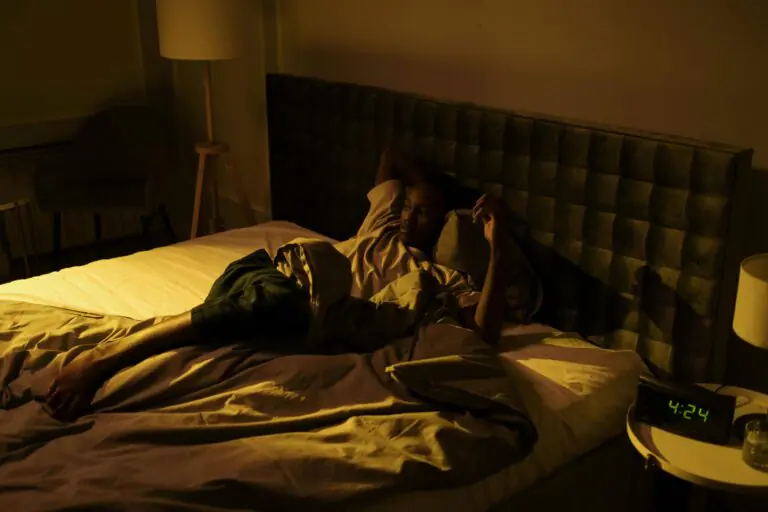
Sleep disruption is nearly universal among survivors. The hypervigilance that develops during an abusive relationship makes deep, restorative sleep difficult. Many women report years of insomnia, frequent waking, or vivid nightmares that persist long after leaving. Chronic sleep deprivation compounds every other effect, making emotional regulation harder, cognitive function slower, and physical health more vulnerable.
Chronic pain conditions, autoimmune flares, digestive problems, and frequent illness are all associated with prolonged psychological stress. The immune system and the stress response system are deeply interconnected, and years of sustained emotional threat take a measurable toll on the body’s ability to regulate and repair itself.
Headaches, muscle tension, and fatigue are common physical companions to the emotional aftermath. Many women spend years seeking medical explanations for physical symptoms that are, at their root, the body’s response to trauma that hasn’t yet been fully processed.
What I find particularly important to name here is that these physical symptoms are real. They are not imagined, not exaggerated, and not signs of weakness. They are the body’s honest report of what it has been through. Treating them requires addressing both the physical symptoms and the underlying psychological roots, ideally with professional support from someone who understands trauma.
How Do Highly Sensitive Women Experience These Effects Differently?
Highly sensitive people, those who process sensory and emotional information more deeply than the general population, face a particular kind of vulnerability in emotionally abusive relationships. Their nervous systems are already finely tuned to emotional nuance. They pick up on subtle shifts in tone, unspoken tension, and emotional undercurrents that others might miss entirely.
In a healthy relationship, this sensitivity is a gift. It enables deep empathy, rich connection, and an extraordinary capacity for attunement. In an abusive relationship, it becomes a liability. A highly sensitive woman doesn’t just experience the abuse she experiences the anticipation of it, the aftermath of it, and every subtle variation in between. Her nervous system is working overtime, all the time.
The long-term effects for highly sensitive women can be particularly pronounced. The emotional dysregulation, hypervigilance, and identity confusion that all survivors experience are often amplified by a nervous system that was already operating at higher sensitivity. Recovery takes longer not because highly sensitive women are weaker, but because they’ve absorbed more.
If you identify as a highly sensitive person and are working through the aftermath of an emotionally difficult relationship, the complete guide to HSP relationships here at Ordinary Introvert addresses many of the specific dynamics that make these relationships both uniquely beautiful and uniquely challenging. And when conflict arises in any relationship, understanding how HSPs can approach disagreements peacefully offers practical grounding for a nervous system that has often learned to associate conflict with danger.
A thoughtful piece from Psychology Today on dating introverts touches on how the emotional depth that introverts and highly sensitive people bring to relationships can be both their greatest strength and their greatest vulnerability, a tension that becomes especially significant in the context of emotional abuse.

What Does Recovery Actually Look Like?
Recovery from the long-term effects of emotional abuse is not a straight line, and it doesn’t follow a predictable timeline. What it does follow is a recognizable pattern: first, naming what happened; second, separating the abuser’s messages from genuine self-knowledge; third, slowly rebuilding trust in one’s own perceptions and feelings; and fourth, relearning what safe connection actually feels like.
Therapy with a trauma-informed professional is often the most significant accelerant in this process. Approaches like EMDR, somatic therapy, and trauma-focused cognitive behavioral therapy have all shown meaningful results for survivors of emotional abuse. The common thread is that they address not just the cognitive understanding of what happened, but the body’s stored response to it.
Community matters enormously as well. Isolation is both a symptom and a tool of emotional abuse. Reconnecting with people who offer consistent, reliable warmth, without conditions or manipulation, begins to rebuild the neural pathways associated with safe attachment. It happens slowly, and there will be setbacks. That’s not failure. That’s the actual texture of healing.
One of the most powerful things I’ve observed, both in my own life and in the lives of people I’ve worked alongside, is how much the quality of our closest relationships determines our ability to recover from damage done by other relationships. When I was at my most burned out from years of performing a version of leadership that didn’t fit who I actually was, what helped most wasn’t a strategy or a framework. It was a handful of people who saw me clearly and didn’t ask me to be different. That kind of witness is what survivors of emotional abuse most need, and most deserve.
For introverted women specifically, recovery often involves reclaiming the interior life that emotional abuse contaminated. Getting reacquainted with your own thoughts, preferences, and perceptions, without constantly filtering them through the question of how someone else will react, is both the work and the reward. Understanding how introverts naturally show and receive affection can be part of that reclamation, a reminder that your way of loving was never the problem.
How Does Emotional Abuse Affect Future Relationships and Attachment?
One of the most painful long-term effects of emotional abuse is what it can do to a woman’s capacity for future intimacy. Not because she’s broken, but because the relationship fundamentally altered her working model of what love looks, sounds, and feels like.
Survivors often find themselves drawn to familiar emotional dynamics, even when those dynamics are harmful. This isn’t masochism or poor judgment. It’s the nervous system seeking the familiar. Patterns that feel normal, even when they’re painful, register as safe simply because they’re known. Recognizing this pattern is the first step toward interrupting it.
Many survivors also struggle with what might be called earned trust, the gradual, evidence-based process of learning to trust a new partner based on consistent behavior over time, rather than either immediately trusting or permanently withholding trust. A Psychology Today piece on romantic introverts notes that introverts often take longer to open up in relationships, which in the context of abuse history can be both a protective factor and a barrier to genuine connection.
For those who eventually enter new relationships, particularly relationships between two introverts who both carry histories and sensitivities, the dynamics can be complex and worth examining carefully. The patterns that emerge when two introverts fall in love include both extraordinary depth and particular vulnerabilities, especially when one or both partners carry unhealed wounds from past relationships.
The 16Personalities piece on the hidden dynamics of introvert-introvert relationships raises useful points about how shared tendencies toward internalization can either deepen connection or, without awareness, create communication gaps that leave both partners feeling unseen. For survivors of emotional abuse, those gaps can trigger old fears in ways that require particular care and patience to work through.
What I want to say clearly, because I think it matters, is that surviving emotional abuse does not disqualify a woman from healthy love. It complicates the path there. It requires more intentional work, more patience with oneself, and often professional support. But the capacity for genuine connection doesn’t get destroyed by abuse. It gets buried. And it can be found again.

What Are the Signs That Healing Is Actually Happening?
Healing from emotional abuse is often invisible from the outside, and even from the inside it can be hard to recognize. Progress rarely feels like progress in the moment. More often, it feels like one day you notice you didn’t apologize for something that wasn’t your fault, or you expressed a preference without immediately bracing for consequences, or you recognized a manipulative dynamic before you were already deep inside it.
Signs that healing is occurring include a gradual return of self-trust, the ability to identify your own feelings without immediately questioning whether they’re valid, and a growing capacity to tolerate conflict without it feeling catastrophic. Boundaries that once felt impossible to hold begin to feel not just possible but necessary.
Reconnection with pleasure and curiosity is another meaningful marker. Emotional abuse tends to flatten a woman’s relationship with joy, because joy requires presence and openness, both of which become dangerous in an abusive environment. When small things start to feel genuinely good again, when a book absorbs you or a conversation energizes you or a quiet afternoon feels like a gift rather than a threat, that’s the nervous system beginning to believe it’s safe again.
There’s a piece from Loyola University Chicago’s research archive that examines recovery trajectories after interpersonal trauma, and what stands out is how nonlinear the process tends to be. Setbacks are part of it. A difficult week doesn’t erase months of progress. The overall arc, measured over years rather than weeks, tends toward greater stability, greater self-knowledge, and greater capacity for connection.
I’ll close this section with something I genuinely believe: the qualities that make introverted women vulnerable to emotional abuse, their depth, their loyalty, their capacity for empathy, their commitment to understanding rather than reacting, are also the qualities that make them extraordinary partners, friends, and human beings. Abuse exploited those qualities. Healing reclaims them.
If you’re working through the aftermath of a difficult relationship and looking for more context on how introversion shapes the way we love and heal, the full collection of articles in our Introvert Dating and Attraction hub covers these themes from many angles, with the kind of depth and honesty that this topic deserves.
About the Author
Keith Lacy is an introvert who’s learned to embrace his true self later in life. After 20 years in advertising and marketing leadership, including running agencies and managing Fortune 500 accounts, Keith now channels his experience into helping fellow introverts understand their strengths and build fulfilling careers. As an INTJ, he brings analytical depth and authentic perspective to every article, drawing from both professional expertise and personal growth.
Frequently Asked Questions
Can emotional abuse cause permanent damage to a woman’s mental health?
Emotional abuse can cause lasting psychological effects, including anxiety, depression, post-traumatic stress responses, and disrupted attachment patterns. That said, “lasting” does not mean “permanent” in the sense of being unchangeable. With appropriate support, including trauma-informed therapy and stable, safe relationships, many survivors experience significant healing over time. The effects are real and serious, but they are not a life sentence.
How long does it take to recover from the long-term effects of emotional abuse?
Recovery timelines vary widely depending on the duration and severity of the abuse, the presence of a support system, access to professional help, and individual factors including personality, prior trauma history, and nervous system sensitivity. Many survivors find that meaningful healing happens over years rather than months, and that the process is nonlinear, with periods of progress followed by setbacks. Patience with oneself is not optional in this process. It’s essential.
Why do introverted women seem particularly affected by emotional abuse?
Introverted women tend to build their sense of self from the inside out, relying on their inner world for stability and self-knowledge. Emotional abuse systematically attacks that inner world, which can make the damage feel especially disorienting. Additionally, introverts often commit deeply when they love, giving an abusive partner access to something extraordinarily private. Their tendency to process internally can also mean they absorb more before seeking outside perspective or help.
Is it possible to have healthy relationships after emotional abuse?
Yes, genuinely. Emotional abuse complicates the path to healthy relationships, but it doesn’t eliminate the possibility. Many survivors go on to build deeply fulfilling partnerships, friendships, and family connections. What it typically requires is intentional work: understanding the patterns learned in the abusive relationship, developing clearer boundaries, rebuilding self-trust, and often working with a therapist who understands relational trauma. The capacity for love and connection doesn’t disappear. It needs time and care to resurface.
What’s the difference between emotional abuse and a difficult relationship?
All relationships involve conflict, misunderstanding, and moments of hurt. What distinguishes emotional abuse is the presence of a pattern, not isolated incidents, designed to control, diminish, or destabilize a partner’s sense of reality and self-worth. In a difficult but non-abusive relationship, both partners can express needs, repair after conflict, and maintain their individual sense of self. In an emotionally abusive relationship, one partner’s needs are consistently subordinated to the other’s, and the targeted partner gradually loses trust in her own perceptions, feelings, and judgment.