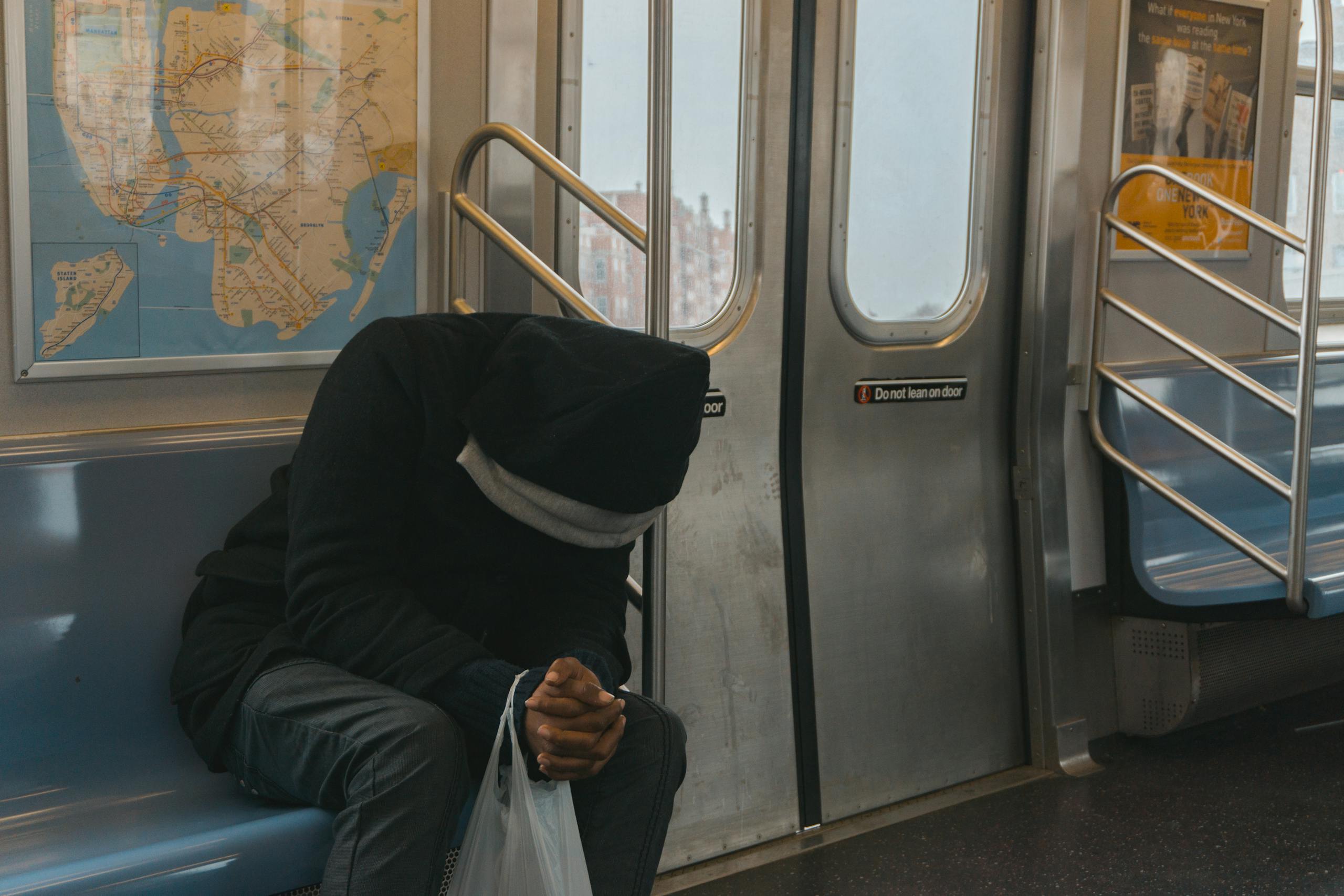

The New York Journal American newspaper ran its last edition in 1966, folding after decades as one of the city’s most colorful tabloids. For most people, it’s a footnote in media history. For me, stumbling across a stack of brittle, yellowed copies at an estate sale years ago, it became something else entirely: a quiet meditation on what happens when the noise stops, when something loud and relentless simply ceases to exist, and what that silence reveals about the people left holding the pages.
There’s a particular kind of mental stillness that introverts and highly sensitive people often find in old things. Archives. Libraries. Forgotten newspapers. The New York Journal American, with its bold headlines and breathless prose, represents a world built entirely on external stimulation. And yet holding those pages, reading stories from a city that no longer quite exists, I found something unexpectedly calming. It made me think seriously about how we process the world around us, and what happens to our mental health when that world is relentlessly loud.
If you find yourself drawn to quiet corners, old books, and the kind of depth that modern media rarely offers, you’re probably already familiar with the tension between a world designed for stimulation and a mind that processes everything more intensely. That tension is worth examining closely, because it shapes how we think, how we feel, and how we protect our mental health in environments that weren’t built with us in mind. Our Introvert Mental Health hub explores exactly this territory, from sensory overload to emotional processing to the quiet grief of feeling perpetually out of step with a louder world.
What Does a Defunct Newspaper Have to Do With Introvert Mental Health?
More than you might expect. The New York Journal American was a Hearst publication, part of the yellow journalism tradition that prioritized sensation over substance. It competed in one of the most aggressive media markets in American history, fighting for attention on newsstands crowded with rivals. Everything about it was designed to grab you, to pull your eyes in, to make you feel something immediately and urgently.
Sound familiar? Replace the newsstand with a smartphone screen, and the Journal American’s front page with a social media feed, and you have a remarkably accurate description of the environment most of us live in today. The stimulation is constant, the urgency is manufactured, and the expectation is that you will respond quickly, loudly, and without much internal reflection.
My years running advertising agencies put me squarely inside that machine. We were paid to create exactly that kind of urgent, attention-grabbing content for Fortune 500 brands. I was good at it professionally. Personally, it nearly broke me. As an INTJ, I process the world by pulling information inward, filtering it through layers of analysis and intuition before I’m ready to respond. The advertising world wanted me to react in real time, to brainstorm loudly in group sessions, to perform enthusiasm on demand. Every day felt like reading a Journal American front page written specifically to overwhelm me.
Why Do Highly Sensitive People Feel the World More Intensely?
Psychologist Elaine Aron’s work on the highly sensitive person trait describes a nervous system that processes sensory and emotional information more deeply than average. This isn’t a disorder or a flaw. It’s a trait found across many species, likely because it confers real advantages in environments that reward careful observation and nuanced response.
That said, in a world that runs on the Journal American model, where everything is loud, fast, and designed to provoke an immediate reaction, being wired for depth can feel like a liability. The research published in PubMed Central on sensory processing sensitivity confirms what many highly sensitive people already know intuitively: deeper processing comes with a cost in high-stimulation environments. The brain is working harder, filtering more, and the cumulative effect can be exhausting in ways that are difficult to explain to people who don’t share the trait.
I managed several highly sensitive people during my agency years, and watching them move through our open-plan offices was genuinely painful. One creative director I worked with, an extraordinarily talented woman who consistently produced our best conceptual work, would arrive early every morning specifically to have two hours of quiet before the floor filled up. By 11 AM, when the account teams started their rounds and the conference calls stacked up, I could see the energy draining from her in real time. She wasn’t being precious or difficult. Her nervous system was doing exactly what it was built to do: processing everything, all at once, at full depth.
Managing HSP overwhelm and sensory overload isn’t about toughening up or learning to ignore the input. It’s about understanding how your particular nervous system works and building environments, habits, and boundaries that honor that reality rather than fight it constantly.

How Does Constant Stimulation Affect Introvert and HSP Anxiety?
There’s a particular kind of anxiety that builds when you’re wired for quiet and the world refuses to offer it. It’s not the sharp, sudden anxiety of a specific threat. It’s more like a low hum that never quite stops, a background frequency of too-much that accumulates over hours and days until it becomes genuinely difficult to function.
The National Institute of Mental Health’s resources on generalized anxiety disorder describe a pattern of persistent, excessive worry that’s difficult to control. Many introverts and highly sensitive people exist in a kind of subclinical version of this state not because they have a disorder, but because their environment is chronically mismatched to their nervous system. The distinction matters, but so does the recognition that the experience of that chronic low-level anxiety is real and deserves attention.
Understanding and working through HSP anxiety starts with recognizing that what you’re experiencing isn’t weakness or irrationality. It’s a predictable response to a specific kind of mismatch. The Journal American model of the world, loud, fast, competitive, sensation-driven, is genuinely more taxing for some nervous systems than others. Acknowledging that isn’t self-pity. It’s accurate self-knowledge, which happens to be the foundation of any effective mental health strategy.
My own anxiety in agency environments was rarely about specific problems. It was about the relentlessness. The phone that rang constantly. The open-door policy that meant my office was never actually mine. The expectation that I’d be available, responsive, and energetically present from 8 AM until the last client dinner wrapped up. I didn’t have words for what I was experiencing at the time. I just knew that by Friday afternoon, I felt like I’d been wrung out and left to dry, and by Monday morning, I hadn’t fully recovered.
What Can We Learn From the Way Old Newspapers Processed the World?
consider this strikes me about the New York Journal American when I read those old issues: beneath all the tabloid bluster, there was actually a great deal of depth. Long-form reporting. Columnists who spent weeks on a single story. Letters sections where readers engaged seriously with ideas over multiple editions. The newspaper’s loud exterior contained something quieter and more considered than its reputation suggests.
Many introverts are like that. The internal life is rich, layered, and full of nuance. The external presentation, because it costs so much energy, tends to be more selective and measured. This creates a persistent misunderstanding: the quiet person must have less going on. In reality, they often have more, processed more carefully, held more thoughtfully.
HSP emotional processing works the same way. Highly sensitive people don’t feel more than others in some dramatic, performative sense. They process what they feel more thoroughly, tracing emotional experiences back through memory and meaning, connecting them to larger patterns, sitting with them longer before moving on. This depth of processing is genuinely valuable. It produces insight, empathy, creativity, and wisdom. It also produces exhaustion when the world moves faster than the processing can keep up.
The PubMed Central research on emotional regulation and sensitivity points toward something important here: the relationship between depth of processing and emotional wellbeing isn’t straightforwardly negative. People who process deeply often show greater capacity for meaning-making and resilience over time, even when the short-term experience is harder. The challenge is building a life that gives the processing the space it needs rather than treating it as an obstacle to overcome.

How Does Deep Empathy Become Both a Strength and a Source of Pain?
The New York Journal American covered some genuinely devastating stories during its run: war, crime, poverty, political corruption. Reading those old pages now, I notice how the writers balanced proximity to human suffering with the need to keep producing, keep publishing, keep moving to the next story. For highly sensitive people in any field, that balance is one of the central challenges of professional life.
HSP empathy is genuinely double-edged in this way. The same capacity that makes highly sensitive people extraordinary listeners, perceptive collaborators, and deeply loyal friends also makes them vulnerable to absorbing the emotional weight of everyone around them. In a newsroom, that might mean carrying the grief of every story. In an advertising agency, it meant something different but equally taxing: absorbing the anxiety of every client, the frustration of every creative conflict, the disappointment of every campaign that didn’t perform.
I watched this play out repeatedly with the empathic people on my teams. One account manager I worked with for years was exceptional at client relationships precisely because she felt the client’s concerns as her own. She wasn’t performing care; she genuinely experienced it. Clients trusted her completely, and she delivered for them consistently because she cared so much. She also burned out twice in five years, and neither time was I equipped to understand why or help her prevent it. Looking back, I can see that her empathy, unmanaged and unprotected, was consuming her from the inside.
The American Psychological Association’s framework on resilience emphasizes that sustainable strength comes not from eliminating sensitivity but from building the internal resources and external supports that allow sensitivity to function without destroying the person who carries it. That’s a meaningfully different approach than the “toughen up” advice that sensitive people typically receive.
Why Do High Standards Become a Mental Health Problem for Sensitive People?
The Journal American competed in a market where being second-best meant losing readers to the Daily News or the Herald Tribune. That competitive pressure created a culture of relentless striving, of good enough never quite being good enough. Sound familiar to anyone who’s ever lived inside a highly sensitive, deeply conscientious mind?
Perfectionism in highly sensitive people isn’t vanity. It’s usually rooted in a genuine, felt sense that details matter, that quality matters, that the gap between adequate and excellent is real and significant. The problem is that this same sensitivity to quality can make it genuinely painful to produce work that falls short of an internal standard, even when that standard is set impossibly high.
Working through HSP perfectionism is one of the more complex mental health challenges in this space, because the solution can’t simply be “care less.” The depth of caring is often inseparable from the quality of the work. What has to change is the relationship with imperfection, the ability to recognize that a finished thing with flaws serves the world better than a perfect thing that never gets made.
I struggled with this constantly as an agency CEO. My INTJ tendency toward high standards combined with genuine care for craft meant that I would sometimes hold campaigns in revision long past the point of productive improvement. I was chasing something that existed in my head and couldn’t quite be fully realized in the physical world. A creative director I deeply respected finally said to me, “Keith, you’re not making it better anymore. You’re just making it different.” That landed. It took years to fully act on it, but it landed.
The Ohio State University research on perfectionism offers an important distinction between adaptive and maladaptive perfectionism. The former drives genuine excellence; the latter drives anxiety, procrastination, and burnout. Highly sensitive people often start in the adaptive zone and slide toward maladaptive patterns under sustained pressure, not because they’re weak, but because their standards are genuinely harder to meet in a world that moves fast and values output over quality.

How Do Introverts and Sensitive People Process Rejection Differently?
The New York Journal American folded in 1966, rejected by a market that had moved on. Newspapers don’t feel rejection, but the people who made them certainly did. Journalism, like advertising, like most creative fields, runs on a constant cycle of pitching and being turned down, proposing and being ignored, creating and watching your creation get quietly shelved.
For highly sensitive people, rejection doesn’t process the same way it might for someone with a less reactive nervous system. It goes deeper, stays longer, and tends to attach itself to larger narratives about worth and belonging. This isn’t irrational. It’s a predictable consequence of deep processing applied to painful experiences.
Understanding HSP rejection processing and healing matters enormously for mental health, because unprocessed rejection has a way of accumulating. Each new experience of being turned down or dismissed gets layered on top of the ones that came before, and eventually the weight of that accumulation starts to shape how you approach new opportunities. You pull back before you can be pushed away. You preemptively edit yourself to avoid the risk of being found wanting.
I’ve watched this pattern in myself and in people I’ve managed. After a major pitch loss early in my agency career, a campaign we’d worked on for three months that a client rejected in a fifteen-minute meeting, I spent the next quarter being measurably more conservative in my creative recommendations. I didn’t consciously decide to play it safe. My nervous system made that decision for me, trying to protect me from repeating the experience. It took a trusted business partner pointing out the pattern before I could see it clearly enough to address it.
The clinical literature on emotional regulation describes this kind of protective withdrawal as a common response to repeated painful experiences. The challenge for sensitive people is that the protection comes at a cost: the same withdrawal that guards against rejection also limits connection, growth, and the kind of creative risk-taking that produces meaningful work.
What Does Healthy Mental Space Actually Look Like for People Who Process Deeply?
Those old Journal American newspapers are quiet now. They don’t demand anything from me. I can read them at my own pace, set them down when I need to, return to them when I’m ready. There’s something genuinely restorative about engaging with information on your own terms, without the urgency that modern media builds into every interaction.
Building mental health as an introvert or highly sensitive person is largely about recreating that quality of engagement in as many areas of your life as possible. It means designing environments that support deep processing rather than constantly interrupting it. It means building relationships with people who value your depth rather than requiring you to perform extroversion to earn their respect. It means being honest about what depletes you and what restores you, and making choices accordingly.
None of that is simple in a world still largely running on the Journal American model. The academic research on introversion and wellbeing consistently points toward the importance of person-environment fit: the degree to which your external circumstances match your internal wiring. When the fit is poor, even naturally resilient people struggle. When the fit improves, people who were previously just surviving begin to do something that looks much more like flourishing.
After I left the day-to-day pressure of running agencies, the shift in my mental health was almost immediate and genuinely surprising in its magnitude. I hadn’t realized how much chronic energy I was spending simply trying to function in an environment that required me to be something I wasn’t. Reclaiming that energy didn’t make me a different person. It made me more fully the person I already was, which turned out to be more than enough.
The Psychology Today piece on introvert communication patterns captures something I’ve long believed: introverts aren’t avoiding connection, they’re protecting the quality of it. That distinction matters enormously for mental health, because it reframes withdrawal not as pathology but as preference, not as failure but as self-knowledge in action.

How Do You Build Resilience Without Losing What Makes You Who You Are?
The New York Journal American didn’t survive because it couldn’t adapt fast enough to a changing media landscape. That’s the conventional explanation. But reading those final editions, I wonder if the more honest answer is that it simply couldn’t be what television was: immediate, omnipresent, effortlessly consuming. Some things aren’t built to compete on those terms, and trying to do so destroys what made them valuable in the first place.
Introverts and highly sensitive people face a version of this choice constantly. You can spend enormous energy trying to match the extroverted, high-stimulation world on its own terms, and some people do this successfully for years, at considerable personal cost. Or you can invest that same energy in building a life that works with your wiring rather than against it.
Resilience, in this context, isn’t about becoming less sensitive or less introverted. It’s about developing the specific skills and structures that allow your particular kind of mind to function well over time. That includes learning to recognize your own early warning signs of overwhelm before they become crises. It includes building recovery practices that actually work for your nervous system, not the ones that work for your more extroverted colleagues. And it includes finding communities, professional environments, and relationships where your depth is treated as an asset rather than an inconvenience.
Those yellowed Journal American pages remind me that things built for depth and care have a different kind of longevity than things built purely for immediate impact. They don’t always win in the short term. But they leave something worth returning to.
There’s more to explore on these themes across the full range of topics we cover in the Introvert Mental Health hub, from managing anxiety and sensory overload to building the kind of emotional resilience that doesn’t require you to become someone else to achieve it.
About the Author
Keith Lacy is an introvert who’s learned to embrace his true self later in life. After 20 years in advertising and marketing leadership, including running agencies and managing Fortune 500 accounts, Keith now channels his experience into helping fellow introverts understand their strengths and build fulfilling careers. As an INTJ, he brings analytical depth and authentic perspective to every article, drawing from both professional expertise and personal growth.
Frequently Asked Questions
What is the New York Journal American newspaper and why does it matter to introvert mental health?
The New York Journal American was a Hearst tabloid that ran from 1937 until 1966, when it folded amid fierce competition in the New York media market. Its legacy is less about journalism history and more about what it represents: a world built on relentless stimulation, urgency, and external noise. For introverts and highly sensitive people, that model of constant sensory demand is a useful lens for understanding why modern environments feel so draining, and why building quieter, more intentional spaces matters for mental health.
Are introverts more likely to experience anxiety in high-stimulation environments?
Many introverts and highly sensitive people do report higher levels of chronic low-grade anxiety in environments that are loud, fast-paced, and socially demanding. This isn’t a clinical diagnosis for most people, but rather a predictable response to a sustained mismatch between their nervous system’s natural processing style and the demands of the environment around them. Recognizing this mismatch is the first step toward addressing it effectively, whether through environmental changes, boundary-setting, or targeted mental health support.
How does sensory processing sensitivity differ from introversion?
Introversion and high sensitivity are related but distinct traits. Introversion primarily describes where you get your energy: introverts restore through solitude and are drained by extended social interaction. Sensory processing sensitivity, associated with the highly sensitive person trait identified by psychologist Elaine Aron, describes a nervous system that processes all incoming information, sensory, emotional, and social, more deeply and thoroughly than average. Many highly sensitive people are introverts, but not all introverts are highly sensitive, and a meaningful minority of highly sensitive people are actually extroverted.
What are practical ways introverts can protect their mental health in demanding environments?
Practical mental health protection for introverts starts with honest self-assessment: knowing your specific triggers, your early warning signs of overwhelm, and your most effective recovery practices. From there, it’s about building structure around those realities. That might mean protecting certain hours for solitary work, creating physical spaces that offer genuine quiet, setting clear boundaries around availability, and being selective about which social and professional commitments you take on. None of these strategies require you to withdraw from the world entirely. They’re about engaging with it on terms that don’t deplete you faster than you can recover.
How do highly sensitive people process rejection differently, and what helps with healing?
Highly sensitive people tend to process rejection more deeply and for longer than people with less reactive nervous systems. The experience often connects to broader narratives about worth and belonging, which means it can feel disproportionately significant even when the objective stakes are relatively low. Healing from rejection as a highly sensitive person benefits from a few specific approaches: naming the experience accurately rather than minimizing it, giving yourself adequate time to process before from here, and consciously separating the specific rejection from global conclusions about your value or capability. Support from people who understand sensitivity, whether a therapist, a trusted friend, or a community of fellow sensitive people, also makes a meaningful difference.