

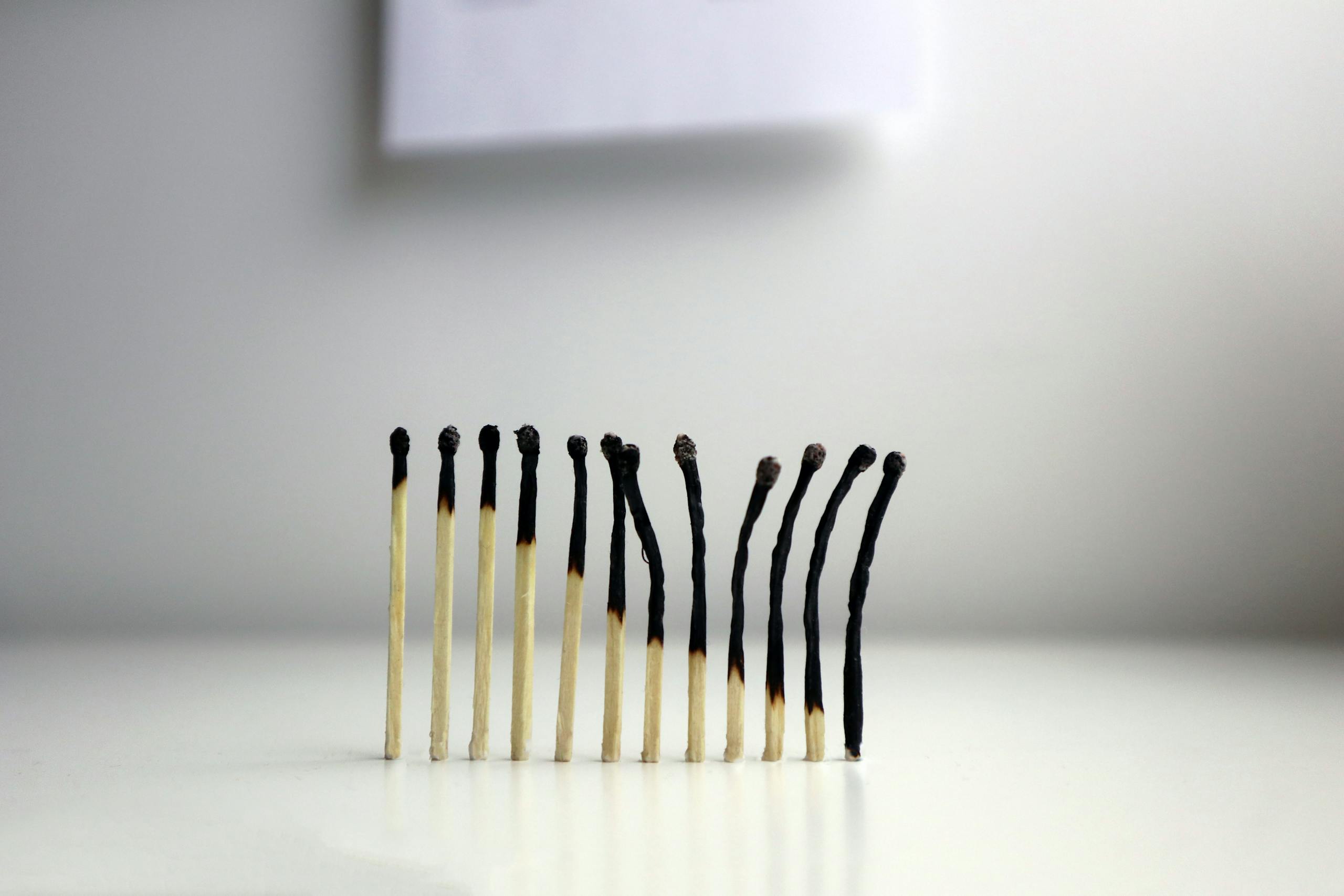
Mean burnout is what happens when ordinary exhaustion crosses into something darker: a state where the depletion itself starts warping how you think, feel, and treat the people around you. It’s not just tiredness. It’s a kind of internal corrosion that makes a normally thoughtful person short-tempered, cynical, and sometimes outright unkind, often without realizing it’s happening until the damage is done.
Introverts face a particular version of this. Because so much of our processing happens internally, the warning signs tend to stay hidden longer, building pressure quietly until something gives. And what gives is usually our patience, our warmth, or our ability to hold ourselves together in front of other people.

If you’ve ever snapped at someone you care about and then felt genuinely confused about where that came from, you may already know what mean burnout feels like. Our Burnout and Stress Management Hub covers a wide range of burnout experiences, but the particular cruelty of this kind deserves its own conversation.
What Makes Burnout Turn Mean?
There’s a version of burnout that looks sympathetic from the outside. The person is clearly exhausted. They’re quiet, withdrawn, visibly struggling. People offer them grace.
Then there’s the version that doesn’t look sympathetic at all. The person is irritable, dismissive, maybe even cutting. They push people away. They say things they can’t fully explain afterward. They seem angry when they’re actually depleted. That’s the mean burnout version, and it’s the one nobody talks about enough.
What causes the shift from exhausted to mean? A few things tend to converge. Chronic depletion degrades the brain’s ability to regulate emotional responses. When your reserves are genuinely empty, the cognitive overhead required for patience, empathy, and measured communication becomes too costly. You stop being able to afford the effort of being kind, not because you don’t care, but because you have nothing left to spend.
For introverts specifically, the path to this state often runs through overstimulation. We process more deeply than we let on. Every interaction, every ambient noise, every unresolved tension in a room costs us something. When those costs accumulate without enough recovery time, the system starts making cuts. Emotional generosity is usually one of the first things to go.
I watched this happen to myself during a particularly brutal stretch of running my agency. We were managing four major accounts simultaneously, all in different stages of crisis. I was in meetings from early morning through late afternoon, fielding calls in the gaps, and then trying to do actual strategic thinking in the evenings. There was no quiet time. There was no recovery time. And somewhere around week three of that pace, I started being short with people I genuinely liked. Not explosive, not dramatic. Just clipped. Cold. Dismissive in a way that wasn’t me. My creative director, who had worked with me for six years, asked if she’d done something wrong. She hadn’t. I had simply run out of the capacity to be decent.
Why Introverts Are Especially Vulnerable to This Pattern
Introverts tend to have a particular relationship with their internal states. We monitor them carefully, process them thoroughly, and often manage them privately. This is generally a strength. It means we’re self-aware, emotionally intelligent, and rarely reactive in the moment.
But it also means we’re good at hiding how depleted we actually are. We’ve had a lot of practice masking discomfort in social and professional settings. We know how to appear composed when we’re not. And that masking takes energy, which accelerates the depletion cycle.
By the time an introvert starts showing the external signs of burnout, they’ve often been running on fumes for weeks. The mean phase arrives not as a warning sign but as a symptom of a crisis that’s already well advanced. If the people around them had known to ask earlier, the whole thing might have been caught sooner. That’s part of why I think it’s worth understanding how to ask an introvert if they’re feeling stressed. The question matters more than most people realize, and so does the way it’s asked.
There’s also the matter of how introverts experience social environments. Many of us find things like mandatory team activities genuinely draining rather than energizing. If you’ve ever wondered whether icebreakers are stressful for introverts, the short answer is yes, often profoundly so. When these kinds of demands are layered on top of an already exhausted system, they don’t just fail to help. They actively make things worse.

Highly sensitive introverts carry an additional layer of risk here. The depth of processing that makes HSPs perceptive and empathetic also makes them absorb environmental stress at a higher rate. HSP burnout recognition and recovery follows its own timeline, and the mean phase can arrive faster and feel more disorienting when your baseline sensitivity is already high. What looks like an overreaction from the outside is often just a system that reached its limit sooner than others would.
What Does Mean Burnout Actually Look Like?
It helps to name the specific behaviors, because they’re easy to rationalize in the moment and easy to miss until someone points them out.
Cynicism is usually one of the first signs. A person who was once genuinely invested starts treating everything with contempt. Projects feel pointless. Colleagues feel irritating. Optimism from others feels naive or even offensive. This isn’t a personality shift. It’s a coping mechanism that kicks in when someone has been disappointed or depleted too many times without recovery.
Short-temperedness follows. The patience that normally buffers interactions disappears. Small frustrations produce disproportionate internal reactions, and some of those reactions leak out. A reasonable question gets a sharper answer than it deserved. A minor mistake gets a response that’s two degrees colder than necessary. The person doing it often knows, in the moment, that they’re being unfair. They just can’t seem to stop.
Withdrawal is another marker. Not the healthy, intentional solitude that introverts need, but a pulling away that has a quality of avoidance to it. Emails that don’t get answered. Conversations that get cut short. A general unavailability that communicates something closer to contempt than genuine need for space.
And then there’s the self-directed version: the internal monologue that turns punishing. When burnout goes mean, it doesn’t just change how we treat others. It changes how we talk to ourselves. The inner critic gets louder. Self-compassion becomes nearly impossible. Every mistake feels like evidence of fundamental inadequacy rather than a normal part of being human.
I’ve been in that place. During a particularly difficult client transition, I lost a major account that I’d held for seven years. The circumstances were complicated and not entirely within my control, but that didn’t matter to the voice in my head. For weeks, I was genuinely mean to myself in a way I would never have accepted from anyone else. And that internal meanness spilled outward in ways I’m not proud of.
The Physiology Behind the Behavioral Shift
There’s something worth understanding about what’s actually happening in the body and brain during this kind of burnout, because it helps explain why willpower alone isn’t enough to fix it.
Chronic stress keeps the body’s threat-response system in a state of low-level activation. Over time, this sustained activation affects the prefrontal cortex, the part of the brain responsible for impulse control, perspective-taking, and measured decision-making. When that system is compromised by prolonged stress, the more reactive, emotionally driven parts of the brain have more influence. The result is behavior that feels out of character precisely because it is: it’s coming from a system that’s been pushed past its regulatory capacity.
This isn’t an excuse for unkind behavior. It’s an explanation that points toward what actually needs to happen to change it. Telling someone in deep burnout to simply be nicer is like telling someone with a fever to just cool down. The symptom isn’t the problem. The underlying depletion is.
The American Psychological Association’s work on relaxation techniques points to the importance of activating the body’s parasympathetic nervous system as a counterweight to chronic stress activation. This isn’t about bubble baths. It’s about physiologically interrupting the stress response cycle so the brain can return to a state where thoughtful behavior is actually possible again.
Similarly, research on emotion regulation and stress suggests that the capacity for empathy and patience isn’t just a matter of character. It’s a resource that can be depleted and needs to be actively replenished. Understanding this shifts the conversation from moral failing to physiological reality, which is a much more useful place to start.

How Social Anxiety Compounds the Problem
Many introverts also carry some degree of social anxiety, and the interaction between social anxiety and burnout creates a particularly difficult feedback loop.
Social anxiety already makes interactions more cognitively and emotionally costly. When burnout is layered on top, those costs become nearly unbearable. The person starts avoiding interactions not just because they’re introverted but because every interaction now feels like a potential source of additional depletion or judgment. The avoidance worsens the isolation. The isolation deepens the burnout. And the burnout makes the social anxiety harder to manage.
Breaking this cycle requires addressing both the burnout and the anxiety, which is why stress reduction skills for social anxiety can be genuinely useful even for people who don’t primarily identify as socially anxious. If interactions are costing you more than they should, reducing the anxiety component frees up capacity that the burnout has been depleting.
Grounding techniques are particularly accessible entry points. The 5-4-3-2-1 grounding technique from the University of Rochester Medical Center is one I’ve returned to more than once during high-pressure periods. It’s not glamorous. It doesn’t require anything. And it works by interrupting the spiral before it can build momentum, which is exactly what you need when you’re already running low.
What Recovery from Mean Burnout Actually Requires
Recovery from this kind of burnout isn’t just about rest, though rest is essential. It’s about systematically addressing the conditions that allowed the depletion to reach this level in the first place.
The first step is usually acknowledgment, which is harder than it sounds. Admitting that you’ve been unkind, that the burnout has changed you in ways that have affected other people, requires a kind of honesty that’s uncomfortable. But it’s necessary, because without that acknowledgment, you can’t make the repairs that matter, and you can’t make the changes that prevent it from happening again.
Self-care becomes non-negotiable at this point, and I mean actual self-care, not the performative kind. Practicing better self-care without added stress is a real consideration for introverts, because many of the standard recommendations (social activities, group fitness classes, community events) can feel like additional demands rather than relief. The most effective recovery tends to involve intentional solitude, physical movement that doesn’t require social performance, and a deliberate reduction in stimulation load.
Structural changes matter too. If the conditions that caused the burnout remain unchanged, rest alone won’t be enough. This might mean renegotiating workload, setting clearer boundaries around availability, or making changes to how you spend your discretionary time. Sometimes it means reconsidering whether a particular role or environment is sustainable at all.
After I lost that major account, I eventually did something I’d been avoiding for years. I restructured how I ran the agency so that I had protected time in my schedule that wasn’t available for meetings or calls. It felt indulgent at first. It felt like something I hadn’t earned. But it was the thing that actually allowed me to show up as the person I wanted to be, rather than the depleted, clipped version of myself that had been showing up instead.
Some people also find that changing their relationship with work itself is part of recovery. Exploring low-stress side hustles for introverts can be a way to rebuild a sense of agency and creativity outside of the primary work environment that’s been draining you. Having something that’s genuinely yours, that doesn’t carry the weight of professional expectations, can restore a kind of vitality that pure rest sometimes can’t.

The Relational Repair That Has to Come After
One of the things that makes mean burnout particularly painful is the relational damage it can leave behind. When you’ve been short, cold, or dismissive with people you care about, there’s often repair work to do once you’ve started to come back to yourself.
This repair doesn’t require elaborate explanations or extended apologies. Most people respond well to simple, direct acknowledgment: “I’ve been difficult lately and I know it. I’m working on it.” What they need is to know that you see what happened and that you’re not going to dismiss it.
What they don’t need is for you to over-explain the burnout in a way that sounds like you’re asking them to excuse the behavior. Explanation and excuse are different things, and the distinction matters. You can help someone understand why you were struggling without asking them to absorb the cost of it retroactively.
There’s something worth noting about the introvert experience of small talk and casual connection during this phase. Psychology Today’s exploration of small talk as an introvert captures something real about how much cognitive and emotional effort goes into even low-stakes social interaction when you’re wired the way we are. During burnout recovery, the pressure to perform normal social pleasantries can feel enormous. Giving yourself permission to be quieter than usual, while still showing up with basic warmth, is a reasonable middle ground.
Preventing the Next Cycle Before It Starts
Mean burnout rarely arrives without warning. In retrospect, most people can identify the signals they either missed or chose to override. success doesn’t mean achieve some burnout-proof life, which isn’t realistic. It’s to shorten the lag between the early signals and the response.
For introverts, the most reliable early signals tend to be internal rather than behavioral. A growing sense of dread before interactions that used to feel neutral. A quality of flatness in things that normally carry meaning. A subtle but persistent irritability that doesn’t have a clear cause. These are the indicators worth paying attention to before they become behavioral problems.
Building in what I think of as mandatory recovery rather than optional recovery is the structural piece most high-functioning introverts resist the longest. We tell ourselves we’ll rest when things slow down. Things don’t slow down. And so the depletion compounds until it reaches the mean phase.
The work published in Frontiers in Psychology on personality and stress responses supports the idea that individual differences in how people experience and recover from stress are real and significant. What works as a recovery strategy for an extrovert may not work for an introvert, and designing your recovery around your actual needs rather than a generalized template is more likely to produce results.
Understanding the energy equation is fundamental here. Psychology Today’s piece on introversion and the energy equation articulates something that took me years to fully accept: introversion isn’t a preference for being alone, it’s a fundamental difference in how energy is generated and spent. Designing your life around that reality isn’t self-indulgence. It’s maintenance.
There’s also value in having a clearer picture of your specific stress triggers. Research on stress and individual vulnerability points to the importance of self-knowledge in stress management. Knowing which specific demands drain you fastest, and building buffers around those demands, is more effective than generic stress management advice.
What I Wish I’d Known Earlier
Twenty years of running agencies taught me a lot of things the hard way. One of the most important was that the version of me that showed up when I was depleted wasn’t a truer version of me. It was a degraded version. The sharpness, the coldness, the impatience: those weren’t my real personality finally coming through the professional veneer. They were symptoms of a system that had been running without adequate fuel for too long.
That reframe matters because it changes how you respond. If you believe the mean version is the real you, you might conclude that you’re simply a difficult person and there’s nothing to be done about it. If you understand it as a symptom of depletion, you can treat the depletion and watch the behavior change.
I’ve seen this play out with people on my teams over the years. A senior account manager who became notoriously difficult during high-pressure campaigns turned out to be someone who simply had no recovery time built into her schedule. When we restructured her workflow to include protected time between major deliverables, she became one of the most collaborative people on the team. The meanness wasn’t her. It was the burnout.
The same principle applies to you. What you’re capable of when you’re resourced is a more accurate picture of who you are than what you produce when you’re running on empty. Getting back to resourced isn’t a luxury. It’s the work.
There’s a lot more to explore about how burnout, stress, and introvert wellbeing intersect. Our complete Burnout and Stress Management Hub brings together the full range of these topics in one place, and it’s worth spending time there if this resonated with you.
About the Author
Keith Lacy is an introvert who’s learned to embrace his true self later in life. After 20 years in advertising and marketing leadership, including running agencies and managing Fortune 500 accounts, Keith now channels his experience into helping fellow introverts understand their strengths and build fulfilling careers. As an INTJ, he brings analytical depth and authentic perspective to every article, drawing from both professional expertise and personal growth.
Frequently Asked Questions
What is mean burnout and how is it different from regular burnout?
Mean burnout is a stage of burnout where depletion has progressed to the point that it visibly affects behavior toward others. Where regular burnout often presents as fatigue, withdrawal, or reduced performance, mean burnout adds a behavioral layer: irritability, cynicism, dismissiveness, and sometimes outright unkindness. It’s not a character flaw. It’s what happens when a system has been running without adequate recovery for long enough that the capacity for patience and empathy becomes genuinely unavailable.
Why are introverts more susceptible to mean burnout?
Introverts process information and emotion more deeply than many people realize, which means they accumulate stress costs at a faster rate in high-stimulation environments. They’re also skilled at masking their internal state, which means the depletion often goes undetected, including by themselves, until it reaches a critical level. By the time the behavioral signs of mean burnout appear, the underlying depletion has typically been building for weeks or longer.
How do I know if I’m in mean burnout or just having a bad week?
Duration and pattern are the key indicators. A bad week produces temporary irritability that resolves when the stressor passes. Mean burnout persists across multiple contexts and doesn’t improve with short breaks. Other signs include a pervasive cynicism about work or relationships that feels out of character, a quality of flatness or contempt in interactions that used to feel neutral, and a growing awareness that you’re being harder on people than they deserve but feeling unable to change it.
What’s the most effective first step for recovering from mean burnout?
Acknowledgment comes first, both internal and, where appropriate, relational. Recognizing that the behavior has been happening and that it’s a symptom of depletion rather than a personality truth creates the foundation for actual change. From there, the most effective recovery combines deliberate reduction of stimulation load, protected solitude, and structural changes to the conditions that caused the burnout. Rest alone, without addressing the underlying conditions, tends to produce temporary improvement followed by relapse.
Can mean burnout cause lasting damage to relationships?
It can, particularly if it goes on for a long time without acknowledgment. Most relationships can absorb a period of difficult behavior if the person eventually recognizes what happened and makes a genuine effort at repair. What tends to cause lasting damage is either the behavior itself continuing without change, or the person minimizing or denying that it happened at all. Simple, direct acknowledgment followed by visible effort to change is usually enough to begin repairing the relational damage, even when the burnout period was significant.