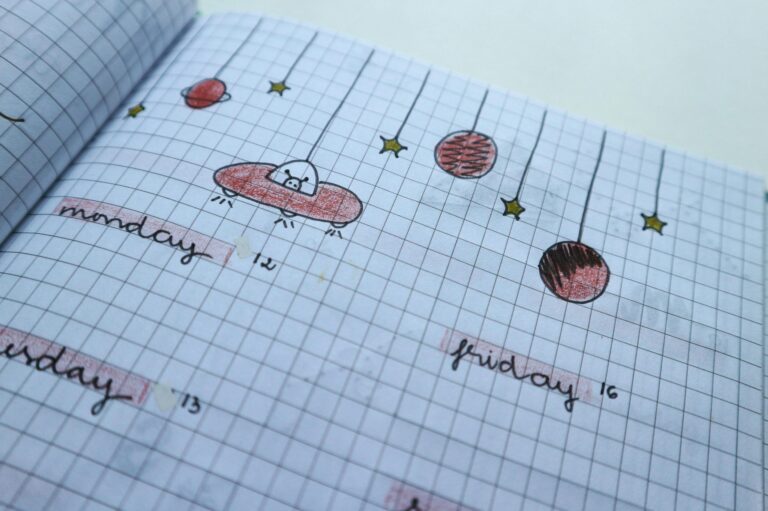

A Louis Carmen journal is more than a blank notebook. For introverts and highly sensitive people, it represents a structured space to process emotions, quiet mental noise, and reconnect with the self when the outside world feels overwhelming.
My own relationship with journaling started out of necessity, not inspiration. Running an advertising agency meant constant noise, constant demands, and a constant expectation that I would have answers ready before I’d had time to think. Writing things down was the only way I could hear myself think.
What I discovered over years of filling pages is that the act of journaling does something specific for people who process deeply. It creates a container for the thoughts and feelings that otherwise cycle endlessly without resolution. That’s not a small thing. For many introverts and HSPs, it can be the difference between functioning and falling apart.

If you’re exploring what journaling can offer your mental health, our Introvert Mental Health Hub covers the broader landscape of emotional wellbeing for introverts and highly sensitive people, from anxiety and overwhelm to processing rejection and perfectionism. This article focuses on one specific tool within that world: the practice of intentional journaling and what it can genuinely do for people wired for depth.
Why Do Introverts and HSPs Struggle to Process Emotions Without an Outlet?
There’s a particular kind of exhaustion that comes from carrying too much internally. I noticed it in myself during the years I was managing large client accounts and trying to lead teams of people with very different working styles. My mind would absorb everything during the day, every conflict in a meeting, every unspoken tension in a client call, every decision I second-guessed on the drive home. By evening, I was full. Not tired exactly, but saturated.
Highly sensitive people experience this in an amplified way. The trait that makes them perceptive and empathetic also makes them more susceptible to what researchers describe as sensory and emotional overload. When you notice more than most people notice, you’re also carrying more than most people carry. That accumulation needs somewhere to go.
For introverts specifically, verbal processing often doesn’t work the way it does for extroverts. Talking through a problem in real time, especially with someone else in the room, can feel more like performance than processing. The thoughts aren’t ready yet. They’re still forming. Pushing them out before they’ve developed means losing something in translation.
Written processing is different. The page doesn’t interrupt. It doesn’t react. It doesn’t require you to manage someone else’s response to your words while you’re still figuring out what you mean. That quality, that patient silence, is exactly what makes journaling so well-suited to the introvert and HSP experience. When HSP overwhelm and sensory overload are at their worst, having a private space to decompress on paper can interrupt the spiral before it takes hold.
What Makes a Structured Journal Different From Just Writing Things Down?
I’ve kept journals in various forms for most of my adult life, and I’ll be honest: some of those journals were just anxiety in ink. Pages of circular thinking, the same worries restated in slightly different words, no real movement toward clarity. That kind of writing can feel cathartic in the moment, but it doesn’t always build anything.
Structured journaling is different because it introduces intention. Instead of simply pouring out whatever is in your head, you’re working with prompts or frameworks that guide the process toward insight. You’re not just documenting your emotional state. You’re examining it.
The Louis Carmen journal approach leans into this kind of structure. Rather than a purely freeform experience, it offers a framework that helps writers move from raw feeling toward reflection and, eventually, toward a clearer sense of what they want or need. For people who already process deeply, that structure acts as a channel rather than a constraint. It gives the depth somewhere productive to go.
One thing I’ve seen in my own practice, and in conversations with other introverts over the years, is that structure actually reduces the intimidation factor. A blank page can be paralyzing when you’re already overwhelmed. A specific prompt, even a simple one like “What am I carrying today that isn’t mine to carry?” gives the mind a place to start. That starting point matters more than most people realize.

How Does Journaling Help With the Anxiety That Comes With Sensitive Processing?
Anxiety has a particular relationship with the introvert and HSP mind. Because these individuals process information thoroughly and notice subtleties that others miss, they’re also more prone to anticipating problems, reading between lines, and dwelling on what could go wrong. That capacity for depth is genuinely valuable. It’s also exhausting when it has no off switch.
The National Institute of Mental Health describes generalized anxiety as a pattern of persistent, excessive worry that’s difficult to control. For many HSPs and introverts, the worry isn’t irrational, it’s just relentless. The mind keeps returning to the same concerns because it hasn’t found resolution. Journaling can interrupt that loop.
Writing about a worry forces it into a fixed form. On paper, an anxiety has edges. You can look at it, examine it from different angles, and ask whether it’s proportionate to the actual situation. That externalization process, moving something from inside your head to outside of it, creates enough distance to think more clearly. It’s the difference between being inside a storm and watching it from a window.
For those dealing with the particular texture of HSP-related anxiety, understanding the patterns beneath it is often more useful than trying to suppress the feelings. HSP anxiety has its own specific character, often rooted in overstimulation and emotional absorption rather than simple worry. Journaling gives you a way to track those patterns over time, to notice what triggers the spiral and what helps bring you back.
I managed a creative director at my agency who was a classic HSP, deeply perceptive, emotionally attuned, and visibly affected by the atmosphere of any room she walked into. She told me once that she’d started keeping a daily journal and that it was the first time in years she felt like she could separate her own feelings from the emotional weather of the office. That separation, that clarity about what belongs to you and what you’ve absorbed from others, is one of the most valuable things journaling can offer someone with high sensitivity.
Can Journaling Actually Help With Emotional Processing, or Is It Just Venting?
This is a fair question, and the distinction matters. Venting, whether on paper or out loud, can provide temporary relief without producing insight. You feel better for a moment because you’ve released pressure, but the underlying pattern remains unchanged. True emotional processing is different. It involves moving through an experience, understanding it, and integrating it in a way that allows you to carry it differently.
Work in the field of expressive writing, particularly the foundational research conducted by James Pennebaker at the University of Texas, has found that writing about emotionally significant experiences can have measurable effects on psychological wellbeing. The mechanism appears to involve the act of making meaning, translating raw emotional experience into narrative, which helps the mind organize and file the experience rather than continuing to process it on a loop. You can find a relevant overview of this work through PubMed Central’s research archive.
The difference between venting and processing often comes down to whether you’re asking questions. Venting states: “That meeting was awful and everyone was frustrating.” Processing asks: “Why did that meeting affect me so strongly? What was I hoping for that didn’t happen? What does that tell me about what I need?” The questions pull you toward insight rather than just release.
For HSPs, emotional processing runs deeper than it does for most people. Feelings aren’t just felt, they’re examined, connected to other feelings, linked to memories, and held for longer. That depth can be a source of enormous richness and empathy. It can also mean that unprocessed emotions linger and compound in ways that become genuinely burdensome. Journaling that moves toward questions and reflection rather than pure expression is a way to work with that depth rather than be overwhelmed by it.

How Does Journaling Support Empathy Without Letting It Become a Burden?
Empathy is one of the defining characteristics of highly sensitive people, and it’s genuinely one of their greatest strengths. The ability to sense what others are feeling, to understand experiences different from your own, to respond with genuine care rather than performed concern, these are rare and valuable qualities. They’re also qualities that can wear a person down if they’re not managed with intention.
HSP empathy is genuinely a double-edged sword. The same sensitivity that makes someone a remarkable friend, colleague, or leader also means they absorb other people’s distress, carry other people’s problems, and sometimes lose track of where they end and others begin. Journaling creates a space to sort through that absorption and reclaim a sense of individual self.
One practice I’ve found genuinely useful is what I think of as an end-of-day inventory. Before closing the journal, I ask: what am I feeling right now, and where did it come from? Is this mine, or did I pick it up somewhere today? It sounds simple, but for someone who moves through the world absorbing emotional information constantly, that question can be revelatory. It creates a moment of ownership over your inner life rather than just being subject to it.
During my agency years, I worked closely with several people who had this quality in abundance. One account manager in particular seemed to carry the emotional weight of every client relationship personally. She was brilliant at her work precisely because she cared so deeply, but by the time I started paying attention, she was burning out. When she started journaling with intention, specifically to separate her own emotional state from what she’d absorbed during the day, the change was visible within weeks. She didn’t become less empathetic. She became more sustainable.
The research on emotional regulation strategies consistently points toward the value of reflective practices in building what psychologists call affect regulation, the ability to experience emotions without being controlled by them. Journaling, done with intention, builds that capacity over time.
What Role Does Journaling Play When Perfectionism Gets in the Way?
Perfectionism and high sensitivity often travel together. When you notice everything, you also notice everything that could be better, everything that fell short, every gap between what you intended and what actually happened. That quality drives excellence. It also drives a particular kind of suffering.
One of the more counterintuitive things about journaling for perfectionists is that the practice itself requires surrendering perfectionism, at least temporarily. A journal is not a polished document. It’s a working space. Sentences don’t have to be complete. Thoughts don’t have to be resolved. The page accepts whatever you bring to it, and that acceptance is part of what makes it useful.
For HSPs who struggle with perfectionism and its relentless high standards, journaling can serve as a daily practice in good enough. You write what you write. You don’t edit it. You don’t judge it. You let it be imperfect, and in doing so, you practice a kind of self-permission that can slowly extend into other areas of life.
I spent a significant portion of my career in the grip of professional perfectionism. As an INTJ running an agency, I had high standards for everything, and I mean everything: pitch decks, client presentations, internal processes, even how conference rooms were set up before a meeting. Some of that served me well. A lot of it was exhausting and, honestly, alienating to the people around me.
Journaling helped me see the pattern. When I started writing about specific moments of perfectionist anxiety, I could trace the thought back to its source. Usually it wasn’t about the pitch deck at all. It was about fear: fear of looking inadequate, fear of losing the client, fear that my best wasn’t good enough. Naming that in writing didn’t eliminate the perfectionism, but it gave me a way to question it. And questioning it was the beginning of something more sustainable.
Work on perfectionism and parenting from Ohio State University researchers has highlighted how perfectionist thinking patterns often develop early and become deeply ingrained, which is part of why they’re so resistant to change through willpower alone. Reflective practices that surface the underlying fears tend to be more effective than simply trying to lower your standards.

How Can Journaling Help After Rejection or Criticism Hits Harder Than It Should?
Rejection is painful for everyone. For highly sensitive people, it can feel disproportionately devastating, not because they’re weak, but because they process it more thoroughly. They replay it. They examine it from every angle. They feel it in their body as well as their mind. And because they’re often deeply invested in the things they care about, criticism of their work can feel like criticism of who they are.
I’ve lost pitches that took months to prepare. I’ve had clients end relationships after years of work together. I’ve received feedback from people I respected that landed like a punch. As an INTJ, I tend to process those experiences internally and quietly, which meant they could sit in me for a long time without resolution. Writing them out was often the only thing that moved them.
The process of processing and healing from rejection as an HSP requires more than time. It requires active engagement with the experience, which is exactly what journaling facilitates. Writing about a rejection gives you a way to examine it without the distorting pressure of someone else’s presence. You can ask whether the feedback was accurate, what you want to do with it, and what the experience actually says about you versus what it says about the situation.
One question I return to after difficult professional experiences is: “What would I tell a colleague I respected if this had happened to them?” That shift in perspective often reveals how much harsher I am with myself than I would ever be with someone else. Writing it down makes that disparity visible in a way that just thinking about it doesn’t.
The American Psychological Association’s framework on resilience emphasizes that recovering from adversity isn’t about avoiding pain, it’s about developing the capacity to work through it. Journaling builds that capacity gradually, one entry at a time, by giving you a reliable place to process difficult experiences rather than suppressing or avoiding them.
What Practical Journaling Habits Actually Stick for Introverts?
Theory is useful, but practice is what matters. And the honest truth is that many people who try journaling abandon it within a few weeks, not because it doesn’t work, but because the habit doesn’t have the right structure around it. For introverts and HSPs specifically, a few principles tend to make the difference between a practice that sticks and one that fades.
Protect the time and the space. Introverts recharge in solitude, and journaling requires genuine solitude, not just physical privacy, but mental quiet. Writing in stolen minutes between meetings or obligations rarely produces the depth that makes journaling worthwhile. Even twenty minutes of genuinely uninterrupted time is more valuable than an hour of fragmented attention.
Start with a question rather than a blank page. The intimidation of the empty journal is real. Having a rotating set of prompts removes that friction. Questions like “What am I avoiding thinking about?” or “What did I notice today that I haven’t examined yet?” or “What do I need that I haven’t asked for?” are simple enough to start quickly and deep enough to go somewhere meaningful.
Don’t aim for length. Aim for honesty. A single paragraph of genuine reflection is worth more than three pages of surface-level summary. The goal isn’t documentation. The goal is contact with your own inner life. Some of the most useful entries I’ve ever written were four sentences long.
Let the journal be ugly. Cross things out. Write in fragments. Change direction mid-entry. The messiness is part of the process. A journal that feels too precious to be honest in has already failed its purpose.
Return to old entries occasionally. One of the underrated benefits of a consistent journaling practice is the longitudinal view it gives you of your own patterns. Reading entries from six months ago can reveal how much has shifted, what concerns have resolved, and what recurring themes deserve more attention. That perspective is genuinely difficult to access any other way.
It’s also worth noting that the physical act of handwriting appears to engage the brain differently than typing. Research examining writing modalities suggests that handwriting may support deeper cognitive engagement with the material, which aligns with what many introverts report: that writing by hand feels more connected to the actual thinking process than typing does.

Is There a Connection Between Journaling and Identity Clarity for Introverts?
One of the quieter gifts of a sustained journaling practice is what it does for your sense of self. For introverts who have spent years performing extroversion, or for HSPs who have adapted their natural responses to avoid being labeled “too sensitive,” there can be a significant gap between who they present to the world and who they actually are. Journaling can begin to close that gap.
I spent a long time in my career presenting a version of myself that I thought leadership required. Decisive, visibly confident, comfortable with conflict, energized by group situations. Some of that was genuine. A lot of it was performance, and maintaining that performance was genuinely costly. It was only when I started writing honestly about my experience, including the exhaustion, the preference for depth over breadth, the discomfort with social performance, that I began to understand what I actually valued and how I actually worked best.
That clarity didn’t come from a single entry. It accumulated over months of consistent writing. Patterns emerged. I started to see what consistently drained me and what consistently energized me. I could trace the difference between days when I felt like myself and days when I felt like I was playing a role. That information was genuinely useful in reshaping how I led and how I structured my work.
The connection between self-knowledge and psychological wellbeing is well-established. Clinical frameworks for self-awareness and mental health consistently point to the value of reflective practices in building a coherent and stable sense of identity, which in turn supports resilience, better decision-making, and more authentic relationships. Journaling is one of the most accessible ways to build that kind of self-knowledge over time.
For introverts who have spent years being told their natural tendencies are problems to be corrected, that process of self-discovery can feel quietly radical. Psychology Today’s writing on introvert experience has long made the case that introversion is not a deficit but a different orientation toward the world, one with its own genuine strengths. Journaling can be the practice through which an introvert actually internalizes that understanding rather than just intellectually accepting it.
There’s something that happens when you read your own words back to yourself and recognize them as true. Not performed, not adjusted for an audience, just true. That recognition is a form of self-respect that builds quietly over time. And for people who have spent years doubting whether their inner experience is valid, that building matters more than it might seem.
If you’re finding that journaling surfaces deeper emotional patterns you want to understand more fully, our Introvert Mental Health Hub offers a comprehensive set of resources covering everything from anxiety and overwhelm to empathy, perfectionism, and healing from rejection, all written specifically for introverts and highly sensitive people.
About the Author
Keith Lacy is an introvert who’s learned to embrace his true self later in life. After 20 years in advertising and marketing leadership, including running agencies and managing Fortune 500 accounts, Keith now channels his experience into helping fellow introverts understand their strengths and build fulfilling careers. As an INTJ, he brings analytical depth and authentic perspective to every article, drawing from both professional expertise and personal growth.
Frequently Asked Questions
What is a Louis Carmen journal and who is it designed for?
A Louis Carmen journal is a structured journaling approach that provides prompts and frameworks to guide reflective writing toward genuine insight rather than surface-level venting. It’s well-suited for introverts, highly sensitive people, and anyone who processes emotions deeply and benefits from having a defined container for that processing. The structure removes the intimidation of a blank page while still allowing for personal depth and authentic expression.
How is structured journaling different from just writing in a diary?
A diary tends to document events and feelings as they occur, functioning primarily as a record. Structured journaling uses intentional prompts or frameworks to move the writer from raw emotional experience toward reflection and meaning-making. The difference is the direction of travel: a diary captures where you are, while structured journaling helps you examine why you’re there and what you want to do about it. For introverts and HSPs who already process deeply, that structure channels the depth productively rather than letting it spiral.
Can journaling help with anxiety and emotional overwhelm?
Yes, and the mechanism is fairly well understood. Writing about an anxiety or overwhelming experience forces it into a fixed, external form, which creates enough distance to examine it more clearly. That externalization process helps the mind organize the experience rather than continuing to process it on a loop. For highly sensitive people who are prone to absorbing emotional input from their environment, journaling also helps sort out what belongs to them versus what they’ve picked up from others, which is a meaningful form of relief.
How often should an introvert journal to see real benefits?
Consistency matters more than frequency. Many introverts find that even three to four sessions per week of twenty to thirty minutes each produces meaningful results over time. What tends to undermine the practice is trying to journal in fragmented or noisy conditions, which defeats the purpose for people who need genuine solitude to access their inner life. Protecting a specific time and space, even a modest one, makes it far more likely that the practice will stick and deepen.
What should I write about if I don’t know where to start?
Starting with a question is almost always more productive than starting with a blank page. Useful prompts include: “What am I carrying today that isn’t mine to carry?”, “What did I avoid thinking about this week and why?”, “What do I need right now that I haven’t asked for?”, and “What would I tell someone I respected if they were in my exact situation?” These questions are simple enough to begin quickly and open enough to lead somewhere genuine. The goal is honest contact with your own inner experience, not a polished or complete piece of writing.