

Burnout isn’t caused by working too hard. At its core, burnout develops when the demands placed on you consistently outpace the resources you have to meet them, and that gap stays open long enough to deplete something fundamental. For introverts especially, those demands often include invisible ones: the constant social performance, the emotional labor of masking, the relentless overstimulation that never quite gets acknowledged as a legitimate stressor.
Most conversations about burnout focus on workload. But workload is rarely the whole story. The actual causes run deeper, and they tend to be the ones nobody puts on a wellness poster.
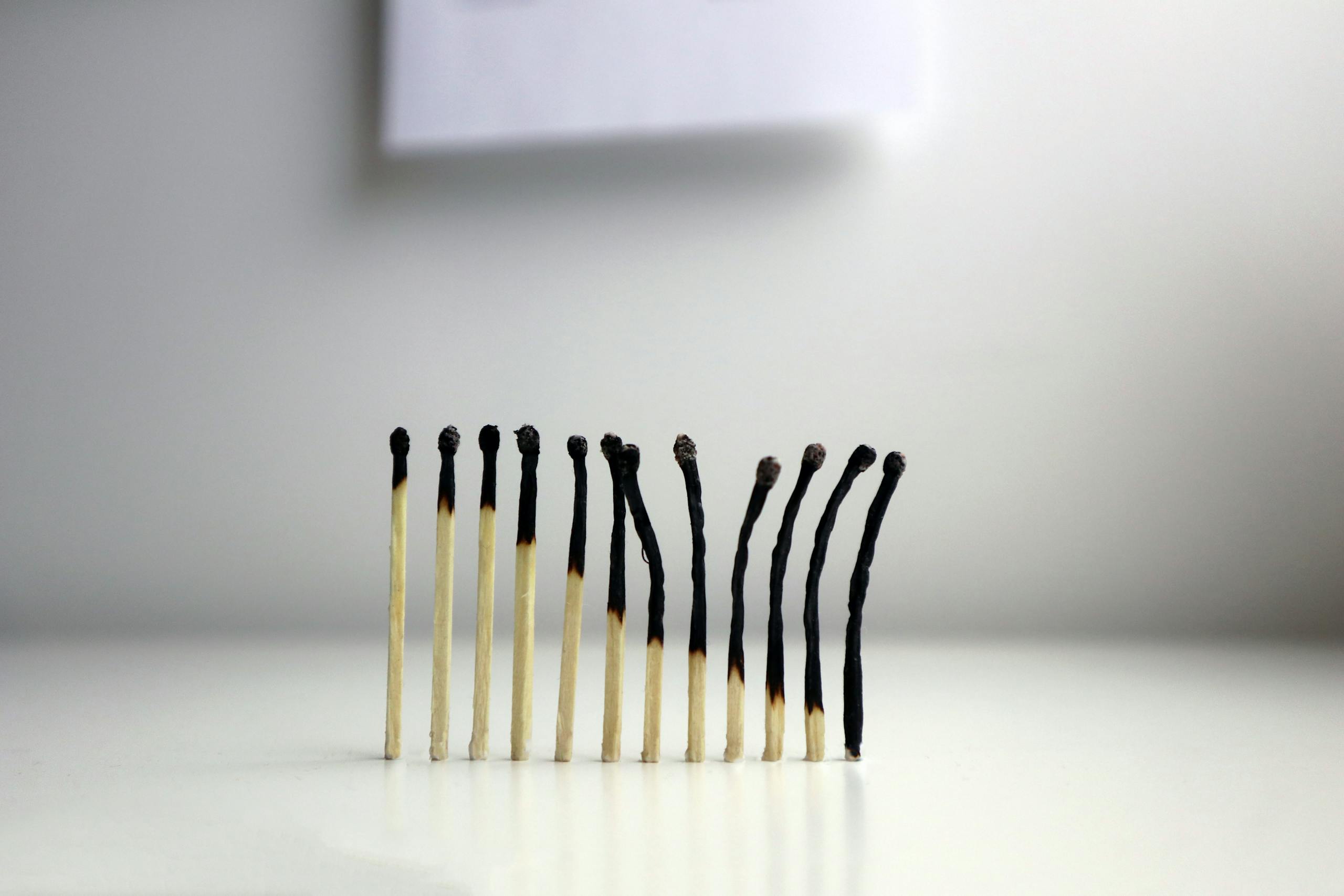
If you’ve been feeling hollowed out and can’t quite explain why, you’re in good company. Our Burnout and Stress Management hub covers the full landscape of what introverts face when it comes to chronic stress, but this article goes straight to the root: what’s actually driving burnout, and why introverts are particularly vulnerable to the causes most people overlook.
Why Do We Keep Misidentifying the Causes of Burnout?
For a long time, I thought burnout was something that happened to people who couldn’t handle pressure. I ran advertising agencies for over two decades. Pressure was the baseline. Deadlines, client demands, new business pitches, staff turnover, budget crises at 4 PM on a Friday. I wore my capacity to absorb all of it like a badge. So when I started feeling genuinely depleted in my late forties, my first instinct was to push harder. That instinct made everything worse.
What I eventually understood, slowly and not without some personal cost, was that I hadn’t been burning out from the work itself. I’d been burning out from the performance surrounding the work. The endless client dinners. The all-hands meetings where I was expected to be “on.” The open-plan office culture that treated quiet focus as antisocial behavior. The unspoken rule that visibility equaled value.
None of that showed up in my workload metrics. But all of it was draining me in ways that compounded over years.
Burnout research has evolved significantly, and psychologists now recognize it as a syndrome with distinct dimensions: emotional exhaustion, a growing sense of detachment or cynicism, and a reduced feeling of personal effectiveness. What’s less discussed is how the triggers for each of those dimensions can differ dramatically depending on how a person is wired.
What Role Does Chronic Overstimulation Play in Burnout?
Overstimulation is one of the most underrated causes of burnout, particularly for introverts and highly sensitive people. Most productivity culture frames stimulation as neutral or even positive. More input, more energy, more collaboration. But the introvert nervous system doesn’t work that way.
Introverts draw energy from internal processing and solitude. Extended exposure to noise, social demands, and environmental complexity doesn’t just tire us out. It depletes the very reservoir we rely on to think clearly, make decisions, and do meaningful work. When that reservoir stays empty for weeks or months at a stretch, burnout isn’t a risk. It’s an inevitability.
I watched this play out on my own teams. I had a senior account director, a classic introvert, who was brilliant at her job. She managed major CPG accounts with precision and genuine care for the work. But we’d moved to a new office space that year, open plan, loud, full of spontaneous “creative collisions” that the extroverts on the team loved. Within six months, her output had declined, her demeanor had shifted, and she’d started calling in sick more often. She wasn’t struggling with the accounts. She was drowning in the environment.
We made some adjustments, gave her a quieter corner, shifted some of her check-ins to async formats, and she came back to herself within weeks. The work hadn’t changed. The overstimulation had simply been reduced enough for her to function.
For highly sensitive people, this dynamic is even more pronounced. If you identify as an HSP, the HSP burnout recognition and recovery piece on this site goes deeper into how that particular sensitivity amplifies the burnout cycle and what recovery actually looks like.

How Does the Pressure to Perform Extroversion Contribute to Burnout?
There’s a particular kind of exhaustion that comes from spending your working hours pretending to be someone you’re not. Psychologists sometimes call it surface acting, the practice of displaying emotions or behaviors that don’t reflect your internal state. It takes real cognitive and emotional energy, and over time, it corrodes your sense of self.
For introverts in most professional environments, surface acting isn’t occasional. It’s the default mode. You walk into a room and immediately start managing your presentation: appear engaged, appear enthusiastic, initiate conversation, don’t look like you’re struggling. The weight of small talk for introverts is often dismissed as a minor inconvenience, but when it’s a daily requirement of your professional life, it accumulates into something genuinely heavy.
I spent the better part of a decade running client-facing agencies where the expectation was that leadership meant being visible, vocal, and socially magnetic. I’m an INTJ. That’s not my natural register. My strengths are strategic, analytical, and depth-oriented. I can hold a room when I need to, but it costs me something. And for years, I paid that cost every single day without accounting for it anywhere.
The math eventually catches up. You can’t sustain a persona that contradicts your wiring indefinitely. What feels like a personality flaw or a lack of resilience is often just the compounded debt of performing extroversion in a world that treats it as the professional standard.
This is also why so many introverts find that even social events framed as “fun” contribute to burnout. Team happy hours, icebreaker activities, company retreats. They’re presented as rewards, but they can function as additional performance demands. If you’ve ever wondered why those activities feel draining rather than energizing, the piece on whether icebreakers are stressful for introverts addresses exactly that experience.
What Is the Connection Between Values Misalignment and Burnout?
One of the most reliable predictors of burnout isn’t workload or even stress. It’s the persistent sense that what you’re doing doesn’t matter, or worse, that it contradicts something you actually care about.
Psychologists who study occupational burnout often point to a mismatch between a person’s values and the values of their organization as a significant driver. When you believe in doing careful, thoughtful work and your company rewards speed over quality, something starts to erode. When you care about honesty and you’re asked to spin a client narrative you don’t believe in, the erosion accelerates.
Introverts tend to be values-driven in ways that make this particular mismatch acutely painful. We process deeply. We notice contradictions. We don’t easily compartmentalize the dissonance between what we’re doing and what we believe. I’ve seen this pattern in myself and in the people I’ve managed over the years.
One of the most talented strategists I ever hired left the agency after two years. He was producing exceptional work. But the agency had taken on a client whose practices he found genuinely troubling, and leadership had made clear that the revenue mattered more than his discomfort. He didn’t make a scene. He just quietly started pulling back, going through the motions, and eventually gave notice. He wasn’t burned out from overwork. He was burned out from being asked to leave his values at the door every morning.
Values misalignment is insidious because it doesn’t always announce itself clearly. It shows up as low-grade cynicism, a growing reluctance to invest effort, a vague sense that none of it matters. By the time those feelings are obvious, the burnout is usually well established.

How Does the Absence of Autonomy Accelerate Burnout?
Control matters enormously to psychological wellbeing. When people feel they have no meaningful say over how they do their work, when they work, or what they prioritize, stress accumulates without any release valve. That’s a structural condition for burnout, not a personal failing.
For introverts, autonomy has an added dimension. We don’t just want control over our schedules in the abstract. We need the ability to protect time for internal processing, for the quiet thinking that produces our best work. When that’s impossible, because every hour is scheduled, every decision requires group consensus, every output is immediately reviewed and redirected, we lose access to the very cognitive mode that makes us effective.
A Frontiers in Psychology analysis examining workplace autonomy and wellbeing found meaningful connections between perceived control at work and burnout outcomes, reinforcing what many introverts already know intuitively: being micromanaged doesn’t just feel bad, it actively degrades performance and mental health over time.
Some introverts respond to the autonomy deficit by pursuing alternative income streams that offer more flexibility and self-direction. If that resonates with where you are right now, the roundup of stress-free side hustles for introverts is worth a look. Not as an escape hatch, but as a way of building some structural breathing room.
What Does Emotional Labor Have to Do With Burnout?
Emotional labor is the work of managing your emotional presentation as part of your job. It’s the customer service rep who stays warm after the tenth difficult call of the day. It’s the manager who absorbs a team’s anxiety during a restructure and projects calm. It’s the consultant who reads the room in real time and calibrates every response to keep the client comfortable.
It’s also invisible, uncompensated, and exhausting in ways that are difficult to articulate to someone who doesn’t experience it.
Introverts often carry disproportionate emotional labor loads precisely because we’re observant and attuned. We notice what others miss. We pick up on the undercurrents in a room. We process other people’s emotional states even when we’re trying not to. That attunement is genuinely valuable, but it comes at a cost when it’s constant and unacknowledged.
One thing I’ve noticed, both in myself and in the introverts I’ve worked with, is that we’re often slow to signal distress. We tend to internalize rather than externalize. So the people around us, including managers and colleagues who might otherwise offer support, often have no idea we’re struggling. There’s a real pattern worth examining here. If someone in your life asked you directly whether you were stressed, would you answer honestly? The piece on what happens when you ask an introvert if they’re feeling stressed touches on exactly this dynamic.
The emotional labor problem compounds because it’s cumulative. Each individual interaction might be manageable. But when you string together hundreds of them across weeks and months, with no real recovery built in, the debt becomes structural.

How Does Poor Recovery Compound the Actual Causes of Burnout?
Burnout isn’t just caused by what depletes you. It’s also caused by the absence of what restores you.
For introverts, genuine recovery requires solitude, quiet, and unstructured time for internal processing. That’s not a preference or a luxury. It’s a neurological need. When that recovery doesn’t happen consistently, the depletion from overstimulation, emotional labor, and performance demands never gets addressed. It just accumulates.
The challenge is that modern professional culture has colonized most of the spaces where recovery used to happen. Commutes became podcast time. Evenings became Slack time. Weekends became “catching up” time. Even vacation, for many people in high-responsibility roles, is only a partial reprieve.
I went through a period in my mid-forties where I genuinely couldn’t remember the last time I’d sat quietly without an agenda. That sounds dramatic, but it’s accurate. Every moment of potential downtime had been filled with something productive or social or both. And I was paying for it in ways I couldn’t fully see yet.
Recovery also has to be appropriate to the type of depletion you’re experiencing. Social exhaustion requires social withdrawal, not just physical rest. Cognitive overload requires genuine mental quiet, not just a change of screen. Getting that match right matters. The self-care approaches that work for introverts without adding more stress to your plate are worth considering if you’re trying to build real recovery into your life rather than just adding another item to your wellness to-do list.
There’s also a physiological dimension here. Chronic stress without adequate recovery keeps the nervous system in a state of sustained activation. Over time, that has real consequences for sleep, immune function, and cognitive performance. The research on chronic stress and health outcomes published through PubMed Central documents how prolonged stress exposure affects the body in ways that go well beyond feeling tired.
What Is the Role of Social Anxiety in Driving Burnout?
Social anxiety and introversion aren’t the same thing, but they frequently coexist. And when they do, the burnout risk multiplies.
An introvert who also carries social anxiety isn’t just drained by social interaction. They’re also dealing with anticipatory dread, self-monitoring during interactions, and post-event rumination afterward. That’s a significant cognitive and emotional load layered on top of the baseline introvert experience. When that load is a daily feature of professional life, burnout can develop faster and run deeper.
The relationship between anxiety and physical stress responses is well documented, and it helps explain why social anxiety doesn’t just feel bad in the moment. It creates a sustained physiological stress response that compounds over time.
Managing the anxiety component isn’t about eliminating discomfort. It’s about developing skills that reduce the cognitive overhead of handling social environments. Practical techniques for doing that are covered in the stress reduction skills for social anxiety piece, which is worth reading alongside this one if anxiety is part of your experience.
The American Psychological Association has also documented the role of relaxation techniques in managing chronic stress responses, and some of those approaches translate well to the specific kind of social overstimulation introverts face regularly.
What Are the Structural Causes of Burnout That Organizations Create?
Individual coping strategies matter, but they can only do so much when the environment itself is structured in ways that guarantee depletion. Some causes of burnout aren’t personal at all. They’re organizational.
Unclear expectations are one of the most consistent structural drivers. When people don’t know what success looks like, or when the definition keeps shifting, they can’t calibrate their effort appropriately. They either overwork to cover all possible bases, or they disengage because nothing feels like enough. Both paths lead to burnout.
Unfairness is another. When people perceive that their effort isn’t recognized, that rewards are distributed inequitably, or that the rules apply differently to different people, trust erodes. And working in an environment you don’t trust is exhausting in a very specific way. You’re constantly scanning for threat, managing your exposure, and protecting yourself from outcomes you can’t predict.
Community breakdown matters too. Humans are social animals, including introverts. We don’t need constant connection, but we do need some sense of belonging and psychological safety. When workplace culture becomes competitive, isolated, or hostile, even introverts who prefer solitude can feel the toll of genuine disconnection.
I’ve seen all three of these structural conditions operate simultaneously in agencies I’ve run and agencies I’ve observed from the outside. The telltale sign is always the same: talented people who genuinely cared about the work slowly stop caring. Not because they changed, but because the environment made caring too costly.
Understanding these structural factors matters because it shifts the frame. Burnout isn’t a sign that you’re not resilient enough. It’s often a sign that you’ve been operating in conditions that would deplete anyone, with the added weight of being wired in ways the environment wasn’t designed to accommodate.

How Can Understanding the Real Causes of Burnout Change Your Path Forward?
Naming the actual causes of burnout doesn’t fix anything immediately. But it does change what you look for and what you address. When you know that overstimulation is a core driver for you, you can start building structural protections against it. When you recognize that values misalignment is eroding your engagement, you can have a more honest conversation with yourself about whether this role or this organization is sustainable. When you see that the absence of recovery is compounding every other stressor, you can stop treating rest as optional.
The introvert energy equation described in Psychology Today captures something important: energy management for introverts isn’t about pushing through. It’s about understanding what depletes you and what restores you, and building your life around that reality rather than against it.
That’s a longer process than any single article can address. But it starts with getting honest about what’s actually causing the depletion, not what’s easiest to point to, and not what the culture around you has decided to call the problem.
There’s also something worth saying about the grounding techniques that can interrupt the acute stress response when burnout is actively building. The 5-4-3-2-1 grounding technique from the University of Rochester Medical Center is a simple, evidence-based tool for moments when the overwhelm is immediate and you need something concrete to reach for.
For a broader look at how introverts experience and recover from chronic stress, the full range of resources in our Burnout and Stress Management hub covers everything from early warning signs to long-term recovery strategies.
About the Author
Keith Lacy is an introvert who’s learned to embrace his true self later in life. After 20 years in advertising and marketing leadership, including running agencies and managing Fortune 500 accounts, Keith now channels his experience into helping fellow introverts understand their strengths and build fulfilling careers. As an INTJ, he brings analytical depth and authentic perspective to every article, drawing from both professional expertise and personal growth.
Frequently Asked Questions
Are introverts more vulnerable to burnout than extroverts?
Introverts aren’t inherently more fragile, but many professional environments are structured in ways that create additional depletion for introverts specifically. The expectation of constant social availability, open-plan workspaces, and performance-based visibility all represent stressors that introverts carry in ways extroverts often don’t. When those environmental demands combine with limited recovery time, introverts can reach burnout faster than the workload alone would suggest.
What is the difference between burnout and regular tiredness?
Ordinary tiredness resolves with rest. Burnout doesn’t. Burnout involves a more pervasive depletion that affects motivation, emotional engagement, and a sense of personal effectiveness. People experiencing burnout often describe feeling disconnected from work they used to care about, a growing cynicism about outcomes, and a sense that effort no longer produces results. Sleep helps temporarily, but the underlying exhaustion returns quickly without structural changes.
Can burnout develop even in a job you genuinely like?
Yes, and this surprises many people. Burnout can develop even when you care deeply about your work, sometimes especially then. When you’re invested in what you do, you’re more likely to absorb the costs of a difficult environment without complaint, to push through depletion rather than address it, and to internalize organizational problems as personal failures. Passion doesn’t protect against burnout. In some cases, it accelerates it.
How long does it take to recover from burnout?
Recovery timelines vary considerably depending on how long the burnout has been building, what caused it, and what structural changes are possible. Minor burnout caught early might resolve within weeks with genuine rest and reduced demands. Deep, long-term burnout can take months or longer, particularly if the underlying causes, such as values misalignment or chronic overstimulation, aren’t addressed alongside the recovery. There’s no universal timeline, and rushing recovery tends to produce relapse.
What’s the first practical step when you recognize you’re burning out?
The most useful first step is honest identification: what specifically is depleting you? Not just “work is stressful” but which aspects of your current situation are creating the most drain. Overstimulation, emotional labor, values misalignment, and lack of autonomy each require different responses. Once you’ve named the primary driver, you can start making targeted changes rather than generic wellness adjustments that don’t address the actual cause.