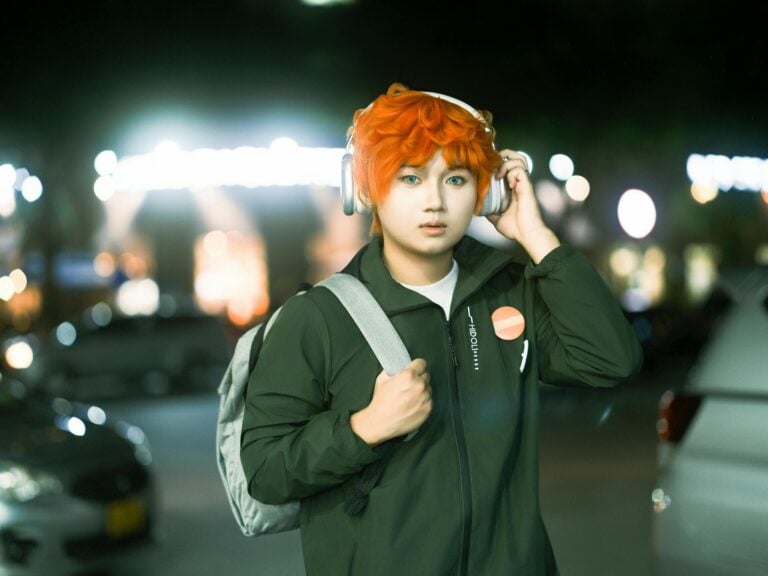

A quiet person who doesn’t draw attention to himself is often misread by the people closest to him. In family settings especially, his stillness gets labeled as distance, his thoughtfulness as indifference, and his preference for listening over performing as a sign that something must be wrong. None of that is accurate.
What’s actually happening is something far more interesting. The quiet man in the room is processing, observing, and caring deeply, just not in ways the louder world around him is trained to recognize. And when that man is a father, a husband, a son, or a brother, the gap between who he is and how he’s perceived can quietly shape an entire family’s emotional landscape.
I know this because I’ve been that person. And for years, I didn’t fully understand what that meant for the people I loved most.

Our Introvert Family Dynamics and Parenting hub covers a wide range of experiences that shape how introverts show up inside families, but the quiet man who flies under the radar deserves his own examination. Because the way others respond to his quietness, and the way he responds to their responses, creates patterns that ripple through every relationship he has.
Why Does Quiet Get Misread as Absence?
There’s a default assumption baked into most social settings: presence is measured in volume. The person talking the most is the most engaged. The person asking questions is the most curious. The person laughing loudest is having the best time. By that logic, the quiet man at the dinner table must be checked out, unhappy, or simply not interested.
What’s your personality type?
Take our free 40-question assessment and get a detailed personality profile with dimension breakdowns, context analysis, and personalised insights.
Discover Your Type8-12 minutes · 40 questions · Free
I ran advertising agencies for over two decades. Loud rooms were my professional habitat. Brainstorms, client pitches, all-hands meetings, award shows. And I learned early that if I wasn’t performing my engagement visibly, people assumed I wasn’t engaged at all. A junior copywriter once told me, after a particularly quiet strategy session, that she thought I hated her concept. I’d actually been sitting with it, turning it over, finding what was genuinely strong about it. My silence was respect, not rejection. She had no way of knowing that.
That same dynamic plays out in families constantly. A father who doesn’t pepper his kids with questions after school isn’t detached. He may be giving them space, processing his own day, or simply communicating love through presence rather than interrogation. A husband who goes quiet during conflict isn’t stonewalling in the clinical sense. He may be doing the internal work that verbal processors do out loud, just privately.
The Psychology Today resource on family dynamics points out that families develop their own communication norms over time, and when one member’s style consistently falls outside those norms, friction follows. The quiet person rarely creates that friction intentionally. He just operates on a different frequency, and nobody taught the rest of the family how to tune in.
What Does the Research Actually Tell Us About Quiet Temperaments?
Temperament isn’t a choice, and it isn’t a flaw. The National Institutes of Health has documented that infant temperament, specifically how reactive a baby is to new stimuli, predicts introversion in adulthood. The quiet man you’re watching at the family reunion wasn’t shaped by laziness or social anxiety. He was wired this way from the beginning.
That matters for families because it reframes the conversation. Quietness isn’t something to fix. It’s a feature of how a person’s nervous system processes the world. Introverts tend to have higher baseline arousal in the brain, which means external stimulation, noise, crowds, rapid-fire conversation, reaches a threshold faster. Pulling back isn’t rudeness. It’s regulation.
When I finally understood this about myself in my early forties, something shifted in how I explained myself to my family. Not as an excuse, but as information. “I need about an hour after I get home before I can really be present” is a very different statement than simply disappearing into my home office every evening without explanation. One builds understanding. The other builds resentment.
If you want to understand the full picture of your own temperament, including where introversion intersects with other personality dimensions, the Big Five Personality Traits Test gives you a more complete map than type-based systems alone. It measures introversion alongside openness, conscientiousness, agreeableness, and emotional stability, which together explain a lot about why the quiet person in your family behaves the way he does.

How Does a Quiet Man Actually Show Up in Family Relationships?
consider this I’ve observed in myself and in the many introverted men I’ve worked alongside over the years: quiet people often show love through action rather than declaration. They remember the small things. They fix what’s broken without being asked. They show up consistently even when they don’t show up loudly.
One of my account directors at the agency was an introverted man in his mid-thirties, deeply competent and almost invisible in group settings. His team adored him. Not because he gave rousing speeches or celebrated wins with theatrical enthusiasm, but because he remembered every detail about every person who worked for him. He knew which team member was going through a custody battle. He knew who had a parent in declining health. He sent handwritten notes. He adjusted workloads without anyone having to ask. His care was expressed in precision and consistency, not volume.
That’s what quiet love looks like in practice. And in a family context, it can be extraordinarily sustaining, as long as the people receiving it know how to read it.
The challenge is that many family members, especially children, are still developing the emotional vocabulary to interpret non-verbal expressions of care. A child who needs explicit verbal affirmation may experience a quiet father’s steady presence as emotional unavailability. This is where the quiet man has to do some work he may find uncomfortable: translating his internal experience into language his family can actually receive.
For introverted parents who also happen to be highly sensitive, this challenge compounds in interesting ways. The HSP Parenting resource on raising children as a highly sensitive parent explores how parents who process the world deeply can struggle to regulate their own emotional experience while also meeting the expressive needs of their kids. It’s a tension I recognize personally.
Does Being Quiet Make Someone Unlikeable?
This question sounds almost absurd on the surface, but it’s one that many quiet men carry internally. Years of being told to “speak up,” to “come out of your shell,” to “be more engaging” leaves a residue. You start to wonder if your quietness is actually a social deficit, something that makes you less warm, less interesting, less worthy of connection.
My experience says otherwise. Some of the most genuinely liked people I’ve ever known were quiet. What they had wasn’t charisma in the performative sense. They had presence. Real attention. The ability to make you feel like the only person in the room because they weren’t scanning for the next conversation or crafting their next witty remark. They were simply there, fully, with you.
Likeability isn’t a volume setting. If you’re curious about how you actually land with others, the Likeable Person Test offers a useful self-assessment that separates genuine warmth from performed sociability. The results often surprise quiet people who’ve spent years assuming they come across as cold.
What makes someone likeable in families specifically is reliability, attentiveness, and the sense that they’re genuinely invested in the people around them. Quiet people often score higher on all three than they give themselves credit for. The issue is rarely likability. The issue is visibility.

When Quiet Becomes a Problem: Knowing the Difference
Not all quiet is the same, and part of being honest about this topic means acknowledging that distinction. There’s a meaningful difference between introversion, which is a temperament, and emotional withdrawal, which is a behavior pattern that can signal something that needs attention.
Introversion means you recharge in solitude and prefer depth over breadth in social interaction. Withdrawal means you’re pulling away from connection as a response to pain, fear, or unprocessed experience. The two can coexist, and they can be hard to tell apart from the outside. Even from the inside, honestly.
The American Psychological Association’s overview of trauma is worth reading in this context, because unresolved trauma frequently expresses itself as emotional distance and silence. A man who grew up in a family where vulnerability was punished learns to be quiet as a survival strategy. That quietness may look like introversion but it’s operating from a very different place.
Similarly, certain personality patterns can amplify withdrawal in ways that go beyond temperament. If the quiet in your family feels less like peaceful stillness and more like emotional instability or fear of abandonment cycling through distance, the Borderline Personality Disorder Test might offer some clarity. It’s not a diagnosis, but it can help identify patterns that warrant a deeper conversation with a professional.
I want to be clear: most quiet men aren’t dealing with clinical patterns. Most are simply introverts who never got the language or permission to explain themselves. But the distinction matters, because the path forward is different depending on what’s actually driving the silence.
How Do Families Learn to Receive a Quiet Person?
One of the most significant shifts in my own family relationships came when I stopped trying to become louder and started helping the people I love understand how to read me differently. That required vulnerability, which, as any INTJ will tell you, doesn’t come naturally. We’re wired to protect our inner world. Sharing it feels like handing someone the controls.
But families can’t adapt to what they don’t understand. And quiet men often assume their families understand more than they actually do. We think our consistency communicates love. We think our presence at the dinner table speaks for itself. Sometimes it does. Often it doesn’t.
What actually helps is specificity. Not a grand declaration of feelings, but small, concrete translations. “When I go quiet after a hard day, it means I’m processing, not pulling away from you.” “When I sit next to you without talking, that’s my version of closeness.” “When I handle something without being asked, that’s how I say I care.” These aren’t therapy scripts. They’re just honest communication about a communication style that most families were never taught to interpret.
There’s also something worth noting about how families in non-traditional structures handle this. Blended families in particular face a steeper curve, because the quiet stepfather or quiet stepparent doesn’t have years of shared history to draw on. His quietness can’t be decoded through accumulated context. He has to do more explicit work, earlier, to establish that his silence isn’t rejection.

What Happens When a Quiet Man Works in Caregiving or Service Roles?
This might seem like a detour from family dynamics, but stay with me. Many quiet, introverted men find themselves drawn to roles that involve steady, reliable care for others. Whether that’s within the family structure or professionally. And there’s a real tension between the assumption that caregiving requires extroverted warmth and the reality that quiet people are often extraordinarily good at it.
I’ve worked with introverted men who were exceptional at roles requiring deep focus, consistent presence, and attentive observation. These are traits that translate directly into caregiving. A personal care assistant who listens more than he talks, who notices the small changes in someone’s condition before they become crises, who doesn’t need external validation to stay motivated, that’s a valuable person. If you’re exploring whether a caregiving path fits your temperament, the Personal Care Assistant Test Online can help you assess whether your quiet strengths align with what those roles actually demand.
The same applies to physical wellness roles. Quiet, introverted men often make excellent fitness coaches and trainers precisely because they observe before they prescribe, they build trust through consistency rather than hype, and they create environments where clients don’t feel judged or performed at. If that sounds like you, the Certified Personal Trainer Test is worth exploring as a career direction that plays to your natural strengths.
What both of these paths share is this: they reward the qualities that quiet men often undervalue in themselves. Steadiness. Observation. Patience. The ability to make someone feel seen without overwhelming them. These aren’t consolation prizes for people who couldn’t be louder. They’re genuine strengths.
What Do Quiet Men Actually Need From Their Families?
Acceptance without a project attached. That’s the honest answer.
So many quiet men have spent their lives being someone else’s self-improvement initiative. The well-meaning spouse who signs them up for improv classes. The parent who pushed them into student council. The manager who kept assigning them to lead the team happy hour. Each gesture, however loving, carries the same implicit message: you’d be better if you were different.
What quiet men actually need is for the people they love to stop treating their quietness as a symptom and start treating it as information. Information about how they process, how they connect, how they love. Not a problem to solve, but a language to learn.
There’s a compelling body of thinking around introvert-introvert relationships and how they function differently from mixed-temperament pairings. The 16Personalities piece on introvert-introvert relationships is worth reading for anyone in a family where multiple members share this temperament. The dynamics are genuinely different, and the risks aren’t what most people assume.
Families that do this well, that learn to receive a quiet person on his own terms, tend to develop a particular kind of depth. Fewer performances. More honesty. Less noise, more signal. The quiet man doesn’t need to become louder for that to happen. He needs his family to become better listeners.
And he needs to meet them halfway by offering more of what’s happening inside him, even when that feels exposing. That’s the work. It’s not glamorous. It doesn’t happen in a single conversation. But over time, it builds something genuinely solid.
A broader look at how introversion shapes every dimension of family life, from parenting styles to sibling dynamics to how introverts handle conflict at home, is available in our complete Introvert Family Dynamics and Parenting hub.

I spent a long time believing that my quietness was something I owed people an apology for. Two decades of running agencies, managing hundreds of people, sitting across from Fortune 500 executives, and I still carried this low-grade shame about not being louder, more expressive, more “on.” What changed wasn’t my personality. What changed was my understanding of what my personality was actually doing. And once I could explain that to the people closest to me, everything got easier. Not perfect. Easier. That’s enough.
About the Author
Keith Lacy is an introvert who’s learned to embrace his true self later in life. After 20 years in advertising and marketing leadership, including running agencies and managing Fortune 500 accounts, Keith now channels his experience into helping fellow introverts understand their strengths and build fulfilling careers. As an INTJ, he brings analytical depth and authentic perspective to every article, drawing from both professional expertise and personal growth.
Frequently Asked Questions
Is being a quiet person who doesn’t draw attention to himself a sign of low confidence?
Not typically. Many quiet people are deeply self-assured; they simply don’t need external validation to feel secure. Quietness often reflects a preference for internal processing rather than a deficit in confidence. That said, some quiet men do carry social anxiety or low self-worth alongside their introversion, and those are separate things worth addressing individually. The quietness itself isn’t the indicator. How someone relates to their own quietness, whether with ease or with shame, tells you far more.
How can family members better connect with a quiet person who doesn’t seek attention?
Side-by-side activities work better than face-to-face interrogation. Quiet people open up more naturally when they’re doing something alongside someone rather than being directly questioned. Walks, cooking together, watching something, working on a shared project. Creating low-pressure environments where conversation can happen organically, rather than demanding it, tends to produce far more genuine connection. Patience also matters. A quiet person may respond to something hours or even days after the initial exchange, and that delayed response deserves to be received as the genuine engagement it is.
Can a quiet person who doesn’t draw attention to himself be a good parent?
Absolutely, and often an exceptional one. Quiet parents tend to be highly observant, which means they notice shifts in their children’s emotional state before those shifts become crises. They model emotional regulation, create calm home environments, and often excel at one-on-one connection with their kids. The area that requires the most intentional effort is explicit verbal affirmation, since some children need to hear love stated directly rather than expressed through action. Quiet parents who learn to stretch into that territory, even when it feels unnatural, tend to raise children who feel deeply seen and secure.
What’s the difference between a quiet introvert and someone who is emotionally unavailable?
A quiet introvert is present internally even when he’s silent externally. He’s processing, observing, caring. An emotionally unavailable person, regardless of whether they’re quiet or loud, has erected barriers to genuine connection and isn’t accessible to the people who need him. The distinction often shows up in responsiveness: a quiet introvert will engage meaningfully when approached with patience and the right conditions. An emotionally unavailable person deflects, minimizes, or redirects even when given every opportunity to connect. Introversion is a processing style. Emotional unavailability is a relational pattern, and the two aren’t the same thing.
How does a quiet man communicate his needs in a family that values expressiveness?
Directly and specifically, even though that feels counterintuitive. Quiet people often assume their needs are obvious because they’re so aware of them internally. They’re rarely obvious to anyone else. Naming what you need in plain language, “I need about thirty minutes alone when I get home before I can really engage,” removes the guesswork and prevents the family from filling the silence with their own interpretations. It also models the kind of honest communication that benefits everyone in the household. Starting small helps. One honest statement about a specific need is more effective than a comprehensive explanation of your entire personality.