
An acting class can be a surprisingly effective tool for easing social anxiety, not because it forces you to become someone else, but because it gives you a structured, low-stakes space to practice being present with other people. For introverts and sensitive people especially, the rehearsed, scene-based format of acting removes the unpredictability that makes real social situations feel so draining.
That said, this isn’t a magic cure. It’s a practice. And like most meaningful practices, it works best when you understand what’s actually happening beneath the surface.
If you’ve ever wondered whether stepping into a drama studio might help you feel less paralyzed in everyday social situations, here’s an honest look at what acting classes actually offer, where they fall short, and how to make them work for the way your mind is wired.
Social anxiety doesn’t exist in isolation for most introverts and highly sensitive people. It intersects with deeper patterns around sensory overload, emotional processing, and fear of judgment. Our Introvert Mental Health Hub explores that full landscape, and this article adds a specific angle worth examining closely: what happens when you put a socially anxious introvert in a room full of strangers and ask them to pretend.

Why Would an Introvert Even Consider an Acting Class?
About twelve years into running my first agency, a business coach suggested I take an improv class. My immediate reaction was something close to physical revulsion. I was managing a team of thirty people, presenting to Fortune 500 clients on a weekly basis, and somehow I still found unscripted social performance genuinely terrifying. The idea of standing in a circle with strangers, making things up on the spot, felt like a punishment disguised as professional development.
What’s your personality type?
Take our free 40-question assessment and get a detailed personality profile with dimension breakdowns, context analysis, and personalised insights.
Discover Your Type8-12 minutes · 40 questions · Free
I didn’t take the improv class. But the suggestion stuck with me, and years later I started paying attention to clients and colleagues who had. What I noticed surprised me. The people who benefited most weren’t the natural extroverts who signed up for fun. They were the quieter ones, the people who struggled with eye contact in meetings, who rehearsed phone calls before making them, who felt their hearts race when asked an unexpected question in a group setting.
Acting classes work on social anxiety through a mechanism that’s different from most therapeutic approaches. Rather than asking you to examine your anxiety directly, they give you something else to focus on entirely. You’re focused on the scene, the character, the other actor across from you. Your nervous system is still activated, but the activation gets redirected toward a task rather than turned inward as self-scrutiny.
For introverts who tend toward deep internal processing, that redirection can be genuinely liberating. Psychology Today notes that introversion and social anxiety are distinct experiences that often overlap, and the distinction matters here. Acting class doesn’t change your introversion. What it can do is loosen the grip of anxiety that has wrapped itself around your social life.
What Does Social Anxiety Actually Feel Like in the Body?
Before exploring what acting class offers, it’s worth being honest about what social anxiety actually is, because it’s frequently misunderstood, even by the people experiencing it.
Social anxiety isn’t shyness, though shyness and social anxiety can coexist. The American Psychological Association distinguishes between shyness as a temperament trait and social anxiety as a pattern of fear and avoidance that meaningfully disrupts daily life. Social anxiety involves anticipatory dread, not just discomfort in the moment. You feel it before the event, during the event, and often long after in the form of replaying what you said or didn’t say.
For highly sensitive people, that post-event processing can be especially intense. If you recognize the pattern of lying awake at night mentally editing a conversation from three days ago, you’re familiar with the way social anxiety and deep emotional processing reinforce each other. Understanding HSP emotional processing can help you see why the anxiety doesn’t simply switch off once the social situation ends.
Physically, social anxiety tends to show up as a racing heart, shallow breathing, muscle tension, and sometimes a kind of cognitive narrowing where your thinking becomes rigid and self-focused. The American Psychological Association’s overview of anxiety disorders describes this physiological activation as the body’s threat response misfiring in social contexts that aren’t actually dangerous.
That misfiring is the core problem. And it’s also, interestingly, where acting class can begin to help.
How Does Acting Class Interrupt the Social Anxiety Cycle?
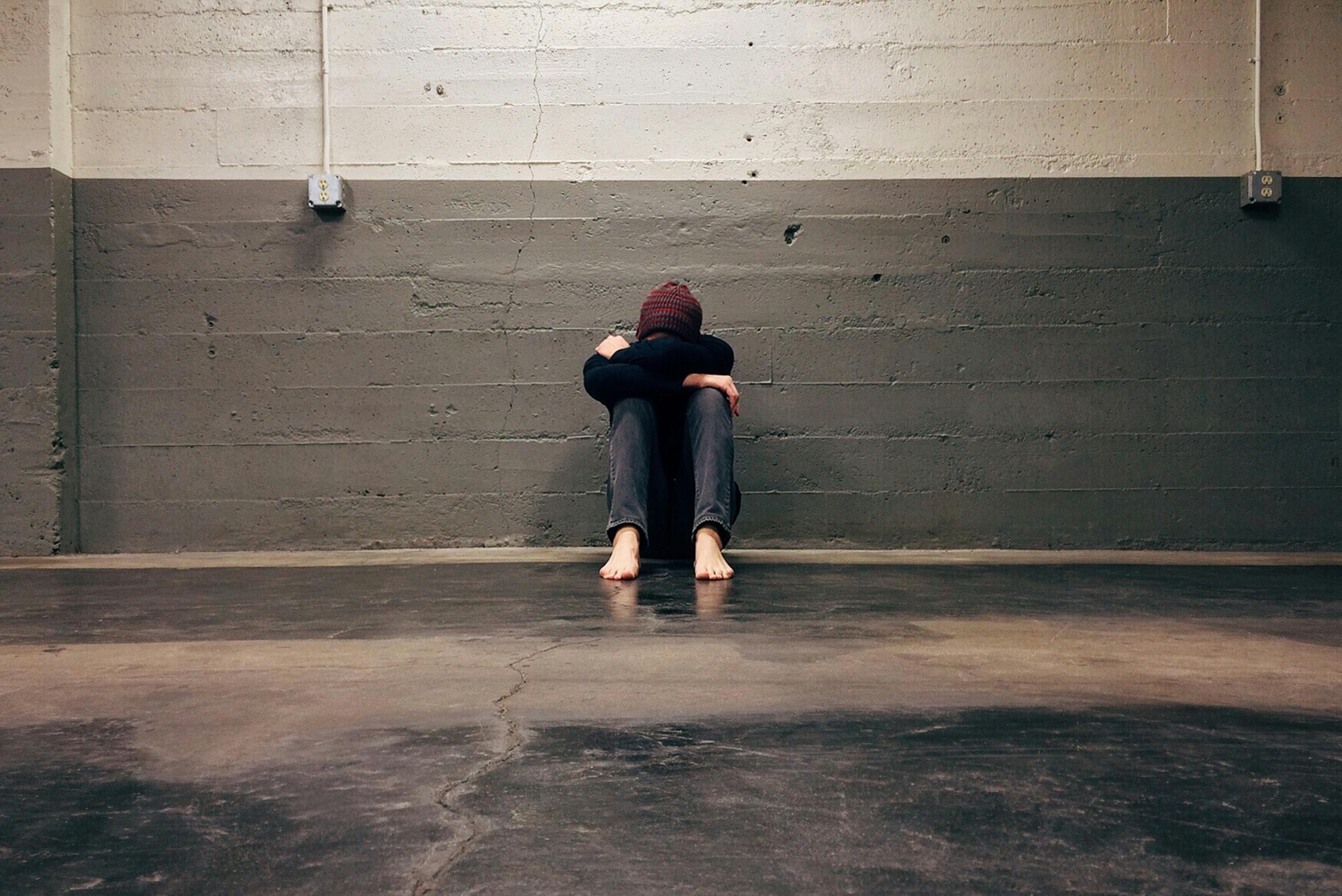
The social anxiety cycle is fairly predictable once you recognize it. A social situation approaches. You anticipate it with dread. You either avoid it or endure it while monitoring yourself constantly. The experience feels awful, which confirms your belief that social situations are threatening. The avoidance grows.
Acting class disrupts this cycle at several points simultaneously, which is part of what makes it interesting as an intervention.
First, it creates repeated, voluntary exposure to social situations in a context where everyone is equally vulnerable. This matters enormously. One of the reasons social situations feel so threatening to anxious introverts is the sense that everyone else is at ease while you’re struggling internally. In an acting class, that illusion dissolves quickly. Everyone is nervous. Everyone fumbles. Everyone has moments where they forget their lines or lose the thread of a scene. The shared vulnerability levels the room in a way that ordinary social situations rarely do.
Second, acting class trains you to focus outward rather than inward. Good acting, as any experienced teacher will tell you, is fundamentally about listening. You can’t perform a scene well while simultaneously monitoring how you look, whether your voice sounds weird, or what the other people in the room think of you. The craft demands that you pay attention to your scene partner. That outward attention is the opposite of the self-focused rumination that drives social anxiety.
I saw this dynamic play out with a creative director I managed at my agency, a genuinely talented INFP who froze in client presentations despite having brilliant ideas. She started taking a scene study class at a local theater on evenings and weekends, not to become an actress, but because her therapist suggested it. Within a few months, something had shifted in how she carried herself in rooms. She wasn’t cured of her anxiety. But she had developed what she described as a “separate track” in her mind, one that could stay focused on the task while the anxious part of her ran quietly in the background without taking over.
Third, acting class gives you permission to fail in front of people. This is harder than it sounds for introverts, particularly those who carry the weight of high standards and perfectionism. The fear of saying something wrong, of being judged or found lacking, sits at the center of a lot of social anxiety. HSP perfectionism adds another layer, where the stakes of any mistake feel disproportionately high. Acting class normalizes imperfection as part of the process, which slowly recalibrates your relationship with being seen.
What the Research Suggests About Exposure and Anxiety
Acting class isn’t a clinical treatment for social anxiety disorder. If your anxiety is significantly disrupting your life, working with a mental health professional is the appropriate starting point. Harvard Health outlines evidence-based treatments including cognitive behavioral therapy and medication, which have strong track records for social anxiety disorder specifically.
That said, acting class shares a core mechanism with one of the most effective therapeutic approaches to anxiety: graduated exposure. The idea is that repeated, voluntary contact with feared situations, at manageable intensity levels, gradually reduces the threat response over time. Your nervous system learns, through direct experience, that the situation isn’t actually dangerous.
What makes acting class a particularly interesting form of exposure is that it’s structured and progressive. You don’t walk in on day one and perform a monologue in front of an audience. You start with simple exercises, mirroring, listening games, short improvised scenes. The intensity builds gradually as your comfort grows. That graduated quality mirrors what a good therapist would design for you deliberately.
A relevant body of work in clinical psychology has examined how performance-based interventions can complement traditional anxiety treatment. Research published in PubMed Central points to the role of behavioral activation and social engagement in reducing anxiety symptoms, findings that align with what many acting class participants report anecdotally.
For highly sensitive people, the sensory dimension of acting class also deserves attention. A drama studio can be a lot: voices, movement, emotional intensity, physical proximity to strangers. If you experience HSP overwhelm and sensory overload, you may need to pace yourself carefully when starting out. Beginning with a smaller class, or one that moves at a gentler pace, can make the difference between an experience that stretches you productively and one that simply overwhelms.

What Specific Skills Does Acting Class Build for Anxious Introverts?
Beyond the exposure mechanism, acting class develops a set of concrete skills that translate directly into everyday social situations. These aren’t performance tricks. They’re capacities that change how you relate to other people and to yourself in social contexts.
Presence. Acting training places enormous emphasis on being fully in the moment of a scene rather than anticipating what comes next. For socially anxious people, whose minds are usually three steps ahead, rehearsing catastrophic outcomes, this is a skill that requires genuine practice. Over time, the ability to stay present in a scene begins to carry over into ordinary conversations.
Embodied confidence. Much of what reads as confidence in social situations is physical: posture, breathing, the steadiness of eye contact. Acting class works on all of these directly. You learn to breathe from your diaphragm, to take up space without apology, to make and hold eye contact as a form of connection rather than confrontation. These physical adjustments have a feedback effect on your internal state. Your body’s signals influence how your nervous system interprets a situation.
Listening as a skill. Most people with social anxiety are not poor listeners by nature. They’re often intensely attuned to others, sometimes to the point where they absorb the emotional states of everyone around them. That empathic attunement is a real strength, but in anxious states it can become a liability, where you’re so focused on reading the room that you lose the thread of the actual conversation. Acting class teaches you to listen with purpose and respond to what’s actually being offered, which is a more grounded form of the attunement you already possess. If you’ve explored HSP empathy as a double-edged sword, you’ll recognize this dynamic immediately.
Tolerance for being seen. This is perhaps the most significant skill acting class builds for socially anxious people. The terror of social anxiety is often less about social interaction itself and more about being observed, evaluated, and potentially found wanting. Acting class puts you in front of other people repeatedly, in a context where being seen is the entire point. The more you experience being seen without catastrophic consequences, the more your nervous system begins to update its threat assessment.
Recovery from mistakes. In a scene, things go wrong constantly. You forget a line, you misread a cue, you lose your place. Good acting training teaches you to recover and continue rather than collapse. That recovery muscle is exactly what socially anxious people need to develop. The fear isn’t usually that something will go wrong. It’s that if something goes wrong, you won’t be able to recover, and everyone will see your failure. Acting class proves that wrong, over and over.
The Rejection Piece: Why Acting Class Hits Different for Sensitive People
There’s an aspect of acting class that rarely gets discussed in the context of social anxiety, and it’s the one that I think matters most for sensitive introverts: the relationship with rejection.
Acting, even in a class setting, involves a constant stream of micro-rejections. Your scene partner doesn’t respond the way you expected. The teacher redirects you mid-exercise. An improvised idea lands flat. A character choice gets corrected. For someone with high rejection sensitivity, these small moments can feel enormous, far out of proportion to what actually happened.
Rejection sensitivity in sensitive people isn’t a character flaw. It’s often a function of how deeply we process social information. Understanding HSP rejection and how to process it is genuinely useful here, because the acting class environment will trigger those responses, and knowing what’s happening makes it easier to stay in the room rather than retreat.
What acting class offers, if you stay with it, is a gradual desensitization to these micro-rejections in a context where they’re explicitly part of the learning process. A good acting teacher frames redirection as craft development, not personal criticism. Over time, that reframing begins to feel true rather than just something you’re telling yourself. You start to experience correction as information rather than judgment.
I’ve watched this process happen with people I’ve worked with over the years. One account executive at my agency, someone who was genuinely excellent at her job but who would visibly deflate after any critical feedback, started taking an evening acting class. She told me later that the class had changed her relationship with feedback at work. Not because the feedback stopped stinging, but because she had accumulated so much evidence that she could survive it and continue.
How to Choose the Right Acting Class if You Have Social Anxiety
Not all acting classes are created equal, and the wrong environment can make social anxiety worse rather than better. A few things worth considering before you sign up.
Class size matters. A smaller class, eight to twelve people, gives you more individual attention and less ambient chaos. Large conservatory-style classes can be overwhelming for someone who’s already managing significant anxiety. Start smaller than you think you need to.
The teacher’s approach matters enormously. Some acting teachers use a confrontational, high-pressure style that can be genuinely harmful for anxious students. Look for teachers who describe their approach as supportive, process-oriented, or ensemble-based. Read reviews carefully. If you can observe a class before committing, do it.
Scene study versus improv. These are different experiences with different challenges. Improv removes the safety net of a script, which can be terrifying for anxious introverts but also deeply liberating once you get past the initial panic. Scene study gives you text to hold onto, which can feel more manageable at first. Many people find scene study a better starting point and move toward improv once they’ve built some confidence. Findings in behavioral psychology suggest that structured practice with gradual complexity increases tends to build confidence more reliably than immediate high-stakes exposure.
Community theater versus studio class. Community theater productions involve auditions, rehearsal schedules, and eventual performance in front of an audience. A studio class is purely for learning, with no public performance required. If the idea of performing for an audience feels like too much right now, start with a studio class. You can always add performance later when you’re ready.
Be honest with yourself about what you’re managing. If your social anxiety is severe, meaning it’s preventing you from functioning at work, maintaining relationships, or leaving the house, acting class is not a substitute for professional support. The Harvard Health guidance on social anxiety disorder is clear that clinical-level anxiety benefits from evidence-based treatment. Acting class works best as a complement to that kind of support, not a replacement for it.
The Introvert Advantage in Acting Class
Here’s something that surprised me when I started paying attention to this: introverts often have a genuine edge in acting class, once they get past the initial anxiety of being there.
Good acting requires qualities that introverts tend to have in abundance. The capacity for deep observation. Sensitivity to emotional nuance. Comfort with silence and stillness. The ability to process complex emotional material internally before expressing it. These aren’t things you learn in acting class. They’re things you bring to it.
What acting class teaches introverts is how to externalize what’s already happening internally. The inner life is already rich. The work is learning to let some of it out in a controlled, intentional way. That’s a different challenge from the one extroverts face, who often need to learn to slow down and go deeper. Neither challenge is easier than the other. They’re just different.
The Jungian framework of typology offers an interesting lens here. Jung’s understanding of the introvert as someone whose primary orientation is toward the inner world rather than the outer one maps well onto what good acting actually requires: genuine inner experience that then gets expressed outward. Introverts aren’t starting from nothing. They’re starting from a place of depth, and learning to build a bridge.
As an INTJ, my own relationship with emotional expression has always been complicated. I feel things deeply, but I process them quietly and privately. The idea of externalizing that processing in front of strangers felt, for a long time, like a kind of violation. What I’ve come to understand is that the anxiety around being seen isn’t about the emotions themselves. It’s about the vulnerability of being witnessed in the act of having them. Acting class is, at its core, a practice in tolerating that vulnerability until it stops feeling fatal.
That shift doesn’t happen overnight. But it does happen. And when it does, it changes not just how you feel in acting class, but how you feel in meetings, at dinner parties, in conversations with people you’ve just met. The coping strategies for HSP anxiety often emphasize building tolerance through repeated, manageable exposure rather than avoidance. Acting class is one of the more engaging ways to do exactly that.

What Happens After the Class Ends
One of the more interesting things about using acting class for social anxiety is what happens in the weeks and months after you’ve been doing it consistently. The benefits don’t stay contained to the drama studio.
People who stick with acting training for several months often report changes in how they experience ordinary social situations. Eye contact feels less fraught. Silence in conversation becomes less threatening. The internal monologue of self-criticism that runs during social interactions gets quieter, not because it’s been suppressed, but because something else has taken its place: attention to the other person.
That shift in attention is significant. Social anxiety is, in large part, a self-focused state. Your attention is trained on yourself, on how you’re coming across, on what might go wrong, on what the other person must be thinking. Acting class trains you, through repeated practice, to put your attention somewhere else. And attention, it turns out, is a trainable capacity.
There’s also something that happens to your relationship with your own emotions over time. Sensitive introverts often carry a complicated relationship with their emotional depth, aware that they feel things intensely but uncertain whether that intensity is safe to show. Acting class creates a space where emotional expression is not just permitted but required. Over time, that permission begins to feel less conditional. You stop needing the frame of a scene to access what you actually feel.
That’s not a small thing. For people who have spent years managing their emotional responses carefully, learning to modulate and conceal, the experience of being in a room where expression is the entire point can be genuinely healing. Not in a dramatic, cathartic way, but in a quiet, cumulative way that you notice mostly in retrospect.
If you’re exploring the broader territory of introvert mental health, including the ways anxiety, sensitivity, and emotional depth intersect, the resources in our Introvert Mental Health Hub cover that ground in depth and from multiple angles.
About the Author
Keith Lacy is an introvert who’s learned to embrace his true self later in life. After 20 years in advertising and marketing leadership, including running agencies and managing Fortune 500 accounts, Keith now channels his experience into helping fellow introverts understand their strengths and build fulfilling careers. As an INTJ, he brings analytical depth and authentic perspective to every article, drawing from both professional expertise and personal growth.
Frequently Asked Questions
Is acting class a legitimate treatment for social anxiety?
Acting class is not a clinical treatment for social anxiety disorder, and it shouldn’t be positioned as a replacement for therapy or medication when those are needed. What it offers is a structured, repeated form of social exposure that shares mechanisms with evidence-based approaches like graduated exposure therapy. For mild to moderate social anxiety, acting class can be a meaningful complement to other strategies. For clinical-level anxiety that significantly disrupts daily life, working with a mental health professional remains the appropriate foundation.
Will acting class make an introvert more extroverted?
No, and that’s not the goal. Introversion is a stable personality orientation, not a problem to be solved. Acting class doesn’t change your introversion. What it can do is reduce the anxiety that has attached itself to social situations, making those situations feel less threatening without requiring you to become a different kind of person. Many introverts who take acting classes report feeling more at ease socially while remaining fundamentally oriented toward quiet, depth, and internal reflection.
What type of acting class is best for someone with social anxiety?
For most people managing social anxiety, a small scene study class with a supportive, process-oriented teacher is the best starting point. Scene study gives you a script to hold onto, which reduces the unpredictability that can trigger anxiety. Improv classes, while potentially very effective over time, tend to be more immediately challenging because they remove that structure. Community theater productions add the pressure of public performance, which may be better suited as a later step once some baseline comfort has been established in a studio setting.
How long before acting class starts to help with social anxiety?
Most people who report meaningful changes from acting class describe noticing shifts after two to four months of consistent attendance. The first few sessions are typically the most uncomfortable, as your nervous system is still registering the environment as threatening. With repeated attendance, that threat response tends to diminish. The carry-over into everyday social situations generally takes longer, often three to six months of regular practice, because the nervous system needs accumulated evidence across many experiences before it updates its baseline assessment of social situations as safe.
Can highly sensitive people handle the emotional intensity of acting class?
Highly sensitive people often find acting class more emotionally activating than other participants do, which can be both a strength and a challenge. The emotional depth that HSPs bring to scene work is often striking. The challenge is managing the sensory and emotional intensity of the environment without becoming overwhelmed. Starting with a smaller class, giving yourself recovery time after sessions, and being honest with yourself about your pacing needs can make a significant difference. Acting class can be deeply rewarding for HSPs, but it works best when approached with self-awareness about your particular sensitivities rather than treated as a one-size-fits-all experience.