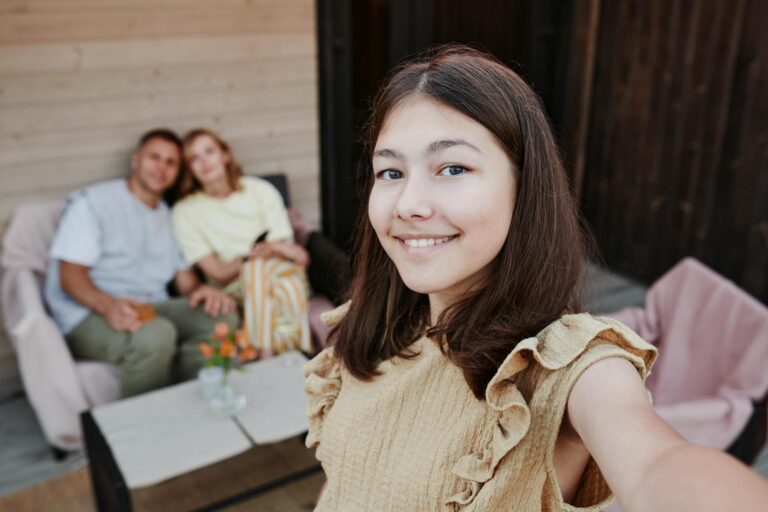

Activities for youth with social anxiety work best when they reduce pressure rather than eliminate connection. The most effective options tend to be structured enough to remove the awkwardness of unscripted social moments, yet open enough to let young people engage at their own pace.
Not every anxious teenager needs therapy as a first step. Sometimes what they need is the right environment, one where their nervous system can settle enough to let their personality show up. That’s where intentional activity choices make a real difference.
I’ve been thinking about this a lot lately, partly because of conversations I’ve had with parents who reach out through this site, and partly because I remember being that kid. Quiet. Watchful. Dreading anything that required me to perform spontaneity in front of others. Nobody handed me a roadmap. I had to figure out, slowly and mostly by accident, which environments let me breathe and which ones made me want to disappear. The goal here is to give young people a better map than I had.

Before we get into specific activities, it helps to understand the broader picture of what socially anxious youth are actually dealing with, and why the mental health dimension matters as much as the social one. Our Introvert Mental Health Hub covers the full range of challenges that quiet, sensitive, and introverted people face, and social anxiety in young people sits squarely at the center of that conversation.
What Makes Social Anxiety Different From Ordinary Shyness?
Most people use “shy” and “socially anxious” interchangeably, but they’re not the same thing. Shyness is a temperament trait. Social anxiety is a pattern of fear and avoidance that can genuinely limit a young person’s life. The American Psychological Association draws a meaningful distinction between the two, noting that shyness involves discomfort in social situations while social anxiety involves persistent fear of negative evaluation that leads to avoidance.
What’s your personality type?
Take our free 40-question assessment and get a detailed personality profile with dimension breakdowns, context analysis, and personalised insights.
Discover Your Type8-12 minutes · 40 questions · Free
In my years running advertising agencies, I hired a lot of young people fresh out of college. Some were quiet and took time to warm up. Others were visibly distressed by meetings, presentations, or even casual team lunches in ways that went beyond introversion. The difference was visible if you knew what to look for. The shy ones needed time. The anxious ones needed something different: structure, predictability, and low-stakes ways to participate without feeling exposed.
For youth, that distinction matters enormously when choosing activities. A socially anxious teenager doesn’t just need “more practice being around people.” They need experiences that gradually build the evidence that social situations can be safe, manageable, and even enjoyable. That’s a fundamentally different design challenge.
The APA’s broader resources on anxiety disorders are worth reading if you’re a parent or educator trying to understand what’s happening beneath the surface. Social anxiety in young people often coexists with other sensitivities, including heightened emotional processing and a strong tendency to notice and absorb the emotional states of people around them.
Why Do Some Activities Help While Others Make Things Worse?
Not all social exposure is created equal. Throwing an anxious teenager into a loud, unstructured party and telling them to “just try” is the equivalent of treating a fear of heights by pushing someone off a ladder. The anxiety doesn’t dissolve. It compounds.
What actually helps is something closer to what psychologists call graduated exposure: starting with low-threat environments and slowly building toward more complex social situations. The activities that work best for socially anxious youth tend to share a few qualities. They have clear rules or roles, so there’s less ambiguity about what’s expected. They involve a shared focus outside the self, like a project, a game, or a creative task, so the spotlight isn’t constantly on the individual. And they allow for varying levels of participation, so a young person can engage deeply or observe from the edges without feeling like they’re failing.
Many socially anxious young people are also highly sensitive. They pick up on subtleties in tone, body language, and group dynamics that others miss entirely. That sensitivity is a genuine strength, but it can also mean they experience social environments as more overwhelming than their peers do. Understanding HSP overwhelm and sensory overload can help adults design activity environments that don’t inadvertently flood a young person’s nervous system before they’ve had a chance to settle in.

I think about a junior copywriter I managed early in my agency career. She was extraordinarily talented but would go completely silent in group brainstorming sessions. Her best ideas came through email, late at night, after the meeting was over. For a long time, her managers saw this as a participation problem. What they were actually looking at was a social anxiety response: the pressure of real-time group evaluation was shutting down her access to her own thinking. Once we shifted how we ran ideation sessions, giving people time to write before speaking, her contributions changed everything. The activity format was the variable. Her capability was never in question.
Which Creative Activities Work Well for Socially Anxious Youth?
Creative activities sit at the top of almost every evidence-informed list for a reason. They provide a focus point outside the self, they allow for individual expression without requiring verbal performance, and they create natural conversation starters that reduce the pressure of unscripted interaction.
Art classes, especially in small group settings, tend to work well. The shared task gives everyone something to look at and talk about that isn’t each other. Ceramics, painting, and illustration all fit this pattern. A young person can be fully absorbed in their work while still being in the presence of others, which is a low-pressure way to build comfort with social proximity.
Creative writing groups, particularly ones that focus on workshopping fiction or poetry rather than personal narrative, offer similar benefits. The work becomes the subject, not the person. Many socially anxious teens find that writing lets them process and express things they can’t say out loud, which connects directly to how deep emotional processing works for sensitive young people. Writing isn’t just a hobby for them. It’s often a primary way they make sense of their inner world.
Music, particularly ensemble settings like chamber groups, jazz combos, or small choirs, adds another layer. There’s a shared language and a shared goal, and the communication happens through the music itself rather than through conversation. Many young people who struggle intensely in social settings find that making music with others feels entirely different from talking with them.
Theater deserves a mention here, though it requires some nuance. Improv theater can be genuinely terrifying for socially anxious youth because of its unpredictability. Scripted theater, on the other hand, gives young people a character to inhabit, lines to learn, and a clear role within a group. Many anxious teens find that performing as someone else temporarily quiets the self-monitoring that fuels their anxiety. That said, the audition process and the social dynamics of a theater group can themselves be challenging, so it’s worth thinking about the full context before recommending it.
What Role Do Nature and Movement-Based Activities Play?
There’s something about being outdoors that changes the social equation for anxious young people. The environment itself absorbs attention in a way that indoor settings don’t, and the reduced eye contact that comes naturally with hiking, birdwatching, or gardening lowers the social intensity considerably.
Hiking clubs, nature photography groups, and environmental volunteering all offer structured social time in settings that feel less like being evaluated. Side-by-side activities, where people share an experience without facing each other directly, tend to be significantly more comfortable for socially anxious individuals than face-to-face interactions.
Individual sports with a team component, like swimming, cross-country running, or cycling clubs, hit a similar note. A young person can train alongside others, share the experience of competition, and belong to something without needing to perform socially in the way that team sports with constant group dynamics require. The research on physical activity and anxiety outcomes is consistent in showing that regular movement has meaningful effects on anxiety levels, independent of the social component. When you combine movement with low-pressure social exposure, you get compounding benefits.

Yoga and martial arts occupy an interesting middle ground. Both involve being in a group, following clear instruction, and focusing primarily on your own body rather than on social performance. Many socially anxious young people find these settings uniquely comfortable precisely because the internal focus is built into the activity itself. There’s no expectation to chat. The shared silence is part of the practice.
How Do Interest-Based Clubs Create Low-Stakes Connection?
One of the most reliable pathways into social comfort for anxious youth is shared interest. When two people are both passionate about the same obscure topic, the social anxiety quiets down because the conversation has a clear center of gravity that isn’t either of them.
Book clubs, gaming groups, robotics teams, coding clubs, astronomy societies, and tabletop role-playing groups all operate on this principle. The shared interest provides a ready-made conversation structure, a common vocabulary, and a reason to keep showing up that isn’t purely social. For a young person who finds unstructured socializing exhausting, having that anchor makes an enormous difference.
Tabletop role-playing games in particular have gained recognition as genuinely therapeutic environments for socially anxious youth. Players inhabit characters, which provides the same protective distance as scripted theater. The game structure creates natural conversation turns. And the collaborative storytelling aspect builds genuine connection over time without requiring anyone to be spontaneously charming.
I’ve seen this dynamic play out in professional settings too. Some of the most socially anxious people I’ve worked with were completely transformed when the conversation moved to their area of deep expertise. A junior account manager who could barely make eye contact in general meetings would hold a room captive when presenting data she’d spent weeks analyzing. The subject matter gave her something solid to stand on. Interest-based activities give anxious young people that same solid ground.
It’s worth noting that many highly sensitive young people carry a particular form of anxiety around not being good enough at the things they care about most. The relationship between HSP perfectionism and high standards is real, and it can make joining a new group feel especially threatening. Choosing activities where beginners are genuinely welcomed, and where the culture emphasizes learning over performance, matters more than it might seem.
What About Volunteering and Service-Based Activities?
Volunteering occupies a unique position in this conversation. It provides social contact structured around a purpose larger than the individuals involved, which shifts attention away from self-evaluation. When you’re focused on helping someone else, the internal critic that fuels social anxiety has less bandwidth to operate.
Animal shelters are particularly worth mentioning. Working with animals provides genuine social warmth and connection without the complexity of human social dynamics. Many socially anxious young people find that their anxiety drops considerably in animal care settings, partly because animals respond to presence and care rather than to social performance. The emotional nourishment is real, and the experience of being genuinely needed builds confidence in ways that are hard to manufacture elsewhere.
Library volunteering, community garden projects, environmental cleanup initiatives, and food bank work all offer similar benefits. The tasks are clear, the social interaction is purposeful rather than performative, and there’s usually a mix of ages that takes some of the peer-evaluation pressure off young participants.
One thing to be aware of: many highly sensitive young people feel others’ distress very acutely. Volunteering in settings that involve significant human suffering, like crisis hotlines or certain medical contexts, may not be the right fit for an anxious teenager who is still building their own emotional regulation capacity. The double-edged nature of deep empathy means that some service environments can be genuinely overwhelming rather than grounding. Matching the volunteer setting to the young person’s current capacity is worth thinking through carefully.

How Do Online and Digital Activities Fit Into This Picture?
This is where the conversation gets more nuanced. Online spaces can be genuinely valuable for socially anxious youth, offering lower-stakes social interaction, interest-based communities, and the ability to participate at their own pace. Many young people build real friendships through online gaming, fan communities, and creative platforms that they couldn’t have built in face-to-face settings.
At the same time, online-only social lives can become a way of avoiding the gradual exposure that helps anxiety ease over time. Harvard Health’s guidance on social anxiety emphasizes that avoidance, while it provides short-term relief, tends to maintain and strengthen anxiety over time. success doesn’t mean eliminate online social activity but to make sure it’s complementing rather than replacing in-person connection.
Online communities built around creative work, like fan fiction platforms, art sharing communities, or music production forums, can serve as genuine bridges. A young person might build confidence through online creative sharing and then find it easier to show up to an in-person creative group because they already have some sense of belonging in that world.
The distinction worth holding onto is between online activities that build toward something and online activities that function primarily as avoidance. A teenager who is writing stories online and connecting with readers is doing something genuinely meaningful. A teenager who is spending all their time online because every offline option feels too threatening is showing a pattern that probably warrants more intentional support.
What Do Parents and Educators Need to Understand About Anxiety and Social Participation?
One of the most common mistakes well-meaning adults make is treating social anxiety in young people as a willpower problem. “Just go. You’ll be fine.” “You have to push through it.” “Everyone feels nervous sometimes.” These responses, however kindly intended, miss what’s actually happening in an anxious young person’s nervous system.
Social anxiety isn’t a character flaw or a lack of effort. Clinical literature on social anxiety disorder is clear that it involves real neurological patterns, not simply a choice to be avoidant. Treating it as a motivation problem tends to add shame to an already difficult experience, which compounds the anxiety rather than reducing it.
What helps is a combination of genuine understanding, patient encouragement, and thoughtful activity design. Adults who take time to understand what specific situations trigger a young person’s anxiety, and who work collaboratively to find activities that offer manageable challenge rather than overwhelming exposure, make a real difference.
It’s also worth understanding that rejection, real or perceived, hits socially anxious young people with particular force. The fear of being excluded, laughed at, or negatively evaluated isn’t abstract for them. It’s visceral. Helping a young person develop the capacity to process and recover from social setbacks, rather than avoid all situations where setbacks might occur, is one of the most valuable things an adult can offer. Understanding how sensitive people process rejection and begin healing can help parents and educators respond to these moments with the right kind of support.
Similarly, many anxious young people carry significant worry about their own anxiety. They feel anxious about feeling anxious. They worry that their sensitivity is a problem to be fixed. Framing their sensitivity as a trait with genuine strengths, rather than purely as a liability, changes the internal narrative in ways that matter. Reading about HSP anxiety and coping strategies might give parents and educators language for exactly that kind of reframing.
One thing I wish someone had told me earlier: success doesn’t mean turn an anxious introvert into a confident extrovert. Psychology Today’s exploration of introversion and social anxiety makes this point well. They’re different things, and treating introversion as the problem to be solved misses the actual target. An anxious introvert who learns to manage their anxiety can still be fully, authentically introverted. That’s not a consolation prize. That’s the actual goal.
How Do You Build a Sustainable Activity Plan for an Anxious Young Person?
Sustainability matters more than intensity. A young person who attends one overwhelming group event and then avoids all social activities for six months has not made progress. A young person who shows up consistently to a low-pressure weekly activity, even if it feels small, is building something real.
Start with activities that match the young person’s genuine interests, not activities chosen purely for their social exposure value. Intrinsic motivation is what keeps anxious young people showing up when their anxiety is telling them to stay home. If they genuinely care about the activity, they have a reason to push through the initial discomfort.
Build in recovery time. Socially anxious young people often need more processing time after social experiences than their peers do. Scheduling back-to-back social obligations and then wondering why a teenager is shutting down misses this basic reality. Quiet time after social engagement isn’t laziness. It’s how their nervous system restores itself.
Celebrate small wins specifically. “You stayed for the whole session” or “You introduced yourself to one new person” are real achievements for a socially anxious young person. Vague encouragement like “you did great” lands less powerfully than specific acknowledgment of what they actually did.
And be patient with setbacks. A bad experience at a club meeting or a difficult social interaction doesn’t erase the progress that came before it. Helping a young person understand that one hard moment doesn’t define the whole picture is part of building the resilience that makes sustained participation possible.
If anxiety is significantly limiting a young person’s life, activities alone may not be sufficient. Professional support, whether through a therapist who specializes in anxiety or through a school counselor, can work alongside these activity strategies to create a more complete picture of support. Activities create the practice ground. Professional support helps with the underlying patterns.
There’s much more on the intersection of sensitivity, anxiety, and mental health in our complete Introvert Mental Health Hub, which brings together everything we’ve written on this topic in one place.
About the Author
Keith Lacy is an introvert who’s learned to embrace his true self later in life. After 20 years in advertising and marketing leadership, including running agencies and managing Fortune 500 accounts, Keith now channels his experience into helping fellow introverts understand their strengths and build fulfilling careers. As an INTJ, he brings analytical depth and authentic perspective to every article, drawing from both professional expertise and personal growth.
Frequently Asked Questions
What are the best activities for teenagers with social anxiety?
The most effective activities for teenagers with social anxiety tend to be structured around a shared focus, like art, music, hiking, gaming, or volunteering with animals, rather than unscripted socializing. These settings reduce the pressure of direct evaluation while still providing genuine social contact. Interest-based clubs and small creative groups are particularly well-suited because the shared topic provides natural conversation and a sense of belonging that doesn’t depend on social performance.
Is social anxiety the same as being introverted?
No. Introversion is a personality trait describing where someone draws their energy, and it’s not a disorder. Social anxiety is a pattern of fear and avoidance around social situations that can significantly limit a person’s life. Many introverts are not socially anxious, and some extroverts experience social anxiety. The two can coexist, but treating introversion as the problem to be solved misses the actual target. An introverted young person who manages their anxiety can remain fully introverted and still build a meaningful social life.
How can parents support a socially anxious child without pushing too hard?
The most helpful approach combines genuine understanding with patient, graduated encouragement. Rather than pushing a child into overwhelming situations and hoping they’ll adapt, parents can work collaboratively to find activities that offer manageable challenge. Acknowledging specific small wins, building in recovery time after social experiences, and framing sensitivity as a strength rather than a flaw all make a meaningful difference. If anxiety is significantly limiting daily life, working with a therapist who specializes in anxiety can provide additional support alongside these strategies.
Can online activities help socially anxious youth?
Online activities can be genuinely valuable when they build toward something, like developing creative skills, finding interest-based community, or building confidence through low-stakes interaction. Many young people form real friendships through online gaming or creative platforms that they couldn’t have built in face-to-face settings initially. The concern arises when online activity functions purely as avoidance, replacing rather than complementing in-person connection. The goal is for online engagement to serve as a bridge toward broader social participation, not a permanent substitute for it.
How long does it take for activities to help reduce social anxiety in young people?
Progress with social anxiety is rarely linear, and timelines vary considerably depending on the severity of the anxiety, the consistency of participation, and whether professional support is also in place. What matters most is sustainability: a young person who participates consistently in a low-pressure activity over months is building something real, even if individual sessions feel small. Setbacks are a normal part of the process. Celebrating specific, concrete progress rather than expecting a smooth upward trajectory helps both young people and their parents maintain perspective through the harder stretches.