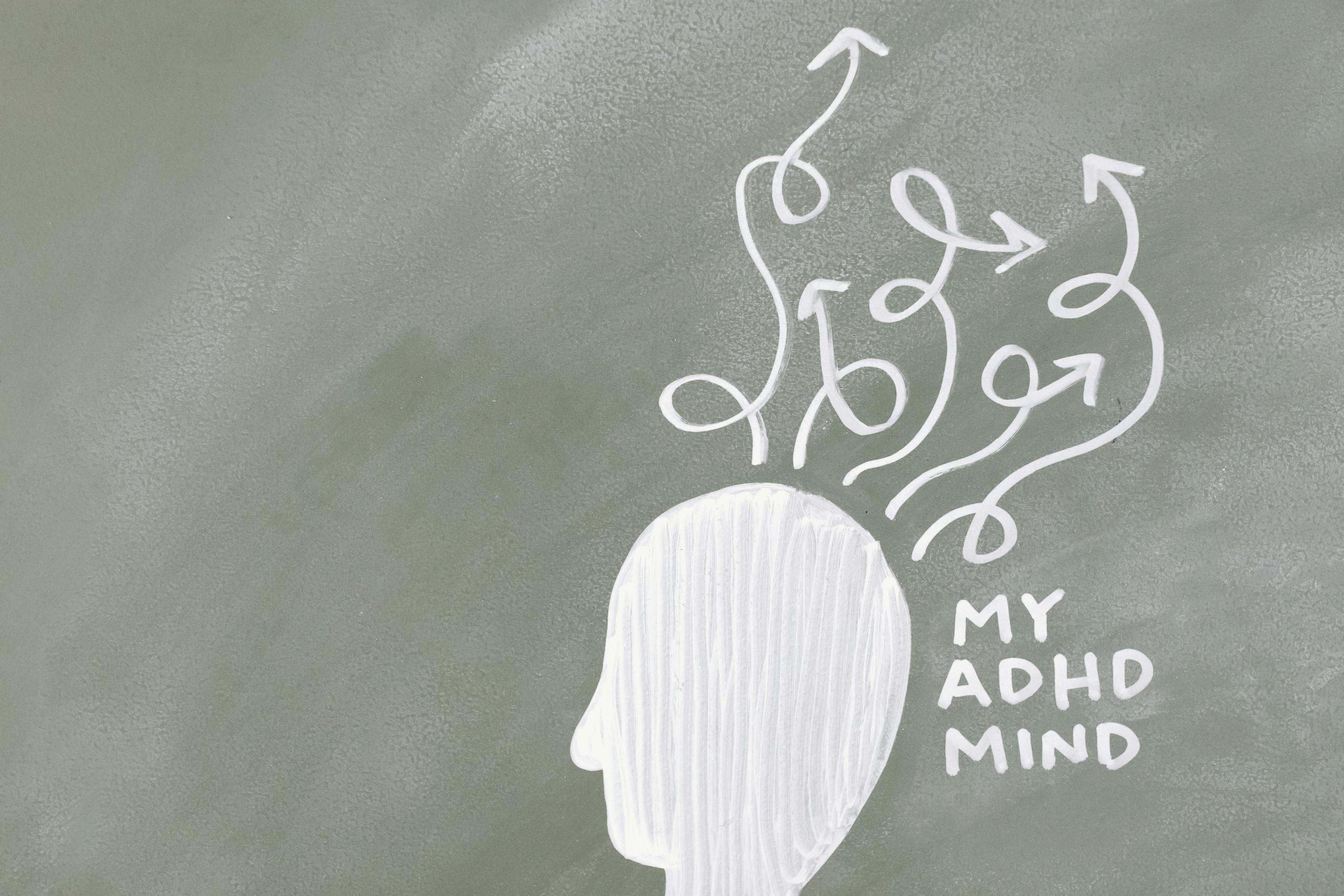

Being an ADHD introvert means carrying two traits that the world consistently misreads, often in opposite directions. ADHD gets labeled as restless, loud, and impulsive. Introversion gets labeled as shy, withdrawn, and disengaged. Sit with both at once and you end up in a strange middle ground where neither description fits, and the strategies designed for one trait can actively work against the other.
ADHD and introversion co-occur more often than most people realize. A 2019 study published through the National Institute of Mental Health estimated that roughly 4.4% of U.S. adults meet criteria for ADHD, and separate population research consistently places introverts at 30 to 50 percent of the general population. What makes the ADHD introvert experience distinct isn’t simply having two separate challenges. It’s that the traits interact, overlap, and sometimes mask each other in ways that make both harder to identify and harder to manage.
I spent more than two decades running advertising agencies, managing teams, and pitching Fortune 500 brands. I’m an INTJ who didn’t fully understand his own wiring until well into that career. Looking back, I can see how ADHD-adjacent patterns and deep introversion shaped nearly every professional struggle I had, and why the standard advice for either trait rarely worked the way it was supposed to.
If you want to understand the full picture of introvert personality traits and where this dual experience fits, our Introvert Personality Traits hub covers the broader landscape. This article focuses specifically on what happens when ADHD and introversion exist together, why that combination creates a unique set of challenges, and what actually helps.

What Does It Actually Mean to Be an ADHD Introvert?
Most conversations about ADHD focus on hyperactivity, impulsivity, and attention deficits in highly social or structured environments, like classrooms and open offices. Most conversations about introversion focus on energy depletion from social interaction and a preference for solitude and depth. Combine them and you get something that doesn’t fit neatly into either framework.
What’s your personality type?
Take our free 40-question assessment and get a detailed personality profile with dimension breakdowns, context analysis, and personalised insights.
Discover Your Type8-12 minutes · 40 questions · Free
An ADHD introvert often presents as calm and reflective on the outside while experiencing significant internal noise. The mind races, loops, and spirals, but because introversion drives a preference for internal processing, that chaos stays largely invisible. Where an extroverted person with ADHD might externalize their restlessness through talking, moving, or seeking stimulation from others, an introverted person with ADHD tends to internalize it. The stimulation-seeking goes inward: rumination, hyperfocus on ideas, and elaborate internal monologues that can last for hours.
This matters because it changes how ADHD symptoms look. A 2020 review in the journal Frontiers in Psychology noted that inattentive ADHD presentations are significantly more likely to go undiagnosed, particularly in adults, because they don’t match the hyperactive stereotype most clinicians and teachers were trained to identify. Introverted people with ADHD are disproportionately represented in that inattentive category, which means many go years without a diagnosis or go misdiagnosed with anxiety or depression instead.
I remember sitting through agency review meetings, looking completely composed while my mind was cataloging seventeen unrelated ideas, replaying a conversation from two days earlier, and quietly panicking about a deadline I hadn’t started yet. From the outside, I probably looked thoughtful and measured. Internally, it was anything but.
Where ADHD Symptoms and Introvert Traits Overlap and Confuse Each Other
One of the most disorienting parts of being an ADHD introvert is that several core traits genuinely overlap between the two, making it difficult to know which is driving a given behavior. That ambiguity isn’t just frustrating, it can lead to years of misapplied coping strategies.
Consider social fatigue. Introverts experience genuine energy depletion after extended social interaction, a well-documented neurological reality tied to how introverted brains process dopamine and stimulation. ADHD also creates social fatigue, but through a different mechanism: the cognitive effort of managing attention, filtering distractions, and tracking conversational threads in real time is exhausting when your executive function is already taxed. Both traits produce the same visible outcome, needing to leave the party early, but the underlying cause differs. Treating it as purely an introvert issue might mean missing that ADHD-specific strategies, like reducing cognitive load before social events rather than just carving out recovery time afterward, could help significantly.
Hyperfocus is another area of genuine overlap. Many introverts experience deep concentration states when engaged with meaningful work, what some researchers describe as a flow state. ADHD hyperfocus is neurologically distinct, an involuntary locking-in that can make it nearly impossible to shift attention even when you want to. For an ADHD introvert, these two experiences layer on top of each other. The result is periods of extraordinary productivity on self-chosen work and near-total paralysis on tasks that don’t generate internal interest, regardless of external urgency.
At my agency, I could spend six uninterrupted hours developing a brand strategy document and produce some of the best work of my career. Ask me to return a routine client call immediately afterward and it felt like trying to start a car with a dead battery. My team probably thought I was inconsistent. What was actually happening was a collision between introvert depth-processing and ADHD’s reward-based attention system.
The complete guide to introvert personality traits covers many of these depth-processing tendencies in detail. What it can’t fully account for is how ADHD reshapes those tendencies into something more erratic and harder to predict.

Perfectionism sits in this overlapping space too. Many introverts set high internal standards because they process deeply and care intensely about quality. ADHD adds a different dimension: the fear of starting because the gap between the vision in your head and what you can currently produce feels unbridgeable. The connection between perfectionism and introversion is real and documented, but when ADHD layers on top, perfectionism can become a form of task avoidance that looks like laziness from the outside and feels like failure from the inside.
Related reading: introversion-vs-adhd-overlooked-connection.
Related reading: giftedness-and-introversion-double-edged-sword.
Why Standard ADHD Advice Often Fails Introverts
Most mainstream ADHD management strategies were developed with a more extroverted presentation in mind. Body doubling, accountability partners, open coworking spaces, frequent check-ins, and high-energy routines are all commonly recommended. These strategies work well for people who draw energy from social presence. For an ADHD introvert, many of them create a secondary problem: the strategy designed to help with attention also depletes the energy needed to sustain any work at all.
Body doubling, the practice of working in the physical presence of another person to improve focus, is a good example. For extroverted people with ADHD, having someone nearby provides the low-level social stimulation that keeps the brain engaged without requiring active interaction. For an ADHD introvert, another person in the room, even a silent one, often activates the social monitoring system. Part of the brain starts tracking that person’s movements, sounds, and energy. That’s not restful background stimulation. That’s a competing cognitive demand.
The American Psychological Association has published guidance on ADHD treatment approaches that increasingly acknowledges individual variability, but the default recommendations in most workplaces and coaching programs still skew toward high-social, high-accountability models that can genuinely exhaust introverted clients.
What tends to work better for an ADHD introvert is creating structured solitude rather than social accountability. A specific workspace, a consistent start ritual, time-blocked deep work periods with hard boundaries around interruption, and task lists that front-load the most interesting or meaningful work. The goal is to give the ADHD brain enough structure to reduce decision fatigue while protecting the introvert’s need for uninterrupted internal space.
Many of the workplace struggles introverts face become significantly more acute when ADHD is also present. Open floor plans are difficult for introverts because of overstimulation. They’re doubly difficult for ADHD introverts because every ambient sound and movement competes directly for limited attentional resources.
The Emotional Weight of Being Misread by Both Communities
There’s a particular kind of loneliness that comes with being an ADHD introvert. ADHD communities often center extroverted experiences, high energy, external chaos, and social impulsivity. Introvert communities often center calm, deliberate, and controlled experiences. An ADHD introvert can feel like a misfit in both spaces simultaneously.
In ADHD forums and support groups, the ADHD introvert may feel out of place because their struggles look so different. They’re not interrupting people in conversation. They’re not bouncing off the walls. They’re quietly disappearing into their own head for hours and then missing a deadline they genuinely forgot existed. That presentation doesn’t always get the same recognition or empathy.
In introvert communities, the ADHD introvert may feel out of place because their internal experience doesn’t match the “calm deep thinker” archetype. Their mind isn’t quiet and ordered. It’s loud, fragmented, and sometimes genuinely distressing. The struggles introverts commonly face are real and valid, but they assume a baseline level of internal order that ADHD disrupts significantly.
I felt this acutely during my agency years. My leadership style was quiet and deliberate, which fit the introvert profile well. But my internal management of projects, deadlines, and administrative tasks was chaotic in ways I couldn’t explain and was embarrassed to admit. I built elaborate systems to compensate, color-coded calendars, redundant reminder structures, and detailed written notes for conversations I’d had an hour earlier. From the outside, I looked organized. Inside, I was managing a constant low-grade crisis.

That kind of masking is exhausting. The CDC’s ADHD resource center notes that adults with ADHD often develop sophisticated compensatory strategies that can make the condition nearly invisible to others, even as the internal burden remains high. For introverts who are already accustomed to managing a rich internal world that others don’t see, this layer of invisible effort can go unacknowledged for a very long time.
Coping Strategies That Actually Work for the ADHD Introvert
Effective coping for an ADHD introvert requires strategies that honor both traits simultaneously. That means approaches that support executive function without requiring sustained social energy, and that protect deep focus without allowing the introvert’s preference for solitude to become avoidance.
Design Your Environment Before You Try to Manage Your Behavior
ADHD management advice often focuses heavily on behavioral strategies: try harder, set more alarms, use accountability. Yet for an ADHD introvert, environmental design is far more powerful and far less draining. A workspace that minimizes auditory and visual distraction reduces the cognitive load the ADHD brain is fighting against. Noise-canceling headphones, a consistent and clutter-controlled desk, and a clear signal to others that you’re in deep work mode can make a measurable difference without requiring any additional social energy.
At my last agency, I eventually stopped trying to work in the open bullpen and moved my most demanding creative work to early mornings before anyone else arrived. That single environmental change improved my output more than any productivity system I’d tried. It wasn’t discipline. It was removing the conditions that made focus impossible.
Use Interest-Based Scheduling Instead of Priority-Based Scheduling
Standard time management advice says to tackle your highest-priority task first. For an ADHD introvert, this often backfires spectacularly. ADHD brains are governed by interest-based attention, meaning the brain allocates focus based on what it finds compelling, not what it logically knows is important. Forcing yourself to start with a dreaded task when your interest system isn’t engaged often results in extended avoidance that wastes more time than the task itself would have taken.
A more effective approach is to identify which tasks generate genuine internal interest and use them as entry points into the workday. Once the ADHD brain is engaged and in motion, transitioning to adjacent tasks becomes significantly easier. This works especially well for introverts because it aligns with the natural tendency to build momentum through depth rather than through external pressure.
Build Recovery Time Into Your Task Transitions, Not Just Your Day
Introverts need recovery time after social interaction. ADHD brains need recovery time after sustained cognitive effort. An ADHD introvert needs both, and the recovery requirements stack. A two-hour client presentation doesn’t just require social recovery. It also requires recovery from the executive function demands of tracking the conversation, managing attention, and suppressing distractions in real time.
Building micro-recovery periods between cognitively demanding tasks, even five to ten minutes of genuine quiet, can prevent the cumulative depletion that leads to late-day crashes and missed commitments. The Mayo Clinic recommends structured breaks as part of ADHD management, but for introverts, those breaks need to be genuinely solitary and low-stimulation to provide actual restoration rather than just a change of scenery.
Externalize Your Internal World Strategically
Introverts process internally by default. ADHD makes that internal processing unreliable because working memory is frequently disrupted. The combination creates a specific failure mode: important information enters the mind, gets processed with genuine depth and care, and then disappears before it can be acted on. The thought was real. The intention was real. The follow-through evaporates.
Externalizing your internal world, through consistent capture systems, written notes immediately after conversations, and visible project boards, compensates for ADHD’s working memory gaps without requiring you to become a different kind of person. It’s not about becoming more extroverted or more structured in a rigid way. It’s about creating external scaffolding that supports how your mind actually works.
Many of the struggles introverts face daily connect directly to being misunderstood by systems designed for different minds. Adding ADHD to that equation makes those systems even less compatible, which is why building personal systems that fit your actual wiring matters so much more than trying to force yourself into existing ones.

Strengths That Emerge from the ADHD Introvert Combination
It would be incomplete to write about this dual trait without acknowledging what it produces at its best. ADHD and introversion together create a particular kind of mind that, when its conditions are right, can do things that neither trait alone tends to produce.
The depth of introversion combined with the hyperfocus capacity of ADHD can generate extraordinary creative and analytical output. When an ADHD introvert locks onto a problem that genuinely interests them, they bring both the introvert’s preference for thorough, multi-layered thinking and the ADHD brain’s ability to sustain intense focus for hours without noticing time passing. That combination, in the right environment and on the right kind of work, is genuinely rare.
The traits that make introverts unique include a strong capacity for independent thinking and a tendency to notice what others miss. ADHD adds a kind of cognitive flexibility and associative thinking that can make connections across seemingly unrelated domains. Some of the most original strategic thinking I ever produced at my agencies came from exactly this combination: long, uninterrupted periods of deep reflection that my ADHD brain kept alive by constantly finding new angles and unexpected connections.
A 2021 paper in the Journal of Attention Disorders found that adults with ADHD scored significantly higher on measures of divergent thinking than neurotypical controls. Paired with the introvert’s tendency toward depth and deliberate analysis, that divergent thinking capacity can become a genuine professional asset rather than just a source of distraction.
The Psychology Today coverage of ADHD in adults has increasingly highlighted these cognitive strengths, moving away from a purely deficit-based framing toward a more complete picture of how ADHD affects different kinds of minds differently.
When to Seek Professional Support and What to Look For
Self-awareness is valuable. Professional support is often necessary. If you recognize yourself in the patterns described in this article and haven’t been formally evaluated for ADHD, that evaluation is worth pursuing. Adult ADHD is significantly underdiagnosed, particularly in people who present with inattentive rather than hyperactive symptoms, and particularly in women, who are diagnosed at roughly half the rate of men despite similar prevalence rates according to NIMH data.
When seeking support, look specifically for clinicians who have experience with adult ADHD and who understand that ADHD presents differently across personality types. A therapist or coach who only recognizes the hyperactive presentation may not identify what’s happening for an ADHD introvert, and may inadvertently reinforce the idea that you’re simply anxious, disorganized, or not trying hard enough.
Cognitive behavioral therapy adapted for ADHD, often called CBT-A, has strong evidence behind it. A 2018 meta-analysis published through the National Library of Medicine found meaningful improvements in ADHD symptoms and quality of life for adults receiving CBT-A compared to control conditions. For introverts, the structured, introspective nature of CBT can align well with how they naturally process experience, making it a particularly good fit.
Medication is a separate conversation worth having with a psychiatrist who specializes in ADHD. It’s not the right choice for everyone, but for many people it removes enough of the baseline cognitive noise to make other strategies actually workable. That’s worth knowing rather than avoiding.

Reframing What Success Looks Like for an ADHD Introvert
One of the most damaging things about carrying both traits without understanding them is that you spend years measuring yourself against standards designed for people wired completely differently. The extroverted neurotypical standard for professional success, consistent output, visible engagement, smooth multitasking, and steady social presence, is genuinely incompatible with how an ADHD introvert’s mind works. Trying to meet that standard doesn’t just feel hard. It actively suppresses the conditions under which you do your best work.
Reframing success means identifying the conditions under which you actually produce your best work and building a career or role around those conditions as much as possible. That might mean negotiating for remote work or flexible hours. It might mean being explicit with collaborators about how you communicate best. It might mean choosing roles that reward depth and original thinking over speed and social performance.
Late in my agency career, I stopped trying to run meetings the way I thought a CEO was supposed to run them. I started sending detailed written agendas in advance, keeping meetings shorter and more focused, and doing my most important thinking in writing rather than out loud in real time. My team responded better. My work got sharper. The change wasn’t about becoming more capable. It was about finally working with my wiring instead of against it.
That shift, from self-correction to self-accommodation, is what most ADHD introverts need most. Not a fix. A fit.
For more on how introvert traits show up across different areas of life and work, the full range of perspectives lives in our Introvert Personality Traits hub, where you’ll find articles covering everything from workplace dynamics to creative strengths to relationships.
About the Author
Keith Lacy is an introvert who’s learned to embrace his true self later in life. After 20 years in advertising and marketing leadership, including running agencies and managing Fortune 500 accounts, Keith now channels his experience into helping fellow introverts understand their strengths and build fulfilling careers. As an INTJ, he brings analytical depth and authentic perspective to every article, drawing from both professional expertise and personal growth.
Frequently Asked Questions
Can someone be both an introvert and have ADHD at the same time?
Yes, absolutely. Introversion and ADHD are independent traits that can and do co-occur. Introversion describes how a person gains and loses energy, specifically through a preference for internal processing and a need for solitude to recharge. ADHD is a neurodevelopmental condition affecting executive function, attention regulation, and impulse control. Having one does not prevent having the other, and the combination creates a distinct experience that differs meaningfully from either trait in isolation.
How do I know if my symptoms are from introversion or ADHD?
Some symptoms genuinely overlap, including social fatigue, preference for solitude, and periods of intense focus. The clearest differentiators are executive function challenges that persist across all areas of life, not just social ones. Chronic difficulty with time management, working memory failures, task initiation problems, and emotional dysregulation that exists independently of social context are more characteristic of ADHD than introversion. A formal evaluation from a psychologist or psychiatrist who specializes in adult ADHD is the most reliable way to distinguish between the two.
Why does standard ADHD advice not work well for introverts?
Most mainstream ADHD strategies, including body doubling, group accountability, and high-social coworking environments, were developed with more extroverted presentations in mind. These approaches require sustained social energy that introverts don’t have in abundance. For an ADHD introvert, the social demands of many common ADHD strategies can create a secondary depletion problem that undermines the focus gains. Strategies built around structured solitude, environmental design, and interest-based scheduling tend to work significantly better for this combination.
Are ADHD introverts more likely to be misdiagnosed?
Yes, and for several interconnected reasons. Introverted people with ADHD are more likely to present with inattentive rather than hyperactive symptoms, which are less visually obvious and historically less recognized by clinicians. Their introversion also means they tend to internalize rather than externalize their struggles, making the condition harder to observe from the outside. Additionally, the compensatory systems many introverts build to manage their inner world can mask ADHD symptoms effectively enough that neither the person nor those around them recognize what’s happening. Anxiety and depression are common misdiagnoses in this group.
What are the strengths of being an ADHD introvert?
When conditions are right, the ADHD introvert combination can produce exceptional creative and analytical output. The introvert’s preference for depth and thorough processing pairs with the ADHD brain’s capacity for hyperfocus and divergent thinking in ways that can generate original, multi-layered work that neither trait alone tends to produce. ADHD introverts often excel at independent, complex, open-ended problems that reward sustained internal engagement over time. They frequently notice connections and patterns that others miss, partly because their minds are constantly making associative leaps across seemingly unrelated domains.