

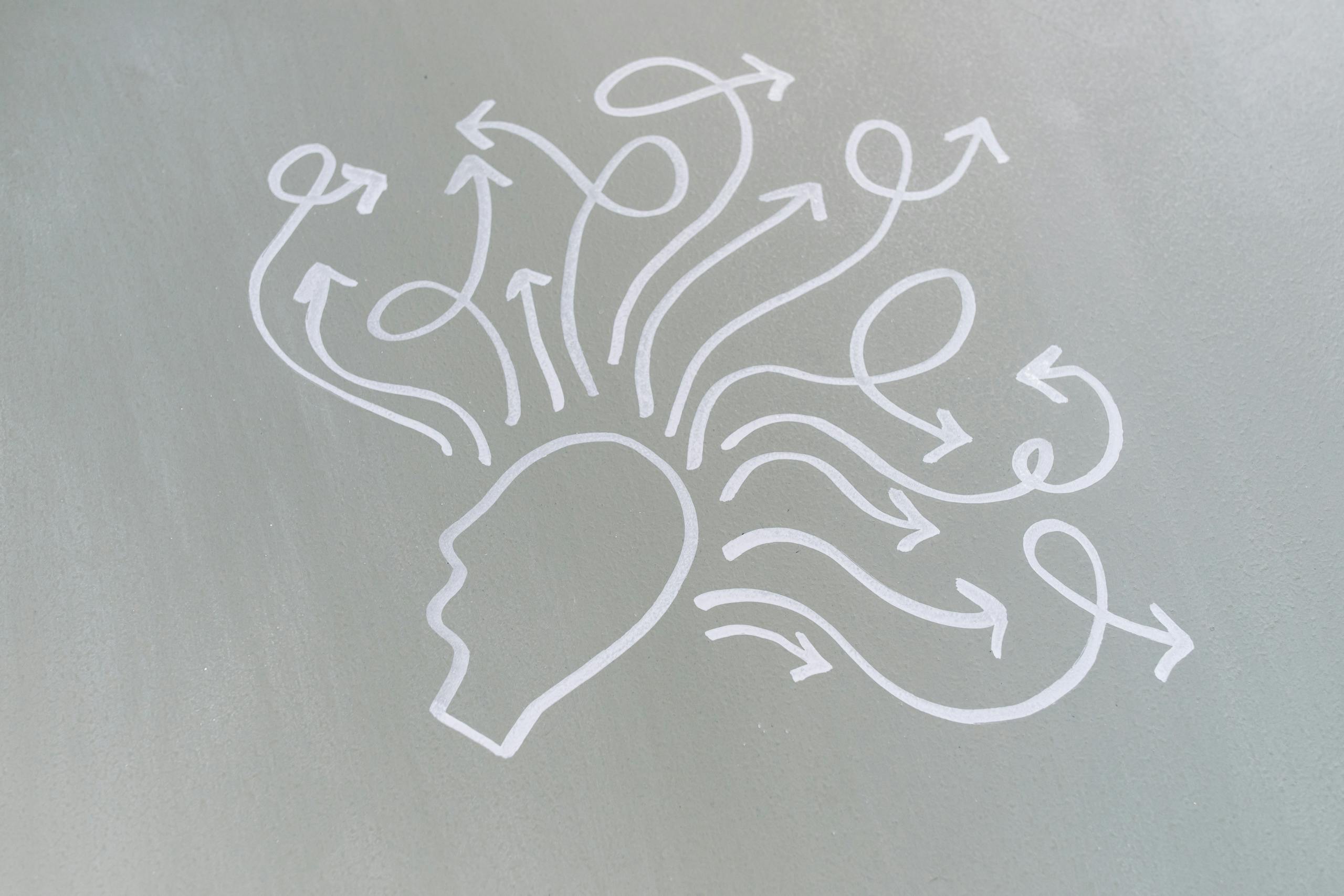
ADHD inattentive type and social anxiety frequently occur together, creating a particular kind of internal experience where attention dysregulation and fear of social judgment amplify each other in ways that neither condition produces alone. People with this combination often appear calm on the outside while managing a constant internal struggle: missing conversational cues, then worrying intensely about what those missed moments meant to everyone watching.
What makes this pairing so difficult to recognize, and even harder to talk about honestly, is that it looks nothing like the ADHD stereotype. There’s no obvious restlessness, no interrupting, no bouncing off the walls. Instead, there’s quiet drift, careful withdrawal, and a deep, exhausting vigilance that most people around you never see.
If you’ve been exploring the intersection of introversion, sensitivity, and mental health, our Introvert Mental Health Hub covers a wide range of experiences that quietly-wired people handle every day. The ADHD inattentive and social anxiety combination fits squarely into that territory, and it deserves a closer, more specific look.
Why Does ADHD Inattentive Type Look So Different From What Most People Expect?
Most people picture ADHD as hyperactivity. The kid who can’t sit still, who blurts out answers, who seems to run on a different fuel entirely. That picture isn’t wrong, but it only describes one presentation. The inattentive presentation, formerly called ADD before the diagnostic terminology was updated, looks almost nothing like that.
What’s your personality type?
Take our free 40-question assessment and get a detailed personality profile with dimension breakdowns, context analysis, and personalised insights.
Discover Your Type8-12 minutes · 40 questions · Free
ADHD Predominantly Inattentive Presentation (ADHD-PI) involves difficulty sustaining attention, losing track of conversations and tasks, struggling to organize thoughts and time, and frequently zoning out in ways that feel involuntary. The brain isn’t absent of attention. It’s dysregulated. Attention moves where interest, urgency, or novelty pulls it, rather than where intention directs it.
I didn’t know any of this when I was building my first agency. What I knew was that certain meetings felt like trying to hold water in cupped hands. I’d be present, genuinely trying to track a client conversation, and then I’d surface twenty seconds later realizing I’d drifted somewhere else entirely. I’d catch myself scanning back through the last few sentences, trying to reconstruct what I’d missed. Nobody in the room knew. But I knew. And that knowing created its own layer of anxiety.
That experience, the drift followed by the scramble to recover, is one of the most socially costly features of ADHD-PI. It doesn’t just affect task completion. It affects how you feel in real-time human interactions, and it feeds directly into social anxiety in ways that are worth understanding carefully.
Girls and women are significantly underdiagnosed with ADHD-PI because the inattentive presentation doesn’t match cultural expectations of what ADHD looks like. Many adults receive their first diagnosis in their thirties, forties, or later, after spending decades developing workarounds and carrying unexplained shame about their attentional patterns. The DSM-5 diagnostic criteria require that symptoms were present before age 12, which means adult-onset attention problems typically point toward other conditions like anxiety, depression, or burnout rather than ADHD.
What Happens in the Brain When ADHD-PI and Social Anxiety Overlap?
These two conditions interact in a feedback loop that’s worth tracing carefully, because understanding the mechanism is the first step toward addressing it without blaming yourself for the experience.
ADHD-PI creates attentional gaps in social situations. You miss a facial expression. You lose the thread of a conversation. You respond a beat too late, or you ask a question that reveals you weren’t fully tracking. These moments are genuinely more frequent than they are for people without attention dysregulation, and they carry real social consequences sometimes.
Social anxiety then processes those moments through a threat lens. Every missed cue becomes evidence that you’re failing socially. Every awkward pause becomes confirmation that others are judging you. The American Psychological Association describes anxiety as involving a future-oriented threat response, and social anxiety specifically orients that threat response toward interpersonal evaluation. When your brain is already generating more social missteps due to attention dysregulation, the anxiety has more raw material to work with.
The result is a particular kind of hypervigilance. You start monitoring your own performance in conversations so closely that the monitoring itself consumes attentional resources you needed for the conversation. You’re trying to track what’s being said, track how you’re coming across, scan for signs of disapproval, and manage your own anxiety response, all simultaneously. For a brain that already struggles with attention regulation, that’s an enormous cognitive load.
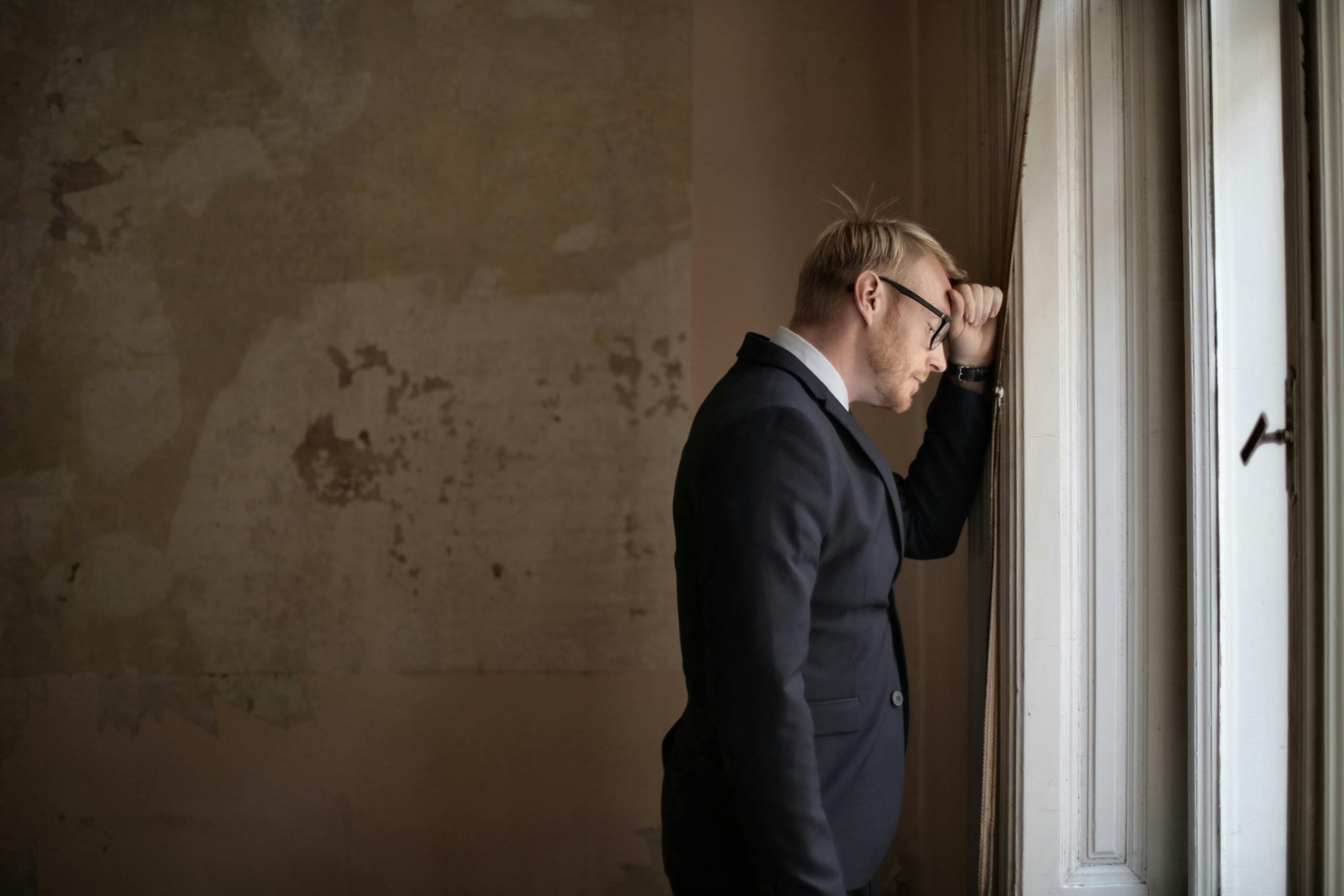
There’s also a sensory dimension that often gets overlooked. Many people with ADHD-PI are sensitive to environmental stimulation, and social environments are dense with competing inputs: multiple conversations, background noise, visual movement, emotional undercurrents. Anyone who has read about HSP overwhelm and sensory overload will recognize some of this territory, because the experience of being flooded by environmental input while trying to maintain social composure is genuinely exhausting regardless of the specific neurological pathway producing it.
What makes the ADHD-PI version distinct is that the sensory overwhelm compounds the attentional dysregulation. More inputs competing for attention means more opportunities for the attention system to follow something irrelevant, which means more social missteps, which means more anxiety fuel.
How Does Masking Shape the Social Experience for People With ADHD-PI?
Masking is the practice of concealing neurodivergent traits to appear neurotypical in social situations. For people with ADHD-PI, masking often begins early, sometimes before they have any name for what they’re managing, and it becomes so automatic that they stop recognizing it as effort.
Common masking strategies for ADHD-PI in social contexts include: asking frequent clarifying questions to recover missed information without revealing the drift, mirroring others’ emotional responses to compensate for delayed processing, over-preparing for conversations to reduce the chance of being caught off-guard, and choosing strategic silence over speaking when unsure of what’s already been established.
I watched this play out in my own behavior for years without understanding what I was doing. Before major client presentations, I’d prepare so thoroughly that I could almost script the likely conversation paths. Part of that was genuine professionalism. But part of it was managing the anxiety of not trusting my in-the-moment attention to catch everything. I was compensating for something I hadn’t identified yet.
The cost of sustained masking is significant. It’s cognitively expensive, emotionally depleting, and it tends to reinforce the social anxiety it’s meant to manage. Every successful masking performance teaches the anxious brain that vigilance worked, which strengthens the case for more vigilance next time. The anxiety doesn’t shrink. It learns that it needs to stay active.
There’s also an identity cost. When you spend years performing a version of yourself that’s carefully managed to hide your actual attentional experience, you can lose track of where the performance ends and you begin. That kind of chronic self-concealment has real implications for self-worth, and it connects directly to the patterns that HSP anxiety researchers have documented in highly sensitive people who’ve learned to suppress their natural responses to manage social acceptance.
What Role Does Rejection Sensitivity Play in This Combination?
Rejection sensitivity is disproportionately common in people with ADHD, and it’s one of the least-discussed aspects of the condition. It refers to an intense emotional response to perceived rejection, criticism, or disapproval, one that feels immediate, physical, and difficult to regulate once triggered.
In social contexts, rejection sensitivity means that the attentional gaps created by ADHD-PI don’t just produce neutral confusion. They produce fear. Missing a conversational cue doesn’t feel like a neutral processing delay. It feels like potential rejection, potential proof that you’re failing to connect, potential evidence that the other person is losing interest or patience.
Social anxiety already orients toward interpersonal threat, so when rejection sensitivity layers on top, the threat-detection system becomes extraordinarily sensitive. A brief pause in a conversation becomes alarming. A shorter-than-usual reply to a message becomes meaningful. An unreturned glance during a meeting becomes something to analyze for hours afterward.
Processing those experiences takes time and internal space. The kind of deep emotional processing that sensitive people engage in after charged social interactions isn’t a weakness, but it does mean that the recovery window after a difficult social moment can be long. For someone managing both ADHD-PI and social anxiety, that recovery window can stretch across an entire day.
One of the most painful aspects of rejection sensitivity in this context is how it interacts with the ADHD-PI tendency toward self-criticism. Many people with inattentive ADHD have accumulated years of feedback suggesting they’re careless, spacey, or not fully present. That accumulated feedback becomes the lens through which new social moments get interpreted. A missed conversational beat isn’t just awkward in the present. It confirms a story about yourself that’s been building for a long time.

The work of processing rejection, both the acute moments and the accumulated history, is something that HSP rejection processing frameworks address thoughtfully. While the neurological roots may differ between HSP and ADHD-PI experiences, the emotional texture of feeling deeply affected by social disapproval, and needing real time and space to work through it, is genuinely shared territory.
How Does Perfectionism Complicate the Picture?
Perfectionism and ADHD-PI might seem like an unlikely pairing. The stereotype of ADHD is disorganization and incomplete tasks, not meticulous standards. But perfectionism in ADHD-PI often emerges as a coping strategy rather than a personality trait. When your brain regularly produces errors, gaps, and missed details, setting impossibly high standards can feel like the only way to stay ahead of the failures.
In social contexts, this manifests as an exhausting pre-occupation with getting interactions right. Replaying conversations after the fact to identify every imprecise word. Rehearsing responses before speaking to reduce the chance of saying something unclear. Avoiding social situations where the variables feel too unpredictable to manage.
I recognize this pattern clearly from my agency years. Certain client relationships felt manageable because I’d developed enough rapport that I could recover gracefully from moments of drift. New relationships felt genuinely threatening. I’d over-prepare for introductory meetings in ways that probably looked like thoroughness from the outside but felt like anxiety management from the inside.
The perfectionism trap in this context is that it never actually resolves the anxiety. It just raises the threshold for what counts as an acceptable social performance. The HSP perfectionism framework describes this cycle well: high standards create high anxiety, which creates more errors, which reinforces the belief that even higher standards are necessary. For someone with ADHD-PI, that cycle has a neurological accelerant built in, because the attention dysregulation genuinely does produce more errors, giving the perfectionism something real to respond to.
Breaking the cycle requires recognizing that the perfectionism is a response to fear, not a solution to it. That’s easier to understand intellectually than it is to actually feel in the middle of a difficult social moment. But naming it is a starting point.
What Does Empathy Add to This Already Complex Experience?
Many people with ADHD-PI are deeply empathic. This sometimes surprises people who associate ADHD with social obliviousness, but the two aren’t contradictory. Attention dysregulation affects what you consciously track. Empathy operates through a different system, one that picks up emotional tone, relational undercurrents, and the felt sense of what’s happening between people.
The result can be a person who misses the literal content of a conversation while picking up its emotional texture with considerable accuracy. You might not remember exactly what was said, but you have a strong sense of how the room felt, who was tense, where the energy shifted. That’s a real form of social intelligence, even when it coexists with genuine attentional gaps.
In social anxiety terms, though, strong empathy creates its own complications. When you’re highly attuned to others’ emotional states, you’re constantly processing information about how people around you are feeling. That information becomes input for the anxiety system. Someone’s slight impatience becomes your problem to solve. Someone’s distraction reads as your failure to hold their attention. Empathy as a double-edged sword is exactly the right framing here, because the same sensitivity that makes you genuinely attuned to others also makes you more vulnerable to interpreting their emotional states as responses to your inadequacy.
For those managing ADHD-PI alongside social anxiety, learning to distinguish between what you’re accurately perceiving and what you’re projecting is significant work. Some of what the empathy system picks up is real. Some of it is anxiety-filtered interpretation. Telling the difference requires a level of internal observation that takes time and practice to develop.
What Practical Approaches Actually Help With This Combination?
Managing ADHD-PI and social anxiety together requires approaches that address both conditions without inadvertently worsening either. Some strategies that help with one can actually aggravate the other, so it’s worth thinking through the interactions carefully.
Structured social environments tend to be more manageable than open-ended ones. When a social interaction has a clear purpose, defined roles, and predictable flow, the attentional system has less to track and the anxiety system has fewer ambiguous signals to interpret. This is part of why many people with ADHD-PI feel more comfortable in professional settings than in casual social ones. The structure isn’t a crutch. It’s a genuine accommodation for how the brain works.
Reducing the social performance load is also meaningful. One of the most effective things I found in my agency years was getting better at asking questions rather than trying to perform expertise in real time. A well-placed question buys processing time, signals genuine interest, and often produces information that fills in gaps I’d missed. It’s a strategy that works with the attentional pattern rather than against it.
The distinction between introversion and social anxiety matters here too. Introversion is a preference for less social stimulation. Social anxiety is a fear of social evaluation. ADHD-PI is an attention regulation difference. These three things can coexist, and they often do, but they respond to different interventions. Treating social anxiety as if it’s just introversion (by simply reducing social contact) doesn’t address the fear. Treating ADHD-PI as if it’s just anxiety (by working on thought patterns alone) doesn’t address the attention dysregulation.
Professional support that accounts for all three is worth seeking. Cognitive behavioral therapy has a strong evidence base for social anxiety. ADHD coaching addresses the executive function and organizational dimensions. Some clinicians specialize in the overlap between neurodevelopmental conditions and anxiety, and finding someone with that dual fluency can make a meaningful difference. The Harvard Health guidance on social anxiety treatment provides a solid overview of evidence-based approaches worth discussing with a provider.
Self-compassion is not a soft add-on to this work. It’s structurally necessary. The ADHD-PI brain generates more social errors than a neurotypical brain would in the same situations. That’s not a character flaw. It’s a neurological reality. Social anxiety then processes those errors through a threat lens. Breaking that cycle requires genuinely changing the relationship to imperfection, which means building self-compassion as a practice rather than waiting to feel it spontaneously.
How Do You Rebuild Social Confidence When Both Conditions Are Present?
Rebuilding social confidence with ADHD-PI and social anxiety isn’t about performing better. It’s about developing a more accurate and kinder relationship with your own social experience.
One shift that matters enormously is moving from outcome evaluation to process observation. Instead of reviewing every social interaction for evidence of failure, practicing noticing what actually happened without immediately assigning meaning to it. A moment of drift in a conversation is a moment of drift. It isn’t proof of anything about your worth as a person or your capacity for connection.
That shift is harder than it sounds when the anxiety system is well-practiced at threat interpretation. It requires the same kind of patient, repeated practice that any attention-related skill requires. Which is somewhat ironic when attention regulation is itself part of what you’re working with. But the irony doesn’t make the practice less useful.
Building genuine social experiences in lower-stakes contexts also helps. Not because you need to “practice” socializing as if it’s a performance skill, but because low-stakes interactions give the anxiety system evidence that social moments don’t always end in judgment. That evidence accumulates slowly, but it does accumulate. The research on social anxiety and avoidance consistently points toward graduated exposure as more effective than withdrawal, even when withdrawal feels like the more compassionate choice in the moment.
Finding communities where the attentional and social style you bring is understood rather than penalized changes the baseline experience significantly. I’ve watched this happen in my own life as I’ve been more honest about how I process and engage. The interactions that feel most natural to me now are with people who don’t require constant verbal engagement to feel connected, who are comfortable with silence, who value depth over social fluency. That’s not avoidance. It’s honest self-knowledge about the environments where I actually thrive.
The neurobiological evidence on ADHD is clear that this is a condition with measurable brain structure and function differences. It’s not a character deficit, not a product of poor parenting or insufficient willpower, and not something you simply outgrow in every case. Approximately 60% of children with ADHD continue to experience clinically significant symptoms into adulthood. Understanding the condition accurately, rather than through the lens of old stigma, is part of what makes self-compassion possible rather than just aspirational.
Social confidence, when it builds, tends to build quietly for people with this combination. Not through dramatic breakthroughs, but through accumulated evidence that you can be present in your own way, that connection doesn’t require perfect attentional performance, and that the people worth being around aren’t keeping score of your missed conversational beats.
If you want to explore more about the mental health experiences that shape quietly-wired people, the full range of topics in our Introvert Mental Health Hub covers everything from anxiety and overwhelm to emotional processing and self-worth, all through a lens that takes your inner life seriously.
About the Author
Keith Lacy is an introvert who’s learned to embrace his true self later in life. After 20 years in advertising and marketing leadership, including running agencies and managing Fortune 500 accounts, Keith now channels his experience into helping fellow introverts understand their strengths and build fulfilling careers. As an INTJ, he brings analytical depth and authentic perspective to every article, drawing from both professional expertise and personal growth.
Frequently Asked Questions
Can someone have both ADHD inattentive type and social anxiety at the same time?
Yes, and the combination is more common than many people realize. ADHD-PI and social anxiety are distinct conditions with different neurological roots, but they interact in ways that make each one harder to manage. The attentional gaps that ADHD-PI creates in social situations give social anxiety more material to work with, while the hypervigilance of social anxiety consumes attentional resources that are already limited. Many people with this combination spend years thinking they simply have one or the other, when both are actually present and reinforcing each other.
How is ADHD inattentive type different from just being introverted or shy?
Introversion is a personality orientation involving a preference for less social stimulation and a tendency to recharge through solitude. Shyness is a temperamental tendency toward social inhibition. ADHD inattentive type is a neurodevelopmental condition involving dysregulated attention, difficulties with executive function, and a pattern of symptoms present since childhood. These can coexist, and they often do, but they’re not the same thing. An introvert who prefers quiet social settings isn’t necessarily managing ADHD. Someone with ADHD-PI who appears reserved may be managing attention dysregulation that looks like shyness from the outside.
Why do people with ADHD inattentive type often develop social anxiety?
ADHD-PI creates more frequent social missteps than neurotypical attention patterns would produce, including missed conversational cues, delayed responses, and moments of obvious drift. Over time, those experiences accumulate into a history of social feedback that can be genuinely painful. Social anxiety develops as the brain begins anticipating those moments of failure before they happen, orienting toward interpersonal threat as a protective response. Rejection sensitivity, which is common in ADHD, amplifies this process by making the emotional response to perceived social failure more intense and harder to regulate.
What types of professional support help most with this combination?
Cognitive behavioral therapy has a strong track record for social anxiety specifically, helping people identify and shift the thought patterns that maintain the fear response. ADHD coaching addresses executive function, organization, and the practical strategies that help manage attention dysregulation in daily life. Some clinicians specialize in neurodevelopmental conditions alongside anxiety and mood disorders, and finding someone with that combined expertise tends to produce better outcomes than working with separate providers who aren’t communicating. Medication for ADHD, when appropriate, can also reduce the attentional gaps that feed social anxiety, though this is a conversation to have with a qualified clinician.
Is the inattentive presentation of ADHD harder to diagnose than other presentations?
Generally, yes. The hyperactive-impulsive presentation of ADHD tends to be more visible and disruptive in ways that prompt earlier clinical attention. The inattentive presentation is quieter, easier to attribute to personality traits like dreaminess or introversion, and more likely to be masked by compensatory strategies. Girls and women are particularly underdiagnosed with ADHD-PI because the inattentive presentation doesn’t match cultural expectations of what ADHD looks like. Many adults with ADHD-PI receive their diagnosis only after seeking help for anxiety or depression, when a thorough assessment reveals the underlying attention dysregulation that’s been present since childhood.