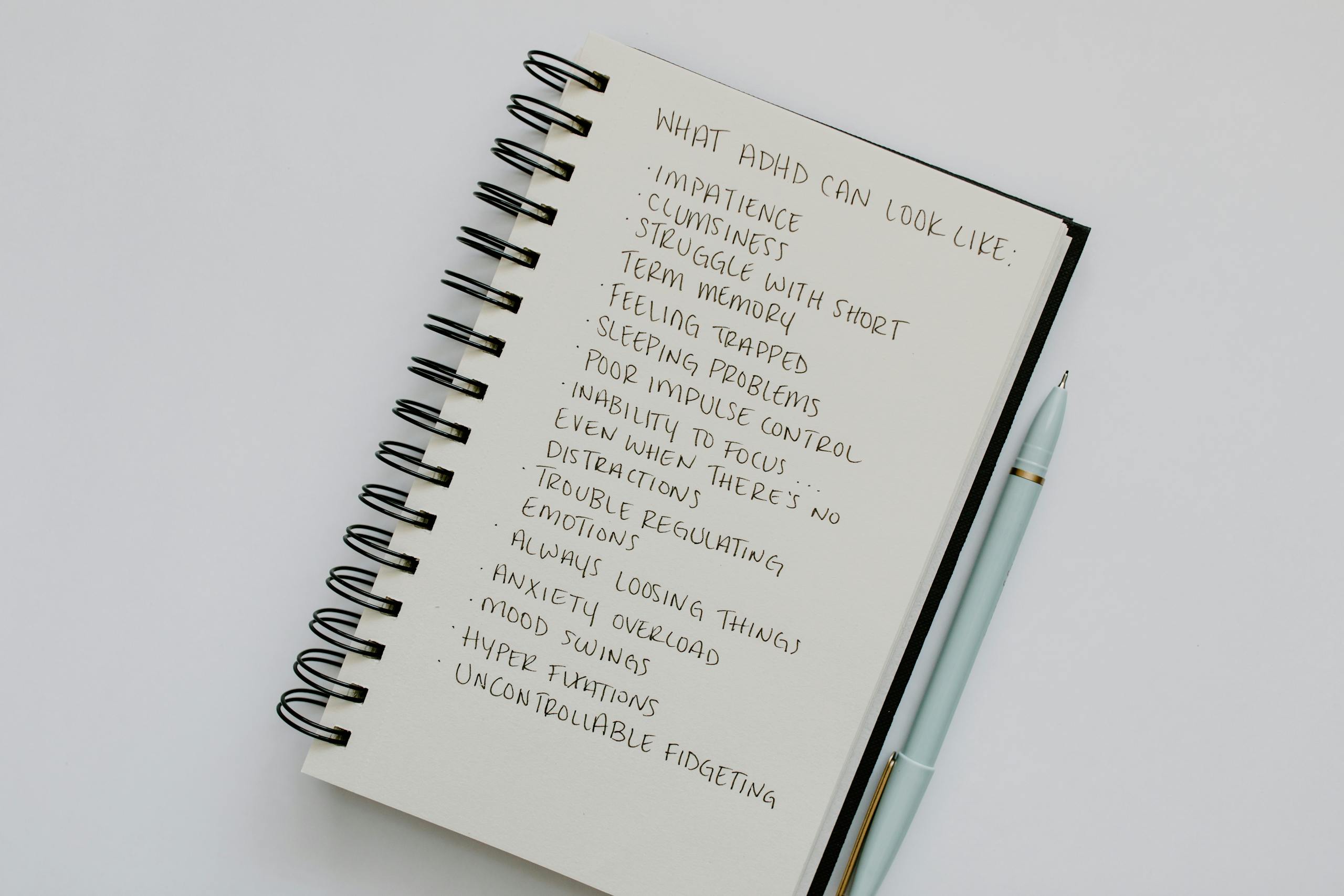
ADHD perfectionism is the painful collision between an urgent need to get everything right and a brain that makes executing on that standard feel nearly impossible. It shows up as procrastination, paralysis, shame spirals, and an exhausting inner critic that never quite goes quiet. For many people with ADHD, perfectionism isn’t a personality quirk or a humble brag. It’s a survival mechanism that developed in response to years of feeling like they were falling short.
What makes this combination so disorienting is that it defies the stereotypes. ADHD is often associated with carelessness or impulsivity, yet many people with ADHD hold themselves to standards so high that starting a task feels impossible. Understanding why that happens, and how to work with it rather than against it, can change everything.
I’ve spent a lot of time in this space, not because I have an ADHD diagnosis, but because I managed teams full of people who did, and because the perfectionism piece hit close to home in ways I didn’t expect. As an INTJ who spent two decades running advertising agencies, I watched the same painful pattern repeat itself in some of my most talented people. And honestly, I recognized pieces of it in myself too.

If you’re working through the emotional weight that comes with being wired differently, many introverts share this in that experience. Our Introvert Mental Health Hub covers the full range of inner experiences that come with sensitive, introspective personalities, and ADHD perfectionism sits squarely in that territory.
Why Do ADHD and Perfectionism Collide So Often?
At first glance, ADHD and perfectionism seem like opposites. One implies scattered attention and incomplete tasks. The other implies meticulous care and impossibly high standards. Yet they coexist in a significant number of people with ADHD, and the reason has everything to do with how the ADHD brain regulates attention and emotion.
Career Coaching for Introverts
One-on-one career strategy sessions with Keith Lacy. 20 years of Fortune 500 leadership as an introvert, now helping others build careers that work with their wiring.
Learn More50-minute Zoom session · $175
ADHD involves dysregulated attention, not absent attention. The brain doesn’t lack the ability to focus. It struggles to direct focus consistently, especially toward tasks that don’t generate immediate interest or emotional engagement. What fills that gap is often a powerful internal critic that has been sharpened by years of external feedback. Missed deadlines. Forgotten details. Projects abandoned halfway through. Over time, many people with ADHD internalize those experiences as evidence that they are fundamentally unreliable, and perfectionism becomes the attempt to compensate.
There’s also a neurological dimension. The dopamine system in ADHD brains functions differently, making it harder to sustain motivation through tasks that don’t offer immediate reward. Perfectionism can temporarily solve that problem by raising the emotional stakes. If the standard is high enough, the fear of falling short creates enough urgency to get moving. It’s an exhausting workaround, but for many people with ADHD, it’s the only one that’s ever worked consistently.
Rejection sensitive dysphoria adds another layer. Many people with ADHD experience emotional pain in response to perceived criticism or failure at an intensity that others find hard to understand. The neurological basis for emotional dysregulation in ADHD is well-documented, and it helps explain why a piece of critical feedback that rolls off most people’s backs can send someone with ADHD into a shame spiral that lasts for days. Perfectionism, in that context, becomes armor. If nothing leaves your hands until it’s flawless, no one can criticize it.
What Does ADHD Perfectionism Actually Look Like in Practice?
One of my senior copywriters, years into working together at the agency, confided something that stopped me cold. She said she’d been sitting on a campaign concept for three weeks because she couldn’t figure out how to make the opening line perfect. The client needed the work. She had ideas. She just couldn’t start because starting meant producing something that might not be good enough.
That’s ADHD perfectionism in its most recognizable form: the inability to begin because the standard for completion feels impossibly out of reach. It masquerades as laziness or avoidance from the outside. From the inside, it feels like being frozen.
Other common expressions include:
- Spending hours on a task that should take thirty minutes, cycling through revisions without ever feeling satisfied
- Abandoning projects entirely when they don’t meet an internal standard, even when the work is objectively strong
- Difficulty delegating because no one else will do it “right”
- Procrastinating on important work while completing low-stakes tasks that feel more manageable
- An intense emotional reaction to mistakes, disproportionate to the actual consequences
- Difficulty accepting positive feedback because it doesn’t match the internal experience of the work
That last one surprised me when I first encountered it. I had a creative director on one of my teams who would receive glowing client feedback and immediately pivot to what could have been better. I assumed it was false modesty at first. It wasn’t. He genuinely couldn’t hold onto the positive because his internal critic had already moved on to cataloging the flaws.

This pattern intersects meaningfully with what highly sensitive people experience. If you recognize this kind of emotional intensity around your own work, the piece on HSP perfectionism and breaking the high standards trap speaks directly to that experience and offers some grounding perspective.
How Does Shame Fuel the Perfectionism Cycle?
Shame is the engine underneath most ADHD perfectionism, and it’s worth naming clearly because it often goes unacknowledged. Many people with ADHD carry decades of accumulated shame from a world that interpreted their neurological differences as character flaws. Lazy. Careless. Unmotivated. Irresponsible. Those labels land differently when you’ve heard them since childhood, and they shape how you relate to your own work long into adulthood.
Perfectionism becomes the response to that shame. If I produce flawless work, no one can call me careless. If I check everything three times, no one can say I’m irresponsible. The standard isn’t actually about the work. It’s about protecting a self-image that has been under attack for a long time.
The cruel irony is that perfectionism creates the very outcomes it’s trying to prevent. Paralysis leads to missed deadlines. Endless revision leads to incomplete projects. The shame deepens, the standard rises to compensate, and the cycle tightens.
This kind of emotional processing, the way shame embeds itself and shapes behavior over time, is something I’ve thought about a lot in the context of sensitive, introspective personalities. The piece on HSP emotional processing and feeling deeply captures something important about how this works for people who experience their inner world with particular intensity.
What I’ve observed, both in myself and in the people I’ve worked with, is that shame rarely responds to logic. You can tell yourself the stakes aren’t that high. You can remind yourself that done is better than perfect. None of it touches the underlying emotional reality until you address the shame directly, which usually means acknowledging where it came from in the first place.
Is ADHD Perfectionism Connected to Anxiety?
Almost always, yes. Anxiety and ADHD co-occur at high rates, and perfectionism sits at the intersection of both. The ADHD brain’s difficulty with predicting and regulating outcomes creates fertile ground for anxious thinking. Add perfectionism into that mix, and you have a mind that is simultaneously convinced that failure is catastrophic and unable to reliably prevent it.
The National Institute of Mental Health’s overview of generalized anxiety describes the way chronic worry can become self-sustaining, which maps closely onto what many people with ADHD experience around their work. The worry isn’t irrational from their perspective. It’s based on real historical experience of things going wrong. Perfectionism is the attempt to worry productively, to channel anxiety into control.
What that produces in practice is a kind of hypervigilance around quality that is genuinely exhausting. Every email gets read four times before sending. Every presentation gets revised until the night before. Every deliverable carries the emotional weight of a performance review. Over time, that sustained vigilance depletes the cognitive and emotional resources that good work actually requires.
For people who also identify as highly sensitive, this anxiety can compound significantly. Sensory and emotional input that others filter out arrives with full force, making an already taxing mental environment even more overwhelming. The connection between sensitivity and anxiety is something the piece on HSP anxiety and coping strategies addresses with real care, and it’s worth reading alongside this one.

How Does ADHD Perfectionism Show Up Differently Across Presentations?
ADHD has three recognized presentations, and perfectionism can look meaningfully different across each of them.
In ADHD Predominantly Inattentive Presentation (ADHD-PI), perfectionism often manifests as prolonged task initiation difficulty. The person knows exactly what they want the finished product to look like. Getting there feels impossible because attention keeps slipping away from the work, and every time they return to it, the gap between where they are and where they want to be feels larger. The result can look like avoidance from the outside, but internally it’s a cycle of high aspiration and frustrated execution.
In ADHD Predominantly Hyperactive-Impulsive Presentation (ADHD-PH), perfectionism sometimes shows up as impulsive overcommitment followed by paralysis. The person says yes to everything, sets ambitious goals, and then hits a wall when the execution doesn’t match the vision. The emotional intensity of hyperactive-impulsive ADHD can make perceived failure feel even more acute, leading to dramatic swings between euphoric ambition and crushing self-criticism.
In ADHD Combined Presentation (ADHD-C), which meets criteria for both inattentive and hyperactive-impulsive symptoms, perfectionism can be particularly destabilizing because both patterns reinforce each other. The impulsivity generates ambitious commitments, the inattention makes follow-through inconsistent, and the perfectionism turns every gap between intention and outcome into evidence of fundamental inadequacy.
What’s consistent across all three is the emotional dimension. ADHD perfectionism is rarely just about standards. It’s about identity, worth, and the fear of confirming a narrative that has followed many people with ADHD for most of their lives.
What Role Does Rejection Sensitivity Play?
Rejection sensitive dysphoria, while not a formal diagnostic criterion, is one of the most commonly reported experiences among adults with ADHD. It describes an intense emotional response to perceived rejection, criticism, or failure, one that can feel completely overwhelming in the moment and disproportionate by any external measure.
In the context of perfectionism, rejection sensitivity creates a particularly vicious dynamic. The fear of criticism is so acute that the person raises their standards to an impossible level in an attempt to make criticism impossible. When criticism arrives anyway, as it always does in professional life, the emotional response is crushing. And because the response feels so outsized, there’s often a secondary layer of shame about the reaction itself.
I watched this play out in a pitch meeting once. We’d prepared for weeks. The client came back with moderate feedback, nothing unusual, the kind of notes that are just part of the process. One of my team members, someone I knew was carrying a lot of self-imposed pressure, went completely quiet for the rest of the meeting. Later, she told me she’d spent the entire drive home convincing herself she was about to be fired. The feedback had been fine. Her nervous system had processed it as catastrophic.
That experience of emotional pain around rejection is something many sensitive, introspective people share, with or without an ADHD diagnosis. The piece on HSP rejection, processing, and healing offers a thoughtful framework for understanding why rejection lands so hard for certain personalities and what the path forward looks like.
What helps in the moment, and what I eventually learned to offer my team members, is acknowledgment before problem-solving. The emotional experience needs to be named before the rational response can land. Jumping straight to “here’s why the feedback was actually fine” skips the step that matters most.
How Can You Start Breaking the ADHD Perfectionism Cycle?
Practical strategies matter here, but they work best when they’re built on an accurate understanding of what’s actually driving the perfectionism. Telling someone with ADHD to “just lower your standards” is about as useful as telling someone with a broken leg to walk it off. The standard isn’t the real problem. The shame, the anxiety, and the emotional dysregulation underneath it are.
That said, there are genuine behavioral approaches that can interrupt the cycle.
Separate the Draft from the Standard
One of the most effective reframes I’ve seen work is creating explicit permission for a “zero draft,” a version of the work that is allowed to be terrible. The zero draft exists only to get something on the page. It doesn’t get evaluated, shared, or judged. Its only job is to exist. For many people with ADHD, this removes enough of the emotional stakes to make starting possible, and starting is almost always the hardest part.
The research on executive function and ADHD consistently points to task initiation as one of the most impaired areas. Strategies that lower the barrier to beginning, rather than trying to improve performance once underway, tend to be more effective.
Make the Standard Explicit and External
Perfectionism thrives on vague internal standards because a vague standard can never be met. One practical approach is to define what “good enough” looks like in concrete, external terms before starting a task. Not “a great presentation” but “a presentation that covers these five points clearly and fits in twenty minutes.” When the standard is specific and finite, the internal critic has less room to move the goalposts.
Address the Shame Directly
This is the piece most productivity advice skips, and it’s the piece that matters most. Perfectionism rooted in shame doesn’t respond to time management techniques. It responds to the slow, patient work of recognizing where the shame came from, understanding that it was a reasonable response to an unreasonable situation, and gradually building a different relationship with imperfection.
Therapy, particularly approaches that address emotional dysregulation and self-compassion, can be genuinely useful here. The clinical literature on ADHD in adults increasingly emphasizes the emotional dimension of the condition, and treatment that addresses only the behavioral symptoms without touching the emotional ones tends to produce limited results.

Build in Completion Rituals
For many people with ADHD, the transition from “working on something” to “done with something” is genuinely difficult. The brain keeps finding one more thing to fix. Creating a deliberate ritual around completion, sending the email, closing the document, saying out loud “this is done,” can help the nervous system register that the task is actually finished. It sounds almost too simple, but the symbolic act of closure matters more than most people expect.
How Does Hyperfocus Complicate the Perfectionism Picture?
Hyperfocus is one of the most misunderstood aspects of ADHD, and it has a complicated relationship with perfectionism. When someone with ADHD enters a state of hyperfocus on work they find genuinely engaging, they can produce output that is extraordinary in both quality and quantity. Hours disappear. The internal critic quiets. The work flows.
The problem is that hyperfocus is not reliably available on demand. It tends to activate around high-interest, high-novelty, or high-stakes tasks, and it can be disrupted by almost anything. When perfectionism has set an impossibly high standard, the fear of not achieving hyperfocus-level quality on a routine task can itself become a barrier to starting.
There’s also a darker side to hyperfocus perfectionism: the person who hyperfocuses on getting something exactly right and loses six hours to a task that needed thirty minutes. I’ve done versions of this myself, not because of ADHD, but because my INTJ tendency to want things thoroughly considered before they leave my hands can tip into something that looks very similar. The difference is that for someone with ADHD, the pull into that state is neurologically harder to interrupt.
Understanding that ability to hyperfocus does not rule out ADHD is important. Interest-based attention regulation is actually a hallmark of the condition, not evidence against it. Many people with ADHD go undiagnosed for years precisely because they can point to areas where they focus brilliantly, which seems to contradict the diagnosis. It doesn’t.
What About the Empathy Dimension?
Many people with ADHD are also highly empathic, and that empathy can amplify perfectionism in ways that aren’t always obvious. When you’re acutely attuned to how others are experiencing your work, the stakes of imperfection feel interpersonal as well as personal. It’s not just that the work might be flawed. It’s that the flaw might disappoint someone, inconvenience someone, or cause someone to think less of you.
That combination of high empathy and perfectionism is genuinely exhausting. Every piece of work carries not just your own standards but your imagined version of everyone else’s standards too. The piece on HSP empathy as a double-edged sword captures this tension well, particularly the way that deep attunement to others can become a source of pressure rather than connection.
What I’ve found, both personally and in watching others work through this, is that empathy doesn’t need to be dialed down. It needs to be redirected. The same attunement that makes you anxious about disappointing people can make you genuinely excellent at understanding what they need. That’s a real strength. The work is in separating the empathy from the self-judgment.
How Does the Environment Affect ADHD Perfectionism?
Environment matters enormously, and it’s one of the levers that people with ADHD often have more control over than they realize. The ADHD brain is particularly sensitive to environmental stimulation, which means that a chaotic, high-interruption environment doesn’t just make focus harder. It makes the gap between the internal standard and the actual output wider, which feeds the perfectionism cycle directly.
When I ran my agencies, I eventually learned to structure the environment differently for different people on my team. Some people needed open collaboration spaces. Others needed quiet, uninterrupted blocks to do their best work. The ones who struggled most with perfectionism almost always fell into the second category. They weren’t being precious about their process. They were managing a nervous system that genuinely couldn’t produce at its best under constant stimulation.
Sensory overload is a real factor here. When the environment is overwhelming, cognitive and emotional resources get consumed by managing the stimulation, leaving less available for the actual work. The piece on HSP overwhelm and managing sensory overload is directly relevant to anyone who finds that environmental factors are making their perfectionism worse, because the connection between sensory load and emotional regulation is significant.
Creating protected time and space for focused work isn’t a luxury for people with ADHD. It’s a functional accommodation that makes a meaningful difference in both output quality and emotional wellbeing.

What Does Moving Through ADHD Perfectionism Actually Feel Like?
Progress with ADHD perfectionism rarely feels like a clean before-and-after. It’s more like developing a slightly better relationship with discomfort over time. The internal critic doesn’t disappear. The fear of falling short doesn’t evaporate. What changes is the ability to act in the presence of those feelings rather than being stopped by them.
One of the most honest things I can say from watching people work through this is that the moments of real progress often look unremarkable from the outside. Someone sends a good-enough email instead of sitting on it for two days. Someone submits a draft that isn’t perfect and tolerates the discomfort of not knowing how it will be received. Someone accepts positive feedback without immediately cataloging what was wrong.
Those small acts of tolerance are genuinely significant. They’re evidence that the nervous system is learning, slowly and imperfectly, that imperfection is survivable. That’s not a small thing for someone who has spent years operating as though it wasn’t.
The American Psychological Association’s framework on resilience is useful here because it reframes the goal. Resilience isn’t about becoming someone who doesn’t struggle. It’s about developing the capacity to move through struggle without being permanently derailed by it. For people with ADHD perfectionism, that framing is both more accurate and more achievable than the idea of simply “getting over it.”
Something that helped me personally, even without an ADHD diagnosis, was recognizing that my own perfectionism around client work was costing me more than it was producing. I was an INTJ who wanted every strategy document to be airtight before it left my desk. Some of that rigor served my clients well. But some of it was self-protection, and learning to tell the difference took years. The academic work on perfectionism and performance suggests that the relationship between high standards and high output is far more complicated than most people assume, and that adaptive perfectionism looks very different from the maladaptive kind.
If you want to keep exploring the mental health dimensions of sensitive, introspective personalities, the Introvert Mental Health Hub brings together everything we’ve written on these themes in one place. It’s a good starting point if you’re trying to understand how different aspects of your inner experience connect to each other.
About the Author
Keith Lacy is an introvert who’s learned to embrace his true self later in life. After 20 years in advertising and marketing leadership, including running agencies and managing Fortune 500 accounts, Keith now channels his experience into helping fellow introverts understand their strengths and build fulfilling careers. As an INTJ, he brings analytical depth and authentic perspective to every article, drawing from both professional expertise and personal growth.
Frequently Asked Questions
Can you have ADHD and still be a perfectionist?
Yes, and it’s more common than most people expect. ADHD perfectionism develops when the brain’s difficulty with consistent execution collides with high internal standards, often shaped by years of external criticism. The result is a painful cycle of high aspiration, frustrated follow-through, and shame that raises the standard even higher to compensate. Understanding this pattern is the first step toward working with it rather than against it.
Why does ADHD cause procrastination even when someone cares deeply about the work?
ADHD involves dysregulated attention, which means the brain struggles to sustain focus on tasks that don’t generate immediate emotional engagement, even tasks the person genuinely values. When perfectionism adds impossibly high standards to the mix, starting feels even more threatening because beginning means risking the gap between intention and execution. The procrastination is rarely about not caring. It’s about caring so much that starting feels dangerous.
What is rejection sensitive dysphoria, and how does it connect to perfectionism?
Rejection sensitive dysphoria describes the intense emotional pain many people with ADHD experience in response to perceived criticism, failure, or rejection. It’s not a formal diagnostic criterion, but it’s one of the most commonly reported experiences among adults with ADHD. In the context of perfectionism, it creates a dynamic where the fear of criticism is so acute that the person raises their standards to an impossible level in an attempt to make criticism impossible. When criticism arrives anyway, the emotional response can feel overwhelming and disproportionate.
Does ADHD medication help with perfectionism?
Stimulant medications for ADHD are well-studied and work by normalizing dopamine regulation in the brain, which can improve executive function, task initiation, and emotional regulation. For some people, this makes perfectionism more manageable because the gap between intention and execution narrows. That said, medication addresses the neurological dimension of ADHD, not the shame and anxiety that often drive perfectionism. A comprehensive approach that includes therapy, particularly approaches focused on emotional dysregulation and self-compassion, tends to produce the most meaningful results.
How do you know if your perfectionism is ADHD-related or something else?
ADHD perfectionism tends to be closely tied to task initiation difficulty, emotional dysregulation, and a history of inconsistent performance despite high effort. It often coexists with other ADHD symptoms like difficulty sustaining attention on low-interest tasks, time blindness, and impulsivity. Perfectionism can also arise from anxiety, trauma, or highly sensitive personality traits without any ADHD component. A qualified clinician is the right person to help sort out what’s driving the pattern, since the treatment approaches differ meaningfully depending on the underlying cause.