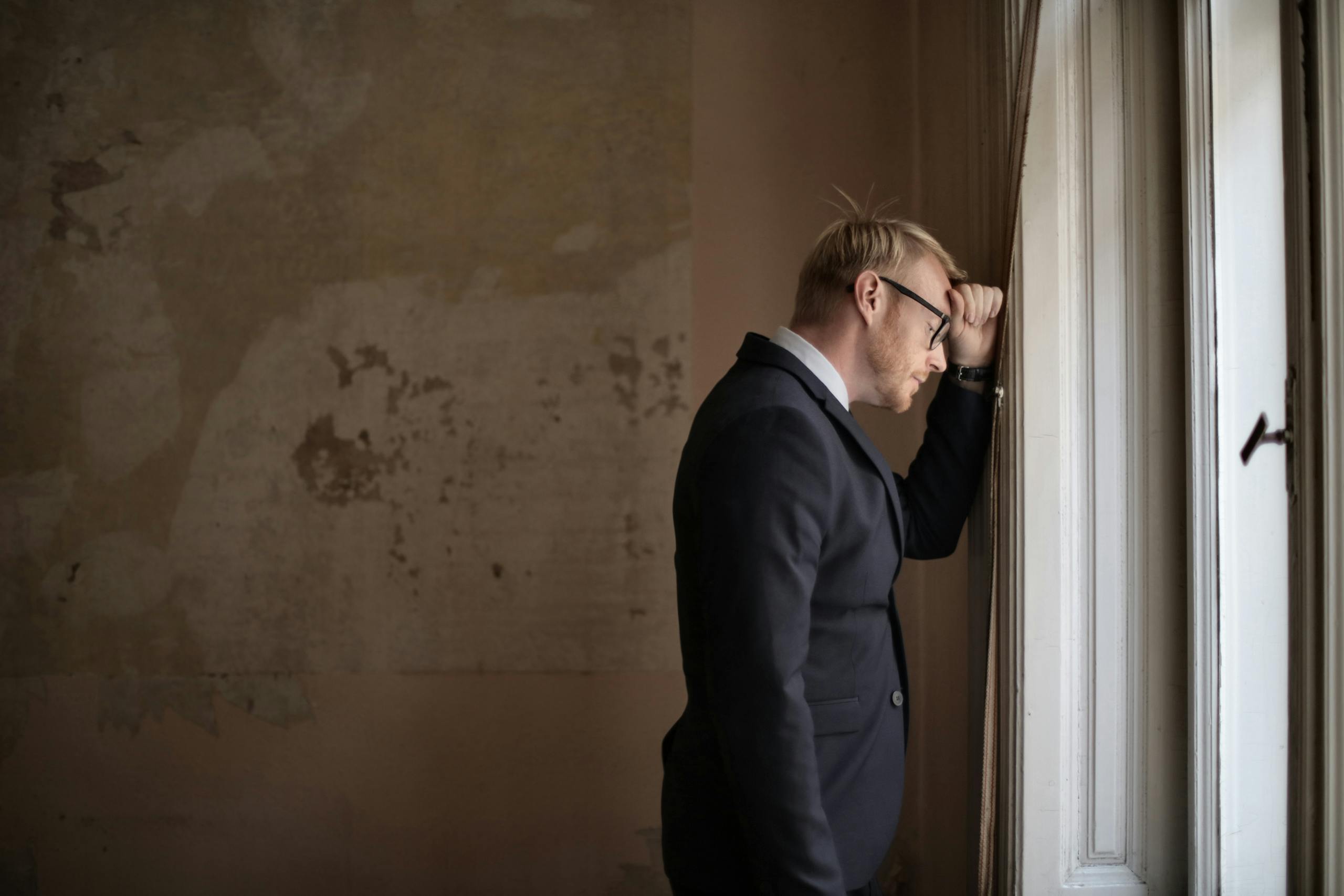

ADHD Predominantly Inattentive Presentation (ADHD-PI) and social anxiety frequently occur together, and the combination creates a specific kind of social suffering that neither label fully captures on its own. People with ADHD-PI often lose track of conversations, miss social cues, or respond after a long internal delay, and social anxiety then layers shame and anticipatory dread on top of those moments. Understanding how these two conditions interact, rather than treating them as separate problems, is what makes meaningful relief possible.
What makes this pairing so difficult to untangle is that each condition can look like the other. The person who goes quiet at a dinner party might be socially anxious, or they might be someone whose attention drifted mid-conversation and who now has no idea how to re-enter. Often, it’s genuinely both at once.
I’ve spent a lot of time thinking about attention and social energy, partly because running advertising agencies for over two decades put me in social situations that demanded a kind of sustained, outward focus that didn’t come naturally to me as an INTJ. I didn’t have an ADHD-PI diagnosis to contend with, but I managed people who did, and I watched the particular exhaustion that comes from trying to hold a room’s attention when your own attention keeps pulling inward or sideways. That experience gave me a lot of empathy for what this combination actually costs people in real professional and social settings.

If you’re exploring the broader territory where introversion, sensitivity, and mental health intersect, the Introvert Mental Health Hub is a good place to orient yourself. What follows here is a closer look at a specific, often misunderstood corner of that territory: what happens when inattentive ADHD and social anxiety share the same nervous system.
What Does ADHD-PI Actually Look Like in Social Situations?
Most people’s mental image of ADHD involves a child who can’t sit still, talking over everyone, bouncing off walls. That picture describes the hyperactive-impulsive presentation. ADHD-PI looks completely different, and because it’s quieter, it gets missed far more often, especially in girls and women, who are significantly underdiagnosed across all ADHD presentations.
What’s your personality type?
Take our free 40-question assessment and get a detailed personality profile with dimension breakdowns, context analysis, and personalised insights.
Discover Your Type8-12 minutes · 40 questions · Free
In social settings, ADHD-PI tends to show up as a kind of internal drift. You’re in a conversation and genuinely trying to track it, but your attention keeps slipping sideways to something you noticed across the room, or to a thought that surfaced from three days ago, or to the texture of what someone just said that sent your mind down a completely unrelated path. By the time you resurface, the conversation has moved on and you’ve missed a beat. You respond slightly out of sync, or you ask a question that was already answered, or you go quiet because re-entering feels too complicated.
None of this is a character flaw. ADHD involves dysregulated attention, not absent attention. The brain isn’t failing to pay attention; it’s regulating which things capture attention in a way that doesn’t match the demands of the situation. High-interest or high-stakes moments can trigger hyperfocus, where attention becomes almost impossibly locked in. Low-stimulation conversations, on the other hand, can cause the mind to wander despite genuine effort to stay present.
The American Psychological Association’s overview of shyness and social anxiety draws a useful distinction between introversion, shyness, and social anxiety disorder, which are three different things that often get conflated. ADHD-PI adds a fourth variable that doesn’t fit neatly into any of those categories, and yet its social effects can look like all of them simultaneously.
Why Do ADHD-PI and Social Anxiety So Often Appear Together?
Co-occurrence between ADHD and anxiety disorders is well-documented, and the relationship runs in multiple directions. ADHD-PI creates real social difficulties, and those difficulties generate real anxiety over time. A person who has repeatedly lost the thread of conversations, said the wrong thing at the wrong moment, or been told they seem distracted or disinterested will eventually start dreading social situations. That dread is a rational response to a pattern of painful experiences.
At the same time, anxiety itself worsens attention. When the nervous system is in a state of threat-anticipation, working memory narrows, processing slows, and the ability to track complex social information gets worse. So the social anxiety that grew out of ADHD-PI difficulties then feeds back into those very difficulties, making them more pronounced. It’s a loop that can tighten over years without anyone recognizing what’s driving it.
There’s also a neurological dimension worth understanding. Published neurobiological research points to shared pathways involving dopamine and norepinephrine regulation in both ADHD and anxiety disorders. These aren’t entirely separate brain events happening in parallel; they’re overlapping systems that influence each other. That’s part of why treating one condition in isolation often produces incomplete results.
One of my former account directors, a sharp and genuinely capable person, was eventually diagnosed with ADHD-PI in her late thirties. Looking back at her years on my team, the pattern was clear: she’d miss details in client briefings not because she didn’t care, but because her attention would catch on one element and go deep while the rest of the meeting continued around her. She’d then overcorrect by over-preparing for every client call, scripting responses, arriving early to every meeting to pre-calm herself. That overcorrection was anxiety. The root was attention dysregulation. Neither of us had the framework to see it clearly at the time.

How Rejection Sensitivity Amplifies the Social Anxiety Component
Many people with ADHD, across all presentations, experience something called rejection sensitive dysphoria. It’s not an official diagnostic criterion, but it’s a widely recognized pattern: an intense, sometimes overwhelming emotional response to perceived rejection, criticism, or failure. The emotional pain isn’t proportional by neurotypical standards, but it’s entirely real and can be debilitating.
In social contexts, this plays out as a heightened vigilance for signs of disapproval. A slightly flat response to something you said, a friend who takes longer than usual to reply to a message, a colleague who seemed distracted during your presentation. Where most people would register these as neutral or mildly unpleasant, someone with ADHD-PI and rejection sensitivity may experience them as sharp, destabilizing signals of social failure.
This connects directly to what highly sensitive people often describe as well. If you’ve read about how sensitive people process and recover from rejection, you’ll recognize some of this emotional terrain. The mechanisms differ, but the lived experience of social pain that lingers and reverberates has real overlap between HSPs and people with ADHD-PI.
What makes rejection sensitivity particularly corrosive in the context of social anxiety is that it creates a strong incentive to avoid any situation where rejection is possible. And because social situations always carry some possibility of rejection, the avoidance can become sweeping. People withdraw from friendships, decline opportunities, stop contributing in meetings, all to protect against a pain that feels disproportionate but is completely genuine.
The Psychology Today piece on introversion versus social anxiety makes the point that social anxiety involves fear of negative evaluation in a way that pure introversion does not. Rejection sensitivity in ADHD-PI adds another layer: the fear isn’t just of being evaluated negatively, but of the specific emotional intensity that follows when that evaluation feels negative, even if it isn’t.
The Sensory and Cognitive Load Problem in Busy Social Environments
Crowded, noisy social environments present a specific challenge when ADHD-PI and social anxiety overlap. For someone with attention dysregulation, a busy room isn’t just loud; it’s a constant stream of competing stimuli, each one pulling at attention that’s already struggling to stay anchored. Conversations, background music, visual movement, physical proximity to strangers, all of it competes for cognitive resources that are already stretched thin.
The result is something that looks a lot like what highly sensitive people describe as sensory overload. If you’ve explored how HSPs manage sensory overload, you’ll find strategies there that translate meaningfully to the ADHD-PI experience, even though the underlying mechanisms are different. The practical problem, too much incoming information overwhelming the system’s capacity to process it, has real similarities.
What happens cognitively in these environments is that working memory gets taxed. Following a conversation requires holding the beginning of a sentence in mind while processing the end, tracking the speaker’s emotional tone, formulating a response, and monitoring the social context all at once. For someone with ADHD-PI, working memory is often an area of genuine difficulty. Add anxiety, which further narrows cognitive bandwidth, and the result is a person who appears checked out but is actually working extremely hard just to stay present.
I remember pitching a major campaign to a room of about twenty people from a Fortune 500 client. I was prepared, I knew the material cold, but the room itself was overwhelming in a way I didn’t have language for at the time. Multiple side conversations happening before we started, fluorescent lighting that felt too bright, the sense of being watched from every angle. I’m an INTJ, not someone with ADHD-PI, but even I felt my processing slow under that kind of environmental load. For someone managing both attention dysregulation and social anxiety, that kind of environment isn’t just uncomfortable; it can make competent people seem incompetent.

Masking, Compensation, and the Hidden Cost of Looking Fine
One of the least visible aspects of ADHD-PI combined with social anxiety is the elaborate compensation system many people build to manage their symptoms. Because ADHD-PI doesn’t look like the stereotype, and because social anxiety often motivates people to appear more socially capable than they feel, many people with this combination become skilled at masking both conditions simultaneously.
Masking might look like scripting conversations in advance, asking lots of questions to keep attention on the other person rather than having to track and respond to complex information, arriving early to social events to manage the anxiety of a crowded room, or developing elaborate note-taking systems to compensate for the details that slip through inattention. These strategies can be effective enough that the person appears completely fine from the outside while carrying an enormous internal load.
The emotional processing that happens after social events can be intense and prolonged. Something that connects to what deep emotional processors experience: the tendency to replay interactions, analyze what was said, and feel the emotional weight of social moments long after they’ve passed. For someone with ADHD-PI and social anxiety, this post-event processing often focuses on the moments where attention slipped, where they responded oddly, where they felt the anxiety spike. It’s exhausting in a way that’s hard to explain to people who don’t experience it.
The hidden cost of masking is cumulative fatigue. People who mask effectively often don’t get the accommodations or support they need because they appear to be managing fine. They may not even seek diagnosis because they’ve convinced themselves, and everyone around them, that they’re coping. The gap between how much effort is going into appearing functional and how much energy that leaves for everything else is where burnout quietly builds.
According to research published in PubMed Central on ADHD in adults, the inattentive presentation is particularly prone to late or missed diagnosis precisely because its symptoms are less disruptive to others and more easily masked. Adults who are finally diagnosed often describe a complicated mix of relief and grief: relief that there’s an explanation, and grief for the years spent working twice as hard to accomplish what others seemed to do effortlessly.
What Happens When Empathy and Attention Dysregulation Collide
Many people with ADHD-PI are deeply empathetic. They notice emotional undercurrents in conversations, pick up on what’s unspoken, and care genuinely about the people they’re with. The painful irony is that attention dysregulation can make them appear to be doing the opposite. Missing a detail someone mentioned, needing something repeated, seeming distracted during an important moment: these things can read as indifference when the internal experience is actually one of wanting very much to be present.
This gap between internal experience and external appearance is one of the most socially painful aspects of ADHD-PI. The person cares deeply, and their caring doesn’t show up the way caring is supposed to look. That disconnect then feeds the social anxiety: if people think I don’t care when I do, what else are they misreading about me? What am I getting wrong that I can’t even see?
The experience of wanting to connect while struggling to track conversations has something in common with what highly sensitive people experience with empathy as a double-edged quality. The caring is real and often intense, but it doesn’t always translate into the social ease that others might expect from someone who feels things so deeply. For ADHD-PI, the barrier isn’t emotional distance; it’s the neurological difficulty of sustaining the kind of focused attention that social connection typically requires.
Social anxiety then adds another layer: the fear of being seen as uncaring, or as someone who can’t be trusted to show up emotionally. That fear can make people with ADHD-PI over-apologize, over-explain, or become hypervigilant about demonstrating care in ways that feel performative even to themselves. The authenticity they want to express gets filtered through so many layers of anxiety and compensation that it sometimes doesn’t come through at all.
The Perfectionism Trap That Makes Social Anxiety Worse
There’s a particular kind of perfectionism that develops in people with ADHD-PI as a response to the awareness of their own inconsistency. Because attention is dysregulated, performance is inconsistent. Some days you track conversations beautifully; other days you lose the thread every few minutes. That inconsistency is confusing and embarrassing, and it can generate a compensatory drive toward perfection as a way of controlling the unpredictability.
In social contexts, this perfectionism often shows up as excessive preparation, over-rehearsing conversations, or avoiding situations where you can’t prepare in advance. It can also show up as intense self-criticism after social events, cataloguing every moment that didn’t go perfectly and treating each one as evidence of fundamental inadequacy. That kind of internal accounting is exhausting, and it keeps the anxiety activated long after the social event has ended.
The relationship between perfectionism and anxiety in sensitive people follows a similar pattern. If you’ve read about how perfectionism becomes a trap for highly sensitive people, you’ll recognize the dynamic: high standards that were originally adaptive become a source of chronic self-judgment that prevents the very confidence they were meant to create.
For ADHD-PI specifically, perfectionism is complicated by the fact that the inconsistency it’s trying to control is neurological, not motivational. No amount of preparation fully eliminates the possibility that attention will dysregulate in a social situation. That means the perfectionism is pursuing a goal it can never fully reach, which keeps the anxiety perpetually alive.

What Actually Helps: Practical Approaches for This Specific Combination
Treating ADHD-PI and social anxiety together requires recognizing that they interact, not just that they coexist. Approaches that work for one condition in isolation may be less effective or even counterproductive when the other is present.
Cognitive behavioral therapy adapted for ADHD has a stronger evidence base than standard CBT for this combination, because it accounts for the executive function challenges that affect how people engage with and implement therapeutic strategies. Standard CBT assumes a level of working memory and follow-through that ADHD-PI can make genuinely difficult. Harvard Health’s overview of social anxiety treatments outlines the core CBT approaches, and it’s worth discussing with a clinician how those approaches can be modified for ADHD-PI.
Medication is often part of the picture, and the decision about what to treat first matters. Some clinicians prefer to address ADHD first, reasoning that improving attention regulation may reduce the social difficulties that feed anxiety. Others prioritize anxiety when it’s severe enough to prevent engagement with ADHD treatment. The right sequence depends on the individual, and it’s a conversation worth having explicitly with a prescribing physician or psychiatrist.
On the practical side, several strategies can reduce the social load without requiring avoidance. Choosing smaller social settings over large ones isn’t a failure of courage; it’s a reasonable accommodation for a nervous system that genuinely processes social information differently. Having a clear exit plan for social events reduces the anxiety that comes from feeling trapped. Telling trusted friends about attention difficulties, without over-explaining or apologizing, creates space for the kind of social connection that doesn’t require constant performance.
One thing I’ve observed in myself and in people I’ve managed: knowing your own patterns gives you options. An INTJ who knows they process slowly can build in reflection time before responding in meetings. A person with ADHD-PI who knows their attention tends to drift in long conversations can develop strategies for re-anchoring, a specific physical cue, a note-taking habit, a brief internal check-in. These aren’t workarounds; they’re intelligent adaptations to a real neurological reality.
The American Psychological Association’s resources on anxiety provide a solid foundation for understanding what anxiety disorder treatment generally involves, which is useful context even when the anxiety is specifically social and co-occurring with ADHD.
The Anxiety That Looks Like HSP Sensitivity But Isn’t Quite Either
People with ADHD-PI and social anxiety often get misidentified as highly sensitive people, and there’s genuine overlap in how the experiences present. Both groups tend to be more affected by sensory input, more emotionally reactive to social situations, more prone to post-event processing, and more likely to need recovery time after social engagement.
The distinction matters for treatment, even if the day-to-day experience has real similarities. HSP is a temperament trait, not a clinical condition, and it doesn’t involve the executive function challenges that are central to ADHD-PI. Social anxiety in an HSP context tends to be driven by the intensity of emotional and sensory processing. In ADHD-PI, the anxiety is more often driven by the awareness of attention dysregulation and its social consequences.
What HSP anxiety coping strategies and ADHD-PI social anxiety strategies share is an emphasis on understanding your own processing style rather than forcing yourself to match neurotypical social norms. Both frameworks push back against the idea that the goal is to become someone who doesn’t find social situations difficult. The actual goal is to understand why they’re difficult and build a life that works with your neurology rather than constantly against it.
That reframe took me years to internalize. Running agencies meant I was constantly in environments designed for extroverts, and I spent a long time trying to perform extroversion convincingly enough that no one would notice the effort. What I eventually found was that the effort itself was the problem. When I stopped trying to be someone I wasn’t and started working with my actual processing style, I became more effective, not less. That’s not a motivational claim; it’s what I observed in my own work and in the people I managed who made similar shifts.

If this territory resonates with you, there’s a lot more to explore across the full range of introvert mental health topics. The Introvert Mental Health Hub brings together articles on anxiety, sensitivity, emotional processing, and the specific challenges introverts face in a world that often doesn’t account for how we’re wired.
About the Author
Keith Lacy is an introvert who’s learned to embrace his true self later in life. After 20 years in advertising and marketing leadership, including running agencies and managing Fortune 500 accounts, Keith now channels his experience into helping fellow introverts understand their strengths and build fulfilling careers. As an INTJ, he brings analytical depth and authentic perspective to every article, drawing from both professional expertise and personal growth.
Frequently Asked Questions
Is ADHD-PI the same as what used to be called ADD?
Yes. ADD is an outdated term that was retired when the diagnostic criteria were updated. The correct current term is ADHD Predominantly Inattentive Presentation, or ADHD-PI. It describes the same cluster of symptoms: difficulty sustaining attention, trouble organizing tasks, losing track of details, and mental drift during low-stimulation activities. The name change was meant to reflect that inattentive symptoms exist on the same neurobiological spectrum as hyperactive-impulsive symptoms, even when they look very different on the surface.
Can social anxiety develop as a result of untreated ADHD-PI?
It often does. When attention dysregulation repeatedly creates awkward or embarrassing social moments, the brain begins to anticipate those moments with dread. That anticipatory dread is social anxiety, and it can develop and solidify over years before anyone connects it to the underlying attention difficulties. Adults who receive a late ADHD-PI diagnosis frequently report that their social anxiety makes much more sense in retrospect once they understand the attention component. Treating the ADHD doesn’t automatically resolve the anxiety, because the anxiety has often become its own self-sustaining pattern, but addressing both together tends to produce better outcomes than treating either in isolation.
How do I know if I’m introverted, highly sensitive, or dealing with ADHD-PI and social anxiety?
These categories aren’t mutually exclusive, and many people carry more than one of them. Introversion is a preference for less stimulating social environments and a tendency to recharge alone. High sensitivity is a trait involving deeper processing of sensory and emotional information. ADHD-PI is a neurodevelopmental condition involving dysregulated attention that is present from childhood and causes functional impairment across multiple settings. Social anxiety is a clinical condition involving fear of negative evaluation that significantly affects quality of life. A formal evaluation from a psychologist or psychiatrist who understands adult ADHD is the most reliable way to sort out what’s driving your specific experience.
Does hyperfocus mean someone doesn’t really have ADHD-PI?
No. Hyperfocus, the ability to become intensely and almost unbreakably absorbed in high-interest activities, is actually a recognized feature of ADHD rather than evidence against it. ADHD involves dysregulated attention, not absent attention. The brain seeks stimulation, and when it finds something sufficiently engaging, attention can lock in with unusual intensity. The difficulty is that this interest-based attention regulation doesn’t transfer to low-interest tasks on demand, which is where the functional impairment shows up. Someone with ADHD-PI might hyperfocus on a fascinating conversation for hours but lose the thread of a routine meeting within minutes.
What should I look for in a therapist if I think I have both ADHD-PI and social anxiety?
Look for someone who has explicit experience with adult ADHD and understands how it interacts with anxiety disorders. Standard CBT can be helpful for social anxiety, but it works best when the therapist understands how executive function challenges affect the implementation of CBT strategies. Some therapists specialize in ADHD-adapted CBT, which accounts for working memory limitations and the inconsistency that comes with attention dysregulation. It’s also worth asking prospective therapists directly how they approach co-occurring conditions, because treating ADHD and social anxiety as entirely separate problems, rather than as interacting systems, tends to produce slower and less complete results.