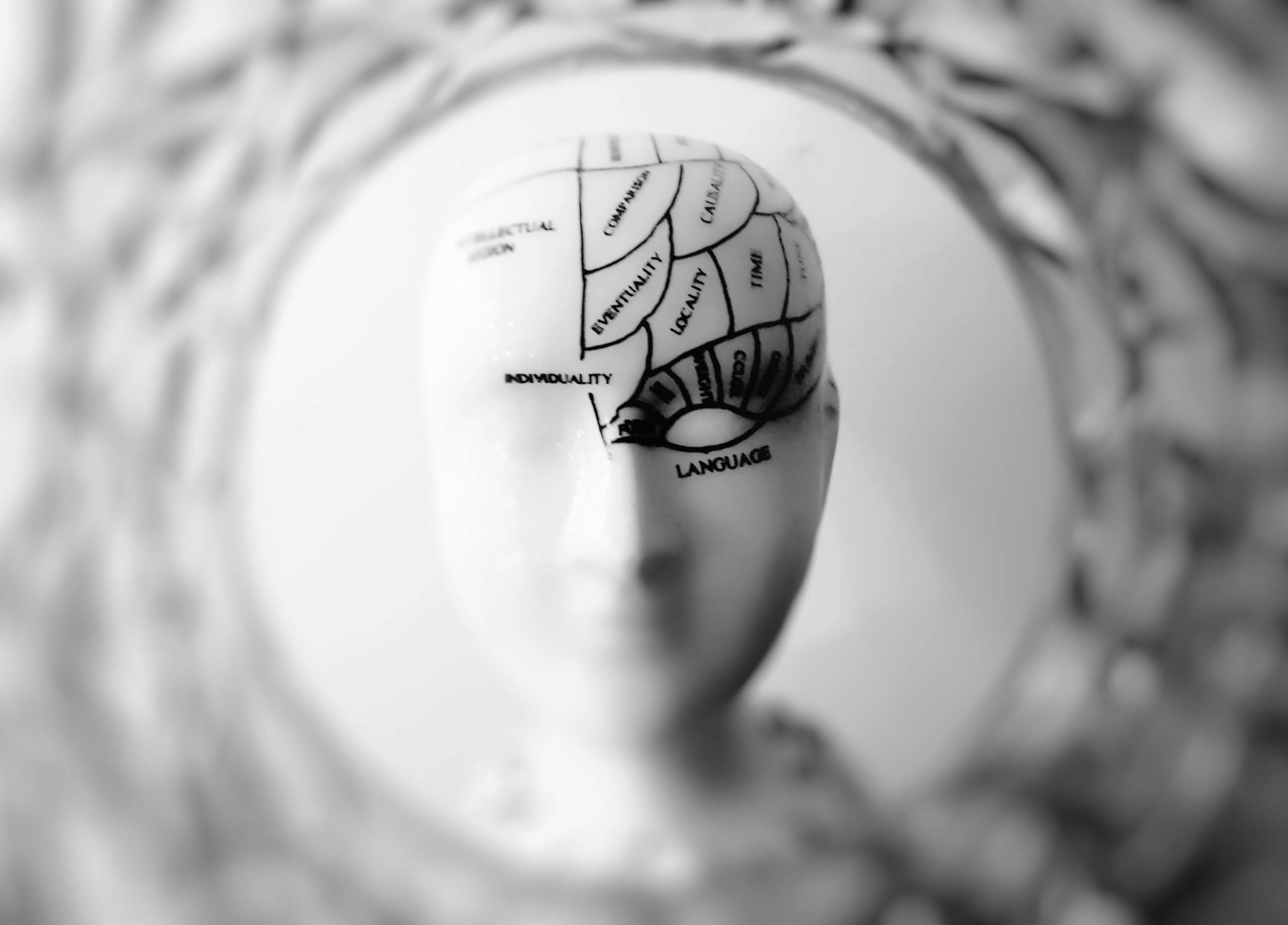
AI emotional intelligence advancements in 2025 have moved faster than most people expected, with systems now capable of detecting vocal tone shifts, reading micro-expressions, and adjusting conversational responses based on emotional cues in real time. For introverts especially, this raises a question worth sitting with: when a machine gets better at reading emotions, does that change how we understand our own?
My short answer is yes, and not always in the ways the tech headlines suggest.

If you want a broader look at how introverts experience connection, communication, and social behavior, our Introvert Social Skills and Human Behavior hub covers the full terrain. This article focuses on one specific and genuinely fascinating piece of that picture: what AI emotional intelligence can and cannot do, and what that means for people who process the world quietly and deeply.
What Exactly Are AI Emotional Intelligence Advancements in 2025?
The phrase gets used loosely, so it helps to be specific. Emotional intelligence in AI refers to a system’s ability to detect, interpret, and respond to human emotional states. In 2025, that capability has expanded across three main areas: affective computing (reading emotion from voice, text, and facial data), large language models trained on emotionally nuanced dialogue, and real-time adaptive systems that shift their responses based on perceived emotional context.
Career Coaching for Introverts
One-on-one career strategy sessions with Keith Lacy. 20 years of Fortune 500 leadership as an introvert, now helping others build careers that work with their wiring.
Learn More50-minute Zoom session · $175
What’s changed most recently isn’t the concept, which has been around for decades, but the accuracy and accessibility. Tools that once required specialized hardware or research labs are now embedded in consumer apps, workplace platforms, and customer service systems. Your phone can detect stress in your voice. Your video conferencing software can flag disengagement. Therapy-adjacent chatbots can sustain emotionally coherent conversations across multiple sessions.
I spent over twenty years in advertising, and I watched technology change client relationships repeatedly. What I noticed every time was that the tools that got adopted fastest were the ones that solved a real human problem, not the ones with the most impressive specs. AI emotional intelligence is following that same pattern. People aren’t adopting it because it’s technically impressive. They’re adopting it because emotional connection is hard, and anything that makes it feel more manageable gets attention.
The National Institutes of Health has documented how emotional processing connects to broader cognitive and social functioning, which gives some scientific grounding to why this technology matters beyond novelty. Emotion isn’t a soft add-on to human behavior. It’s central to how we make decisions, form relationships, and interpret meaning.
Why Do Introverts Have a Complicated Relationship With Emotional AI?
As an INTJ, I process emotion internally before it ever reaches the surface. That’s not emotional absence, it’s emotional architecture. My feelings run through a long internal filter before they become visible, which means a system trained to read surface-level emotional signals often misreads me entirely.
Many introverts share this experience. The quietness that reads as disengagement to an algorithm is often deep concentration. The flat affect that registers as neutral or even negative on an emotional detection system can be contentment, focus, or simply a preference for internal processing over external performance.
The American Psychological Association defines introversion as a personality orientation characterized by a preference for the internal world of thoughts and feelings, which is a useful reminder that introversion is fundamentally about where attention and energy flow, not about emotional capacity or depth. AI systems trained on behavioral data often conflate the two, which creates a real accuracy problem.
I remember running a client presentation for a Fortune 500 consumer goods brand. I’d spent two weeks preparing a strategy I genuinely believed in. During the presentation, I was calm, measured, and deliberate. One of my junior account managers pulled me aside afterward and said she’d been worried I wasn’t confident because I seemed “too quiet.” I’d been completely confident. I just didn’t perform confidence the way the room expected. An emotional AI system reading that presentation would likely have flagged the same thing she did, and it would have been wrong.
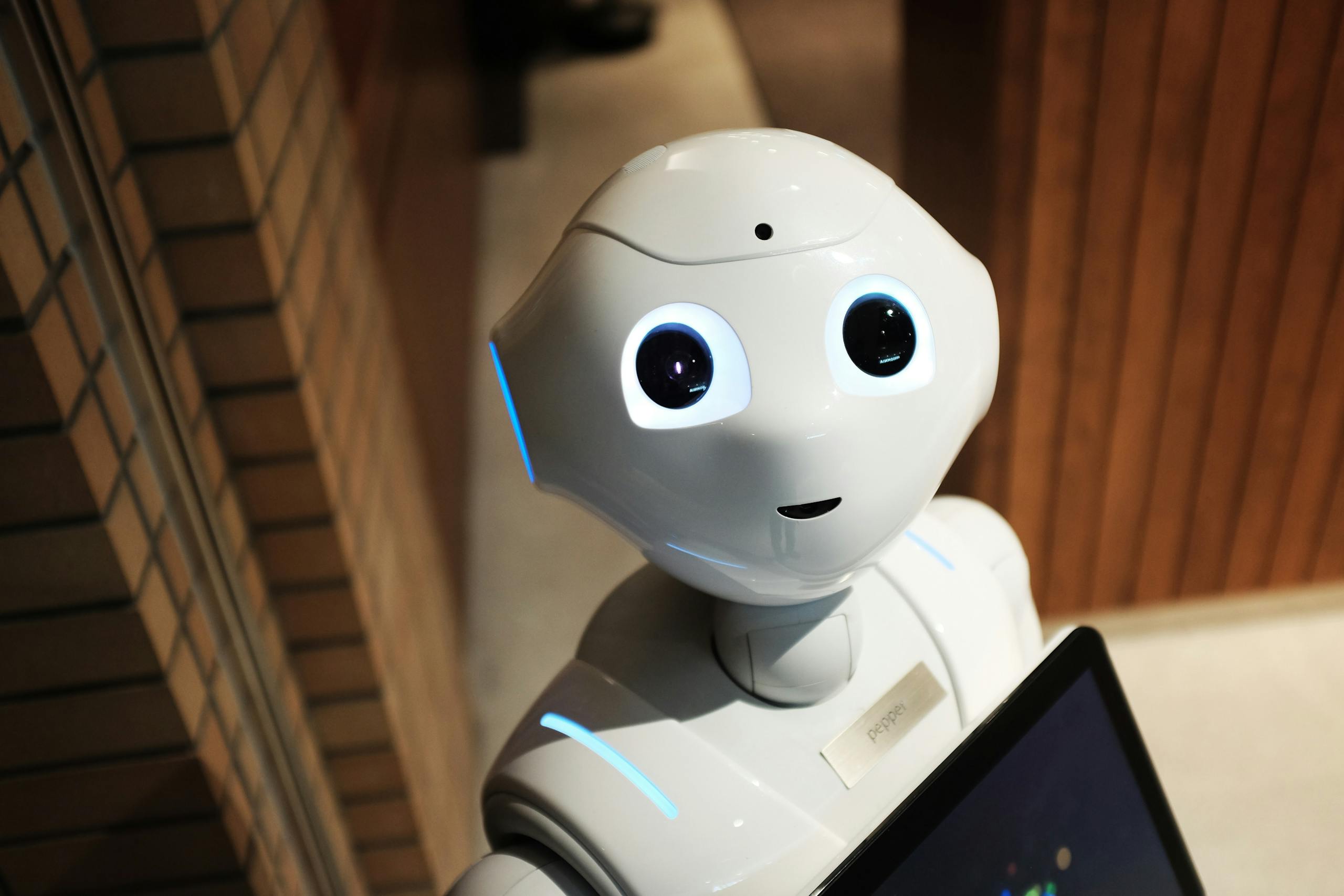
That gap between internal experience and external signal is worth understanding, especially as these tools become more embedded in hiring, performance review, and even therapeutic settings. If you’re curious where you land on the personality spectrum before reading further, our free MBTI personality test can give you a clearer picture of your own type and how you’re wired to process the world.
Where Are the Real Advancements Happening in 2025?
Setting aside the hype, several areas have seen meaningful progress worth paying attention to.
Contextual Emotional Memory in AI Conversations
Earlier AI systems reset between sessions. You could have a deeply personal conversation with a chatbot, return the next day, and it would have no memory of what you’d shared. In 2025, the leading conversational AI platforms maintain emotional context across sessions, tracking not just what was said but the emotional register of previous exchanges.
For introverts who find it exhausting to re-explain themselves socially, this is genuinely significant. One of the barriers many introverts face in therapy, coaching, and even friendship is the energy cost of building context from scratch repeatedly. A system that remembers where you left off emotionally removes one layer of that friction.
That said, memory and understanding aren’t the same thing. A system can remember that you seemed distressed last Tuesday without genuinely comprehending what distress means in your specific life. The distinction matters.
Multimodal Emotion Detection
The shift from single-channel to multimodal detection is probably the most technically significant advancement. Earlier systems analyzed text or voice independently. Current platforms cross-reference vocal tone, word choice, response latency, and in video contexts, facial micro-expressions simultaneously. The combined signal is more accurate than any single channel alone.
This matters for introverts because our emotional signals are often distributed across channels in ways that single-channel systems miss. My voice might stay even while my word choices signal something different. A multimodal system has a better chance of catching that, though it still depends heavily on what data it was trained on.
Research published in PubMed Central on emotional processing highlights how complex the relationship between internal emotional states and external expression really is, which underscores why multimodal approaches are more appropriate than single-signal detection.
Emotionally Adaptive Coaching and Therapy Tools
Mental health applications have seen some of the most meaningful development. AI-assisted tools now adjust pacing, tone, and intervention style based on real-time emotional feedback. A platform might slow down its prompts if it detects overwhelm, or shift from structured questioning to open reflection if it senses resistance.
For introverts who often find structured therapeutic environments too fast or too socially demanding, this adaptive quality has real value. The ability to work through emotional content at your own pace, without a human sitting across from you waiting for a response, removes significant pressure.
Practices like meditation and self-awareness have always helped introverts access their internal emotional landscape. AI tools that work alongside those practices rather than replacing them seem to be where the most thoughtful development is happening.

What Does Emotional AI Mean for Introvert Social Skills?
Here’s where I want to be honest about something I’ve wrestled with personally. There’s a real risk that emotionally intelligent AI becomes a substitute for the harder, more rewarding work of developing genuine human connection skills.
I’ve seen this pattern before, just in a different form. When I was running agencies, we adopted every new communication technology that promised to make client relationships easier. Email replaced phone calls. Project management platforms replaced status meetings. And every time, the result was the same: the technology made logistics smoother while the actual relationship quality declined. Clients felt less known, not more.
Emotional AI carries the same risk at a deeper level. A chatbot that validates your feelings with impressive accuracy might reduce the urgency you feel to work on improving your social skills as an introvert in real-world contexts. That would be a loss, because the skills built through genuine human interaction, with all its awkwardness and unpredictability, are qualitatively different from what any AI exchange can build.
At the same time, I don’t want to dismiss the legitimate value. For introverts who struggle with social anxiety, AI tools can serve as low-stakes practice environments. For people processing grief, trauma, or difficult transitions, having an emotionally responsive system available at 2 AM when no human support is accessible has genuine worth. Healthline’s coverage of introversion and social anxiety draws an important distinction between the two, and AI tools that help people work through anxiety without pathologizing introversion are doing something valuable.
The question isn’t whether to use these tools. It’s whether you’re using them to move toward human connection or away from it.
How Can Introverts Use Emotional AI Without Losing Their Edge?
Introverts already possess qualities that align naturally with high emotional intelligence: depth of observation, careful listening, preference for meaningful over surface-level exchange, and a tendency to process before responding. The Psychology Today piece on the introvert advantage articulates this well, noting that the traits often dismissed as social liabilities are frequently the same ones that drive genuine connection.
So the opportunity isn’t to use AI to compensate for perceived emotional deficits. It’s to use it as a mirror and a practice space while continuing to develop the real thing.
Use AI Feedback to Understand How You Come Across
One of the most useful applications I’ve found is using AI tools to get feedback on communication style. Not as a judgment, but as data. If a system consistently reads my tone as flat or disengaged when I feel engaged, that’s useful information about the gap between my internal experience and external signal. It doesn’t mean I need to perform differently. It means I can make a conscious choice about when that gap matters and when it doesn’t.
Working on becoming a better conversationalist, something I’ve written about in this guide on conversation skills for introverts, is in the end about closing that gap on purpose, not by becoming someone else, but by ensuring the depth you actually feel comes through in the exchanges that matter.
Don’t Let AI Replace the Work of Emotional Processing
One pattern I’ve noticed in myself and in people I’ve worked with is the tendency to use external feedback, whether from people or technology, to avoid sitting with difficult emotions. It’s easier to ask a chatbot how to handle a situation than to actually feel the discomfort of the situation itself.
Genuine overthinking therapy approaches help people learn to process emotion rather than loop around it endlessly. AI tools work best when they support that same movement through emotion, not around it. If you find yourself using emotional AI primarily to feel validated without actually examining what’s underneath, that’s worth noticing.
Recognize What AI Cannot Do
No current AI system can genuinely understand what your emotional experience means within the specific context of your life. It can pattern-match against vast training data. It can produce responses that feel remarkably attuned. But it doesn’t know that your hesitation in a conversation comes from a childhood experience of being dismissed, or that your quietness in a meeting reflects strategic observation rather than uncertainty.
Human emotional intelligence, at its best, carries that contextual depth. A trusted colleague, a good therapist, a close friend who knows your history, they bring something that no system in 2025 can replicate. The Harvard Health guide on introvert social engagement makes a point I’ve always found grounding: introverts often form fewer but deeper relationships, and those relationships carry a kind of emotional intelligence that emerges from genuine shared history. That’s worth protecting.

The Workplace Implications of Emotional AI for Introverted Professionals
This is the area I watch most closely, partly because of my background and partly because the stakes are high. Emotional AI is being deployed in hiring processes, performance evaluations, and team dynamics tools at a pace that outstrips our ability to assess its fairness or accuracy.
When I was building agency teams, I learned fairly quickly that my instinct to hire people who communicated the way I did, quietly, precisely, with minimal performance, was actually a bias that cost me. Some of the most emotionally intelligent people on my teams were the ones whose style looked least like traditional emotional expressiveness. An INFJ account planner I worked with for several years processed client relationships with extraordinary depth and accuracy, but she would have scored low on any system measuring emotional expressiveness through behavioral signals. She was one of the most emotionally perceptive people I’ve ever worked alongside.
Emotional AI in hiring that relies on behavioral signals without accounting for personality type variation is going to systematically disadvantage introverted candidates. That’s not a hypothetical concern. It’s already happening in video interview platforms that score emotional engagement based on facial expressiveness and vocal energy, two areas where introverts often present differently than extroverts without any difference in actual emotional intelligence or job capability.
The NIH research on personality and behavior reinforces that behavioral expression is only one component of emotional functioning, and a poor proxy for the full picture. Professionals who understand this, and who can articulate it clearly in hiring and performance contexts, have a real advantage.
There’s also an opportunity here for introverted leaders. As emotional AI becomes a standard workplace tool, the people who understand its limitations and can advocate for more nuanced interpretations will be valuable. That kind of systems-level thinking, seeing where a tool’s assumptions break down, is something many INTJs and other introverted types do naturally.
When AI Emotional Intelligence Touches Personal Pain
One area where I want to be particularly thoughtful is the use of emotional AI during genuinely difficult personal experiences. Relationship breakdown, betrayal, loss, these are moments when people are most vulnerable and most likely to reach for whatever feels supportive.
AI tools in these contexts can provide real comfort. They’re available, patient, non-judgmental, and increasingly good at holding space. For someone working through something like the obsessive thought loops that follow betrayal, having a tool that can interrupt rumination and redirect toward processing has genuine therapeutic value.
What concerns me is when AI emotional support becomes the primary or only support during those periods. Not because the tools are harmful in themselves, but because the kind of healing that happens through genuine human witness, being truly seen and known by another person during your hardest moments, is something different. It changes you in ways that validated-by-algorithm doesn’t.
The most useful framing I’ve found is this: AI emotional tools are good at helping you stabilize. Human connection is what helps you grow. Both matter. Neither replaces the other.
What Should Introverts Actually Do With All of This?
My honest take, after thinking through this carefully, is that the AI emotional intelligence advancements of 2025 are genuinely interesting and genuinely limited in equal measure. They’re interesting because they’re surfacing questions about emotional expression, personality variation, and what connection actually requires that we should have been asking more rigorously all along. They’re limited because emotion, at its most meaningful, is inseparable from the specific, irreplaceable context of a human life.
For introverts specifically, the most valuable thing these tools offer isn’t emotional support. It’s a mirror. A way to see how your internal experience is landing externally, and to make more conscious choices about when and how you bridge that gap.
Being an emotionally intelligent communicator has never been about performing emotions loudly. It’s about being genuinely attuned, responsive, and present. Those qualities don’t need AI to develop. They need practice, reflection, and the willingness to keep showing up in human relationships even when that’s uncomfortable.
What AI can do is lower the activation energy for that practice. And for introverts who sometimes need a lower-stakes entry point before engaging the real thing, that’s worth something.
If you want to keep exploring how introverts experience and build social and emotional skills in the real world, the full range of that conversation lives in our Introvert Social Skills and Human Behavior hub, where we cover everything from conversation depth to self-awareness to the science of how introverts connect.
About the Author
Keith Lacy is an introvert who’s learned to embrace his true self later in life. After 20 years in advertising and marketing leadership, including running agencies and managing Fortune 500 accounts, Keith now channels his experience into helping fellow introverts understand their strengths and build fulfilling careers. As an INTJ, he brings analytical depth and authentic perspective to every article, drawing from both professional expertise and personal growth.
Frequently Asked Questions
What are the main AI emotional intelligence advancements in 2025?
The most significant developments in 2025 include multimodal emotion detection (combining voice, text, and facial data), emotionally adaptive conversational AI that adjusts its responses in real time, and cross-session emotional memory in therapy and coaching platforms. These advancements have moved from research settings into widely available consumer and workplace tools, making emotionally responsive AI a practical reality rather than a future concept.
Can AI accurately read the emotions of introverts?
Current AI emotional detection systems often struggle with introverts because they’re trained primarily on behavioral signals like facial expressiveness, vocal energy, and response speed. Introverts frequently process emotion internally before it surfaces externally, which means the external signals available to an AI system may not reflect the actual emotional state. Multimodal systems are more accurate than single-channel ones, but a meaningful gap remains between how introverts experience emotion and how AI systems are trained to recognize it.
Should introverts use AI emotional support tools?
AI emotional support tools can be genuinely useful for introverts as low-stakes practice environments, as stabilizing resources during difficult periods, and as mirrors for understanding how internal experiences translate into external communication. The important distinction is whether you’re using these tools to move toward human connection or as a substitute for it. They work best as complements to real-world social and emotional development, not replacements for it.
How is emotional AI affecting introvert professionals in the workplace?
Emotional AI is increasingly embedded in hiring, performance evaluation, and team dynamics tools. Many of these systems measure emotional engagement through behavioral expressiveness, which can systematically disadvantage introverted professionals whose emotional depth doesn’t match the behavioral patterns the systems are trained to recognize. Introverted professionals benefit from understanding these limitations and being able to articulate them clearly, particularly in hiring contexts where AI-scored video interviews are becoming standard.
What can AI emotional intelligence not do that human emotional intelligence can?
No current AI system can understand the specific contextual meaning of your emotional experience within your particular life history. AI can pattern-match against large datasets and produce responses that feel attuned, but it doesn’t carry the accumulated knowledge of who you are, where you’ve been, and what your emotional responses actually mean in context. Genuine human emotional intelligence, especially in close relationships built over time, carries that contextual depth in a way that AI cannot replicate in 2025.