

Amanda Tate is a homeschooling mother in Vermont who built her family’s entire educational approach around one insight: her introverted children learn best when the environment matches how they’re actually wired. Her story resonates with introverted parents everywhere who sense that conventional schooling asks quiet kids to perform extroversion all day, every day, and then wonder why those children come home completely depleted.
What Amanda figured out, and what many introverted families are slowly discovering, is that homeschooling isn’t just an academic choice. It’s an environmental one. And for introverts, the environment shapes nearly everything.

If you’re exploring what it means to build a home that genuinely supports introverted living, our Introvert Home Environment Hub covers the full range of how introverts can shape their physical and daily spaces to work with their nature rather than against it. Amanda’s homeschool story fits squarely into that conversation.
Why Does the School Environment Drain Introverted Children So Completely?
Anyone who has picked up an introverted child from a full day of school knows what I’m describing. The kid who seemed fine at drop-off arrives at pickup looking hollowed out. Not sad, not troubled, just completely empty. They need an hour of silence before they can even form a sentence about their day.
What’s your personality type?
Take our free 40-question assessment and get a detailed personality profile with dimension breakdowns, context analysis, and personalised insights.
Discover Your Type8-12 minutes · 40 questions · Free
That pattern makes complete sense once you understand what a conventional school day actually demands. Constant group work. Open classrooms. Cafeterias designed for maximum noise and minimum privacy. Hallways between every class. The social performance of lunch. And then, if a child is lucky, maybe twenty minutes of quiet reading before the next activity pulls them back into the social current.
I ran advertising agencies for over two decades, and I watched the same dynamic play out in adult professionals. My most thoughtful strategists, the ones who produced the sharpest thinking, would visibly deteriorate after a day of back-to-back client meetings. It wasn’t weakness. It was neurology. Introverts process stimulation differently, and environments built for extroverted output simply cost them more energy. A study published in PubMed Central examining personality and cognitive processing found meaningful differences in how introverts and extroverts respond to environmental stimulation, which helps explain why the same classroom can energize one child and exhaust another.
Amanda recognized this pattern in her own children early. Her eldest, she’s said in interviews, would spend the entire weekend recovering from a school week, only to face Monday again before the tank was ever truly full. That cycle wasn’t sustainable, and she started asking what would happen if she simply removed the drain.
What Does Amanda Tate’s Homeschool Approach Actually Look Like?
What strikes me most about Amanda’s approach isn’t any single curriculum choice or teaching method. It’s the intentionality behind the physical and emotional environment she created. Vermont winters are long and quiet, which probably helped. There’s something about that landscape that naturally invites inward focus.
Her homeschool day is structured around deep work blocks rather than fragmented subject periods. Her children move through extended stretches of focused engagement, reading, writing, building, experimenting, without the bell-driven interruptions that reset concentration every forty-five minutes. For introverted learners, that unbroken time isn’t a luxury. It’s where real absorption happens.

She’s also spoken about the importance of the physical space itself. A dedicated learning corner with soft light, minimal visual clutter, and a sense of enclosure. Something closer to a reading nook than an open-plan classroom. If you’ve ever spent time thinking about how the homebody couch functions as a genuine restoration zone for introverts, you’ll recognize the same logic applied to learning. The body needs a signal that says: this is a safe, low-stimulation place where you can think.
Social connection is part of the picture too, but on different terms. Amanda’s children participate in co-ops, nature groups, and community activities, but those interactions are chosen and bounded rather than mandatory and constant. Her kids get to arrive as themselves rather than as performers.
How Does Vermont’s Environment Shape an Introverted Homeschool Life?
Place matters more than we usually admit. Vermont isn’t just a backdrop in Amanda’s story. It’s a participant. The state’s rural character, its slower rhythms, its deep winters that make staying home feel natural rather than antisocial, all of that creates conditions where introverted living doesn’t require constant justification.
I’ve thought about this in terms of my own work life. My most productive periods as an agency leader were never in our open-plan New York office, buzzing with activity and ambient noise. They were in quieter spaces, early mornings before the building filled up, or in our smaller regional office in a less frenetic city. The environment either supports your nature or it fights it, and fighting it takes energy you could spend on actual thinking.
Vermont’s homeschool community also tends to attract families who’ve made deliberate choices about pace. Many of them have moved away from urban centers precisely because they wanted a different relationship with time and space. That cultural context means Amanda’s approach doesn’t stand out as eccentric. It fits. And for introverted parents raising introverted children, fitting in without having to explain yourself constantly is its own form of relief.
There’s also something to be said for a landscape that rewards observation. Vermont’s seasons are dramatic and specific. Learning to notice those changes, to track what’s different about the light in February versus April, builds exactly the kind of attentional depth that introverts often possess naturally and that conventional schooling rarely cultivates. Frontiers in Psychology has published work on how environmental factors shape attention and cognitive engagement, and the implications for introverted learners in particular are worth considering.
What Can Introverted Parents Learn From This Approach Even Without Homeschooling?
Most introverted parents aren’t going to homeschool. That’s simply the reality. But Amanda’s framework contains lessons that translate into any family’s daily life, regardless of where the children spend their school hours.
The first is the idea of decompression architecture. Building genuine quiet time into the after-school hours rather than rushing from school to activities to dinner to homework. Treating that transition period as sacred rather than inconvenient. An introverted child who gets forty-five minutes of low-demand time after school arrives at the dinner table as a completely different person than one who was swept immediately into the next obligation.
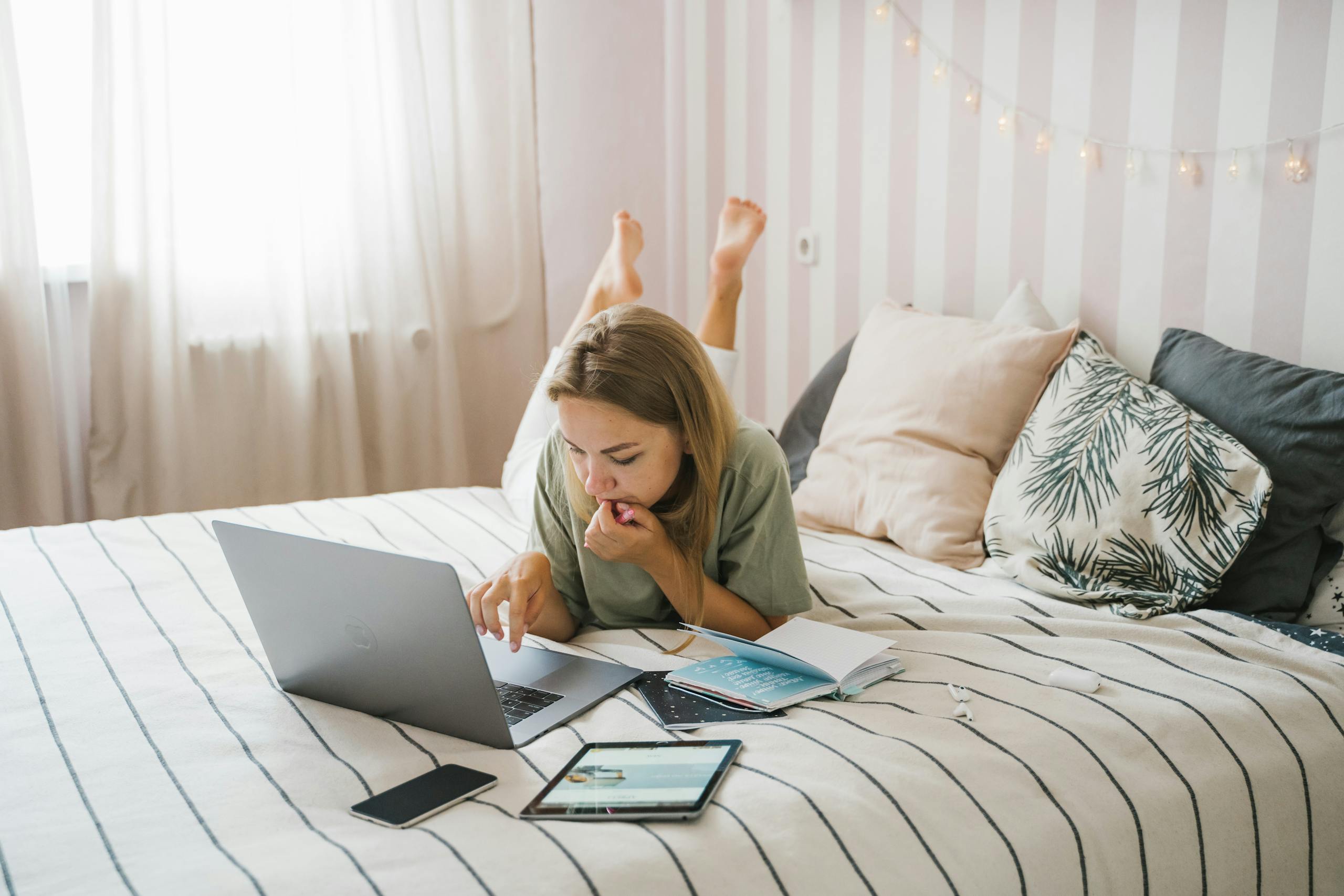
The second lesson is about physical space. Amanda’s emphasis on creating a specific, intentional learning environment at home is something any family can do in some form. It doesn’t require a farmhouse in Vermont. It requires a corner, a chair, good light, and the agreement that this space is for focused, quiet engagement. Principles from HSP minimalism apply beautifully here: reducing visual and sensory noise in a child’s primary spaces can meaningfully change how settled and focused they feel.
The third lesson is permission. One of the most powerful things Amanda models is the explicit validation that her children’s need for quiet isn’t a problem to be managed. It’s a feature of who they are. Many introverted adults, myself included, spent years believing that needing time alone meant something was wrong with us. Getting that message corrected in childhood changes everything.
As an INTJ who spent two decades in environments that rewarded extroverted performance, I can tell you that the internal cost of constantly questioning your own wiring is enormous. The energy that goes into wondering whether you’re broken is energy that could go into actually doing meaningful work. Children who grow up understanding themselves don’t carry that particular weight.
How Does Homeschooling Change the Social Development Picture for Introverted Kids?
The social question comes up every time homeschooling is discussed, and it’s worth addressing honestly rather than defensively. The concern is real. Children do need social experience, and the ability to function in group settings is genuinely important.
What Amanda’s approach suggests, and what I find compelling, is that the quality and structure of social interaction matters at least as much as the quantity. Introverted children don’t need less connection. They need connection that doesn’t require them to perform constantly. Psychology Today has written about why deeper, more intentional conversations serve introverts better than the surface-level social noise that fills most school days. That insight applies to children as much as adults.
Her children participate in meaningful group activities. They collaborate on projects, handle disagreements, and develop friendships. But those experiences happen in contexts where they can show up with some energy in reserve, rather than arriving already depleted from eight hours of mandatory social performance.
I managed a team of about thirty people at the peak of my agency years. Some of my strongest performers were deeply introverted, and they were also some of the most genuinely collaborative people on the team. The difference was that they collaborated on their own terms, in settings where they had some control over the pace and depth of interaction. Amanda is essentially building that same condition for her children from the start, rather than letting them figure it out at forty.
Online communities have also become part of the social fabric for many homeschooled introverts. Spaces like chat rooms for introverts offer low-pressure connection that suits the introverted communication style, and many homeschooled teens find genuine community there while they’re building in-person relationships at their own pace.
What Role Does Gift-Giving and Home Culture Play in an Introverted Homeschool Family?
One aspect of Amanda’s story that doesn’t get discussed enough is the culture she’s built around what her family values and celebrates. The gifts she chooses for her children, the objects that fill their home, the books on their shelves, all of it communicates something about what’s worth caring about.

Introverted homeschool families tend to gravitate toward gifts that support depth and solitude. Good books. Art supplies. Nature journals. Building sets that reward patient, focused attention. If you’re looking for ideas, both our gifts for homebodies collection and the broader homebody gift guide are worth browsing, because they’re built around the same sensibility: honoring the person who finds richness in quiet, focused engagement rather than constant novelty and stimulation.
There’s something quietly powerful about a home where the objects and books and chosen activities all send the same message: depth is valued here. Slowness is valued here. You don’t have to perform to belong here.
Amanda has mentioned that books are central to her family’s culture, not just as learning tools but as objects of meaning. A well-chosen homebody book on a child’s nightstand communicates something about identity, about the kind of person it’s okay to be. That cumulative cultural message shapes a child’s self-understanding in ways that no single lesson or conversation can replicate.
What Does Amanda Tate’s Story Actually Reveal About Introverted Wellbeing?
Stepping back from the specifics of homeschooling, what Amanda’s story points toward is something I’ve been thinking about for years: the relationship between environment and wellbeing for introverts is not incidental. It’s foundational.
Many introverts spend enormous energy adapting to environments that weren’t built with them in mind. Schools. Open-plan offices. Networking events. Social media feeds optimized for rapid, shallow engagement. Each of those environments extracts a cost, and the cumulative effect over years and decades is significant. Research published in PubMed Central on personality and wellbeing suggests that the fit between a person’s traits and their environment plays a meaningful role in overall life satisfaction, which aligns with what many introverts report from lived experience.
What Amanda did was refuse to accept the default. She looked at the environment her children were being placed in, recognized the mismatch, and built something different. That’s not a small act. It requires confidence in your own observations, willingness to go against the grain, and enough self-knowledge to trust that what you’re seeing is real.
Those are also, not coincidentally, qualities that introverts often develop precisely because they spend so much time in their own heads. The same depth of internal processing that makes conventional environments draining is also what allows introverts to notice subtle patterns, question assumptions, and imagine alternatives. Amanda’s homeschool approach is, in a sense, introversion’s strengths turned toward solving introversion’s challenges.
I spent most of my agency career watching talented introverts contort themselves to fit environments that didn’t suit them, including myself. Some of them burned out. Some of them quietly underperformed relative to their actual capacity. A few of them, the ones who found ways to shape their environment rather than simply endure it, did something remarkable. Amanda is doing that for her children before they ever have to figure it out the hard way.
That’s worth paying attention to, whether you homeschool or not, whether you live in Vermont or not, whether you have children or not. The question she’s asking is one every introvert eventually has to face: what does it look like to build a life that actually fits?
There’s no single answer. But asking the question with real honesty, and being willing to do something about the answer, is where it starts. Amanda’s Vermont homeschool is one version of that answer. Yours will look different. What matters is that you’re building it consciously rather than simply accepting whatever the default environment happens to be.
Our complete Introvert Home Environment Hub offers more perspectives on shaping your physical and daily spaces around how introverts actually function, from sensory considerations to routines to the specific objects and arrangements that support quiet, focused living.
About the Author
Keith Lacy is an introvert who’s learned to embrace his true self later in life. After 20 years in advertising and marketing leadership, including running agencies and managing Fortune 500 accounts, Keith now channels his experience into helping fellow introverts understand their strengths and build fulfilling careers. As an INTJ, he brings analytical depth and authentic perspective to every article, drawing from both professional expertise and personal growth.
Frequently Asked Questions
Who is Amanda Tate and why does her homeschool approach matter for introverts?
Amanda Tate is a Vermont-based homeschooling mother who built her family’s educational approach specifically around the needs of introverted children. Her story matters because she identified something many introverted families feel but don’t always articulate: conventional school environments are structured around extroverted output, and introverted children often spend their entire school day in a state of low-grade depletion. Her approach demonstrates that changing the environment, rather than asking the child to change, produces meaningfully different outcomes in wellbeing and learning.
How does homeschooling specifically benefit introverted children?
Homeschooling benefits introverted children primarily by removing the constant social performance that conventional school demands. Extended deep work blocks replace fragmented forty-five-minute periods. Physical spaces can be designed for low stimulation and focused engagement. Social interaction happens in chosen, bounded contexts rather than as an all-day mandatory condition. The cumulative effect is that introverted children get to learn in a state of relative calm rather than chronic overstimulation, which changes both their capacity for absorption and their overall sense of wellbeing.
Can introverted parents apply these lessons without homeschooling?
Yes, and many of the most important lessons translate directly. Creating genuine decompression time after school, designing a quiet and intentional home learning space, explicitly validating a child’s need for solitude rather than treating it as a problem, and choosing activities that allow depth rather than constant novelty, all of these are available to any family regardless of where children spend their school hours. The core principle is building an environment at home that restores rather than further depletes an introverted child’s energy.
Does homeschooling limit social development for introverted children?
Not when it’s done thoughtfully. Introverted children don’t need less social connection. They need connection that doesn’t require constant performance. Homeschooled introverts who participate in co-ops, community groups, nature programs, and chosen friendships often develop strong social skills precisely because they arrive at those interactions with energy rather than exhaustion. The quality and structure of social experience matters more than the raw quantity, and homeschooling allows families to prioritize depth of connection over volume of exposure.
Why does Vermont’s environment suit an introverted homeschool approach?
Vermont’s rural character, slower pace, and dramatic natural seasons create conditions where introverted living feels natural rather than countercultural. Long winters make staying home feel appropriate rather than antisocial. The landscape rewards careful observation and patience, qualities that align well with introverted learning styles. Vermont’s homeschool community also tends to include many families who’ve made deliberate choices about pace and environment, which means introverted families find cultural context for their choices rather than having to constantly explain or justify them.