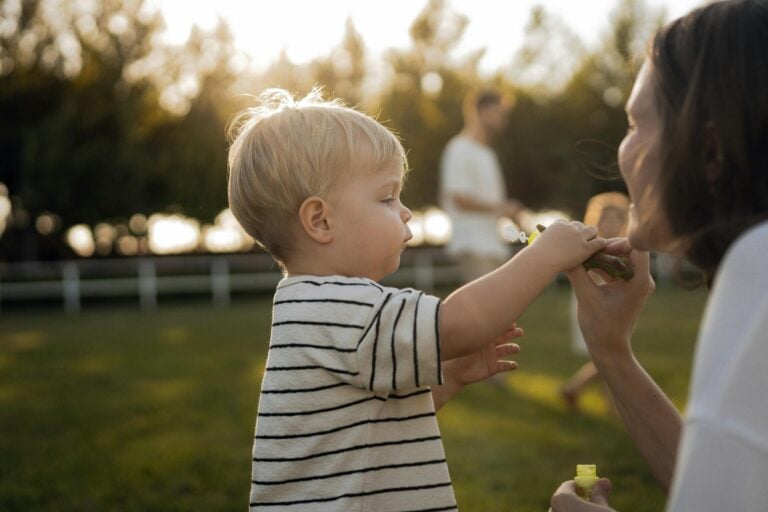

Ambivert parents occupy a fascinating middle ground. They recharge through solitude sometimes and through connection at others, and their children watch every shift. What those children absorb isn’t a lecture about personality types. It’s a lived demonstration of how a person reads a room, adjusts their energy, and stays true to themselves across wildly different social situations.
My own children never heard me explain introversion until they were teenagers. But they watched me come home from client presentations and go quiet for an hour. They watched me light up at small dinner tables and grow distant at crowded parties. They were learning something I hadn’t consciously decided to teach.
Parenting as an ambivert means your social flexibility is already on display. The question worth asking is whether you’re making that flexibility legible to the kids in your home.

Personality and social behavior intersect in ways that shape children long before they can name what they’re observing. Our full exploration of ambivert identity lives in the Ambivert hub, where we look at how this personality profile shows up across relationships, work, and daily life. The modeling question, though, is where parenting gets genuinely interesting.
What Does Social Flexibility Actually Mean for Ambivert Parents?
Social flexibility isn’t the same as people-pleasing. It isn’t performing extroversion when you’d rather be alone, or pretending solitude feels fine when you actually need connection. Real social flexibility means reading what a situation calls for and responding from an honest place rather than a habitual one.
What’s your personality type?
Take our free 40-question assessment and get a detailed personality profile with dimension breakdowns, context analysis, and personalised insights.
Discover Your Type8-12 minutes · 40 questions · Free
Ambiverts tend to do this more naturally than either end of the introvert-extrovert spectrum. A 2021 review published through the American Psychological Association found that individuals who score in the middle ranges of extraversion tend to show greater adaptability in social contexts, adjusting their engagement style based on situational cues rather than fixed preference. That adaptability is a strength. It’s also a behavior your children are cataloging in real time.
Early in my agency career, I thought flexibility meant suppressing my quieter instincts. I ran team meetings like I imagined a confident extrovert would: loud, fast, full of energy I had to manufacture. My staff probably sensed the performance. My family definitely did. I’d come home depleted and withdrawn, and my kids had no framework for understanding why Dad was so different at 7 PM than he’d been at 7 AM. What I was modeling wasn’t flexibility. It was exhaustion with a professional veneer.
Real modeling started when I stopped pretending the shift didn’t happen and started explaining it honestly.
How Does an Ambivert Parent’s Energy Management Show Up at Home?
Children are exceptionally good at reading parental energy, even when they can’t articulate what they’re sensing. A parent who returns from a draining social obligation and immediately withdraws communicates something. A parent who does the same thing and says, “I need about thirty minutes to recharge, then I’m all yours,” communicates something very different.
The first scenario teaches children that social exhaustion is something to hide. The second teaches them that energy is a real, manageable resource, and that knowing your own limits is a form of self-respect.
According to resources from the National Institute of Mental Health, emotional regulation in children develops significantly through observation of caregivers. Children who see adults name their emotional states and respond to them deliberately, rather than reactively, develop stronger self-regulation skills over time. The ambivert parent who says “I’m a little overstimulated from that party, I need some quiet time” is doing more than managing their own state. They’re giving their child a vocabulary and a model for doing the same.
I remember a specific Saturday when my agency had just closed a major account with a national retail brand. We’d celebrated with the whole team, clients included, a long lunch that stretched into late afternoon. By the time I got home, I was genuinely spent. My daughter, who was maybe nine at the time, wanted to show me something she’d been working on all day. I almost deflected. Instead, I sat down and said, “Give me five minutes to just breathe, and then I want to hear everything.” She waited. I recovered. We had a real conversation. She learned that her dad’s need for quiet wasn’t rejection. It was just how he worked.

Can Modeling Flexible Social Behavior Protect Children from Social Anxiety?
There’s a meaningful difference between a child who avoids social situations out of fear and one who chooses them selectively based on genuine preference. The first pattern tends toward anxiety. The second tends toward confidence. Ambivert parents, when they’re conscious about it, can model the second pattern in ways that genuinely shape how their children approach social life.
The CDC’s children’s mental health resources note that social anxiety in children often involves avoidance as a coping strategy, and that exposure to healthy adult coping models can interrupt that pattern early. Seeing a parent choose to attend a gathering, engage genuinely, and then step away when they need to, without drama or apology, normalizes a balanced relationship with social demands.
What ambivert parents can offer that purely introverted or extroverted parents sometimes can’t is range. A child watches their ambivert parent be warm and present at a neighborhood gathering, then watches that same parent choose to skip a second event that same weekend without guilt. Both behaviors carry information. Together, they communicate that social choices are exactly that: choices, made from self-knowledge rather than obligation or fear.
At my agency, I had a senior account manager who struggled with client presentations despite being genuinely talented. She’d over-prepare to the point of rigidity, then freeze when conversations went off-script. What she lacked wasn’t skill. It was a model for flexible engagement, the ability to read a room and adjust without losing her footing. That’s something that often gets built or not built in childhood, watching the adults around you handle social variability with ease or with panic.
What Are the Most Effective Ways to Talk to Kids About Personality Differences?
Children don’t need a lecture on the Myers-Briggs Type Indicator. They need honest, simple language that connects behavior to internal experience. “I’m feeling a little quiet today” is more useful than “I’m an introvert.” “I feel energized when we have people over” is more useful than “I’m an extrovert sometimes.”
The goal is to help children build a mental model of social energy as something real and variable, not a fixed character trait that determines who you are. Ambiverts are well-positioned to model this because their own experience of social energy genuinely shifts. You’re not performing a lesson. You’re just describing what’s actually happening.
Psychology Today’s coverage of personality development suggests that children as young as five can begin to understand basic emotional and social preferences when adults describe them in concrete, experiential terms. Saying “big crowds make me feel tired, but I love talking with just one or two people at a time” gives a child something they can actually use, both to understand you and to begin examining their own preferences.
Some specific language that tends to land well with younger children:
- Describing social energy as something that fills up and runs down, like a phone battery
- Naming what kinds of situations feel energizing versus draining without framing either as wrong
- Asking children what kinds of social time feel fun versus tiring to them, without leading the answer
- Modeling the behavior of choosing activities based on energy level rather than obligation alone
That last one matters more than most parents realize. When a child watches you decline a social invitation and hears you say “I need a quiet weekend,” they’re absorbing permission to do the same, without shame.

How Should Ambivert Parents Handle Children Who Are More Introverted or More Extroverted?
One of the more complicated realities of ambivert parenting is that your children may not share your social profile. An ambivert parent with a deeply introverted child needs to resist the pull toward pushing that child into more social engagement than they can handle. An ambivert parent with a highly extroverted child needs to resist the pull toward limiting social exposure because it exceeds the parent’s own comfort level.
Both errors happen. Both come from a reasonable place. And both can leave children feeling misunderstood in their core social needs.
The Mayo Clinic’s guidance on introverted children emphasizes that a child’s social preference is not a problem to be corrected. Introverted children benefit from having their need for quiet time validated rather than treated as shyness to overcome. Extroverted children benefit from parents who support their social needs even when those needs exceed the parent’s own appetite for stimulation.
As an INTJ, I’ve always leaned toward the introverted end of my ambivert range. My son is wired differently. He’s social in a way that used to genuinely puzzle me, energized by noise and groups and constant interaction. For years, I managed his social calendar with my own comfort level as the baseline. That was a mistake. It took a frank conversation with his school counselor to help me see that I was filtering his needs through my own lens.
Adjusting meant actively scheduling more social time for him than felt natural to me, and doing it without telegraphing resentment. That’s a form of modeling too: showing a child that you can act in their interest even when it requires something from you.
Does an Ambivert Parent’s Workplace Behavior Teach Children Anything About Social Skills?
Children absorb more about professional social behavior than most parents expect. They hear the stories. They watch how you prepare for difficult conversations. They notice whether you come home energized or depleted after different kinds of work days. The way you describe your colleagues, your clients, your team dynamics, all of it feeds their developing understanding of how adults function in social and professional contexts.
Running advertising agencies for two decades gave me an unusual amount of material to work with. Client relationships, team dynamics, new business pitches, agency reviews, all of it required constant social calibration. I’d come home and my kids would sometimes ask about my day. Early on, I gave sanitized answers. Later, I started being more honest about the texture of it.
I told them about the pitch meeting where I’d gone quiet in the room because I needed to think, and how that silence had actually landed well because the client read it as confidence. I told them about the team meeting where I’d pushed through my own fatigue to stay present because the conversation mattered. I told them about the client dinner I’d genuinely enjoyed despite dreading it beforehand, because the conversation went somewhere unexpected and real.
Those weren’t lessons I was packaging for their benefit. They were just honest accounts. But they gave my children a picture of social flexibility that was grounded in real adult experience rather than abstraction.
According to Harvard Business Review‘s coverage of workplace social dynamics, adaptability in professional settings is increasingly recognized as a core competency rather than a soft skill. Children who grow up watching a parent manage that adaptability with awareness and honesty are being prepared for something genuinely useful.

What Specific Habits Help Ambivert Parents Model Healthy Social Behavior Consistently?
Consistency matters more than perfection here. Children don’t need to see a parent who always gets social calibration exactly right. They need to see a parent who engages with the question honestly and keeps trying. A few habits tend to make that consistency more achievable.
Name Your State Without Drama
When you’re overstimulated, say so simply. When you’re feeling socially energized, say that too. Brief, matter-of-fact acknowledgments of your internal state give children permission to do the same. They don’t need a full emotional processing session. They need to hear that internal states are real and worth noticing.
Make Social Choices Visible
When you decline an invitation or choose a quieter option, let your children hear the reasoning. Not as justification, but as information. “I’m going to skip the block party this year, I’ve had a full week and I need a quiet Saturday” is a complete and honest sentence. It models decision-making from self-knowledge rather than avoidance.
Debrief Social Experiences Honestly
After a family gathering, a school event, or a work function, share something real about your experience. Not complaints, but honest observations. “That was a lot of people, I’m tired but I’m glad we went” teaches children that mixed experiences are normal and that you can hold complexity without collapsing into either extreme.
Repair When You Get It Wrong
There will be times when your social fatigue leaks out as irritability, or when you push a child toward social engagement they weren’t ready for, or when you avoid something you should have attended. Repair matters. Saying “I was short with you earlier because I was overstimulated, and that wasn’t fair” teaches children something more valuable than any lesson about personality types. It teaches them that self-awareness includes accountability.
The American Psychological Association’s parenting resources consistently identify parental repair behaviors as among the most powerful factors in children’s emotional development. Getting it wrong and coming back to it honestly is not a failure. It’s the model.
How Does Ambivert Parenting Look Different from Introverted or Extroverted Parenting?
Every personality type brings genuine strengths to parenting. Introverted parents often create deeply calm, reflective home environments. Extroverted parents often model enthusiasm, social confidence, and a genuine ease with engagement. Ambivert parents have access to something from both ends of that spectrum, and that range is genuinely useful for children who will eventually need to function across a wide variety of social contexts.
What ambivert parents can model that neither extreme offers as naturally is the shift itself. The visible, honest movement between social engagement and quiet recovery. Children who see that shift handled with ease and self-awareness learn something important: that social behavior doesn’t have to be fixed. You can be the person who’s warm and present at the school fundraiser and also the person who needs a quiet Sunday morning. Those aren’t contradictions. They’re just different expressions of the same person reading different situations.
A 2019 study referenced through NIMH’s child and adolescent mental health resources found that children who observed caregivers demonstrating situational social adaptability showed stronger social competence scores in school settings, particularly in their ability to read social cues and adjust their own behavior accordingly. The modeling effect is real and measurable.
Ambivert parents don’t have a monopoly on good social modeling. But they do have a particular kind of lived experience to draw from, one that includes both the pull toward connection and the pull toward quiet, and the ongoing work of honoring both without apologizing for either.

The most honest thing I can say about ambivert parenting is that it’s less about having the right answers and more about being willing to let your children see the real questions. How do I take care of myself socially without withdrawing from the people I love? How do I show up for others when my own tank is low? How do I help my child find their own social rhythm without projecting mine onto them? Those questions don’t resolve cleanly. But asking them out loud, in front of your kids, is itself a form of modeling worth more than any prepared lesson.
Find more on personality, social behavior, and identity in our Ambivert hub.
About the Author
Keith Lacy is an introvert who’s learned to embrace his true self later in life. After 20 years in advertising and marketing leadership, including running agencies and managing Fortune 500 accounts, Keith now channels his experience into helping fellow introverts understand their strengths and build fulfilling careers. As an INTJ, he brings analytical depth and authentic perspective to every article, drawing from both professional expertise and personal growth.
Frequently Asked Questions
What is an ambivert parent and how do they differ from introverted or extroverted parents?
An ambivert parent is someone who draws energy from both social engagement and solitude, depending on the situation. Unlike parents at either end of the introvert-extrovert spectrum, ambivert parents experience genuine variability in their social energy, sometimes thriving in group settings, sometimes needing significant quiet time to recover. This range gives them a unique ability to model social flexibility for their children, demonstrating that personality isn’t fixed and that healthy social behavior includes both connection and withdrawal.
How can ambivert parents model healthy social behavior for their children?
Ambivert parents model healthy social behavior most effectively by making their internal states visible and naming them honestly. Saying “I need some quiet time to recharge” rather than simply withdrawing gives children a framework for understanding social energy as a real, manageable resource. Debriefing social experiences honestly, making social choices visible and explaining the reasoning behind them, and repairing moments when social fatigue leaks out as irritability all contribute to a consistent model of flexible, self-aware social behavior.
What should ambivert parents do when their child has a different personality type?
When a child’s social needs differ significantly from a parent’s, the most important step is to recognize the difference and resist filtering the child’s needs through the parent’s own comfort level. An ambivert parent with a highly extroverted child may need to schedule more social time than feels natural to them. An ambivert parent with a deeply introverted child should avoid pushing them toward social engagement beyond their capacity. In both cases, the goal is to support the child’s actual social temperament rather than the parent’s preference.
Can ambivert parenting help prevent social anxiety in children?
Conscious ambivert parenting can contribute meaningfully to a child’s social confidence. When children see a parent engage with social situations flexibly, choosing engagement sometimes and solitude other times without guilt or anxiety, they absorb a model of social behavior that is grounded in self-knowledge rather than fear. This stands in contrast to avoidance-based coping, which tends to reinforce anxiety. The key distinction is whether the parent models social choices as deliberate decisions or as anxious retreats.
How do ambivert parents talk to young children about personality and social energy?
Young children respond best to concrete, experiential language rather than personality type labels. Describing social energy as something that fills up and runs down, like a battery, gives children a tangible framework. Saying “big groups make me feel tired, but I love talking with one or two people” is more useful than any personality type explanation. Asking children about their own social preferences without leading the answer helps them begin developing self-awareness about their own temperament early.