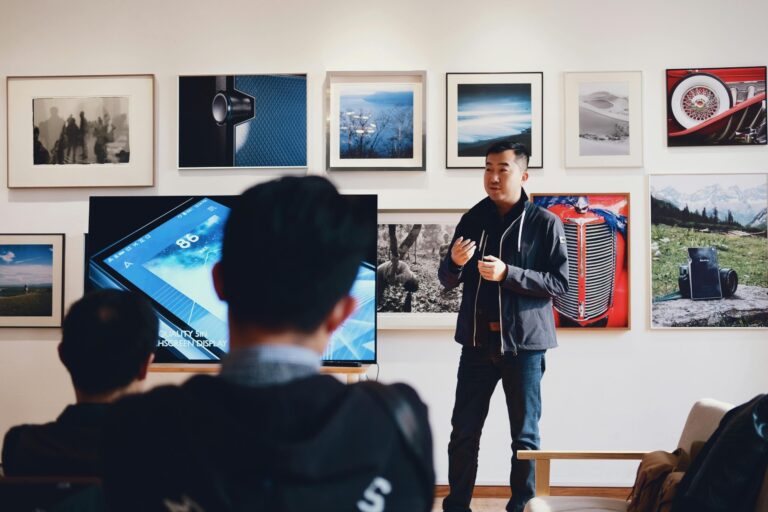
Streets Ahead Productions is an independent production company built around character-driven storytelling, the kind that rewards patience, observation, and emotional depth over spectacle. For introverts who’ve long felt that mainstream entertainment moves too fast and speaks too loud, this studio’s approach offers something genuinely different: stories that breathe, characters who think before they act, and narratives that trust the audience to sit with complexity.
What makes Streets Ahead Productions worth paying attention to isn’t just the content itself. It’s what the studio’s philosophy reflects about how introverts actually consume and process storytelling, and why certain kinds of creative work resonate so deeply with people who do their best thinking quietly.

If you’re exploring tools and resources that genuinely support the way introverts think and recharge, our Introvert Tools & Products Hub covers everything from digital apps to sensory management, all curated around how introverts actually function rather than how the world assumes they should.
What Is Streets Ahead Productions and Why Does It Matter to Introverts?
There’s a particular kind of fatigue that comes from consuming content designed for people who process the world differently than you do. Fast cuts, constant noise, plots that prioritize action over interiority. After two decades running advertising agencies, I watched countless creative briefs get stripped of their nuance in favor of what the room called “energy.” What they meant was volume. What they lost was depth.
What drains your social battery?
Not all social exhaustion is the same. Our free quiz identifies your specific drain pattern and gives you personalised recharging strategies.
Find Your Drain PatternUnder 2 minutes · 8 questions · Free
Streets Ahead Productions operates from a different set of assumptions. The company focuses on projects where character interiority matters, where silence carries weight, and where the audience is trusted to fill in emotional gaps rather than having every feeling underscored and explained. That’s a creative philosophy that maps directly onto how many introverts experience both art and life.
I’ve always been drawn to creative work that respects the observer’s inner life. As an INTJ, my natural mode is to watch, absorb, and process before responding. Mainstream entertainment often treats that process as a problem to be solved with more stimulation. Independent studios like Streets Ahead treat it as the point.
The connection between introversion and certain creative sensibilities isn’t accidental. Work published in PubMed Central on personality and information processing suggests that introverts tend to engage more deeply with stimuli over time, rather than seeking novelty for its own sake. That’s exactly the kind of audience that character-driven independent production is made for.
How Does Quiet Storytelling Actually Work for Introverted Audiences?
Quiet storytelling isn’t the same as slow storytelling, and that distinction matters. Some of the most emotionally intense work I’ve ever encountered moves at a deliberate pace while carrying enormous internal pressure. The tension lives inside the characters rather than in external events. For introverts who spend significant energy managing their own internal worlds, that kind of narrative feels familiar in a way that’s almost physical.
During my agency years, I worked with a creative director who had a phrase she used when reviewing scripts: “Where does the character go when no one’s watching?” She meant it literally. What does this person do alone? What do they think about? What do they want that they’d never say out loud? Those questions animated the best work we produced, and they’re the same questions that character-driven independent production asks by design.

Introverts often find that stories prompt a kind of internal dialogue that extends well beyond the viewing experience. A film or series that raises genuine questions about identity, belonging, or emotional honesty can stay active in the mind for days. That’s not passive consumption. It’s a form of processing, and it’s one of the reasons many introverts find journaling after watching something meaningful to be genuinely useful. If you’re looking for tools to support that kind of reflection, the roundup of journaling apps that actually help introverts process is a solid starting point.
The introverted engagement with storytelling also tends to be cumulative. Rather than moving quickly from one piece of content to the next, many introverts return to the same films, series, or books repeatedly, finding new layers each time. That behavior is entirely consistent with how introversion functions as a processing style, not a limitation, but a different and often richer relationship with meaning-making.
What Does Independent Production Offer That Mainstream Content Often Doesn’t?
Mainstream content production operates under enormous commercial pressure. The notes that come back from studios and networks almost always push in the same direction: faster, louder, clearer, more. I saw the same dynamic in advertising. Clients who were initially drawn to a subtle, intelligent campaign would get nervous in pre-production and start asking for more explicit messaging, more energy, more reassurance that the audience would “get it.”
The result, in both advertising and entertainment, is content that’s been optimized for the most distracted possible viewer. Which means it often fails the engaged one.
Independent production companies work under different constraints. Without the same commercial pressure to appeal to the broadest possible audience, they can make choices that serve a specific kind of viewer. They can let a scene breathe. They can trust subtext. They can cast actors whose strength lies in stillness rather than performance. These aren’t compromises. They’re creative decisions that require more confidence, not less.
For introverts who’ve spent years feeling like they were watching content designed for someone else, independent work can feel like finally being spoken to directly. Psychology Today has written about why introverts crave depth in their interactions, and the same principle applies to creative consumption. Surface-level entertainment satisfies a surface-level need. Depth satisfies something more essential.
How Does the Streets Ahead Approach Reflect Introvert Strengths in Creative Work?
One of the things I’ve come to appreciate about my own introversion is how it shaped the way I approached creative strategy. While extroverted colleagues were often brilliant at generating energy in a room and building momentum through collaboration, my strength was in the long view. I’d sit with a brief for days before speaking up, and when I did, I’d usually found an angle that the faster conversations had skipped past.
That same capacity for sustained attention and pattern recognition shows up in the best independent creative work. The ability to notice what’s beneath the surface, to observe rather than perform, to let meaning accumulate rather than announce itself. These are introvert strengths, and they’re also the qualities that make certain kinds of storytelling genuinely powerful.

Many introverts who work in creative fields find that their best work emerges from extended periods of solitary observation and reflection rather than from collaborative brainstorming sessions. The advertising industry tends to fetishize the latter, but some of the most effective campaigns I’ve seen were born in someone’s quiet office at seven in the morning, not in a conference room at two in the afternoon.
Streets Ahead Productions, in its emphasis on character interiority and deliberate pacing, creates space for that same kind of reflective engagement on the audience’s side. It’s a creative feedback loop: quiet work invites quiet attention, which generates deeper meaning, which rewards the kind of viewer who was paying attention in the first place.
For introverts who want to support their own creative and reflective practices, having the right digital tools matters. The guide to introvert apps that match how you actually think covers options that work with your processing style rather than against it.
Why Do Introverts Often Feel Overstimulated by Mainstream Entertainment?
There’s a real physiological dimension to this that often gets overlooked in conversations about creative preferences. Introverts tend to be more sensitive to stimulation generally, which means that the sensory intensity of mainstream entertainment, the compressed editing, the constant musical underlining of emotion, the sheer volume of information being delivered per minute, can be genuinely exhausting rather than engaging.
I noticed this pattern in myself long before I had language for it. After a day of client meetings and presentations, the last thing I wanted was to come home to something loud and fast. What I wanted was something that asked me to pay attention rather than demanding it. Something that offered a quiet room to think in rather than a crowded one to escape from.
For highly sensitive people, this dynamic is even more pronounced. The overlap between introversion and high sensitivity is significant, and the sensory demands of certain kinds of entertainment can cross from stimulating into overwhelming. Managing noise sensitivity as an HSP is a real and practical challenge, and it extends to how people engage with media as much as how they manage their physical environments.
Independent production tends to be more measured in its sensory demands. Not because it lacks ambition, but because it’s working toward a different kind of impact. Emotional resonance rather than sensory overwhelm. That distinction matters enormously to viewers who are already managing a high baseline of internal stimulation.
Research indexed in PubMed Central on sensory processing sensitivity points to meaningful differences in how highly sensitive individuals respond to environmental and emotional stimuli, differences that show up in creative preferences as much as in everyday life management.
What Can Introverts Take From the Streets Ahead Philosophy Into Their Own Lives?
The creative philosophy behind Streets Ahead Productions isn’t just relevant to how introverts consume content. It maps onto how many introverts do their best work, build their most meaningful relationships, and find their way through environments that weren’t designed with them in mind.
Depth over breadth. Observation before reaction. Trust in subtext. Patience with complexity. These aren’t just storytelling principles. They’re descriptions of how introverts naturally operate when they’re given the space to do so.

One of the things I’ve tried to do throughout my career, with mixed success early on and more consistent results later, is apply that same philosophy to how I ran my teams. Instead of performing extroverted leadership, I leaned into what I actually did well: asking the question that nobody else had thought to ask, staying with a problem longer than was comfortable, and creating space for the quieter voices in the room to be heard.
That approach didn’t always land well in agency culture, which tends to reward visible energy and immediate contribution. But the work it produced was consistently stronger. And the people who thrived under that style of leadership were often the ones who’d been waiting their whole careers for someone to tell them that thinking carefully before speaking was a feature, not a flaw.
For introverts who are building their own creative practices, whether that’s writing, filmmaking, design, or something else entirely, the Streets Ahead model offers a useful frame. You don’t have to produce work that’s optimized for the most distracted possible audience. You can make something that rewards attention. And you can trust that the right audience will find it.
Supporting that kind of sustained creative practice often means having the right infrastructure in place. The overview of journaling tools that actually work for introverts is worth exploring if you’re looking to build a more consistent reflective practice around your creative work.
How Does Watching Thoughtful Content Support Introvert Mental Health?
There’s a difference between passive consumption and active engagement, and it’s a distinction that matters for mental health as much as for creative appreciation. Watching something that genuinely challenges you to think, feel, and interpret is a form of cognitive and emotional exercise. It builds the same muscles that introverts use in their best conversations and their most productive solitary work.
Content that resonates emotionally can also serve as a kind of external reference point for internal experiences that are hard to articulate. Many introverts struggle to name what they’re feeling in real time, processing emotion more slowly and thoroughly than they express it outwardly. A film or series that captures a particular emotional state with precision can function almost like a translator, giving language to something that was previously wordless.
That’s not a trivial function. For introverts who are also highly sensitive, having access to emotional vocabulary and reference points can make a real difference in how they manage their inner lives. The HSP mental health toolkit covers a range of tools and approaches for people who process emotion deeply and need support structures that match that depth.
Beyond the emotional processing function, there’s also something to be said for the simple restorative value of consuming content that doesn’t demand more than you have to give. After a week of high-stakes client presentations, I’d often spend Saturday morning watching something quiet and character-driven, not as escapism, but as genuine recovery. The right kind of content can be a form of rest.
That’s a point worth making explicitly, because introverts often feel guilty about the time they spend consuming media rather than producing or socializing. Reframing that time as legitimate restoration rather than avoidance changes the relationship to it entirely.
What Role Does Independent Creative Work Play in the Broader Introvert Experience?
Independent creative work, whether you’re making it or consuming it, occupies a particular place in the introvert experience because it operates outside the systems that typically reward extroverted behavior. The mainstream entertainment industry, like most industries, tends to amplify the voices that are already loudest. Independent production creates a parallel track where different values can operate.
That parallel track matters beyond entertainment. It’s a demonstration that depth and subtlety can sustain a creative enterprise, that there’s an audience for work that asks more of its viewers, and that the qualities introverts bring to creative work, observation, patience, interiority, are genuinely valuable rather than merely tolerated.

I spent a long time in my career trying to make myself more palatable to environments that valued extroversion. I got better at it, in the way that you get better at anything you practice consistently. But the work I’m most proud of came from leaning into what I actually am rather than performing what the room expected. That’s a lesson that took longer than it should have.
Studios and production companies that operate from a similar philosophy, trusting their own sensibility rather than chasing the broadest possible appeal, tend to produce work with a longer shelf life. Not always a wider audience, but a more devoted one. And for introverts who’ve always preferred depth of connection over breadth of it, that trade-off makes complete sense.
Managing the productivity side of creative work is its own challenge for introverts, particularly when the tools available were designed for a different kind of thinker. The analysis of why most productivity apps drain introverts is worth reading before you invest time in systems that might work against your natural processing style rather than with it.
The independent creative space also tends to be more hospitable to introverted professionals. Frontiers in Psychology has published work on personality traits and creative environments that speaks to how different personality types thrive under different working conditions. Independent production, with its emphasis on sustained focus and collaborative depth over performative energy, tends to create conditions where introverts do their best work.
For introverts considering creative careers more broadly, the path through independent work, whether as a creator, collaborator, or deeply engaged audience member, offers something the mainstream rarely does: a context where your natural strengths are the point rather than the exception.
There’s also a professional development dimension worth naming. Introverts who build their creative sensibility through sustained engagement with thoughtful independent work are developing the same observational and analytical skills that serve them in business contexts. Rasmussen College has written about how introverts bring distinctive strengths to marketing and creative strategy, strengths that are cultivated through exactly the kind of deep engagement that independent creative work invites.
And for introverts in leadership or client-facing roles, the capacity for emotional attunement and subtext-reading that comes from years of engaging with character-driven work translates directly into professional effectiveness. Harvard’s Program on Negotiation has examined whether introverts face disadvantages in high-stakes conversations, and the findings are more nuanced than the conventional wisdom suggests. The same qualities that make someone a perceptive audience member often make them a more effective negotiator.
What Streets Ahead Productions represents, beyond any specific project or title, is a proof of concept. Quiet work can find its audience. Depth can sustain a creative enterprise. And the introverts who’ve always known that the most interesting things happen beneath the surface were right all along.
There’s more to explore across the full range of introvert-friendly resources, tools, and approaches at the Introvert Tools & Products Hub, where everything is organized around how introverts actually think and recharge rather than how they’re expected to.
Running on empty?
Five drain profiles, each with specific triggers, warning signs, and a recharging playbook.
Take the Free QuizUnder 2 minutes · 8 questions · Free
About the Author
Keith Lacy is an introvert who’s learned to embrace his true self later in life. After 20 years in advertising and marketing leadership, including running agencies and managing Fortune 500 accounts, Keith now channels his experience into helping fellow introverts understand their strengths and build fulfilling careers. As an INTJ, he brings analytical depth and authentic perspective to every article, drawing from both professional expertise and personal growth.
Frequently Asked Questions
What is Streets Ahead Productions?
Streets Ahead Productions is an independent production company focused on character-driven storytelling. Its creative philosophy emphasizes emotional depth, narrative patience, and trust in the audience’s capacity to engage with complexity, qualities that tend to resonate strongly with introverted viewers who find mainstream content overstimulating or emotionally thin.
Why do introverts tend to prefer independent or character-driven content?
Introverts typically process information and emotion more deeply than extroverts, which means they often find greater satisfaction in content that rewards sustained attention. Character-driven independent work tends to prioritize interiority, subtext, and emotional complexity over sensory stimulation and rapid pacing, making it a natural fit for how introverts engage with storytelling.
Can watching thoughtful films and series genuinely support introvert mental health?
Yes, in several meaningful ways. Emotionally resonant content can help introverts find language for internal experiences that are difficult to articulate, provide legitimate cognitive and emotional restoration after socially demanding periods, and reinforce the sense that depth and interiority are valued rather than marginal. For highly sensitive introverts especially, the right kind of content can function as genuine recovery rather than passive avoidance.
How does the introvert experience of overstimulation affect media consumption choices?
Introverts, and particularly highly sensitive people, tend to reach their stimulation threshold more quickly than extroverts. Mainstream entertainment, with its compressed editing, constant audio underlining of emotion, and high information density per minute, can push past that threshold into exhaustion rather than engagement. Independent content that moves more deliberately and trusts silence tends to stay within a more comfortable range, allowing for genuine absorption rather than sensory management.
What introvert strengths does character-driven creative work draw on and develop?
Sustained attention, observational depth, comfort with ambiguity, and the capacity to read subtext are all introvert strengths that both inform and are strengthened by engagement with character-driven work. These same qualities translate directly into professional effectiveness in creative strategy, negotiation, leadership, and any context that rewards careful observation over performative energy. Engaging consistently with thoughtful independent work is, in a real sense, practice for the kind of deep engagement that introverts bring to everything they do.