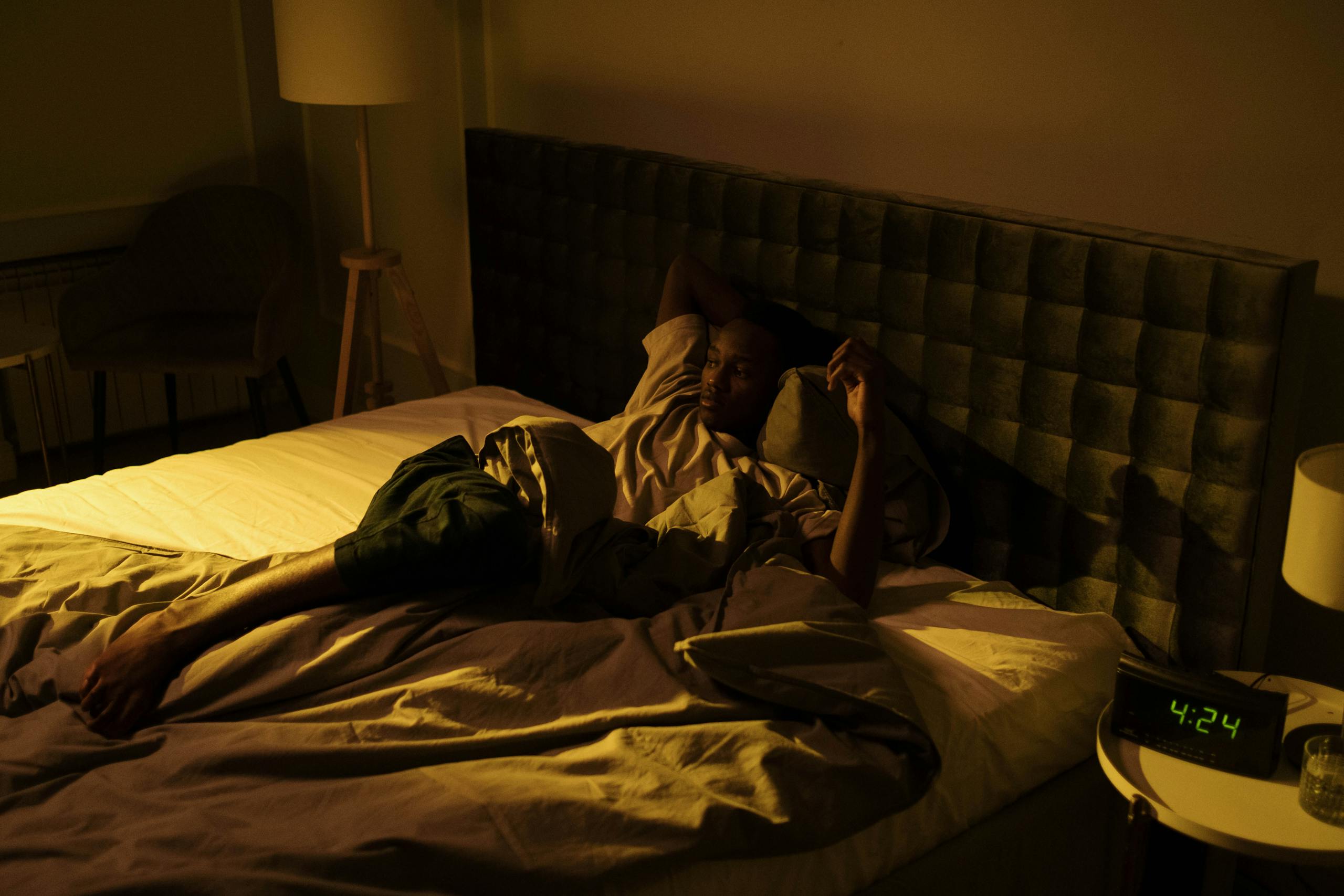

The Andrew Kukes Foundation for Social Anxiety is a nonprofit organization dedicated to raising awareness, funding research, and expanding access to treatment for one of the most misunderstood mental health conditions affecting millions of people worldwide. Founded in memory of Andrew Kukes, who lived with severe social anxiety disorder before dying by suicide in 2009, the foundation works to ensure that others have access to the help he never received in time.
Social anxiety disorder is far more than shyness or introversion. It is a recognized clinical condition that can make ordinary social situations feel genuinely threatening, and for many people, it goes undiagnosed and untreated for years. The Andrew Kukes Foundation exists to close that gap.

If you are exploring the broader landscape of mental health as an introvert, our Introvert Mental Health Hub brings together articles on anxiety, emotional processing, sensory sensitivity, and more. Social anxiety sits at an important intersection of those themes, and understanding the organizations working to address it is part of building a fuller picture.
Who Was Andrew Kukes, and Why Does His Story Matter?
Andrew Kukes was a young man from New Jersey who struggled with severe social anxiety disorder for most of his life. His condition made everyday interactions feel overwhelming, and despite his family’s efforts to find him adequate care, the resources available were not enough. He died by suicide in 2009 at the age of 26. His parents, Steve and Shirley Kukes, channeled their grief into action and founded the Andrew Kukes Foundation for Social Anxiety in his honor.
What’s your personality type?
Take our free 40-question assessment and get a detailed personality profile with dimension breakdowns, context analysis, and personalised insights.
Discover Your Type8-12 minutes · 40 questions · Free
His story hits close to home for me, not because I experienced social anxiety at the clinical level Andrew did, but because I spent years operating in environments where I masked discomfort so thoroughly that I had no real language for what I was experiencing. Running advertising agencies meant constant client presentations, new business pitches, and networking events. I moved through all of it on autopilot, performing a version of confidence I had constructed carefully over time. It worked, mostly. But I never asked myself what it was costing me.
Andrew Kukes never got the chance to ask that question either, or to find answers that might have helped. That is what makes his foundation’s work so important. It is not abstract advocacy. It is a direct response to a life cut short by a condition that still carries enormous stigma and receives far too little attention.
What Does the Andrew Kukes Foundation Actually Do?
The foundation operates across three core areas: awareness, research, and access to treatment. Each one addresses a different barrier that prevents people with social anxiety disorder from getting help.
Awareness work focuses on educating the public about what social anxiety disorder actually is, separate from the common misconception that it is simply being shy or introverted. The American Psychological Association draws a clear distinction between shyness and social anxiety disorder, noting that shyness is a personality trait while social anxiety disorder is a clinical condition that causes significant functional impairment. The foundation works to make that distinction visible in public conversation.
Research funding is another pillar of the foundation’s work. Social anxiety disorder is one of the most common anxiety disorders, yet it has historically received less research attention than conditions like depression or generalized anxiety. The foundation supports scientific investigation into the causes, mechanisms, and treatments for social anxiety, helping to build the evidence base that clinicians and policymakers rely on.
Access to treatment may be the most urgent piece. Many people with social anxiety disorder never receive a diagnosis, and many who do receive one cannot access affordable, effective care. The foundation works to address that gap by connecting people with resources and advocating for broader availability of evidence-based treatments.

Why Social Anxiety Is So Often Invisible Until It Isn’t
One of the things that strikes me most about social anxiety disorder is how effectively people can hide it. I managed teams of twenty or thirty people at peak agency size. Some of the most capable people I worked with were quietly suffering in ways I never recognized at the time. A brilliant strategist who consistently avoided client-facing work. A copywriter who produced exceptional output remotely but froze in group critiques. A junior account manager who resigned after a particularly brutal new business pitch, citing “a need for a different environment.”
Looking back with what I know now, I wonder how many of those situations involved unaddressed social anxiety rather than simple preference or personality. The condition is extraordinarily good at disguising itself as something more acceptable: introversion, professionalism, preference for written communication, high standards. It can look like competence from the outside while being debilitating on the inside.
The American Psychological Association describes anxiety disorders as involving excessive fear and anxiety that interfere with functioning, and social anxiety disorder specifically involves intense fear of social situations where one might be scrutinized or judged. That fear is not a personality quirk. It is a clinical experience that deserves clinical attention.
For people who are also highly sensitive, the experience can be compounded in particular ways. Highly sensitive people process emotional information more deeply, which means social threat cues can feel more vivid and more persistent. If you have ever felt like you absorb the tension in a room before anyone else seems to notice it, you may recognize what I mean. That kind of deep empathy can be a genuine strength, but it also makes social environments more taxing to process.
How Social Anxiety Differs From the Introvert Experience
This distinction matters enormously, both for individuals trying to understand themselves and for foundations like Andrew Kukes’s trying to reach the right people with the right message.
As an INTJ, I prefer depth over breadth in social interaction. I find large gatherings draining and one-on-one conversations energizing. I need significant amounts of solitude to think clearly and do my best work. None of that is anxiety. It is preference, wiring, temperament. I am not afraid of social situations in the clinical sense. I simply find many of them inefficient and exhausting.
Social anxiety disorder involves fear. Genuine, physiological, sometimes overwhelming fear of situations where judgment or embarrassment might occur. Psychology Today explores this distinction thoughtfully, pointing out that introverts can have social anxiety, and people with social anxiety can be extroverted. The two are not the same thing, and conflating them does harm to both groups.
That said, the overlap is real enough that many introverts spend years wondering whether what they experience is preference or pathology. The Andrew Kukes Foundation’s awareness work helps people ask that question more clearly and find credible answers.
For highly sensitive people in particular, the line can feel blurry. HSP anxiety has its own texture and complexity that deserves careful attention rather than quick categorization. Knowing the difference between being wired for depth and experiencing clinical anxiety is not always straightforward, and foundations like this one help create the conditions where people can get accurate answers.

The Treatment Gap That the Foundation Is Working to Close
One of the most striking things about social anxiety disorder is how treatable it is relative to how undertreated it remains. Evidence-based approaches exist, including cognitive behavioral therapy and certain medications, yet many people with the condition go years without receiving either.
Harvard Health outlines several treatment approaches for social anxiety disorder, noting that cognitive behavioral therapy is among the most well-supported interventions. The challenge is not the absence of effective treatments. The challenge is that people cannot access what they do not know exists, or cannot afford, or feel too ashamed to seek out.
Shame is a particularly cruel feature of social anxiety disorder. The condition makes people afraid of being judged, and then the condition itself becomes something they fear being judged for. Seeking help requires doing the very thing the disorder makes hardest: being visible, being vulnerable, admitting struggle in a context where another person’s response matters enormously.
I think about the people I managed over the years who quietly left rather than ask for accommodations or support. Some of them were almost certainly dealing with more than introversion or preference. The culture I operated in, fast-paced advertising agencies with open floor plans and constant collaboration, was not designed with their needs in mind. And I was not yet equipped to recognize what I was seeing.
The Andrew Kukes Foundation works to change the conditions that make that kind of silent suffering so common. By funding research, they help build a stronger evidence base. By raising awareness, they reduce the stigma that keeps people from seeking care. By advocating for access, they work to make treatment available to people who might otherwise never find it.
What Highly Sensitive People Should Know About Social Anxiety
Highly sensitive people are not automatically more prone to social anxiety disorder, but their nervous systems do process social information more intensely. That intensity has real implications for how they experience environments, relationships, and perceived threat.
When a highly sensitive person walks into a crowded room, they are often processing more data than others around them. The ambient noise, the emotional undertones in conversations nearby, the facial expressions of people across the space. That is not pathology. It is a different perceptual style. But it can create conditions where social environments feel genuinely overwhelming in ways that are hard to explain to people who do not share that wiring. Understanding how to manage sensory overload becomes a practical skill rather than an optional one.
Highly sensitive people also tend to process emotional experiences more thoroughly after the fact. A difficult conversation does not end when it ends. It continues to be examined, replayed, and analyzed for meaning. That depth of emotional processing can be a source of genuine insight, but it can also amplify the impact of negative social experiences in ways that take real time to work through.
Rejection is one area where this plays out particularly visibly. A critical comment from a colleague, a pitch that falls flat, a relationship that ends abruptly. For highly sensitive people, those experiences carry significant weight, and processing rejection and healing from it often requires more intentional care than standard advice accounts for.
None of this means that highly sensitive people have social anxiety disorder. But it does mean that the overlap between high sensitivity and social anxiety is worth understanding clearly, for the sake of accurate self-knowledge and appropriate help-seeking when needed.

The Role of Perfectionism in Keeping Social Anxiety Hidden
There is a pattern I noticed repeatedly in agency environments: the people who appeared most polished were sometimes the ones carrying the heaviest internal load. Perfectionism and social anxiety have a complicated relationship. Perfectionism can be a coping mechanism, a way of trying to eliminate the possibility of judgment by eliminating the possibility of error.
I watched this play out in a senior creative director I worked with for several years. Her work was extraordinary. Her presentations were flawless. She revised copy until it was nearly impossible to critique. What looked like professional excellence from the outside was, I eventually understood, partly driven by a terror of being found inadequate. The higher the standard she set, the safer she felt. Except that it was never quite safe enough.
That dynamic, where perfectionism becomes a kind of armor against social judgment, is worth examining honestly. Breaking free from perfectionism’s grip often requires understanding what the high standards are actually protecting against. For some people, that answer leads directly toward social anxiety and the fear of exposure that drives it.
The Andrew Kukes Foundation’s awareness work matters here because it creates more language and more cultural permission for people to name what they are actually experiencing. When perfectionism is understood as a symptom rather than a virtue, people have a better chance of getting to the root of what is driving it.
What the Science Tells Us About Social Anxiety Disorder
Social anxiety disorder is one of the most common mental health conditions globally. It typically emerges in adolescence, though it can develop at any age, and it has a tendency to persist without treatment. The condition involves heightened reactivity to social threat cues, a pattern that has neurological underpinnings worth understanding.
Research published in PubMed Central has examined the neural correlates of social anxiety, pointing to the amygdala’s role in processing perceived social threat. The amygdala responds to cues of danger, and in people with social anxiety disorder, social situations can trigger that threat response even when no objective danger is present. That is not weakness. It is a nervous system responding according to patterns it has learned, and those patterns can be changed with the right support.
Additional work published in PubMed Central has explored how cognitive behavioral therapy works to address the thought patterns and avoidance behaviors that maintain social anxiety over time. The evidence for CBT in this context is among the strongest in the anxiety treatment literature. That matters because it means people who seek treatment have genuine reason for optimism.
What the science also tells us is that early intervention matters. The longer social anxiety disorder goes untreated, the more entrenched the avoidance patterns become, and the more areas of life they affect. The Andrew Kukes Foundation’s emphasis on awareness is not just about reducing stigma in the abstract. It is about shortening the time between symptom onset and treatment, which has real consequences for outcomes.
How to Support the Foundation’s Work
The Andrew Kukes Foundation for Social Anxiety operates as a nonprofit, which means its work depends on public support. There are several ways to engage with what they are doing, depending on where you are and what resources you have available.
Direct financial support funds research and awareness initiatives. Even modest contributions, when aggregated across a community of people who care about this issue, make a meaningful difference in what the foundation can accomplish. Their website provides information on how to donate and what programs the funding supports.
Awareness is another form of support that costs nothing but attention. Sharing accurate information about social anxiety disorder, correcting misconceptions when they come up in conversation, and treating the condition with the same seriousness as other mental health challenges all contribute to the cultural shift the foundation is working toward.
If you are in a leadership position, as I was for many years, there is something specific you can do: create environments where people feel safe enough to name what they are dealing with. That does not require a clinical background. It requires paying attention, asking genuine questions, and resisting the impulse to interpret struggle as weakness. Some of the most capable people I worked with needed accommodation more than they needed advice. Most of them never asked for it because the environment made asking feel too costly.
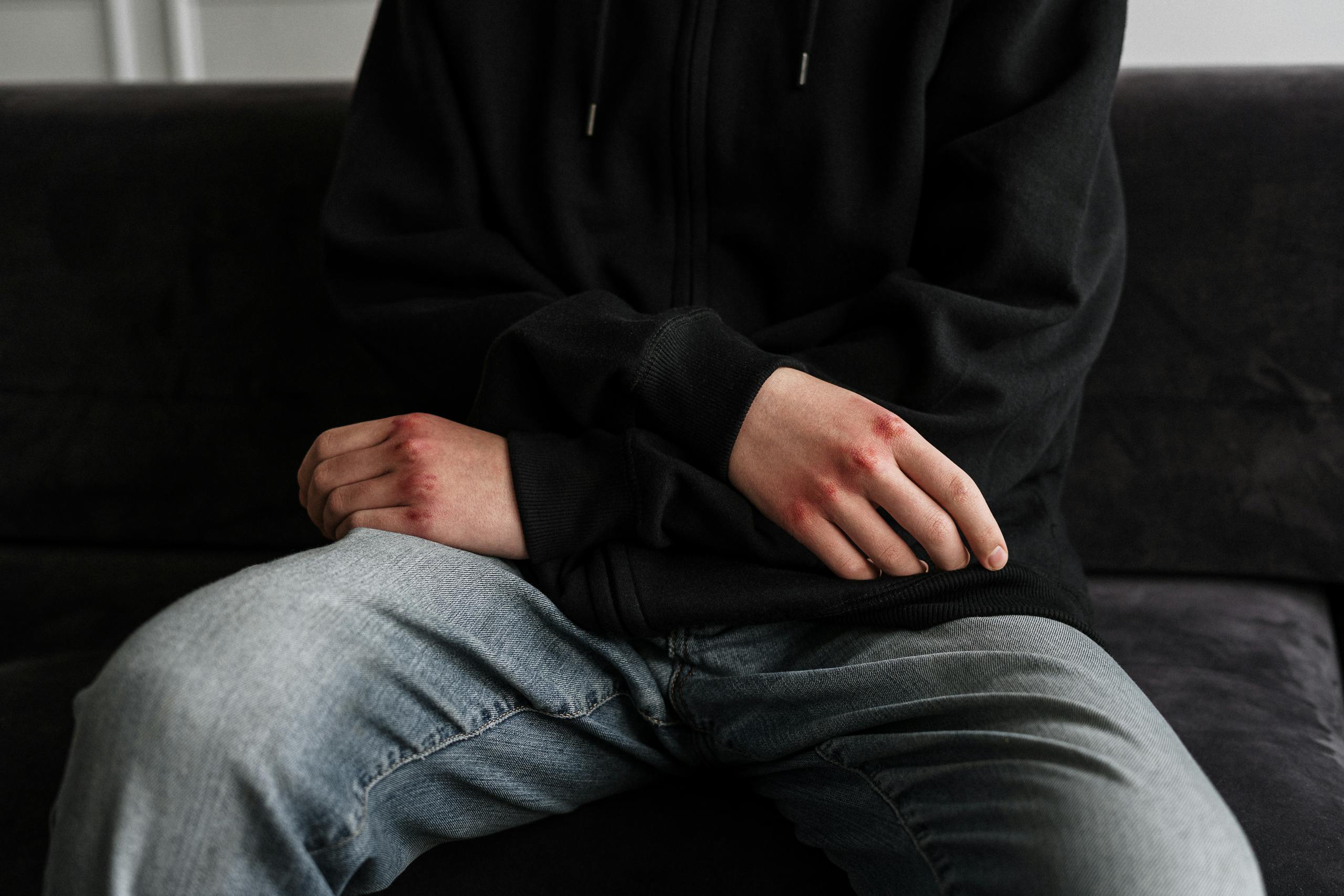
Finding Your Own Footing When Social Anxiety Is Part of the Picture
Whether you are dealing with social anxiety disorder yourself, supporting someone who is, or simply trying to understand the landscape better, a few things are worth holding onto.
First, accurate language matters. Calling social anxiety “just shyness” or conflating it with introversion does not help anyone. The distinction between a personality trait and a clinical condition is not semantic. It determines whether someone gets appropriate help or spends years managing something that could be treated.
Second, the experience of social anxiety is not a character flaw. It is a nervous system pattern that developed for reasons, often in response to early experiences of threat or judgment, and it can be changed. That is not a small thing. It is genuinely hopeful information for people who have spent years believing that what they feel in social situations is simply who they are.
Third, organizations like the Andrew Kukes Foundation exist because individuals and families decided that grief could become purpose. Steve and Shirley Kukes lost their son and responded by building something that might prevent another family from experiencing the same loss. That is worth acknowledging, and worth supporting.
I spent a long time in my career believing that managing discomfort was the same as being fine. It is not. Getting curious about what is actually happening, finding accurate language for it, and seeking appropriate support when needed, those are not signs of weakness. They are signs of someone paying honest attention to their own experience. Andrew Kukes deserved the chance to do that. The foundation in his name is working to make sure more people get that chance.
There is much more to explore across the full range of these topics. Our Introvert Mental Health Hub covers anxiety, emotional sensitivity, perfectionism, and the many ways introverts experience and process their inner lives. If today’s article opened a door, that hub is a good place to keep walking.
About the Author
Keith Lacy is an introvert who’s learned to embrace his true self later in life. After 20 years in advertising and marketing leadership, including running agencies and managing Fortune 500 accounts, Keith now channels his experience into helping fellow introverts understand their strengths and build fulfilling careers. As an INTJ, he brings analytical depth and authentic perspective to every article, drawing from both professional expertise and personal growth.
Frequently Asked Questions
What is the Andrew Kukes Foundation for Social Anxiety?
The Andrew Kukes Foundation for Social Anxiety is a nonprofit organization founded in memory of Andrew Kukes, who died by suicide in 2009 after living with severe social anxiety disorder. The foundation works to raise awareness about social anxiety disorder, fund research into its causes and treatments, and expand access to care for people who might not otherwise receive it.
Is social anxiety disorder the same as being introverted?
No. Introversion is a personality trait characterized by a preference for quieter, less stimulating environments and a tendency to recharge through solitude. Social anxiety disorder is a clinical condition involving intense fear of social situations where one might be judged or embarrassed. An introvert may prefer small gatherings without experiencing clinical anxiety, while someone with social anxiety disorder may find even routine social interactions genuinely threatening regardless of their personality type.
How is social anxiety disorder treated?
Cognitive behavioral therapy is among the most well-supported treatments for social anxiety disorder, helping people identify and change the thought patterns and avoidance behaviors that maintain the condition. Certain medications, including selective serotonin reuptake inhibitors, are also used in treatment. Many people benefit from a combination of therapeutic and pharmacological approaches, and early intervention tends to produce better outcomes than delayed treatment.
How can highly sensitive people tell if they have social anxiety disorder?
Highly sensitive people process sensory and emotional information more deeply than others, which can make social environments more tiring and sometimes more distressing. That experience is not automatically social anxiety disorder. The key distinction is whether the distress involves significant fear of judgment or humiliation, whether it causes functional impairment in work or relationships, and whether it persists across many different social situations. A qualified mental health professional is best positioned to make that distinction accurately.
How can I support the Andrew Kukes Foundation for Social Anxiety?
Direct financial donations fund the foundation’s research and awareness work. Beyond financial support, spreading accurate information about social anxiety disorder, correcting common misconceptions in everyday conversation, and creating more understanding environments in workplaces and communities all contribute to the cultural shift the foundation is working toward. For those in leadership positions, building environments where people feel safe enough to name their struggles is a meaningful form of support that does not require a clinical background.