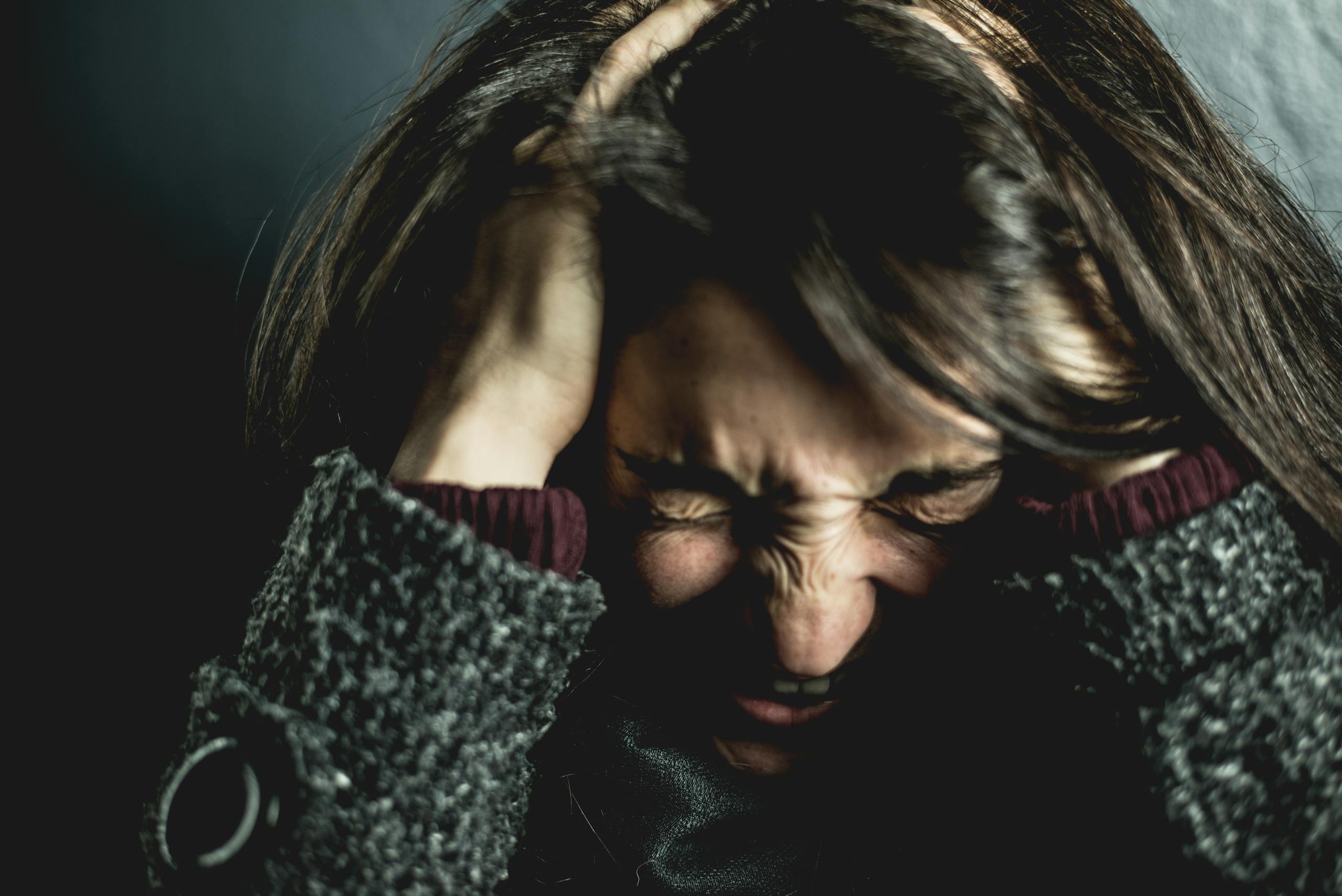

Anxiety created by the fear of social interactions isn’t simply shyness with a louder voice. At its core, it’s a nervous system response, a threat signal firing before you’ve even walked through the door, telling you that something in the social environment ahead poses real danger. Many introverts carry this quietly for years, unsure where their natural preference for solitude ends and genuine fear begins.
What makes this particularly complex is that the fear isn’t always rational, and it doesn’t always announce itself clearly. Sometimes it shows up as a tightened chest before a meeting. Sometimes it’s the mental rehearsal you run the night before a dinner party, scripting every possible conversation so nothing catches you off guard. And sometimes it’s the relief you feel when plans fall through, a relief that feels good in the moment but slowly shrinks your world.
I spent a long time confusing these two things in myself. Running advertising agencies for two decades meant I was constantly surrounded by social performance, client pitches, agency reviews, networking events, and team dynamics that demanded visible presence. I thought the dread I felt before those situations was just introversion. It wasn’t always. Some of it was fear, and that distinction matters enormously.
If you’ve been sorting through questions about your mental health as an introvert, our Introvert Mental Health Hub covers the full range of experiences that quiet people carry, from sensory overwhelm to emotional processing to anxiety. This article focuses on one specific thread: how fear of social interactions generates anxiety, and what that cycle actually looks like from the inside.
Where Does the Fear Actually Come From?
Fear of social interactions rarely appears out of nowhere. It builds through accumulated experiences: the comment that landed wrong in a meeting, the party where you felt invisible, the presentation where your voice shook and you watched someone in the front row check their phone. Each experience gets filed somewhere in the nervous system, and over time, the brain starts pattern-matching. Social situation equals potential threat.
What’s your personality type?
Take our free 40-question assessment and get a detailed personality profile with dimension breakdowns, context analysis, and personalised insights.
Discover Your Type8-12 minutes · 40 questions · Free
The American Psychological Association describes anxiety as involving persistent, excessive worry that’s difficult to control, often accompanied by physical symptoms like muscle tension, fatigue, and sleep disruption. What’s worth noting is that word “excessive,” because from the inside, the worry rarely feels excessive. It feels proportional. It feels like preparation.
That’s what makes socially-driven anxiety so hard to catch in yourself. The brain presents it as logic. You’re not catastrophizing, you’re planning. You’re not avoiding, you’re protecting your energy. The narrative is convincing, and for introverts especially, it borrows the language of self-care and boundaries to disguise what is sometimes plain fear.
Early in my agency career, I managed a creative director who was an INFJ. Watching her before client presentations was instructive. She would spend days anticipating every possible emotional undercurrent in the room, every potential misread, every moment where the relationship might fracture. She was processing deeply, which is how INFJs are wired, but she was also feeding a fear cycle. The preparation never felt like enough, because fear doesn’t have a finish line. As an INTJ, my version looked different. I over-engineered the logic of the pitch instead. Different wiring, same underlying anxiety mechanism.
How Sensitivity Amplifies Social Fear
Not every introvert experiences social anxiety, and not every person with social anxiety is an introvert. But there’s a meaningful overlap worth examining, particularly among those who are also highly sensitive. Highly Sensitive People process sensory and emotional information more deeply than most, which means a crowded room isn’t just loud, it’s overwhelming on multiple levels simultaneously.
If you’ve ever felt your anxiety spike in environments that others seem to handle without effort, HSP overwhelm and sensory overload may be part of what’s driving that response. The nervous system of a highly sensitive person is processing far more data per second than average, and social environments are dense with data: facial expressions, vocal tones, ambient noise, unspoken tensions, competing conversations. When the system is already running hot, fear has less resistance to move through.
There’s also the emotional dimension. Highly sensitive people tend to feel their own emotions intensely, and they’re often acutely aware of others’ emotions too. HSP empathy is genuinely powerful, but it creates a particular kind of social vulnerability. When you can sense that someone in the room is irritated or disappointed, even if they haven’t said so, you’re carrying information that most people don’t have access to. That extra weight can make social situations feel higher-stakes than they objectively are.

I’ve watched this play out in hiring decisions over the years. Some of the most perceptive people I ever brought onto my teams were highly sensitive, and they were often the first to pick up on client dissatisfaction or internal team friction. That perceptiveness was an asset. But it also meant they were carrying more emotional load in every room they entered. The anxiety some of them experienced wasn’t weakness. It was the cost of processing at that depth.
The Difference Between Discomfort and Disorder
One of the most important distinctions in this conversation is the line between social discomfort and social anxiety disorder. Discomfort is normal. Most people feel some degree of nervousness before high-stakes social situations. That’s not pathology, that’s human. Social anxiety disorder, as defined in the DSM-5, involves marked and persistent fear or anxiety about social situations in which the person may be scrutinized, with the fear being out of proportion to the actual threat and causing significant impairment in daily functioning.
The impairment piece is worth sitting with. Discomfort that you push through and that doesn’t significantly limit your life is different from anxiety that causes you to decline opportunities, withdraw from relationships, or structure your entire existence around avoidance. Both deserve attention, but they’re not the same thing, and conflating them can lead to either over-pathologizing normal introvert behavior or under-estimating genuine anxiety that warrants real support.
A Psychology Today article on introversion and social anxiety makes the useful point that introverts choose solitude because they find it genuinely energizing, while socially anxious people often want connection but are blocked from it by fear. That’s a meaningful functional difference. An introvert who turns down a party because they’d genuinely rather read is not the same as someone who turns down the party because the thought of going makes them feel sick with dread.
In my own experience, I’ve been both of those people at different points. There were years in my agency life where I declined social invitations because I genuinely wanted solitude after a demanding week. And there were periods where I declined them because I was afraid of the judgment, the performance, the possibility of saying something wrong. Learning to tell those two things apart in myself took longer than I’d like to admit.
How the Fear Cycle Sustains Itself
Anxiety is self-reinforcing in a way that makes it particularly stubborn. Fear of social interactions triggers avoidance. Avoidance prevents you from gathering evidence that the feared situation is actually manageable. Without that evidence, the fear stays large and unchallenged. And because you avoided the situation, you don’t have a bad experience to point to, but you also don’t have a good one. The unknown stays threatening.
There’s also what happens inside the situations you do enter. When anxiety is running, attention narrows. You become hyperaware of yourself, monitoring your words, your facial expressions, how you’re being perceived. That self-focused attention is exhausting, and it actually degrades performance. You’re so busy watching yourself that you stop being fully present in the conversation. Which then gives you something to feel bad about afterward, which feeds the next cycle.
For highly sensitive people, this cycle can be intensified by a particular kind of emotional processing that happens after social events. HSP emotional processing tends to be thorough and layered, meaning the post-event analysis doesn’t stop at “that went fine.” It goes deeper, replaying moments, questioning interpretations, wondering what the other person really meant. That depth of processing is valuable in many contexts, but when it’s fueled by anxiety, it can become a loop that’s hard to exit.

I ran a team of about thirty people at the peak of my agency years, and I watched this cycle operate in real time. One of my account managers, a highly perceptive and sensitive person, would spend days after a difficult client call mentally reconstructing what she should have said differently. The actual call was usually fine. The client was usually satisfied. But her internal processing didn’t have access to that information, because anxiety doesn’t update on evidence the way logic does. It updates on feeling.
When Perfectionism Feeds the Fear
Social fear and perfectionism have a close relationship that doesn’t always get enough attention. When you hold yourself to extremely high standards in social situations, the margin for acceptable performance shrinks. Every conversation becomes a test you could fail. Every interaction carries the weight of evaluation. And because social situations are inherently unpredictable, you can never fully prepare for them, which means you’re always operating with some residual risk of falling short of your own standard.
This is particularly relevant for introverts who are also highly sensitive. HSP perfectionism and high standards can create a social experience that feels like a continuous performance review. You’re not just trying to connect with people, you’re trying to connect perfectly, to say the right thing, read the room accurately, leave the right impression. That’s an enormous cognitive load to carry into any social situation, and it creates exactly the kind of high-stakes framing that makes anxiety worse.
As an INTJ, I’ve had my own version of this. My perfectionism tends to show up as over-preparation, arriving at meetings with more data than anyone needs, rehearsing presentations until they’re airtight, controlling every variable I can control. In social situations where the variables can’t be controlled, that same drive becomes a liability. You can’t prepare your way out of a genuine human interaction. At some point, you have to show up without a script.
The American Psychological Association’s overview of shyness notes that shyness often involves both fear of negative evaluation and a strong desire to make a positive impression. That combination, wanting to be seen positively while fearing you won’t be, is the engine of a lot of socially-driven anxiety. And perfectionism turns up the pressure on both sides of that equation.
The Role of Rejection in Social Fear
Social fear is rarely abstract. At the center of most of it is a specific dread: rejection. The fear that you’ll reach toward connection and be turned away, judged, dismissed, or found wanting. For introverts who already invest significant energy before entering social situations, the prospect of that investment going badly is particularly discouraging.
Rejection hits differently when you process deeply. HSP rejection sensitivity describes the way highly sensitive people often experience social rejection more intensely and for longer than others. A comment that someone else might shake off in an hour can stay with a sensitive person for days, being turned over, reinterpreted, used as evidence in a case against themselves. Over time, that pattern creates a very rational-feeling reason to avoid situations where rejection is possible.
There’s also a memory dimension. The rejections we’ve experienced tend to be more available to us than the acceptances. Before a social event, the nervous system is more likely to surface the time you said something awkward and watched the room go quiet than the dozens of times you had easy, warm conversations. That’s not a character flaw, it’s a survival mechanism that has simply been misapplied to a context where the “threats” are social rather than physical.
Early in my career, I lost a major pitch to a competitor. The client chose them over us after what I thought was a strong presentation. I replayed that pitch for weeks, convinced I’d said something wrong, missed something obvious, failed in some way I hadn’t yet identified. What I know now is that sometimes clients choose differently for reasons that have nothing to do with you. But anxiety doesn’t offer that perspective freely. You have to work for it.

What Anxiety Looks Like When It’s Quiet
Social anxiety doesn’t always look like panic. For many introverts, it presents quietly, in ways that are easy to rationalize or miss entirely. It might look like always arriving early to a party so you can acclimate before the crowd builds, or always having an exit strategy before you walk in. It might look like preparing conversational topics in advance, or steering away from any social situation that feels unpredictable.
It might look like the relief that comes when someone cancels plans, a relief that feels like freedom but is actually avoidance getting its reward. It might look like the way you default to your phone in a group setting, not because you’re rude, but because looking at a screen is less threatening than making eye contact with a stranger. It might look like the careful, meticulous way you craft text messages, editing and re-editing before sending, because written communication feels safer than spoken.
None of these behaviors are inherently problematic. Many of them are sensible adaptations. But when they’re driven by fear rather than preference, they gradually narrow the world. And that narrowing is worth paying attention to, not with judgment, but with curiosity.
Anxiety that presents alongside heightened sensitivity can also include a physical dimension that gets overlooked. HSP anxiety often involves physical symptoms like fatigue after social events, headaches in overstimulating environments, or a general sense of being depleted that goes beyond normal introvert energy management. When the body is consistently signaling distress around social situations, that’s worth taking seriously.
Building a Different Relationship With Social Fear
Addressing anxiety created by social fear isn’t about eliminating the fear. Fear is part of the human operating system, and some degree of social self-consciousness is universal. What’s possible, and what actually helps, is changing your relationship to the fear so it has less authority over your decisions.
One of the most evidence-supported approaches involves gradual, repeated exposure to feared social situations in a context where you’re not trying to perform perfectly, just to be present. Harvard Health notes that cognitive behavioral therapy, particularly exposure-based approaches, has strong support for social anxiety. The mechanism is straightforward: each time you enter a feared situation and survive it, the brain updates its threat assessment slightly. Over time, those updates accumulate.
What this looks like practically is less dramatic than it sounds. It might mean committing to one small social interaction per week that you’d normally avoid. A brief conversation with a neighbor. Asking a question in a meeting. Staying at a gathering for thirty minutes instead of leaving after ten. success doesn’t mean become someone who loves crowded rooms. The goal is to demonstrate to your nervous system that the rooms are survivable.
There’s also something valuable in learning to observe the fear without immediately acting on it. When the dread appears before a social event, instead of either suppressing it or surrendering to it, you can treat it as information worth examining. What specifically are you afraid of? What’s the worst realistic outcome? What evidence do you have that this particular situation poses the threat your body is signaling? That kind of inquiry doesn’t dissolve anxiety instantly, but it interrupts the automatic avoidance response and creates a small gap where choice can live.
Toward the end of my agency years, I started doing something that felt almost embarrassingly simple: I would name what I was feeling before walking into high-stakes social situations. Not to anyone else, just to myself. “I’m anxious about this client dinner. I’m worried they’re going to ask about the campaign metrics and I won’t have the right answer.” Naming it specifically, rather than carrying it as a vague dread, made it smaller. It also made it mine, something I was experiencing rather than something that was happening to me.

There’s also real value in understanding the neuroscience behind what’s happening, not to over-intellectualize your experience, but to reduce the shame around it. Research published in PubMed Central examines the neurobiological underpinnings of social anxiety, pointing to the ways threat-detection systems in the brain can become sensitized through experience. Knowing that your anxiety has a biological substrate doesn’t make it disappear, but it does make it less personal. You’re not broken. Your nervous system learned something, and nervous systems can learn new things.
Additional work published through PubMed Central on emotion regulation points to the importance of developing flexible responses to emotional states rather than rigid suppression or avoidance. For introverts handling social fear, this means building a wider range of options: not just “avoid the situation” or “white-knuckle through it,” but genuinely more nuanced responses that account for context, capacity, and what you actually want.
What I’ve come to believe, after years of watching this in myself and in the people I’ve worked with, is that social fear is almost always pointing at something real, a genuine need to be seen, to belong, to be accepted. The fear isn’t the enemy. It’s a signal that those needs matter to you. Working with it, rather than against it, is where the real shift happens.
There’s more to explore on this and related topics across the full Introvert Mental Health Hub, where we cover everything from emotional processing to anxiety management to the specific challenges that come with being a sensitive, deeply-wired person in a loud world.
About the Author
Keith Lacy is an introvert who’s learned to embrace his true self later in life. After 20 years in advertising and marketing leadership, including running agencies and managing Fortune 500 accounts, Keith now channels his experience into helping fellow introverts understand their strengths and build fulfilling careers. As an INTJ, he brings analytical depth and authentic perspective to every article, drawing from both professional expertise and personal growth.
Frequently Asked Questions
Is anxiety from fear of social interactions the same as being introverted?
No, they’re distinct experiences that can overlap but don’t have to. Introversion is an energy orientation, a genuine preference for quieter, less stimulating environments. Social anxiety is a fear response, often involving dread, avoidance, and physical symptoms before or during social situations. An introvert can have no social anxiety at all. A person with social anxiety can be extroverted. The confusion arises because both can lead to similar behaviors, like declining social invitations, but the internal experience and the underlying mechanism are different.
Can social fear develop later in life, or does it always start in childhood?
Social anxiety can develop at any point in life, though it often first appears in adolescence when social evaluation becomes more intense. It can also emerge or worsen after significant negative social experiences, major life transitions, or periods of prolonged stress. Adults who’ve functioned well socially for years can develop heightened social fear following burnout, public failure, or significant rejection. The nervous system is always learning, which means new fear patterns can form at any age, and new patterns of confidence can form at any age too.
How do I know if my social avoidance is preference or fear?
One useful question to ask yourself is: when you decline a social situation, do you feel genuine contentment with the alternative, or do you feel relief followed by some version of guilt, longing, or regret? Preference-based avoidance tends to feel clean. You’d rather be home, and home is where you want to be. Fear-based avoidance tends to feel more complicated, with relief in the short term but a sense of having lost something or let yourself down. Another signal is whether the avoidance is growing over time. If the circle of situations you’re willing to enter keeps shrinking, that’s worth paying attention to.
Does being highly sensitive make social anxiety worse?
High sensitivity doesn’t cause social anxiety, but it can intensify the experience. Highly sensitive people process social information more deeply, feel emotions more acutely, and often have stronger responses to perceived rejection or criticism. In environments that are already socially demanding, that depth of processing can amplify fear signals and make recovery from difficult social experiences slower. That said, high sensitivity also brings genuine social strengths, including attunement, empathy, and the ability to build deep connections, that can counterbalance the anxiety component when worked with consciously.
What actually helps reduce fear-based social anxiety over time?
Gradual, repeated exposure to feared social situations is one of the most consistently effective approaches, particularly when combined with cognitive work that challenges distorted threat assessments. Therapy, especially cognitive behavioral approaches, has strong support for social anxiety. Beyond formal treatment, practices that build nervous system regulation, like consistent sleep, physical movement, and deliberate recovery time after social events, reduce the baseline activation that makes fear responses more likely. Learning to name and examine fear rather than immediately acting on it also builds meaningful capacity over time. Progress is rarely linear, but it is possible.