

Being an anxiety-ridden introvert isn’t simply a matter of being shy or preferring quiet. It’s a specific kind of exhaustion that comes from carrying a mind that never fully powers down, one that processes every interaction, every silence, every ambiguous email with relentless intensity. Many introverts experience anxiety not as an occasional visitor but as a near-constant companion, woven into the fabric of how they think and feel and move through the world.
What makes this combination so particular is that the very traits that make introverts thoughtful and perceptive, including deep processing, heightened sensitivity, and a strong inner world, can also make anxiety feel louder and harder to quiet. The internal volume is simply turned up higher than most people realize from the outside.

If you’re exploring the broader picture of mental health as it relates to introversion, our Introvert Mental Health Hub covers the full spectrum of topics that matter most to people wired the way we are, from sensory sensitivity to emotional processing to the specific pressures that come with living in an extrovert-dominant world.
Why Does Anxiety Hit Introverts So Differently?
Anxiety doesn’t discriminate by personality type. Extroverts experience it too. But the texture of anxiety feels distinctly different when you’re someone who already does most of your living inside your own head.
What’s your personality type?
Take our free 40-question assessment and get a detailed personality profile with dimension breakdowns, context analysis, and personalised insights.
Discover Your Type8-12 minutes · 40 questions · Free
Introverts are natural deep processors. We don’t just observe a situation and move on. We turn it over, examine it from multiple angles, and file it away for further consideration at 2 AM. That tendency toward reflection, which is genuinely one of our strengths, becomes a liability when anxiety gets into the mix. What might be a passing concern for someone who processes externally becomes a multi-hour internal loop for someone who processes internally.
I noticed this clearly during my years running advertising agencies. My extroverted colleagues could walk out of a tense client meeting, grab lunch with the team, and genuinely decompress. I’d walk out of the same meeting and spend the next four hours replaying every word I said, every pause, every moment where I thought I might have lost the room. The content of the anxiety wasn’t necessarily different. The duration and depth of it absolutely was.
Part of what drives this is the introvert’s relationship with stimulation. We’re wired to be more sensitive to our environment, which means we pick up on more, process more, and feel the weight of more. The National Institute of Mental Health notes that generalized anxiety disorder involves persistent, excessive worry that’s difficult to control, and for introverts who already carry a high-volume inner life, that threshold between normal concern and clinical anxiety can feel uncomfortably thin.
The Overlap Between Introversion and High Sensitivity
Not every introvert is a highly sensitive person, and not every HSP is an introvert. But the overlap is substantial enough that understanding high sensitivity can shed real light on why anxiety tends to run deeper in introverted people.
Highly sensitive people process sensory and emotional information more thoroughly than others. Bright lights, loud environments, and crowded spaces register with more intensity. Emotional undercurrents in a room that others might miss entirely are impossible to ignore. When you combine that sensitivity with an introvert’s already-active inner world, anxiety has more raw material to work with.
Managing that input is genuinely hard work. If you’ve ever felt completely depleted after a day that didn’t seem particularly demanding on paper, that’s often what’s happening beneath the surface. The experience of HSP overwhelm and sensory overload explains a great deal about why anxiety-prone introverts can hit a wall seemingly out of nowhere.
During a particularly brutal pitch season at my agency, I had a creative director on my team who I now recognize as a highly sensitive introvert. She was extraordinarily talented, one of the best conceptual thinkers I’d ever worked with. But by Thursday of any given week, she was visibly fraying. At the time, I chalked it up to the pressure of deadlines. What I understand now is that she was carrying the cumulative weight of every conversation, every revision request, every ambient tension in the office. The anxiety wasn’t about the work itself. It was about the sheer volume of everything she was absorbing.

How Anxiety Actually Feels When You’re Wired This Way
People who don’t experience anxiety as a constant presence often imagine it as acute panic, the racing heart and shallow breathing you see dramatized in films. For many anxiety-ridden introverts, it rarely looks that dramatic from the outside. It’s quieter, more chronic, and in some ways harder to name because it blends so seamlessly with the introvert’s normal internal experience.
It shows up as the mental rehearsal that happens before every phone call, every meeting, every social obligation. It’s the post-event analysis that runs long after the event itself is over. It’s the difficulty letting go of ambiguous feedback, the persistent sense that something is slightly off even when nothing concrete supports that feeling.
There’s also a particular flavor of anxiety that comes from the intersection of deep emotional processing and a rich inner life. When you feel things as fully as many introverts do, difficult emotions don’t just pass through. They settle in. The experience of HSP emotional processing and feeling deeply captures something important here: the same capacity that allows for profound connection and creativity also means that fear, worry, and grief have more surface area to grip.
For me, anxiety most often showed up as a kind of hypervigilance in professional settings. I’d walk into a room and immediately start reading the energy, cataloguing who seemed distracted, who seemed engaged, who was checking their phone. By the time a meeting started, I’d already run several mental simulations of how it might go. That’s not inherently a problem. Pattern recognition is part of what made me effective as a strategist. But when anxiety gets into that same process, pattern recognition tips into threat detection, and threat detection is exhausting to sustain across a full working day.
The Anxiety-Perfectionism Loop That Nobody Talks About
Anxiety and perfectionism have a complicated relationship, and for introverts, that relationship tends to be especially entangled. Perfectionism often functions as a coping mechanism for anxiety, a way of trying to control outcomes by eliminating any possible reason for criticism. If the work is flawless, the thinking goes, there’s nothing to fear.
The problem is that perfectionism doesn’t actually quiet anxiety. It feeds it. Every standard that gets met simply raises the bar for the next one. The fear of falling short doesn’t diminish because you’ve succeeded before. If anything, previous success raises the stakes.
This loop is something I lived inside for most of my career. As an INTJ running agencies, I had genuinely high standards for the work, and I told myself that was simply professional rigor. What I was slower to admit was that some of those standards were anxiety-driven rather than quality-driven. The difference matters. Quality-driven standards are about the work. Anxiety-driven standards are about managing fear. The trap of HSP perfectionism and high standards describes this cycle with uncomfortable precision, and I recognized myself in it more than I expected.
There’s also a body of evidence suggesting that perfectionism in parents can shape anxiety patterns in children. Research from Ohio State University found connections between parental perfectionism and stress outcomes in families, which points to how early these patterns can take root and how deeply they can run by the time we’re adults trying to figure out why we’re so hard on ourselves.
When Empathy Becomes an Anxiety Amplifier
Many introverts are also highly empathic. They pick up on other people’s emotional states with a sensitivity that can feel almost involuntary. In healthy doses, this empathy is genuinely valuable. It makes introverts perceptive colleagues, loyal friends, and thoughtful leaders. In excess, especially when anxiety is already present, it becomes something closer to an emotional burden.
When you’re anxiety-ridden and highly empathic, other people’s distress doesn’t stay at arm’s length. It comes home with you. A colleague’s bad day becomes something you carry. A client’s frustration registers in your body long after the call ends. The concept of HSP empathy as a double-edged sword captures exactly this tension: the same quality that makes you deeply attuned to others can also make you permeable to emotions that aren’t yours to carry.

I managed a team of about twelve people at peak, and I was acutely aware of the emotional temperature of the office on any given day. A senior account manager going through a difficult stretch at home would affect my concentration in ways I couldn’t fully explain. An animator who seemed disengaged in a Monday morning check-in would send me into a quiet spiral about whether I’d somehow contributed to their disengagement. That level of attunement had real value in terms of catching team problems early. But it also meant my anxiety had an enormous amount of incoming data to work with at all times.
Anxiety disorders, including those shaped by chronic empathic overload, are among the most common mental health conditions. Published research in PubMed Central has examined the neurological underpinnings of anxiety and how emotional regulation intersects with sensitivity, offering a clearer picture of why some people carry so much more of this weight than others.
Rejection Sensitivity and the Introvert’s Inner Critic
One of the lesser-discussed dimensions of anxiety in introverts is the relationship with rejection. Introverts tend to invest deeply in their relationships and their work. That depth of investment means that rejection, whether real or perceived, lands with considerable force.
The inner critic that most anxious introverts carry is often fueled by a fear of rejection that runs deeper than they let on. An unanswered message becomes evidence of disapproval. A piece of feedback that’s 80% positive gets filtered through the 20% that wasn’t. A missed social invitation becomes a referendum on whether you’re valued at all.
Processing rejection in a healthy way is a skill that takes real work, and it’s one that anxiety makes significantly harder. The experience of HSP rejection, and the work of processing and healing from it, speaks to how much of this is about building a different relationship with the stories we tell ourselves after something goes wrong.
Early in my agency career, I pitched a campaign I was genuinely proud of to a major retail client. They passed. Politely, professionally, without any particular harshness. But I spent the next two weeks second-guessing everything, not just the pitch, but my judgment, my instincts, my right to be in the room at all. That’s anxiety-amplified rejection sensitivity in action. The actual event was a normal part of business. The internal aftermath was disproportionate to it, and I knew it even at the time. Knowing it didn’t make it stop.
The Social Exhaustion That Anxiety Makes Worse
Introverts recharge through solitude. That’s a foundational truth about how we’re wired. But when anxiety enters the picture, the social exhaustion that introverts already experience becomes something more complicated. Social situations aren’t just draining because they’re stimulating. They’re draining because anxiety turns them into performance evaluations.
Every conversation carries a low-grade monitoring process: Am I talking too much? Too little? Did that land the way I meant it? Was that question too personal? Anxiety-ridden introverts often leave social situations not just tired but genuinely depleted, having spent enormous mental energy on a kind of real-time self-editing that most people never notice because it’s entirely internal.
The specific anxiety that clusters around social situations has been well-documented. Research published in PubMed Central has examined how social anxiety operates at both cognitive and behavioral levels, reinforcing patterns that can make withdrawal feel like the only reasonable option even when connection is genuinely wanted.
There’s also a particular irony that many anxiety-ridden introverts know well: the anticipation of a social event is often worse than the event itself. The mental preparation, the rehearsed conversations, the catastrophic scenarios, all of that happens before anything has even occurred. By the time you actually show up, you’ve already been anxious about it for days. The event itself is almost anticlimactic.
I watched this play out repeatedly in my own life around industry conferences. The weeks leading up to a major advertising conference were genuinely miserable in a way that the conference itself rarely was. Once I was there, I could find my footing. The dread was always louder than the reality. That gap between anticipated threat and actual experience is one of anxiety’s most reliable features, and recognizing it doesn’t make it disappear, but it does give you something to hold onto.
What Helps When You’re an Anxiety-Ridden Introvert
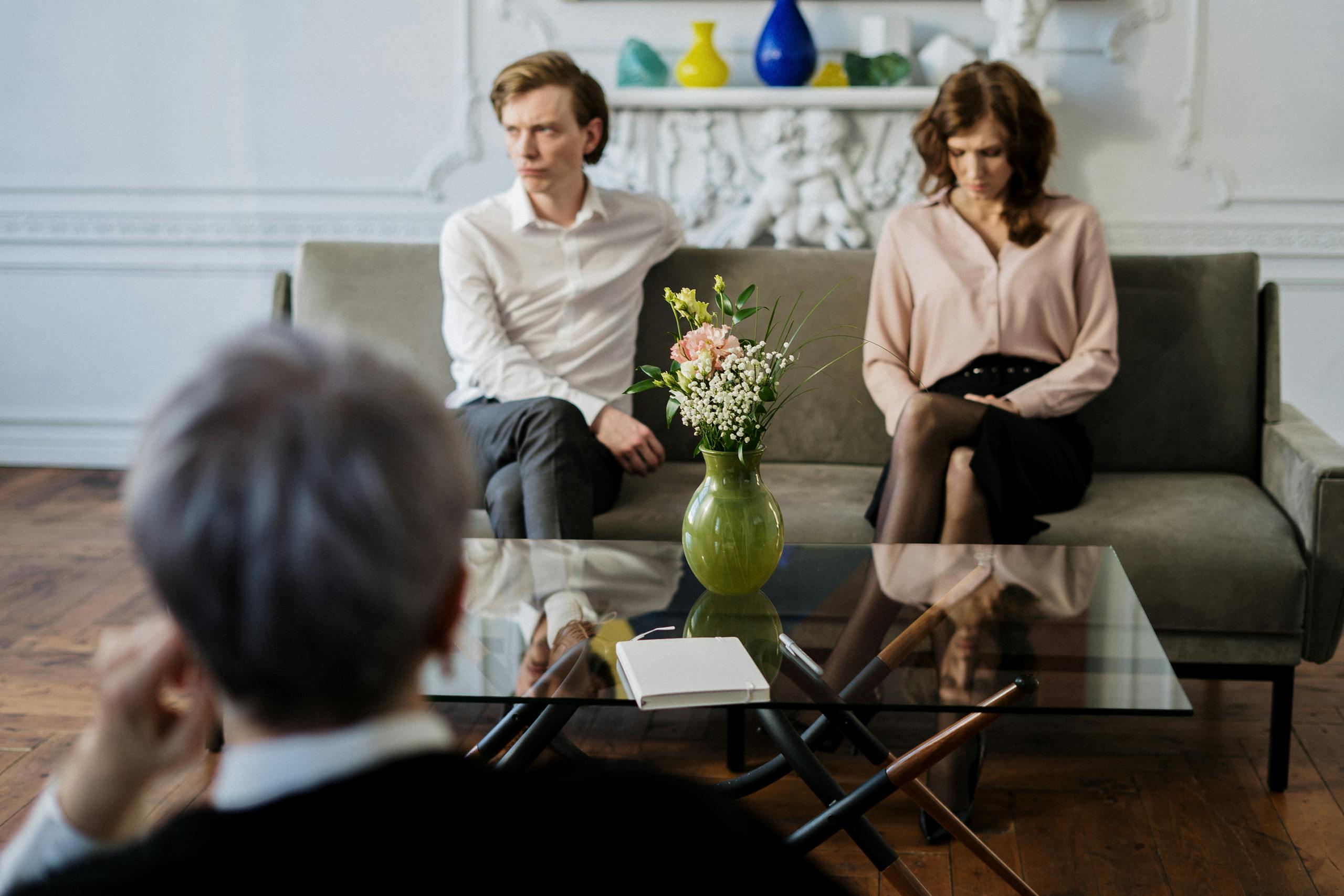
There’s no single answer here, and anyone who tells you otherwise is selling something. What works is usually a combination of understanding your own patterns, building structures that support your nervous system, and developing a more compassionate relationship with the parts of yourself that anxiety has convinced you to be ashamed of.
Solitude matters, but it matters differently for anxious introverts than for non-anxious ones. Unstructured alone time can sometimes give anxiety more room to run. Many anxiety-ridden introverts find that solitude works best when it’s purposeful: a walk with a specific route, a creative project with clear parameters, a reading practice that pulls attention outward. success doesn’t mean eliminate the inner world. It’s to give it something constructive to engage with rather than a blank canvas for worry.
Understanding the specific flavor of your anxiety also matters. For some introverts, anxiety is primarily social. For others, it’s performance-based, or health-related, or tied to uncertainty about the future. Understanding HSP anxiety and building effective coping strategies offers a useful framework for getting more specific about what you’re actually dealing with, because the more precisely you can name it, the more effectively you can respond to it.
Physical regulation is underrated in conversations about introvert anxiety. The body and mind are not separate systems. Chronic anxiety lives in the nervous system, not just in thought patterns, and approaches that address the physiological dimension, including consistent sleep, movement, and time in natural environments, can make a meaningful difference in how loud the internal noise gets.
The American Psychological Association’s work on resilience emphasizes that resilience isn’t a fixed trait but a set of behaviors and practices that can be developed over time. That’s genuinely encouraging for anxious introverts who sometimes feel as though they’re simply built wrong. The capacity to manage anxiety more effectively is something that grows with practice, even when it doesn’t feel that way in the middle of a difficult stretch.
Professional support is worth naming directly. Therapy, particularly approaches that work with both cognitive patterns and nervous system regulation, has been genuinely useful for many introverts who carry significant anxiety. There’s sometimes a reluctance among introverts to seek that kind of help, partly because we’re accustomed to processing internally and partly because asking for support can feel like admitting defeat. It isn’t. It’s applying the same analytical rigor to your mental health that you’d apply to any other complex problem.
A graduate-level review of introversion and related traits from the University of Northern Iowa explored how introverts’ internal processing styles intersect with emotional regulation, offering useful context for understanding why standard anxiety advice often feels like it was written for someone else entirely.
Reframing the Anxiety-Ridden Introvert Identity
There’s a version of this conversation that ends with a list of coping tools and a pat on the shoulder. That’s not where I want to leave this.
Being an anxiety-ridden introvert is genuinely hard. It involves carrying more internal weight than most people around you realize, managing a nervous system that registers everything at high volume, and doing all of that while living in a world that tends to reward the opposite of everything you are. That deserves to be acknowledged directly, not glossed over with reassurances about how your sensitivity is actually a gift.
And yet. The qualities that make anxiety harder for introverts are inseparable from the qualities that make introverts remarkable. The depth of processing that feeds the worry loop is the same depth that produces insight. The empathy that makes you permeable to other people’s pain is the same empathy that makes you a genuinely trustworthy presence. The perfectionism that keeps the inner critic loud is, at its healthiest, a commitment to doing things that matter with real care.
The work isn’t to eliminate those qualities. It’s to build enough internal stability that they can operate as assets rather than liabilities. That’s a long process, and it’s not linear. There were years in my career where I had this more figured out than others, and years where I was back at the beginning, white-knuckling through a presentation I’d prepared six times or spiraling over a client relationship that was probably fine.
What changed, gradually, was my relationship to the anxiety itself. Not making it disappear, but stopping treating it as evidence that something was fundamentally wrong with me. The clinical literature on anxiety disorders is clear that anxiety is one of the most common and most treatable mental health experiences humans have. Common doesn’t mean trivial. It means many introverts share this in this, and treatable means the story doesn’t have to end where it is right now.
If you want to go deeper on any of these themes, the Introvert Mental Health Hub brings together everything we’ve written on the emotional and psychological dimensions of introversion, including the topics that don’t always get talked about openly.
About the Author
Keith Lacy is an introvert who’s learned to embrace his true self later in life. After 20 years in advertising and marketing leadership, including running agencies and managing Fortune 500 accounts, Keith now channels his experience into helping fellow introverts understand their strengths and build fulfilling careers. As an INTJ, he brings analytical depth and authentic perspective to every article, drawing from both professional expertise and personal growth.
Frequently Asked Questions
Are introverts more likely to experience anxiety than extroverts?
Anxiety affects people across all personality types, but introverts may experience it differently due to their tendency toward deep internal processing, heightened sensitivity, and a more active inner world. The same qualities that make introverts thoughtful and perceptive can also give anxiety more material to work with, making it feel more persistent or harder to quiet. That doesn’t mean introverts are more prone to clinical anxiety disorders, but the subjective experience of anxiety can feel more consuming when you already live primarily inside your own head.
What’s the difference between introversion and anxiety?
Introversion is a personality trait characterized by a preference for quieter, less stimulating environments and a tendency to recharge through solitude. Anxiety is a mental health experience involving persistent worry, fear, or apprehension that interferes with daily functioning. The two are distinct, but they frequently co-occur. An introvert who prefers staying home isn’t necessarily anxious. An anxious person who avoids social situations may be doing so out of fear rather than preference. The distinction matters because the strategies that help are different in each case.
Why does social exhaustion feel worse when I’m anxious?
Social exhaustion in introverts comes from the stimulation of social environments and the energy required to engage externally rather than internally. When anxiety is also present, social situations carry an additional layer of self-monitoring, threat assessment, and post-event analysis that significantly increases the cognitive and emotional load. You’re not just participating in a conversation. You’re simultaneously evaluating it in real time and preparing to review it afterward. That combination of introvert processing and anxious vigilance is genuinely depleting in a way that goes beyond normal social tiredness.
Can perfectionism make anxiety worse for introverts?
Yes, and the relationship tends to be circular rather than linear. Perfectionism often develops as a way of managing anxiety, as a strategy for eliminating any reason to be criticized or rejected. But perfectionism doesn’t reduce anxiety over time. It raises the threshold for what counts as good enough, which means the fear of falling short never actually goes away. For introverts who are already inclined toward deep self-reflection and high standards, this loop can be particularly difficult to step out of without intentional work on the underlying beliefs driving it.
What are practical first steps for managing anxiety as an introvert?
Getting more specific about the type of anxiety you carry is a useful starting point. Social anxiety, performance anxiety, health anxiety, and generalized worry each respond to somewhat different approaches. From there, building consistent physical routines around sleep, movement, and time in quieter environments can reduce the baseline level of nervous system activation. Purposeful solitude, meaning alone time with a clear focus rather than open-ended rumination, tends to work better than unstructured downtime for anxious introverts. And professional support, particularly therapy that addresses both thought patterns and physiological regulation, is worth considering if anxiety is significantly affecting your quality of life.