

An anxious introvert, or “anxious introvert adalah” as it’s searched in Indonesian-speaking communities, describes someone who is both introverted by nature and prone to anxiety as a persistent emotional state. These are two distinct things that frequently overlap, and understanding how they interact changes everything about how you relate to yourself.
Introversion describes how you process energy and information. Anxiety describes how your nervous system responds to threat, uncertainty, and social pressure. They’re not the same thing, yet they often amplify each other in ways that can feel impossible to separate.
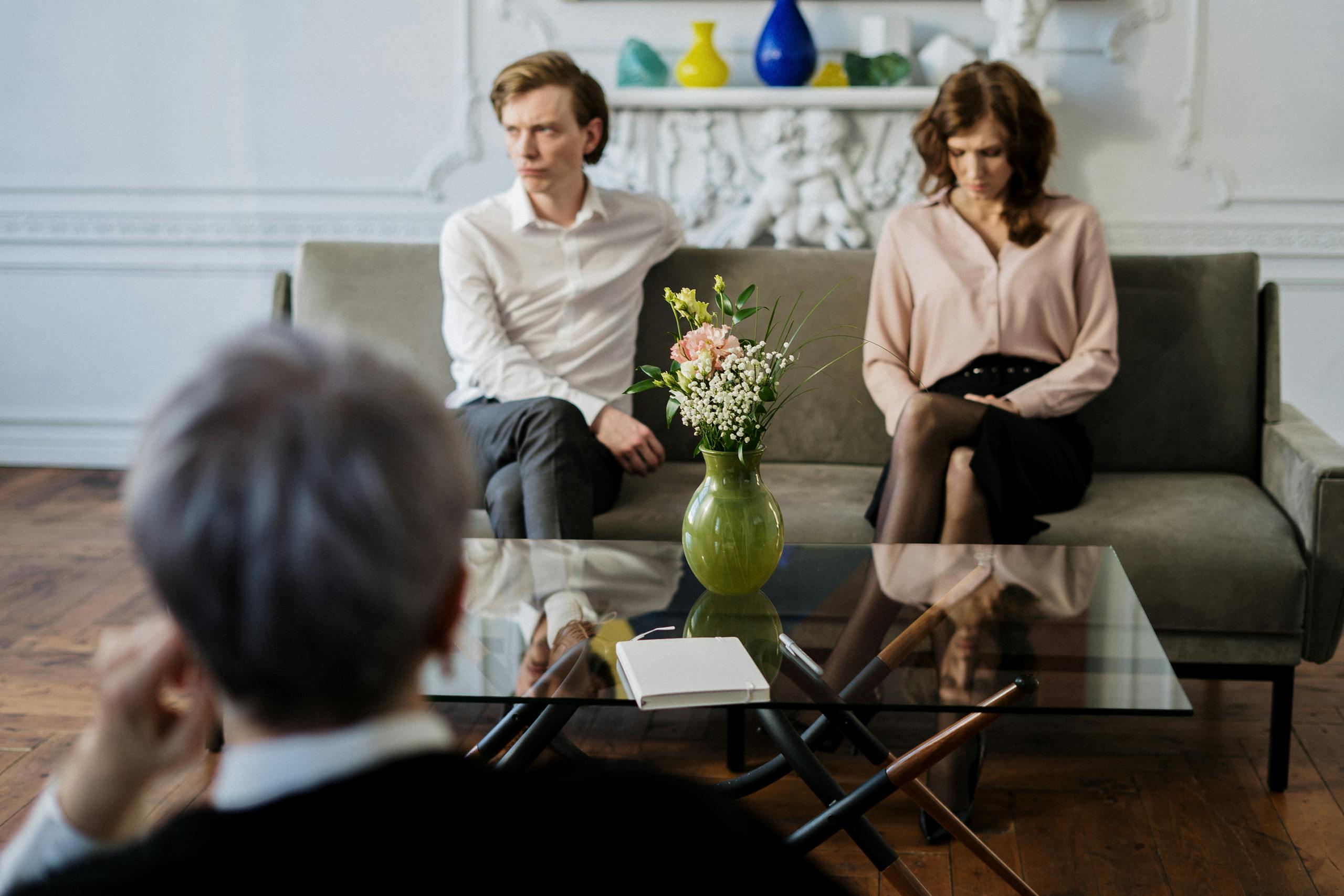
My own experience with this combination shaped most of my professional life before I had the language to name it. Running advertising agencies meant constant client presentations, team meetings, and high-stakes pitches. As an INTJ, I could prepare obsessively, think several moves ahead, and hold a room with careful precision. What I couldn’t always do was separate the productive tension of preparation from the spiral of anxiety that followed. That distinction took years to understand.
If you’re working through the relationship between your introversion and your anxiety, the Introvert Mental Health Hub covers the full landscape of emotional wellbeing for people like us, from sensory sensitivity to social exhaustion to the patterns that quietly shape our inner lives.
What Does It Actually Mean to Be an Anxious Introvert?
There’s a version of the anxious introvert conversation that stays frustratingly surface-level. It usually goes something like: introverts are quiet, shy people who get nervous around others. That’s not wrong exactly, but it misses the real texture of what’s happening inside.
What’s your personality type?
Take our free 40-question assessment and get a detailed personality profile with dimension breakdowns, context analysis, and personalised insights.
Discover Your Type8-12 minutes · 40 questions · Free
Introversion, in its truest sense, is about where you get your energy. Introverts recharge through solitude and deep focus. Social interaction, even enjoyable interaction, draws down that energy. This is neurological, not a choice, and not a flaw. Many introverts are confident, sociable, and genuinely enjoy people. They simply need recovery time afterward.
Anxiety operates on a different track entirely. It’s a state of heightened alertness, a nervous system that perceives threat even when no actual threat exists. The National Institute of Mental Health describes anxiety disorders as involving excessive worry and fear that interfere with daily functioning. Anxiety can affect anyone regardless of personality type, but certain traits make the combination particularly intense.
When introversion and anxiety share the same body, the experience gets layered. You’re not just tired after a social event. You’re also replaying every conversation, cataloguing every possible misstep, wondering what people thought of you. The introvert’s natural preference for internal processing gets hijacked by the anxious mind’s tendency to loop, critique, and catastrophize.
I watched this happen with one of my account directors, an INFJ who was brilliant with clients but would spend the entire drive home after a pitch mentally dissecting every moment. She wasn’t being dramatic. Her mind was doing what anxious introverts’ minds do: processing deeply and finding every possible threat in the data.
How Sensitivity Makes the Anxious Introvert Experience More Intense
A significant portion of anxious introverts also carry a trait called high sensitivity. Elaine Aron’s research on Highly Sensitive Persons identified a subset of the population whose nervous systems process sensory and emotional information more deeply than average. Many introverts fall into this category, and when you add anxiety to that sensitivity, the internal experience becomes genuinely overwhelming.
Highly sensitive people notice more. They catch the shift in someone’s tone, the flicker of irritation on a colleague’s face, the subtle tension in a room before anyone else registers it. That awareness is a genuine strength in many contexts. In an anxious mind, though, it becomes fuel for worry.

Managing HSP overwhelm and sensory overload is a real and ongoing practice for people who carry both sensitivity and anxiety. The nervous system simply takes in more input, and without deliberate strategies for processing that input, it accumulates.
During my agency years, I ran a creative team that included several highly sensitive people. I could always tell when the open-plan office was affecting them. Their output would drop, their communication would become more careful and guarded, and they’d start working with headphones in even during collaborative sessions. At the time, I interpreted this as a focus preference. Looking back, I understand it as a survival mechanism. They were managing an environment that was genuinely overwhelming their systems.
The connection between high sensitivity and HSP anxiety is well-documented in the psychological literature. Sensitive people are more prone to anxiety partly because they’re processing so much more information at once. The brain has to work harder, and that sustained effort has emotional costs.
The Internal World of an Anxious Introvert: What’s Actually Happening?
One of the most disorienting aspects of being an anxious introvert is that your internal experience and your external appearance rarely match. You might look calm, composed, even aloof. Inside, you’re running a parallel process at full speed.
Introverts naturally process information internally before externalizing it. We think before we speak, consider multiple angles before committing to a position, and prefer depth over speed in most interactions. This internal orientation is a strength in many professional contexts. Paired with anxiety, though, it means the internal processor never quite gets to stop.
The anxious introvert’s mind is often running several scenarios simultaneously: what might happen, what probably won’t happen but could, what happened last time in a similar situation, and what any of it means about who you are as a person. Research published in PubMed Central points to the relationship between rumination and anxiety, noting that repetitive negative thinking patterns are a core feature of anxiety disorders. For introverts, whose natural processing style already tends inward, this loop can become particularly entrenched.
The emotional processing that comes with this combination is genuinely complex. It’s not just thinking about feelings. It’s feeling feelings about feelings, analyzing why you felt something, wondering if the feeling was appropriate, and then feeling anxious about whether you’ve handled any of it correctly. Understanding HSP emotional processing and what it means to feel deeply helped me put language around something I’d been experiencing for decades without being able to name.
At one point in my agency career, I had to deliver difficult feedback to a long-term client about a campaign direction that wasn’t working. I prepared meticulously, which is my INTJ default. What I didn’t anticipate was the three days of internal processing that followed the meeting, even though the conversation had gone well. The client had been receptive. The relationship was intact. My anxious mind didn’t care. It kept reviewing the conversation, looking for the thing I’d missed, the way it could have gone wrong.
Why Empathy Becomes a Complicating Factor
Many anxious introverts are also highly empathic. They absorb not just their own emotional states but the emotional states of the people around them. This creates a particular kind of exhaustion that’s hard to explain to people who don’t experience it.
Empathy, at its best, is a profound gift. It’s the capacity to genuinely understand another person’s experience, to feel into their reality rather than simply observing it from the outside. In professional settings, it makes you a better collaborator, a more attuned leader, and someone people genuinely trust. The challenge is that HSP empathy is genuinely a double-edged sword. The same sensitivity that makes you perceptive also makes you absorb emotional weight that isn’t yours to carry.

For the anxious introvert, empathy compounds the internal load. You’re already processing your own anxiety responses. Add in the emotional states of a team, a client, a partner, or a family member, and the system can become genuinely overloaded. What looks like withdrawal or disconnection from the outside is often the introvert’s nervous system trying to reduce input to a manageable level.
I managed a senior copywriter for several years who carried this combination visibly. She was extraordinarily perceptive about client needs, often anticipating what they wanted before they could articulate it. She was also the first person to pick up on team tension, which made her invaluable in certain situations and genuinely depleted in others. After a particularly difficult client review, she’d need a full day of quiet work before she could engage productively again. That wasn’t weakness. That was her system doing what it needed to do.
The Perfectionism Connection That Most People Miss
Anxious introverts and perfectionism have a complicated relationship. On the surface, perfectionism looks like high standards. Underneath, it’s often a strategy for managing anxiety. If everything is done perfectly, nothing can go wrong. If nothing goes wrong, there’s nothing to worry about. The logic is flawless. The execution is exhausting.
Perfectionism in anxious introverts tends to show up in specific ways. It might be over-preparation for meetings or presentations, rewriting emails multiple times before sending, avoiding starting projects because the internal standard for completion feels impossible to meet, or struggling to delegate because no one else will do it quite right. Each of these behaviors is anxiety management dressed up as conscientiousness.
A study from Ohio State University’s nursing program explored how perfectionism functions as a coping mechanism and found that the drive toward impossible standards often originates in anxiety about outcomes rather than genuine love of excellence. That distinction matters enormously for anxious introverts trying to understand their own patterns.
Working through HSP perfectionism and the high standards trap is something I’ve had to do deliberately in my own life. My INTJ tendency toward strategic precision combined with anxious energy around outcomes created a version of perfectionism that looked like professional rigor but was often just fear in disguise. The work was never quite done. The presentation could always be tighter. The proposal always needed one more pass.
What shifted for me was recognizing that my perfectionism was serving my anxiety, not my actual standards. Once I could see that distinction, I could start asking a different question: is this revision making the work better, or is it making me feel safer? The answer changed how I worked.
How Rejection Hits Differently for Anxious Introverts
Rejection is hard for most people. For anxious introverts, it lands with a particular weight. The internal processing that’s already running at high capacity takes rejection as significant data, often overweighting it relative to positive feedback and running it through multiple interpretive loops.
Some anxious introverts experience what’s sometimes called rejection sensitive dysphoria, a pattern where perceived or actual rejection triggers an intense emotional response that feels disproportionate to the situation. Even mild criticism, a short reply to an email, or a meeting invitation that wasn’t extended can activate this response. The anxious mind finds the threat signal and amplifies it.
Research on emotional regulation and anxiety suggests that people with higher baseline anxiety show more pronounced responses to social threat cues, including rejection. For introverts who already process social information deeply, this creates a compounding effect that can make even minor social friction feel significant.
Understanding HSP rejection and how to process and heal from it is genuinely useful work for anxious introverts. success doesn’t mean stop caring about rejection. It’s to develop a more calibrated relationship with it, one where the response is proportional and the recovery is faster.

I lost a significant pitch early in my agency career to a competitor whose work I genuinely respected less than our own. The client chose them for reasons that had nothing to do with creative quality, mostly budget and existing relationships. My rational INTJ mind understood this completely. My anxious mind spent weeks reviewing every element of our presentation, looking for the thing we’d gotten wrong. The two parts of me were having entirely different conversations about the same event.
What Anxious Introverts Actually Need (That They’re Often Not Getting)
There’s a version of advice for anxious introverts that amounts to “push yourself more” or “just get out of your comfort zone.” This advice misunderstands the actual problem. The anxious introvert doesn’t need more exposure to discomfort. They need better tools for processing what they’re already experiencing.
What tends to actually help is different for everyone, but some patterns show up consistently. Structured solitude, time that’s genuinely protected and not just stolen from other obligations, allows the nervous system to reset. Many anxious introverts function significantly better when they have predictable quiet time built into their days rather than hoping to find it.
Physical regulation matters more than most people expect. PubMed Central’s overview of anxiety disorders notes that physical symptoms are a core feature of anxiety, not just a side effect. For anxious introverts, working with the body through movement, breathwork, or even just deliberate changes in physical environment can interrupt the mental loop in ways that purely cognitive approaches sometimes can’t.
Meaningful social connection, in small doses and with the right people, is also genuinely important. Anxious introverts sometimes withdraw entirely as a way of managing anxiety, but isolation tends to feed anxiety rather than relieve it. Psychology Today’s Introverts Corner has explored how introverts relate to social connection differently, preferring depth over frequency. For anxious introverts, a few genuinely close relationships often provide more genuine relief than any amount of social activity.
Professional support is worth naming directly. Anxiety that significantly affects your daily functioning, your work, your relationships, or your sense of self is not something you need to manage alone. Cognitive behavioral therapy in particular has a strong evidence base for anxiety, and many therapists now work specifically with introverts and highly sensitive people who’ve found that standard approaches don’t always account for how their minds work.
Building a Life That Works With Your Wiring, Not Against It
One of the most freeing realizations I’ve had in the years since leaving agency life is that I spent enormous energy trying to operate like someone I wasn’t. Not because anyone explicitly told me to, but because the environments I worked in rewarded certain ways of being and quietly penalized others. The extroverted, always-available, thrives-on-chaos leadership style was the default template. I adapted to it reasonably well. That adaptation had real costs.
Building a life that works with your introversion and your anxiety means making structural choices, not just attitudinal ones. It means designing your environment to reduce unnecessary friction. It means being honest with yourself about what drains you and building recovery into your schedule rather than hoping it happens. It means choosing work, relationships, and commitments that align with how you actually function rather than how you think you should function.
The American Psychological Association’s work on resilience frames it as something built through deliberate practice and environmental factors, not just internal fortitude. For anxious introverts, that framing is useful. Resilience isn’t about being less sensitive or less anxious by force of will. It’s about building the conditions under which your particular system can function well.
Academic work on introversion and personality has consistently found that introverts perform best in environments that match their processing preferences, quieter, more structured, with opportunities for deep focus rather than constant context-switching. Knowing this, and actually acting on it, are two different things. Acting on it often requires letting go of the idea that you should be able to thrive in any environment if you just try hard enough.

My own turning point came when I stopped treating my need for quiet and recovery as a personal failing to be overcome and started treating it as operational information. My best work happened in the early morning before the office filled up, or in deep-focus blocks with no meetings. Once I structured my days around that reality instead of fighting it, my anxiety dropped noticeably. Not because I’d solved anything, but because I’d stopped adding unnecessary friction to an already demanding system.
Being an anxious introvert doesn’t mean you’re broken or that something has gone wrong with your wiring. It means you carry a particular combination of traits that require particular kinds of care. That’s not a limitation. It’s just information. What you do with that information is where the real work begins.
There’s much more to explore on this topic across the full Introvert Mental Health Hub, where we cover everything from emotional regulation to the specific mental health challenges introverts face in work and relationships.
About the Author
Keith Lacy is an introvert who’s learned to embrace his true self later in life. After 20 years in advertising and marketing leadership, including running agencies and managing Fortune 500 accounts, Keith now channels his experience into helping fellow introverts understand their strengths and build fulfilling careers. As an INTJ, he brings analytical depth and authentic perspective to every article, drawing from both professional expertise and personal growth.
Frequently Asked Questions
What is an anxious introvert?
An anxious introvert is someone who is both introverted by nature and experiences anxiety as a persistent trait or condition. Introversion describes energy orientation, specifically the preference for internal processing and the need to recharge through solitude. Anxiety describes a nervous system pattern of heightened alertness and worry. The two frequently overlap because introverts’ natural tendency toward deep internal processing can amplify the rumination loops that anxiety depends on. Understanding them as separate but interacting traits is the first step toward managing both effectively.
Is being an anxious introvert the same as having social anxiety?
No, they’re not the same, though they can coexist. Social anxiety is a specific anxiety disorder centered on fear of social situations and judgment by others. Being an anxious introvert is a broader description that includes general anxiety patterns alongside introverted personality traits. An anxious introvert may or may not have clinical social anxiety. Some anxious introverts are quite comfortable socially but experience anxiety in other areas of life, such as performance, uncertainty, or health. The distinction matters because the approaches that help are somewhat different depending on what’s actually driving the anxiety.
Why do anxious introverts tend toward perfectionism?
Perfectionism in anxious introverts is often a strategy for managing uncertainty rather than a genuine love of high standards. The anxious mind seeks control over outcomes as a way of reducing the threat of things going wrong. If everything is done perfectly, the logic goes, there’s nothing to worry about. For introverts who already process deeply and notice details others miss, this tendency toward thoroughness can tip into perfectionism when anxiety is also present. Recognizing perfectionism as an anxiety response, rather than a character trait, opens up more useful ways of working with it.
How can anxious introverts manage their energy and anxiety together?
Managing both introversion and anxiety requires addressing each on its own terms while recognizing how they interact. Protecting genuine solitude and recovery time addresses the introvert’s energy needs. Developing tools for interrupting rumination, whether through physical movement, structured reflection, or professional support, addresses the anxiety. Environmental design matters significantly. Reducing unnecessary sensory and social overload gives the nervous system less to process. Many anxious introverts also benefit from small but consistent social connection with trusted people, since isolation tends to increase anxiety over time even when it feels like relief in the short term.
When should an anxious introvert seek professional help?
Professional support is worth considering when anxiety is significantly affecting your daily functioning, your work performance, your relationships, or your overall sense of wellbeing. If worry feels constant and difficult to control, if anxiety is causing you to avoid important situations or relationships, or if you’re experiencing physical symptoms like sleep disruption, tension, or fatigue that you can connect to anxiety, those are meaningful signals. Cognitive behavioral therapy has a strong evidence base for anxiety and can be adapted for introverts who prefer reflective, depth-oriented approaches. Seeking help is not a sign that your introversion has failed you. It’s a practical response to a system that needs support.