
Homebodies living in tiny homes are discovering something that runs counter to most assumptions about downsizing: shrinking your square footage can actually deepen your relationship with home rather than diminish it. For introverts who already treat their living space as a sanctuary, the tiny home movement offers a way to make that sanctuary more intentional, more personal, and more protective of the energy that matters most. Less square footage, it turns out, often means less noise, less maintenance, less obligation to fill rooms you never wanted in the first place.
There’s a particular kind of quiet that comes with a well-designed small space. I’ve felt it. And I suspect you have too, whether you’ve actually moved into a tiny home or simply found yourself gravitating toward one corner of your house as your real home within the home.

If you’re exploring what it means to build a home environment that genuinely supports how you’re wired, our Introvert Home Environment hub covers the full range of topics around creating spaces that restore rather than drain. Tiny homes represent one of the most radical expressions of that idea, and they’re worth examining honestly, both the appeal and the real challenges.
Why Do So Many Introverted Homebodies Feel Drawn to Tiny Homes?
Somewhere around year fifteen of running advertising agencies, I started noticing a pattern in myself. After a week of client presentations, team meetings, and the relentless social performance that agency life demands, I didn’t want a bigger apartment or a fancier office. What I wanted was a smaller, quieter space where I could actually hear my own thoughts again.
What’s your personality type?
Take our free 40-question assessment and get a detailed personality profile with dimension breakdowns, context analysis, and personalised insights.
Discover Your Type8-12 minutes · 40 questions · Free
That desire, the pull toward compression and containment rather than expansion, is something many introverts recognize immediately. And it’s one reason the tiny home movement has resonated so strongly with people who identify as homebodies.
Conventional wisdom says more space equals more freedom. A bigger house means room to spread out, to host, to accumulate. But for someone who finds social obligations exhausting and prefers depth over breadth in almost every area of life, a large home can feel like a liability. More rooms means more surfaces to maintain, more spaces that feel hollow if they’re not filled with people you didn’t particularly want to invite over anyway.
Tiny homes invert this logic entirely. When your entire living space is three hundred to five hundred square feet, every object earns its place. Every design choice matters. The space becomes an extension of your inner world rather than a performance of what a home is supposed to look like. For introverts who already live much of their lives internally, that alignment between inner and outer environment carries real psychological weight.
There’s also the matter of sensory experience. Many introverts, particularly those who identify as highly sensitive, find that large spaces with high ceilings, open floor plans, and lots of ambient noise are genuinely draining. A small, well-insulated, thoughtfully designed space can reduce that sensory load considerably. The connection between HSP minimalism and simplified living environments runs deep for a reason. Sensitive people often thrive when their surroundings are curated, calm, and free from the visual and auditory clutter that larger homes tend to accumulate.
What Does Daily Life Actually Look Like in a Tiny Home as a Homebody?
This is where honesty matters more than inspiration. The tiny home aesthetic looks beautiful in photographs. The reality of living in one requires a specific kind of person, and a specific kind of homebody, to work well over time.
The homebodies who seem to thrive in tiny homes share a few consistent traits. They’re intentional about their belongings. They have a high tolerance for proximity to their own thoughts (which is to say, they’re comfortable with themselves). They don’t require physical space to signal their identity or status to others. And they’ve made peace with the fact that entertaining large groups isn’t really their version of a good time anyway.
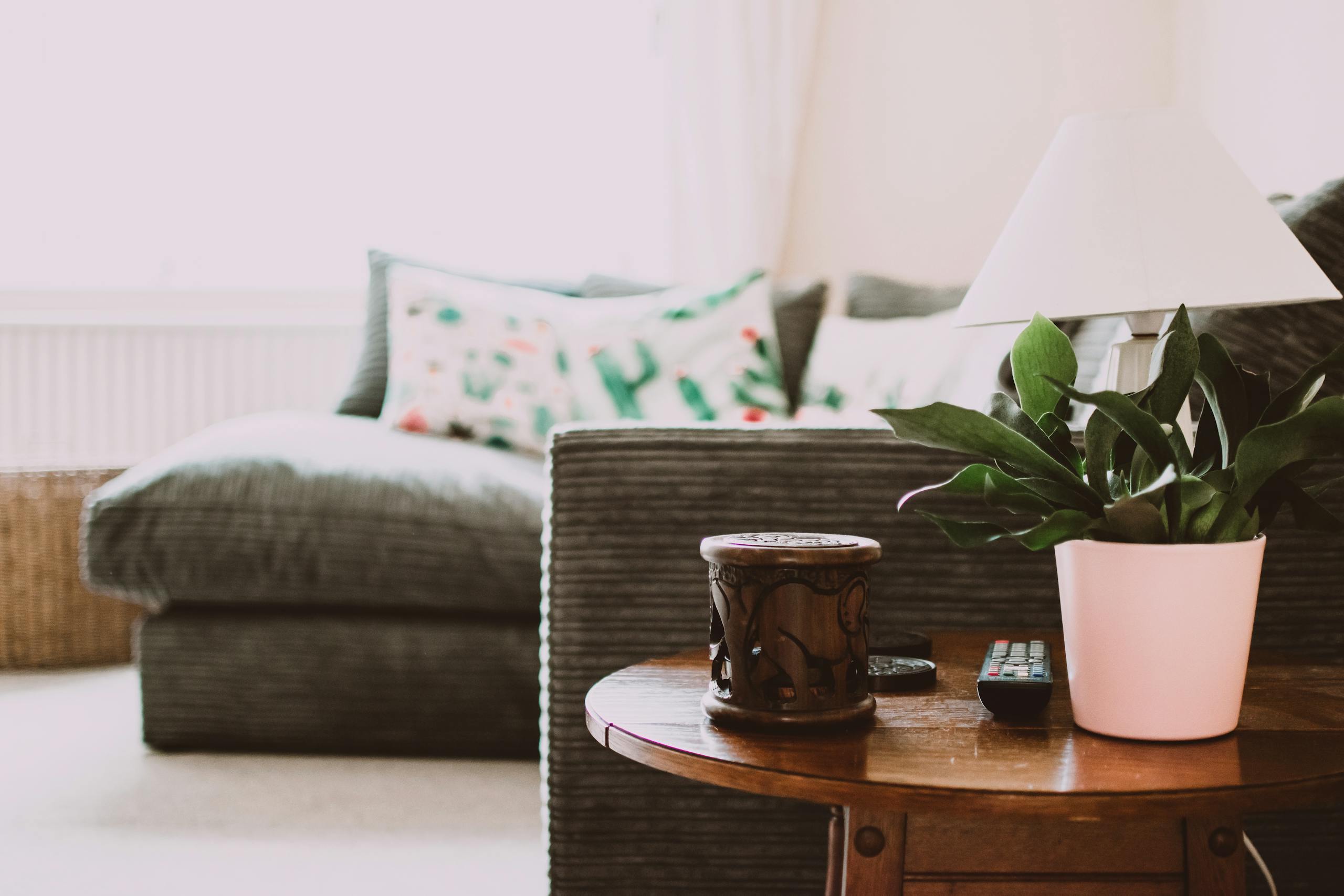
Daily rhythms in a tiny home tend to become more deliberate. Morning routines, meal preparation, the way you move through your space, all of these take on a kind of intentionality that larger homes don’t demand. Some introverts find this deeply satisfying. The space itself becomes a container for ritual. Your reading chair isn’t just furniture; it’s the place where you decompress. Your kitchen counter isn’t just a surface; it’s where you make the coffee that signals the start of a day that belongs to you.
That said, tiny home living does create friction points that introverts need to think through carefully before committing. If you work from home, which many introverts prefer, carving out a functional workspace in a tiny home takes real planning. The boundaries between work mode and rest mode can blur when your desk is six feet from your bed. Some people solve this with a dedicated loft workspace or a fold-down desk that physically closes at the end of the workday. Others find the lack of separation genuinely difficult over time.
There’s also the question of what you do when you need a break from yourself. Introverts recharge alone, yes, but even the most committed homebody occasionally needs a change of scenery within their own space. In a tiny home, that option is limited. Having a small outdoor area, a porch, a deck, even a well-placed window seat can make a significant difference in how sustainable the lifestyle feels over months and years rather than weeks.
One thing I’ve noticed about introverts who successfully build rich inner lives at home is that they’re skilled at creating variety within constraint. The same instinct that makes someone good at finding depth in a single conversation, rather than skimming across many, also makes them good at finding variation in a small physical space. It’s a cognitive style, not just a preference, and it translates well to tiny home living.
How Does a Tiny Home Change Your Relationship With “Home” as a Concept?
When I left the agency world and started thinking more seriously about what I actually wanted my daily environment to feel like, I realized I’d spent two decades designing spaces for other people’s brands and almost no time thinking about what my own space was communicating to me.
Advertising is fundamentally about environment and signal. What does this space say? What feeling does it create? I’d applied that thinking to client campaigns for car companies, financial services firms, and consumer brands, but I’d never applied it to my own home with any rigor. A tiny home forces that reckoning in a way a conventional house doesn’t. When you have eight hundred square feet instead of two thousand, you can’t defer the question of what matters to you. Every square foot has to earn its place.
For homebodies specifically, this is often a clarifying rather than a limiting experience. Home isn’t just where you sleep; it’s where you think, create, recover, and exist most fully as yourself. A tiny home asks you to be explicit about what that means in practice. Do you need a dedicated reading space? A place for creative work? Somewhere to cook properly? The answers reveal what you actually value, as opposed to what you’ve accumulated out of habit or social expectation.
Many introverts who make this shift report that their relationship with home becomes more conscious and more satisfying. The space feels genuinely theirs in a way that a larger house, with its guest rooms and formal dining areas that rarely get used, often doesn’t. There’s a concept in environmental psychology around how physical environments affect psychological wellbeing, and the evidence points consistently toward the idea that perceived control over one’s environment matters enormously. A tiny home, designed around your actual needs, can create that sense of control in a way that’s hard to replicate in a larger, more generic space.
There’s also something to be said about how a tiny home changes your relationship with possessions. When you can only keep what fits, you stop accumulating things that represent aspirational versions of yourself and start keeping things that represent who you actually are. For introverts who tend toward depth over breadth in their interests, this often means a carefully curated collection of books, a few meaningful objects, and tools for the hobbies that genuinely matter to them. A good homebody-focused book collection might take up an entire wall in a tiny home, and that’s a completely reasonable priority.

What Are the Real Challenges Introverted Homebodies Face in Tiny Homes?
Honesty requires acknowledging the friction alongside the appeal. Tiny home living isn’t universally suited to every introvert, and the challenges are real enough to warrant serious consideration before making the leap.
The most significant challenge for many introverted homebodies is the tension between wanting total control over their environment and the practical realities of tiny home living. Many tiny homes are located in communities, on shared land, or in proximity to neighbors in ways that conventional suburban houses aren’t. The irony is that a lifestyle choice driven partly by a desire for solitude can sometimes place you in closer physical proximity to other people than a standard neighborhood would.
This isn’t insurmountable, but it requires thought. Location matters enormously. A tiny home on a rural plot of land offers a very different experience than a tiny home in an urban tiny home community, even if the square footage is identical. Introverts considering this lifestyle need to be honest about whether they’re drawn to the tiny home itself or to a particular vision of solitude and self-sufficiency that the tiny home represents. Those are related but distinct desires, and conflating them can lead to disappointment.
There’s also the practical reality of social connection. Even the most committed introvert needs some form of meaningful connection, and a tiny home lifestyle can sometimes make spontaneous social interaction harder to maintain. When you live in a small, remote space, the effort required to see people increases. For introverts who already tend to underinvest in social connection, this added friction can tip the balance toward isolation rather than healthy solitude.
Some introverts I’ve spoken with have found that online communities and digital connection spaces become more important when they’re living in physically isolated tiny homes. The internet can bridge the gap between the solitude that restores you and the connection that sustains you, provided you’re intentional about how you use it rather than just defaulting to passive scrolling.
Mental health considerations also matter here. A body of work in environmental and clinical psychology suggests that the quality of our living environment has measurable effects on psychological health. A tiny home that feels curated and intentional can be deeply restorative. A tiny home that feels cramped, cluttered, or poorly designed can amplify anxiety and low mood rather than ease them. The difference often comes down to how much control the inhabitant has over the design and organization of the space.
How Do You Design a Tiny Home That Actually Works for an Introverted Homebody?
Design in a tiny home isn’t decoration. It’s function made visible. And for introverts who are sensitive to their environment, getting the design right isn’t a luxury, it’s a necessity.
The most important principle I’d offer, drawing on years of thinking about how environments shape behavior and mood, is this: design for your actual daily experience, not for the version of yourself you imagine living there. This sounds obvious, but it’s surprisingly easy to get wrong.
In my agency years, we talked constantly about the gap between aspirational identity and actual behavior. A car brand might want to position itself as adventurous, but if their buyers are mostly commuters who want reliability, that positioning creates friction rather than resonance. The same principle applies to tiny home design. If you imagine yourself as someone who meditates every morning and does yoga in a dedicated corner, but your actual morning involves coffee and reading in bed, design for the coffee and the reading.
For introverted homebodies specifically, a few design priorities tend to matter more than others. Natural light is significant. Many introverts are sensitive to their sensory environment, and a dark, cave-like tiny home that looks cozy in photographs can feel genuinely oppressive over time. Large windows, skylights, and thoughtful orientation toward natural light sources make a disproportionate difference in how livable a small space feels.
Acoustic quality is another underrated factor. Tiny homes can be surprisingly noisy if they’re not well insulated, and for introverts who are sensitive to sound, this is a serious quality-of-life issue. The sound of rain on a metal roof might be appealing in theory; in practice, it can make concentration impossible. Insulation, soft furnishings, and thoughtful material choices all affect how a tiny home sounds from the inside.
Storage design also matters more than most people anticipate. Clutter is cognitively draining, and in a tiny home, clutter has nowhere to hide. Building in generous, well-organized storage from the start means you’re not constantly making decisions about where things go or what to do with the pile that accumulates on the kitchen counter. That cognitive overhead is a real cost for people who are already managing a lot of internal processing.
The right seating and comfort choices deserve particular attention in a tiny home context. When your living space is small, your primary seating area becomes your reading chair, your thinking space, your recovery spot, and your work-from-home option all at once. Investing in that piece of furniture, getting it genuinely right rather than just adequate, pays dividends every single day.

What Does the Tiny Home Movement Get Right About Introverted Needs?
Beyond the practical considerations, there’s something philosophically aligned between the tiny home movement and the way many introverts naturally approach life.
The tiny home movement, at its core, is a rejection of the assumption that more is better. It’s a deliberate choice to prioritize quality of experience over quantity of space, depth of engagement over breadth of accumulation. These are values that map closely onto how introverts tend to approach relationships, work, and leisure. The same person who prefers one deep conversation to a room full of small talk is often the same person who finds genuine satisfaction in a carefully chosen, small, intentional living space.
There’s also an alignment around the concept of energy management. Tiny homes reduce the maintenance burden that larger homes impose. Less space to clean, fewer systems to maintain, lower utility costs, less time spent managing possessions. For introverts who are already careful about where they spend their energy, this reduction in domestic overhead can free up significant mental and physical resources for the things that actually matter to them.
The relationship between environmental simplicity and psychological restoration is an area that researchers in environmental psychology have been examining more closely in recent years. The findings generally support what many introverts already know intuitively: simplified, controlled environments tend to support the kind of deep cognitive processing and emotional recovery that introverts need most.
What the tiny home movement gets right, perhaps more than any other housing trend, is the idea that your home should serve you rather than the other way around. That’s a radical reframing in a culture that treats home size as a proxy for success. And it’s a reframing that introverts, who’ve often spent years feeling like they’re supposed to want what extroverted culture tells them to want, tend to find genuinely liberating.
How Do You Make the Transition Without Losing What You Love About Being a Homebody?
The transition to a tiny home is a significant life change, and for homebodies who’ve built their sense of comfort and identity around a particular living environment, it requires careful thought about what you’re actually preserving and what you’re leaving behind.
One of the most useful exercises I’ve come across is to spend a week tracking which parts of your current home you actually use. Not which rooms you own, but which spaces you genuinely inhabit. Many homebodies discover that they live in a surprisingly small portion of their existing home, gravitating to the same chair, the same corner of the kitchen, the same spot by the window. That observation alone can be clarifying about whether tiny home living would actually represent a loss or simply an honest acknowledgment of how they already live.
The possessions question is the other major transition challenge. Downsizing to a tiny home means making real decisions about what you keep. For introverts who’ve built their home environment as a reflection of their inner life, this can feel threatening. Books, art, collections of objects with personal meaning, these aren’t just stuff. They’re the physical language of who you are.
The solution isn’t to pretend possessions don’t matter. It’s to be more intentional about which ones do. A tiny home forces you to choose your most meaningful objects rather than keeping everything by default. Many people who’ve made this transition report that the curation process itself, though difficult, in the end results in a space that feels more genuinely personal than a larger home filled with accumulated stuff ever did.
Thinking carefully about what you bring into a tiny home also changes how you approach gifts and additions to your space over time. Thoughtful gifts designed for homebodies take on a different meaning when space is genuinely limited. The best gifts for tiny home dwellers tend to be experiences, consumables, or objects of exceptional quality that earn their place. If you’re building a gift list or thinking about what to ask for, a good homebody gift guide can help you think through what actually adds value to a small, intentional space versus what just adds volume.
The transition also requires honest conversations with the people in your life. Family members who visit, partners who may or may not share your enthusiasm for small-space living, friends who expect to be hosted occasionally. These conversations are easier when you’re clear about your own reasons for making the choice, not just the aesthetic appeal, but the genuine alignment between how you’re wired and what a smaller, more intentional space offers you.
What I’ve found, both in my own experience of simplifying my environment and in conversations with introverts who’ve made more dramatic changes, is that the people who matter most in your life tend to respect a thoughtful, well-reasoned choice even if they wouldn’t make it themselves. The people who push back hardest are usually responding to what your choice implies about their own choices, which is their work to do, not yours.
Is Tiny Home Living Actually Sustainable Long-Term for Introverted Homebodies?
Sustainability here means more than environmental impact, though tiny homes do tend to have a significantly smaller ecological footprint than conventional housing. It means: can you actually live well in this space over years and decades, not just months?
The honest answer is that it depends on factors that are deeply personal and not always apparent until you’re living the reality. Age and physical health matter. A tiny home that works beautifully at thirty-five may present real challenges at sixty-five if it involves a steep loft ladder or limited accessibility features. Life circumstances change. A tiny home designed for solo living requires significant reconsideration if a partner or child enters the picture.
That said, many introverted homebodies who’ve committed to this lifestyle for five or more years report that the sustainability question answers itself differently than they expected. The things they worried about in advance, mostly social and practical concerns, turned out to be manageable. The things they didn’t anticipate, mostly the psychological benefits of a genuinely aligned environment, turned out to be more significant than they’d imagined.
There’s something that psychologists who study introverted wellbeing have noted consistently: introverts tend to thrive when their environments match their internal experience. A tiny home, designed thoughtfully, can be one of the most effective expressions of that alignment available. It’s not a compromise or a consolation prize for people who can’t afford larger homes. For the right person, it’s a genuine optimization of the conditions under which they live best.
The introverts who seem to find tiny home living most sustainable long-term are those who approach it as a positive choice rather than a reaction. They’re not downsizing because they feel they should or because tiny homes are trendy. They’re choosing a smaller space because it genuinely reflects how they want to live, what they value, and the kind of relationship they want to have with their home environment. That clarity of intention makes an enormous difference in how the lifestyle feels over time.
If you’re still exploring what kind of home environment genuinely supports your introverted nature, from tiny homes to more conventional spaces designed with solitude in mind, the full range of ideas in our Introvert Home Environment hub offers a broader context for thinking through what actually works for people like us.
About the Author
Keith Lacy is an introvert who’s learned to embrace his true self later in life. After 20 years in advertising and marketing leadership, including running agencies and managing Fortune 500 accounts, Keith now channels his experience into helping fellow introverts understand their strengths and build fulfilling careers. As an INTJ, he brings analytical depth and authentic perspective to every article, drawing from both professional expertise and personal growth.
Frequently Asked Questions
Are tiny homes a good fit for introverts who work from home?
Tiny homes can work well for introverts who work remotely, but they require deliberate design to separate work and rest spaces. Without a physical boundary between your workspace and your living area, the psychological separation that helps you mentally leave work at the end of the day becomes harder to maintain. Many tiny home dwellers solve this with a dedicated loft workspace, a fold-down desk that closes at day’s end, or a small outdoor area that serves as a transition zone. The key factor is intentionality: design your tiny home around your actual work habits before you move in, not after.
How do introverted homebodies handle having guests in a tiny home?
Most introverted tiny home dwellers find that the space naturally limits the frequency and duration of guests, which many actually appreciate. Hosting in a tiny home tends to be more intimate and intentional than in a larger house. Some people designate a fold-out sofa or convertible sleeping area for occasional overnight guests, while others simply meet visitors outside the home at a nearby cafe or outdoor space. The tiny home context gives introverts a natural, honest reason to keep visits shorter and gatherings smaller, which often aligns well with their actual social preferences.
What’s the biggest mistake introverts make when transitioning to a tiny home?
The most common mistake is conflating the desire for solitude with the desire for a tiny home, and assuming the physical space will automatically deliver the psychological experience. A tiny home in a crowded community, or one that’s poorly designed for your actual daily habits, can feel more constraining than restorative. The transition works best when you’re specific about what you’re actually seeking, whether that’s reduced maintenance, a more curated environment, lower costs, or genuine physical isolation, and then design the space and location around those specific needs rather than the general aesthetic appeal of tiny home living.
Can highly sensitive introverts thrive in tiny homes, or is the limited space too stressful?
Highly sensitive introverts can absolutely thrive in tiny homes, and many find the experience deeply satisfying, provided the space is designed with sensory needs in mind. Good acoustic insulation, ample natural light, quality air circulation, and visual calm through thoughtful organization all matter more in a small space than a large one because there’s nowhere to escape to if something is off. A poorly designed tiny home with thin walls, inadequate lighting, or constant clutter can be genuinely distressing for sensitive people. A well-designed one, with careful attention to sensory environment, can be among the most restorative living situations available.
Do tiny homes actually cost less than conventional housing for introverted homebodies?
The financial picture for tiny homes is more complicated than the movement’s advocates sometimes suggest. The purchase cost of a quality tiny home is often lower than a conventional house, and ongoing utility and maintenance costs tend to be significantly reduced. However, land costs, zoning restrictions, financing challenges (most mortgages don’t apply to tiny homes on wheels), and the premium associated with well-built small spaces can offset some of those savings. For introverted homebodies whose primary motivation is lifestyle alignment rather than cost savings, the financial comparison matters less than whether the space genuinely supports how they want to live. Those who approach it primarily as a financial strategy sometimes find the trade-offs less favorable than expected.