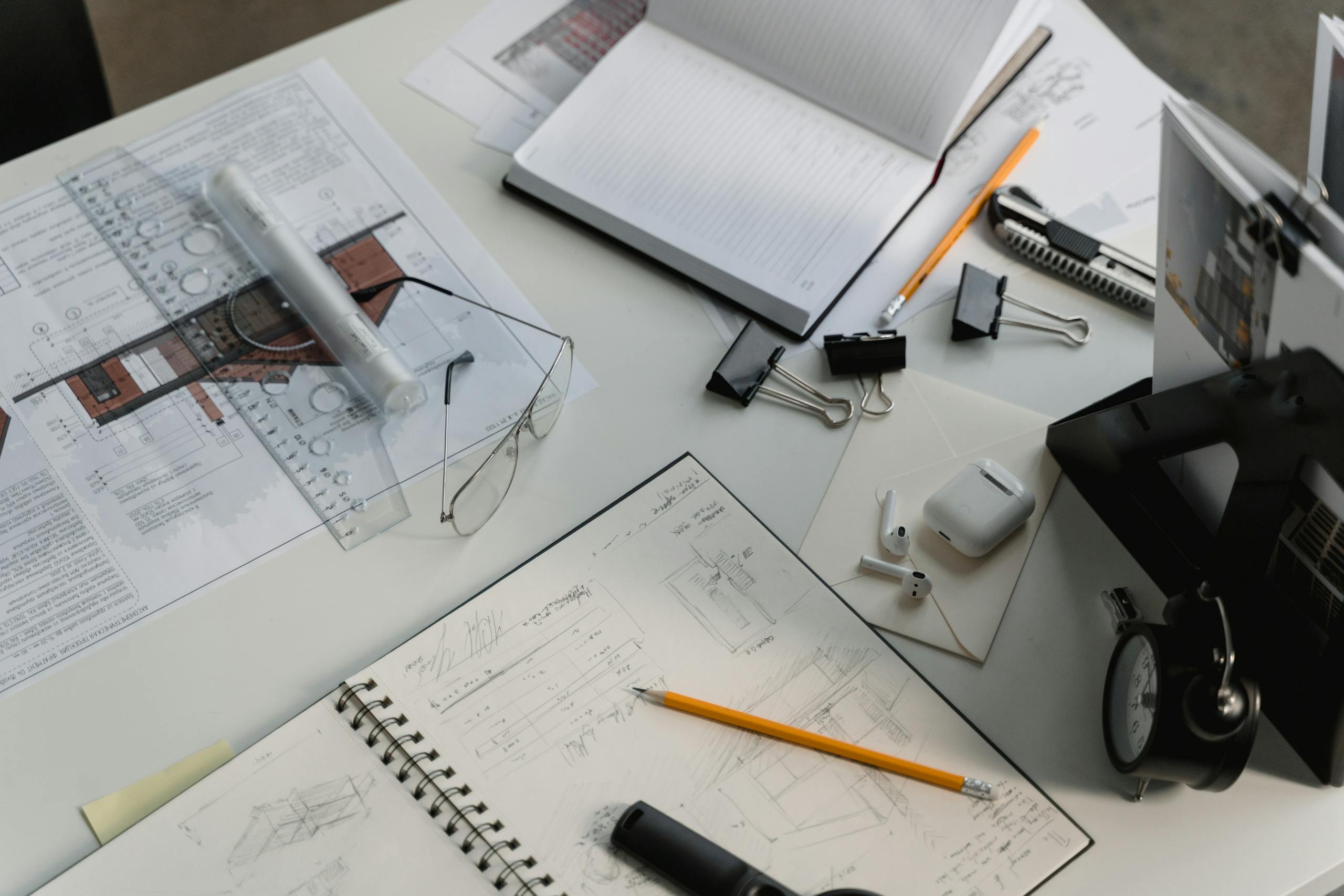

Standing alone in an empty building site at dawn, sketching the morning light as it moves across concrete forms, I realized something that took me years to understand. The quiet observation that happens before the team arrives and the phones start ringing is where architecture actually begins. That solitary moment of seeing possibilities that others miss is not a limitation of introverted designers. It is their greatest professional advantage.
Architecture presents an intriguing paradox for those of us who find energy in reflection rather than constant interaction. The profession demands client presentations, contractor negotiations, and endless meetings. Yet it equally rewards the kind of deep, sustained focus that comes naturally to introverted minds.
Introverted architects thrive because the profession rewards sustained concentration, careful observation, and thoughtful problem-solving over quick networking and constant collaboration. While client presentations and team meetings are essential, 60-70% of an architect’s daily work happens in focused solitude at the drafting table, developing concepts that require hours of uninterrupted thought.
During my years managing creative teams for Fortune 500 brands, I watched introverted designers consistently produce the most innovative solutions. They invested time in understanding problems deeply before proposing solutions. They refined concepts through careful iteration rather than rapid brainstorming. Their measured approach led to fewer revisions and stronger final outcomes. Architecture follows these same patterns, making it an ideal profession for reflective minds.

Why Does Architecture Reward the Reflective Mind?
The architecture profession self-selects for introverted qualities in ways that might surprise outsiders. Research on creativity and personality consistently finds that the most creative people across many fields tend toward introversion. This connection makes sense when you consider what architectural design actually requires:
What’s your personality type?
Take our free 40-question assessment and get a detailed personality profile with dimension breakdowns, context analysis, and personalised insights.
Discover Your Type8-12 minutes · 40 questions · Free
- Extended concentration periods – Developing buildings from concept to construction documents requires hours of uninterrupted focus on complex spatial and technical problems
- Detailed observation skills – Noticing how light moves through spaces, how people interact with environments, how materials age over time
- Patient iteration – Working through thousands of technical details while maintaining the larger design vision
- Deep research capability – Understanding building codes, material properties, structural systems, and client needs
- Reflective problem-solving – Finding creative solutions to constraints rather than accepting the first viable option
According to the Bureau of Labor Statistics, architects spend significant time developing detailed drawings and specifications, consulting with clients to determine requirements, and preparing construction documents. What this official description misses is how much of that work happens in focused solitude. The drafting, the modeling, the research, the problem-solving that forms the backbone of architectural practice suits the introverted working style remarkably well.
How Do You Leverage Deep Work in Design?
Cal Newport’s concept of deep work resonates particularly strongly with architects. According to research on focused productivity, deep work involves concentrated, distraction-free effort on cognitively demanding tasks. This describes the core of architectural design perfectly. When you are working through how a building’s structure will support its form, how mechanical systems will integrate with aesthetic intentions, how human movement will flow through spaces, you cannot do that work in snippets between meetings.
Introverts possess a natural advantage here. We do not need to learn how to concentrate for extended periods because that is simply how our minds work. The challenge for introverted architects is not finding focus. It is protecting that focus from the collaborative demands that also come with the territory.
**Strategies for protecting deep work time:**
- Block scheduling – Cluster meetings on specific days, leaving full days for uninterrupted design work
- Early arrival – Use the quiet hours before office bustle for your most demanding conceptual work
- Project batching – Work on similar tasks across multiple projects rather than constantly switching contexts
- Communication boundaries – Designate specific hours for email and calls, protecting design time from interruptions
- Visual work prioritization – Use your design time for tasks requiring spatial thinking, save administrative work for lower-energy periods

I learned this lesson managing creative projects for Fortune 500 clients. The best work always emerged from periods of protected concentration followed by strategic collaboration. The worst projects were those where meetings proliferated and nobody had time to actually think. Architecture firms that understand this rhythm and structure their workflows accordingly will get the best from their introverted designers.
How Can You Master Client Presentations as an Introvert?
Here is where introverted architects often feel the most pressure. Client presentations require standing before rooms full of stakeholders and selling a vision. This can feel antithetical to everything that comes naturally to the reflective designer. But I want to reframe this challenge because the conventional wisdom about presentations being an extrovert’s domain is simply wrong.
Preparation is the introverted presenter’s superpower. While extroverts may excel at thinking on their feet and improvising through unexpected questions, introverts can outperform everyone through thorough preparation:
- Know your design intimately – Understand every decision so deeply that no question can catch you off guard
- Create compelling visuals – Develop renderings, models, and presentation boards that communicate design intent without extensive verbal explanation
- Practice key transitions – Rehearse moving between major presentation sections until they feel natural rather than scripted
- Prepare for likely questions – Anticipate client concerns and have thoughtful responses ready
- Use your drawings as anchors – Let visual materials carry the communicative weight while you provide focused commentary
The key insight that transformed my own approach to presenting was understanding that effective presentations are not performances. They are structured conversations about something you know intimately. When I stopped trying to be charismatic and started focusing on clearly communicating design decisions, everything changed. Clients responded better because they sensed authenticity rather than salesmanship.
Let your drawings speak. Architecture is uniquely blessed as a profession where visual communication can carry enormous weight. A well-crafted rendering, a thoughtful model, a carefully considered presentation board can communicate design intent more effectively than any amount of verbal persuasion. Introverted architects can lean into this reality, investing their energy in visual materials rather than trying to become someone they are not.
Why Do Introverts Excel at Client Relationships?
Something I observed repeatedly in my agency career applies directly to architecture. Introverts tend to be exceptional listeners. We process before responding. We notice the underlying concerns beneath surface requests. We remember details that others miss because we were actually paying attention rather than waiting for our turn to speak.
In architecture, truly understanding what a client needs requires this kind of deep listening:
| Client Says | What They Often Mean | Introverted Response |
| “We want an impressive lobby” | Visitors should feel welcomed, not intimidated | Design for emotional comfort within visual impact |
| “Make it modern” | We want to appear forward-thinking to our clients | Balance contemporary aesthetics with functional clarity |
| “Keep it simple” | We’re concerned about maintenance and operational complexity | Design elegant solutions that hide complexity |
| “We need flexible space” | We’re uncertain about future needs and want options | Create adaptable systems rather than generic spaces |

The American Institute of Architects has increasingly recognized the importance of psychological safety and healthy work cultures in architectural practice. Part of this conversation involves acknowledging that different personality types contribute different strengths. Introverted architects often build stronger client relationships over time because those relationships are built on genuine understanding rather than surface charm.
One of my most successful client relationships in advertising started when I admitted during a project kickoff that I needed to hear their complete vision before offering solutions. Instead of jumping to creative concepts, I spent two hours asking questions and taking detailed notes. That client worked with our agency for eight years because they felt truly understood from day one. Introverted architects can build similar trust by leading with curiosity rather than solutions.
What Education Path Works Best for Introverted Designers?
The path to becoming a licensed architect is significant but well-defined. You will typically need to complete either a five-year Bachelor of Architecture program or a Master of Architecture for those who completed undergraduate degrees in other fields. This is followed by approximately three years of paid internship under licensed architects and passing the Architect Registration Examination.
For introverted students considering this path, architecture school presents both challenges and opportunities. The studio culture involves peer critique and public presentations of your work, which can feel exposing. Yet the long hours of individual design work and the focus on developing a personal vision suit the introverted learning style well.
**Educational strategies for introverted architecture students:**
- Choose programs wisely – Research schools that balance collaborative learning with independent studio time
- Develop critique skills – Learn to present your work confidently by focusing on design decisions rather than personal validation
- Find quiet study spaces – Identify campus locations where you can work without constant interruption
- Build one-on-one relationships – Connect with professors during office hours for deeper learning opportunities
- Document your process – Keep detailed records of design decisions to support presentations and critiques
I would encourage prospective architecture students to seek out programs that balance collaborative learning with opportunities for independent development. The best technical and creative professionals I have worked with came from programs that respected both modes of learning.
How Do You Handle Collaborative Projects Without Burnout?
Architecture is inherently collaborative. Buildings require the coordinated effort of architects, engineers, contractors, consultants, and clients. Introverted architects cannot avoid this reality, but they can approach it strategically.
First, recognize that collaboration quality matters more than quantity. You do not need to be in every meeting or on every call. Strategic presence, where you show up prepared and contribute meaningfully, builds more respect than constant availability.
**Effective collaboration strategies for introverts:**
- Prepare thoroughly before meetings – Review agendas, prepare key points, and anticipate questions to maximize your contribution time
- Use written communication strategically – Follow up meetings with detailed summaries and action items to ensure clarity
- Schedule recovery time – Block calendar time after intensive collaborative sessions for processing and recharging
- Build one-on-one relationships – Develop strong individual connections with key team members outside group settings
- Contribute your strengths – Focus on providing thoughtful analysis and detailed solutions rather than constant brainstorming
Second, protect your recovery time. After intensive client meetings or collaborative sessions, introverts need space to process and recharge. This is not weakness or antisocial behavior. It is simply how introverted energy systems work. Understanding and honoring this need will make you more effective in collaborative settings, not less.

Third, leverage written communication when possible. Many project coordination tasks that traditionally happened in meetings can now occur through structured digital communication. This plays to introverted strengths in thoughtful, precise written expression. When leading creative design careers, I found that clear written briefs and documented decisions reduced meeting time while improved project outcomes.
I learned this managing a particularly complex campaign for a major automotive brand. Instead of daily status meetings, we implemented structured written updates with weekly collaborative sessions. The introverted team members flourished under this system, producing higher quality work while the extroverted members still got their collaborative energy from the weekly sessions. Productivity increased 40% while team satisfaction improved across all personality types.
What Architecture Niches Suit Introverted Minds?
Architecture encompasses remarkable variety in practice types, and introverts can find niches that align particularly well with their working style:
**Residential Architecture:**
- Smaller project teams and deeper client relationships
- Focus on individual family needs and personal expression
- Longer design development phases allowing for iteration
- Less complex regulatory approval processes
**Technical Specialization:**
- Sustainable design and green building certification
- Historical preservation and restoration projects
- Accessibility consulting and universal design
- Building performance and energy modeling
**Research and Development:**
- Material research and building technology development
- Academic positions combining teaching with research
- Policy development for building codes and standards
- Consulting on complex technical problems
Some introverted architects thrive in large firms where they can focus on specific aspects of complex projects without shouldering all client-facing responsibilities. Others prefer small practices where they control their environment and workload. There is no single right path, only the path that matches your particular combination of skills and temperament.
Research suggests that creative professionals, including architects, often experience heightened flow states during solitary work. A study published in Scientific Reports found that choiceful solitude supports creative work and wellbeing when approached intentionally. This has direct implications for how introverted architects structure their days and careers.
How Do You Build Authority Through Expertise?
One of the most effective career strategies for introverted architects is building authority through demonstrated expertise rather than networking prowess. This approach aligns with how introverts naturally build professional relationships. We tend to prefer depth over breadth, substance over surface.
**Authority-building strategies for introverted architects:**
- Develop specialized knowledge – Become the go-to expert in sustainable design, historic preservation, or accessibility compliance
- Document your process – Write detailed case studies of your projects showing problem-solving approaches
- Pursue relevant certifications – LEED credentials, preservation specialist certifications, accessibility consultancy qualifications
- Share knowledge thoughtfully – Write for industry publications or speak at conferences about your area of expertise
- Build portfolio depth – Focus on creating comprehensive project documentation that demonstrates competence
In architecture, where clients make significant investments based on trust in professional capability, substantive expertise matters enormously. The architect who can demonstrate deep understanding of sustainable building systems or accessibility requirements will attract clients seeking those specific capabilities.
I spent years building professional reputation through content and demonstrated results rather than constant networking events. This approach takes longer to generate momentum, but the relationships it builds tend to be stronger and more aligned with your actual capabilities. My most valuable client relationships came from people who found my work through articles I had written or case studies I had published, not from cocktail party conversations.
Why Does Solitude Fuel Creative Breakthroughs?
Psychologists have long recognized the connection between solitude and creative breakthroughs. The wandering mind that occurs during quiet reflection makes connections that focused problem-solving cannot. For architects, this means that the time spent apparently doing nothing is often the time when design solutions emerge.
Introverted architects can leverage this knowledge by structuring their creative process intentionally:
- Schedule focused design time – Protect your freshest mental energy for conceptual development
- Allow for reflection periods – Build apparent “idle time” into your schedule for processing complex problems
- Change environments strategically – Move between spaces to trigger different thinking patterns
- Document insights immediately – Capture ideas that emerge during reflection before they disappear
- Prepare for collaboration – Bring developed ideas to team settings where they can be refined through input

This rhythm of solitude and engagement mirrors how I found success in creative leadership. The best ideas rarely emerged from meetings. They emerged from quiet contemplation that meetings then helped refine and validate. I remember developing a campaign concept for a major technology client during a quiet Sunday morning walk. The core insight came not from brainstorming sessions but from unstructured mental wandering. That campaign won multiple industry awards and generated $50 million in client sales.
What Daily Strategies Support Introverted Success?
If you are an introverted designer considering or currently pursuing architecture, here are concrete approaches that can help you thrive:
**Energy Management:**
- Arrive early – Use quiet morning hours for your most demanding design work before office bustle begins
- Cluster meetings – Schedule collaborative sessions on specific days, leaving full days for uninterrupted work
- Plan recovery time – Build recharge periods into your schedule after intensive social interactions
- Protect lunch breaks – Use midday time for restoration, not additional meetings
**Communication Strategies:**
- Prepare for meetings – Review agendas and key discussion points beforehand
- Follow up in writing – Send detailed summaries to ensure clarity and demonstrate thoroughness
- Use visual communication – Let drawings and models carry more weight than verbal presentations
- Build relationships gradually – Focus on one-on-one connections rather than group networking
Develop presentation skills specifically for introverts. This does not mean becoming extroverted. It means learning to present authentically and effectively as the person you actually are. Practice makes this easier over time, and most introverts find that familiarity with material dramatically reduces presentation anxiety.
Find your recharging rituals and protect them. Whether it is a quiet lunch away from the office, a walking commute, or morning meditation, these practices are not luxuries. They are essential maintenance for the introverted mind working in a demanding profession.
Your Reflective Nature is an Asset
Architecture needs what introverted designers bring. The profession needs careful observation, sustained concentration, thoughtful problem-solving, and the kind of deep client relationships that come from truly listening. These are not qualities to overcome or compensate for. They are competitive advantages in a profession that rewards exactly these capabilities.
I spent too many years early in my career trying to be someone I was not, mimicking extroverted leadership styles that never quite fit. The turning point came when I recognized that my reflective approach was not a limitation to work around but a strength to leverage. Architecture offers similar opportunities for introverted designers willing to honor their nature while developing professional skills.
The buildings you design will outlast fleeting impressions from networking events. The client relationships you build through genuine understanding will prove more durable than those built on charm. The design solutions you develop through deep contemplation will serve users better than quick concepts that never received proper attention. Architecture as a career rewards exactly what the introverted mind does best.
Start where you are. Develop your skills. Trust that your reflective nature is preparing you to create buildings that matter. The profession has room for your quiet excellence.
Explore more career guidance in our complete Career Paths & Industry Guides Hub.
About the Author
Keith Lacy is an introvert who has learned to embrace his true self later in life. With a background in marketing and a successful career in media and advertising, Keith has worked with some of the world’s biggest brands. As a senior leader in the industry, he has built a wealth of knowledge in marketing strategy. Now, he is on a mission to educate both introverts and extroverts about the power of introversion and how understanding this personality trait can unlock new levels of productivity, self-awareness, and success.