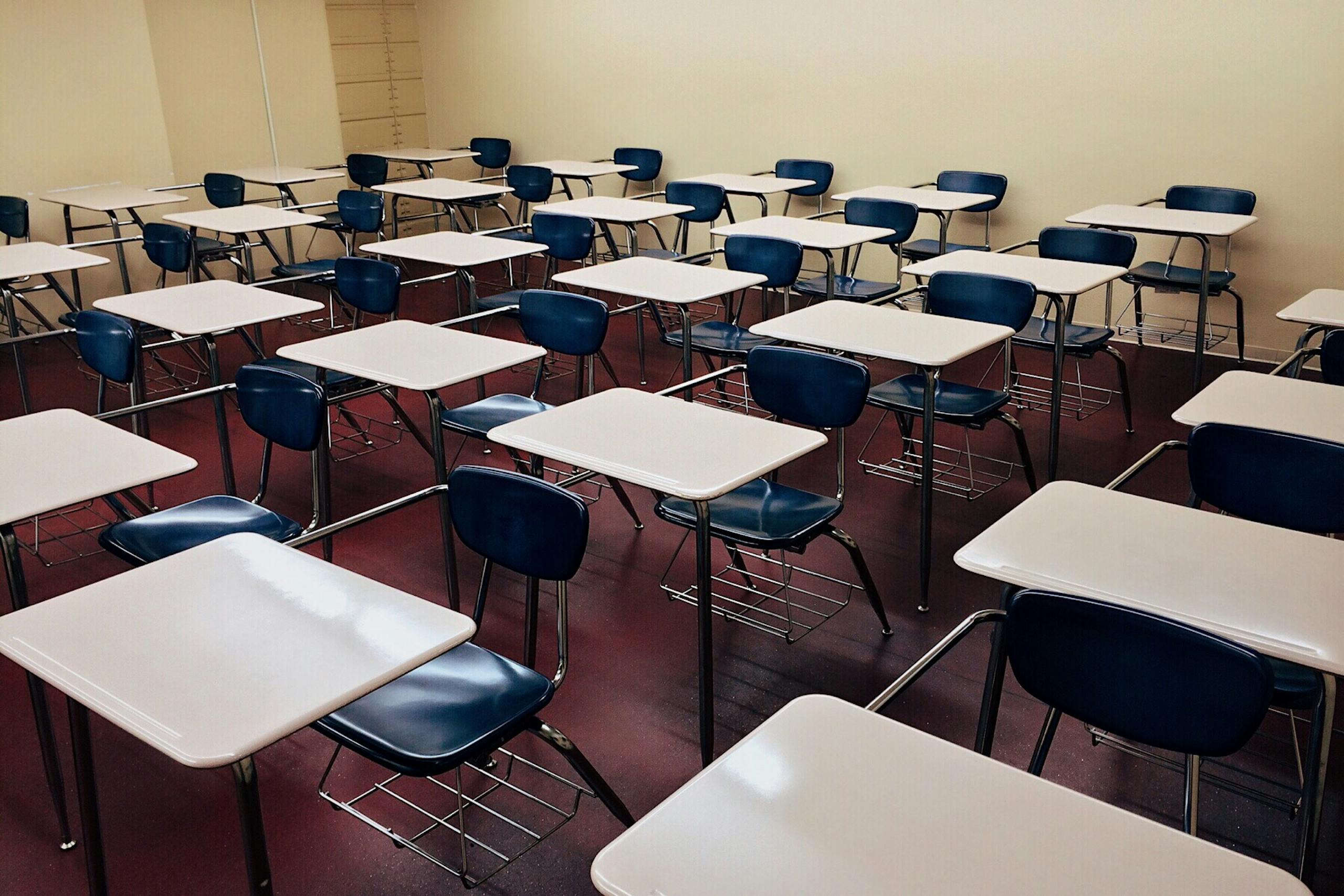

Yes, there are real advantages in the classroom for introverts, and they go well beyond simply preferring to study alone. Introverts tend to process information more deeply, concentrate for longer stretches, and bring a level of thoughtfulness to written work and independent projects that often translates directly into academic strength. These aren’t consolation prizes for struggling socially. They’re genuine cognitive and behavioral patterns that classrooms, at their best, reward.
That said, most schools weren’t designed with introverts in mind. Group projects, class participation grades, open-plan classrooms, and constant peer interaction can make the school day feel like an endurance test. Knowing where your natural strengths actually live, and how to protect your energy while using them, changes the whole picture.

Much of what makes introverts effective learners connects to something I explore more broadly in my Introvert Home Environment hub, which looks at how the spaces and rhythms we build around ourselves shape how well we think, create, and recover. The classroom is just one environment among many, and understanding how introverts relate to their surroundings is part of understanding why certain conditions help them thrive and others drain them dry.
Why Do Introverts Often Excel at Independent Work?
Spend enough time managing creative teams and you start to notice patterns. Some people do their best thinking in the middle of a brainstorm, feeding off the energy in the room. Others go quiet in group settings, then come back the next morning with something genuinely brilliant. I was always the second kind, and so were many of the strongest performers I worked with over my years running advertising agencies.
What’s your personality type?
Take our free 40-question assessment and get a detailed personality profile with dimension breakdowns, context analysis, and personalised insights.
Discover Your Type8-12 minutes · 40 questions · Free
Independent work suits introverts because it removes the social overhead. When you’re not spending mental energy tracking group dynamics, managing how you’re being perceived, or waiting for a pause in the conversation, that energy goes somewhere else. It goes into the actual problem. Essays, research papers, solo projects, reading comprehension tasks, these are all formats where depth of focus pays off, and depth of focus is something introverts tend to bring naturally.
There’s also something about the relationship between introverts and written communication that matters here. Many introverts find that writing gives them room to think in a way that speaking out loud doesn’t. The words can be revised. The thought can be completed before it’s shared. In my agency years, I noticed that my most introverted team members often produced the sharpest written briefs, even when they struggled to articulate the same ideas in a pitch meeting. The medium made the difference.
Classrooms that assign substantial writing, independent research, or take-home projects create conditions where this strength shows up clearly. And when introverted students learn to recognize this about themselves early, they can start choosing environments and formats that let them demonstrate what they actually know.
Does Deep Processing Give Introverts an Academic Edge?
One of the things I’ve come to understand about my own mind is that I rarely arrive at a conclusion quickly. I need to sit with information, turn it over, connect it to other things I already know, and let it settle before I can really say I understand it. That used to frustrate me. In fast-moving client meetings, it felt like a liability. Someone would ask a question and I’d be three beats behind while I processed it properly.
What I eventually realized is that the conclusions I reached through that slower process were usually more accurate and more durable. I wasn’t slow. I was thorough. And in academic settings, thoroughness matters enormously.
Introverts tend toward what psychologists sometimes describe as a longer processing style, where incoming information gets filtered through more associative layers before it becomes a response or a decision. This has real implications for learning. Concepts that get processed deeply are retained longer. Connections made between ideas tend to produce stronger comprehension. Tests that reward genuine understanding over surface recall tend to favor this approach.
A study published in PubMed Central examining personality and cognitive processing found meaningful differences in how introverts and extroverts engage with incoming stimuli, with introverts showing stronger activation in areas associated with internal processing and reflection. That’s not a weakness dressed up as a strength. It’s a genuinely different way of thinking that academic work, particularly at higher levels, tends to reward.

The challenge is that not every classroom format surfaces this strength. Multiple-choice tests under time pressure, rapid-fire class discussions, and group activities that reward whoever speaks first can obscure what an introverted student actually understands. Knowing that the processing strength exists, and advocating for opportunities to demonstrate it, is something introverted students can learn to do deliberately.
How Does Introvert Sensitivity Translate Into Stronger Observation?
There’s a quality that many introverts share with highly sensitive people, that tendency to notice more than others expect you to notice. Not just emotional undercurrents in a room, though that’s real too, but details in text, patterns in data, inconsistencies in an argument, the thing the teacher mentioned once in passing that turned out to be the whole point. I’ve written about how this overlaps with sensory sensitivity in my piece on HSP minimalism, where that same attentiveness that makes crowded environments exhausting also makes quiet, simplified spaces feel deeply restorative. The same perceptual sensitivity that creates overwhelm in one context creates insight in another.
In a classroom, this shows up as a student who catches the nuance in a primary source, who notices that the question on the exam has a hidden assumption, who reads a novel and comes away with observations that feel almost uncomfortably specific. These aren’t skills that announce themselves loudly. They tend to surface in written work, in one-on-one conversations with teachers, in the quality of questions asked rather than the quantity.
I had an introverted analyst on my team years ago who barely spoke in group strategy sessions. Her colleagues sometimes assumed she wasn’t engaged. But her written analysis was consistently the sharpest in the room, and when I started meeting with her individually to debrief after client presentations, I realized she’d been observing everything. She just needed a different format to share what she’d seen. Her observational depth was an asset. The meeting format had been hiding it.
Introverted students who develop awareness of this quality in themselves can start to channel it deliberately. Taking more detailed notes. Asking the teacher a specific question after class rather than in the middle of a discussion. Choosing essay topics that let them examine something closely rather than surveying broadly. The observation is already there. Directing it is a learnable skill.
What Role Does Sustained Focus Play in Introvert Learning?
Concentration is a resource, and different people have different relationships with it. Extroverts often find that social interaction replenishes their energy and sharpens their thinking. Introverts tend to find that solitude does the same thing. This has a direct practical consequence in academic settings: introverts often have a higher capacity for sustained, uninterrupted focus than their extroverted peers, particularly in quiet environments.
Long reading assignments, complex problem sets, research-heavy projects, these are all tasks that reward the ability to stay with something difficult for an extended period without needing external stimulation to stay engaged. Introverts who have learned to protect their quiet time and structure their study environment well often find that this capacity becomes one of their most reliable academic tools.
The home environment matters enormously here. A student who has a calm, low-distraction space to work in, somewhere that feels genuinely restorative rather than just functional, has a structural advantage over one who has to fight their environment to concentrate. I’ve spent a lot of time thinking about what makes a space work for introverted minds, from the simple comfort of a dedicated reading spot to the broader question of how to design a home that supports deep thinking rather than interrupting it.
When I was running my agency and had a major pitch to prepare, I never did my best thinking in the open-plan office. I’d come in early before anyone else arrived, or work from home on the most demanding creative and strategic work. Not because I was antisocial, but because I knew that my concentration was a finite resource and that I needed to spend it carefully. Introverted students who figure this out early, who learn to match their most demanding academic work to their highest-energy, lowest-distraction windows, tend to get significantly more out of the same amount of study time.

Are Introverts Actually Better at Listening in the Classroom?
One of the things that took me a long time to recognize as a strength was my tendency to listen more than I spoke. In meetings, in pitches, in client conversations, I was often the person who said the least and absorbed the most. I used to interpret that as a social shortcoming. It took years of professional experience to see it differently.
Introverts tend to be genuinely good listeners, not just politely quiet while waiting to speak, but actually processing what’s being said, tracking the argument, noticing the gaps. In a classroom context, this has real value. A student who listens carefully to a lecture absorbs more than one who is simultaneously planning their next comment. A student who tracks the thread of a class discussion rather than competing for airtime often understands the material more completely by the end of it.
There’s also something worth noting about the quality of contributions that tend to come from introverts when they do speak up. Because the threshold for speaking is higher, the comments tend to be more considered. Teachers often notice this. The student who rarely raises their hand but says something genuinely insightful when they do tends to be remembered differently than the student who dominates discussion with half-formed thoughts.
This connects to something Psychology Today has written about regarding introverts and meaningful conversation: the preference for depth over breadth in communication isn’t just a social preference. It reflects a genuine cognitive orientation toward substance. In academic discussions, that orientation tends to produce contributions that move a conversation forward rather than simply extending it.
How Can Introverts Handle Group Work Without Losing Their Edge?
Group work is probably where introverted students feel most at odds with the classroom environment. The format rewards quick verbal contributions, social confidence, and the ability to think out loud, none of which are natural introvert strengths. And yet group projects aren’t going away. They’re a fixture from elementary school through graduate programs, and learning to work within them without abandoning what makes you effective is a genuinely useful skill.
The most effective strategy I’ve seen, and one I used repeatedly in my own career when managing collaborative work, is to find the role within the group that plays to introvert strengths. Research, writing, editing, organizing the final product, these are all contributions that tend to be undervalued in the early stages of group work and absolutely essential by the end. An introverted student who volunteers for these roles isn’t opting out. They’re positioning themselves where they’ll do their best work.
There’s also value in using lower-stakes communication channels to stay connected with group members. Many introverts find that written communication, whether that’s a shared document, a group chat, or even a quick email, lets them contribute more fully than real-time discussion does. I’ve written elsewhere about how text-based environments can be genuinely comfortable spaces for introverts to communicate, and that principle applies in academic group work as much as anywhere else. Suggesting that the group use a shared document to collect ideas before meeting in person isn’t a workaround. It’s a format that tends to produce better output for everyone.
Managing energy around group work matters too. The social drain is real, and trying to do your best individual work immediately after an extended group session often doesn’t go well. Building in recovery time, even fifteen minutes of quiet before switching to independent study, helps maintain the quality of work across the full day.
What Do Introverts Need to Protect in Order to Perform Well Academically?
Energy management is the thing most introverted students aren’t taught to think about explicitly, and it might be the most important variable in academic performance. The capacity to do deep, focused work isn’t constant. It depletes through social interaction, environmental stimulation, and any situation that requires sustained performance in an extroverted mode. Protecting it means making deliberate choices about how the day is structured.
Sleep matters more for introverts than many realize. The processing that happens during rest, the consolidation of what was learned, the recovery from social drain, these are all functions that suffer when sleep is shortened. A student who stays up late studying in a depleted state often retains less than one who studied for a shorter time and slept well.
The physical environment of study is equally important. I’ve thought a lot about this in the context of how introverts design their home spaces to support recovery and deep work. A good book on homebody living and intentional space design can reframe this entirely, helping introverted students and their families understand that creating a calm, comfortable study environment isn’t indulgent. It’s functional. The right space produces better work.
For parents of introverted students, this is worth taking seriously when thinking about what to support. A thoughtfully chosen gift for a homebody student, something that enhances their quiet space rather than pulling them out of it, can have a real impact on how well they’re able to study and recover. The same thinking applies to a broader homebody gift guide approach for creating environments that genuinely support an introverted person’s best functioning.

Do Introverts Perform Differently on Different Types of Assessments?
Yes, and being aware of this pattern can help introverted students prepare more strategically. Written assessments, particularly essays and long-form responses, tend to be formats where introverts perform well relative to their actual knowledge. The format allows for the kind of careful, organized thinking that comes naturally to a mind oriented toward depth.
Oral presentations and in-class participation grades are often harder, not because introverts understand the material less, but because the performance context adds a layer of social demand that consumes cognitive resources. Research published in PubMed Central on personality and stress responses suggests that introverts tend to experience higher physiological arousal in evaluative social situations, which can interfere with performance even when underlying knowledge is solid. Knowing this, introverted students can prepare more thoroughly for oral components, practice in lower-stakes settings, and develop specific strategies for managing that arousal rather than being surprised by it.
Standardized tests present an interesting case. The timed, solitary format actually suits many introverts reasonably well, provided the content rewards comprehension over recall. Where introverts sometimes struggle is with the pace, specifically the pressure to produce answers quickly without time to fully process. Practicing under timed conditions, rather than only studying content, helps calibrate the response to that particular demand.
Teachers and educators who understand these patterns can make meaningful accommodations that don’t lower standards but do create fairer conditions for demonstrating knowledge. Allowing students to submit written questions after class rather than only during discussion, offering extended time on oral components, or providing essay alternatives to participation grades all represent ways that assessment design can stop penalizing introversion without compromising academic rigor.
What Long-Term Academic Habits Do Introverts Build That Pay Off Later?
Some of the most valuable professional skills I developed didn’t come from my most extroverted moments. They came from the habits I built around independent work, careful preparation, and the tendency to think before speaking. Those habits started forming in school, even when I didn’t recognize them as strengths at the time.
Introverts who lean into their natural orientation in school tend to develop a few habits that compound over time. The first is thoroughness. When you’re not trying to match the pace of the most vocal people in the room, you tend to be more careful. You check your work. You read the question twice. You notice when something doesn’t quite add up. These habits translate directly into professional settings where accuracy and depth matter.
The second is self-directed learning. Introverts often develop the ability to teach themselves things, to sit with a difficult concept until it makes sense, to seek out additional sources when the explanation in class wasn’t sufficient. In a world where continuous learning is increasingly essential, that capacity is genuinely valuable. A 2024 paper published in Frontiers in Psychology examining personality and learning approaches found that introversion was associated with stronger tendencies toward self-regulated learning, the ability to monitor, adjust, and direct one’s own learning process. That’s a skill that serves people well far beyond the classroom.
The third habit is reflection. Introverts tend to debrief their own experiences, to think back on what worked and what didn’t, to extract meaning from events rather than simply moving on to the next thing. In academic terms, this looks like reviewing mistakes on returned assignments, thinking about why a particular approach to a problem didn’t work, or connecting new material to things learned previously. It’s a habit that accelerates learning in ways that are hard to see in the short term but become obvious over years.
I’ve watched introverted people across my career build quietly formidable expertise in their fields through exactly this kind of steady, reflective accumulation. They’re rarely the loudest voice in the room. They’re often the most knowledgeable person in it.

There’s much more to explore about how introverts create the conditions they need to think, recover, and do their best work. My Introvert Home Environment hub brings together everything I’ve written on that topic, from study spaces to sensory design to the habits that help introverted minds function at their best.
About the Author
Keith Lacy is an introvert who’s learned to embrace his true self later in life. After 20 years in advertising and marketing leadership, including running agencies and managing Fortune 500 accounts, Keith now channels his experience into helping fellow introverts understand their strengths and build fulfilling careers. As an INTJ, he brings analytical depth and authentic perspective to every article, drawing from both professional expertise and personal growth.
Frequently Asked Questions
Are introverts naturally better students than extroverts?
Neither personality type is inherently a better student. Introverts tend to have natural strengths in areas like sustained focus, deep processing, and written communication, which align well with many academic formats. Extroverts often excel in collaborative work, oral presentations, and environments that reward quick verbal engagement. Academic performance depends on how well a student’s natural strengths match the formats being used to assess them, and both types can perform at the highest levels when their environment suits them.
Why do introverts sometimes struggle with class participation grades?
Class participation grades typically reward frequent verbal contributions in real-time group discussions, a format that plays to extrovert strengths. Introverts often process information more slowly and prefer to think before speaking, which means they contribute less frequently even when they understand the material deeply. The challenge isn’t knowledge or engagement. It’s a mismatch between the assessment format and how introverts naturally communicate. Strategies like preparing specific talking points before class, asking thoughtful questions rather than making frequent comments, and speaking with the teacher directly after class can all help demonstrate engagement in ways that feel more authentic.
How can parents support an introverted child’s academic performance at home?
Creating a calm, low-distraction study environment is one of the most impactful things parents can do. Introverted children tend to do their best work in quiet spaces where they can concentrate without interruption. Respecting their need for downtime after school before expecting homework engagement also matters, since social drain from a full school day is real and affects cognitive performance. Avoiding the pressure to socialize immediately after school, allowing for solitary recovery time, and treating quiet home time as productive rather than antisocial all support an introverted child’s ability to bring their best thinking to academic work.
Do introverts do better in online or remote learning environments?
Many introverts find remote or online learning formats genuinely easier to work within, largely because they reduce the social overhead of a traditional classroom. Written discussion boards, asynchronous video lectures, and independent project work all align well with introvert strengths. That said, online learning also requires strong self-regulation and the ability to stay motivated without external structure, skills that introverts often have but still need to develop deliberately. The format can be an advantage, but it isn’t automatically easier. It simply shifts the demands in ways that tend to suit introverted learners better.
What subjects tend to suit introverted students particularly well?
Introverts often gravitate toward subjects that reward depth, careful analysis, and independent exploration. Literature, history, philosophy, mathematics, computer science, and the natural sciences all tend to suit introverted learners well because they involve sustained engagement with complex material, often in formats that allow for written or independent demonstration of understanding. That said, introversion doesn’t determine aptitude. An introverted student can excel in any subject when the teaching and assessment formats allow them to demonstrate what they actually know, rather than penalizing the way they naturally process and communicate.