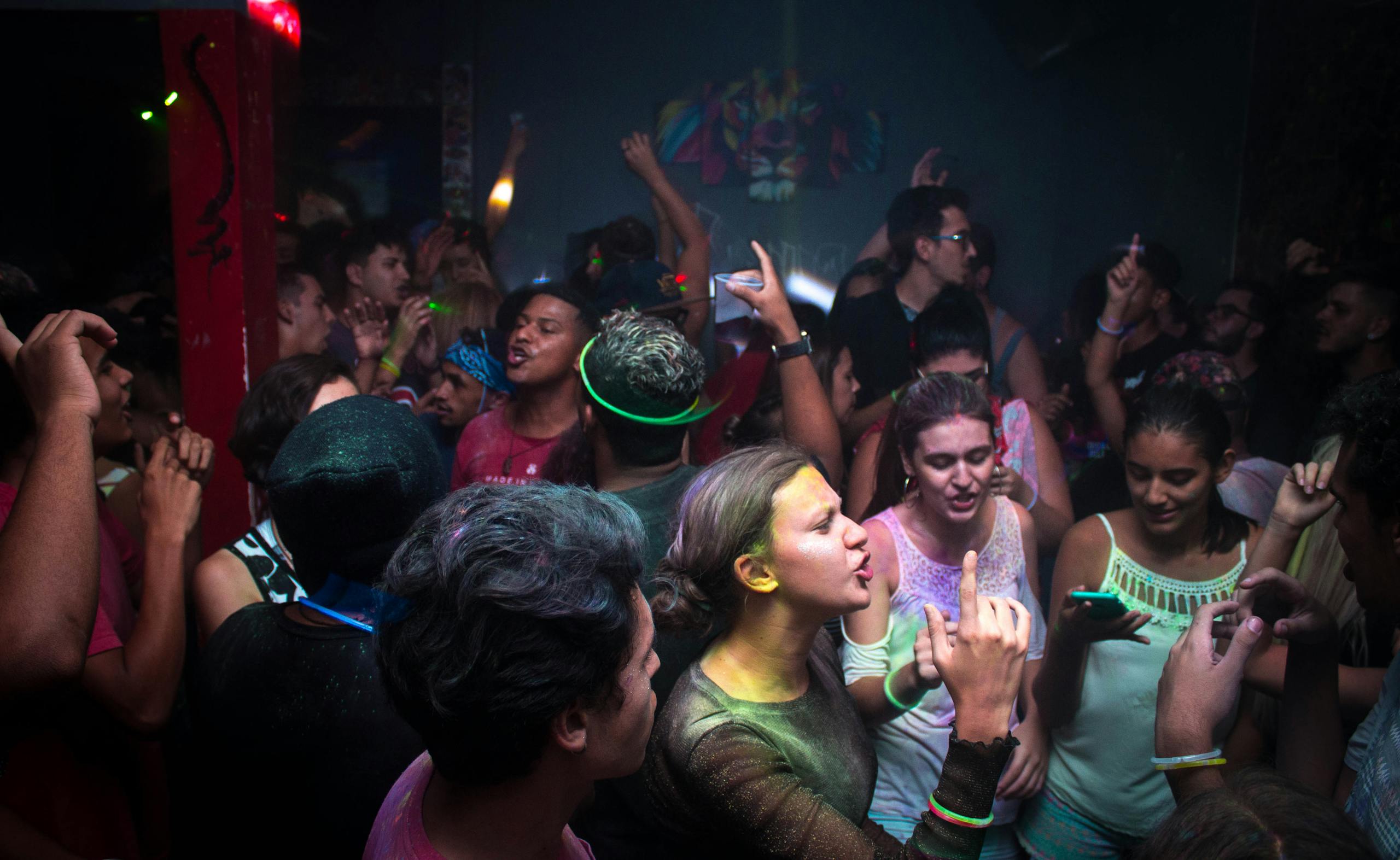
Most people assume extroverts dominate the population by a wide margin, but the actual split is far more balanced than popular culture suggests. Estimates from personality researchers generally place introverts somewhere between one-third and one-half of the population, with a significant portion of people falling somewhere in the middle as ambiverts. So while extroverts may edge out introverts in raw numbers, the gap is much narrower than most assume.
That gap matters less than what it reveals: we live in a world shaped by extroverted norms, yet a huge portion of the people around you process the world the same quiet way you do.

If you’ve ever wondered where you fit in the broader personality landscape, or why the world sometimes feels designed for someone else entirely, you’re in good company. Our Introversion vs Other Traits hub explores the full range of what it means to be wired for inward reflection in a world that often rewards outward expression. This article digs into the population question specifically, and what it actually means for how introverts experience everyday life.
Why Does the Introvert-Extrovert Population Question Matter?
Numbers carry weight. When someone tells you that most people are extroverts, it can quietly reinforce the idea that introversion is the exception, the deviation from some imagined human default. That framing shapes how introverts see themselves, and it shapes how organizations, schools, and workplaces get designed.
What’s your introvert superpower?
Every introvert has a quiet strength others overlook. Our free quiz identifies yours and shows you how to leverage it in your career and relationships.
Discover Your Superpower2-3 minutes · 10 questions · Free
I spent more than two decades running advertising agencies, and for most of that time I operated inside a professional culture that treated extroversion as the baseline for competence. Open floor plans, brainstorming sessions that rewarded whoever spoke first, client entertainment that stretched across entire evenings. The implicit message was clear: the ideal professional was someone who recharged in a crowd. Anyone who didn’t fit that mold was working against the grain.
What I didn’t realize until much later was that a significant portion of my team felt exactly the same way I did. The quiet ones weren’t rare. They were just quiet about being quiet.
Understanding the actual distribution of introverts and extroverts in the population isn’t just an academic exercise. It challenges the assumption that introversion is somehow marginal, and it opens the door to designing environments, conversations, and careers that work for everyone.
What Do Personality Researchers Actually Say About the Numbers?
Pinning down an exact percentage is genuinely difficult, partly because introversion and extroversion exist on a spectrum rather than as two distinct boxes. The Myers-Briggs Type Indicator, one of the most widely used personality frameworks in professional settings, has consistently found that roughly half of people identify as introverted when given the binary choice. Other frameworks and population samples produce slightly different distributions depending on how introversion is defined and measured.
What makes this complicated is the concept of ambiversion. Many people don’t sit firmly at either end of the spectrum. They draw energy from social connection in some contexts and need solitude to recover in others, depending on the situation, their mood, or the stakes involved. Research published in PubMed Central examining personality trait distributions suggests that introversion and extroversion, like most personality dimensions, tend to follow a roughly normal distribution across the population, meaning the extremes on either end are less common than the middle ground.
That middle ground is important. If you’ve ever felt like a fraud because you can hold your own at a networking event but desperately need a quiet evening afterward, you’re not broken. You might simply be closer to the center of the spectrum than the edges.
Worth noting: introversion is not the same thing as social anxiety, even though the two are frequently conflated. Introversion vs Social Anxiety: Medical Facts That Change Everything breaks down the clinical distinctions in detail, but the short version is that introversion is a stable personality trait related to how you process stimulation and energy, while social anxiety is a condition rooted in fear. Conflating the two distorts both the research and the lived experience of people who have one, the other, or both.
Why Do We Perceive Extroverts as the Majority?
Even if the numbers are closer to even than most people think, extroversion feels dominant in most Western professional and social environments. That perception isn’t accidental. It’s the result of systems built by and for people who thrive in high-stimulation, highly social settings.
Think about how most workplaces are structured. Meetings are the default mode for decision-making. Open offices eliminate quiet space. Performance reviews reward visibility and vocal contribution. Promotions often go to the people who speak up in rooms, not the ones who do the deepest thinking outside of them. The architecture of professional life tilts the playing field before anyone even sits down.
Early in my agency career, I watched a colleague get passed over for a leadership role despite doing exceptional strategic work. The feedback was that she “didn’t have enough presence in the room.” What that actually meant was that she processed information before speaking rather than thinking out loud, and in that particular culture, visible processing was mistaken for absence of thought. She was one of the sharpest people I’ve ever worked with. She was also deeply introverted. The two things had nothing to do with each other, but the culture couldn’t separate them.
That experience stayed with me. It’s one of the reasons I became more intentional about how I ran my own teams later on, specifically about creating space for different processing styles rather than defaulting to whoever was loudest in the room.
The perception of extrovert dominance is also reinforced by visibility bias. Extroverts, by nature, tend to take up more conversational and social space. They’re more likely to speak first in meetings, volunteer for public-facing roles, and build the kind of broad social networks that create professional visibility. Introverts do the same quality of work, often deeper work, but in ways that are less immediately observable. What’s visible gets counted. What’s quiet gets overlooked.
Does Culture Affect Whether More People Identify as Introverts or Extroverts?
Culture shapes personality expression in ways that make cross-cultural comparisons genuinely interesting. What counts as “introverted behavior” in one cultural context might be considered perfectly normal social conduct in another. Societies that place a high value on group harmony, contemplative communication, and careful listening may produce environments where introverted tendencies are less stigmatized and more visible.
In contrast, cultures that celebrate assertiveness, spontaneous self-expression, and outward charisma tend to pathologize quietness. The United States, where I’ve spent my entire career, sits firmly in the latter category. American professional culture, particularly in advertising and marketing, practically worships the extrovert ideal. The person who commands the room, pitches with flair, and works the cocktail hour is the person who gets celebrated. The person who writes the brilliant brief alone at their desk at 7 AM is often invisible.
Additional research available through PubMed Central on personality and social behavior suggests that cultural norms significantly influence how people express and even identify their own personality traits. Someone who is genuinely introverted but grew up in an environment that rewarded extroverted behavior may not recognize their own introversion until much later in life. I didn’t fully recognize mine until I was well into my forties.
It’s also worth acknowledging that introversion sometimes gets tangled up with other traits that have their own distinct characteristics. Introversion vs Autism: What Nobody Tells You addresses one of the most common areas of confusion, where the preference for solitude and depth of focus that many introverts share can superficially resemble traits associated with autism spectrum conditions, even though they’re fundamentally different in origin and experience.

What Does It Mean That So Many People Fall in the Middle?
The concept of ambiversion deserves more attention than it typically gets. If personality researchers are right that most people cluster somewhere in the middle of the introversion-extroversion spectrum rather than at the poles, that has real implications for how we talk about these traits.
For one thing, it means the binary framing of “introvert vs. extrovert” is a simplification. Useful, yes. Accurate as a complete picture of human personality, not quite. Most people have the capacity to draw on both modes depending on context. An introvert can deliver a powerful presentation. An extrovert can sit with a problem in solitude and do excellent analytical work. The difference lies in what costs them energy and what restores it, not in what they’re capable of doing.
That said, the distinction still matters, because energy management is real. I can work a room at a client event with genuine warmth and effectiveness. I’ve done it hundreds of times. But it costs me something. After a full day of back-to-back client meetings and a dinner that ran until 10 PM, I needed the next morning to myself to think clearly again. That’s not weakness. That’s just how my system works. An extroverted colleague in the same situation would have come in the next morning energized by all that connection. Neither of us was wrong. We were just different.
The middle of the spectrum also raises interesting questions about personality flexibility. Introversion: Why You Can Actually Change (Sometimes) explores the distinction between introversion as a fixed trait versus a state that can shift with circumstances, life stage, or deliberate practice. The short answer is that your core wiring tends to be stable, but your expression of it has more flexibility than most people realize.
How Does the Population Balance Affect Introverts in the Workplace?
Even if introverts and extroverts exist in roughly equal numbers, workplaces are rarely designed with that balance in mind. The structures that govern most professional environments, open collaboration, real-time brainstorming, constant availability, verbal performance in meetings, tend to favor extroverted processing styles.
What this means practically is that introverts often spend significant energy adapting to environments that weren’t built for them, and that adaptation has a cost. Over time, the cumulative weight of performing extroversion in an extroverted culture can erode confidence, creativity, and even physical wellbeing.
One of the things I changed when I moved into agency leadership was the structure of our creative reviews. Instead of putting people on the spot in real-time group critiques, I started circulating briefs and concepts in advance so that everyone had time to process before the meeting. The quality of feedback improved dramatically. The introverts on my team, who had previously said little in group settings, started contributing some of the sharpest thinking in the room. They hadn’t been disengaged before. They’d been processing on a timeline that didn’t match the format.
Small structural changes like that don’t require anyone to change their personality. They just create space for different processing styles to contribute at their best. Psychology Today’s exploration of why deeper conversations matter touches on something related: when we design interactions for depth rather than speed, the people who think carefully before speaking have a genuine advantage, and the quality of the work improves for everyone.
There’s also the question of leadership. The assumption that leadership requires extroversion is one of the most persistent and damaging myths in professional culture. Harvard’s Program on Negotiation has examined whether introverts are at a disadvantage in high-stakes professional interactions, and the findings are more nuanced than the stereotype suggests. Introverts bring genuine strengths to negotiation and leadership, including careful listening, strategic patience, and the ability to read a room without filling it with noise.

Are There More Introverts Now Than There Used to Be?
This is a question worth sitting with, because the cultural moment we’re in has genuinely shifted some of the conditions around introversion. Remote work, asynchronous communication, and digital-first professional environments have created more structural space for introverted working styles than existed even fifteen years ago.
Whether that means more people are introverts now, or simply that more people feel comfortable identifying as introverts, is a different question. Personality traits are generally considered stable across a lifetime, though their expression shifts with age and experience. What’s changed is the cultural permission structure. Introversion has become a more visible and accepted identity, partly through the rise of personality frameworks in popular culture and partly through the pandemic-era normalization of working from home.
There’s also a growing awareness that some traits previously lumped under the introversion umbrella have their own distinct identities. ADHD and Introversion: Double Challenge explores what happens when two frequently misunderstood traits overlap, because some people who identified as introverts for years later discover that ADHD was also part of the picture, shaping their energy, focus, and social experience in ways that introversion alone didn’t fully explain.
The broader point is that increased cultural awareness hasn’t necessarily changed the underlying population distribution. It’s made more people willing to name what was already true about themselves.
What Happens When Introverts Mistake Their Trait for Something Darker?
One of the more uncomfortable corners of this conversation involves what happens when introverts spend too long in environments that drain them without relief. The fatigue and irritability that come from sustained overstimulation can start to feel like something more than a preference for quiet. It can start to feel like a general dislike of people.
I’ve been there. There were stretches during my agency years when I’d get to the end of a week of nonstop client interaction and feel genuinely hostile toward the idea of any further human contact. Not sad, not anxious, just done. I’d cancel plans, ignore calls, and spend entire weekends in near-total solitude. At the time I wondered if something was wrong with me beyond introversion.
What I eventually understood was that I wasn’t misanthropic. I was depleted. The distinction matters enormously. I Don’t Like People: Is It Misanthropy or Just Introversion? addresses this directly, because the two can feel similar from the inside but have very different implications for how you relate to yourself and others over time.
Genuine misanthropy is a worldview. Introvert depletion is a resource problem. One requires philosophical examination. The other requires rest, solitude, and better energy management going forward. Knowing the difference can save you from a lot of unnecessary self-criticism.
Conflict between introverts and extroverts in close relationships or professional settings can also compound this exhaustion. Psychology Today’s four-step approach to introvert-extrovert conflict resolution offers a practical framework for those moments when different processing styles create friction, particularly in partnerships or teams where one person needs to talk through problems and the other needs to think through them first.
What Does the Population Balance Mean for How You See Yourself?
Knowing that introverts make up somewhere between a third and half of the population, with a large middle ground of ambiverts on either side, should do something to the story you tell yourself about who you are.
You are not rare in the sense of being defective. You are not an anomaly that the world forgot to account for. You are part of a substantial portion of humanity that processes experience inwardly, that finds depth more energizing than breadth, and that does some of its best work in quiet.
The world may have been built with extroverted defaults, but those defaults are increasingly being questioned. Frontiers in Psychology has published work examining personality and professional performance that adds nuance to the old assumption that extroversion is simply better for outcomes in social and professional domains. The picture is more complex, and more encouraging for introverts, than the conventional wisdom suggests.
For me, the shift came when I stopped trying to calculate whether I was in the majority or minority and started paying attention to what actually worked. What kind of environment let me think clearly? What kind of interactions left me feeling energized rather than hollowed out? What did my best work look like, and under what conditions did it happen? Those questions turned out to be far more useful than any population statistic.

Understanding where introversion fits alongside other traits, how it differs from anxiety, autism, ADHD, and misanthropy, and how much flexibility exists within the trait itself, is the kind of grounded self-knowledge that changes how you move through the world. Our complete Introversion vs Other Traits resource hub is a good place to keep exploring those distinctions with the depth they deserve.
Know your quiet strength?
Six superpower types, each with career implications and curated reading to develop your specific strength further.
Take the Free Quiz2-3 minutes · 10 questions · Free
About the Author
Keith Lacy is an introvert who’s learned to embrace his true self later in life. After 20 years in advertising and marketing leadership, including running agencies and managing Fortune 500 accounts, Keith now channels his experience into helping fellow introverts understand their strengths and build fulfilling careers. As an INTJ, he brings analytical depth and authentic perspective to every article, drawing from both professional expertise and personal growth.
Frequently Asked Questions
Are there more extroverts or introverts in the world?
The best available evidence suggests that extroverts may slightly outnumber introverts, but the margin is far smaller than popular culture implies. Personality researchers generally estimate that introverts make up somewhere between one-third and one-half of the population, with a large portion of people falling somewhere in the middle as ambiverts. The idea that extroverts vastly dominate is more myth than reality.
What percentage of people are introverts?
Estimates vary depending on the framework and population studied, but many personality researchers place introverts at roughly 30 to 50 percent of the population. The variation comes partly from how introversion is defined and measured, and partly from the significant number of people who fall in the ambivert range and don’t fit neatly into either category.
Is introversion becoming more common?
Introversion as a trait is generally considered stable across populations over time, so it’s unlikely that more people are becoming introverted in a biological sense. What has changed is cultural visibility and acceptance. Remote work, digital communication, and growing awareness of personality diversity have made it easier for people to identify and name their introversion. More people are recognizing the trait in themselves, even if the underlying distribution hasn’t shifted dramatically.
Why does the world seem designed for extroverts if there are so many introverts?
Most Western professional and social institutions were built around extroverted norms: open workplaces, verbal performance in meetings, real-time collaboration, and constant availability. These structures reflect historical assumptions about what productivity and leadership look like, not an accurate accounting of how the population is actually distributed. The result is a visibility bias where extroverted behavior gets rewarded and introverted contributions, which often happen quietly and independently, go unnoticed even when the work is exceptional.
Can someone be both an introvert and an extrovert?
Yes, and this is actually the most common position on the personality spectrum. People who draw meaningfully on both introverted and extroverted tendencies depending on context are often described as ambiverts. Most personality researchers believe that introversion and extroversion exist on a continuum rather than as two fixed categories, and that the majority of people sit somewhere in the middle rather than at the extremes. This doesn’t mean someone is “neither,” it means they have genuine access to both modes of engaging with the world.