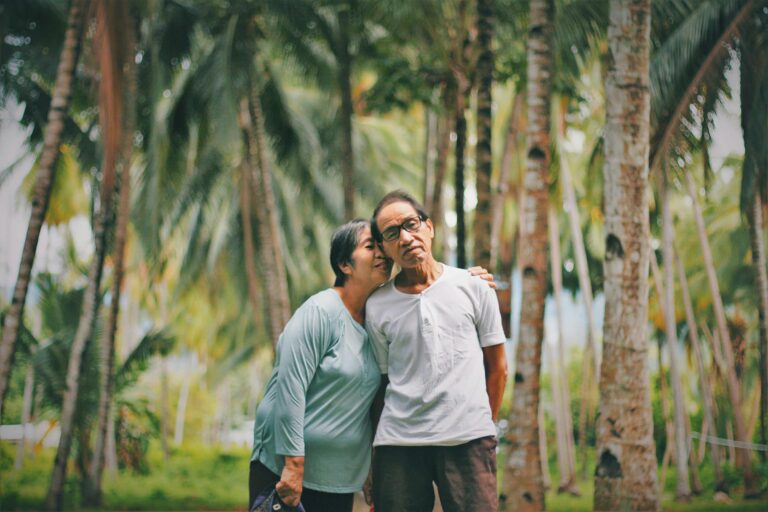

Wearing a human suit is what many people with social anxiety call it privately: that performance of ease, warmth, and belonging that feels utterly foreign to the person inside. For creatively wired, deeply feeling individuals, art becomes one of the few places where the suit comes off, where the internal experience gets to exist without apology. The intersection of art, social anxiety, and the masks we wear to survive social life is more layered than most mental health conversations acknowledge.
Art does something specific for people who find social interaction exhausting or frightening. It externalizes the interior. It gives form to the formless. And for many introverts and highly sensitive people, it may be the first honest language they ever find.
If you’ve been thinking about the emotional weight that comes with social anxiety, many introverts share this in finding that creative expression is tied up in it. Our Introvert Mental Health Hub explores the full range of these experiences, from sensory overwhelm to emotional processing to the specific ways anxiety shows up for people wired for depth. This article adds another layer: what art actually does inside that experience, and why the human suit metaphor resonates so deeply with so many.
What Does the “Human Suit” Actually Mean?
I heard this phrase for the first time from a creative director I managed early in my agency career. She was exceptionally talented, the kind of person who could concept a campaign in an afternoon that would take a committee three weeks to produce. She also visibly braced herself before every client meeting, every all-hands presentation, every social gathering attached to a pitch. One afternoon, after a particularly draining new business dinner, she said to me quietly, “I’ve been wearing my human suit all day. I need to go home and take it off.”
What’s your personality type?
Take our free 40-question assessment and get a detailed personality profile with dimension breakdowns, context analysis, and personalised insights.
Discover Your Type8-12 minutes · 40 questions · Free
I knew exactly what she meant, even if I hadn’t named it that way myself. As an INTJ who spent most of my agency years performing extroversion, I’d been doing the same thing. The human suit is the social performance layer that people with social anxiety, and many introverts, construct to function in environments that feel fundamentally misaligned with how they actually operate. It’s not dishonesty. It’s survival.
The American Psychological Association distinguishes shyness, introversion, and social anxiety as overlapping but distinct experiences. What ties them together in many people’s lives is this sense of performing a version of themselves that fits external expectations while the actual self watches from somewhere further back. The suit is adaptive. It’s also exhausting.
What makes art relevant here is that it’s one of the few activities where the suit isn’t required. You can make something true without having to defend it in real time, without reading a room, without managing another person’s reaction while simultaneously managing your own nervous system.
Why Highly Sensitive People Often Turn to Art
Not everyone with social anxiety is a highly sensitive person, and not every HSP has social anxiety. But the overlap is significant enough that the two experiences frequently inform each other. HSPs process sensory and emotional information more deeply than most people, which means social environments carry a heavier cognitive and emotional load. Crowded rooms, unpredictable social dynamics, the pressure to perform ease: all of it registers more intensely.
That intensity needs somewhere to go. For many HSPs, art becomes the container. Painting, writing, music, ceramics, photography: these are activities that match the pace of deep internal processing. They don’t require you to respond in real time. They don’t penalize you for needing to sit with something before you can articulate it. If you’ve ever felt overwhelmed in social settings in ways that seem disproportionate to what’s actually happening, understanding HSP overwhelm and sensory overload can help explain why the nervous system responds the way it does, and why quieter, creative outlets provide genuine relief rather than just distraction.
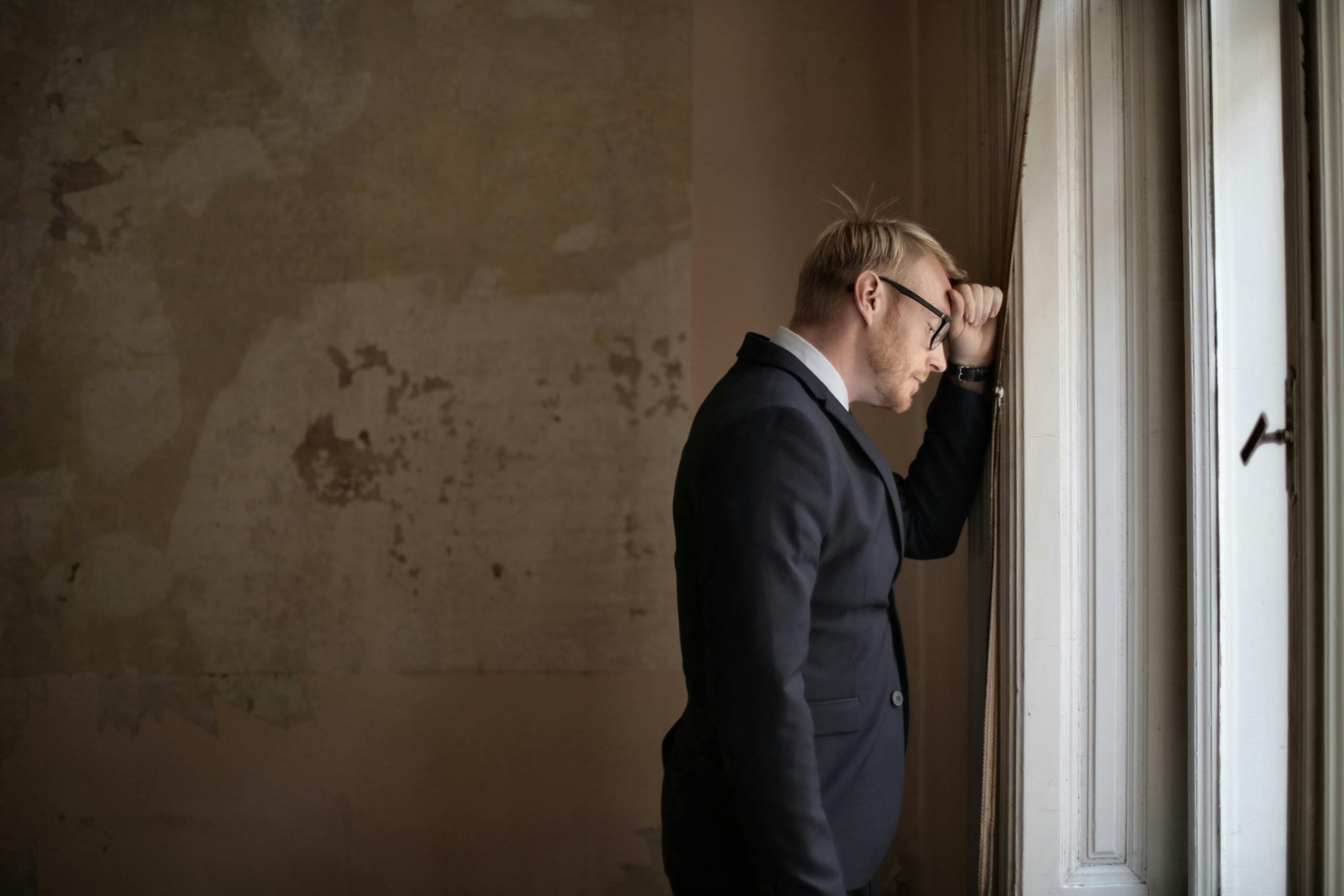
I’ve watched this pattern play out across two decades of managing creative teams. The people most naturally drawn to the craft of advertising, the ones who cared most deeply about the work itself, were often the ones most visibly uncomfortable in the social theater of agency life. Client presentations, agency parties, the performative confidence of pitching: these things cost them something real. And many of them made their best work in the quiet margins, early mornings before the open-plan office filled up, late evenings after everyone else had left.
That’s not a productivity quirk. It’s a nervous system preference. And it connects directly to why art, as a solitary or low-stakes social activity, functions differently than most other forms of engagement for people wired this way.
How Social Anxiety Shapes Creative Expression
Social anxiety doesn’t just affect how people behave in social situations. It shapes what they make and why they make it. The American Psychological Association describes anxiety as involving persistent worry about future events and a heightened sense of threat. When that threat is specifically social, the creative work that emerges often reflects a preoccupation with being seen, misunderstood, judged, or excluded.
Some of the most arresting art in any medium comes from people who were working through exactly this. The work is often marked by a quality of interiority, a sense that the artist is speaking from somewhere very private, very carefully. There’s a reason so much of it resonates with audiences who feel the same way. Depth recognizes depth.
But social anxiety also creates obstacles within the creative process itself. The fear of judgment doesn’t disappear when you’re alone with a canvas or a keyboard. It migrates inward. It becomes the inner critic that tells you the work isn’t good enough, that sharing it will expose you, that finishing it means risking rejection. The HSP perfectionism trap is particularly relevant here: when you feel everything deeply, the gap between your vision and your execution can feel unbearable, and that gap often stops creative work before it starts.
I’ve experienced this myself, not in visual art but in writing. Every article I publish goes through a version of this internal negotiation. There’s the part of me that wants to say something true, and the part of me that’s already anticipating how it might be received, misread, or dismissed. That negotiation is quieter now than it used to be. But it’s never entirely gone.
The Mask and the Canvas: Art as Authentic Expression
One of the more interesting things about social anxiety is how it creates a split between the performed self and the experienced self. You’re doing one thing while feeling another. You’re presenting ease while cataloguing every social cue in the room. You’re laughing at the right moment while internally processing a comment from three exchanges ago that might have carried a subtext, or might not have.
Art collapses that split, at least temporarily. When you’re genuinely absorbed in making something, the performance layer goes quiet. You’re not managing an impression. You’re following a line, a word, a sound. The psychologist Mihaly Csikszentmihalyi called this state flow, and it’s particularly accessible through creative work because the activity provides its own feedback loop without requiring social validation to sustain it.
For people with social anxiety, this is significant. Most activities that feel rewarding come with a social component that reintroduces the threat response. Art, particularly solitary creative practice, can provide genuine absorption and meaning without triggering the same alarm systems. That’s not escapism. It’s a legitimate form of nervous system regulation.
What’s worth noting is that the emotional processing that happens during creative work is real processing, not just avoidance. People who feel things deeply often struggle to articulate their emotional experience in conversation, where the pace is set by someone else and there’s no time to find the right words. Art gives them the time. It gives them the medium. For a more complete look at how deep emotional processing works and why it matters, HSP emotional processing covers the terrain in ways that apply directly to creative people managing anxiety.

When Sharing the Work Brings the Anxiety Back
Making art in private is one thing. Sharing it is another conversation entirely. And for people with social anxiety, the moment of sharing is often where the human suit goes back on, sometimes more tightly than it fits in ordinary social situations.
Sharing creative work is a particular kind of exposure. You’re not just presenting yourself in a social context. You’re presenting something you made from the inside out, something that reflects your perception, your sensibility, your interior life. The vulnerability is qualitatively different from ordinary social risk. A Psychology Today article on introversion and social anxiety makes the point that for many people, these experiences compound each other: the introvert’s discomfort with extended social exposure meets the anxious person’s threat response to judgment, and creative sharing triggers both.
I saw this clearly with a copywriter I managed during a major rebrand for a financial services client. He was brilliant, genuinely one of the best I’ve worked with. His internal drafts were extraordinary. But getting him to present his own work in a room full of stakeholders was like asking someone to perform surgery on themselves. He’d minimize the work before anyone else could. He’d preemptively apologize for choices he’d made deliberately and thoughtfully. He was protecting himself from rejection by rejecting his own work first.
That pattern, preemptive self-dismissal as a shield against external criticism, is one of the more painful ways social anxiety intersects with creative life. It keeps the work hidden or diminished. It prevents the very connection that art is capable of creating. And it often looks, from the outside, like a lack of confidence when it’s actually a very active, very exhausting form of self-protection.
The fear underneath that pattern is almost always about rejection. Not just the rejection of the work, but the rejection of the self that made it. When creative expression is authentic, the two are hard to separate. Understanding how HSPs process rejection helps explain why creative sharing feels so high-stakes for people wired this way, and why the wound of a dismissive response to creative work can cut so much deeper than it might seem to warrant.
Empathy, Art, and the Cost of Feeling Everything
There’s a particular kind of person who makes art because they feel too much to do anything else with it. They absorb the emotional texture of rooms, relationships, and interactions in ways that can be genuinely overwhelming. Their empathy is both the source of their creative insight and a significant contributor to their social anxiety.
When you feel other people’s emotional states as vividly as your own, social environments become extraordinarily complex. You’re not just managing your own responses. You’re tracking everyone else’s. You’re picking up on the tension between two colleagues across a conference table, the disappointment behind a client’s polite smile, the subtle shift in energy when someone feels unheard. That level of attunement is exhausting, and it’s one of the reasons that social anxiety and high empathy so often travel together. HSP empathy is genuinely double-edged: it makes you a more perceptive artist and a more attuned human being, and it makes ordinary social situations significantly harder to move through without cost.
Art becomes the place where that empathy gets to do its work without the social overhead. You can feel deeply into a subject, a character, a color relationship, a lyric, without simultaneously managing the social dynamics of a room. The emotional intelligence that makes social life difficult becomes a creative asset when it’s channeled into making something.
Some of the most compelling work in any creative field comes from exactly this kind of person. The work carries weight because it was made by someone who felt the weight. That’s not a coincidence.

Art Communities and the Particular Anxiety of Creative Belonging
One of the more counterintuitive challenges for socially anxious creative people is that the communities built around art, writing groups, open mic nights, gallery openings, online creative forums, can be just as socially fraught as any other environment. Sometimes more so, because the stakes feel higher.
Creative communities carry their own social hierarchies, their own unspoken rules about what’s worthy and what isn’t, their own dynamics of belonging and exclusion. For someone already managing social anxiety, entering those spaces requires a particular kind of courage. You’re bringing your interior life into a room full of people who are also bringing theirs, and the comparison is inevitable.
A PubMed Central paper on social anxiety and avoidance behavior highlights how avoidance, while providing short-term relief, tends to reinforce the anxiety over time. Creative communities present this dilemma acutely: the very environments that could offer connection and validation are often the ones that feel most threatening to approach.
What I’ve noticed, both in my own experience and in watching the creative people I’ve managed over the years, is that the anxiety around creative communities often has less to do with the social interaction itself and more to do with the question of legitimacy. Am I really a writer? Am I really an artist? Do I belong in this room? That question, which is fundamentally about identity rather than social skill, sits underneath a lot of the avoidance behavior that looks like social anxiety from the outside.
Addressing HSP anxiety in creative contexts means working with that identity question directly, not just the surface-level social discomfort. It means building a relationship with your own creative identity that doesn’t depend on external validation to feel real.
Taking Off the Suit: What Art Actually Offers
There’s a line from a Psychology Today piece on Jung’s typology that has stayed with me: the idea that psychological wholeness requires integrating the parts of ourselves we’ve been hiding, not performing them away. For people with social anxiety, the human suit is a way of hiding. Art is one of the ways the hidden parts find form.
That’s not a small thing. For someone who has spent years managing their social presentation, who has learned to read rooms and calibrate responses and perform ease they don’t feel, having a practice that doesn’t require any of that is genuinely restorative. It’s not just pleasant. It’s part of how the self stays coherent under the pressure of constant social performance.
What art offers, at its most functional, is a space where the gap between the performed self and the experienced self closes. You don’t have to be two people at once. You can just be the one making the thing. That’s a form of rest that most other activities don’t provide for people wired this way.
Harvard Health notes that effective approaches to social anxiety typically involve both addressing the underlying thought patterns and building genuine sources of self-worth that aren’t contingent on social performance. Creative practice, when it’s sustained and honest, does both. It builds competence that feels real because it was earned in private, without an audience. And it gradually shifts the internal narrative from “I’m performing adequately” to “I’m making something true.”
That shift doesn’t happen overnight. It doesn’t happen because someone told you art is therapeutic. It happens through the accumulation of small moments where you made something honest and the world didn’t end. Where you shared something vulnerable and someone recognized themselves in it. Where the suit came off and it turned out the person underneath was worth knowing.

The neuroscience behind why creative engagement affects anxiety the way it does is still being mapped. A PubMed Central review on creative arts and mental health points toward the role of focused attention, emotional expression, and self-efficacy in explaining why art-based activities consistently show up as beneficial for anxiety-related conditions. The mechanisms are real, even if the full picture is still coming into focus.
What I know from my own experience is simpler than the neuroscience. Writing this site, writing these articles, has been one of the most honest things I’ve done with the second half of my career. It doesn’t require the human suit. It asks for the actual person. And that’s both the scariest and the most worthwhile thing about it.
If you’re exploring the broader landscape of mental health as an introvert or highly sensitive person, the Introvert Mental Health Hub brings together everything from anxiety and overwhelm to emotional processing and rejection sensitivity in one place.
About the Author
Keith Lacy is an introvert who’s learned to embrace his true self later in life. After 20 years in advertising and marketing leadership, including running agencies and managing Fortune 500 accounts, Keith now channels his experience into helping fellow introverts understand their strengths and build fulfilling careers. As an INTJ, he brings analytical depth and authentic perspective to every article, drawing from both professional expertise and personal growth.
Frequently Asked Questions
What is the “human suit” in the context of social anxiety?
The human suit is an informal metaphor for the social performance layer that people with social anxiety construct to function in environments that feel misaligned with their natural way of operating. It describes the experience of performing ease, warmth, and social fluency while internally feeling something quite different. Many introverts and highly sensitive people recognize this description immediately because it names something they’ve experienced but rarely seen articulated. Art and creative practice are often described as spaces where the suit comes off, where the internal experience gets to exist without being managed or performed.
Can making art actually help with social anxiety?
Creative practice can be a genuine support for people managing social anxiety, though it works differently than clinical treatment. Art provides a space where the threat response associated with social judgment is reduced or absent, allowing for emotional processing, self-expression, and the development of competence and self-worth that don’t depend on social performance. Over time, that foundation can shift the internal narrative in ways that make social situations feel less threatening. Harvard Health and other medical sources note that building genuine self-worth outside of social validation is a meaningful component of managing social anxiety, and sustained creative practice contributes to exactly that.
Why do highly sensitive people often gravitate toward creative expression?
Highly sensitive people process sensory and emotional information more deeply than most, which means they carry a heavier cognitive and emotional load through ordinary social and environmental experiences. That intensity needs somewhere to go. Creative expression, whether visual art, writing, music, or other forms, matches the pace of deep internal processing in a way that most social activities don’t. It doesn’t require real-time response. It doesn’t penalize the need to sit with something before articulating it. And it provides a channel for the emotional depth that HSPs experience, turning what can be overwhelming in social contexts into a genuine creative asset.
Why does sharing creative work feel so much more anxiety-producing than ordinary social interaction?
Sharing creative work is a qualitatively different kind of exposure than ordinary social interaction because the work itself comes from the interior. When you share something you made from the inside out, you’re not just presenting yourself in a social context. You’re presenting your perception, your sensibility, your way of seeing. For people with social anxiety, the fear of judgment is already heightened in ordinary social situations. When the thing being judged is something that reflects your inner life this directly, the stakes feel significantly higher. This is compounded for highly sensitive people, who tend to experience rejection more intensely and process it more deeply than most.
Is social anxiety the same as introversion, and does it affect creative people differently?
Social anxiety and introversion are distinct experiences that frequently overlap. Introversion is a personality orientation toward internal processing and a preference for less stimulating social environments. Social anxiety is a fear response to social situations that involves anticipating judgment, embarrassment, or rejection. Many introverts don’t have social anxiety, and some extroverts do. For creative people, both experiences can shape the work itself, influencing what gets made, how it gets shared, and what the relationship to creative community looks like. The intersection is worth understanding clearly because the strategies that help with introversion and those that help with social anxiety, while sometimes overlapping, are not identical.