

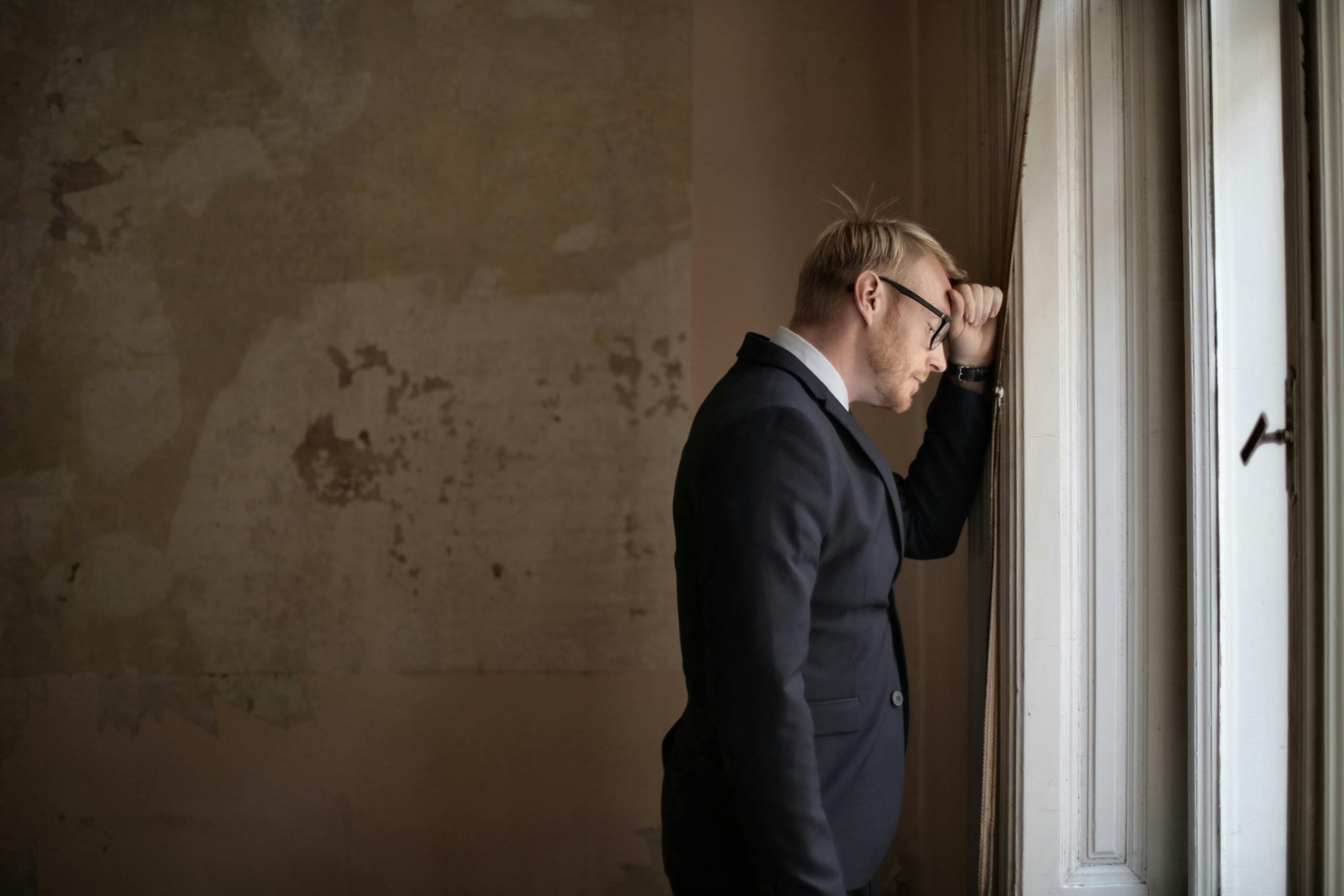
Social anxiety in your 20s in America is one of the most common and least talked-about mental health experiences of early adulthood. It shows up as a persistent fear of social judgment, a tendency to rehearse conversations before they happen, and an exhaustion that has nothing to do with how much sleep you got. For many young Americans, this isn’t shyness or introversion. It’s a real, recognized condition that shapes careers, friendships, and the quiet story you tell yourself about who you are.
What makes your 20s particularly complicated is that society expects you to be thriving socially. You’re supposed to be networking, dating, building your professional reputation, going out. When anxiety makes all of that feel like walking through wet concrete, the gap between where you are and where you think you should be can feel enormous.
I know something about that gap. Not because my 20s were a disaster, but because I spent them performing a version of myself I thought the world needed, and quietly wondering why it cost so much.

If you’re working through anxiety, introversion, or the emotional weight that comes with feeling deeply in a loud world, our Introvert Mental Health Hub covers the full range of these experiences, from sensory overwhelm to perfectionism to the complicated terrain of empathy. This article focuses on something specific: what social anxiety actually looks like in your 20s in America, why this decade amplifies it, and what genuinely helps.
Why Your 20s Are a Social Anxiety Pressure Cooker
There’s a particular cruelty to social anxiety arriving, or intensifying, right when you’re expected to be building your entire adult life. Your 20s in America are framed culturally as the decade of becoming. You’re supposed to find your career, your people, your identity. The pressure to be socially competent, professionally visible, and personally magnetic is everywhere.
What’s your personality type?
Take our free 40-question assessment and get a detailed personality profile with dimension breakdowns, context analysis, and personalised insights.
Discover Your Type8-12 minutes · 40 questions · Free
When I started my first agency job in my mid-20s, the unspoken currency was confidence. Not competence, confidence. The people who got noticed were the ones who filled rooms. I watched colleagues walk into client presentations like they owned the building, and I’d be in the hallway beforehand running through every possible thing I might say wrong. I was good at my job. But I was spending enormous energy managing a version of social dread that I didn’t have language for yet.
What I didn’t know then was that this experience is extraordinarily common. The American Psychological Association recognizes anxiety disorders as among the most prevalent mental health conditions in the country, and social anxiety disorder specifically tends to emerge in adolescence and early adulthood. Your 20s aren’t just when life gets socially demanding. They’re often when the condition becomes impossible to ignore.
Several forces converge in this decade to make things harder. You’re likely in new environments repeatedly, new jobs, new cities, new social circles, which means your nervous system is constantly recalibrating. You’re doing this without the scaffolding of school structures that used to organize your social world. And you’re doing it while social media provides a constant, curated comparison of how well everyone else seems to be handling it.
What Makes Social Anxiety Different From Ordinary Nervousness
Everyone gets nervous before a big presentation or an awkward first date. Social anxiety is something categorically different. It’s not situational nervousness. It’s a pervasive pattern of fear around social situations, specifically around being evaluated, judged, or humiliated by others.
The DSM-5 criteria describe social anxiety disorder as a marked fear of social situations in which the person may be scrutinized, a fear that the anxiety will show and cause further embarrassment, and avoidance behavior that interferes with daily functioning. That last part matters. It’s not about feeling uncomfortable. It’s about how that discomfort shapes your decisions.
In your 20s, avoidance can look like turning down opportunities that seem too exposed. Declining the networking event. Not raising your hand in the meeting. Canceling plans at the last minute because the anticipatory anxiety became unbearable. Each avoidance provides short-term relief and long-term reinforcement of the fear. The anxiety learns that avoidance works, and so it demands more of it.
There’s also a distinction worth drawing between social anxiety and introversion, because conflating them causes real harm. Psychology Today has explored this overlap carefully: introverts prefer less stimulation and find social interaction draining, but they don’t necessarily fear it. Social anxiety involves fear of judgment. An introvert can leave a party early because they’re tired. Someone with social anxiety might not go at all because the anticipation of scrutiny is overwhelming. Many people are both, which compounds the experience considerably.
How Sensitivity Shapes the Social Anxiety Experience
One thing I’ve come to understand about my own experience, and about many of the introverts I hear from through this site, is that sensitivity and social anxiety often travel together. Not because they’re the same thing, but because a nervous system wired to notice more has more to process in social situations.
Highly sensitive people, a trait identified by researcher Elaine Aron, process sensory and emotional information more deeply than others. In social environments, that depth of processing means picking up on subtle cues, other people’s moods, shifts in tone, unspoken tensions. That’s a lot of data to manage while also trying to hold a conversation and appear at ease. If you’ve ever left a party feeling completely depleted despite barely talking to anyone, you might recognize this. The internal processing alone is exhausting.
Sensory overwhelm is a real factor here. Loud venues, crowded rooms, overlapping conversations, these aren’t just annoying. For someone with high sensitivity, they can trigger a stress response that looks a lot like, and compounds, social anxiety. Understanding HSP overwhelm and sensory overload can help you separate what’s environmental from what’s psychological, which matters when you’re trying to figure out what’s actually happening in your nervous system.
I managed a creative director at my agency who was visibly gifted but consistently avoided client-facing work. She’d produce brilliant strategy documents and then hand them off to someone else to present. For a long time I read this as lack of confidence. Eventually I understood it differently. She wasn’t unconfident. She was overwhelmed by the social performance layer that client meetings demanded, on top of everything else she was already processing. Her sensitivity was an asset in her work and a real complication in certain professional contexts.
For people who experience anxiety alongside high sensitivity, the internal emotional world can become its own source of stress. HSP anxiety has its own texture: it’s often anticipatory, often tied to interpersonal dynamics, and often accompanied by a detailed internal narrative about what just happened and what it means. That narrative can be relentless in your 20s, when every social interaction feels like it carries weight for your future.
The Emotional Processing Loop That Keeps You Stuck
One of the less-discussed dimensions of social anxiety in your 20s is the post-event processing that happens after social situations. You leave the dinner, the meeting, the date, and then spend the next two hours reviewing everything you said. You isolate the moments that felt awkward. You construct elaborate theories about what the other person thought of you. You arrive at conclusions that are almost certainly more negative than reality.
This is sometimes called post-event rumination, and it’s a core feature of social anxiety. It’s also deeply connected to how sensitive people process emotional experiences. Feeling deeply isn’t a flaw. It’s a feature of certain nervous systems. But in the context of social anxiety, that depth of feeling gets turned inward and backward, replaying scenes rather than integrating them.
What I’ve noticed in my own experience is that the rumination is rarely about the actual event. It’s about what the event might mean about me. That’s the anxiety speaking, not reality. An INTJ like me tends to analyze situations systematically, which is useful in strategy and disastrous when applied to social self-evaluation. The analytical mind doesn’t stop running just because the meeting is over.
The loop looks like this: anticipatory anxiety before the event, hypervigilance during it, post-event rumination after it, and then avoidance of similar situations in the future. Each stage reinforces the next. Breaking the loop requires interrupting it at multiple points, not just telling yourself to relax.

Why Empathy Makes Social Anxiety More Complicated
Many people with social anxiety are also highly attuned to others’ emotional states. They walk into a room and immediately register the mood. They notice when someone is uncomfortable, when a conversation is strained, when someone’s smile doesn’t reach their eyes. This attunement is often described as empathy, and it’s a genuine strength. It also has a shadow side when anxiety is involved.
When you’re already worried about being judged, picking up on other people’s emotional states becomes a source of threat data. Someone looks distracted while you’re talking, and your anxious mind immediately concludes they’re bored by you. Someone responds briefly to your message, and you spend an hour wondering what you did wrong. The empathic attunement that could help you connect becomes, in anxious moments, a system for detecting rejection everywhere.
This is the complicated reality that empathy as a double-edged sword describes so well. The same sensitivity that makes you a good friend, a perceptive colleague, a person others trust with their real feelings, can amplify your own social fear when it’s turned toward detecting disapproval. Learning to distinguish between genuine interpersonal signals and anxiety-generated interpretations is genuinely difficult work.
At my agencies, I had team members who were extraordinarily empathic and also extraordinarily anxious in client settings. They could read a client’s dissatisfaction before anyone else in the room noticed it. But that same skill meant they were constantly scanning for signs of disapproval, and they found them even when they weren’t there. Managing those team members well meant helping them see that their perception was a strength, not a liability, and that not every piece of emotional data they picked up was about them.
The Role of Perfectionism in Keeping Anxiety Alive
Social anxiety and perfectionism are frequent companions, particularly in your 20s when you’re building a reputation and feel like every interaction counts. The logic of perfectionism in social contexts goes something like this: if I can be articulate enough, charming enough, competent enough, no one will have a reason to judge me negatively. Perfectionism becomes a strategy for managing the threat of social evaluation.
The problem is that perfectionism raises the stakes of every interaction. Now it’s not just a conversation. It’s a performance that must go flawlessly. And when it doesn’t, when you stumble over a word or forget someone’s name or say something that lands awkwardly, the gap between the perfect version you were trying to be and what actually happened becomes evidence of your inadequacy. The anxiety feeds on that evidence.
I’ve written before about my own relationship with perfectionism as an INTJ. The drive toward high standards is real and has served me professionally. But in social contexts it created a kind of performance pressure that was exhausting and counterproductive. Clients didn’t want a perfect presentation of me. They wanted a genuine one. It took years to understand that distinction. The work of breaking the high standards trap isn’t about lowering your standards. It’s about recognizing when those standards are protecting you from connection rather than supporting it.
For young Americans in their 20s, perfectionism often gets reinforced by professional culture. You’re told to bring your best self, to be on, to make an impression. Nobody tells you that the pressure to perform perfectly is one of the things keeping your anxiety alive.
Rejection Sensitivity and What It Does to Your 20s
Social anxiety is fundamentally a fear of negative evaluation, which means rejection, real or perceived, hits differently when you’re living with it. A friend who doesn’t respond to a text. A job application that goes silent. A conversation that ends awkwardly. For someone without social anxiety, these are minor disappointments. For someone with it, they can feel like confirmation of their worst fears about themselves.
In your 20s, rejection is also statistically more frequent. You’re applying for jobs and not getting them. You’re dating people who don’t call back. You’re building friendships in new cities where the social fabric hasn’t formed yet. The volume of potential rejection is high, and if your nervous system is already primed to interpret social outcomes as evidence of your worth, that volume becomes genuinely painful.
What helps is developing a more nuanced relationship with rejection, understanding that most of it isn’t personal, even when it feels intensely personal. That’s easier said than done, which is why the work of processing and healing from rejection deserves real attention rather than a quick pep talk. Rejection triggers a grief response in many sensitive people. That response needs space, not suppression.
One of the most useful shifts I’ve made in my own thinking is separating outcome from meaning. A client choosing another agency doesn’t mean my work wasn’t good. A colleague not engaging with my idea doesn’t mean the idea was wrong. The meaning I attach to outcomes is a choice, even when it doesn’t feel like one. Anxiety makes that choice for you unless you actively intervene.
What the Research Actually Supports for Treatment
Social anxiety disorder is one of the most treatable anxiety conditions, which matters to say clearly because many people in their 20s assume their experience is just who they are. It isn’t. It’s a pattern that can change with the right support.
Cognitive behavioral therapy, specifically exposure-based approaches, has the strongest evidence base for social anxiety. The core mechanism is graduated exposure to feared social situations combined with cognitive restructuring of the beliefs driving the fear. You practice the thing you’re afraid of, in controlled increments, and your nervous system gradually learns that the catastrophe you anticipated doesn’t materialize. Harvard Health outlines the treatment landscape clearly, including both therapy and medication options for those who need additional support.
What doesn’t help, despite being culturally common advice, is simply forcing yourself into overwhelming social situations and hoping exposure alone does the work. Unstructured exposure without cognitive support can reinforce anxiety rather than reduce it. The difference between therapeutic exposure and just suffering through something is the structured processing that happens alongside it.
Acceptance and Commitment Therapy has also shown meaningful results for social anxiety, particularly for people who struggle with rumination. Rather than trying to eliminate anxious thoughts, ACT focuses on changing your relationship to them, observing them without letting them dictate behavior. For analytical minds that can’t simply stop thinking, this approach often resonates more than trying to think your way out of anxiety.
There’s also growing attention to the role of the autonomic nervous system in anxiety, and specifically to practices that activate the parasympathetic response. Slow breathing, cold exposure, certain forms of movement, these aren’t replacements for therapy, but they’re tools that can help regulate a nervous system that’s been running hot. Published research has explored how physiological regulation approaches interact with anxiety treatment, pointing toward a more integrated understanding of what helps.
Building a Social Life That Actually Fits You
One of the most damaging things social anxiety does in your 20s is convince you that you need to want the social life everyone else seems to have. The packed social calendar, the large friend group, the ease with strangers at parties. If that’s not what you naturally want, anxiety will tell you that your preferences are symptoms rather than personality.
Some of it might be anxiety. Some of it might just be you. The American Psychological Association’s resources on shyness and social behavior make an important distinction: there’s a difference between wanting connection but fearing it, which is anxiety, and preferring fewer, deeper connections, which may simply be your nature. Both deserve respect. Neither requires fixing.
What helped me, over years of running agencies and managing large teams, was building a social life structured around my actual preferences rather than the template I thought I was supposed to follow. I’m better in small groups than large ones. I’m better in conversations with depth than small talk. I’m better when I’ve had time to prepare than when I’m dropped into spontaneous social situations. None of that is a limitation. It’s information about how I function best.
For people in their 20s working through social anxiety, success doesn’t mean become someone who loves every social situation. It’s to expand your capacity enough that anxiety stops making decisions for you, and then to build a life that genuinely fits who you are. Those are two separate projects, and both matter.
The neuroscience of social connection suggests that quality of relationships matters more than quantity for wellbeing outcomes. That’s genuinely good news if you’re someone who finds a few deep friendships more sustaining than a broad social network. You’re not missing out on something essential. You’re building something different, and potentially more durable.

What Your 20s Are Actually For
There’s a version of your 20s that involves figuring out who you are, not performing who you think you should be. Social anxiety makes that harder because it keeps you in a constant state of managing others’ perceptions rather than attending to your own experience. But the decade also offers something valuable: enough novelty and change that old patterns can be interrupted, if you’re paying attention.
Looking back at my own 20s, what I wish I’d understood earlier is that the energy I spent managing my social performance could have gone toward building something real. Real skills, real relationships, real self-knowledge. The performance was exhausting and largely unnecessary. The clients who trusted me most weren’t the ones I’d impressed with confident presentations. They were the ones I’d been honest with when something wasn’t working.
Social anxiety tells you that authenticity is risky, that showing your actual self will result in rejection. In my experience, the opposite is closer to true. People are drawn to authenticity because it’s rare. The version of you that’s carefully managed and strategically presented is less compelling than the version that’s genuinely present, even if that presence includes some awkwardness and uncertainty.
Your 20s with social anxiety aren’t wasted years. They’re years of learning something important about how your nervous system works, what you actually need, and what kind of life fits you. That knowledge, built slowly and sometimes painfully, becomes the foundation of something more solid than confidence. It becomes self-understanding. And that, in the end, is more useful than any social performance ever was.
If you’re finding that social anxiety intersects with other aspects of your inner life, including sensitivity, emotional depth, or the particular challenges of being a thoughtful introvert in an extroverted world, there’s a wider collection of resources waiting for you in our Introvert Mental Health Hub. It’s a place to keep exploring what’s true for you.
About the Author
Keith Lacy is an introvert who’s learned to embrace his true self later in life. After 20 years in advertising and marketing leadership, including running agencies and managing Fortune 500 accounts, Keith now channels his experience into helping fellow introverts understand their strengths and build fulfilling careers. As an INTJ, he brings analytical depth and authentic perspective to every article, drawing from both professional expertise and personal growth.
Frequently Asked Questions
Is social anxiety more common in your 20s than other decades?
Social anxiety disorder typically emerges in adolescence and early adulthood, making your 20s a period when the condition often becomes most disruptive. The combination of new environments, professional pressure, social comparison, and reduced structural support from school settings creates conditions where anxiety tends to intensify. Many people experience their most significant social anxiety symptoms during this decade, even if the underlying tendency was present earlier.
How do I know if what I’m experiencing is social anxiety or just introversion?
Introversion is a preference for less stimulation and a tendency to find social interaction draining. Social anxiety involves fear of judgment or negative evaluation in social situations. The clearest distinction is whether avoidance is driven by preference or fear. An introvert might skip a large party because they’d rather have a quiet evening. Someone with social anxiety might skip it because the anticipation of being evaluated is overwhelming. Many people experience both, which is why the distinction matters for choosing the right support.
What actually helps with social anxiety in your 20s?
Cognitive behavioral therapy with an exposure component has the strongest support for social anxiety treatment. Acceptance and Commitment Therapy is also effective, particularly for people who struggle with rumination. Medication can be a helpful addition for some people, and a doctor or psychiatrist can assess whether that’s appropriate. Beyond formal treatment, practices that regulate the nervous system, including slow breathing and consistent physical activity, can support the therapeutic work. The combination of professional support and lifestyle regulation tends to produce the most durable results.
Can high sensitivity make social anxiety worse?
High sensitivity and social anxiety often overlap, and sensitivity can amplify the social anxiety experience in specific ways. Highly sensitive people process sensory and emotional information more deeply, which means they’re picking up more data in social environments and may be more attuned to perceived signals of disapproval or tension. Sensory overwhelm in crowded or loud environments can also compound anxiety symptoms. That said, sensitivity itself isn’t a disorder, and many highly sensitive people manage social anxiety effectively once they understand how their nervous system works and what conditions support them.
Is it possible to have a fulfilling social life with social anxiety?
Yes, and the goal isn’t necessarily to want the same social life as someone without anxiety. Many people with social anxiety find that treatment expands their capacity enough to engage in the kinds of connection they actually value, whether that’s a few close friendships, meaningful professional relationships, or community involvement in contexts that feel manageable. A fulfilling social life looks different for different people. The work of addressing social anxiety is about making sure fear stops limiting your choices, not about becoming someone who loves every social situation.