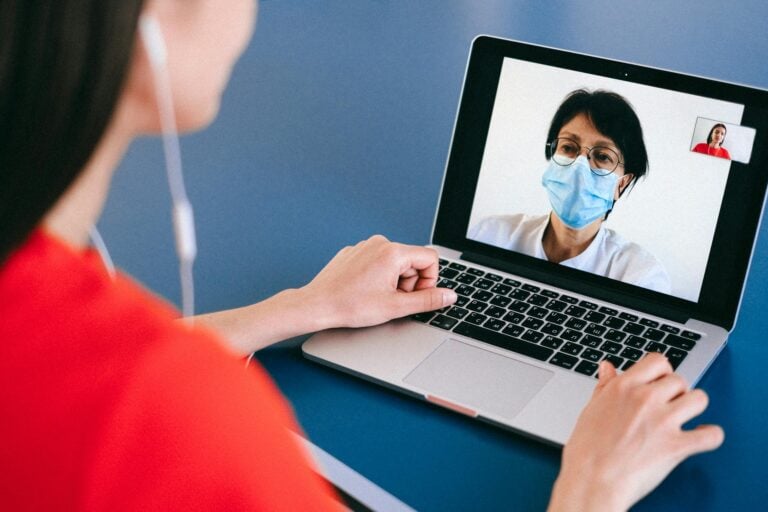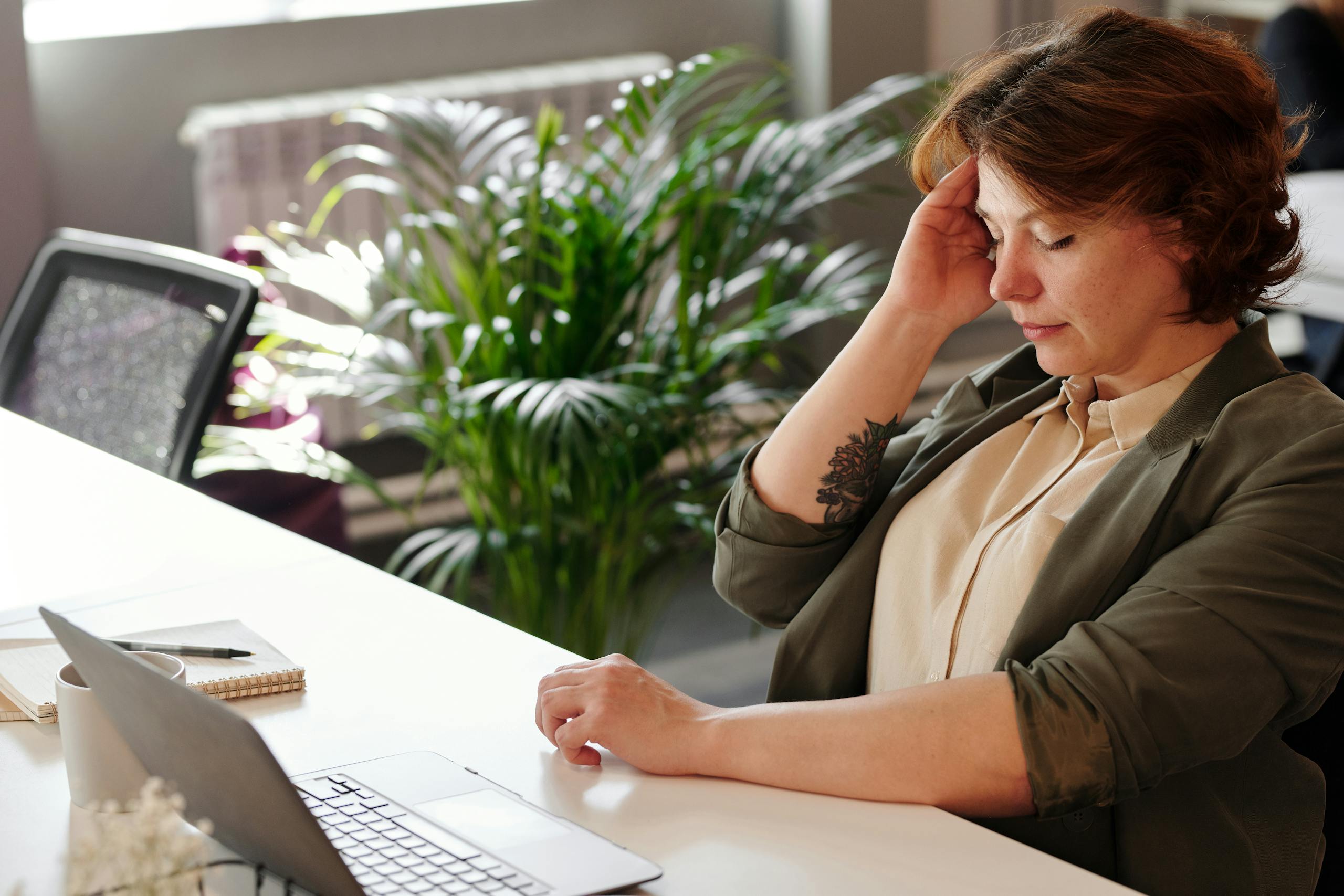

There is a well-documented association between internet addiction and social anxiety, and it runs in both directions. People with social anxiety often turn to online spaces because they feel lower-stakes and more controllable, and heavy internet use can gradually erode the social confidence needed to feel comfortable offline. Neither causes the other in a clean, linear way, but the two conditions feed each other in ways that deserve a much closer look.
What makes this connection particularly interesting to me is how invisible it looks from the outside. You are not visibly struggling. You are just online a lot. And if you happen to be an introvert who genuinely prefers quieter, more solitary environments, the line between healthy preference and avoidance behavior can blur in ways that are genuinely difficult to see in yourself.
I ran advertising agencies for over two decades. We were early adopters of digital platforms, social media strategy, and always-on communication culture. I watched my teams, my clients, and honestly myself develop complicated relationships with screens. Some of it was professional necessity. Some of it was something else entirely.
Much of what I explore here connects to the broader terrain covered in our Introvert Mental Health hub, where we look honestly at the internal experiences that often go unspoken in quieter personalities. The internet addiction and social anxiety connection sits squarely in that territory.
What Does Internet Addiction Actually Mean?
Before we can understand how internet addiction and social anxiety interact, it helps to be clear about what we mean by internet addiction. The term gets used loosely, and that looseness matters when you are trying to assess your own behavior honestly.
What’s your personality type?
Take our free 40-question assessment and get a detailed personality profile with dimension breakdowns, context analysis, and personalised insights.
Discover Your Type8-12 minutes · 40 questions · Free
Internet addiction, sometimes called problematic internet use, refers to a pattern of online behavior that feels compulsive, is difficult to control, and creates real disruption in daily life. It is not about the number of hours you spend online. Plenty of people spend eight hours a day online for entirely legitimate professional reasons. What distinguishes problematic use is the relationship with that use: the inability to stop when you want to, the distress when access is interrupted, the way online activity starts replacing rather than supplementing offline life.
It is worth noting that internet addiction does not currently appear as a formal diagnosis in the DSM-5, though the American Psychiatric Association’s DSM-5 changes did include internet gaming disorder as a condition warranting further study. The broader concept of problematic internet use is widely recognized in clinical literature even without a formal diagnostic category.
Social anxiety, by contrast, has a very clear clinical definition. According to the American Psychological Association, anxiety disorders involve persistent, excessive fear or worry that is difficult to control and interferes with daily functioning. Social anxiety disorder specifically involves intense fear of social situations where one might be judged, embarrassed, or rejected. It goes well beyond ordinary shyness or introversion, though all three can coexist in the same person.
As an INTJ who spent years in client-facing leadership roles, I can tell you that introversion and social anxiety are genuinely different experiences, even when they look similar from the outside. Introversion is a preference. Social anxiety is a fear. I preferred smaller meetings and deeper one-on-one conversations because that is where I do my best thinking. Some people on my teams avoided meetings because the anticipatory dread was overwhelming. Those are not the same thing, and treating them as equivalent does real harm.
Why Does Social Anxiety Pull People Toward Online Spaces?
Online environments offer something that feels genuinely valuable to someone with social anxiety: a degree of control that face-to-face interaction simply does not provide.
When you are communicating through a screen, you can take time before responding. You can edit what you say before anyone sees it. You can manage your self-presentation more carefully. You can exit a conversation without the awkwardness of a physical departure. For someone whose nervous system treats social situations as threats, those affordances are not trivial. They feel like relief.
There is also the question of rejection. Online, rejection tends to arrive in softer forms: an unanswered message, a post that gets few responses, a comment that goes unacknowledged. It still stings, but it does not carry the immediacy and visibility of being ignored or dismissed in a room full of people. For anyone who has spent time with the kind of deep emotional processing that highly sensitive people do around social pain, you can understand why the lower-stakes version feels preferable. The piece we have on HSP rejection, processing and healing, captures just how deeply that social pain registers for some people.
What starts as a reasonable accommodation can become a trap. Each time someone chooses the screen over the room, the offline world feels slightly more foreign and slightly more threatening. The avoidance that feels protective in the short term makes the anxiety worse over time. This is one of the clearest mechanisms connecting internet use patterns to increasing social anxiety, not as a moral failing but as a predictable psychological feedback loop.

How Does Heavy Internet Use Make Social Anxiety Worse?
The reinforcement cycle is worth examining carefully, because it explains why people who recognize the problem still find it so hard to change their behavior.
Every time you avoid a social situation by retreating online, your brain registers the anxiety reduction as a success. The threat was avoided. You feel better. That relief is real, and your nervous system remembers it. The next time a social situation arises, the pull toward the screen is slightly stronger because the brain has learned that this is how you make the discomfort stop.
Meanwhile, the social muscles you would have exercised in that avoided interaction remain underdeveloped. Confidence in social situations comes largely from accumulated experience of surviving them. When you systematically avoid them, you deprive yourself of the evidence that you can handle them. The anxiety does not shrink through avoidance. It expands to fill the space you have given it.
There is also a comparison dimension that social media specifically amplifies. Online environments, particularly curated social platforms, present a version of social life that is relentlessly edited for best performance. When someone with social anxiety is already primed to feel inadequate in social situations, spending hours consuming evidence that everyone else appears effortlessly connected and socially successful is not neutral. It actively distorts their reference point for what normal social life looks like.
I watched this play out in real time when I was running a mid-sized agency through the early years of social media’s dominance. We had a creative team that was extraordinarily talented and extraordinarily online. Some of the most gifted people I have ever worked with were also the ones most visibly destabilized by the comparison culture that social platforms created. Their work was exceptional. Their sense of where they stood relative to peers was in constant, anxious flux. The internet did not create their sensitivity, but it gave it a 24-hour feed to consume.
For people who are already wired for deep emotional processing, that kind of constant social comparison carries extra weight. The way that HSP emotional processing works means that information about social standing, belonging, and rejection does not pass through quickly. It gets examined, turned over, and felt at length. Pair that with an algorithm designed to maximize engagement, and you have a genuinely difficult combination.
Is There Something Different About How Introverts Experience This?
Introverts are not more prone to social anxiety than extroverts, and it is worth being clear about that. Psychology Today notes that introversion and social anxiety are distinct constructs that frequently get conflated. Introversion is about energy and preference. Social anxiety is about fear. Many introverts are entirely comfortable in social situations, even if they find them draining.
That said, introverts may find certain aspects of online communication genuinely better suited to how they process and engage with the world. Written communication, asynchronous exchange, the ability to think before responding, the absence of sensory overwhelm from crowded physical spaces: these are real advantages for people whose natural mode is reflective rather than reactive. The problem is not that introverts prefer online communication. The problem arises when that preference becomes the only mode and offline interaction starts feeling impossible rather than merely less preferred.
Highly sensitive people, who overlap significantly with the introvert population though they are not identical, may be particularly vulnerable to the sensory and emotional dimensions of this dynamic. The kind of HSP overwhelm and sensory overload that comes with busy social environments can make online spaces feel like a genuine refuge, which they sometimes are. The question is whether that refuge is being used for recovery or for permanent retreat.
As someone who identifies strongly as an introvert and spent years in environments that were genuinely overstimulating, I have real sympathy for the pull toward quieter, more controlled spaces. My office was always the quietest room in the building. I did my best thinking early in the morning before anyone else arrived. None of that was avoidance. It was knowing how I work. The distinction between that and using the screen to avoid the discomfort of human connection is one worth sitting with honestly.

What Does the Research Actually Say About This Connection?
The clinical literature on this topic has grown considerably over the past decade, and the picture that emerges is consistent even if the mechanisms are still being worked out.
A paper published in PubMed Central examined the relationship between problematic internet use and social anxiety, finding meaningful associations between the two, particularly around the use of online communication as a substitute for face-to-face interaction. The direction of influence appears to go both ways, with social anxiety predicting heavier internet use and heavy internet use predicting worsening social anxiety over time.
Additional work available through PubMed Central’s research library has looked at how specific types of online activity relate differently to social anxiety outcomes. Passive consumption, scrolling without interacting, tends to show stronger negative associations than active participation in online communities. This makes intuitive sense: passive consumption maximizes social comparison while minimizing any actual social engagement, even the online kind.
What the research consistently does not support is the idea that online social interaction is simply equivalent to offline interaction for building social confidence. The skills involved in face-to-face communication, reading non-verbal cues, tolerating ambiguity, managing the unpredictability of real-time conversation, are not fully developed through online practice. For someone with social anxiety, this matters because the goal is not just to feel comfortable online. It is to function well in the full range of social environments that life requires.
The American Psychological Association’s work on shyness and social anxiety draws a useful distinction between situational social anxiety, which most people experience at some level, and the more pervasive kind that qualifies as a disorder. Most people who find themselves spending more time online than they intended are not dealing with a clinical condition. Even so, the patterns that develop at subclinical levels can still meaningfully narrow a person’s life if left unexamined.
Where Does Empathy Fit Into This Picture?
One dimension of this conversation that does not get enough attention is the role of empathy, specifically the kind of deep, absorptive empathy that many introverts and highly sensitive people carry.
Online spaces can feel safer partly because the emotional field is more manageable. In a physical room, you are picking up on everyone’s energy, mood, tension, and subtext simultaneously. For someone with a highly attuned nervous system, that can be genuinely exhausting. The screen filters much of that out. You receive information at the pace you can process it, without the ambient emotional noise of physical presence.
At the same time, online environments are not emotionally neutral. Social media, in particular, is engineered to generate emotional responses. Outrage, validation, comparison, belonging, exclusion: all of it is present, just in a form that feels more controllable. For someone with the kind of empathic sensitivity described in the piece on HSP empathy as a double-edged sword, the idea that online spaces are emotionally safer is partly an illusion. The emotional content is still there. It just arrives through a different channel.
What I noticed in my own experience, particularly during periods of high stress at the agency, was that I would reach for screens not because I wanted to connect but because I wanted to be near the idea of connection without the vulnerability of actual contact. That is a subtle distinction but an important one. Consuming social content is not the same as being social. It can feel like a substitute while actually widening the gap.
How Does Perfectionism Complicate the Pattern?
Social anxiety and perfectionism have a well-established relationship, and online environments interact with that combination in ways worth examining.
One of the features that makes online communication appealing to anxious people is the ability to edit before sending. You can craft the perfect response, review it, revise it, and only then let it go. For someone whose social anxiety is driven partly by fear of saying the wrong thing or being judged negatively, that editing capacity feels protective. In some ways, it is. In other ways, it reinforces the belief that unedited, spontaneous social interaction is too risky to attempt.
The perfectionism that underlies much social anxiety tends to apply a standard to social performance that would be exhausting even without anxiety. When you are already convinced that any misstep will result in rejection or judgment, the editing capacity of online communication starts to feel not like a convenience but like a requirement. The idea of speaking without editing, of being seen in real time without the ability to revise, becomes increasingly intolerable.
This connects directly to what we explore in the piece on HSP perfectionism and the high standards trap. The same internal architecture that produces exceptional attention to quality and depth also produces a vulnerability to the fear that nothing you do will ever be quite good enough, including how you present yourself socially. Online environments offer the illusion of control over that presentation, which is seductive but in the end limiting.
I managed a creative director at one of my agencies who was extraordinarily talented and almost completely paralyzed by perfectionism in client presentations. She was brilliant in writing, thoughtful in email, meticulous in her work. In a room with clients, she froze. We spent a lot of time working through what was actually happening, and what we found was that the editing capacity she relied on in written communication had made real-time interaction feel genuinely impossible rather than merely uncomfortable. The solution was not more preparation. It was deliberate, graduated exposure to the discomfort of being imperfect in public.
What Actually Helps When the Screen Has Become a Refuge?
If you recognize the pattern we have been describing, the path forward is not to shame yourself for it or to make dramatic declarations about going offline. Neither of those approaches tends to work. What tends to work is gradual, honest, and specific.
The first step is distinguishing between use that is genuinely restorative and use that is avoidance. Not all screen time is the same. Spending an hour reading something absorbing, having a meaningful conversation with a close friend over text, doing focused creative work: these are not the problem. The problem is the reflexive reach for the phone the moment a social situation presents itself, or the hours that disappear into passive scrolling that leave you feeling worse rather than better.
Cognitive behavioral approaches have the strongest evidence base for social anxiety, and Harvard Health’s overview of social anxiety treatments provides a clear summary of what the options look like. The core of effective treatment involves gradually confronting the situations you have been avoiding, not all at once, but in a structured way that builds evidence against the catastrophic predictions your anxiety generates.
For introverts specifically, the goal is not to become someone who thrives on constant social stimulation. That is not what this is about. The goal is to have access to the full range of social experiences that matter to you, without fear being the thing that decides which ones you pursue. There is a meaningful difference between choosing solitude because it genuinely restores you and choosing it because the alternative feels terrifying.
Managing the anxiety that underlies these patterns also means paying attention to the physical and sensory conditions that affect your nervous system more broadly. The work on HSP anxiety and coping strategies is genuinely useful here, because it addresses the baseline sensitivity that makes social situations feel more costly for some people than for others. Reducing overall sensory load, building in genuine recovery time, and being honest about your actual limits are all part of a sustainable approach.
One thing I have found personally useful is treating social engagement the way I treat any other skill that requires maintenance. I am not naturally drawn to large gatherings or high-stimulation social environments. As an INTJ, I find them draining rather than energizing. But I have learned that the answer is not avoidance. It is strategic engagement, with genuine recovery time built in afterward. The screen is not the enemy. Letting it become the only place you feel safe is.
When Should You Take This More Seriously?
Most people who spend more time online than they intend are not dealing with a clinical condition. But there are signs that the pattern has moved into territory that warrants professional attention.
If your internet use is consistently interfering with work, relationships, or basic daily functioning, that is worth taking seriously. If the thought of being without your phone or offline for a day generates genuine distress rather than mild inconvenience, that is worth examining. If you find yourself declining social invitations not because you need solitude but because the anxiety of attending feels unmanageable, that is a signal worth paying attention to.
Social anxiety disorder is a real and treatable condition. The APA’s resources on shyness and social anxiety are a reasonable starting point for understanding where the line is. Therapy, particularly cognitive behavioral therapy and exposure-based approaches, has a strong track record. The fact that something has become a pattern does not mean it is permanent.
What I would say from personal experience is that the most important thing is honesty with yourself about what is actually happening. Not judgment, not self-criticism, just honest observation. Are you online because you want to be, or because you are afraid of what happens if you put the phone down? That question is worth sitting with quietly, which, as an introvert, is something you are probably well equipped to do.

There is much more to explore across the full range of introvert mental health experiences. Our Introvert Mental Health hub brings together the pieces that matter most, from anxiety and sensitivity to emotional processing and the particular challenges that come with being wired for depth in a world that often rewards noise.
About the Author
Keith Lacy is an introvert who’s learned to embrace his true self later in life. After 20 years in advertising and marketing leadership, including running agencies and managing Fortune 500 accounts, Keith now channels his experience into helping fellow introverts understand their strengths and build fulfilling careers. As an INTJ, he brings analytical depth and authentic perspective to every article, drawing from both professional expertise and personal growth.
Frequently Asked Questions
Does using the internet a lot cause social anxiety?
Heavy internet use does not cause social anxiety in a simple, direct way. The relationship is more circular than causal. People with social anxiety are drawn to online environments because they feel more controllable and lower-stakes than face-to-face interaction. Over time, consistently choosing online interaction over offline engagement can reinforce avoidance patterns that make social anxiety worse. The two conditions influence each other rather than one cleanly causing the other.
Is introversion the same as social anxiety?
No. Introversion is a personality trait involving a preference for quieter, less stimulating environments and a tendency to recharge through solitude. Social anxiety is a fear-based condition involving dread of social situations where one might be judged or rejected. Many introverts are entirely comfortable in social situations, even if they find them tiring. The two can coexist in the same person, but they are distinct experiences with different underlying mechanisms.
What are the signs that internet use has become problematic?
Problematic internet use typically involves difficulty stopping when you want to, significant distress when access is interrupted, and online activity that is replacing rather than supplementing offline life. If internet use is consistently interfering with work, relationships, or daily functioning, or if you find yourself avoiding social situations specifically to spend time online, those are meaningful signs that the pattern warrants closer attention.
Can online social interaction help with social anxiety?
Online social interaction can provide genuine connection and community, and for people with social anxiety it can serve as a lower-stakes environment to practice communication. That said, it does not fully substitute for offline interaction when it comes to building social confidence. The skills involved in face-to-face communication, reading non-verbal cues, tolerating real-time unpredictability, managing physical presence, are not fully developed through online practice alone. Online connection works best as a complement to, rather than a replacement for, offline engagement.
What treatments are most effective for social anxiety?
Cognitive behavioral therapy, particularly approaches that include graduated exposure to feared social situations, has the strongest evidence base for social anxiety disorder. Exposure therapy works by helping people build direct experience of surviving the situations they have been avoiding, which gradually weakens the anxiety response. Medication can also be helpful for some people, particularly when anxiety is severe. A mental health professional can help determine which approach is most appropriate for a given individual’s situation and severity.