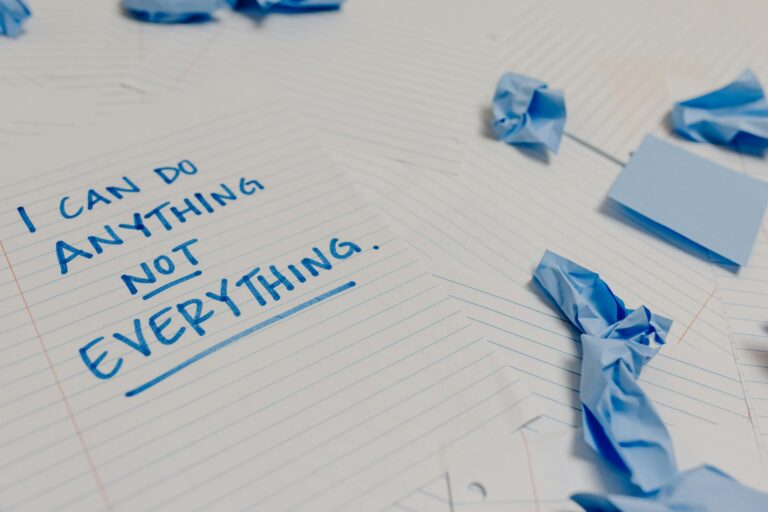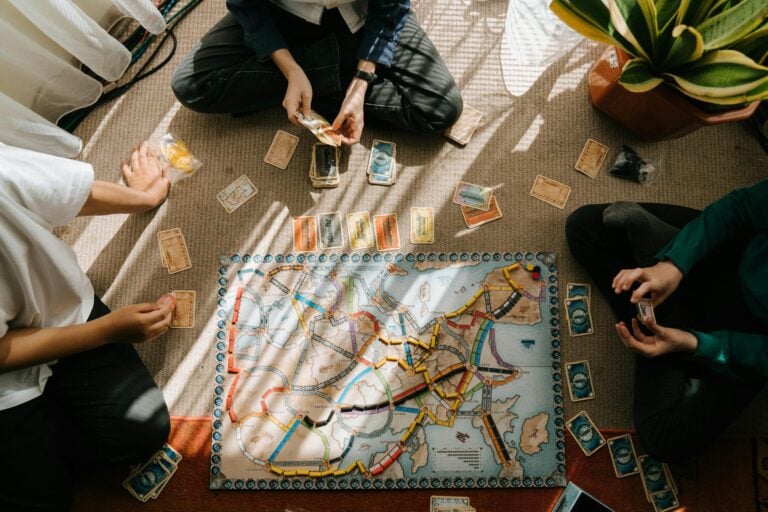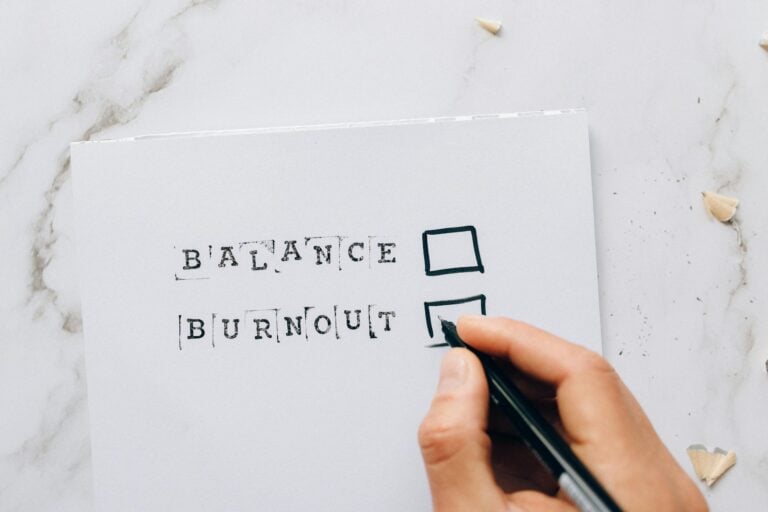

Avoiding conflict in the classroom is something many introverted students do instinctively, often long before they have words for why they pull back from confrontation. For these students, conflict feels physically draining, emotionally overwhelming, and deeply at odds with how they process the world. Understanding what drives that avoidance, and how to work with it rather than against it, makes a real difference in how introverted kids experience school.
My own conflict avoidance didn’t disappear when I grew up. It followed me into conference rooms, client calls, and agency leadership. Looking back, I can trace almost every professional mistake I made in my twenties to some version of the same pattern I developed as a quiet kid in school: say nothing, absorb everything, and hope the tension resolves itself. It doesn’t. It never does.
What I’ve come to understand is that avoiding conflict and being conflict-averse are two different things. One is a strategy. The other is a wiring. And for introverts, especially introverted children still figuring out who they are, the distinction matters enormously.
If you’re exploring how introverts manage their environments at home and at school, our Introvert Home Environment hub covers the full range of topics around how quiet people create space to think, recover, and thrive. Classroom conflict is just one layer of a much larger picture.
Why Do Introverted Students Avoid Conflict More Than Others?
Conflict requires a particular kind of energy that introverts don’t have in unlimited supply. It demands real-time verbal processing, emotional regulation under pressure, and the ability to hold your ground while reading another person’s reactions simultaneously. For extroverts, that kind of charged interaction can actually feel energizing. For introverts, it’s exhausting before it even begins.
What’s your personality type?
Take our free 40-question assessment and get a detailed personality profile with dimension breakdowns, context analysis, and personalised insights.
Discover Your Type8-12 minutes · 40 questions · Free
There’s also the matter of how introverts process information. Most introverted students think before they speak. They want to consider all angles, choose their words carefully, and arrive at a response that actually reflects what they mean. Conflict doesn’t allow for that. It moves fast, it’s loud, and it rewards whoever responds quickest. Introverted kids often lose that race not because they have nothing to say, but because they’re still formulating the right way to say it.
I watched this play out countless times in my agencies. I managed a team that included several introverted creatives, and during brainstorming sessions that turned heated, they’d go quiet. Not because they lacked ideas or opinions, but because the environment had shifted into something that didn’t suit how they thought. The most insightful feedback I got from those team members came hours later, in emails or one-on-one conversations, never in the room where the conflict happened.
For children, that delayed processing is even more pronounced. A twelve-year-old introverted student doesn’t yet have the professional skills or self-awareness to explain why they shut down during an argument. They just know it feels wrong. And so they avoid the situations that trigger it.
Some of what drives conflict avoidance in introverted students also connects to sensory sensitivity. Students who identify as highly sensitive, a trait that overlaps significantly with introversion, often experience classroom conflict as genuinely overwhelming rather than merely uncomfortable. The raised voices, the social complexity, the unpredictability of how others will react, all of it registers at an intensity that’s hard to describe unless you’ve felt it. Approaches like HSP minimalism speak to this need to reduce overwhelm, and that same instinct to simplify and protect one’s environment shows up in how sensitive students handle classroom tension.
What Does Conflict Avoidance Actually Look Like in School?
It doesn’t always look like what you’d expect. Some introverted students are visibly withdrawn, sitting at the edges of group work, declining to voice disagreement, nodding along even when they don’t agree. But others are skilled enough socially to seem engaged while quietly managing every interaction to prevent friction from arising.
That second type is harder to spot, and I say this as someone who was exactly that kid. I learned early that if I asked the right questions, kept conversations focused on the other person, and never pushed back too directly, I could move through social situations without triggering the kind of conflict that drained me. It felt like a superpower at the time. In retrospect, it was also a way of disappearing.
Common patterns of conflict avoidance in classroom settings include:
- Staying silent during group disagreements even when the student has a clear opinion
- Agreeing with whoever spoke last to end the tension quickly
- Avoiding group projects or partner work where disagreement might arise
- Physically removing themselves from tense situations by asking to use the restroom or visit the library
- Deflecting with humor to dissolve tension before it escalates
- Giving up on a position not because they changed their mind, but because defending it felt too costly
None of these behaviors are inherently problematic in isolation. Some of them reflect genuine emotional intelligence. The issue arises when avoidance becomes the only tool in a student’s kit, when they never develop the capacity to work through conflict because they’ve learned to sidestep it entirely.
Psychology Today has written thoughtfully about how introverts and extroverts approach conflict resolution differently, and the core insight is one I’ve seen confirmed in my own experience: introverts don’t lack the capacity for conflict, they lack the conditions that make conflict feel manageable. Change the conditions, and the capacity emerges.

How Does Chronic Avoidance Affect Introverted Students Over Time?
Short-term, conflict avoidance works. It reduces immediate discomfort, preserves energy, and keeps the social environment stable. That’s why introverted students do it. It’s rational. But the long-term costs accumulate quietly, which makes them easy to miss until they’ve built into something significant.
Students who consistently avoid conflict often struggle with a particular kind of identity erosion. When you never voice disagreement, never defend a position, never push back on something that doesn’t sit right with you, you gradually lose touch with what you actually think. Your opinions start to feel less real because they’ve never been tested. You become skilled at reading the room and adjusting to it, but less skilled at knowing what you’d say if the room weren’t a factor.
I felt this acutely in my early career. I was good at consensus. I was good at reading clients and adjusting my pitch to match what they seemed to want. What I wasn’t good at was telling a client when their instinct was wrong. That cost me. Not dramatically, not all at once, but in the slow erosion of credibility that comes when people sense you’ll agree with whatever they say. The conflict avoidance that had protected me as a student was undermining me as a professional.
For students, that erosion can show up as difficulty advocating for themselves academically, reluctance to challenge a grade they believe is unfair, or an inability to set limits with peers who take advantage of their agreeableness. It can also contribute to burnout. Suppressing your actual responses to situations takes energy, and over time, that expenditure adds up. The student who seems fine, who never causes problems, who always goes along, may be quietly running on empty.
There’s a reason introverted people often seek out quiet, restorative environments after socially demanding days. Whether that’s curling up with a good book or retreating to a familiar couch, the need to decompress after emotional labor is real and physiological, not a character flaw. For students managing conflict avoidance all day, that decompression time is essential, not optional.
What’s worth noting is that the avoidance itself, not just the conflict, generates stress. Anticipating situations you’re trying to prevent, monitoring interactions for signs of tension, and managing your presentation to keep everything smooth, all of that is cognitively and emotionally demanding. Some preliminary evidence in stress and coping research suggests that avoidance coping can actually increase anxiety over time rather than reduce it, because it prevents the student from building confidence in their ability to handle difficult situations. You can read more about stress response patterns in this research via PubMed Central.
What Helps Introverted Students Handle Conflict Without Forcing Them to Become Someone Else?
Every approach I’ve seen fail starts with the same assumption: that the introverted student needs to become more comfortable with conflict the way extroverts experience it. Louder, faster, more willing to engage in the moment. That’s the wrong frame entirely.
What actually helps is building conditions that allow introverted students to engage with conflict in ways that suit how they process the world. That means slowing things down, creating space for written communication, and separating the moment of conflict from the moment of resolution.
One thing that made a genuine difference in how I handled difficult client conversations was learning that I didn’t have to resolve everything in the room. I could say, “I want to think about this properly before I respond,” and then follow up. That wasn’t weakness. It was how I did my best thinking. Introverted students need to learn that same permission, and they need adults in their lives to model it and validate it.
Some specific approaches that tend to work well:
- Teaching students to name their need for processing time without apologizing for it
- Offering written channels for voicing disagreement, such as comment cards, private journals reviewed by teachers, or structured reflection prompts after group work
- Building explicit conflict resolution frameworks into classroom culture so the process feels predictable rather than chaotic
- Pairing introverted students with partners or small groups before larger group discussions so they’ve already processed their thoughts
- Acknowledging disagreement as a skill, not just a behavior to manage
Teachers who understand introversion tend to intuitively create these conditions. Those who don’t often inadvertently reward extroverted conflict styles, calling on students who raise their hands fastest, praising students who speak up in the moment, and interpreting silence as disengagement rather than processing.
For introverted students who want connection and community outside the classroom’s social pressures, low-stakes digital spaces can offer a useful bridge. Chat rooms designed for introverts give students a way to practice expressing opinions and working through disagreement in writing, at their own pace, without the sensory intensity of in-person conflict. That practice builds real skills that transfer to face-to-face situations over time.
What Role Do Parents Play in Helping Introverted Kids Work Through This?
Parents of introverted children often fall into one of two camps. Either they over-identify with the avoidance (because they’re introverts themselves and remember how painful conflict felt) or they push too hard toward engagement (because they’re worried the avoidance will hold their child back). Both responses come from love. Neither is quite right on its own.
What introverted children need from parents is something more nuanced: validation of the discomfort alongside encouragement to develop capacity. Not “just speak up” and not “it’s okay to stay quiet.” Something closer to “I know that feels hard, and I also know you have something worth saying.”
The home environment matters here more than most parents realize. A child who comes home from a day of managing social tension needs genuine recovery time. That might look like an hour of quiet reading, time alone in their room, or the simple comfort of a familiar space. The homebody couch isn’t a metaphor here, it’s a real and necessary part of how introverted kids restore themselves after emotionally demanding school days. Honoring that need isn’t indulgence. It’s maintenance.
Once a child has had time to decompress, they’re often much more willing to talk through what happened at school. That’s the window for the real conversations, the ones where parents can help kids examine what they were feeling, what they wished they’d said, and what they might try differently next time. Trying to have those conversations before the child has recovered is like asking someone to sprint before they’ve caught their breath.
Parents can also help by modeling healthy conflict at home. Children who watch adults disagree respectfully, hold their ground calmly, and repair relationships after tension learn that conflict doesn’t have to be catastrophic. For introverted children especially, seeing that conflict can be handled without drama or damage is genuinely reassuring.
Some of the most thoughtful parents I’ve observed also invest in creating a home environment that supports their introverted child’s overall wellbeing, not just in response to specific school challenges. Thoughtful gifts for homebodies that support quiet hobbies, creative expression, or independent learning give introverted children ways to build confidence and self-knowledge outside the social pressures of school. That confidence carries back into the classroom.
Can Introverts Actually Become Skilled at Conflict, or Is Avoidance Just Wired In?
Avoidance is a learned response, not a fixed trait. Introversion is the wiring. Conflict avoidance is what many introverts develop on top of that wiring as a coping mechanism. The two aren’t the same thing, and that distinction is important because it means the avoidance can change even when the introversion doesn’t.
I’m living evidence of this. I spent my first decade in advertising avoiding direct confrontation with clients, softening feedback, letting things slide that I knew weren’t right. By my second decade, I’d developed a very different approach. I still processed conflict differently than my extroverted colleagues. I still preferred written follow-ups to heated in-room debates. But I could hold my ground, deliver difficult news, and work through genuine disagreement without it costing me days of recovery.
What changed wasn’t my introversion. What changed was my understanding of it. Once I stopped treating my processing style as a deficiency and started treating it as a feature, I could build conflict skills that actually worked for me rather than forcing myself to use skills designed for someone else’s brain.
There’s interesting work in personality and behavior research suggesting that introverts can develop significant negotiation capability when they approach it through preparation and strategic communication rather than spontaneous verbal sparring. Harvard’s Program on Negotiation has explored whether introverts are at a disadvantage in negotiation, and the conclusion is more nuanced than most people expect. Introverts who leverage their natural strengths, listening carefully, preparing thoroughly, and thinking before speaking, often outperform extroverts who rely on in-the-moment charisma.
That same principle applies to classroom conflict. An introverted student who learns to say “I need to think about this before I respond” and then actually follows through with a thoughtful response is developing a conflict skill, just not the one the classroom typically rewards. success doesn’t mean produce students who argue louder. It’s to produce students who can advocate for themselves effectively, in ways that are authentic to who they are.
Research on social-emotional learning also points to the value of teaching students specific language for conflict situations. Not scripts exactly, but frameworks. When introverted students have practiced phrases and approaches in advance, the cognitive load of conflict drops significantly because they’re not trying to invent language under pressure. That preparation is something introverts can do exceptionally well, and it’s worth building into how we support these students both at home and at school.

What Should Schools Do Differently to Support Introverted Students Around Conflict?
Most conflict resolution programs in schools are built around the assumption that the problem is escalation. Students get too heated, say things they don’t mean, and need help de-escalating. That’s a real problem, and those programs address it reasonably well.
What they miss almost entirely is the other end of the spectrum: students who never escalate because they never engage. Students who absorb conflict rather than express it. Students whose avoidance looks like cooperation until it doesn’t.
Schools that genuinely support introverted students around conflict tend to share a few characteristics. They treat silence as data, not absence. They create structured opportunities for students to voice disagreement in writing before or after group discussions. They teach conflict as a skill set rather than a behavioral problem. And they recognize that the student who never argues might be struggling just as much as the one who argues too much.
Counseling and psychology literature has increasingly acknowledged that introversion is not a deficit requiring correction. Resources like those from Point Loma Nazarene University’s counseling psychology program reflect a growing understanding that introverted individuals bring distinct strengths to relational and communicative contexts. Schools that absorb this perspective treat introverted students’ communication styles as valid starting points, not problems to fix.
There’s also something to be said for the physical environment of conflict resolution. Many schools route students through mediation rooms or counselor offices that are, frankly, not designed for introverted processing. Bright lighting, institutional furniture, the presence of multiple adults, all of it adds to the sensory load at exactly the moment when an introverted student needs the opposite. Quieter, less stimulating spaces for working through conflict aren’t a luxury. They’re a functional necessity for students who process best in calm environments.
One angle that gets almost no attention is how classroom culture around conflict affects introverted students’ willingness to form genuine connections with peers. When conflict is handled poorly, introverted students often retreat further into themselves, becoming more isolated not because they want to be alone, but because the social environment feels too unpredictable. Deeper conversations and authentic connection, which introverts typically crave, become harder to access when the baseline social climate feels unsafe. Psychology Today’s writing on why deeper conversations matter speaks to exactly this dynamic.
Schools that build cultures of thoughtful conflict, where disagreement is expected, respected, and handled with care, actually create better conditions for introverted students to connect. The irony is that reducing the fear of conflict makes introverted students more socially present, not less.
How Does This Connect to the Broader Question of Introverted Identity?
Conflict avoidance in the classroom is rarely just about conflict. It’s about identity. About whether an introverted student believes their way of processing the world is legitimate, or whether they’ve absorbed the message that they need to change in order to fit in.
That message is everywhere in school culture. Participation grades reward speaking up. Group projects reward quick verbal consensus. Class discussions reward whoever talks most. The implicit curriculum tells introverted students, over and over, that the way they naturally engage is wrong.
When I finally stopped trying to perform extroversion in my professional life, something shifted. Not in my ability to handle conflict exactly, but in my relationship to it. I stopped dreading conflict because I stopped treating it as evidence that I was failing at being the kind of leader I was supposed to be. I started treating it as information, something to process carefully and respond to thoughtfully. That reframe changed everything.
Introverted students who develop that same relationship to their own nature, who learn to see their processing style as a strength rather than a liability, tend to handle conflict better over time. Not because they’ve become more extroverted, but because they’ve stopped spending energy trying to be someone they’re not. That freed-up energy goes toward actual engagement instead.
Some of the most useful resources for introverted students and their families aren’t specifically about conflict at all. They’re about building a life that honors introversion. Whether that’s creating a restorative home environment, finding community that fits, or simply understanding that the homebody instinct is a feature and not a flaw, a good homebody gift guide or a carefully chosen book can quietly reinforce the message that the introverted way of being in the world is worth supporting. That kind of affirmation, small as it seems, matters more than most people realize for students who spend their days in environments not designed for them.
Personality research has also pointed to meaningful connections between self-acceptance and social functioning. Students who feel more secure in their identity tend to engage more authentically in social situations, including difficult ones. You can explore some of the underlying personality and wellbeing research through Frontiers in Psychology, which has published work examining how personality traits intersect with social and emotional outcomes.
The classroom conflict that an introverted student avoids today is often the professional conflict they’ll struggle with in ten years. Not because avoiding conflict is irreversible, but because the patterns we build early run deep. Helping introverted students understand themselves now, and giving them tools that work with their nature rather than against it, is genuinely one of the most useful things we can do for their long-term wellbeing. That’s not a small thing. It’s the whole thing.

There’s much more to explore about how introverts create and protect environments that support their wellbeing. Our complete Introvert Home Environment hub covers everything from sensory-friendly spaces to the rhythms and routines that help quiet people feel genuinely at home in their own lives.
About the Author
Keith Lacy is an introvert who’s learned to embrace his true self later in life. After 20 years in advertising and marketing leadership, including running agencies and managing Fortune 500 accounts, Keith now channels his experience into helping fellow introverts understand their strengths and build fulfilling careers. As an INTJ, he brings analytical depth and authentic perspective to every article, drawing from both professional expertise and personal growth.
Frequently Asked Questions
Is conflict avoidance in the classroom a sign of a deeper problem?
Not necessarily. Many introverted students avoid conflict as a natural response to how they process social and emotional information. It becomes a concern when avoidance is the only strategy a student has, when it prevents them from advocating for themselves, forming genuine connections, or developing the capacity to work through disagreement over time. The avoidance itself isn’t the problem. The absence of alternatives is.
How can parents tell if their child is avoiding conflict or just naturally easygoing?
Genuinely easygoing children tend to be comfortable with conflict when it arises and simply don’t seek it out. Children who are avoiding conflict often show signs of stress around social situations, come home emotionally depleted after school, or describe feeling like they couldn’t say what they really thought. They may also agree with peers in ways that don’t reflect their actual opinions, or express strong feelings at home about situations they seemed unbothered by at school. That gap between home and school presentation is often the clearest signal.
What can teachers do to support introverted students who avoid conflict?
Offering written channels for voicing disagreement is one of the most effective tools available. Structured reflection prompts after group work, private written feedback options, and small-group discussion before whole-class debate all give introverted students time to process before responding. Teachers can also explicitly validate the need for processing time by modeling it themselves and framing thoughtful delayed responses as a strength rather than a hesitation.
Can introverted students genuinely get better at handling conflict, or will they always struggle with it?
Introverted students can absolutely develop strong conflict skills. The distinction worth holding onto is that introversion is a stable personality trait, while conflict avoidance is a learned behavior pattern. When students are given tools that suit their processing style, including preparation time, written communication options, and frameworks for expressing disagreement, they often become highly effective at working through conflict. They may never prefer in-the-moment verbal confrontation, but they can become skilled at the kind of thoughtful, deliberate conflict engagement that produces real resolution.
How does home environment affect how introverted students handle conflict at school?
Significantly. Introverted students who have adequate recovery time at home, quiet space to decompress, and family relationships where they feel safe expressing disagreement tend to handle school conflict more effectively. When home is also a high-stress or high-conflict environment, introverted students often have fewer internal resources available for managing the social demands of school. Creating a genuinely restorative home environment isn’t separate from supporting a child’s social development at school. The two are directly connected.