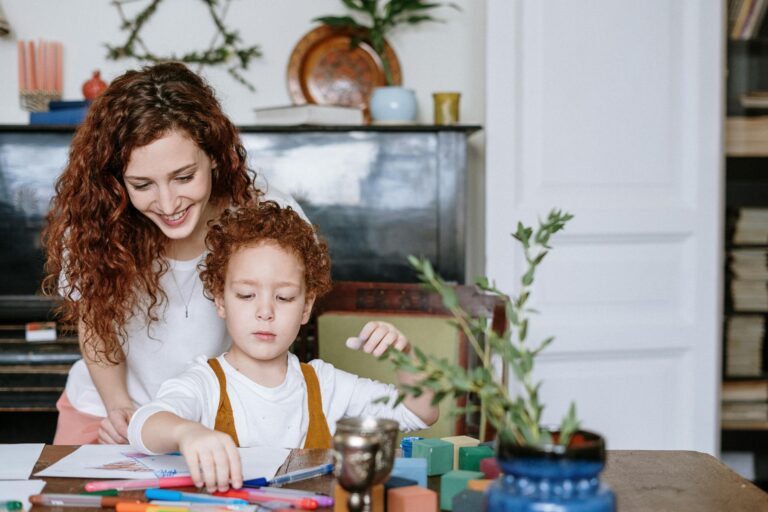

Baby shower games for introverts work best when they replace loud, performance-based activities with quieter, connection-focused alternatives that let people participate at their own pace. Think written prompts, creative stations, and low-pressure group activities rather than competitive games that put individuals on the spot.
Most traditional baby shower games were designed by and for people who genuinely love being the center of attention. As someone who spent two decades running advertising agencies, I watched the same dynamic play out in every team event we ever hosted: a handful of people dominated, a handful of people disappeared into their phones, and everyone else performed enthusiasm they didn’t actually feel. The introvert at the table wasn’t being difficult. She was just exhausted.
There’s a better way to celebrate someone you love without turning the afternoon into a social endurance test.
If you’re thinking more broadly about how introversion shapes family relationships and the rituals we build around them, our Introvert Family Dynamics & Parenting hub covers everything from how introverted parents manage sensory overload to how personality shapes the way we show up for the people we love most.

Why Do Traditional Baby Shower Games Feel So Uncomfortable?
Somewhere along the way, baby shower games became synonymous with activities that require people to perform on command. Guess the baby food flavor while everyone watches. Race to diaper a doll. Shout out answers to trivia while competing against strangers. These formats assume that everyone in the room draws energy from being seen, being loud, and winning in front of a crowd.
What’s your personality type?
Take our free 40-question assessment and get a detailed personality profile with dimension breakdowns, context analysis, and personalised insights.
Discover Your Type8-12 minutes · 40 questions · Free
That assumption leaves a significant portion of every guest list quietly suffering.
As an INTJ, I process everything internally first. My observations are thorough, my responses are considered, and my discomfort with being put on the spot is genuine and deep-seated. When I was managing creative teams at my agency, I noticed that the introverts on staff, especially those who scored high on openness and low on extraversion in personality assessments, consistently withdrew during group activities that required fast, public responses. They weren’t disengaged. They were protecting themselves from a format that didn’t suit how they think.
If you want to understand how personality traits shape social comfort in group settings, tools like the Big Five Personality Traits test offer a useful framework. The Big Five measures openness, conscientiousness, extraversion, agreeableness, and neuroticism, and it can help you understand why some guests will love a rowdy guessing game while others would genuinely rather reorganize the gift table.
The goal of any good baby shower game isn’t to entertain the loudest people in the room. It’s to help everyone feel connected to the person being celebrated. Introvert-friendly games do exactly that, often more meaningfully, because they create space for depth instead of performance.
What Are the Best Written and Creative Games for Introverted Guests?
Written games are the natural starting point for introvert-friendly showers. They give people time to think, remove the pressure of speaking in front of a group, and often produce more genuine, meaningful responses than anything shouted across a room.
Advice Cards for the Parents
Set out a basket of blank cards and ask each guest to write one piece of advice, one memory, or one hope for the growing family. No time pressure, no audience, no winner. Guests can complete their card when they arrive, between conversations, or while they’re eating. The expecting parent walks away with a collection of handwritten notes that will mean far more than a trophy for fastest diaper-changer.
At one of the last agency holiday parties I organized, I replaced the usual competitive trivia format with a simple “write one thing you appreciate about a colleague” card station. The responses were quieter to produce but far more powerful to read. The introverts on my team, who had historically disappeared during game time, were the ones who filled out the most cards.
Finish the Nursery Rhyme
Print out classic nursery rhymes with key words removed and let guests fill in the blanks on paper. This works beautifully for introverts because it’s self-contained, low-stakes, and quietly funny. People can complete it alone, share it with the person next to them, or not share it at all. The host collects the sheets and reads the best ones aloud at the end, which keeps the laughs coming without forcing anyone to perform in real time.
The Book Dedication Station
Ask guests to bring a favorite childhood book instead of a card. Set up a station where they write a personal dedication inside the cover. The result is a curated library for the baby, and the activity suits introverts perfectly because writing a heartfelt note is exactly how many of them prefer to express affection. No public speaking required, just a pen and a quiet corner.

Which Low-Pressure Group Activities Actually Work for Mixed Crowds?
Not every guest is an introvert, and the best baby shower creates space for everyone. The trick is choosing activities where participation is flexible, where introverts can engage meaningfully without being spotlighted, and where extroverts still have room to be themselves.
Baby Photo Guessing Game
Ask guests in advance to send a baby photo of themselves. Display them on a board or table and give everyone a numbered sheet to match the photo to the person. This game is wonderfully low-pressure because there’s no performance element, the conversation happens naturally as people wander the display, and introverts get to engage at their own pace. It also sparks one-on-one conversations, which is exactly where introverts tend to do their best connecting.
Predictions Jar
Set out small slips of paper and ask guests to write predictions for the baby: first word, favorite hobby at age ten, what they’ll want to be when they grow up. Fold the slips and drop them in a jar. The expecting parent opens them at a first birthday or a milestone moment later. No competition, no audience, just quiet imagination. Introverts tend to love this one because it gives them permission to be thoughtful and a little whimsical without having to explain themselves in real time.
Onesie Decorating Station
Set up a table with plain white onesies in various sizes, fabric markers, and simple stencils. Guests decorate a onesie for the baby at their own pace, in their own style, with whoever they want to sit beside. Creative, tactile activities are a natural fit for introverts because the focus shifts to the work rather than the person doing it. I’ve watched quiet people at agency brainstorming sessions come completely alive the moment we switched from verbal pitching to sketching ideas on paper. The same principle applies here.
Worth noting: if the expecting parent is a highly sensitive person, the sensory and emotional weight of a baby shower can be genuinely overwhelming, not just socially tiring. Our piece on HSP parenting and raising children as a highly sensitive parent explores how that heightened sensitivity shapes the experience of new parenthood in ways that go well beyond the shower itself.
How Do You Structure the Shower Itself to Reduce Social Overwhelm?
Game selection matters, but so does the overall structure of the event. Even the most introvert-friendly game becomes exhausting when it’s sandwiched between two hours of forced mingling and a room that’s too loud to think in.
Keep the Guest List Intentional
Smaller gatherings are almost always more comfortable for introverted guests and, often, for introverted honorees too. A baby shower with fifteen close friends and family members creates room for genuine conversation. A shower with fifty colleagues, neighbors, and acquaintances creates a networking event with cake. If the person being celebrated is introverted, ask them what they actually want before defaulting to a large celebration.
The National Institutes of Health has explored how infant temperament predicts introversion in adulthood, which is a fascinating lens through which to think about the baby being celebrated. The introversion we’re accommodating at the shower may well be a trait the child inherits.
Build In Breathing Room
Schedule the games with natural pauses between them. Give people time to eat, to step outside, to have a quiet conversation without the pressure of a game timer running. At my agency, the most productive creative sessions were never the ones packed with back-to-back activities. They were the ones where we built in fifteen minutes of unstructured time between exercises. People came back to the table refreshed rather than depleted.
Create a Quiet Corner
Set up one area of the venue, even just a chair by a window, where guests can step away from the main activity without it feeling like they’re leaving. A small table with the advice cards or the predictions jar gives introverts a socially acceptable reason to be in a quieter space. They’re still participating. They’re just doing it at a pace that doesn’t cost them everything.

What If the Guest of Honor Is the Introvert?
Planning a shower for an introverted mom-to-be is a different challenge entirely. She’s not just a guest who can slip away to a quiet corner. She’s the center of the event, which means she has no exit from the spotlight. Every game that puts her on display, every moment where the room turns to watch her reaction, every round of “let’s go around and share” adds to a cumulative social cost she’ll be paying for days afterward.
If you’re hosting for an introvert, consider reframing the entire event around her comfort rather than convention. Ask her directly what she’d actually enjoy. Some introverted people love the idea of a small dinner with their closest friends instead of a traditional shower. Others prefer an activity-based gathering, like a cooking class or a painting session, where the focus is on doing something together rather than performing for each other.
Understanding her personality more precisely can help you plan something that genuinely fits. A tool like the Likeable Person test can reveal how someone tends to connect with others socially, which is useful context when you’re trying to design an event that plays to her strengths rather than her anxieties.
When the guest of honor is introverted, the best gift you can give her isn’t a perfectly curated game lineup. It’s an event that doesn’t require her to perform her own joy.
Are There Games That Work Well for Introverts Who Are Also Caregivers?
Baby showers often include guests who are already parents, nurses, teachers, or caregivers of various kinds. These are people who spend enormous amounts of energy attending to others, and they often arrive at social events already running low. Introversion and caregiving create a particular kind of exhaustion that’s worth acknowledging when you’re planning activities.
If you’re curious whether caregiving might be a natural fit for your personality, the Personal Care Assistant test online offers some useful self-reflection prompts around empathy, patience, and attentiveness. Many introverts discover that their capacity for deep focus and genuine listening makes them exceptionally well-suited to caregiving roles, even when the social demands of those roles are draining.
For this group specifically, choose games that feel restorative rather than demanding. The book dedication station works beautifully here. So does a simple “write a letter to the baby” activity, where guests share whatever wisdom they’ve gathered from their own experience as parents or caregivers. Introverted caregivers tend to have rich inner lives and genuine things to say. Give them a format that lets them say those things without having to compete for airtime.
It’s also worth considering the emotional health of your guests more broadly. Pregnancy, new parenthood, and family gatherings can surface complicated feelings for people who’ve experienced loss, difficult family dynamics, or their own mental health challenges. Being thoughtful about game formats means being thoughtful about the whole person. The American Psychological Association’s overview of trauma is a useful reminder that social events can carry unexpected weight for people whose histories we don’t fully know.

How Do You Handle Guests Who Resist Quieter Game Formats?
Not everyone will embrace the shift toward quieter, more reflective activities. Some guests genuinely love the chaos of traditional baby shower games, and they’ll say so, loudly, when you propose something different. This is a real tension that hosts face, and it’s worth thinking through in advance.
My approach, both at the agency and in personal life, has always been to lead with the reasoning rather than defending the choice. When I shifted our agency’s brainstorming sessions from verbal free-for-alls to structured written exercises, some of my extroverted account managers pushed back immediately. They liked the energy of open discussion. What changed their minds wasn’t an argument about introversion. It was showing them the quality of the ideas that emerged when everyone had time to think first.
The same principle works at a shower. Frame quieter games not as a concession to the introverts in the room, but as a way to get more genuine, meaningful participation from everyone. “We wanted everyone to have a real chance to contribute something personal” lands very differently than “some people find loud games uncomfortable.”
You can also include one or two higher-energy activities for guests who want them, just don’t make those the centerpiece of the event. A quick round of baby trivia before the food is served gives the extroverts their moment without turning the entire afternoon into a performance.
Personality differences in group settings are well-documented. Research published in PubMed Central has examined how temperament and personality traits shape social behavior in ways that are stable across contexts, which is a useful reminder that the extrovert who loves loud games isn’t being difficult any more than the introvert who hates them. Both are responding authentically to their wiring.
What About Virtual Baby Showers for Introverted Guests?
Virtual showers became common out of necessity, and many introverts discovered they actually preferred them. The ability to participate from home, to control your own environment, and to exit a video call without the social complexity of leaving a physical space is genuinely appealing to people who find in-person gatherings draining.
Virtual formats also open up game options that work especially well for introverts. Shared digital documents where guests contribute advice or predictions simultaneously, without anyone watching them type, remove almost all the performance pressure. Online polls and quizzes let people respond at their own pace. Even a virtual “show and tell” where guests share a meaningful object from their own childhood creates connection without requiring anyone to be on stage.
The challenge with virtual showers is that the social energy can feel flat, which frustrates extroverted guests who came for the connection. Balancing both needs means being intentional about which activities require live participation and which can happen asynchronously. A shared digital advice card that guests fill out before the event, combined with a live video call for opening gifts and a brief group activity, gives both personality types something that works for them.
There’s also interesting evidence from PubMed Central research on social interaction patterns suggesting that introverts often report higher satisfaction in structured social interactions compared to open-ended mingling. Virtual showers, with their built-in structure and defined start and end times, may actually be a better fit for introverted guests than their in-person equivalents.
How Do You Know If Your Approach Is Actually Working?
Here’s something I learned running agencies for twenty years: the success of any group experience isn’t measured by how loud the room got. It’s measured by how people feel when they leave.
After a well-designed baby shower, introverted guests should feel like they genuinely connected with the person being celebrated and with at least one or two other people in the room. They should leave with something meaningful, a memory, a conversation, a card they wrote. They should feel warm rather than wrung out.
Extroverted guests should feel like they had fun, laughed, and contributed to something celebratory. Both outcomes are achievable in the same event. They just require a host who’s thought carefully about what connection actually looks like for different kinds of people.
One thing worth considering: if you’re noticing that a particular guest seems persistently withdrawn, anxious, or emotionally flat in social settings, that can sometimes point to something beyond introversion. Mood and personality overlap in complex ways, and tools like the Borderline Personality Disorder test exist for people who want to explore whether their social experiences might be shaped by something they haven’t yet named. It’s not a clinical diagnosis, but it can be a useful starting point for self-understanding.
Similarly, if you’re the kind of person who’s drawn to planning events that genuinely serve everyone in the room, you might find that your instincts align with something like a personal training or wellness orientation. The Certified Personal Trainer test isn’t just about fitness knowledge. It touches on how well you understand individual needs and adapt your approach accordingly, skills that translate directly to thoughtful event planning.
And if you’re wondering whether your natural social style is actually more appealing to others than you think, the Psychology Today overview of family dynamics offers helpful context for understanding how personality shapes the way we show up in close relationships, including the ones we celebrate at events like these.

The way we celebrate the people we love says something about how well we actually know them. Choosing games that honor introversion isn’t a small detail. It’s a way of saying: I see you, and I designed this afternoon with you in mind. That’s what good hosting looks like, and it’s what good relationships look like too. If you want to explore more of how introversion shapes family life, connection, and the rituals we build around the people we care about, the Introvert Family Dynamics & Parenting hub is where we go deeper on all of it.
About the Author
Keith Lacy is an introvert who’s learned to embrace his true self later in life. After 20 years in advertising and marketing leadership, including running agencies and managing Fortune 500 accounts, Keith now channels his experience into helping fellow introverts understand their strengths and build fulfilling careers. As an INTJ, he brings analytical depth and authentic perspective to every article, drawing from both professional expertise and personal growth.
Frequently Asked Questions
What makes a baby shower game introvert-friendly?
An introvert-friendly baby shower game removes the pressure to perform publicly, gives people time to think before responding, and allows participation at an individual pace. Written activities, creative stations, and guessing games where responses are private rather than shouted across a room all fit this description. The common thread is that engagement happens on the participant’s terms rather than on a timer or in front of an audience.
Can you mix introvert-friendly games with more traditional ones?
Yes, and for mixed-personality guest lists, a blend usually works best. The approach that tends to succeed is leading with quieter, written activities early in the event when energy is fresh, then offering one or two higher-energy options later for guests who want them. Making the louder games optional rather than mandatory removes the pressure for introverted guests without taking anything away from those who enjoy the format.
How do you handle an introverted guest of honor who doesn’t want to be the center of attention?
Ask her directly what she’d enjoy before planning anything. Many introverted honorees prefer smaller gatherings, activity-based events, or formats where the focus shifts to a shared experience rather than to her reactions. Designing the event around her actual preferences, rather than shower tradition, is the most meaningful thing you can do. A dinner with close friends may serve her better than a formal shower with games.
Are virtual baby showers actually better for introverts?
Many introverts find virtual formats genuinely preferable because they allow participation from a controlled environment, remove the physical exhaustion of in-person socializing, and have defined start and end times. Asynchronous elements, like a shared digital advice document guests fill out before the call, work especially well because they remove real-time performance pressure entirely. That said, virtual showers can feel flat for extroverted guests, so a hybrid approach often works best for mixed groups.
How many games should an introvert-friendly baby shower include?
Two to three activities is usually the right range, with plenty of unstructured time between them. Packing the schedule with back-to-back games, even gentle ones, creates cumulative social fatigue for introverted guests. Building in time for quiet conversation, eating, and simply being in the space without a task attached gives introverts the breathing room they need to actually enjoy the event rather than just endure it.