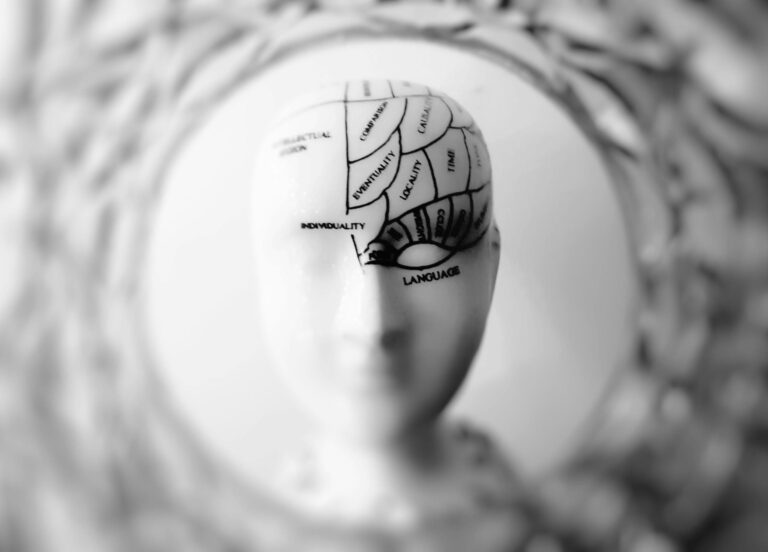

Bach Flower Water Violet is a flower remedy developed by Dr. Edward Bach in the 1930s, traditionally associated with people who tend toward self-reliance, emotional reserve, and a quiet withdrawal from social connection when life feels overwhelming. It’s often recommended for those whose social anxiety manifests not as visible panic, but as a quiet retreat inward, a kind of dignified distance that can leave others feeling shut out and leave you feeling profoundly alone.
Whether you approach it as a complementary wellness tool or simply as a useful lens for understanding your own patterns, Water Violet offers something genuinely worth sitting with: a framework for recognizing when your introversion has crossed into isolation, and when the quiet you crave has become a wall rather than a refuge.
I want to be honest with you upfront. Bach flower remedies are not clinically proven treatments for social anxiety. What they are, at least in my experience and in the experience of many people I’ve spoken with over the years, is a surprisingly accurate mirror. And sometimes, the mirror is what you actually needed.

If you’re exploring the broader landscape of mental health as an introvert, our Introvert Mental Health Hub covers everything from sensory overwhelm to emotional processing, with resources written specifically for people who experience the world from the inside out. Water Violet fits naturally into that conversation, because the social anxiety it describes is one that many introverts recognize immediately, even if they’ve never heard the name before.
What Is the Water Violet Personality Type?
Edward Bach described 38 flower remedies, each corresponding to an emotional state or personality pattern he believed needed gentle rebalancing. Water Violet was one of the twelve he considered most fundamental, part of what he called the “Twelve Healers.” The emotional state it addresses is one he described with unusual specificity: a person who is capable, self-contained, and genuinely comfortable in solitude, but who has allowed that self-sufficiency to harden into aloofness.
What’s your personality type?
Take our free 40-question assessment and get a detailed personality profile with dimension breakdowns, context analysis, and personalised insights.
Discover Your Type8-12 minutes · 40 questions · Free
The Water Violet type, as Bach described it, carries themselves with a certain quiet dignity. They don’t seek attention. They don’t broadcast their problems. They move through social situations with composure, often appearing calm when they’re actually managing a significant amount of internal discomfort. To the outside world, they can seem proud, even condescending, though that’s rarely their intention. What’s actually happening is closer to a kind of protective withdrawal, a retreat into the self that feels safer than the unpredictability of genuine connection.
When I first read Bach’s description of the Water Violet state, I felt something uncomfortable shift in my chest. I recognized it. Not because I’d ever thought of myself as aloof, but because I’d spent twenty years in advertising leadership developing exactly the kind of composed, self-reliant exterior that Bach was describing. I’d learned to appear unruffled in client presentations, to handle conflict with measured calm, to keep my own emotional temperature invisible in rooms full of extroverted energy. What I hadn’t realized was how much of that composure was actually distance.
How Does Social Anxiety Show Up Differently in Quiet People?
Most depictions of social anxiety focus on visible symptoms: trembling hands, a racing heart, the desperate urge to flee a crowded room. And those experiences are real and valid. But there’s another form of social anxiety that looks nothing like that from the outside. It’s the kind that presents as composure. As self-sufficiency. As a preference for solitude that has quietly become something more complicated.
The American Psychological Association notes that anxiety disorders encompass a wide range of presentations, and social anxiety in particular can manifest in ways that are easy to misread, both by others and by the person experiencing it. For quiet, introspective people, the anxiety often doesn’t announce itself dramatically. It shows up as a consistent reluctance to reach out, a habit of declining invitations that feel like too much effort, a subtle but persistent belief that other people don’t really want your company anyway.
Many introverts I’ve spoken with over the years describe a version of this that feels almost indistinguishable from their natural temperament. They genuinely do prefer smaller gatherings. They genuinely do need solitude to recharge. But somewhere along the way, the preference became a pattern, and the pattern became a wall. Psychology Today has explored the overlap between introversion and social anxiety extensively, noting that while they’re distinct experiences, they frequently coexist and can reinforce each other in ways that are worth examining carefully.
Highly sensitive people tend to experience this overlap with particular intensity. If you recognize the pattern of emotional overwhelm in social settings, the articles on HSP anxiety and coping strategies go deeper into why the nervous system of a sensitive person responds to social threat the way it does, and what that means practically for how you manage your energy.

Why Do Introverts Withdraw Instead of Reaching Out?
There’s a particular logic to withdrawal that makes complete sense from the inside. When social interaction costs you more energy than it returns, when you’ve been misread or dismissed or simply exhausted by the effort of translating your inner world into something others can receive, pulling back feels like the rational choice. It’s self-protection dressed up as preference.
I ran advertising agencies for over two decades, and for most of that time, I operated in environments that were built for extroverts. Open offices, brainstorming sessions, client entertainment, networking events that stretched into evenings I desperately wanted to spend alone. I got good at performing the expected version of leadership. What I didn’t get good at, not for a long time, was being honest about what that performance was costing me.
The withdrawal pattern I developed wasn’t dramatic. I didn’t stop showing up. I just stopped letting people in. I became very skilled at the kind of warm-but-distant professional presence that reads as confident and composed, while actually functioning as a very effective barrier against genuine connection. My team respected me. My clients trusted me. And I was profoundly isolated in ways I didn’t fully understand until much later.
The Water Violet framework names this pattern with unusual precision. Bach described it as the experience of someone who has become so accustomed to self-reliance that they’ve forgotten how to receive support, or have unconsciously decided that needing support is itself a kind of weakness. That resonated with me more than I was comfortable admitting.
Sensitive people who process emotions deeply often find that withdrawal feels protective in the moment but compounds over time. The piece on HSP emotional processing explores why that internal depth, while genuinely valuable, can also make the prospect of social exposure feel disproportionately risky. When you feel everything this intensely, the instinct to protect yourself from other people’s energy is understandable. The cost of that protection is worth examining, though.
What Does Bach Flower Water Violet Actually Do?
Bach flower remedies are prepared through a process of infusing flowers in spring water, either through sunlight or brief boiling, then preserving the resulting liquid in brandy. The remedies are taken in small doses, typically a few drops in water several times a day. They have no known pharmacological mechanism, and clinical evidence for their efficacy beyond placebo is limited.
I want to be clear about that, because I think it matters. If you’re dealing with significant social anxiety that’s affecting your daily life, please talk to a qualified mental health professional. Harvard Health has published solid guidance on evidence-based treatments for social anxiety disorder, including therapy approaches and, where appropriate, medication. Those are the interventions with real clinical support behind them.
What Bach remedies offer, and what I think is genuinely worth considering, is something more in the territory of reflective practice than medicine. Choosing a remedy requires you to honestly assess your emotional state. Reading the descriptions requires you to recognize patterns in yourself that you might otherwise walk past. That process of self-examination has value independent of whatever the drops themselves do or don’t do.
Water Violet specifically is said to support a shift from proud isolation toward what Bach called “wisdom and service.” The idea is that the qualities the Water Violet type possesses, depth, calm, self-sufficiency, perceptiveness, are genuinely valuable. The remedy isn’t meant to change those qualities. It’s meant to help you hold them more lightly, so they become gifts you can share rather than armor you hide behind.

Is the Water Violet Profile Related to Being a Highly Sensitive Person?
There’s significant overlap between the Water Violet emotional profile and the experience of being a highly sensitive person. Both involve a heightened awareness of environment and emotional nuance. Both can lead to a preference for quiet, controlled spaces over unpredictable social situations. And both can result in a kind of withdrawal that looks like aloofness from the outside while feeling like necessary self-care from the inside.
Highly sensitive people often pick up on subtle social cues that others miss entirely. They notice the slight tension in a colleague’s voice, the shift in a room’s energy when someone enters, the unspoken discomfort in a group dynamic. That perceptiveness is remarkable, but it also means that social environments carry a much higher cognitive and emotional load. The experience of HSP overwhelm and sensory overload captures this well: when you’re processing everything at that level of intensity, pulling back from social exposure isn’t laziness or arrogance. It’s a survival mechanism.
Where it gets complicated is in the distinction between protective withdrawal and isolating withdrawal. The first is healthy. The second, over time, compounds the very anxiety it was meant to relieve. When you stop testing the social environment, you stop gathering evidence that it might sometimes be safe. Your nervous system stays in a state of low-grade vigilance, and the wall that was meant to protect you starts to feel more like a cell.
The empathic dimension of this is worth naming too. Many sensitive people withdraw partly because they absorb other people’s emotional states so readily that social contact feels genuinely depleting. The piece on HSP empathy as a double-edged sword addresses this directly. Feeling other people’s pain or anxiety or frustration as if it were your own is not a small thing. It makes sense that you’d want to limit your exposure. What Bach’s Water Violet framework suggests is that there might be a way to remain present and connected without losing yourself in the process.
What Does the Research Actually Say About Flower Remedies and Anxiety?
Honest answer: the clinical picture is not strong. Systematic reviews of Bach flower remedies have generally found no significant difference between the remedies and placebo for measurable anxiety outcomes. A review published in PubMed Central examining complementary and alternative approaches to anxiety found that the evidence base for flower essences specifically is weak, and that any benefits observed in practice are difficult to attribute to the remedies themselves rather than to the ritual of use, the attention paid to one’s own emotional state, or the therapeutic relationship with a practitioner.
That’s not nothing, by the way. The ritual of pausing to assess your emotional state, the act of naming what you’re experiencing and choosing a response to it, those practices have genuine value. Mindfulness-based approaches to anxiety draw on exactly this kind of intentional self-observation, and there’s considerably more clinical support for those frameworks.
Additional research published in PubMed Central on complementary wellness approaches notes that people often find value in practices that help them develop a more conscious relationship with their own emotional patterns, regardless of whether the specific mechanism claimed for those practices holds up to scrutiny. For many introverts, the Water Violet framework functions more as a psychological vocabulary than a medical treatment. And vocabulary, the ability to name what you’re experiencing, is genuinely useful.
Where I’d caution against leaning too heavily on flower remedies is when they become a substitute for addressing the underlying anxiety directly. The American Psychological Association’s resources on shyness and social anxiety make clear that avoidance, in any form, tends to maintain anxiety rather than reduce it. If the appeal of Water Violet is partly that it lets you feel like you’re doing something about your social anxiety without actually having to engage with the social world, that’s worth noticing.

How Can the Water Violet Framework Help You Understand Your Own Patterns?
Here’s where I think the real value lives, separate from any question of whether the drops themselves do anything measurable. The Water Violet profile is a remarkably detailed portrait of a specific kind of social struggle, one that doesn’t get talked about much because it doesn’t look like struggle from the outside.
Recognizing yourself in that portrait can be genuinely clarifying. It can help you see that what you’ve been calling “preferring solitude” might actually be “avoiding the discomfort of being known.” It can help you notice that the composure you’ve cultivated, the quiet dignity that others admire, might be costing you something real in terms of intimacy and connection.
When I was running my agency, I had a senior account director on my team who was extraordinarily capable. She delivered flawless work, managed client relationships with grace, and never once complained or asked for help. I admired her efficiency enormously. What I didn’t see until much later was that her self-sufficiency was partly a defense. She’d learned, probably long before she ever worked for me, that asking for support was risky. That needing people left you vulnerable. So she didn’t ask. And she didn’t let people in. And eventually she burned out quietly and left the industry entirely, which was a genuine loss.
I recognized that pattern in her partly because I recognized it in myself. The Water Violet description gave me language for something I’d been doing for years without realizing it had a name.
Perfectionism often runs alongside this pattern, and it’s worth naming that connection explicitly. The high standards that Water Violet types hold for themselves, and sometimes for others, can become another layer of social armor. If you’re never quite good enough to deserve connection, you have a reason to keep your distance. The piece on HSP perfectionism and breaking the high standards trap addresses this dynamic with real honesty, and it’s worth reading if you recognize that thread in your own experience.
What Practical Steps Actually Help With This Kind of Social Anxiety?
Whether or not you ever try a Bach flower remedy, the emotional territory the Water Violet profile describes responds to some specific, evidence-informed approaches. These aren’t magic. They require consistent effort and a willingness to sit with discomfort. But they work, at least in the sense that they gradually shift the pattern in a direction that feels more like freedom than isolation.
Start with noticing. Before you can change a pattern, you have to see it clearly. Pay attention to the moments when you pull back from connection. Notice whether it’s genuine preference or protective avoidance. There’s a difference between choosing solitude from a place of contentment and retreating to it because social contact feels threatening. That distinction matters.
Practice small disclosures. One of the core features of the Water Violet pattern is the habit of keeping your inner world private. You can begin to loosen that habit in very low-stakes ways. Mention something real to a colleague. Share a small uncertainty with a friend. Let someone see that you don’t have everything perfectly managed. This is genuinely uncomfortable for people wired this way, and that discomfort is worth moving through rather than around.
Consider what you’re protecting. The Water Violet withdrawal often has a specific fear at its center, usually something in the territory of rejection, judgment, or being seen as less capable than you appear. Naming that fear specifically, not just “I’m anxious about social situations” but “I’m afraid that if people see me struggle, they’ll think less of me,” gives you something concrete to work with.
Rejection sensitivity is real and deserves its own attention. Many people who fit the Water Violet profile have a history of social rejection that shaped their withdrawal pattern in the first place. The resource on HSP rejection, processing, and healing is worth reading if you suspect that past experiences of being dismissed or misunderstood are still influencing how available you allow yourself to be in the present.
And if the anxiety feels significant enough to be interfering with your work, your relationships, or your sense of wellbeing, please don’t rely on complementary practices alone. A therapist who understands introversion and sensitivity can offer something that flower remedies genuinely cannot: a real relationship in which you practice being known. That practice, more than any specific technique, is often what actually moves the needle.
What Does It Actually Look Like to Move Through the Water Violet Pattern?
Bach’s vision for the resolved Water Violet state was specific and, I think, genuinely beautiful. He described it as a person who retains all the depth and calm and self-possession that characterizes them, but who can now bring those qualities into genuine relationship with others. The aloofness softens. The distance closes. Not because they’ve become someone else, but because they’ve stopped needing the wall.
I’ve experienced something like this shift over the past several years, and it didn’t come from a flower remedy. It came from a combination of therapy, honest conversations with people I trusted, and the gradual, uncomfortable practice of letting myself be seen in professional contexts where I’d previously hidden behind composure. It came from admitting to my team, occasionally, that I didn’t have all the answers. From letting a client see that a campaign wasn’t working before I had a solution ready. From telling a colleague I respected that I found something difficult.
None of those moments were comfortable. All of them deepened the relationships in ways that the polished, composed version of me never could have. And none of them required me to become an extrovert, or to stop valuing solitude, or to pretend that I don’t process the world quietly and internally. They just required me to stop treating that inner world as something that had to be protected from other people at all costs.
The Water Violet framework, whatever you make of the remedy itself, points toward something worth pursuing: the possibility of being both deeply private and genuinely connected. Of holding your own counsel and still letting people in. Of being self-sufficient without being isolated. That’s not a compromise between introversion and social engagement. It’s what introversion at its best actually looks like.
There’s much more to explore on these themes across the full Introvert Mental Health Hub, where we cover the emotional landscape of introversion with the depth and honesty it deserves.
About the Author
Keith Lacy is an introvert who’s learned to embrace his true self later in life. After 20 years in advertising and marketing leadership, including running agencies and managing Fortune 500 accounts, Keith now channels his experience into helping fellow introverts understand their strengths and build fulfilling careers. As an INTJ, he brings analytical depth and authentic perspective to every article, drawing from both professional expertise and personal growth.
Frequently Asked Questions
What is Bach Flower Water Violet used for?
Bach Flower Water Violet is traditionally used to address emotional states characterized by proud self-reliance, aloofness, and a withdrawal from social connection that has become isolating rather than restorative. It’s associated with people who appear calm and composed in social settings but maintain significant emotional distance from others. Bach intended it to support a shift toward warmer, more open engagement while preserving the genuine depth and self-possession that characterizes this type.
Is there scientific evidence that Bach flower remedies work for social anxiety?
Clinical evidence for Bach flower remedies is limited. Systematic reviews have generally found no significant difference between flower essences and placebo for measurable anxiety outcomes. Any benefit observed tends to be attributed to the reflective practice of self-assessment involved in choosing and using a remedy, rather than to a pharmacological mechanism. For social anxiety that significantly affects daily life, evidence-based approaches including cognitive behavioral therapy and, where appropriate, medication have considerably stronger clinical support.
How is the Water Violet profile different from ordinary introversion?
Introversion is a natural personality orientation involving a preference for solitude and internal processing. The Water Violet profile describes something more specific: a pattern in which self-reliance has hardened into emotional distance, and the preference for solitude has become a way of avoiding the vulnerability of genuine connection. Not all introverts fit this profile. What distinguishes the Water Violet pattern is the quality of the withdrawal, specifically whether it comes from contentment or from a need to protect against perceived social threat.
Can highly sensitive people benefit from exploring the Water Violet framework?
Many highly sensitive people find the Water Violet profile resonant, particularly those who have developed a habit of withdrawal in response to the intensity of social stimulation. Because sensitive people process environmental and emotional information so thoroughly, social settings can feel genuinely depleting, and pulling back can feel like the only sensible response. The Water Violet framework offers a way to examine whether that withdrawal is serving you well or has become a pattern that compounds isolation over time. It functions more usefully as a reflective tool than as a treatment.
What practical steps help with the social anxiety the Water Violet type describes?
Practical approaches that address the Water Violet pattern include developing the habit of noticing when withdrawal is protective versus avoidant, practicing small and low-stakes disclosures with trusted people, and identifying the specific fear that sits beneath the composed exterior. Working with a therapist who understands introversion and sensitivity can be particularly valuable, as the therapeutic relationship itself provides a context for practicing the openness that the Water Violet pattern tends to avoid. Mindfulness-based practices that support self-observation without judgment are also useful complements to any therapeutic work.