
The conference room tension was thick enough to cut with a knife. My overstuffed backpack groaned under the table as I fumbled through three different compartments searching for my notebook. By the time I found it, the meeting had moved past my key talking point.
Minimalist commuter backpacks work when they eliminate decision fatigue and reduce physical clutter. The best systems have structured organization, quick-access pockets for essentials, and comfortable carrying that disappears on your back. For introverts managing limited energy, the right bag removes friction rather than creating it.
As an introvert who’s tested dozens of bags over five years, I eventually realized something crucial: physical clutter creates mental clutter, and both steal pieces of the limited energy I have each day. That overstuffed backpack wasn’t about being prepared. It was about not trusting myself to know what I actually needed.
The breakthrough came during a three-day trip when I forced myself to pack everything into one backpack. No suitcase. No backup bag. Just one system. And for the first time in years, I felt light. Not just physically, but mentally. It was like I’d been clenching a fist I didn’t know was tight.
That experience changed everything about how I commute, travel, and think about gear. But here’s what nobody tells you about one-bag minimalism: it’s not about owning less. It’s about removing friction from your daily life so you can preserve energy for what actually matters.
Living with less stuff and carrying everything you need in a single bag isn’t just practical,it’s a lifestyle choice that aligns perfectly with introvert values of simplicity and intentional living. As you explore ways to simplify your daily routine and reduce unnecessary complexity, checking out our resources on general introvert life can help you find other minimalist habits that support your quiet, focused lifestyle. A well-chosen minimalist backpack becomes your trusted companion, letting you move through the world on your own terms without the burden of excess.
Why Does Physical Clutter Drain Introverts So Much?
Before we talk about specific backpacks, we need to understand why this matters so much for introverts specifically.
What’s your personality type?
Take our free 40-question assessment and get a detailed personality profile with dimension breakdowns, context analysis, and personalised insights.
Discover Your Type8-12 minutes · 40 questions · Free
Research from Princeton University demonstrates that visual clutter competes with our brain’s ability to pay attention and tires out our cognitive functions over time. When you’re surrounded by disorganized items, your brain has to work harder to filter them out. For introverts who already manage limited energy reserves, this constant background drain adds up fast.
I spent weeks comparing backpack specs, materials, and YouTube reviews. Every forum I found mentioned some flaw I couldn’t unsee. The overwhelm came from trying to find a bag that solved everything, rather than one that solved my actual problems. Studies show that decision fatigue, the mental exhaustion from making too many choices, can impair our cognitive function and lead to worse decisions later in the day.
For introverts, this is amplified. We’re already processing more internal stimuli than most people. Add the visual noise of a cluttered bag, the friction of disorganized pockets, and the cognitive load of remembering what’s where, and you’re drained before your workday even begins.
The psychological impact hits three specific areas:
- Attention residue: Visual clutter keeps part of your brain constantly engaged in low-level processing
- Decision overload: Too many organizational options create fatigue every time you pack or unpack
- Stress amplification: Disorganization triggers cortisol production, which compounds throughout the day
What Does “Minimalist Commuting” Actually Look Like?
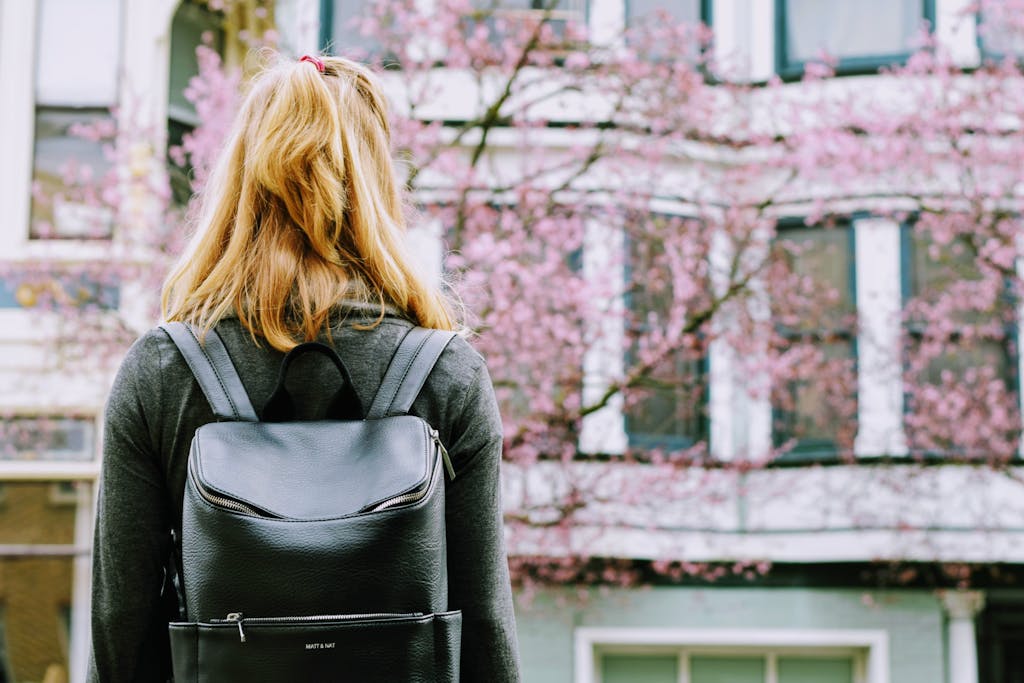
I learned this the hard way. My first “minimalist” backpack had no structure, no padding, and terrible organization. It looked sleek in photos. In reality, everything pooled at the bottom. I spent more time digging for things than actually using them.
Here’s what I wish someone had told me: minimalism isn’t about barebones. It’s not about carrying as little as humanly possible or making your bag look like an empty canvas. Real minimalism for introverts means removing friction.
The right backpack for minimalist commuting does three specific things:
First, it reduces decisions. You shouldn’t have to think about where something goes. The organization should feel intuitive, grab without searching, pack without planning.
Second, it creates accessibility. Essential items (phone, wallet, keys, water) should be reachable without removing the bag or unzipping the main compartment. Every extra step drains energy.
Third, it disappears on your back. You shouldn’t feel the bag after the first five minutes. No strap digging. No weight shifting. No awareness of it at all.
Research on cognitive load theory shows that people think more clearly and become less irritable in organized settings than cluttered ones. By decluttering your daily carry, you free up mental bandwidth. Decisions come easier when your brain isn’t constantly managing excess stimuli.
Which Backpacks Actually Work for Daily Commuting?
Over the past five years, I’ve used and tested more bags than I care to admit. Here’s what actually worked and what didn’t.
During my agency days, I tried everything from tactical military surplus to designer leather goods. The pattern I noticed: minimalist backpacks work best when they prioritize functionality over bare-bones aesthetics. They need fewer pockets that work better, not more pockets that create chaos.
The Winners:
- Aer Day Pack 2 and City Pack: Structured design means items don’t collapse into a pile at the bottom. The organization is thoughtful without being overwhelming. Multiple compartments that actually make sense.
- Bellroy Transit Workpack and Classic Backpack Plus: Clean aesthetics without screaming “I’m trying to be minimal.” Internal organization that works with how I actually pack. Quiet zippers that don’t announce your presence in every room.
- Peak Design Everyday Backpack 20L: Accessibility panels that let you reach gear from multiple angles. Perfect for introverts who hate making a production out of accessing their stuff in public.
The Disappointments:
- Floppy bags that looked great: Zero structure meant everything shifted with every step
- Overbuilt tactical bags: Too many straps and dangling parts that grabbed attention
- Generic Amazon travel backpacks: Fell apart within months from cheap materials and zipper failures

Which Features Actually Matter for Daily Use?
Here’s what I thought didn’t matter but absolutely does:
Structured frame: Without it, your bag becomes a shapeless blob that makes everything harder to access. Structure means items stay where you put them.
Comfortable shoulder straps: You’ll notice bad straps within five minutes. You’ll hate them within an hour. Wide, padded straps that don’t dig into your shoulders are non-negotiable.
Top quick-access pocket: For phone, wallet, keys, earbuds. The stuff you need constantly. If these aren’t immediately accessible, you’ll waste cognitive energy every single time.
Separate laptop pocket: Not just any pocket. One with actual padding and separate access. Your laptop shouldn’t require unpacking your entire bag.
Clamshell opening for travel: Lets you open the bag flat like a suitcase. Makes packing and airport security infinitely smoother.
Side water bottle pocket: External bottle access means you can hydrate without making a production out of it in public spaces.
Each of these features dramatically reduces friction. And for introverts managing energy throughout the workday, friction is the enemy.
The features that seemed important but weren’t:
- Excessive organization: Too many pockets create decision paralysis
- External attachment points: MOLLE webbing and D-rings just catch on things
- Compression systems: Over-engineering that rarely gets used in daily commuting
- Weather-proofing beyond basic: Most commuters never need expedition-level protection
What Do Introverts Need Differently in Backpack Design?
As an introvert, I value things that most backpack reviews never mention:
Quiet designs: Bags that don’t draw attention. No flashy logos, no tactical military aesthetic, no bright colors screaming “look at me.”
Smooth zippers: Every loud zipper sound feels like announcing your presence. Quality zippers operate quietly.
Predictable layouts: I don’t want to think about where things are. The organization should be intuitive enough that I can reach for items without looking.
Lightweight builds: Heavy bags drain physical energy, which directly impacts mental energy. Every ounce matters.
Low-profile designs: The backpack should help me move through crowds quietly, not bump into people or draw attention.
These aren’t just preferences. They’re about protecting your energy in an already demanding world. The quieter the bag feels, both visually and physically, the better I function.
I learned this during a particularly stressful client presentation period. My previous bag had scratchy Velcro closures and stiff zippers. Every time I needed something, the noise drew attention. The stress of feeling watched while accessing my bag compounded throughout long meeting days. Switching to a bag with magnetic closures and smooth operation eliminated that micro-stressor entirely.

Does One-Bag Living Actually Work Long-Term?
True one-bag living sounds romantic until you actually try it.
For short trips, it’s liberating. Three days with one backpack taught me I could feel calmer with less. No suitcase decisions. No chaos. Just one system, one routine.
For long-term commuting, one-bag minimalism requires discipline:
- Compressing clothing into packing cubes
- Minimizing tech to essentials only
- Creating a repeatable packing system you can execute without thinking
- Resisting the urge to “just bring one more thing”
The emotional side proved harder than the practical side. When I first packed everything into one bag, I felt exposed. Like I’d forgotten something crucial. But the longer I lived with it, the more I felt light, both physically and mentally. It was like unclenching a fist I didn’t know was tight.
Research on minimalist living shows that an uncluttered space translates to an uncluttered mind. Your space becomes more tranquil, peaceful, and relaxing. For introverts, this mental clarity is essential for maintaining daily energy.
The reality check: one-bag works for 80% of situations. The other 20% require compromises. Winter coats don’t compress well. Formal events need specific gear. Extended travel demands more than minimal packing allows. The key is knowing when to adapt the system rather than forcing it.
What Organization Principles Actually Work?
It took me years to understand these principles:
Organization matters more than volume. A 20L backpack with smart organization beats a 35L bag with chaos.
Accessibility matters more than aesthetics. Fast access to essentials reduces friction, which preserves energy.
Structure matters more than capacity. A well-structured 25L bag holds more usable gear than a floppy 30L bag.
Comfort matters more than features. All the pockets in the world don’t help if the bag hurts after 20 minutes.
Fewer pockets equals fewer decisions. Too many organizational options create decision fatigue every time you pack.
And the hardest lesson: Minimalism isn’t about owning less. It’s about needing less.
The practical application looks like this:
- Designate homes for categories: Tech in one section, documents in another, personal items separated
- Use packing cubes for compression: Transform chaos into organized blocks
- Keep essentials accessible: Phone, wallet, keys, water should never require full unpacking
- Maintain the system daily: Don’t let small messes compound into organizational chaos
- Review and refine quarterly: What’s working, what isn’t, what’s changed in your routine

Why Most Backpack Reviews Miss the Point for Introverts
Here’s what the gear review sites won’t tell you: most hype-driven bags are built for gear reviewers, not for introverts.
The tactical backpacks with MOLLE webbing and multiple external attachment points. The bags with 47 pockets and organizing systems that require a manual. The packs designed to hold every possible item you might theoretically need.
These aren’t bad bags. They’re just designed for a different user, someone who enjoys the process of organizing and accessing gear. Someone who gains energy from optimization and customization.
For introverts, the opposite works better. We want bags that organize themselves. That make decisions automatic. That reduce the cognitive load of daily carry rather than adding to it.
I stopped thinking about minimalism as an identity and started using it as a tool to protect my energy. That shift changed everything.
When I managed creative teams, I watched colleagues obsess over tactical bags with endless customization options. They spent energy configuring, reconfiguring, and optimizing their setups. That process energized them. But for me, it felt like homework that never ended. I needed a bag that worked immediately, without requiring me to become an expert in its operation.
What Backpacks Actually Work Based on Real Testing?
Here’s what actually works after testing dozens of bags:
For daily commuting: Aer Day Pack 2 (18L)
Structured enough to keep gear organized. Comfortable enough for all-day wear. Professional enough for client meetings. The quick-access top pocket alone justifies this bag.
For hybrid work/travel: Bellroy Transit Workpack (28L)
Clamshell opening makes packing effortless. Clean design doesn’t scream “travel backpack.” Enough space for a few days without becoming overwhelming. Internal organization that actually works.
For photographers/tech gear: Peak Design Everyday Backpack 20L
Side access panels mean you can grab gear without fully opening the bag. Magnetic closures are genius. Excellent protection for expensive equipment. Slightly heavier, but worth it for gear security.
For true minimalists: Bellroy Classic Backpack Plus (20L)
The cleanest aesthetic in this category. Perfect for people who carry less. Not enough organization for heavy packers, but ideal if you’ve mastered minimalism.
These recommendations come from actual use, not spec sheets. Each solved specific problems in my daily life as someone who values quiet productivity and friction-free routines.
How Did My Philosophy About Minimalism Change?
At the start, I thought minimalism meant “carry as little as humanly possible.” Austere. Hardcore. Proof of discipline.
Now I think: “Carry only what reduces stress later.”
That shifted everything. The question isn’t “what can I eliminate?” It’s “what creates friction in my day, and how can the right gear remove it?”
A portable battery pack isn’t excess, it’s peace of mind. A lightweight rain jacket isn’t clutter, it’s protection from unexpected variables. The right gear actually enables minimalism by removing worry.
Minimalism is not austerity. It’s intentional comfort. It’s designing your daily carry around how you actually function, not how you theoretically wish you functioned.
For introverts specifically, this means understanding that our needs are different. We’re not trying to impress anyone with how little we carry. We’re trying to move through the world with as little friction as possible so we can preserve energy for what matters.
The breakthrough came when I stopped judging my carry choices against some imaginary minimalist standard. Instead, I started asking: “Does this make my day easier or harder? Does it remove anxiety or create it? Does it help me function better or worse?”
What’s the Real Cost of Poor Backpack Design?
Bad backpack design costs more than money. It costs energy.
Every time you dig for something, that’s energy. Every time strap pressure reminds you the bag exists, that’s energy. Every time you shift weight or adjust fit, that’s energy. Every time you feel self-conscious about your bag’s appearance or function, that’s energy.
Research confirms that thinking through the act of navigating clutter creates cognitive overload, resulting in a stressed state that causes agitation and overwhelm. For introverts managing workplace demands, eliminating these small energy drains makes a massive cumulative difference.
The right bag gives you energy back by removing these micro-frictions from your day.
I quantified this during a particularly demanding project period. With my old bag, I was making 15-20 conscious decisions about accessing, organizing, or adjusting gear each day. Multiply that by workweeks, and it added up to hundreds of small energy drains. The right bag reduced those decisions to maybe 3-5 per day. That difference was measurable in my end-of-day energy levels.
How Do You Build an Effective One-Bag System?
If you want to try one-bag commuting, start here:
First, audit what you actually use. Not what you might theoretically need. What you’ve actually used in the past month.
Second, create homes for each category. Tech in one section. Documents in another. Personal items separated. This reduces decision fatigue every time you pack.
Third, invest in quality basics. Packing cubes for compression. A good water bottle. Cable organization. These multipliers make one-bag living actually work.
Fourth, test your system before committing. Try it for a week. Notice what causes friction. Adjust. The perfect system reveals itself through use, not theory.
Fifth, accept that your system will evolve. What works in winter won’t work in summer. What works for local commuting won’t work for air travel. Build flexibility into your approach.
The practical testing phase revealed most of my assumptions were wrong. Items I thought were essential rarely got used. Features I dismissed as unnecessary became daily lifesavers. Systems that looked perfect on paper created friction in real use.
The Bigger Picture
This isn’t really about backpacks. It’s about understanding that as an introvert, your energy is limited and precious. Every system, tool, and choice should be evaluated through that lens.
Does this create friction or remove it? Does this add to my cognitive load or reduce it? Does this help me move quietly through the world or draw attention?
The right backpack removes friction, reduces decisions, and helps you preserve energy for what actually matters. It’s a tool for protecting your wellbeing in a world designed for people with different energy systems.
After years of trying to find the perfect minimalist backpack, I’ve realized: you don’t need the perfect backpack. You need the right companion for your daily life. Stop over-optimizing hypothetical scenarios. Choose the bag that fits your current reality, not a fantasy version of yourself.
And remember: minimalism is about needing less, not owning less. When you need less, you carry less. When you carry less, you move through the world with less friction. And for introverts, less friction means more energy for what matters.
If you’re looking for other ways to reduce friction in your daily workflow, I’ve also tested productivity apps designed for introvert focus and minimalist wallets that complement this one-bag philosophy perfectly.
This article is part of our Introvert Tools & Products Hub , explore the full guide here.
About the Author
Keith Lacy is an introvert who’s learned to embrace his true self later in life. With a background in marketing and a successful career in media and advertising, Keith has worked with some of the world’s biggest brands. As a senior leader in the industry, he has built a wealth of knowledge in marketing strategy. Now, he’s on a mission to educate both introverts and extroverts about the power of introversion and how understanding this personality trait can unlock new levels of productivity, self-awareness, and success.