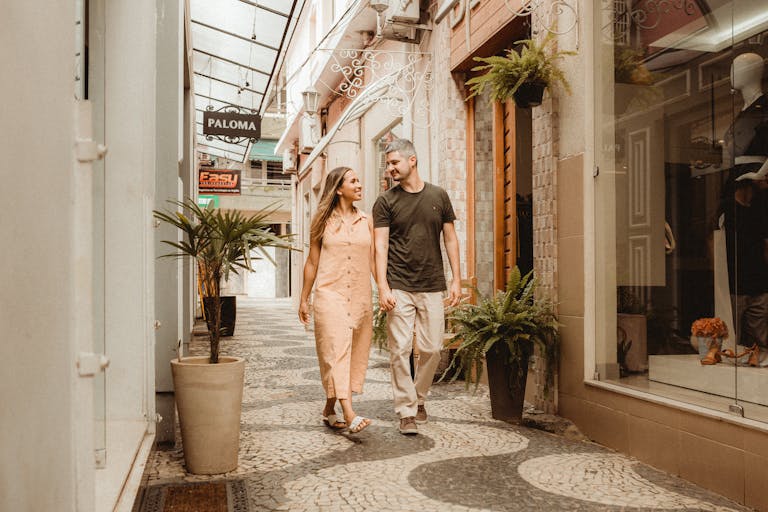
Minimalist bags for women are small, intentional carryalls designed to hold only what you truly need, stripping away the excess weight, clutter, and decision fatigue that come with overstuffed totes and oversized purses. For introverted women especially, this approach to what you carry reflects something deeper than fashion: it’s a daily act of protecting your energy and simplifying your sensory experience. Choosing a minimalist bag isn’t just an aesthetic preference. It’s a quiet form of self-care.
My wife pointed this out to me years ago, and honestly, I didn’t fully understand it until I started paying closer attention. She’d switched from a massive work tote to a small structured crossbody, and I noticed she seemed less frazzled at the end of the day. She said something I’ve never forgotten: “I stopped carrying things I might need and started carrying only what I actually need.” That sentence landed differently for me as an INTJ who’d spent two decades hauling a briefcase stuffed with contingency plans I rarely used.
There’s a broader conversation happening about how introverts and highly sensitive people can structure their physical environment to support their inner world. Our Solitude, Self-Care and Recharging hub explores many of those angles, from sleep routines to alone time to sensory recovery. What I want to add to that conversation today is something more tactile and immediate: the bag you carry every single day and what it’s quietly doing to your nervous system.
Why Does What You Carry Actually Matter to Introverts?
Most people wouldn’t connect their handbag to their mental energy. I wouldn’t have either, until I started noticing patterns in myself and in the people I worked with over two decades in advertising.
What drains your social battery?
Not all social exhaustion is the same. Our free quiz identifies your specific drain pattern and gives you personalised recharging strategies.
Find Your Drain PatternUnder 2 minutes · 8 questions · Free
Running an agency means you’re constantly managing inputs: client demands, creative revisions, budget conversations, team dynamics. For introverts, all of that external stimulation accumulates. What I found, both in myself and in the introverted women on my teams, is that the physical environment matters enormously. A cluttered desk wasn’t just untidy. It was cognitively expensive. The same principle applies to what you carry on your body.
Highly sensitive people in particular tend to notice physical weight and sensory input in ways that others might not register. The drag of a heavy bag on one shoulder, the low-grade anxiety of digging through a cluttered purse to find your keys, the visual noise of a bag stuffed beyond its capacity: these aren’t trivial irritants. For someone whose nervous system is already processing the world at a higher resolution, they add up. The connection between physical simplicity and psychological calm is well-documented in research on environmental stressors and mental load published through PubMed Central, which examines how accumulated sensory and cognitive demands affect wellbeing over time.
Minimalism in your bag isn’t about deprivation. It’s about deliberately reducing the number of micro-decisions and micro-frustrations that chip away at your energy before you’ve even arrived at your destination.
What Makes a Bag Truly Minimalist?
The word minimalist gets used loosely, so it’s worth being specific. A minimalist bag for everyday use typically shares a few characteristics: it’s compact without being impractical, structured enough to keep contents organized without requiring a bag organizer insert, and designed with intentional compartments rather than a single open void that swallows everything.
Size matters, but it’s not the whole story. A small bag stuffed with unnecessary items is just a cluttered bag in a smaller package. True minimalism starts with what you put inside it, and the bag itself should support that discipline rather than fight it.
Common formats that work well for minimalist carry include:
- Slim crossbody bags with one or two exterior pockets
- Structured top-handle bags in the small-to-medium range
- Belt bags worn at the hip or across the chest
- Compact totes with a defined structure that prevents overpacking
- Card-holder wallets paired with a small wristlet for days when you need even less
Material also plays a role. Bags made from quality leather or durable canvas tend to age better and feel more intentional than fast-fashion alternatives. For introverts who prefer fewer, better things, investing in one well-made bag that lasts years aligns with the same philosophy as everything else in a minimalist approach to daily life.

How Does Minimalism Connect to Introvert Self-Care?
Self-care for introverts isn’t always about grand gestures or dedicated wellness routines, though those matter too. A lot of it happens in the small, daily choices that either protect your energy or quietly drain it.
One of the best things I ever did for my own mental clarity was simplify my physical environment at work. I’m talking about clearing my desk down to the essentials, removing the visual clutter that made my office feel like a constant reminder of unfinished business. The effect was immediate and noticeable. I could think more clearly. I felt less reactive. The same principle scales down to something as small as what’s in your bag.
For highly sensitive women especially, the practices that support daily wellbeing often involve reducing unnecessary stimulation rather than adding more coping strategies on top of an already taxing environment. Thoughtful HSP self-care practices tend to share a common thread: they eliminate friction before it builds. A minimalist bag fits squarely in that category.
There’s also something to be said for the ritual of packing intentionally. When you know exactly what’s in your bag and why each item is there, you move through the world with a quiet confidence that’s hard to replicate. You’re not hunting for your phone at the bottom of a tote. You’re not shifting weight from shoulder to shoulder because the bag is too heavy. You arrive places feeling more composed, and for introverts who often need a moment to settle into new environments, that composure matters.
The connection between intentional simplicity and health outcomes explored in Psychology Today reinforces what many introverts already sense intuitively: reducing the unnecessary is a form of self-respect, not self-denial.
What Should a Minimalist Bag Actually Contain?
This is where the philosophy becomes practical. Deciding what belongs in a minimalist bag requires honest self-assessment, which, as an INTJ, I find genuinely satisfying. It’s a systems problem with a clean solution.
Start by emptying your current bag completely and sorting everything into three piles: things you use daily, things you use occasionally, and things you’ve been carrying “just in case” for weeks or months without touching. That third pile is almost always the culprit behind a bag that feels overwhelming.
A well-curated minimalist bag for most days might include:
- A slim wallet or card case with only the cards you actually use
- Your phone
- One set of keys, ideally on a compact key organizer rather than a bulky keychain
- A small lip balm or one essential personal care item
- Earbuds or earphones if you use them regularly
- A compact notebook if you’re a writer or thinker who processes on paper
That’s often enough. The items that get added beyond this core should earn their place based on your specific day, not on generalized anxiety about what might happen.
One of the introverted women on my creative team years ago had a system I admired: she kept a small pouch at her desk with the “just in case” items (pain reliever, spare earbuds, charging cable) and only transferred something to her bag when she actually anticipated needing it that day. It was a small but elegant solution to the over-packing habit, and it meant her bag stayed light and her mind stayed clearer.

Does Bag Minimalism Actually Reduce Anxiety?
Framing a bag choice as anxiety reduction might sound like a stretch, but bear with me here, because the mechanism is real even if the scale seems small.
Introverts and highly sensitive people often experience what I’d describe as a low-level hum of environmental input that runs constantly in the background. It’s not always distressing, but it is always present. Every unnecessary object in your physical space is a small signal your brain registers and has to process, even if you’re not consciously aware of it. Multiply that by the dozens of items in an overstuffed bag, and you have a genuinely measurable cognitive load.
The research on clutter and cognitive load published through PubMed Central on environmental factors and mental health supports the idea that physical disorder creates psychological friction. Reducing that friction, even in small ways, contributes to a calmer baseline state.
There’s also the question of what happens when introverts don’t protect their energy proactively. The cumulative effect of small energy drains, including the frustration of a disorganized bag, the weight on your shoulder, the time spent searching for things, adds to the larger picture of depletion. If you’ve read about what happens when introverts don’t get alone time, you’ll recognize the pattern: small depletions compound into something much harder to recover from.
Simplifying your bag won’t replace the need for genuine solitude and recovery. Still, it’s one of the many small environmental adjustments that collectively make a real difference in how much energy you have at the end of the day.
How Does Bag Minimalism Fit Into a Larger Introvert Lifestyle?
What I find compelling about minimalism as a philosophy, beyond the aesthetic appeal, is how naturally it aligns with the introvert’s instinct to go deeper rather than wider. We tend to prefer fewer, more meaningful things over a broad accumulation of options. That applies to social relationships, to careers, and yes, to what we carry.
The women I’ve observed who seem most grounded in their daily lives, and I’m thinking of several former colleagues and clients here, tend to share a quality of deliberateness. They’ve made intentional choices about their environment, their routines, and their possessions. A minimalist bag is often just one visible expression of that broader orientation.
This connects directly to how introverts and highly sensitive people approach rest and recovery. Quality sleep, for instance, is enormously affected by the amount of residual mental activity you’re carrying into the evening. The practices outlined in resources like HSP sleep and recovery strategies often start with reducing stimulation throughout the day, not just at bedtime. A day spent in a simplified, intentional environment contributes to an easier wind-down at night.
Solitude is another thread that runs through all of this. The ability to be alone with your thoughts, to move through the world without constant friction, to feel settled in your own skin: these aren’t luxuries for introverts. They’re necessities. As explored in depth in the piece on HSP solitude and the need for alone time, that inner quiet isn’t just pleasant. It’s restorative in a way that nothing else quite replicates.
A minimalist bag, in its own small way, supports that inner quiet by removing one more source of outer noise.

What Are the Best Bag Styles for Introverted Women Who Value Simplicity?
Style is personal, and I won’t pretend to have authority on fashion. What I can offer is a framework for thinking about bag choice through the lens of intentionality and energy management.
Crossbody bags tend to be the most consistently recommended format among women who’ve adopted minimalist carry. They distribute weight evenly, keep your hands free, and their compact size naturally limits what you can pack. The best ones have a main compartment and one or two exterior pockets, enough structure to keep things organized without becoming a filing system.
Top-handle bags in a small structured format offer a more polished look for professional settings. They signal intentionality without sacrificing function. Many minimalist-leaning women keep one crossbody for daily errands and one small structured bag for work or evening occasions, covering most situations without needing a collection of bags.
Belt bags have become genuinely functional rather than purely trendy. Worn across the chest or at the hip, they keep essentials immediately accessible and eliminate the shoulder strain that comes with even a moderately heavy crossbody. For days that involve a lot of movement, particularly time outdoors, they’re worth considering.
Speaking of outdoors: there’s something particularly grounding about being in nature with minimal carry. The freedom of movement, the absence of physical weight, the way your attention can settle on the environment around you rather than the bag on your shoulder. The healing power of nature for highly sensitive people is well worth exploring, and pairing those outdoor moments with a genuinely minimal carry setup amplifies the restorative effect.
Color and material are worth a brief mention. Neutral tones (black, tan, cognac, warm gray) offer the most versatility and tend to feel visually quieter, which aligns with the minimalist aesthetic. Quality leather or waxed canvas ages beautifully and reduces the need to replace bags frequently. Both of those factors matter when you’re building a simpler, more intentional relationship with your possessions.
Can Minimalism in Small Things Actually Change How You Feel?
My honest answer, based on years of observation and my own experience simplifying my work environment, is yes. Not dramatically, and not in isolation. Small changes don’t replace the larger work of building a life that supports your introversion. Yet they contribute to it in ways that are easy to underestimate.
There’s something in the act of choosing less that trains your attention. Every time you consciously decide not to add something to your bag, you’re practicing a form of discernment that extends into other areas of your life. You get better at distinguishing between what you actually need and what you’re carrying out of habit or anxiety. That’s a genuinely useful skill for introverts who often absorb more from their environment than they realize.
The Greater Good Science Center at Berkeley has written about how solitude and simplified environments support creative thinking. The underlying idea is that when your mind isn’t occupied with managing clutter and complexity, it has more space for the kind of deep, associative thinking that introverts tend to do naturally. A minimalist bag is a small contribution to that spaciousness.
I’ve also noticed that the discipline of minimalism tends to be self-reinforcing. Once you experience the ease of carrying only what you need, the overstuffed bag starts to feel genuinely uncomfortable rather than just heavy. You’ve recalibrated your baseline, and going back feels like a step backward rather than a neutral choice.
That recalibration is worth something. It’s one of the quieter ways that introverts can reshape their daily experience toward more ease and less friction, without requiring anyone else’s participation or approval.
There’s a piece I return to occasionally about finding genuine solitude in everyday moments that captures this well. The moments of quiet aren’t always found in grand retreats or dedicated meditation sessions. Sometimes they’re found in the small choices that reduce noise and create space, and a minimalist bag is exactly that kind of choice.
How Do You Build a Minimalist Bag Habit That Actually Sticks?
Habits stick when they’re tied to values rather than trends. If minimalism in your bag feels like a sacrifice, it won’t last. If it feels like a form of self-respect, it will.
Start with a single week of intentional carry. Choose your smallest functional bag and spend a week packing only what you genuinely need each day. Notice how it feels to move through your day with less. Notice what you actually reached for and what stayed untouched. That data is more useful than any packing list I could give you.
From there, build a personal “core carry” list based on your actual life rather than a generalized ideal. An introvert who works from home and rarely leaves without a specific purpose has different needs than someone commuting daily to an office. The minimalist principle is the same; the specific contents will vary.
Revisit your carry every season. Life changes, and what you need changes with it. A quarterly audit of your bag, like a quarterly audit of your schedule or your commitments, keeps the habit fresh and prevents the slow accumulation of items that gradually turns a minimalist bag back into a cluttered tote.
The Frontiers in Psychology research on habit formation and environmental design supports the idea that sustainable habits are built through environmental cues and consistent small actions rather than willpower alone. Choosing the right bag, one that physically limits overcrowding, is itself an environmental cue that supports the habit you’re trying to build.
Finally, extend the philosophy outward. A minimalist bag is often the entry point to a broader simplification of daily life that many introverts find genuinely liberating. The same instinct that drives you to carry less tends to show up in other areas: fewer social commitments, a more curated home environment, a work schedule that prioritizes depth over breadth. These aren’t separate practices. They’re expressions of the same underlying orientation toward quality over quantity, depth over accumulation.
If this kind of intentional, energy-protecting approach resonates with you, there’s a lot more to explore. Our full Solitude, Self-Care and Recharging hub covers everything from daily HSP practices to nature connection to the science of introvert recovery, all through the lens of building a life that genuinely works for how you’re wired.
Running on empty?
Five drain profiles, each with specific triggers, warning signs, and a recharging playbook.
Take the Free QuizUnder 2 minutes · 8 questions · Free
About the Author
Keith Lacy is an introvert who’s learned to embrace his true self later in life. After 20 years in advertising and marketing leadership, including running agencies and managing Fortune 500 accounts, Keith now channels his experience into helping fellow introverts understand their strengths and build fulfilling careers. As an INTJ, he brings analytical depth and authentic perspective to every article, drawing from both professional expertise and personal growth.
Frequently Asked Questions
What is a minimalist bag for women?
A minimalist bag for women is a compact, intentionally designed carryall that holds only essential items, reducing physical weight, visual clutter, and the low-level cognitive load that comes with an overstuffed purse. Common formats include slim crossbody bags, small structured top-handle bags, and belt bags. The philosophy behind minimalist carry is less about the bag itself and more about the discipline of choosing only what you genuinely need each day.
Why do introverts and highly sensitive women benefit from minimalist bags?
Introverts and highly sensitive women tend to process their environment at a higher level of detail, which means physical clutter and sensory friction accumulate more quickly into genuine fatigue. A minimalist bag reduces the number of micro-frustrations (hunting for items, managing weight, visual disorder) that chip away at energy throughout the day. It’s a small but meaningful way to protect your mental bandwidth before it gets depleted.
What should a minimalist bag contain?
A well-curated minimalist bag typically contains a slim wallet or card case, your phone, a compact set of keys, one personal care essential, and earbuds or a small notebook if you use them daily. Items beyond this core should be added based on the specific demands of each day rather than kept permanently. A useful strategy is maintaining a small pouch at home for “just in case” items and only transferring something to your bag when you genuinely anticipate needing it.
Does carrying a minimalist bag actually reduce anxiety?
While a bag choice alone won’t resolve anxiety, it does reduce the low-level cognitive load that contributes to a sense of overwhelm throughout the day. Every unnecessary object in your physical space requires a small amount of mental processing, even when you’re not consciously aware of it. Reducing physical clutter, including in your bag, contributes to a calmer baseline state. For introverts and highly sensitive people who are already managing significant sensory input, these small reductions genuinely add up.
How do you start a minimalist bag practice?
Start by emptying your current bag completely and sorting everything into daily-use items, occasional-use items, and “just in case” items you rarely touch. Pack only the daily-use items into your smallest functional bag for one week and notice what you actually reach for. Build a personal core carry list from that real-world data rather than a generalized ideal. Revisit and audit your carry seasonally to prevent gradual re-accumulation. Choosing a bag with a defined structure that naturally limits overcrowding also helps reinforce the habit over time.