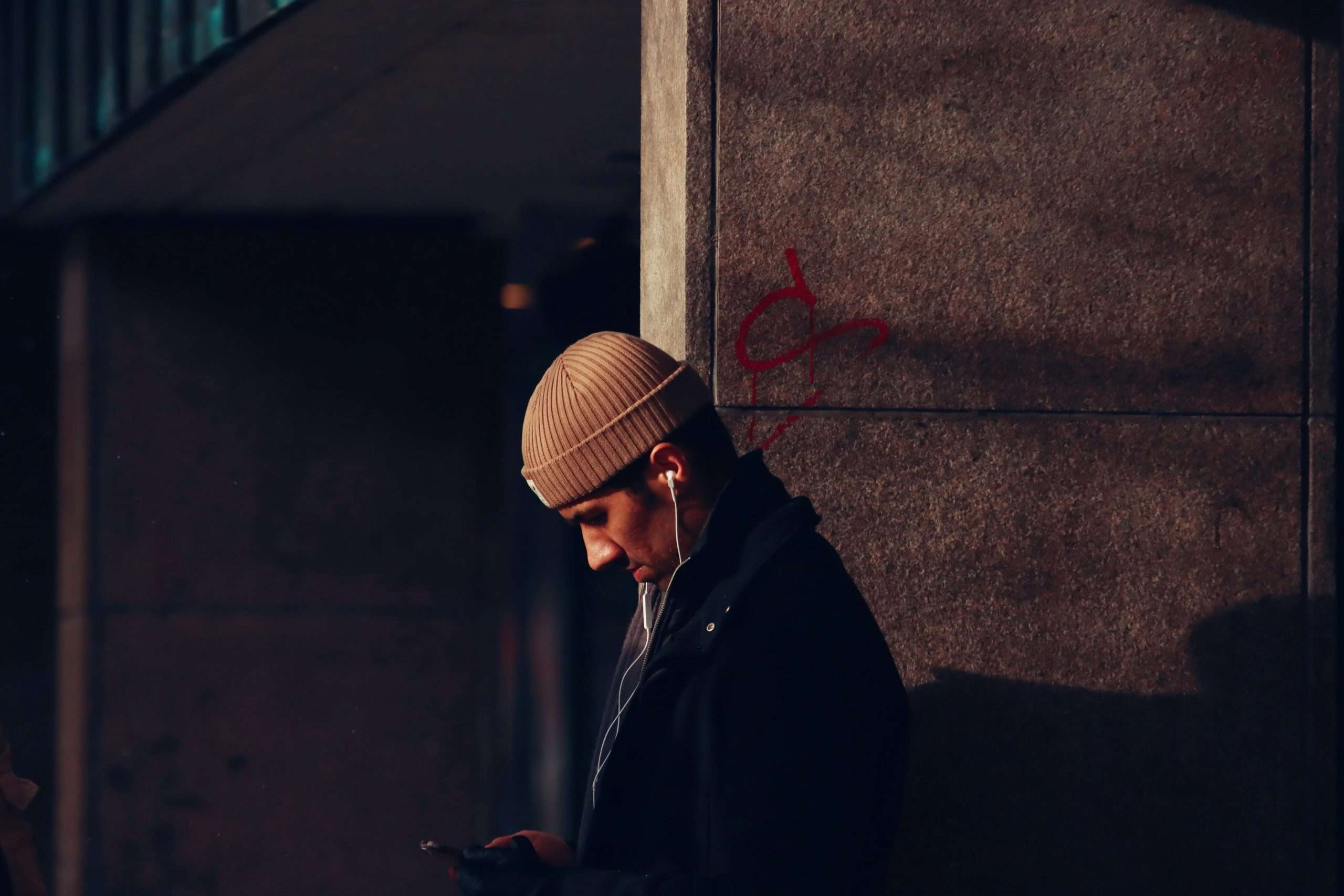

Shyness isn’t just a feeling. It produces real, observable behaviors that ripple outward into careers, relationships, and daily life in ways most people never stop to examine. The behavioral consequences of shyness include social withdrawal, avoidance of eye contact, hesitation before speaking, physical tension in group settings, and a tendency to hold back contributions even when someone has something genuinely valuable to offer.
What makes this complicated is that shyness and introversion are not the same thing, and conflating them leads to a lot of unnecessary confusion and self-blame. Shyness is rooted in anxiety and fear of negative social evaluation. Introversion is a preference for quieter, less stimulating environments. A person can be one without the other, and understanding that distinction changes everything about how you approach your own patterns.
I spent years inside both experiences without a clear vocabulary for either. Running advertising agencies, I was expected to command rooms, pitch loudly, and perform confidence on demand. What I didn’t understand at the time was which of my hesitations came from being an introvert, and which came from something closer to fear. Untangling those two threads took longer than I’d like to admit.

Our Introvert Personality Traits hub covers the broader landscape of how introverts experience the world, and shyness fits into that picture in specific, often misunderstood ways. Before we can talk about behavioral consequences, we need to understand what’s actually driving them.
What Does Shyness Actually Look Like in Practice?
Shyness shows up in the body before it shows up in behavior. There’s a tightening in the chest before a phone call you didn’t initiate. A slight delay before entering a room where people are already gathered. A practiced habit of scanning for exits at social events, not because you want to leave immediately, but because knowing the exit is there makes staying feel manageable.
Career Coaching for Introverts
One-on-one career strategy sessions with Keith Lacy. 20 years of Fortune 500 leadership as an introvert, now helping others build careers that work with their wiring.
Learn More50-minute Zoom session · $175
At the behavioral level, shyness tends to produce a recognizable cluster of patterns. People who experience shyness often speak more quietly than their ideas deserve. They defer to others in group conversations, not because they lack opinions, but because the social cost of asserting themselves feels too high in the moment. They rehearse what they want to say before saying it, sometimes so many times that the moment passes before they’ve worked up to it.
In professional settings, I watched this play out constantly across the teams I managed. One of my senior strategists at a mid-sized agency I ran in the early 2000s was genuinely one of the sharpest thinkers in the room during any client briefing. Her written work was brilliant. In person, she went quiet the moment a client pushed back on her recommendations. She’d nod, take notes, and then send a comprehensive rebuttal by email two hours later. Her shyness wasn’t about lacking confidence in her ideas. It was about the specific pressure of real-time social evaluation.
That pattern, where someone performs significantly better in asynchronous communication than in live interaction, is one of the clearest behavioral signatures of shyness. It’s worth naming because a lot of people interpret it as a skills gap when it’s actually a anxiety response.
How Does Shyness Differ From Introversion in Behavioral Terms?
This distinction matters more than most personality discussions give it credit for. An introvert who isn’t shy will still prefer smaller gatherings and quieter environments, but they’ll move through social situations without the accompanying dread. They might choose not to speak in a meeting because they’re still processing, not because they’re afraid of how their words will land.
Shyness, by contrast, involves a specific fear of negative evaluation. The American Psychological Association has documented how fear of social judgment shapes behavior in ways that go well beyond simple preference. Shy individuals often want social connection but feel blocked from it by anxiety. That’s fundamentally different from an introvert who prefers less social interaction and feels genuinely satisfied with that arrangement.
Understanding introvert character traits helps clarify this. Introverts tend to be thoughtful, observant, and energized by solitary activity. Those are preferences, not fears. Shyness layers anxiety on top of whatever personality type someone already has, and that’s where the behavioral consequences become more acute.
Some people sit at the intersection of both. They’re introverted and shy, which means they both prefer quieter environments and feel anxious in social situations. Others are extroverted and shy, which creates an interesting internal conflict: they crave social connection but feel anxious pursuing it. That combination produces some of the most complex behavioral patterns I’ve observed. If you’re curious about people who blend those social tendencies, the piece on introverted extroverts behavior traits explores that overlap in detail.

What Are the Social Behavioral Consequences of Shyness?
Social withdrawal is the most visible consequence, but it’s also the most misread. When a shy person pulls back from a group conversation or declines an invitation, the assumption is often that they don’t want to be there. The reality is usually more complicated. Many shy people want connection deeply and feel genuine distress about the gap between what they want socially and what they’re able to pursue without significant anxiety.
Avoidance is the behavioral mechanism that makes shyness self-reinforcing. When anxiety around social situations leads to avoidance, the avoided situations never get a chance to feel less threatening. The anxiety stays intact, sometimes grows, and the avoidance becomes a default rather than a choice. Over time, the behavioral footprint of shyness expands: fewer initiations, fewer risks taken, a shrinking circle of comfortable social territory.
There’s also a specific pattern around eye contact that shows up reliably. Shy individuals often struggle to maintain eye contact in high-stakes interactions, not because they’re being evasive, but because eye contact intensifies the feeling of being evaluated. In a pitch meeting early in my agency career, I remember watching a junior account manager avoid looking directly at the client while presenting. The client later mentioned it made him seem uncertain about his own work. The account manager was certain about the work. He was uncertain about the social situation, and his body was broadcasting that uncertainty.
Physical symptoms are another behavioral consequence that often goes undiscussed. Blushing, voice tremors, sweating, and muscle tension are real physical responses to the anxiety that shyness produces. Research published in PubMed Central has examined how social anxiety activates physiological stress responses, and shy individuals often experience these responses in situations that wouldn’t register as stressful to someone without that anxiety baseline. The physical symptoms then compound the problem: once you notice you’re blushing, the awareness of blushing makes the blushing worse.
How Does Shyness Shape Professional Behavior Over Time?
The professional consequences of shyness are significant and often cumulative. They tend to compound quietly over years rather than announcing themselves in a single moment.
Networking is the area where shy professionals feel the impact most acutely. Not because they can’t build relationships, but because the specific behaviors that networking demands, cold introductions, sustained small talk with strangers, self-promotion in real time, are precisely the behaviors that shyness makes most difficult. Many shy professionals have deep, loyal professional relationships built over years. What they often lack is the broader network that comes from repeated low-stakes social initiations, because those initiations feel anything but low-stakes to them.
I saw this clearly in how I handled business development during my agency years. My most productive client relationships were ones that started through referrals or existing connections. Cold outreach felt genuinely uncomfortable, and I avoided it more than I should have. At the time I told myself it was because I preferred quality over quantity in relationships, which was partly true. It was also partly avoidance dressed up as strategy.
Promotion and visibility are also affected. Shy professionals are often less likely to advocate for themselves in performance reviews, less likely to volunteer for high-visibility projects, and less likely to interrupt or redirect conversations when they’re being talked over. These aren’t character flaws. They’re behavioral consequences of anxiety around social evaluation. Yet organizations typically reward the behaviors that shyness suppresses, and penalize the quieter patterns that shy people default to.
There’s an interesting gender dimension here worth acknowledging. The behavioral expectations placed on shy women in professional environments are particularly complex. Female introvert characteristics overlap with some of the behavioral patterns associated with shyness, and women are often penalized differently than men for similar levels of social reticence. A quiet man in a meeting might be read as thoughtful. A quiet woman in the same meeting might be read as disengaged or lacking confidence. That asymmetry shapes how shy women manage their professional behavior, often adding a layer of performance on top of already taxing social navigation.

What Happens Inside Relationships When Shyness Goes Unaddressed?
Shyness doesn’t stay at the office. Its behavioral consequences extend into personal relationships in ways that can be genuinely painful, especially when neither person in the relationship has a clear framework for what’s happening.
Shy people often struggle to initiate. Initiating a conversation, a plan, a difficult discussion, or even a casual text can feel like a high-stakes social act. The fear of being perceived as too eager, too much, or socially clumsy creates a hesitation that can read as disinterest to people who don’t share that anxiety. Friendships stall. Romantic connections don’t develop. The shy person feels the loss acutely while simultaneously feeling unable to close the gap.
Conflict is another area where shyness creates distinctive behavioral patterns. Many shy people avoid conflict not because they don’t have strong feelings, but because the social exposure of disagreement feels too threatening. They’ll absorb more than they should, agree when they don’t, and then feel resentment building in private. The behavioral consequence is a pattern of surface-level agreeableness that doesn’t reflect what’s actually happening internally.
There’s also a specific challenge around self-disclosure. Building closeness in relationships requires sharing something real about yourself, which means risking being judged for what you share. For shy people, that risk feels disproportionately large. They often know a great deal about the people in their lives while sharing relatively little of themselves in return, not out of secrecy, but out of anxiety about how their inner world will be received.
Worth noting: some people who appear shy in relationships are actually closer to the ambivert end of the personality spectrum. If you’re uncertain where you fall, the exploration of ambivert characteristics might help you get clearer on what’s driving your social patterns.
Are There Positive Behavioral Consequences of Shyness?
Shyness gets an almost entirely negative treatment in the psychology literature and in popular culture, but the behavioral patterns it produces aren’t uniformly limiting. Some of them are genuinely valuable, in the right contexts.
Careful observation is one. Shy people, because they spend more time listening and watching than talking, often develop acute social perception. They notice the shift in someone’s posture when a topic makes them uncomfortable. They catch the slight hesitation before someone says yes when they mean no. Psychology Today has written about how deep attentiveness to others is a hallmark of empathic people, and shyness, for all its costs, tends to cultivate that attentiveness.
Preparation is another. Because shy people anticipate social situations with some anxiety, they tend to over-prepare for them. That over-preparation often produces genuinely excellent work. The presentations are more thorough. The questions are more considered. The written communication is more precise. My strategist who sent the two-hour email rebuttals? Her rebuttals were always better than what she would have said in the room. The anxiety that slowed her down in real time made her more rigorous in reflection.
Thoughtfulness in communication is a third. Shy people rarely dominate conversations. They tend to wait, to listen, to let others finish. In environments that reward that quality, it’s a genuine asset. Many of the best managers I’ve known were people who spoke less and listened more, not because they were passive, but because they understood that their silence created space for others to contribute something worth hearing.
These behavioral tendencies connect to a broader set of qualities that introverts and shy people often share. The piece on 15 traits introverts have that most people don’t understand covers several of these in depth, and it’s worth reading if you’ve spent years wondering why your quieter tendencies feel like liabilities when they’re actually strengths in disguise.

Can Shyness Change, and What Does That Change Look Like Behaviorally?
Shyness isn’t a fixed trait. The behaviors it produces can shift meaningfully over time, through experience, through deliberate practice, and sometimes simply through aging. Psychology Today has noted that personality traits shift as people age, and many people find that the anxiety component of shyness softens over decades even as their fundamental introversion stays intact.
What changes is rarely the underlying sensitivity. What changes is the relationship to that sensitivity. A shy person who has spent years working in a field they’re confident in often finds that professional confidence bleeds into their social behavior within that domain. They still feel anxious at a crowded networking event, but they can hold a conversation about their work without the same hesitation they felt at 25.
Behavioral change around shyness tends to happen incrementally. It’s rarely a single confrontation with fear that rewires the pattern. It’s more often a series of small exposures that gradually recalibrate what feels threatening. Work published in PubMed Central on social anxiety and behavioral interventions suggests that gradual exposure, rather than forced confrontation, produces more durable behavioral change for people dealing with anxiety-driven social avoidance.
My own experience with this was less dramatic than I’d expected. I didn’t overcome shyness in any single moment. What happened was that I accumulated enough evidence, through enough successful client presentations and enough difficult conversations that went better than I feared, that the catastrophic outcomes my anxiety predicted stopped feeling inevitable. The behavior changed because the underlying prediction changed.
That’s worth sitting with if you’re someone who experiences shyness. The behavioral consequences you’re living with aren’t permanent features of who you are. They’re responses to a set of predictions your nervous system is making about social situations. Those predictions can be updated. It takes time and it takes repetition, but the update is possible.
What Does Shyness Look Like Across Different Personality Types?
Shyness doesn’t belong exclusively to introverts, and the behavioral consequences look different depending on the broader personality context in which it appears.
An extroverted person who is also shy presents a particular kind of internal conflict. They’re energized by social interaction but anxious about social evaluation. The behavioral result is often someone who seems outwardly engaged and socially active but carries significant internal distress about how they’re being perceived. They might be the loudest person in a room while simultaneously running a constant internal audit of whether they said the wrong thing.
Among introverts, shyness adds an additional layer of complexity to understanding which qualities are most characteristic of introverts. Introversion’s core features, preference for depth over breadth, need for solitary recovery time, rich inner life, exist independently of shyness. When shyness is also present, it can amplify the withdrawal behaviors and make it harder to distinguish what’s preference and what’s avoidance.
As an INTJ, I’ve spent considerable time observing how shyness expresses itself across different types on my teams. The INFJs I managed often internalized their shyness as a kind of hypervigilance about how their words were landing, constantly monitoring for signs that they’d said something that created discomfort. The ISFPs I worked with sometimes expressed shyness through creative withdrawal, retreating into their work as a way of managing social exposure. The behavioral signatures were different, but the underlying anxiety about social evaluation was recognizable across all of them.
Understanding personality type is a useful lens here, though it’s not a complete framework on its own. The Myers-Briggs Foundation offers resources on how personality type intersects with learning and development, which can help shy individuals understand their own patterns within a broader context. And Verywell Mind provides a solid overview of the MBTI framework for anyone who wants to ground their self-understanding in the model before applying it to something as specific as shyness.

What’s Worth Remembering About the Behavioral Consequences of Shyness
Shyness shapes behavior in ways that are real, measurable, and worth taking seriously. It’s not a personality quirk to push through with enough willpower. It’s an anxiety response that produces specific behavioral patterns, and those patterns deserve to be understood on their own terms rather than dismissed as weakness or social incompetence.
The behaviors that shyness produces, withdrawal, hesitation, avoidance, careful preparation, deep listening, aren’t all negative. Some of them are genuinely valuable. The work isn’t to eliminate shyness entirely. It’s to understand which of its behavioral consequences are limiting you and which ones are actually serving you, and to make more conscious choices from that understanding.
After two decades in advertising, I can tell you that the most self-aware people I worked with weren’t the ones who had no anxiety. They were the ones who understood their anxiety well enough to work with it rather than against it. That understanding starts with naming what’s actually happening, and that’s what this is about.
If you want to go deeper on the personality traits that sit alongside shyness and introversion, the full collection of resources in our Introvert Personality Traits hub is a good place to continue the conversation.
About the Author
Keith Lacy is an introvert who’s learned to embrace his true self later in life. After 20 years in advertising and marketing leadership, including running agencies and managing Fortune 500 accounts, Keith now channels his experience into helping fellow introverts understand their strengths and build fulfilling careers. As an INTJ, he brings analytical depth and authentic perspective to every article, drawing from both professional expertise and personal growth.
Frequently Asked Questions
Is shyness the same as introversion?
No. Introversion is a personality preference for quieter, less stimulating environments and is not rooted in anxiety. Shyness involves fear of negative social evaluation and produces behavioral avoidance as a result. A person can be introverted without being shy, shy without being introverted, or both at the same time. Understanding the difference helps people identify which of their behaviors are driven by preference and which are driven by anxiety.
What are the most common behavioral consequences of shyness?
The most common behavioral consequences include social withdrawal, avoidance of situations that feel socially threatening, hesitation before speaking, difficulty maintaining eye contact in high-stakes interactions, physical symptoms like blushing or voice tremors, and a tendency to communicate more effectively in writing than in real-time conversation. Over time, these patterns can compound and lead to a narrowing of social and professional opportunities.
Can shyness have positive behavioral consequences?
Yes. Because shy people spend more time observing than participating in social situations, they often develop strong listening skills and social perception. The anxiety that comes with shyness also tends to produce thorough preparation before social or professional encounters. Many shy people are exceptionally careful communicators who choose their words with more precision than people who speak without hesitation. These qualities are genuine assets in the right contexts.
How does shyness affect professional behavior specifically?
In professional settings, shyness often leads to difficulty with networking, reluctance to self-advocate in performance reviews, avoidance of high-visibility projects, and hesitation to speak up in meetings even when someone has something valuable to contribute. Shy professionals may also struggle with real-time pushback from clients or colleagues, preferring to respond in writing where the social pressure is lower. These patterns can limit career advancement in environments that reward visible assertiveness.
Can the behavioral consequences of shyness change over time?
Yes, they can. Shyness is not a fixed trait. The behaviors it produces can shift through gradual exposure to social situations, accumulated professional confidence, and a growing body of evidence that the feared social outcomes don’t always materialize. Many people find that the anxiety component of shyness softens with age and experience, even if the underlying sensitivity remains. Behavioral change tends to happen incrementally rather than through a single breakthrough moment.