

The “being alone together” introvert comic captures something most of us have felt but rarely seen put into words: the specific comfort of sharing space with someone you trust, in complete silence, without any pressure to perform. It’s not loneliness, and it’s not isolation. It’s a particular kind of closeness that introverts often find more nourishing than any amount of conversation.
What makes these comics resonate so deeply is their precision. They don’t just describe introversion in broad strokes. They pinpoint the exact texture of a feeling, the relief of proximity without obligation, and suddenly you realize you’ve been living something that finally has a name.
Our Solitude, Self-Care and Recharging hub explores the many ways introverts restore themselves, and the “being alone together” dynamic sits right at the heart of that conversation. It’s where solitude and connection stop being opposites and start making sense together.

What Does “Being Alone Together” Actually Mean for Introverts?
There’s a scene I remember clearly from my agency years. A creative director on my team, a deeply introverted woman who produced some of the most original work I’d seen in two decades, used to bring her lunch to her desk and eat in silence while I worked at the table across the room. We weren’t talking. We weren’t collaborating. We were just occupying the same space, each absorbed in our own thoughts. She told me once that those quiet afternoons were the most productive hours of her week.
What’s your personality type?
Take our free 40-question assessment and get a detailed personality profile with dimension breakdowns, context analysis, and personalised insights.
Discover Your Type8-12 minutes · 40 questions · Free
At the time, I understood it intellectually. As an INTJ, I had my own version of this need. But I hadn’t yet put language to what was happening: two introverts recharging in parallel, drawing something from shared presence without the cost of social performance.
“Being alone together” describes exactly that state. It’s the experience of being physically close to another person while remaining emotionally and mentally in your own space. No conversation required. No eye contact demanded. No one tracking whether you’re engaged enough or expressive enough. Just the quiet comfort of not being literally alone, paired with the freedom of not being socially obligated.
For many introverts, this is the ideal social arrangement. Not isolation, not performance. Something in between that most social scripts don’t even acknowledge as a category.
Why Does This Particular Dynamic Show Up in So Many Introvert Comics?
Comics and illustrated posts about introversion tend to land hardest when they capture something hyperspecific. Not “introverts need alone time” as a general concept, but the precise moment when you’re sitting next to your partner on the couch, both of you reading, and you feel genuinely content without saying a word for an hour.
That specificity is what makes the being alone together format so effective as a comic subject. It’s a scene that plays out in real life constantly for introverts, yet almost never gets depicted in mainstream cultural representations of closeness. Movies and television tend to equate intimacy with conversation, with eye contact, with active emotional exchange. The idea that two people can feel deeply connected while sitting in companionable silence, each in their own world, rarely makes it into the frame.
So when a comic nails that image, even in a few panels, it creates the particular jolt of recognition that introverts describe as “this is the most seen I’ve ever felt by a drawing.” There’s something almost cathartic about seeing your private experience reflected back with such accuracy.
Part of what makes this resonate for highly sensitive introverts especially is that the need for quiet companionship is more than a preference. It’s a genuine form of self-care. If you’ve explored the essential need for alone time that HSPs experience, you’ll recognize how solitude and gentle proximity aren’t mutually exclusive. They can exist in the same moment, and for sensitive introverts, that combination is often the most restorative arrangement of all.
Is This a Healthy Way to Connect, or Just Avoidance?
I’ve had this question posed to me in different forms over the years, sometimes by well-meaning colleagues, sometimes by people who genuinely couldn’t understand why I’d want to spend an evening in the same room as someone without talking to them. The implication was always that something was missing, that real connection required more active engagement.
What I’ve come to understand is that this framing misses something fundamental about how introverts process closeness. For many of us, presence is the communication. Choosing to be in the same space, choosing to stay, choosing not to fill every moment with words, that is the expression of comfort and trust. It doesn’t signal disconnection. It signals the opposite.
The CDC’s work on social connectedness makes an important distinction between meaningful connection and mere social activity. What matters for wellbeing isn’t the volume of interaction but the quality of the bond. Shared silence between people who genuinely trust each other can carry more relational weight than hours of surface-level conversation.
That said, there’s a real difference between choosing quiet companionship and using it as a way to avoid emotional intimacy altogether. One is a preference rooted in how you’re wired. The other is a pattern that can quietly erode relationships over time. The being alone together dynamic works beautifully when both people are genuinely at ease. It becomes a problem when one person is using the silence to disappear.
As an INTJ, I’ve had to examine this distinction in my own relationships more than once. My natural tendency is to process internally, to sit with things quietly rather than talk them out immediately. That’s not avoidance. But I’ve also had moments where the silence was less about recharging and more about not wanting to engage with something difficult. Learning to tell the difference has been one of the more honest parts of my own self-awareness work.
What Happens to Introverts Who Don’t Get This Kind of Space?
Running an advertising agency meant I spent years in environments that were structurally hostile to introverted recharging. Open floor plans, constant client calls, brainstorming sessions that ran back to back, team lunches that felt less like breaks and more like extended performance. By the time I’d get home in the evening, I was so depleted that I’d sometimes sit in my car in the driveway for ten minutes before going inside, just to have a few moments of genuine quiet.
What I was experiencing wasn’t unusual. When introverts don’t get adequate alone time, the effects show up across the board: irritability, difficulty concentrating, a kind of emotional flatness that looks like disengagement but is actually exhaustion. The body and mind are running on fumes, trying to maintain social output without the input of quiet that makes it sustainable.
The being alone together arrangement is one of the most practical solutions to this problem, especially for introverts who live with other people. It threads the needle between the social expectation of presence and the genuine need for mental space. You’re not retreating to another room. You’re not asking your partner or family member to leave. You’re simply agreeing, often without even saying so explicitly, that proximity doesn’t require performance.
There’s real physiological grounding for why this matters. Research published in PubMed Central examining solitude and psychological restoration points to the way voluntary quiet time supports emotional regulation and cognitive recovery. The operative word is voluntary. Solitude chosen freely functions very differently from isolation imposed by circumstance. Being alone together, when both parties are comfortable, is a form of chosen quiet that carries those same restorative properties.

How Does This Connect to Introvert Self-Care More Broadly?
One of the things I’ve noticed over years of thinking and writing about introversion is that self-care for introverts often gets reduced to the same handful of suggestions: take a bath, go for a walk, spend time alone. Those aren’t wrong, but they miss the more nuanced reality of how introverts actually restore themselves.
For many of us, the being alone together dynamic is one of the most effective self-care tools available, precisely because it doesn’t require full withdrawal from the people we love. It’s sustainable in a way that complete solitude sometimes isn’t, especially for introverts who share homes with partners, children, or roommates.
The essential daily self-care practices for HSPs include a lot of the same principles: managing sensory and emotional input, building in quiet time, creating space for internal processing. Being alone together fits naturally into that framework. It’s not a grand gesture. It’s a small, repeatable arrangement that adds up to something significant over time.
What I find compelling about the comic format for illustrating this is that it makes the mundane visible. A drawing of two people on opposite ends of a couch, each absorbed in a book, each looking completely at peace, communicates something that a paragraph of explanation might not. It shows rather than tells. And for introverts who’ve spent years wondering why they feel most comfortable in exactly that kind of arrangement, seeing it depicted with warmth and humor is itself a form of care.
Sleep is another dimension of this that doesn’t get enough attention. Many introverts who share a bed with a partner describe the quiet hours before sleep as some of the most restorative of the day, not because they’re sleeping yet, but because the low-pressure proximity allows the nervous system to settle. The rest and recovery strategies that work for HSPs often center on exactly this kind of gradual, gentle decompression, winding down in an environment that feels safe and quiet rather than stimulating.
Why Does Solitude Feel Different When Someone Else Is in the Room?
There’s a quality to being alone together that differs from pure solitude in ways that are hard to articulate but easy to recognize once you’ve experienced it. Pure solitude carries its own gifts. The complete freedom to follow your thoughts wherever they lead, the absence of any social monitoring, the sense of being entirely your own company. I’ve written before about how Mac’s alone time captures something of that essential quality, that sense of a creature fully at ease in its own presence.
But there’s also something that pure solitude doesn’t provide, which is the background hum of another person’s presence. Not their demands or their conversation, just their existence in the same space. For many introverts, this creates a particular kind of ease that pure aloneness doesn’t quite replicate. It’s the difference between being alone and being lonely, a distinction that matters enormously.
Harvard Health’s examination of loneliness versus isolation draws out an important nuance here: loneliness is a subjective experience of disconnection, while isolation is an objective state of being without others. You can be isolated without feeling lonely. You can also be surrounded by people and feel profoundly lonely. The being alone together dynamic sits in a category that neither term fully captures: chosen proximity without social demand.
What’s interesting from a creative standpoint is that this kind of environment often supports deeper thinking. Berkeley’s Greater Good Science Center explores how solitude supports creativity, noting that mental space free from social performance allows for the kind of associative thinking that generates original ideas. Being alone together can provide that same mental freedom, the cognitive experience of solitude, within the emotional context of connection.
I’ve experienced this directly. Some of my best strategic thinking during my agency years happened not in formal brainstorming sessions but in quieter moments when I was physically present with someone but mentally in my own space. The background presence of another person seemed to anchor me without pulling me out of my own head.

How Nature Fits Into the Being Alone Together Experience
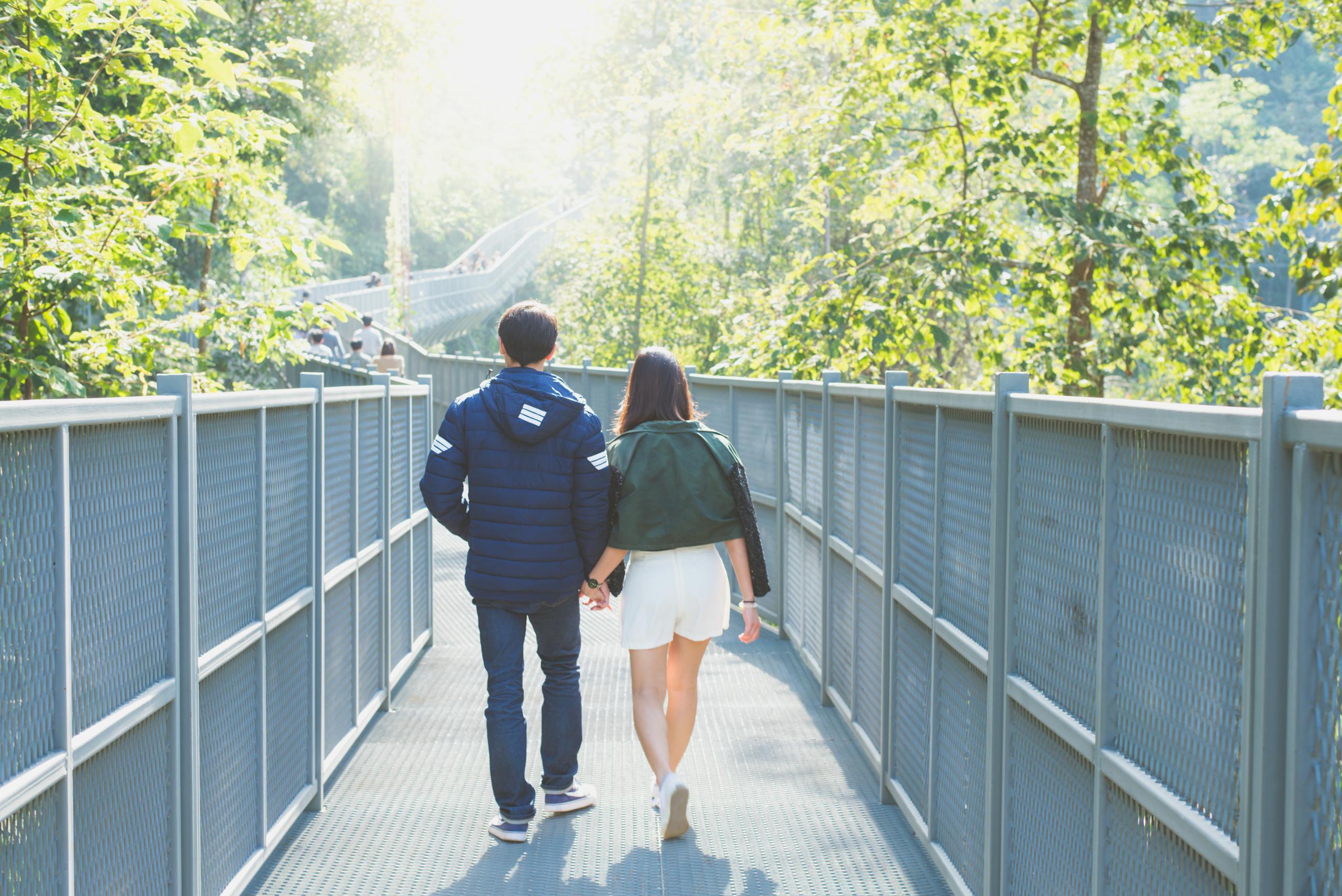
One version of being alone together that I’ve come to appreciate more as I’ve gotten older is spending time outdoors with someone in comfortable silence. A walk where you’re side by side but not necessarily talking. Sitting outside together watching the light change. Being in the same natural space without the pressure to fill it with words.
The healing power of nature for highly sensitive people works partly because natural environments provide sensory input that feels restorative rather than draining. The sounds, the light, the sense of scale, all of it tends to quiet the internal noise that social environments amplify. When you combine that with the easy presence of someone you trust, the effect compounds.
Some of the most connected I’ve felt with people I care about has happened in exactly these kinds of settings. Not over dinner conversation, not in meetings, not in any of the socially scripted contexts that are supposed to produce closeness. But walking alongside someone through a quiet park, both of us thinking our own thoughts, occasionally pointing at something interesting, then returning to silence.
That’s being alone together in its most natural form. And it’s something the best introvert comics capture with a kind of gentle accuracy that makes you feel less like an outlier and more like someone whose experience is simply being described correctly for once.
What the Comics Get Right That Mainstream Culture Gets Wrong
Mainstream cultural depictions of connection tend to follow a recognizable script. Meaningful relationships involve talking, sharing, expressing, engaging. Silence between people is usually coded as tension, awkwardness, or emotional distance. The comfortable quiet that introverts often experience as the deepest form of ease rarely gets depicted as something positive.
Introvert comics, at their best, correct this. They show the couch scene, the parallel reading, the shared meal where both people are absorbed in their own thoughts and neither one feels the need to apologize for it. They show the text exchange where one person says “want to come over and just exist near each other?” and the other responds with something like relief.
What these comics communicate, often in just a few panels, is that this is a complete and valid form of connection. Not a lesser version of the extroverted ideal. Not something to be worked on or grown out of. A genuine way of being close that deserves to be seen.
Frontiers in Psychology research on solitude and wellbeing supports the idea that voluntary quiet time serves distinct psychological functions that social interaction simply doesn’t replicate. For introverts, the being alone together arrangement is a way of accessing those benefits without full withdrawal from the people they love. The comics make this visible in a way that academic language rarely does.
There’s also something worth noting about how these comics function as social permission. For introverts who’ve spent years feeling vaguely apologetic about their need for quiet, seeing that need depicted with warmth and humor can be genuinely freeing. Not because a comic changed anything about how they’re wired, but because it confirmed that the wiring is normal, that other people experience this too, and that wanting to be near someone in comfortable silence is not a character flaw.
I spent a significant portion of my leadership career performing extroversion because I believed that was what the role required. I scheduled one-on-ones back to back, I hosted team dinners, I pushed myself to be “on” in ways that cost me considerably. What I understand now is that the cost wasn’t necessary. The version of connection that actually sustained me, and that I could offer authentically, looked a lot more like the being alone together comic than the conference room version I was trying to enact.
A Psychology Today piece on embracing solitude for health makes the point that solitude isn’t the opposite of connection. Practiced well, it’s part of what makes genuine connection possible. You can’t offer presence to others when you’ve depleted your own. The being alone together dynamic is one of the more elegant solutions to that tension, a way of being present without being drained.

How to Cultivate This Dynamic in Your Own Relationships
One of the more practical questions that comes out of all this is how to actually build the being alone together dynamic into your relationships, especially if your partner, family members, or close friends are more extroverted and tend to interpret silence as a signal that something is wrong.
The most useful thing I’ve found is naming it explicitly and early. Not as a complaint or a demand, but as a simple description of what you need and what it means. Something like: “I love spending time with you, and some of my favorite evenings are when we’re both just doing our own thing in the same space. That’s not me pulling away. That’s actually me being really comfortable.” Most people, once they understand that the silence is an expression of ease rather than distance, can relax into it.
It also helps to create physical environments that support this. Comfortable seating arranged so two people can be in the same room without necessarily facing each other. Good lighting for reading. Minimal background noise. The practical setup matters more than it might seem, because a space that feels genuinely comfortable for quiet coexistence is one that both people can settle into naturally.
For introverts who travel, Psychology Today’s examination of solo travel preferences touches on something relevant here: the appeal of being in a public space, a café, a train, a park, where other people are present but not engaged with you. That’s a version of being alone together with strangers, and many introverts find it surprisingly restorative. You get the background hum of human presence without any social obligation. The introvert comic version of this is the person who goes to a coffee shop specifically to be around people while remaining entirely in their own world.
What all of these variations share is the same underlying structure: presence without performance, proximity without pressure. Once you recognize that as a legitimate and healthy way of connecting, you start seeing opportunities for it everywhere.
There’s more to explore on this topic and the broader world of introvert recharging in the Solitude, Self-Care and Recharging hub, which covers everything from daily restoration practices to the deeper psychology of why quiet time matters so much for people wired the way we are.
About the Author
Keith Lacy is an introvert who’s learned to embrace his true self later in life. After 20 years in advertising and marketing leadership, including running agencies and managing Fortune 500 accounts, Keith now channels his experience into helping fellow introverts understand their strengths and build fulfilling careers. As an INTJ, he brings analytical depth and authentic perspective to every article, drawing from both professional expertise and personal growth.
Frequently Asked Questions
What does “being alone together” mean for introverts?
“Being alone together” describes the experience of sharing physical space with another person while each person remains in their own mental and emotional world, without conversation or social performance required. For introverts, this arrangement often feels more restorative than traditional social interaction because it provides the comfort of human presence without the energy cost of active engagement. It’s a form of connection built on trust and ease rather than output.
Is wanting to be alone together a sign of introversion or something else?
It’s strongly associated with introversion, though not exclusive to it. Introverts tend to find social interaction more energetically costly than extroverts do, which means they often gravitate toward forms of connection that don’t require sustained social performance. Being alone together threads that needle: you’re not withdrawing from the people you care about, but you’re also not spending energy you don’t have. Highly sensitive people, whether introverted or not, often share this preference for quiet companionship over active socializing.
Why do introvert comics about being alone together resonate so strongly?
These comics resonate because they depict an experience that is extremely common among introverts but almost never represented in mainstream cultural narratives about connection. Most depictions of intimacy emphasize conversation, eye contact, and active emotional exchange. Comics that show two people happily coexisting in silence validate a form of closeness that many introverts have experienced but rarely seen acknowledged. The recognition of seeing your private experience accurately depicted creates a powerful sense of being understood.
How is being alone together different from avoidance or emotional distance?
The difference lies in the emotional quality of the silence. Being alone together, in the healthy sense, is a silence rooted in comfort and trust. Both people are at ease, neither is withdrawing from something difficult, and the shared quiet feels like a choice rather than a retreat. Avoidance, by contrast, uses silence to sidestep emotional engagement. The practical test is whether the quiet feels like rest or like hiding. One nourishes the relationship; the other gradually erodes it. Self-awareness about which pattern is operating is what makes the difference.
How can introverts explain the being alone together preference to extroverted partners or friends?
The most effective approach is direct, warm explanation that frames the preference as a positive rather than a withdrawal. Describing it as “this is how I feel most comfortable and most myself around you” tends to land better than framing it as a need to escape social demands. It also helps to point out specific moments when the arrangement worked well, so the other person has a concrete reference point. Many extroverts, once they understand that the silence signals ease rather than distance, find they can settle into it more naturally than they expected.