
Being an introvert can strain a marriage in very real ways, but it rarely ruins one on its own. What creates the damage is the gap between how introverts process the world and how their partners interpret that processing, specifically when neither person has the language to explain what’s actually happening.
My need for solitude has been misread as coldness. My quiet processing has looked like disinterest. My preference for depth over small talk has felt, to people who love me, like I was holding something back. None of those things were true. But the perception was real, and in a marriage, perception has weight.

If you’ve typed the phrase “being an introvert ruining my marriage” into a search bar, I want you to know something before we go any further: you’re asking a more honest question than most people are willing to ask. That kind of self-examination takes courage. And the fact that you’re asking it means you care enough to look at your own patterns, which is more than half the work.
Everything I cover here connects to a larger conversation happening over at the Introvert Dating and Attraction hub, where we look at how introverted people build, sustain, and sometimes repair the relationships that matter most to them. Marriage is the deepest version of that challenge, and it deserves its own honest examination.
Why Does Introversion Feel Like a Relationship Problem in the First Place?
There’s a version of this story I lived for years. I ran advertising agencies where the expectation was constant availability, high energy, and visible enthusiasm. Client dinners, team celebrations, after-hours drinks with the creative department. I showed up to all of it. What I didn’t show up to, at least not fully, was the quieter version of connection that my personal relationships needed from me.
What’s your personality type?
Take our free 40-question assessment and get a detailed personality profile with dimension breakdowns, context analysis, and personalised insights.
Discover Your Type8-12 minutes · 40 questions · Free
By the time I got home, I had nothing left. Not because I didn’t care, but because I had spent every reserve I had performing extroversion for eight hours straight. My introversion wasn’t the problem. The mismatch between how I was spending my energy and what my closest relationships actually needed was the problem.
That distinction matters enormously. Introversion is a wiring, not a character flaw. As Healthline points out in their breakdown of introvert and extrovert myths, introversion is simply a preference for less stimulating environments and a tendency to recharge through solitude rather than social interaction. It says nothing about warmth, love, or commitment.
What makes introversion feel like a relationship problem is that many of its natural expressions, withdrawing after conflict, needing time alone to process emotions, preferring one deep conversation to an evening of casual chatting, can look from the outside like avoidance, indifference, or emotional unavailability. And when a partner doesn’t understand the wiring behind those behaviors, they fill in the blanks with their own fears.
What Does Introvert Withdrawal Actually Look Like Inside a Marriage?
I want to be specific here because vague reassurances don’t help anyone. The patterns that tend to create the most friction in introverted marriages fall into a few recognizable categories.
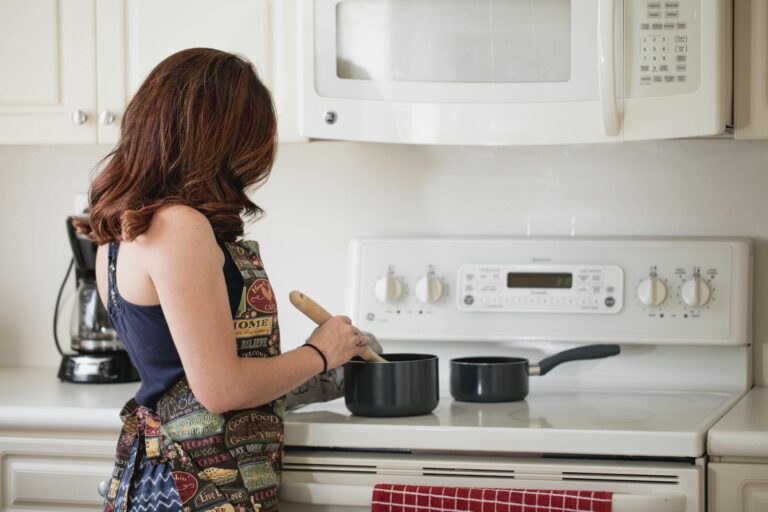
The first is what I’d call the recharge retreat. You come home from a demanding day and you need thirty minutes of silence before you can be present with anyone. Your partner, who may have been looking forward to seeing you all day, experiences those thirty minutes as rejection. You experience the absence of those thirty minutes as a kind of slow suffocation. Neither of you is wrong. You’re just operating on different emotional timelines.
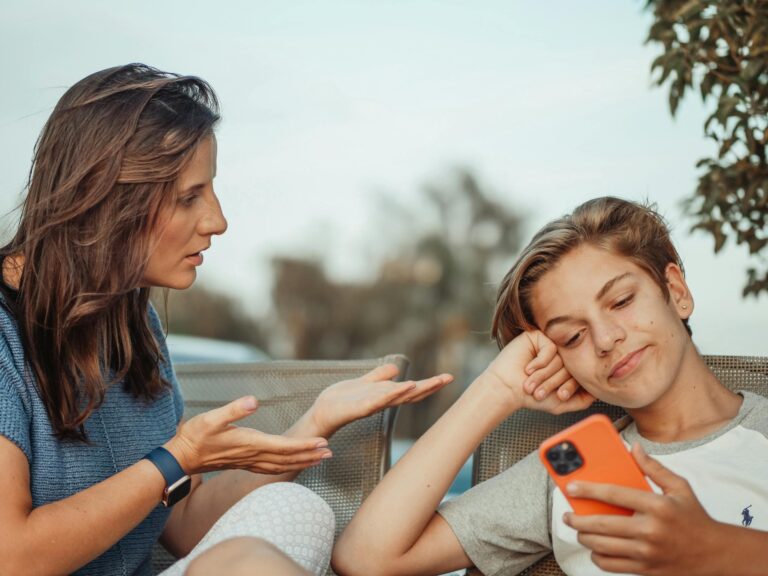
The second pattern is emotional processing delay. When something difficult happens between you and your partner, you don’t have an immediate response. You need to think. You need to sit with it. You might need a day. Your partner, in that silence, starts to catastrophize. They read your processing time as stonewalling or as not caring enough to engage. Meanwhile, you’re doing the most thorough emotional work of anyone in the room. You’re just doing it invisibly.
Understanding how these patterns connect to the deeper architecture of introvert emotion is something I’ve explored in the piece on introvert love feelings and how to understand and work through them. The internal richness of an introvert’s emotional life is real, it just doesn’t broadcast on the same frequency most people expect.
The third pattern is social battery incompatibility. Your partner wants to spend the weekend at a neighbor’s barbecue, then brunch with friends, then a family dinner. You want to spend Saturday morning reading in the backyard and Saturday afternoon doing exactly nothing. To your partner, your reluctance signals that you don’t want to be part of their life. To you, agreeing to all of it would mean arriving at Monday completely depleted. Both of those realities are true simultaneously.

Is This an Introversion Problem or a Communication Problem?
Honestly? It’s almost always both, and the introversion piece is usually the easier one to address once you name it clearly.
I spent years in agency leadership watching communication failures happen not because people were dishonest, but because they assumed their internal experience was visible to others. I’d be deep in strategic thinking during a client meeting, completely silent, and my team would read that silence as disapproval. I wasn’t disapproving anything. I was working. But I had never told them that, so they filled the silence with their own interpretations.
Marriage operates the same way. When you don’t explain your need for solitude, your partner doesn’t experience it as a need. They experience it as a choice you’re making over them. That’s a communication gap, not an introversion problem. And communication gaps are fixable.
What makes this harder is that introverts often find it genuinely difficult to articulate emotional needs in real time. We process internally, which means we often don’t know what we need until we’ve had time to figure it out. By then, our partner may have already moved through three stages of hurt and arrived at a conclusion we had no part in creating.
One framework that helped me enormously was understanding how introverts actually express love, because it’s often nothing like the way their partners expect to receive it. The article on how introverts show affection through their love language gets at something important: introverts often express care through action, presence, and deep attention rather than verbal declaration. If your partner doesn’t know to look for those signals, they’ll miss them entirely.
When Does Introversion Cross Into Emotional Unavailability?
This is the question I think most people are actually asking when they worry about their introversion damaging their marriage. And it deserves a straight answer.
Introversion and emotional unavailability are not the same thing, but they can look identical from the outside, and sometimes one can mask the other. An introvert who consistently withdraws, avoids difficult conversations, and uses “I need alone time” as a way to escape relational discomfort isn’t just being introverted. They’re using a real personality trait as a shield against intimacy.
I’ve had to be honest with myself about this distinction. There were periods in my professional life where I was so exhausted by the performance demands of running an agency that I had essentially shut down emotionally at home. I told myself I needed quiet. What I actually needed was to stop running from the discomfort of being fully seen by someone who knew me well enough to see through my competence.
The difference between healthy introversion and problematic withdrawal comes down to direction. Healthy introversion is about moving toward something, toward rest, toward depth, toward meaningful connection on your own terms. Problematic withdrawal is about moving away from something, away from vulnerability, away from conflict, away from the emotional demands of being in a real relationship.
There’s also an important overlap worth examining here. Many introverts are also highly sensitive people, and the combination creates its own relational complexity. The HSP relationships dating guide explores how high sensitivity shapes the way people connect in romantic partnerships, and if you recognize yourself in both categories, that dual lens is worth understanding.

What Happens When Both Partners Are Introverts?
Some people assume that two introverts together must be a perfect match. And in many ways, there’s genuine ease in that pairing. Shared comfort with silence. Mutual respect for alone time. No pressure to fill every moment with conversation.
But two introverts can also create a relationship where both people are retreating simultaneously, where neither person initiates the emotional conversations that need to happen, and where comfortable distance slowly becomes disconnection neither person intended.
I’ve watched this dynamic play out in couples I’ve known. Two people who both valued depth and quiet ended up in a marriage that felt more like a respectful cohabitation than a genuine partnership. They weren’t fighting. They weren’t unhappy, exactly. But they had stopped reaching toward each other in any meaningful way, and they’d told themselves that was just who they both were.
The piece on what happens when two introverts fall in love examines the specific patterns that emerge in these pairings, including both the genuine strengths and the blind spots that can develop when two internally-oriented people build a life together. It’s worth reading if this is your situation.
The 16Personalities analysis of introvert-introvert relationship dynamics also raises some useful cautions about the specific risks that emerge when two people who process internally are trying to build genuine intimacy with each other. Awareness of those risks is the first step toward working around them.
How Do Introverts Actually Fall in Love, and Does That Pattern Create Problems Later?
There’s something worth examining about how introverts tend to enter relationships in the first place, because the patterns that feel like strengths during courtship can become sources of friction once the relationship is established.
Introverts typically fall in love slowly and deeply. We observe before we engage. We build internal models of people before we declare anything out loud. By the time we say “I love you,” we’ve often been feeling it for months. That depth of feeling is real and it’s meaningful. But it can also mean we’ve constructed a very specific internal picture of our partner that doesn’t account for who they actually are on their harder days.
The patterns introverts bring to love, the careful observation, the slow trust-building, the preference for depth over frequency, are worth understanding in detail. The piece on how introverts fall in love and the relationship patterns that follow traces how those early dynamics evolve over time, and what they mean for long-term partnership.
What I’ve noticed in my own experience is that the qualities that made me feel like a good partner during the early stages of a relationship, my attentiveness, my tendency to remember small details, my preference for one-on-one depth over group socializing, required active maintenance to stay visible once the relationship became established. Early on, those qualities were obvious. Later, they required me to keep expressing them deliberately, because the relationship no longer had the heightened attention of new connection to make them apparent.

What Does Conflict Look Like for an Introverted Partner, and How Do You Repair It?
Conflict is where introversion creates its most acute marital stress, and I say that from experience rather than theory.
As an INTJ, my instinct during conflict is to withdraw and analyze. I want to understand the problem fully before I respond to it. That instinct, which feels responsible and careful to me, registers as stonewalling to anyone on the other side of it. My silence isn’t hostile. It’s processing. But processing that takes place entirely inside my own head, with no visible output, is indistinguishable from shutting down.
What I eventually learned was that the solution wasn’t to process faster or to perform engagement I didn’t feel. The solution was to narrate the process. “I’m not ready to respond to this yet, but I’m taking it seriously and I’ll come back to you in an hour.” That single sentence changed the dynamic entirely. My partner wasn’t left in silence wondering if I cared. I wasn’t forced into a conversation I couldn’t have productively yet. We both got what we needed.
For introverts who are also highly sensitive, conflict carries an additional layer of complexity. The physiological response to interpersonal tension is more intense, the recovery time is longer, and the risk of saying something damaging in a flooded emotional state is higher. The resource on handling conflict peacefully as a highly sensitive person offers specific strategies for managing that intensity without either shutting down or escalating.
There’s also a body of work worth engaging with on how personality traits intersect with relationship satisfaction. Research published in PubMed Central examining personality and relationship quality suggests that self-awareness about one’s own traits is a significant factor in how well those traits are managed within close relationships. Knowing your wiring isn’t enough. You have to actively account for it.
What Practical Changes Actually Help an Introverted Partner Show Up Better in Marriage?
I want to be careful here not to suggest that introverts need to become different people to sustain a good marriage. That’s not what I’m saying, and it’s not what the evidence supports. What helps is not personality change. It’s structural adjustment, the deliberate creation of conditions that allow your authentic self to show up in ways your partner can actually receive.
The first adjustment is protecting your recharge time proactively rather than reactively. When I started treating my alone time as a scheduled, non-negotiable part of my week rather than something I grabbed desperately whenever I could, two things happened. I stopped feeling chronically depleted, and my partner stopped feeling like they were competing with my need to disappear. The need was the same. The framing changed everything.
The second adjustment is learning to signal your emotional state in real time, even briefly. At the agency, I eventually started telling my team when I was in deep-focus mode versus available mode. It took me embarrassingly long to apply the same principle at home. A simple “I’m running low tonight, give me an hour and I’ll be back” is not a rejection. It’s an invitation to reconnect later, and it lands completely differently than silence.
The third adjustment is understanding what your partner actually needs from connection with you, and meeting it in ways that work for your temperament. Many introverts assume their partner wants more quantity of interaction. Often, what their partner actually wants is more quality. That’s something introverts are genuinely built for. One focused, fully present evening together can outweigh a week of distracted coexistence.
There’s also value in understanding the attachment dynamics at play. Work published in PubMed Central on attachment theory and adult relationships helps explain why some partners experience an introvert’s withdrawal as abandonment rather than rest. Attachment patterns are often formed long before the marriage, and they shape how each person interprets the other’s behavior in ways neither partner may be consciously aware of.
It’s also worth examining whether the introversion itself is being understood correctly by both partners. Psychology Today’s piece on the signs of a romantic introvert reframes many introvert behaviors in a relational context, making it easier to see them as expressions of care rather than withdrawal.
And if you’re in the early stages of figuring out how to build a relationship that actually fits your temperament, Psychology Today’s guidance on dating an introvert offers useful context for partners trying to understand what they’re working with, and for introverts trying to articulate it.

Can an Introvert-Extrovert Marriage Actually Work Long Term?
Yes. Genuinely yes. But not through one person changing who they are. Through both people developing a working understanding of what the other actually needs and why.
The introvert-extrovert pairing has real complementary strengths. The extroverted partner often pulls the introvert into social experiences that turn out to be genuinely good for them. The introverted partner often creates depth and intentionality in the relationship that the extroverted partner didn’t know they needed. The friction isn’t a sign of incompatibility. It’s a sign that two different operating systems are trying to run on the same hardware.
What I’ve seen work, both in my own life and in watching others figure this out, is a shared vocabulary. When both partners can name what’s happening, “I’m overstimulated and need to decompress” lands differently than unexplained silence. “I’m feeling disconnected and need some time together” lands differently than an accusation. Language creates the container for understanding.
There’s also something worth saying about professional support. A therapist who understands introversion as a trait rather than a problem to be fixed can help both partners develop that shared vocabulary in a structured way. The work isn’t about fixing the introvert. It’s about building a relationship architecture that genuinely works for both people.
Being an introvert is not ruining your marriage. The gap between who you are and how that’s being understood might be creating real strain. But gaps can be closed. That’s the work, and it’s worth doing.
There’s a full range of resources on building relationships that honor your introverted nature at the Introvert Dating and Attraction hub, covering everything from early attraction to long-term partnership dynamics.
About the Author
Keith Lacy is an introvert who’s learned to embrace his true self later in life. After 20 years in advertising and marketing leadership, including running agencies and managing Fortune 500 accounts, Keith now channels his experience into helping fellow introverts understand their strengths and build fulfilling careers. As an INTJ, he brings analytical depth and authentic perspective to every article, drawing from both professional expertise and personal growth.
Frequently Asked Questions
Can introversion actually damage a marriage?
Introversion itself doesn’t damage a marriage. What creates strain is when introvert behaviors like needing alone time, processing emotions internally, or withdrawing after overstimulation are misread by a partner as rejection, indifference, or avoidance. When both partners understand the wiring behind those behaviors, the same actions carry a completely different meaning. The problem is almost always a communication gap rather than the introversion itself.
How do I explain my need for alone time without my spouse feeling rejected?
The most effective approach is to frame alone time as something you’re moving toward rather than something you’re retreating from. Instead of going silent and disappearing, try narrating the need in advance: “I need about an hour to decompress and then I really want to catch up with you.” This signals that the solitude is temporary, that your partner is still a priority, and that connection is coming rather than being withheld. Scheduling regular recharge time also helps, because it removes the sense that your partner is competing with an unpredictable need.
What’s the difference between healthy introversion and emotional unavailability?
Healthy introversion is directional, it moves toward something: rest, depth, meaningful connection on your own terms. Emotional unavailability moves away from something: vulnerability, conflict, the discomfort of being fully known. An introverted partner who withdraws to recharge and then returns present and engaged is practicing healthy introversion. An introverted partner who uses “I need alone time” consistently to avoid difficult conversations or emotional intimacy has crossed into avoidance. Honest self-examination about which pattern is actually operating is essential.
Do introvert-extrovert marriages have a harder time than introvert-introvert marriages?
Both pairings have distinct challenges. Introvert-extrovert marriages often struggle with mismatched social needs and different interpretations of alone time. Introvert-introvert marriages can struggle with mutual withdrawal, where both partners retreat simultaneously and the relationship slowly loses its sense of active connection. Neither pairing is inherently more difficult. What matters most is whether both partners have the self-awareness and communication skills to work with their combined temperaments rather than around them.
Should introverts consider therapy if their introversion is causing relationship problems?
Yes, and the most important thing is finding a therapist who understands introversion as a legitimate personality trait rather than a symptom to be treated. Couples therapy can be particularly valuable for building a shared vocabulary around introvert needs, helping both partners understand each other’s behaviors without defaulting to negative interpretations. success doesn’t mean change the introvert. It’s to build a relationship structure that genuinely works for both people, which is something a skilled therapist can help facilitate significantly faster than two people trying to figure it out alone.