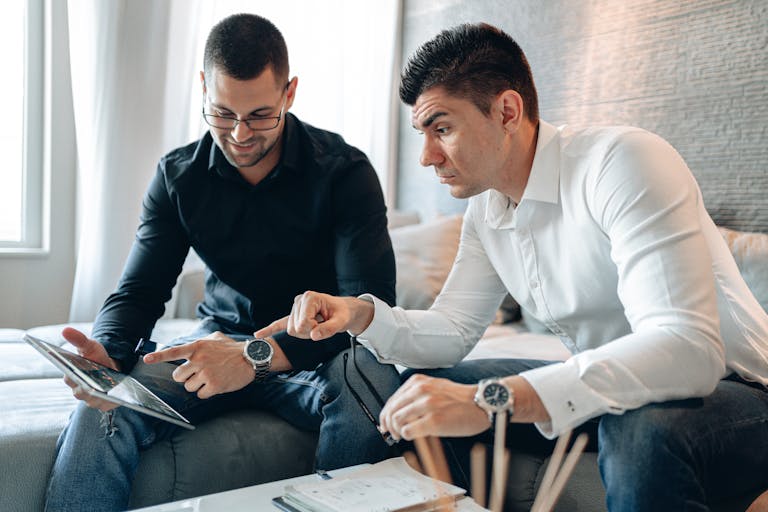

Personal space means something different when you’re an introvert. It’s not just physical distance from another person. It’s the invisible buffer that keeps your nervous system regulated, your thoughts coherent, and your sense of self intact. When someone gets too close, whether physically, emotionally, or conversationally, many introverts experience a subtle but real kind of overwhelm that’s hard to explain to people who don’t share the same wiring.
I spent more than two decades running advertising agencies, surrounded by open floor plans, client meetings, and the constant hum of creative teams who thrived on proximity and noise. For a long time, I thought my discomfort with all of it was a professional liability. It took years of honest reflection to understand that my need for personal space wasn’t a flaw. It was a fundamental part of how I process the world.

If you’ve ever felt that twinge of tension when a colleague leans over your desk uninvited, or that quiet dread when a family member follows you from room to room, you’re not experiencing something unusual. You’re experiencing something deeply tied to your temperament. And understanding it changes everything about how you handle relationships, work, and family life.
This article is part of a broader conversation I’ve been building around how introversion shapes the people closest to us. Our Introvert Family Dynamics & Parenting hub covers how these traits play out at home, with partners, children, and extended family. Personal space is one of the most misunderstood pieces of that puzzle, so I wanted to give it the full treatment it deserves.
What Does Personal Space Actually Mean for Introverts?
Ask most people what personal space means and they’ll describe physical proximity. Don’t stand too close. Don’t touch someone without permission. That’s accurate, but for introverts, the concept runs much deeper than body language norms.
What’s your personality type?
Take our free 40-question assessment and get a detailed personality profile with dimension breakdowns, context analysis, and personalised insights.
Discover Your Type8-12 minutes · 40 questions · Free
Personal space, at its core, is about cognitive and emotional bandwidth. Introverts process stimulation more thoroughly than their extroverted counterparts. Every conversation, every glance, every ambient sound gets filtered through a more active internal processing system. When someone intrudes on that space, whether by hovering physically or by demanding constant emotional access, the introvert’s internal resources deplete faster than most people realize.
I noticed this pattern clearly when I was managing large creative teams at the agency. My extroverted account directors would energize visibly during brainstorming sessions, getting louder and more animated as the room filled with voices. I was doing the opposite. By the end of those same sessions, I needed twenty minutes alone just to return to baseline. Same room, same meeting, completely different internal experience.
The National Institutes of Health has explored how temperament traits present early in life and persist into adulthood, suggesting that introversion isn’t a learned preference but a deeply embedded neurological orientation. That means the need for personal space isn’t something introverts can simply train away. It’s wired in.
Physical proximity matters too, of course. Many introverts are acutely aware of how close someone is standing, where their hands are, whether they’re making sustained eye contact. But the more significant intrusion is often the invisible kind: the person who texts incessantly, who expects immediate emotional availability, or who fills every quiet moment with conversation. That kind of closeness can feel just as suffocating as someone standing inches from your face.
Why Does Being Too Close Feel So Overwhelming?
There’s a physiological component to this that most people don’t talk about enough. When an introvert’s personal space is repeatedly breached, the body often responds with low-grade stress signals: a tightening in the chest, a narrowing of focus, a creeping irritability that seems disproportionate to the situation. From the outside, this can look like rudeness or coldness. From the inside, it feels like survival.

I’ve watched this play out in professional settings more times than I can count. One of my senior copywriters, an INFJ, was brilliant in one-on-one conversations but visibly shut down during large group critiques. It wasn’t insecurity. It was overstimulation. The room was too full of competing emotional signals. She needed space to process before she could contribute meaningfully. When I started giving her that space, her work improved dramatically.
The American Psychological Association notes that chronic stress from environmental overwhelm can have real effects on cognitive performance, emotional regulation, and long-term wellbeing. For introverts who spend years in environments that consistently violate their need for personal space, this isn’t a minor inconvenience. It accumulates.
What makes this especially complicated in family settings is that the people doing the intruding usually love you. They’re not trying to overwhelm you. A child climbing into your lap for the fourth time in an hour isn’t being malicious. A partner who wants to debrief every detail of their day the moment you walk through the door isn’t being cruel. They’re expressing connection in the way that feels natural to them. The mismatch between their need for closeness and your need for space is where real friction lives.
Understanding the full picture of your own personality can help here. If you’ve never taken a Big Five personality traits test, it’s worth exploring. The Big Five measures openness, conscientiousness, extraversion, agreeableness, and neuroticism, and it can give you concrete language for why you respond to closeness and stimulation the way you do. That language matters when you’re trying to explain your needs to someone who experiences the world differently.
How Does This Show Up in Family Life?
Family is where personal space needs get most complicated, because the social contract of family often implies unlimited access. Parents are supposed to be available to their children. Spouses are supposed to want togetherness. Extended family gatherings are supposed to feel warm and welcoming, not exhausting. When you’re an introvert who needs genuine physical and emotional space to function, these expectations can create a quiet, persistent tension that’s hard to name without the right framework.
I remember a period in my career when I was running the agency during a particularly demanding growth phase. We were pitching Fortune 500 clients every other week, managing a team of thirty, and I was also trying to be present at home for my family. I was failing at all of it, not because I lacked effort, but because I had no personal space anywhere. There was no recovery time between the demands. Everything felt like intrusion because I was already depleted before anyone even approached me.
That experience taught me something important: when introverts don’t protect their personal space proactively, they eventually have nothing left to give. The withdrawal that follows isn’t selfishness. It’s depletion. And the people around us often experience it as rejection, which creates a painful cycle where both parties feel misunderstood.
Psychology Today’s overview of family dynamics points out that unspoken expectations around availability and closeness are among the most common sources of family conflict. For introverted family members, those unspoken expectations often run directly counter to their fundamental needs.
Highly sensitive parents face a particularly layered version of this challenge. If you’re raising children while also managing your own sensitivity to stimulation and proximity, the demands can feel relentless. Our article on HSP parenting and raising children as a highly sensitive parent gets into the specific strategies that help, but the foundation is the same: you have to understand your own needs before you can meet theirs.
Is the Need for Space a Personality Trait or a Boundary Problem?
This is a question worth sitting with, because the answer shapes how you respond to it. There’s a meaningful difference between an introvert who needs regular solitude to function well and someone whose difficulty with closeness stems from anxiety, trauma, or attachment patterns that deserve direct attention.
Most introverts who struggle with personal space are experiencing something temperament-based. Their nervous system genuinely processes stimulation differently. They need more recovery time. They find sustained proximity draining in a way that has nothing to do with how much they care about the person in front of them. That’s not a boundary problem. That’s just how they’re built.
That said, some people who identify strongly with the need for space are actually managing something more complex underneath. Fear of intimacy, difficulty trusting others, patterns that developed in response to early relational experiences, these can mimic introvert needs while actually pointing toward something that warrants deeper exploration. If you’re uncertain where your discomfort with closeness comes from, it’s worth being honest with yourself about that distinction. Our borderline personality disorder test isn’t a diagnostic tool, but it can be a useful starting point for understanding emotional patterns that might be worth examining more carefully.
The research published in PubMed Central on personality and interpersonal functioning supports the idea that stable personality traits and situational emotional responses operate through different mechanisms. Knowing which one is driving your discomfort helps you address it more effectively.
From my own experience as an INTJ, I can say that my need for personal space has always been consistent regardless of how much I trust or love someone. My closest friendships, my most valued professional relationships, they all require me to have regular periods of genuine solitude. That consistency is the hallmark of a temperament-based need rather than a relational wound. Your pattern might look different. The point is to know which one you’re working with.
How Do You Ask for Personal Space Without Hurting People?
This is where most introverts get stuck. Recognizing the need is one thing. Communicating it to someone who experiences closeness as love is something else entirely.
The most common mistake I see is framing space as a reaction to the other person. “I need you to stop following me around” lands very differently than “I need some time alone to recharge so I can be fully present with you later.” One sounds like rejection. The other sounds like self-knowledge. The content is similar. The emotional impact is completely different.
At the agency, I had to have versions of this conversation regularly. New team members would interpret my closed office door as disapproval. They’d wonder if they’d done something wrong. I learned to get ahead of it by being explicit: “When my door is closed, it means I’m in deep work mode. It’s not about you. When it’s open, I’m available.” That one simple explanation changed the entire dynamic. People stopped taking my need for space personally because I’d given them a different story to attach to it.
In family relationships, the same principle applies, but the emotional stakes are higher. A partner who grew up in a home where withdrawal meant anger or abandonment will read your retreat to a quiet room through that lens unless you actively offer them a different interpretation. You don’t have to over-explain. You just have to be consistent and clear enough that your space-seeking behavior becomes predictable rather than mysterious.
One thing that genuinely helps is understanding how you come across to others in general. If you’re curious about that, the likeable person test can give you some useful perspective on how your communication style lands. Introverts often underestimate how their natural quietness or physical distance reads to more extroverted people, and that awareness is the first step toward bridging the gap.

What Happens When Your Space Needs Conflict With Someone Else’s Closeness Needs?
This is the real friction point in most introvert relationships, and it deserves honest attention. When two people have fundamentally different needs around proximity and availability, neither person is wrong. They’re just different. But different still requires negotiation.
16Personalities explores the dynamics of introvert-introvert relationships, noting that even two introverts can have mismatched needs around space and togetherness. The assumption that two quiet people will automatically understand each other’s needs isn’t always accurate. Space preferences are individual, not just type-based.
In blended family situations, these conflicts can become especially layered. Psychology Today’s coverage of blended family dynamics highlights how different attachment styles and personality differences between family members create unique friction points that biological families don’t always face. An introverted stepparent who needs solitude can be misread as disinterested by a child who craves connection. The gap between intention and perception becomes a source of real pain for everyone involved.
What I’ve found, both in my own life and in watching people work through these dynamics, is that the solution almost never involves one person completely accommodating the other. It involves building a shared language and a set of agreements that honor both sets of needs. The extroverted partner gets reliable togetherness windows. The introvert gets protected solitude time. Neither person has to constantly override their own nature to keep the relationship functioning.
That kind of negotiation requires self-awareness on both sides. If you’re working in a caregiving role and wondering whether your personal space needs are compatible with that work, tools like the personal care assistant test online can help you assess your natural tendencies around sustained proximity and emotional labor. Knowing your baseline is always more useful than guessing.
Can You Genuinely Enjoy Closeness as an Introvert?
Yes. Absolutely. And this is something I want to be clear about, because the narrative around introverts and personal space can sometimes slide into the idea that introverts are fundamentally averse to connection. That’s not accurate.
What introverts are averse to is unstructured, unpredictable, or sustained proximity without adequate recovery time. When the conditions are right, many introverts are deeply capable of genuine intimacy, warmth, and physical closeness. The difference is that they need to arrive at those moments from a place of sufficient solitude, not from a state of ongoing depletion.
Some of the most connected conversations I’ve ever had happened after a long stretch of quiet. I’d spend a morning alone, processing, writing, thinking, and then meet a close friend or colleague for a focused two-hour conversation that felt rich and genuinely mutual. The solitude wasn’t avoidance. It was preparation.
The research on introversion and social engagement published in PubMed Central suggests that introverts don’t necessarily enjoy social interaction less than extroverts. They simply find it more taxing and require more recovery time afterward. That distinction matters enormously when you’re trying to explain to a partner or family member why you sometimes need space even when you love them completely.
For introverts in professional roles that require sustained engagement with others, like coaching, personal training, or caregiving, this balance becomes a career consideration as much as a personal one. The certified personal trainer test touches on the interpersonal demands of client-facing fitness work, which is one example of how personal space needs intersect with professional sustainability. Knowing your own thresholds helps you design a working life that doesn’t constantly run against your grain.
Practical Ways to Protect Your Personal Space Without Isolating Yourself
Protecting personal space isn’t about building walls. It’s about building rhythms. When you create predictable patterns around your need for solitude, the people in your life stop experiencing your retreats as abandonment and start experiencing them as just part of how you function.
A few things that have worked consistently, both in my own life and in conversations with other introverts over the years:
Name your needs before you’re depleted. When you wait until you’re overwhelmed to ask for space, it comes out wrong. You’re sharper, less articulate, more likely to say something that sounds like rejection. Asking for space from a calm place sounds completely different from demanding it when you’re already at the edge.
Create physical signals that others can learn. The closed door at the agency worked because it was consistent and explained. At home, a similar signal can work: a specific chair, a particular room, a set time of day that everyone in the household comes to understand as your recharge window. Predictability removes the ambiguity that makes space-seeking feel threatening to the people around you.
Schedule closeness intentionally. This sounds counterintuitive, but it actually helps. When your partner or children know that a specific evening is dedicated connection time, they’re less likely to demand constant access throughout the week. The security of knowing closeness is coming makes the space between more tolerable for everyone.
Be honest about the difference between needing space and avoiding a conversation. Introverts sometimes use the language of personal space to sidestep difficult relational moments. That’s worth watching in yourself. Genuine space needs and conflict avoidance can look similar from the outside, but they come from different places and require different responses.
One of the most useful things I did during my years running the agency was build transition rituals between work and home. A twenty-minute drive with no phone calls. A short walk before entering the house. These weren’t luxuries. They were the buffer that allowed me to actually show up for my family instead of arriving already empty. Small structural changes like these do more for most introverts than any amount of self-talk about trying harder to be present.
If you’re still mapping your own personality landscape and want to go deeper on how your traits show up in relationships and daily life, the full range of our Introvert Family Dynamics & Parenting hub covers these themes from multiple angles, including parenting, partnership, and the particular challenges introverts face in family systems that weren’t designed with them in mind.
About the Author
Keith Lacy is an introvert who’s learned to embrace his true self later in life. After 20 years in advertising and marketing leadership, including running agencies and managing Fortune 500 accounts, Keith now channels his experience into helping fellow introverts understand their strengths and build fulfilling careers. As an INTJ, he brings analytical depth and authentic perspective to every article, drawing from both professional expertise and personal growth.
Frequently Asked Questions
Why do introverts need more personal space than extroverts?
Introverts process stimulation more thoroughly than extroverts, which means sustained proximity, noise, and social interaction consume more of their internal resources. Personal space gives introverts the recovery time their nervous system genuinely requires. This isn’t a preference or a social quirk. It’s a fundamental aspect of how introverted brains process and respond to the environment around them.
How can I explain my personal space needs to family members without hurting them?
Frame your need for space as self-knowledge rather than a reaction to them. Saying “I need quiet time to recharge so I can be fully present with you” communicates the same information as “I need you to leave me alone” but lands in a completely different emotional register. Consistency matters too. When your family sees that your space-seeking behavior follows a predictable pattern and doesn’t predict conflict or coldness, they stop experiencing it as rejection.
Is needing personal space a sign of introversion or an anxiety problem?
Both introversion and anxiety can produce a strong desire for personal space, but they come from different sources. Introversion-based space needs are consistent across contexts and relationships, present regardless of how safe or comfortable you feel with someone. Anxiety-based avoidance tends to be more situational and often involves fear of judgment, conflict, or intimacy specifically. If your need for space feels tied to specific fears or past relational experiences, it may be worth exploring with a professional.
Can introverts be physically affectionate with people they love?
Yes. The introvert’s need for personal space isn’t about disliking physical closeness or affection. It’s about needing adequate recovery time before and after sustained proximity. Many introverts are deeply warm and physically affectionate in the right conditions, particularly when they’ve had enough solitude to arrive at those moments without already feeling depleted. The quality of the connection matters more than the quantity of contact.
How do personal space needs affect introverted parents?
Parenting requires sustained availability and physical closeness that can genuinely challenge introverts’ need for personal space. Introverted parents often experience what feels like a constant deficit of solitude, which can affect their patience, emotional availability, and sense of wellbeing. Building intentional recovery windows into the daily routine, even brief ones, makes a significant difference. success doesn’t mean avoid your children. It’s to show up for them from a place of genuine presence rather than chronic depletion.