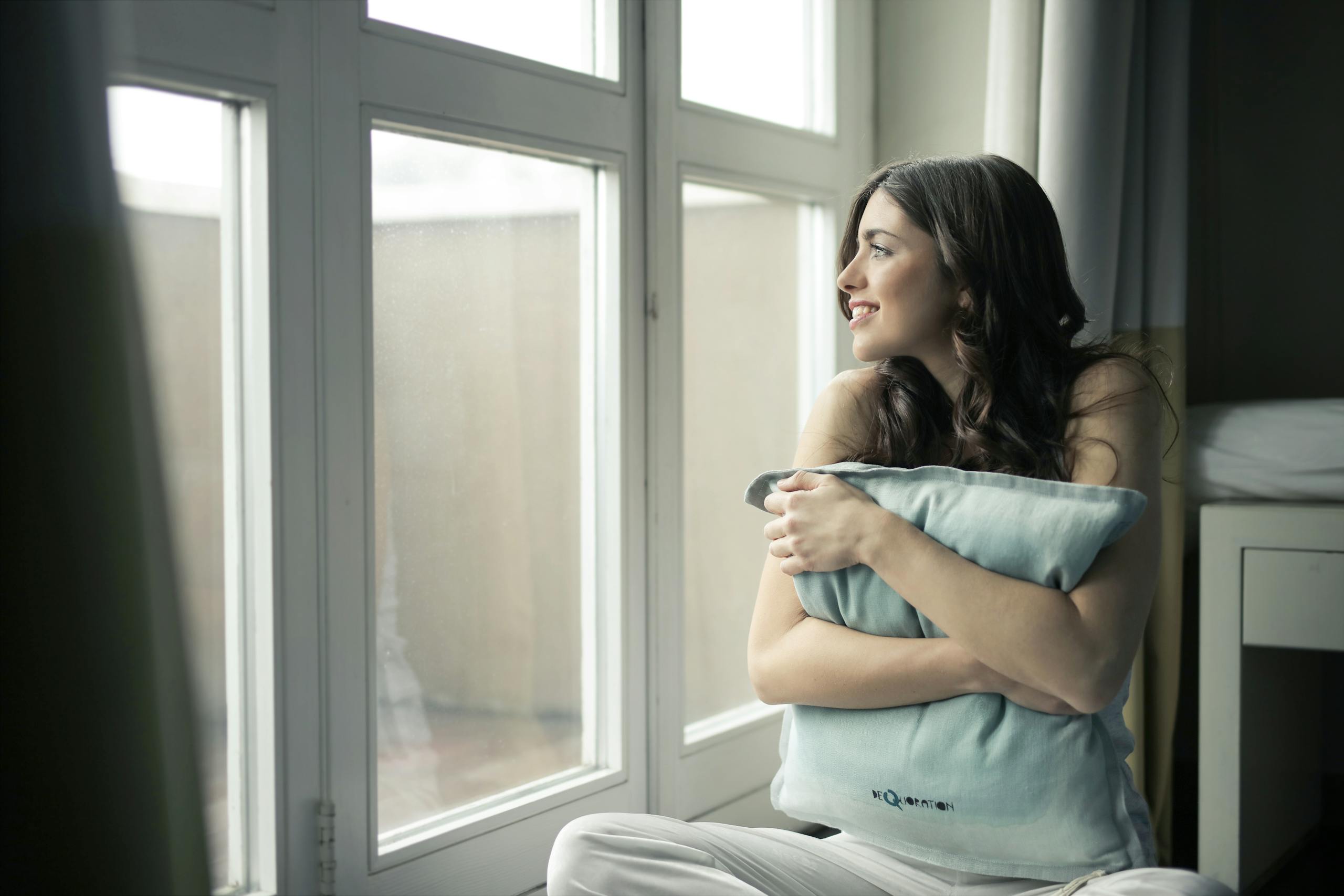

Being with an introvert can trigger relationship anxiety in ways that feel confusing and deeply personal. The quiet, the need for solitude, the slower emotional pace, these things can read as withdrawal or disinterest to someone who doesn’t understand how introverts are wired. What’s actually happening is something far less alarming, but without that context, anxiety can fill every silence with worst-case stories.
Relationship anxiety triggered by an introvert partner isn’t a sign that something is broken between you. More often, it signals a gap in understanding, one that’s entirely possible to close once you recognize what’s actually driving the dynamic.

If you’re trying to make sense of where introversion ends and relationship problems begin, our Introvert Dating and Attraction hub covers the full emotional landscape of loving someone who processes the world from the inside out. It’s a good place to start building the vocabulary you need for these conversations.
Why Does an Introvert’s Quiet Feel Like Rejection?
There’s a moment I remember clearly from my early years running an agency. A senior copywriter on my team, someone whose work I genuinely admired, would go completely silent after a big pitch. Not cold, not hostile, just absent. He’d close his office door, eat lunch alone, stop responding to Slack messages. My first instinct, every time, was that I’d done something wrong. That the pitch had failed in a way he blamed on me, or that some decision I’d made had eroded his trust.
What’s your personality type?
Take our free 40-question assessment and get a detailed personality profile with dimension breakdowns, context analysis, and personalised insights.
Discover Your Type8-12 minutes · 40 questions · Free
It took me longer than I’d like to admit to understand that he was recharging. The pitch had cost him socially and emotionally, and he needed space to process and restore. Nothing was wrong. Nothing had shifted between us. He was simply doing what introverts do.
In romantic relationships, that same dynamic plays out with far higher emotional stakes. When your partner goes quiet after a full weekend together, or asks for an evening alone when you were expecting closeness, the brain doesn’t automatically reach for “they need to recharge.” It reaches for “something is wrong with us.”
That interpretive gap is where anxiety takes root. The silence isn’t a verdict, but it can feel like one. And once anxiety starts narrating your relationship, it’s remarkably good at finding evidence to support its story.
Understanding how introverts fall in love and the relationship patterns that follow can genuinely reframe what you’re experiencing. Many of the behaviors that trigger anxiety in partners are actually signs of deep investment, not distance.
What Does Relationship Anxiety Actually Look Like in This Context?
Relationship anxiety isn’t just worrying about your partner. It’s a specific loop: a trigger event, a spike of fear, a search for reassurance, temporary relief, and then the cycle starting again. When your partner is an introvert, the triggers tend to be things that look, on the surface, like emotional withdrawal.
They take a long time to respond to texts. They cancel plans to stay home. They seem distracted during conversations. They don’t initiate affection as often as you’d like. They need time alone after conflict rather than immediate resolution.
Each of these behaviors is entirely consistent with introversion. Each of them can also, in the wrong emotional frame, feel like evidence that your partner is pulling away. The anxious mind doesn’t distinguish between “they’re an introvert who needs quiet” and “they’re losing interest.” It just registers the distance and sounds the alarm.
What makes this particularly difficult is that the reassurance-seeking that anxiety drives, the constant checking in, the need for verbal confirmation, the pushing for more contact, can actually create the withdrawal it fears. Introverts who feel pressured or crowded tend to retreat further. The anxious partner interprets that retreat as confirmation of their fears, and the loop tightens.
Some people with highly sensitive nervous systems experience this loop with particular intensity. The complete dating guide for HSP relationships addresses how high sensitivity amplifies both the emotional rewards and the anxious moments in close relationships, which is worth reading if you recognize yourself in that description.

Is the Anxiety About Your Partner, or About Attachment?
One of the most important questions to sit with honestly is whether the anxiety you’re feeling is actually about your partner’s introversion, or whether it’s about your own attachment patterns that introvert behaviors happen to activate.
Attachment theory, developed from the work of John Bowlby and expanded significantly since, describes how early relational experiences shape the way we seek closeness and respond to perceived distance in adult relationships. People with anxious attachment styles are particularly sensitive to any signal that might indicate their partner is becoming less available or less invested. Introvert behaviors, by their nature, create those signals constantly, even when no withdrawal is actually happening.
I’ve watched this play out on my own team dynamics over the years. As an INTJ, I tend to process problems internally before bringing them to anyone else. I’ve had colleagues, people who worked closely with me, mistake that internal processing for exclusion. One account director told me directly that my quiet during a difficult client period made her feel like she’d done something wrong. She hadn’t. I was just doing what I do: thinking before I spoke. But her anxious attachment style read my introversion as a warning sign, and she spent two weeks in a low-grade panic that had nothing to do with our actual relationship.
The distinction matters because the solutions are different. If the anxiety is primarily about attachment, working with a therapist on those patterns, particularly through approaches like cognitive behavioral therapy, can create lasting change that no amount of reassurance from your partner will replicate. Cognitive behavioral therapy has strong evidence behind it for treating anxiety disorders, and its principles apply well to relationship anxiety specifically.
If the anxiety is more about genuine incompatibility or unmet needs, that’s a different conversation, and it deserves honesty rather than management.
How Do Introverts Actually Express Love, and Why Does It Get Missed?
Part of what makes this dynamic so painful is that introverts are often expressing love in ways their partners simply don’t register. They’re not withholding affection. They’re offering it in a language that doesn’t always translate.
An introvert who remembers something you mentioned in passing three weeks ago and acts on it quietly, who sits beside you in comfortable silence, who sends a single perfectly chosen message instead of a stream of check-ins, who creates space in their carefully protected solitude to include you, these are acts of love. They just don’t look like what anxious attachment is scanning for.
Understanding how introverts show affection through their own love language can shift the entire emotional experience of the relationship. When you know what you’re looking for, you start seeing it. And when you start seeing it, the anxiety loses some of its fuel.
There’s also something worth noting about the depth of feeling that introverts bring to relationships when they’ve chosen to be in one. Introverts tend to be selective about who gets access to their inner world. If your partner is an introvert who has let you in, that’s not a small thing. That’s a significant act of trust from someone who guards their inner life carefully.
The emotional processing that happens beneath the surface in introvert relationships is often profound. How introverts experience and process love feelings is a layered topic, and understanding that depth can help partners stop misreading quiet as emptiness.

What Happens When Both Partners Are Introverts?
There’s a common assumption that two introverts together would naturally avoid this kind of anxiety. Both people understand the need for solitude. Both people value quiet. What could go wrong?
Quite a bit, actually. Two introverts can create a relationship where both people are so comfortable with distance that genuine disconnection goes unaddressed for a long time. Or one partner may have more anxious attachment tendencies despite being introverted, and the other partner’s natural withdrawal still triggers the same fear response.
The dynamics of two introverts falling in love and building a relationship together have their own specific patterns and challenges, including how they handle conflict, closeness, and the moments when both people need space at the same time.
What tends to protect two-introvert couples from anxiety spirals is explicit communication about what silence means in their relationship. When both partners have agreed that quiet doesn’t equal distance, the interpretive gap that anxiety exploits gets much smaller.
Can Boundaries Actually Reduce Anxiety Instead of Increasing It?
One of the counterintuitive truths about relationship anxiety in introvert partnerships is that clearly defined boundaries, which can initially feel like more distance, actually tend to reduce anxiety over time.
When I was managing large client accounts, I learned that ambiguity was the enemy of good working relationships. Clients who didn’t know what to expect from me were anxious clients. Once I established clear communication rhythms, consistent check-ins, defined response windows, that anxiety dissolved almost entirely. The structure created safety.
The same principle applies in intimate relationships. When an introvert partner says “I need Sunday mornings alone, but I’m fully present every Sunday afternoon,” that’s not rejection. That’s a gift of clarity. The anxious partner now knows what the Sunday morning quiet means. It means nothing about the relationship. It’s just Sunday morning.
Setting and respecting those kinds of agreements is explored thoughtfully in this Psychology Today piece on establishing boundaries with a spouse, which frames boundaries not as walls but as the architecture of a sustainable relationship.
The anxiety that says “if they loved me, they wouldn’t need this space” is operating from a premise that simply isn’t true for introverts. Needing space is not a measure of love. It’s a measure of how someone’s nervous system functions. Separating those two things, intellectually and emotionally, is one of the most important shifts an anxious partner can make.
There’s also the matter of what happens when conflict arises. Introverts often need time to process disagreements before they can engage productively. An anxious partner who needs immediate resolution can experience that processing time as stonewalling or indifference. Approaches to conflict that account for sensitive processing styles can help both partners feel respected during difficult moments rather than abandoned.

What Does the Research Suggest About Introversion and Relationship Satisfaction?
The connection between personality traits and relationship outcomes is genuinely complex. What’s clear from the broader literature on personality and close relationships is that introversion itself is not a predictor of lower relationship quality. Relationship satisfaction tends to be more strongly influenced by communication patterns, attachment security, and how well partners understand each other’s needs than by introversion or extroversion alone.
A paper published in PMC examining personality and relationship dynamics points to the significance of emotional regulation and interpersonal understanding in shaping how satisfied partners feel over time. The introvert-extrovert dimension matters less than how both people handle the moments when their needs diverge.
Anxiety in relationships, separately from introversion, does show consistent associations with lower relationship satisfaction. Research indexed in PMC on anxiety and relational well-being suggests that the reassurance-seeking cycle characteristic of anxious attachment tends to undermine the security it’s trying to create, which is why addressing the anxiety directly, rather than just seeking more reassurance, tends to produce better outcomes.
Work on neuroticism and its relationship to interpersonal functioning, including findings discussed in this Springer article on personality and social behavior, also suggests that the emotional reactivity associated with anxious attachment has a stronger effect on relationship quality than introversion does. That’s an important distinction. The introversion isn’t the problem. The anxiety is, and anxiety is something that responds to treatment and to deliberate relational practice.
How Do You Build Security Without Asking Your Partner to Change?
There’s a version of this conversation that puts all the pressure on the introvert partner: be more available, communicate more, reassure me more often. That version rarely works, and it’s not fair. Asking an introvert to perform extroversion as a condition of the relationship is asking them to be someone they’re not.
The more sustainable path runs in a different direction. It involves the anxious partner developing what therapists sometimes call earned security, the capacity to feel safe in a relationship not because your partner is constantly demonstrating their love, but because you’ve internalized the evidence that they do.
That process takes time and often benefits from external support. Findings from Springer on emotional well-being and interpersonal functioning point to the value of developing internal regulatory capacity rather than relying on external reassurance to manage anxiety. In plain terms: building your own sense of security rather than outsourcing it entirely to your partner.
In practice, this might look like journaling about what you actually observed versus what your anxiety interpreted. It might look like naming the anxiety to your partner without demanding they fix it. It might look like developing friendships and interests outside the relationship so that your partner’s need for solitude doesn’t feel like it’s leaving you with nothing.
One thing I’ve found genuinely useful, both in my professional relationships and my personal ones, is the practice of checking my interpretation against the evidence before acting on it. My INTJ tendency to analyze before reacting has served me well here. When I notice I’m reading something negatively, I ask myself what else it could mean. More often than not, the quieter interpretation is the accurate one.
Dating burnout, which can develop when the emotional labor of managing anxiety in a relationship becomes exhausting, is a real risk in these dynamics. Psychology Today’s piece on overcoming dating burnout offers practical perspective on recognizing when the anxiety cycle is depleting you and how to interrupt it before it does lasting damage to the relationship.

What Actually Helps Long-Term?
The couples who seem to handle this dynamic best share a few things in common. They’ve developed a shared language for what introversion actually means in their relationship, not as a concept but as a lived reality with specific behaviors and specific needs. They’ve had the explicit conversation about what silence means, what alone time means, what a slow response to a message means. They’ve taken the ambiguity out of the equation.
They’ve also, in most cases, done some individual work alongside the relational work. The anxious partner has explored where the anxiety comes from, not to assign blame but to understand the pattern well enough to interrupt it. The introvert partner has found ways to offer reassurance that feel authentic rather than performative, small gestures that communicate presence without requiring them to be someone they’re not.
Something I’ve noticed over years of working with people across personality types is that the relationships that work aren’t the ones where both people are perfectly matched. They’re the ones where both people are genuinely curious about each other. Where the differences prompt questions instead of verdicts.
When a partner’s quietness prompts “I wonder what they’re processing right now” instead of “they must be pulling away,” the entire emotional texture of the relationship changes. That shift doesn’t happen automatically. It’s a choice you make, repeatedly, until it becomes your default.
The research on introversion and interpersonal relationships from University of Northern Iowa reinforces the idea that introvert traits are not inherently problematic in close relationships. The challenges tend to emerge from misunderstanding and mismatched expectations, both of which are addressable with the right information and the willingness to engage honestly.
If you’re in the middle of this dynamic right now, whether you’re the anxious partner or the introvert watching someone you love struggle with your quietness, the most important thing to know is that the anxiety is not a verdict on your relationship. It’s information. And information, unlike anxiety, is something you can actually work with.
There’s a lot more to explore about what makes introvert relationships work, from attraction to long-term connection. The Introvert Dating and Attraction hub brings together the full range of those topics if you want to keep going.
About the Author
Keith Lacy is an introvert who’s learned to embrace his true self later in life. After 20 years in advertising and marketing leadership, including running agencies and managing Fortune 500 accounts, Keith now channels his experience into helping fellow introverts understand their strengths and build fulfilling careers. As an INTJ, he brings analytical depth and authentic perspective to every article, drawing from both professional expertise and personal growth.
Frequently Asked Questions
Why does my introvert partner’s need for alone time trigger my anxiety?
When an introvert partner withdraws to recharge, it can activate attachment fears in someone with an anxious attachment style, because the brain interprets distance as a potential threat to the relationship. The withdrawal isn’t personal or relational, it’s neurological. Introverts restore their energy through solitude, and that need exists independently of how much they love their partner. Building a shared understanding of what alone time means in your specific relationship, through explicit conversation rather than assumption, tends to reduce the anxiety significantly over time.
Is relationship anxiety with an introvert partner a sign of incompatibility?
Not necessarily. Relationship anxiety in this context is more often a sign of an interpretive gap than a fundamental incompatibility. When the anxious partner understands what introvert behaviors actually mean, and the introvert partner understands how their quietness is being received, many couples find that the anxiety decreases substantially. Genuine incompatibility tends to involve misaligned values or consistently unmet needs that persist even after both people understand each other well. Anxiety that responds to education and communication is a different category of challenge.
How can I ask my introvert partner for reassurance without pushing them further away?
Framing matters enormously here. Asking for reassurance from a place of vulnerability, “I’m feeling anxious and I want you to know that, not because I need you to fix it but because I want to be honest with you,” tends to land very differently than seeking reassurance through pressure or repeated questioning. Introverts often respond well to clear, direct communication that doesn’t require them to perform emotional availability on demand. Naming what you need specifically, rather than expressing anxiety in ways that feel like an accusation, creates space for genuine connection rather than defensive retreat.
What’s the difference between introvert withdrawal and emotional unavailability?
Introvert withdrawal is temporary, cyclical, and unrelated to the state of the relationship. An introvert who has withdrawn to recharge will return, often with more genuine presence and warmth than they had before. Emotional unavailability is a persistent pattern where a person consistently avoids depth, deflects vulnerability, and doesn’t engage with the emotional content of the relationship even when they have the energy to do so. The clearest way to distinguish between them is to notice what happens after the quiet period ends. If your partner returns and is genuinely present, engaged, and connected, that was recharging. If the distance persists regardless of circumstances, that warrants a different conversation.
Should I seek therapy for relationship anxiety triggered by my introvert partner?
Therapy is worth considering if the anxiety is significantly affecting your quality of life or creating a cycle that’s damaging the relationship. Cognitive behavioral approaches have solid support for treating relationship anxiety, and attachment-focused therapy can help identify the deeper patterns that introvert behaviors are activating. That said, therapy works best when it’s paired with genuine effort in the relationship itself, including honest conversations with your partner about what you’re experiencing. Individual work and relational work tend to reinforce each other, and both are more effective than either alone.