
Shyness and introversion are not the same thing, and mixing them up costs introverts something real: the chance to own who they actually are. Shyness is rooted in fear of judgment. Introversion is a preference for depth over volume, for meaning over noise. You can be an introvert who walks into a room with complete confidence, and you can be an extrovert who freezes at the thought of being evaluated by others.
Believing in your “flyness,” your inherent worth and the distinct value you carry into every room, is not about becoming louder or more socially aggressive. It is about recognizing that the qualities you may have spent years apologizing for are often your greatest professional and personal assets. Conquering shyness, when shyness is genuinely present, means addressing the fear underneath it without abandoning the introverted wiring that makes you who you are.
My own experience with this distinction took years to sort out. Running advertising agencies, I was expected to command rooms, pitch loudly, celebrate loudly, and perform confidence on cue. Some of what held me back in those early years was genuine shyness, fear of being seen as less than, fear of judgment from clients who expected a certain kind of energy. But a large portion of what I mistook for shyness was simply my INTJ wiring telling me that small talk was expensive and depth was worth protecting. Those are two very different problems requiring two very different solutions.
If you have ever wondered where you actually land on the personality spectrum, our Introversion vs. Extroversion hub covers the full landscape, from the science behind energy preferences to the nuances that most personality quizzes miss entirely. It is a useful anchor as you work through what is actually yours to conquer and what is simply yours to accept.
What Is the Actual Difference Between Shyness and Introversion?
Shyness is anxiety-driven. It shows up as hesitation, avoidance, or discomfort specifically tied to social evaluation. A shy person wants connection but fears the cost of being seen. Introversion, by contrast, is an energy equation. Introverts are not afraid of people. They are selective about how they spend their social energy because that energy is finite and replenishes through solitude rather than stimulation.
Career Coaching for Introverts
One-on-one career strategy sessions with Keith Lacy. 20 years of Fortune 500 leadership as an introvert, now helping others build careers that work with their wiring.
Learn More50-minute Zoom session · $175
The confusion between the two is understandable. Both can look like withdrawal from the outside. Both can result in someone choosing to stay quiet in a group setting. But the internal experience is completely different. The shy person is quiet because they are afraid. The introvert may be quiet because they are listening, processing, or simply conserving energy for something that matters more to them.
I managed a junior copywriter early in my agency career who was intensely quiet in team meetings. I assumed, wrongly, that she lacked confidence. When I finally had a one-on-one conversation with her, she had more original ideas than anyone else in the room. She was not afraid to speak. She was waiting for the noise to settle so her words could land somewhere worth landing. That distinction changed how I ran meetings for the rest of my career.
Worth noting: some people genuinely carry both traits. An introvert can also be shy. Sorting out which is which matters because the path forward differs. Shyness responds well to gradual exposure, cognitive reframing, and building evidence that social situations are survivable. Introversion does not need to be treated at all. It needs to be understood and worked with, not against. If you are unsure where you fall, taking an introvert, extrovert, ambivert, and omnivert test can help you get clearer on your actual baseline before you start trying to fix something that may not be broken.
Where Does “Flyness” Come From When You’re Wired for Quiet?
Confidence for introverts rarely looks the way the world expects it to look. It is not the person who fills every silence or commands every room. It is the person who knows exactly what they bring and has stopped apologizing for the packaging it comes in.
My version of flyness took a long time to find. For most of my agency years, I was performing a version of confidence that was not mine. I watched extroverted leaders in my industry and tried to match their energy, their volume, their ease in a crowd. What I produced was a reasonable imitation that exhausted me completely and convinced exactly no one who knew me well. The real shift came when I stopped treating my quietness as a deficit to compensate for and started treating it as a signal that I processed things differently, not worse.
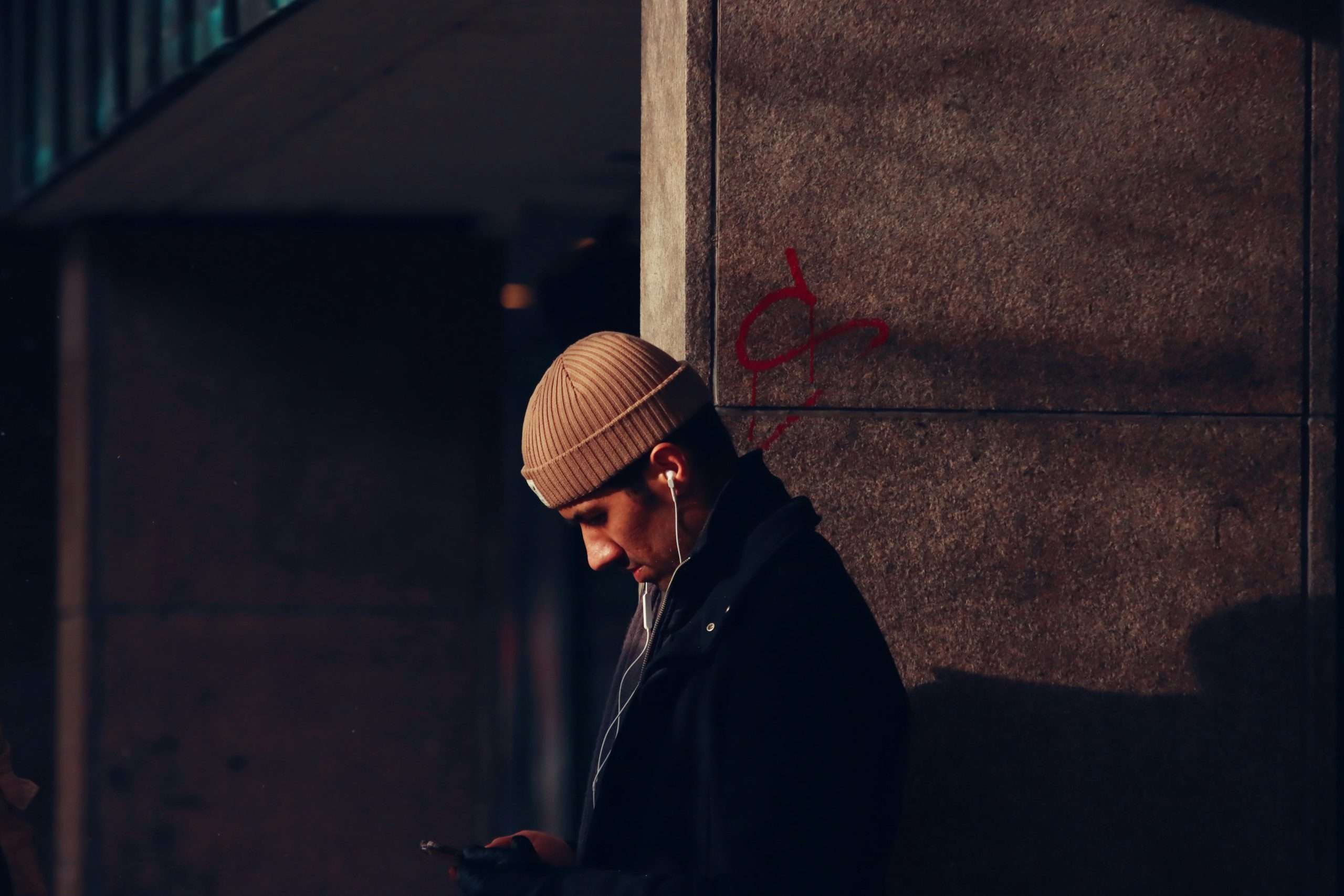
Flyness, for an introvert, is built on a few specific foundations. First, it comes from knowing your own thinking deeply enough that you trust it. Introverts tend to process before they speak, which means when they do speak, there is often more substance behind it than the person who filled the last ten minutes with improvised commentary. That is a genuine advantage in high-stakes environments. I watched it play out in client pitches repeatedly: the quieter members of my team who spoke last often landed the most memorable points because they had been listening while everyone else was performing.
Second, confidence for introverts grows from accumulated evidence. Every time you show up, contribute something real, and survive the experience, your nervous system updates its threat assessment. The fear does not vanish overnight, but it recalibrates. The goal is not to become fearless. It is to build a track record that your own mind can point to when the fear starts talking.
Third, and this one took me the longest, flyness comes from understanding that depth of connection matters more than frequency of contact. Introverts who stop trying to match extroverted social output and instead invest in fewer, richer relationships often find that their influence grows rather than shrinks. People remember the person who asked the right question, not the one who asked the most questions.
How Does Shyness Actually Show Up in Professional Settings?
Shyness in a professional context tends to cluster around specific triggers: being evaluated, being singled out, speaking in front of groups, initiating conversations with people who have more perceived status. It is not a global trait. Most shy people have contexts where they feel completely at ease and others where the anxiety spikes significantly.
In my agency years, I saw shyness show up most often during new business pitches and performance reviews, two situations with high evaluation stakes. Team members who were articulate and confident in everyday work settings would suddenly go flat or disappear into the background when a CMO from a Fortune 500 brand walked into the room. That was not introversion. That was fear of judgment operating at full volume.
The professional cost of unaddressed shyness is real. Promotions often go to people who are visible, not necessarily to the people doing the best work. Ideas that never get voiced never get implemented. Relationships that never get initiated never become the network that opens doors. None of this is fair, but it is the reality of how most workplaces operate. Understanding how introverts can market themselves effectively without abandoning their authentic style is a practical skill worth developing, not a betrayal of who you are.
The good distinction to hold onto is this: introversion is about preference, and shyness is about fear. Preferences do not need to be cured. Fear can be worked with systematically. If you find yourself avoiding situations because of what might happen rather than because you genuinely prefer solitude, that is worth paying attention to.
Are You Introverted, Shy, or Something Else Entirely?
Personality is not a simple binary, and the introvert-extrovert spectrum has more variation in it than most people realize. Some people are ambiverts, drawing energy from both social interaction and solitude depending on context. Others are omniverts, shifting more dramatically between states based on environment and circumstance. Understanding the difference between an omnivert and an ambivert can actually help clarify whether your social variability is a personality trait or a response to specific situational triggers.
There is also a meaningful difference between being fairly introverted and being extremely introverted. Someone who sits at the moderate end of the spectrum might find social interaction draining but recovers relatively quickly and can sustain longer periods of engagement without significant cost. Someone at the more extreme end may need substantially more recovery time and find overstimulation genuinely painful rather than merely inconvenient. Exploring the distinction between fairly introverted versus extremely introverted can help you calibrate your expectations for yourself and stop measuring your experience against someone whose baseline is different from yours.

What complicates this further is that people often misread their own type because they are comparing themselves to a cultural stereotype rather than the actual definition. Extroversion, properly understood, is about where you draw energy, not how outgoing or likable you are. If you want to get clear on what extroversion actually means at its core, the breakdown of what it means to be extroverted is worth reading before you decide which label fits you.
I spent years believing I was more extroverted than I actually was because I could perform extroversion convincingly in professional settings. I was good at pitching, good at client dinners, good at rallying a team before a big deadline. What I consistently missed was that I needed a full day of solitude after each of those events to feel like myself again. That recovery need is the clearest signal. It does not lie.
What Does It Actually Look Like to Conquer Shyness Without Losing Yourself?
Conquering shyness is not about becoming extroverted. It is about removing the fear that is preventing you from accessing the version of yourself you already are. The goal is not to become someone who loves networking events. The goal is to become someone who can attend a networking event without their nervous system treating it as a threat.
Practically, this tends to work best through a combination of small, repeated exposures and deliberate reframing. Exposure means doing the scary thing in progressively larger doses, not throwing yourself into the deep end and hoping adrenaline does the work. Reframing means examining the specific thought underneath the fear. Most shy people are not afraid of people in the abstract. They are afraid of a very specific outcome: being judged, being rejected, being seen as inadequate. Naming that specific fear makes it smaller and more workable than the vague dread of “social situations.”
One thing I found genuinely useful in my own experience was shifting my focus from how I was coming across to what I was actually curious about. When I walked into a client meeting thinking about how I was being perceived, I was anxious. When I walked in genuinely interested in the client’s problem, I forgot to be self-conscious. Curiosity is a surprisingly effective antidote to social fear because it redirects attention outward. Introverts tend to be naturally curious and observant, which means this is a tool that is already in the kit. It just needs to be applied intentionally.
There is also real value in understanding your conflict patterns as a shy or introverted person. Shyness often shows up as conflict avoidance, letting things slide because speaking up feels too exposed. A thoughtful approach to conflict resolution that accounts for introvert-extrovert dynamics can give you a framework for speaking up in ways that feel authentic rather than performative.
How Does the Introverted Extrovert Experience Fit Into This?
Some people read about introversion and extroversion and feel like neither label quite fits. They love people but also need significant time alone. They can be the life of the party in one context and completely invisible in another. This experience is more common than the binary framing suggests, and it has a name: the introverted extrovert, sometimes called an ambivert or an omnivert depending on the specific pattern.
If this sounds familiar, taking an introverted extrovert quiz can help you understand whether your variability reflects a stable middle-ground preference or a more context-dependent pattern. The distinction matters because it shapes which strategies actually work for you. Someone who is genuinely ambivert may find that moderate social engagement is energizing rather than draining, which opens up different options than someone who is solidly introverted.
There is also a related concept worth knowing about. An otrovert experiences their introversion and extroversion in a way that shifts based on environment and relationship rather than following a consistent internal pattern. If you have ever wondered why you feel completely different at a work event versus a gathering with close friends, exploring the difference between an otrovert and an ambivert might give you language for something you have experienced but never had a name for.

What I noticed in my agency work is that some of my most effective team members were people who could shift registers depending on what the situation demanded. They were not performing. They genuinely had access to both modes, and they had learned to read which mode the situation called for. That kind of flexibility is a real skill, and it is available to people across the personality spectrum, not just those who fall neatly in the middle.
Can Introverts Be Genuinely Confident in High-Stakes Situations?
Yes, and often more sustainably than their extroverted counterparts. Introverted confidence tends to be built on preparation, depth, and track record rather than on in-the-moment social energy. That makes it slower to build and more durable once established.
There is interesting work being done on how introverts perform in high-stakes contexts like negotiation. Contrary to what many people assume, introverts often hold their own or outperform in negotiation settings because they tend to listen more carefully, prepare more thoroughly, and resist the impulse to fill silence with concessions. A look at how introverts approach negotiation from Harvard’s Program on Negotiation challenges the assumption that extroverted energy is a prerequisite for getting what you want in a high-pressure conversation.
My own experience bears this out. Some of my best client negotiations happened in quiet, almost understated conversations where I had done enough preparation that I did not need to perform certainty. I actually had it. The clients who trusted me most were not the ones I had dazzled with energy. They were the ones I had impressed with specificity, follow-through, and the willingness to say “I don’t know yet, but I’ll find out” rather than improvising an answer that fell apart later.
Confidence in high-stakes situations also comes from having a clear sense of your own values and what you are not willing to compromise. Introverts who have done the internal work of understanding themselves tend to have a clearer sense of their own lines than people who have spent less time in genuine self-reflection. That clarity reads as confidence to others, even when it does not feel like confidence from the inside.
There is also a neurological dimension worth acknowledging. Some personality researchers have explored how introversion relates to arousal sensitivity, suggesting that introverts may reach their optimal performance state at lower levels of external stimulation than extroverts. This does not mean introverts are fragile. It means they often perform best in conditions that allow for focus and reduced noise, which is worth knowing when you are designing your own work environment or preparing for a high-stakes moment. The connection between introversion and how the brain processes stimulation is explored in research published in PubMed Central that examines personality and arousal patterns.
What Practical Steps Actually Help Shy Introverts Build Confidence?
Concrete steps matter more than abstract encouragement, so here is what has actually worked, both in my own experience and in what I watched work for people I managed over two decades in advertising.
Prepare more than you think you need to. Introverts often feel most confident when they have processed a situation thoroughly before entering it. This is not a crutch. It is a legitimate strategy. Knowing your material deeply, anticipating likely questions, and having a clear sense of what you want to communicate reduces the cognitive load in the moment and frees up attention for actually listening and responding.
Find your format. Not every communication context is equally suited to introvert strengths. Written communication, small group conversations, and one-on-one meetings tend to play to introvert advantages. Large group presentations and impromptu speaking are harder. Rather than avoiding the harder formats entirely, build toward them incrementally while also investing in the formats where you naturally shine. Your written communication, your ability to synthesize and articulate complex ideas clearly, is a genuine competitive advantage in most professional environments.
Build a small circle of genuine advocates. Introverts often underestimate the value of having a few people in their professional environment who know their work deeply and will speak up for them in rooms they are not in. This is not networking in the performative sense. It is investing in relationships with enough depth that those people become genuine allies. That kind of connection is something introverts tend to be exceptionally good at when they stop trying to replicate extroverted social patterns and start playing to their own strengths.
Address the fear directly when it is present. If shyness is genuinely operating alongside introversion, working with a therapist or counselor who understands social anxiety can make a significant difference. The concern that seeking help means something is fundamentally wrong with you is itself a product of the shame that shyness often carries. Many introverts have found that working through social anxiety in a therapeutic context does not change who they are. It removes the static so they can hear themselves more clearly.
Track your evidence. Every time you do something that felt scary and it goes reasonably well, write it down. Shy people have a negativity bias that causes them to discount positive social experiences and amplify the negative ones. Building a deliberate record of evidence that contradicts the fear narrative is not self-delusion. It is accurate accounting. The fear is telling you a story that is not fully true, and evidence is how you argue back.

Finally, stop waiting to feel ready. Confidence is not a prerequisite for action. It is a byproduct of it. The introverts I have watched build the most genuine professional confidence did not wait until the fear was gone. They acted with the fear present and updated their self-assessment based on what actually happened rather than what they had imagined would happen. That gap between imagination and reality is where most shyness lives, and closing it requires showing up before you feel prepared enough.
Personality research continues to refine our understanding of how traits like introversion and shyness interact with outcomes like wellbeing and social functioning. Work published in PubMed Central examining personality and social behavior offers useful context for understanding how these traits operate across different life domains. And for a broader look at how introversion intersects with extroversion and the many personality patterns in between, the full range of perspectives in our Introversion vs. Extroversion hub is worth exploring as you build your own understanding.
About the Author
Keith Lacy is an introvert who’s learned to embrace his true self later in life. After 20 years in advertising and marketing leadership, including running agencies and managing Fortune 500 accounts, Keith now channels his experience into helping fellow introverts understand their strengths and build fulfilling careers. As an INTJ, he brings analytical depth and authentic perspective to every article, drawing from both professional expertise and personal growth.
Frequently Asked Questions
Is shyness the same thing as introversion?
No. Shyness is rooted in fear of social evaluation and the anxiety that comes with being seen or judged. Introversion is an energy preference: introverts recharge through solitude and tend to prefer depth over breadth in social interaction. A person can be introverted without being shy, shy without being introverted, or carry both traits simultaneously. Sorting out which is which matters because the path forward is different for each.
Can introverts be genuinely confident?
Absolutely. Introverted confidence tends to look different from extroverted confidence: it is often quieter, more preparation-based, and grounded in depth of knowledge rather than social energy. Many introverts find that their confidence grows most reliably through accumulated evidence of competence and through investing in relationships where they can show up as their full selves rather than a performed version of themselves.
How do I know if I am shy, introverted, or both?
Pay attention to the internal experience behind your social behavior. If you avoid situations because you are afraid of being judged or rejected, shyness is likely present. If you withdraw from situations because you find them draining rather than frightening, introversion is the more accurate frame. Many people carry both, and recognizing the distinction helps you apply the right strategies: addressing fear directly when fear is the issue, and honoring energy preferences when that is what is actually operating.
What does “conquering shyness” actually mean for an introvert?
Conquering shyness does not mean becoming extroverted or eliminating your preference for quiet and depth. It means removing the fear that prevents you from accessing the version of yourself you already are. The practical work involves gradual exposure to situations that trigger social anxiety, deliberate reframing of the thoughts underneath the fear, and building a track record of evidence that contradicts the fear narrative. The goal is not fearlessness. It is the ability to act with the fear present without being controlled by it.
Does believing in yourself look different for introverts than for extroverts?
Often, yes. Extroverted confidence is frequently visible, expressive, and socially performed. Introverted confidence tends to be quieter, more internally anchored, and expressed through preparation, depth, and selective but meaningful contribution. Neither version is superior. They are simply different expressions of the same underlying self-trust. Introverts who stop measuring their confidence against an extroverted standard and start measuring it against their own capacity for depth and follow-through often find that they have more genuine confidence than they realized.