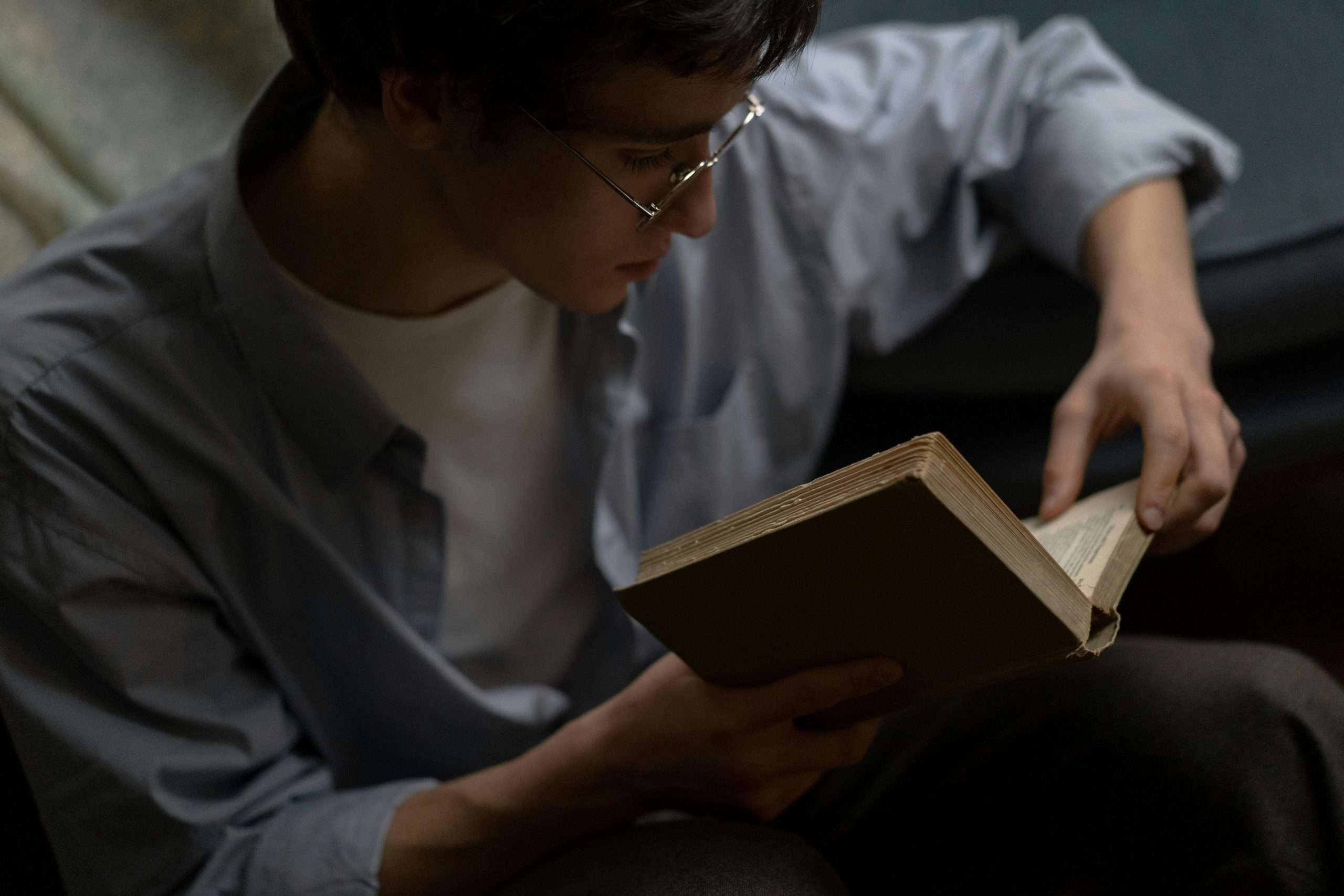
The best creative writing undergraduate programs share a quality that matters deeply to introverted writers: they protect space for solitude, reflection, and the kind of slow, layered thinking that produces genuinely original work. Programs at schools like the University of Iowa, Sarah Lawrence College, Emerson College, and NYU offer structured creative environments where deep thinkers can develop their craft without sacrificing the inner life that feeds their writing.
Choosing the right program isn’t just about rankings or faculty names. For writers who do their best thinking alone, who process emotion through language rather than conversation, the culture of a program matters as much as its credentials. A workshop that rewards the loudest voice in the room will drain a quiet writer before they ever finish their first manuscript.
I spent more than two decades running advertising agencies, writing copy, crafting brand narratives, and managing creative teams for Fortune 500 clients. I wasn’t a fiction writer in any formal sense, but I understood early that my best ideas came not from brainstorms or whiteboard sessions, but from the quiet hours before the office filled up. That instinct, it turns out, is something creative writing programs are finally starting to honor.

Much of what makes creative writing sustainable as a practice, and as a degree program, connects to something broader: the relationship between solitude, self-care, and the kind of deep recharging that introverted minds require. Our Solitude, Self-Care and Recharging hub explores this territory in depth, and it forms the quiet backbone of why choosing the right creative environment matters so much for writers who are wired for inner work.
What Makes a Creative Writing Program Worth Four Years of Your Life?
Not all creative writing programs are built the same way, and the differences go far beyond curriculum. Some programs treat writing as a social performance, centering workshop critique culture where volume and confidence carry the room. Others build in structured solitude, independent study tracks, and mentorship models that let quieter, more reflective students do their best work.
What drains your social battery?
Not all social exhaustion is the same. Our free quiz identifies your specific drain pattern and gives you personalised recharging strategies.
Find Your Drain PatternUnder 2 minutes · 8 questions · Free
When I was managing creative directors at my agency, I noticed something consistent. The writers who produced the most original, resonant copy weren’t the ones who dominated creative reviews. They were the ones who went quiet for a day or two, came back with something fully formed, and then defended it calmly when the room pushed back. Those writers needed programs, and workplaces, that understood the value of that incubation period.
A strong undergraduate creative writing program will offer several things that matter specifically to deep-thinking, introverted students. Small workshop sizes that allow genuine reflection rather than competitive performance. Faculty who treat revision as the real work, not just the preliminary sketch. Independent thesis or capstone projects that reward sustained solo effort. And a campus culture that doesn’t mistake quietness for disengagement.
There’s also the question of what the Greater Good Science Center at Berkeley describes as the creative dividend of solitude, the way time alone allows the mind to make unexpected connections, process emotional complexity, and generate ideas that group settings often flatten before they fully form. The best creative writing programs understand this intuitively, even if they don’t always frame it in those terms.
Which Schools Are Actually Worth Considering?
Let me walk through the programs that consistently appear at the top of serious rankings, and more importantly, what each one offers writers who need depth over performance.
University of Iowa
Iowa’s undergraduate creative writing program operates under the shadow of its legendary MFA program, which is both a blessing and a complication. On the positive side, undergraduates have access to world-class faculty, visiting writers of genuine stature, and a campus culture that takes writing seriously as an intellectual pursuit. The program emphasizes craft across multiple genres, including fiction, poetry, and nonfiction, and the workshop model here has been refined over decades.
The challenge for introverted students is that Iowa’s workshop culture can feel competitive. The program attracts ambitious writers who arrive already confident in their voices, and the room can reward assertiveness. That said, many quieter students find their footing here precisely because the faculty is experienced enough to draw out students who process slowly and speak carefully.
Sarah Lawrence College
Sarah Lawrence may be the most introvert-friendly creative writing program in the country. The school’s conference system replaces traditional lectures with one-on-one faculty meetings, which means students spend significant time in private, reflective conversation rather than competing for airtime in a seminar. The writing program here is deeply integrated with the broader liberal arts curriculum, encouraging students to draw on philosophy, psychology, and literature in ways that reward associative, layered thinking.
For writers who need space to develop their ideas before sharing them, Sarah Lawrence’s structure is almost custom-built. The emphasis on independent work, combined with a faculty that genuinely mentors rather than just critiques, creates conditions where quiet writers can produce ambitious, original work without burning through their social energy in the process.

Emerson College
Emerson’s writing program in Boston is particularly strong for students interested in the intersection of creative writing and media, publishing, or content industries. The faculty includes working writers and editors with real industry experience, and the curriculum reflects that practical grounding. For introverted writers who are thinking about careers in publishing, content strategy, or literary journalism, Emerson offers a path that connects craft to professional reality.
I can speak to this from my own experience. When I hired writers for my agency, the ones who lasted, and thrived, were the ones who understood both the art and the business of language. They could write beautifully and they understood why a particular piece of writing needed to accomplish a specific goal. Emerson tends to produce that combination.
NYU Gallatin School of Individualized Study
NYU’s Gallatin School is worth including here because it offers something most traditional programs don’t: the ability to design your own concentration. For an introverted writer who knows exactly what they want to study, whether that’s magical realism and mythology, or personal essay and trauma narrative, or experimental poetry and visual art, Gallatin lets you build a program around your specific intellectual obsessions rather than fitting yourself into a predetermined shape.
The self-direction required here suits certain introverted students extremely well. Others find the lack of structure disorienting. Honest self-knowledge is essential before choosing this path.
Brown University
Brown’s literary arts program is rigorous, small, and deeply serious. The faculty includes writers of significant literary reputation, and the program’s connection to Brown’s broader humanities curriculum means students are reading widely and thinking carefully about the relationship between literature and culture. The workshop culture here tends toward the intellectually generous rather than the competitive, which creates space for quieter voices to develop at their own pace.
Brown also benefits from its New Curriculum, which gives students significant freedom in designing their academic path. For introverted writers who want depth over breadth, the ability to go very deep into a small number of subjects, rather than scattering attention across requirements, is a genuine advantage.
Kenyon College
Kenyon may be the most underrated creative writing program in the country. The college publishes the Kenyon Review, one of the most respected literary journals in American letters, and that connection shapes the entire culture of the writing program. Students here are surrounded by serious literary conversation, faculty who are active in the literary world, and a campus environment that treats writing as a genuine vocation rather than a career hedge.
The small size of the college, around 1,700 students, means that introverted writers aren’t lost in a large university system. The intimacy of the campus can feel nourishing rather than claustrophobic, particularly for students who need to recharge between social interactions and want a community that feels manageable rather than overwhelming.
How Does the Workshop Model Actually Affect Introverted Writers?
The workshop model is the dominant pedagogy in creative writing education, and it deserves honest examination. In a typical workshop, students submit writing in advance, the group reads it, and then the class discusses the work while the author sits silently and listens. The author speaks only at the end, if at all.
On paper, this sounds like an introvert’s ideal format. You write alone, you submit your work, and then you listen while others respond. In practice, it’s more complicated. The quality of workshop depends entirely on the quality of the conversation, and that conversation is often dominated by the most verbally confident students in the room.
I watched this dynamic play out in my agency’s creative reviews for twenty years. The person who spoke first and most confidently shaped the entire conversation, regardless of whether their ideas were the strongest. Quieter team members, often the ones who had thought most carefully about the work, got crowded out. I had to actively restructure how we ran reviews to give slower processors a real voice.
The same problem exists in workshop. Introverted writers often find that their most useful responses to a piece of writing arrive hours or days after the workshop ends, when they’ve had time to process. By then, the conversation has moved on. Programs that build in written responses before workshop, or that allow students to submit written feedback alongside verbal discussion, serve introverted students significantly better.
There’s also the emotional dimension of having your work discussed publicly. For highly sensitive writers, the workshop can feel like an exposure event rather than a learning experience. Building consistent self-care practices around workshop cycles, including recovery time after particularly intense sessions, isn’t optional for writers with this level of sensitivity. It’s what makes the work sustainable over four years.

What Role Does Solitude Play in Developing a Writing Practice?
Every serious writer I’ve ever known, or read about, has said some version of the same thing: the writing happens alone. The ideas might come from anywhere, from conversation, from observation, from the accumulated weight of lived experience, but the actual work of turning those ideas into language requires a quality of solitude that most people never fully experience.
This isn’t just temperament. There’s a physiological dimension to it. Research published in PubMed Central on attention and cognitive processing suggests that sustained creative work requires the kind of focused, internally directed attention that social environments actively disrupt. The writer who can protect extended periods of uninterrupted solitude isn’t just indulging a preference. They’re creating the neurological conditions that make deep work possible.
For introverted writers, this is both a strength and a vulnerability. The strength is that solitude feels natural and restorative rather than uncomfortable. The vulnerability is that the academic environment, with its constant social demands, scheduled activities, and ambient noise, can erode the very conditions that make the writing possible.
Understanding why solitude is a genuine need rather than a social failure is something introverted students often have to work out for themselves, sometimes in the face of roommates, advisors, or family members who interpret withdrawal as depression or antisocial behavior. It isn’t. It’s the writer doing exactly what the work requires.
What I’ve observed in my own work, and in the creative directors I managed over the years, is that the quality of alone time matters as much as the quantity. Two hours of genuinely uninterrupted, mentally rested solitude produces more than six hours of fragmented, anxious solitude where you’re half-waiting for the next interruption. Sleep and genuine recovery feed directly into the quality of that creative solitude. You can’t write well from exhaustion, no matter how much time you have.
Does Campus Environment Matter as Much as Program Reputation?
Genuinely, yes. And I’d argue it matters more than most college guides acknowledge.
An introverted writer at a program with a strong reputation but a socially exhausting campus culture will spend four years fighting against their environment rather than writing. The energy that should go into developing craft goes instead into managing overstimulation, social performance, and the slow drain of never quite being able to recharge.
Campus environment includes things like the physical landscape, the density of social programming, the housing culture, and the general pace of campus life. A rural campus with access to natural spaces, trails, and genuine quiet is a different creative environment than an urban campus where the city itself is always pressing in.
I’ve written before about how connection to natural spaces supports the kind of deep restoration that introverted minds need. For a writer spending four years on a campus, proximity to nature isn’t a luxury amenity. It’s a creative resource. Kenyon’s Ohio countryside, Sarah Lawrence’s Westchester landscape, and Brown’s proximity to the Rhode Island coast all offer something that a dense urban campus simply can’t replicate.
There’s also the question of what happens when you’re not in class. When introverts don’t get adequate alone time, the consequences show up in concentration, emotional regulation, and creative output. A campus that builds in genuine downtime, where not every evening is filled with organized social activity, serves introverted writers better than one that treats constant engagement as a sign of a healthy campus community.

How Should Introverted Writers Evaluate Programs Before Applying?
Most college visits are designed to show you the best version of campus life, which means they’re optimized for extroverts. The campus tour hits the social spaces, the dining hall, the student center. The information session emphasizes clubs, activities, and community. None of that tells you what you actually need to know.
What introverted writers should be looking for on a campus visit is harder to see but not impossible. Arrive early and walk around before your official tour. Notice whether there are quiet spaces scattered across campus, not just the library, but alcoves, courtyards, reading rooms, spots where a person can be alone without it feeling like they’re hiding. Notice the pace of the campus at different times of day.
Ask to sit in on a workshop class rather than just meeting with an admissions officer. Watch how the conversation moves. Notice whether quieter students are drawn out or overlooked. Ask the faculty member afterward how they think about different learning styles in workshop settings. The answer will tell you a great deal.
Ask current students, not the ones the admissions office has selected to speak with you, but students you find yourself in the writing program, what a typical week looks like. How much of the work is done in groups versus independently? What do students do to recharge? Is there social pressure to be constantly visible and engaged?
One thing I wish I’d understood earlier in my career is that the environment shapes you as much as the work does. I spent years in agency environments that were built for extroverted energy, and I adapted, but the adaptation cost me something. The writers who choose programs that fit their actual temperament, rather than programs they think they should want, tend to produce their best work and sustain their creative practice long after graduation.
There’s a kind of permission that comes with finding a space that genuinely fits. Something I’ve explored in thinking about what meaningful alone time actually looks like in practice, the way solitude can feel chosen and nourishing rather than imposed and isolating. That quality of chosen solitude is what the right creative writing program can offer an introverted writer: a structure that makes space for the inner life rather than treating it as an obstacle.
What About the Mental Health Dimension of Creative Writing Programs?
This deserves honest attention. Creative writing programs attract people who are often processing significant emotional material through their work, and the workshop model can intensify that dynamic in ways that aren’t always healthy.
Highly sensitive writers, many of whom are drawn to creative writing precisely because language gives form to emotional experience, are particularly vulnerable to the cumulative stress of workshop culture. Psychology Today’s writing on solitude and health points to the way that intentional alone time functions as genuine psychological maintenance, not escape, but active restoration. For writers in demanding programs, building this kind of intentional solitude into their weekly rhythm isn’t self-indulgence. It’s what makes sustained creative work possible.
The distinction Harvard draws between loneliness and chosen isolation is worth keeping in mind here. An introverted writer who spends Saturday mornings alone writing isn’t lonely. They’re doing exactly what their creative practice requires. Programs that understand this distinction, and that don’t pathologize introversion as social avoidance, create healthier environments for the full range of creative personalities.
It’s also worth asking about mental health resources when evaluating programs. Not because creative writing programs are uniquely dangerous, but because the emotional demands of the work, combined with the social pressures of undergraduate life, can create genuine stress for sensitive, introverted students. Programs at larger universities often have more strong counseling resources. Smaller colleges may have fewer options but a more intimate community that provides informal support.
One thing the Frontiers in Psychology research on introversion and well-being points toward is that introverts who understand their own needs and have strategies for meeting them tend to fare significantly better in demanding environments than those who are still fighting against their own temperament. Knowing that you need solitude, and having a plan for protecting it, is a form of self-knowledge that pays dividends throughout a four-year program and beyond.
What Comes After the Degree?
A question worth asking before you choose a program is what you actually want from a creative writing degree. The honest answer is that most creative writing graduates don’t become full-time fiction writers or poets. They become editors, teachers, content strategists, journalists, UX writers, speechwriters, and people who use language with unusual precision in whatever field they end up in.
From where I sit, having spent decades working with writers in a professional context, the skills a strong creative writing program develops are genuinely valuable across a wide range of careers. The ability to construct a clear, emotionally resonant argument. The discipline to revise until something is actually right rather than just finished. The sensitivity to language that lets you hear when something is off, even if you can’t immediately articulate why.
For introverted writers, these skills often translate into careers that play to their strengths: work that can be done with significant autonomy, that rewards careful attention and depth of thought, and that doesn’t require constant social performance. Publishing, editing, academic writing, content strategy, technical writing, and literary journalism all fit this profile.
The CDC’s research on social connectedness and health outcomes is a useful reminder that the goal isn’t isolation. Introverted writers still need community, mentorship, and genuine connection. What they need is community that doesn’t demand constant social performance, and a career path that allows them to do their best work in the conditions that actually support it.
The right creative writing program plants the seeds for exactly that kind of career. It gives you the craft, the community, and the self-knowledge to build a writing life that’s genuinely yours, on terms that fit who you actually are.

If you’re thinking about how solitude, self-care, and creative recharging connect to the larger work of building an intentional life, our full Solitude, Self-Care and Recharging hub brings together everything we’ve written on these themes in one place.
Running on empty?
Five drain profiles, each with specific triggers, warning signs, and a recharging playbook.
Take the Free QuizUnder 2 minutes · 8 questions · Free
About the Author
Keith Lacy is an introvert who’s learned to embrace his true self later in life. After 20 years in advertising and marketing leadership, including running agencies and managing Fortune 500 accounts, Keith now channels his experience into helping fellow introverts understand their strengths and build fulfilling careers. As an INTJ, he brings analytical depth and authentic perspective to every article, drawing from both professional expertise and personal growth.
Frequently Asked Questions
Are creative writing programs a good fit for introverts?
Many creative writing programs are well-suited to introverted students, particularly those that emphasize independent work, one-on-one mentorship, and written feedback over competitive verbal performance. Schools like Sarah Lawrence, Kenyon, and Brown tend to create environments where quieter, more reflective writers can develop their craft without being drowned out by more extroverted voices. what matters is researching program culture, not just reputation, before applying.
What should introverted writers look for when choosing a creative writing program?
Introverted writers should look for small workshop sizes, faculty who prioritize mentorship over performance, independent thesis or capstone options, campus environments with genuine quiet spaces, and a culture that doesn’t treat introversion as disengagement. Access to natural spaces and a manageable campus size can also make a significant difference in day-to-day well-being and creative output over four years.
Does the workshop model work for introverted writers?
The workshop model can work well for introverts, but it depends heavily on how individual programs run their workshops. Programs that build in written responses before discussion, that actively draw out quieter voices, and that allow time for reflection rather than rewarding immediate verbal reaction tend to serve introverted writers better. Sitting in on a workshop before committing to a program is one of the most useful things a prospective student can do.
What careers do creative writing graduates typically pursue?
Creative writing graduates work across a wide range of fields, including publishing, editing, content strategy, journalism, technical writing, UX writing, speechwriting, teaching, and literary nonprofits. Many introverted graduates find that the precision and depth of thought developed in a strong writing program translates well into careers that reward careful language use and can be done with significant autonomy. Full-time fiction writing or poetry is one path, but far from the only one.
How important is solitude to developing as a writer?
Solitude is central to serious writing practice. The actual work of turning ideas into language requires sustained, internally directed attention that social environments disrupt. For introverted writers, solitude tends to feel natural and restorative, which is a genuine advantage. Protecting regular periods of uninterrupted alone time, and choosing a program and campus environment that makes this possible, directly supports the quality and consistency of creative output over the course of a degree program and throughout a writing career.